


ADL Report: Tulane University receives highest grade for addressing antisemitism on campus
Tulane University, whose campus was roiled two years ago during the spring of 2024 with pro-Palestinian and anti-Israel protests and an encampment organized by mostly outside agitators, has received the highest grade of A for its ongoing campaign intended to address antisemitism, according to the third annual Campus Antisemitism Report Card, an assessment conducted by the Anti-Defamation League (ADL).
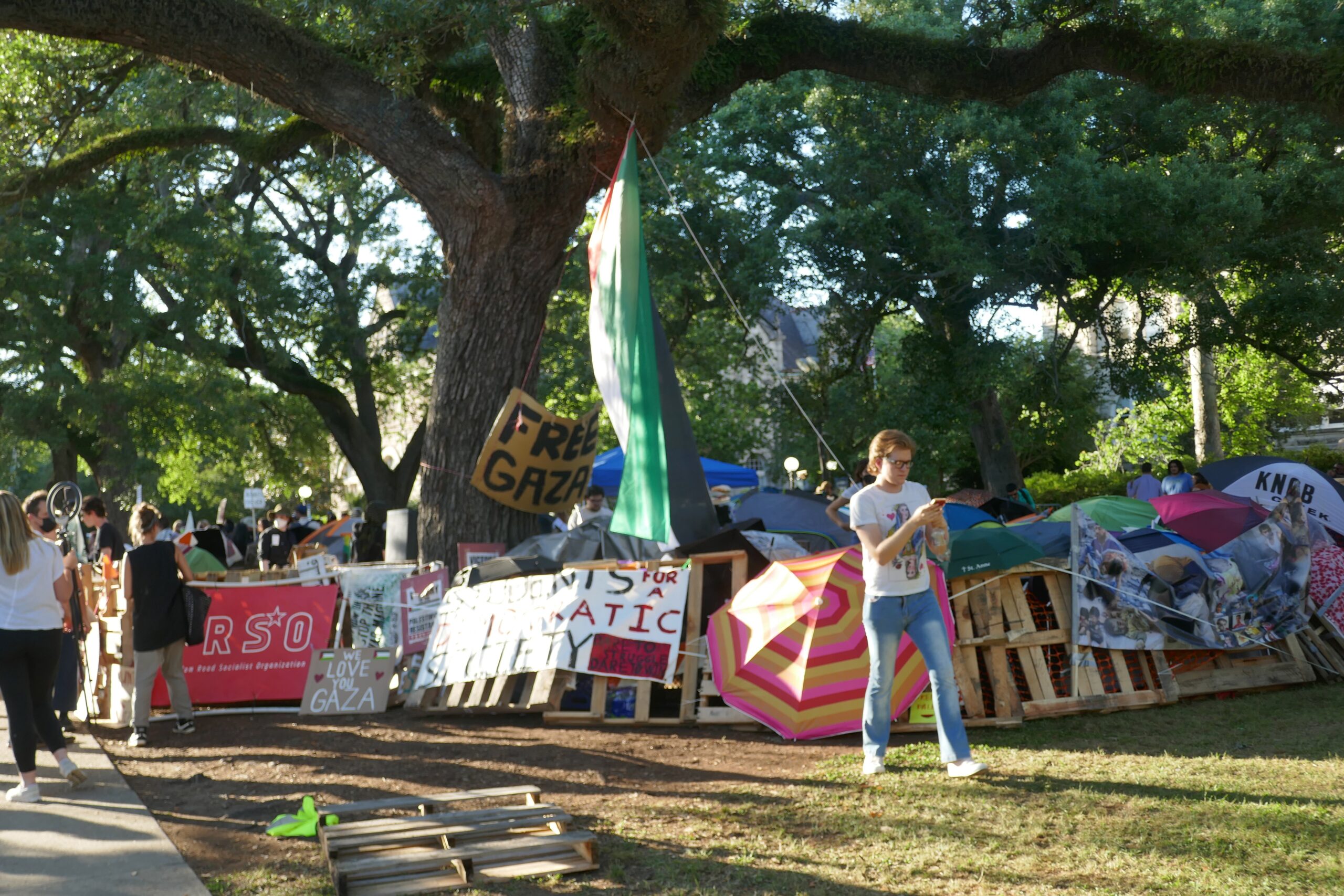
An illegal encampment erected in front of Gibson Hall along St. Charles Avenue on May 1, 2024, the height of anti-Israel and antisemitic protests at Tulane University. (Photo by Alan Smason)
The assessment, which assigns letter grades to institutions across the United States based on their responses to antisemitism, found significant year-over-year improvement at institutions nationwide. Tulane received a C in 2024, improved to a B in 2025 and achieved ADL’s highest grade of an A this year.
“The Campus Antisemitism Report Card reflects Tulane University’s clear and ongoing commitment to protecting Jewish students and fostering a campus environment where they can feel safe and supported,” said ADL South Central Regional Director Lindsay Baach Friedmann. “Tulane has been a great partner in the fight against antisemitism, and no school is more deserving. Unfortunately, anti-Jewish attitudes persist on campuses nationwide, and we are grateful for the example they set.”
The 2026 Report Card assessed 150 colleges and universities across 32 criteria in three areas: administrative policies, Jewish life on campus, campus conduct, and climate concerns. The only other Louisiana institution to receive a grade was Loyola University New Orleans, which improved significantly from last year’s failing grade. Loyola leadership has spent much of this year working with ADL and its anti-discrimination task force to actively implement best practices into campus policies and procedures. While there is still work to do on campus, Loyola administration is committed to working with ADL to improve upon this year’s C.
While colleges and universities are improving frameworks, policies and practices to address antisemitism, an ADL survey finds a troubling persistence of anti-Jewish attitudes and behavior among students. The report, Campus Crossroads: Non-Jewish Student Perceptions of Jews and Israel, reveals that policy changes have not necessarily led to improved day-to-day experiences for Jewish students.

The pro-Palestinian encampment on the lawn in front of Columbia University’s Butler Library, April 24, 2024. (ProudFarmerScholar, CC0, via Wikimedia Commons)
Nearly half (48.3 percent) of non-Jewish students reported witnessing or experiencing anti-Jewish behavior in the past year, and 47.6 percent endorsed at least one anti-Jewish attitude. At the same time, strong majorities of students support university action to address antisemitism, suggesting both ongoing risk and meaningful opportunity for campus leadership.
The percentage of those receiving A’s or B’s rose to 58 percent in 2026. That’s up from 23.5 percent in 2024 and 41 percent in 2025. Additionally, 47 percent of the 135 schools assessed in 2025 received higher grades than last year.
Overall results show a clear upward trend, with more institutions earning higher grades compared to prior years, with many drawing on ADL’s expertise as they refined policies and practices to support Jewish students, staff and faculty.
“The data confirms what we’ve said from the start: maintaining a safe campus climate is a matter of will,” said Jonathan Greenblatt, ADL CEO. “Universities that have taken a comprehensive approach – reviewing policies, clarifying expectations, and strengthening enforcement – are seeing meaningful progress. Some of the strongest gains are coming from institutions that have engaged deeply with our recommendations and translated them into lasting institutional practice, rather than symbolic commitments.”
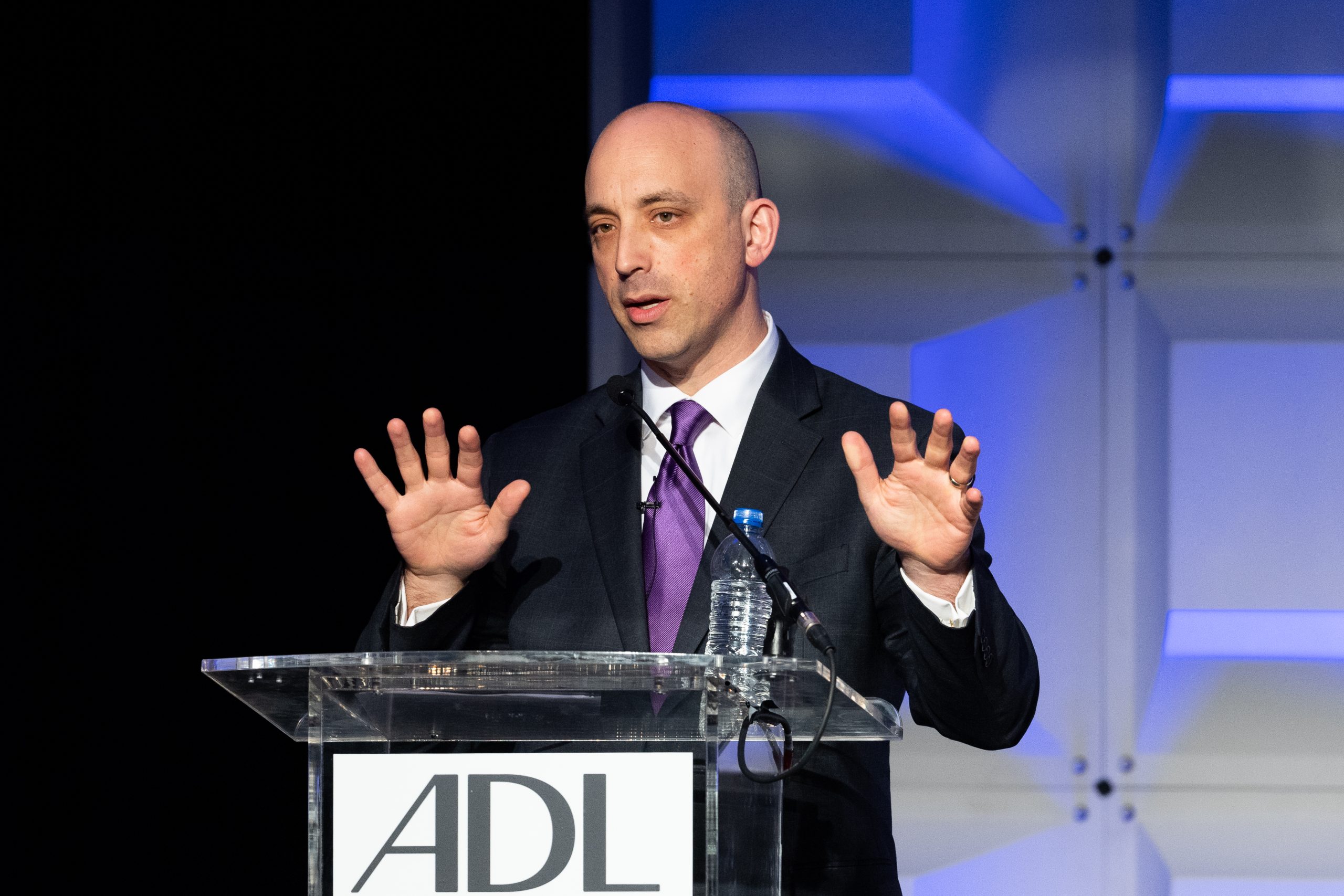
Jonathan Greenblatt, ADL CEO and National Director, in Washington, DC. (Photo by Michael Brochstein/SOPA Images/LightRocket via Getty Images)
At the same time, the data makes clear that improvement does not mean the challenge has been solved. While reported antisemitic incidents on campus declined in 2025 compared to the period following October 7, 2023, levels remain well above those documented in 2022, when concerns were already being raised. The findings underscore that progress is real, but sustained vigilance and institutional action remain essential.
The highest-rated institutions include New York University, Temple University, American University, Washington University in St. Louis, Vanderbilt University, Johns Hopkins University, Vassar College and Arizona State University. All received an “A” grade and stood out for consistent condemnation of antisemitic incidents, clear enforcement of conduct standards, and sustained investment in Jewish life.
At the same time, California State University, Los Angeles, University of North Texas, The New School and Scripps College received some of the lowest grades, reflecting gaps in enforcement, limited transparency, or the absence of durable systems to support Jewish life on campus. Overall, this year’s grading distribution reflects broad improvement across higher education, with 23 institutions earning A’s, 64 earning B’s, 52 earning C’s, 7 earning D’s, and 4 receiving F grades – signaling a continued upward trend alongside meaningful variation in performance.
Progress Driven by Institutional Action
While challenges remain and campus climates continue to evolve, the overall trajectory is positive. Of the 150 institutions assessed, 129 (86 percent) engaged with ADL during the assessment process by providing institutional information and context. ADL also received 145 responses from representatives of Jewish campus organizations and task forces, covering 106 campuses, reflecting the depth of collaboration informing the Report Card.

The Report Card has also facilitated new engagements and partnerships between ADL regional offices and assessed universities, prompting 78 percent of the 135 schools assessed in 2025 to engage in ADL-led consultations and webinars following the release of the 2025 Report Card and leading to measurable positive impacts.
Institutions showing the greatest gains tended to adopt clearer antisemitism definitions, expand training, formalize accountability structures, enforce policies consistently and integrate antisemitism into broader non-discrimination and campus safety frameworks. These changes were often informed by direct engagement with ADL and were aligned with ADL’s Six Asks for campus administrators.
Shira Goodman, ADL Vice President of Advocacy and head of the Ronald Birnbaum Center to Combat Antisemitism in Education, said “The campuses showing the greatest improvement are those that treat antisemitism as an ongoing responsibility, not a one-time response. Even as institutional grades improve, the persistence of anti-Jewish attitudes and the limited reach of antisemitism education identified in the survey show that universities cannot take their foot off the gas. Policy progress must translate into lived experience for Jewish students, staff and faculty.”
Methodology
The 2026 Report Card assessed 150 colleges and universities using a multi-pronged approach that included surveys distributed to campus administrators and representatives of Jewish organizations, secondary research on high-profile incidents and institutional responses, and incident data collected by the ADL Center on Extremism. The assessment was informed by a panel of external experts, including former college presidents, current students, non-profit leaders and Jewish student organization representatives.
The full 2026 Campus Antisemitism Report Card, including individual school grades and detailed methodology, is available at https://www.adl.org/campus-antisemitism-report-card
