


Israeli ministers urge reprisals as UK mulls sanctions
By JNS STAFF
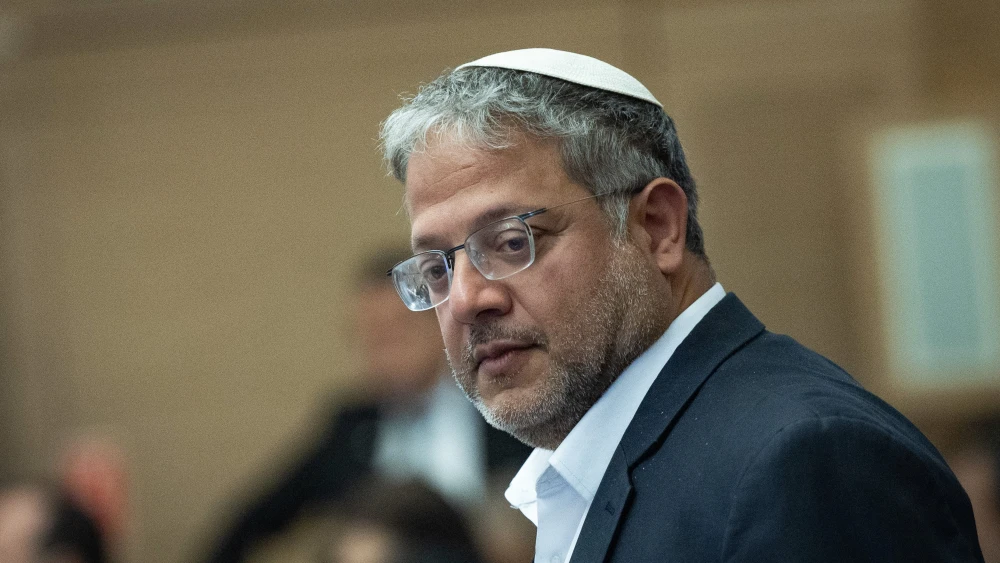
Itamar Ben-Gvir, Israel’s national security minister, attends a House committee meeting at the Knesset in Jerusalem on June 8, 2026. (Photo by Yonatan Sindel/Flash90)
Bezalel Smotrich, Israel’s finance minister, called for the British ambassador to be “expelled” immediately, adding: “We will not be a doormat trampled by an antisemitic government, in a country conquered by radical Islam, trying to save itself from economic and social decline by attacking Jews and the State of Israel.”
Ben-Gvir called in a Spanish-language post on X to recognize “that the Malvinas Islands are Argentine territory under occupation, which the British violently are stealing from the Argentine people.” This was a reference to the decades-long British-Argentine dispute over the territory, which in the United Kingdom is called the Falkland Islands.
“The British are not content with merely occupying the territory; they also carry out oil drilling there and steal the money from the Argentine people,” Ben-Gvir’s X-post continued. He also called on Israeli Prime Minister Benjamin Netanyahu to “impose sanctions on Great Britain as long as the occupation continues.”
Herzog, in a speech on Tuesday, said about the reported plans in London: “If this happens and other nations decide to join, I believe this will prove to be a grave miscalculation, a decision that will fall on the wrong side of history,” before describing it as meddling in Israel’s general elections next month.
A British Cabinet minister, Pat McFadden, confirmed to the BBC that the foreign ministry would announce new sanctions on Tuesday due to a “continued expansion of settlement activity.” The announcement would be made in the House of Commons, the lower house of the British Parliament, the BBC reported.
British media reported that the new measures would be a ban on products and services. The BBC quoted unnamed Labour MPs as saying they expected a ban on some goods. Mcfadden did not describe the new sanctions he said were envisaged by the Foreign Ministry.
British Foreign Minister Ed Miliband had previously said there would be a “reset” of British-Israeli relations following Israel’s plans to build new homes in the E1 area in Ma’aleh Adumim, east of Jerusalem.
Richard Tice, a lawmaker for the Reform UK Party and deputy to the party’s leader, Nigel Farage, condemned the plan to ban Israeli products from Judea and Samaria. “Sanctions imposed by this hard left, anti-Jew Burnham Government against Israel will embolden antisemitic hate crimes in UK, are damaging to our international standing with U.S. and Israel, two of our most important security partners. It is self-destructive virtue signaling that will make us less safe,” Tice wrote on X.
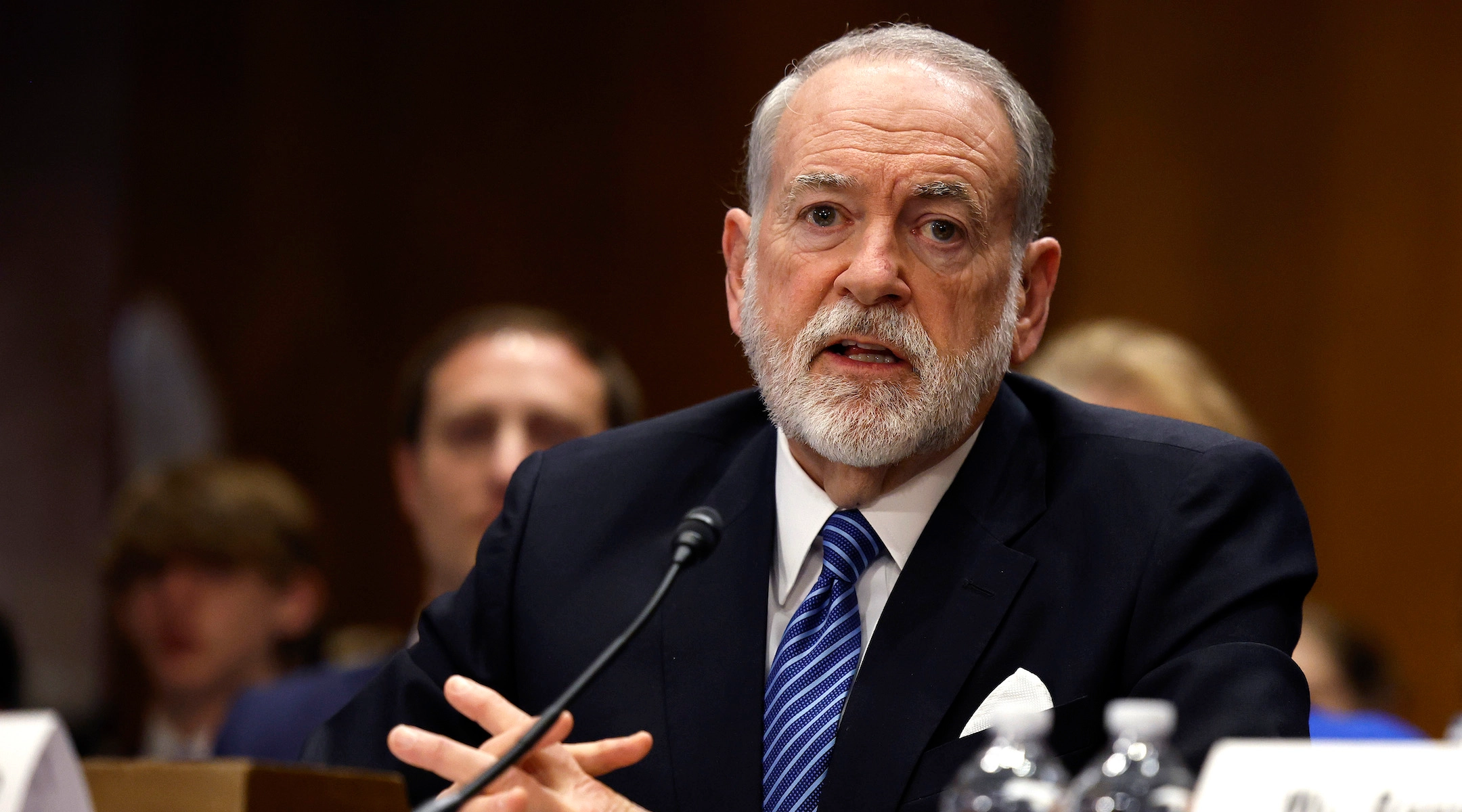
United States Ambassador to Israel Mike Huckabee. (Photo by (Kevin Dietsch/Getty Images)
The U.S. ambassador to Israel, Mike Huckabee, told the BBC on Tuesday that the planned sanctions were “discrimination against the Israeli government” and “discrimination against the Jewish People,” in addition to being irresponsible. “The U.K. is a sovereign country, they can do what they want, but so is the U.S.,” he said.
Huckabee on Saturday accused the British government of antisemitism, writing on X that “the Brits have lost it.” He was sharing a post by Israel’s Foreign Ministry, which pushed back on a video by British Foreign Secretary Ed Miliband, in which he recounted “stories” he was told about the Gaza Strip. Miliband in the video recalled stories “of medicines being blocked, children dying while waiting for vital, life-saving treatment.”
“The Jew hate of their government knows no boundaries and knows no facts,” Huckabee wrote. The Foreign Ministry in Jerusalem noted that there are no restrictions on the entry of medicines into the Gaza Strip. Some 22,500 tons of medical supplies have entered the enclave since the ceasefire began, it said. Gazans also exit the Strip for medical treatment, including 200 in the past two weeks.
Last month, Israeli Prime Minister Benjamin Netanyahu sarcastically referred to the United Kingdom as “the Islamic Republic of Britain,” reflecting a low point in British-Israel relations, which have been declining steadily for nearly three years.
The deterioration began in 2024, when Labour replaced the Conservative Party as the ruling party. While still in the opposition, Labour had asked the government to demand that Israel refrain from pursuing its campaign against Hamas in Gaza in response to the Oct. 7, 2023 massacre in Israel.
The Labour government repeatedly clashed publicly with Israel, using increasingly forceful language, including a July 29, 2025, call for it to “stop the slaughter” in Gaza. The phrase echoed rhetoric used by anti-Israel protesters who had gathered by the thousands in London to demonstrate against the Jewish state.
Britain recognized a Palestinian state in September 2025, alongside Australia and Canada. France also recognized “Palestine” that year. The decision followed Britain’s suspension of roughly 30 arms-export licenses covering equipment deemed potentially usable in Israel’s military operations against Hamas in Gaza.
The Labour-led government in London imposed a travel ban on Smotrich and Ben-Gvir last year over their support for Jewish presence in Judea and Samaria.
If the U.K. bans trade in Israeli Judea and Samaria products, it will join Spain, the Netherlands and Belgium in adopting such a policy.
Last week, Israeli Foreign Minister Gideon Sa’ar said that there would be consequences for London should it implement measures targeting Judea and Samaria.
“We are preparing. I hope they won’t make that mistake,” said Sa’ar. “If they do, there will be a reaction. Gone are the days that one can act against Israel without it responding.”
