Wednesday, October 7th 2026   |

Jewish Trivia Quiz

from RASHI, RAMBAM and RAMALAMADINGDONG: A Quizbook of Jewish Trivia Facts & Fun by New Orleans native Mark Zimmerman

Itamar Ben-Gvir

Itamar Ben-Gvir, leader of the Israeli far right-wing Otzma Yehudit party, is set to become the Minister of Israeli Security in the new government led by Benjamin Netanyahu. Ben-Gvir is a very controversial figure. He was a follower of Meir Kahane and an advocate for removing Arabs from the West Bank. Ben-Gvir hung a picture on his living room wall of Baruch Goldstein, the Jewish terrorist who murdered 29 Muslim worshipers in Hebron in 1994. He only took the picture down after entering politics in 2020, saying, “I’m declaring that for the sake of unity and a right-wing victory in the elections, I’m removing the photograph in my living room.” The Ministry of Israeli Security is an expanded version of the current Ministry of Internal Security, with increased authority over border police in the occupied territories. Given Ben-Gvir’s radical right-wing beliefs and statements about Arabs, many in Israel and worldwide Jewry are fearful of the steps he may take in that position. For example, Abe Foxman, former head of the ADL, recently said in response to the inclusion of Ben-Gvir in the government (along with Bezalel Smotrich, another far-right politician whom Netanyahu is appointing as finance minister), “I never thought that I would reach that point where I would say that my support of Israel is conditional...I love Israel and I want to love Israel as a Jewish and democratic state that respects pluralism.” What else did Ben-Gvir previously do that was controversial?
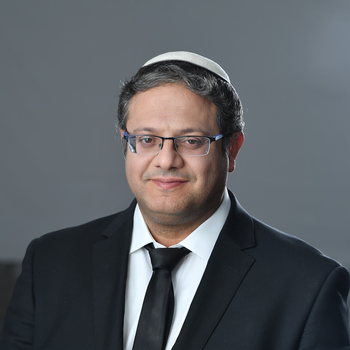
Itamar Ben-Gvir

Itamar Ben Gvir 1 by  דוד דנברג is licensed under CC-BY-SA 3.0 via Wikimedia Commons

A. Two weeks before Yitchak Rabin was assassinated, Itamar Ben-Gvir stole the dog from Rabin’s yard and held it up, saying “We got to his dog, and we’ll get to him, too.”

B. Two weeks before Yitchak Rabin was assassinated, Itamar Ben-Gvir broke the hood ornament off of Rabin’s car and held it up, saying “We got to his car, and we’ll get to him, too.”

C. When Israeli Prime Minister Ariel Sharon suffered a stroke, Itamar Ben-Gvir celebrated with a bar-b-q and stated, “We are, of course, happy. We hope there is a message here to everyone who wants to harm the land of Israel: the land of Israel is more powerful than all of you.”

D. Two weeks before Yitchak Rabin was assassinated, Itamar Ben-Gvir stole Rabin’s Nobel Peace Prize from his office and held it up, saying “He doesn't deserve a peace prize, he deserves a death prize.”

E. Itamar Ben-Gvir posted a picture of himself holding a brick and wrote, “I praise the Big Bad Wolf for blowing down the straw and stick houses of those unkosher pigs. But he failed to blow down the third pig’s brick house, so we got to the bricks, and we’ll get to those treif pigs, too.”
Click here for the answer.

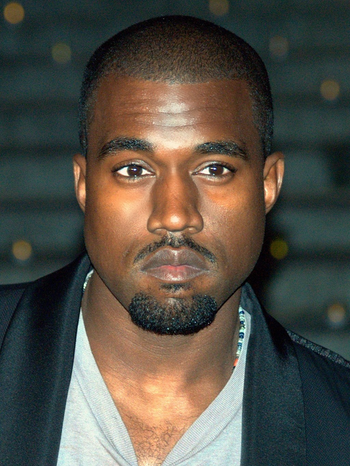
Kanye

Kanye West, also known as Ye, has generated much controversy over his antisemitic remarks (among other things). As far back as 2013 he stated that Jews are more well-connected than Black people, giving them an unfair advantage. He also criticized Jared Kushner for his efforts to improve relations between Israel and Arab nations, saying that Kushner was driven by greed. And he stated that “I prefer my kids knew Hanukkah than Kwanzaa. At least it will come with some financial engineering.” He has frequently referenced Jewish control of the media, including his recent response to rapper Sean Combs, who had asked Kanye not to continue wearing a White Lives Matter shirt. Kanye said, “Ima use you as an example to show the Jewish people that told you to call me that no one can threaten or influence me.” And last week, Kanye went to Mar-a-Lago to have lunch with Donald Trump, bringing with him Nick Fuentes, a white nationalist Holocaust denier. When Kanye recently tweeted that “I’m going death con 3 On JEWISH PEOPLE” his Twitter account was restricted and the tweet was deleted. Following Elon Musk’s purchase of Twitter, Kanye returned to that platform with a tweet that read “Testing Testing Seeing if my Twitter is unblocked.” He followed that with what tweet?

Kanye West

Kanye West at the 2009 Tribeca Film Festival is in the public domain, via Wikimedia Commons

A. I asked Trump to be my VP. Changing my mind. Elon-you’re my guy.

B. Special thanks to Kyrie and Chapelle for taking the attention off of me.

C. Yes, America. I’m back. Thanks, Elon, for taking Twitter out of the hands of the Jewish media.

D. Wow. I brought a white supremacist to lunch with Trump. Is there nothing I can’t do?

E. Shalom : )

Click here for the answer.

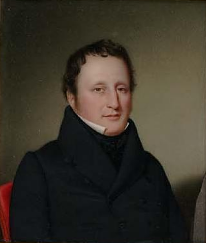
Mordecai Manuel Noah

The city of Buffalo, New York was buried under record snowfall this past week, with some areas receiving more than 6 feet of snow. The first Jew known to reside in the Buffalo area was Captain Mordecai Myers, who was stationed at the Williamsville cantonment during the War of 1812. The Jewish population grew through the 1800’s, with the first synagogue established in 1847. There are presently more than a dozen synagogues serving the Jewish population of approximately 12,000. The most famous member of the Jewish community was Mordecai Manuel Noah, who purchased land at Grand Island in the Niagara River to establish a Jewish homeland, one of the earliest Zionist endeavors. On September 2, 1825, Noah led a procession of Masons, militia members, municipal leaders, Seneca Chief Red Jacket, thousands of Christians, and a few Jews, to a ceremony at St. Paul’s Episcopal Church where he presented a cornerstone declaring “ARARAT, A City of Refuge for the Jews, Founded by Mordecai Manuel Noah in the month of Tizri 5586, Sept. 1825 and in the 50th Year of American Independence.” Noah called on every Jew in the world to be taxed “three sheckels of silver” to support the government of the Jewish Nation. His plan failed to attract any interest in the Jewish world, however, and the cornerstone now sits in the Buffalo Historical Society. Noah went on to great success in a very varied career–he served as a sheriff in New York, was a founder of New York University, wrote plays, was behind the establishment of New York’s Mt. Sinai Hospital, published the Sunday Times and other newspapers, was a leader of the Tammany Hall political machine, and more. What else is Mordecai Manuel Noah known for?

Mordecai Manuel Noah

Mordecai Manuel Noah is in the public domain, via Wikimedia Commons

A. Noah was one of the founders, in 1845, of Temple Emanu-El on the Lower East Side of New York. Though Noah was not an ordained rabbi, he served as the congregation’s religious leader for its first 5 years until the congregation expanded and hired its first rabbi, Leo Merzbacher, in 1850.

B. Noah was a prominent abolitionist, saying of slavery, “How can Americans be engaged in this traffic [the slave trade], men whose birthright is liberty, whose eminent peculiarity is freedom?”

C. Noah wrote a book entitled Ararat and the Jewish Enterprise, where he continued to advocate for a Jewish homeland despite the failure of his efforts on the island near Buffalo. His book was a primary inspiration to Theodor Herzl, who spoke about it in great detail at the First Zionist Congress in Basel in 1897.

D. Noah wrote critical reviews of the plays and performers at New York’s African Grove Theatre, a theater whose company and crew were all Black. Noah demeaned the actors in racist terms and questioned their intelligence, as evidenced by the following quote: “People of colour generally are very imitative, quick in their conceptions and rapid in execution; but it is in the lighter pursuits requiring no intensity of thought or depth of reflection.”

E. Noah established the first kosher slaughterhouse in Buffalo, which specialized in the kosher slaughtering of buffalo, and he owned a kosher deli specializing in kosher Buffalo wings.

Click here for the answer.

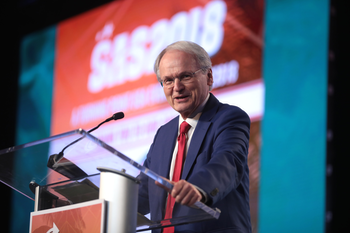
Mort Klein

Donald Trump was honored last week by the ZOA, which bestowed upon him the prestigious Theodor Herzl Medal, an award that has previously been given to Lord Balfour, Winston Churchill, Harry Truman, David Ben Gurion, Golda Meir, and Menachem Begin. ZOA’s announcement of the award, which is only rarely given out, noted Trump’s strong support of Israel, including the moving of the US embassy to Jerusalem, the cutting of funding to Palestinians, and the withdrawal from the Iran nuclear deal. In his remarks, Trump said that the United States and Israel are “allies morally, culturally and spiritually and we always will be, at least if I have anything to do about it.” He also noted that “When you see all of the horrible things that have taken place with Biden and Barack Hussein Obama and then they get 75% of the [Jewish] vote. What the hell is going on here?” ZOA president Mort Klein spoke at the event, remarking that “The Torah promises that Israel is the Jewish homeland, and will always be the Jewish homeland. Unlike politicians, except President Trump, God keeps his promises.” In addition to this strange statement comparing God’s trustworthiness to Trump’s, what other noteworthy comments has Klein made in the past?

Mort Klein

Morton Klein by Gage Skidmore is licensed under CC BY-SA 2.0

A. In support of rapper Ice Cube against charges of antisemitism, Klein tweeted, “I, Mort Klein, just had a 2 hour conversation with Ice Cube. We both grew up poor in Black hoods. Cube told me he thanked Jews for starting NAACP, many Black schools&fighting for Black civil rights.”

B. Commenting on the joyous style of celebration displayed by the Chassidic community, Klein referenced a family wedding he had attended, where the Chassidic guests danced with great exuberance, putting the rest of the celebrants to shame. “They were dancing up a storm, these guys. I thought they were black. Instead they’re just black-hat.”

C. In response to a reporter’s question about Klein’s stereotypical remark about Black people being good dancers, Klein defended himself to the reporter, saying “What are you, stupid? What are you, stupid? Each different peoples have different talents that everyone knows. And everyone knows that blacks are, on average, are better dancers than other people.”

D. Defending himself against charges that he has made racist remarks, Klein explained that “If one mentions a positive trait about an identifiable group it can never be called racism.” He then added, “I don’t even think about difference in colors. Except I recognize that whites cannot compete with blacks in basketball.”

E. In response to questions about his past comments which many have seen as insensitive at best and racist at worst, Klein stated, “What was I thinking? I’m ashamed of my past comments, I disavow them all, and I have some serious t’shuvah to undertake.”

Click here for the answer.

Theater Controversy

Theater productions have led to criticism and protest from the Jewish community for centuries, going back at least to Shakespeare’s portrayal of Shylock, the Jewish moneylender in The Merchant of Venice. But the Jewish contribution to the theater world has been significant, especially in musical theater, which has been dominated by such lyricists and composers as Oscar Hammerstein II, George and Ira Gershwin, Jerry Herman, Alan Menken, and Stephen Sondheim. And Fiddler on the Roof, the story of Tevye the milkman and his family’s and community’s attempts to maintain their Jewish ways in Czarist Russia is one of the most widely produced musical theater productions of all. Meanwhile, last year in London, the Royal Court Theatre apologized following criticism of their production of Rare Earth Mettle, a show about a billionaire who was attempting to monopolize the earth’s resources. The character’s original name was Hershel Fink, but after complaints that this was an antisemitic stereotype, the character’s name was changed to Henry Finn. And last month in London, The Icarus Theatre Collective canceled a planned production of a show because of criticism from the Jewish community. What was the controversy about?

Shylock (from "Twelve Characters from Shakespeare"), print, John Hamilton Mortimer (MET, 2002.330.2)

Shylock (Twelve Characters from Shakespeare) is in the public domain, under CC0 1.0 Universal (CC0 1.0) via Wikimedia Commons

A. The Icarus Theatre Collective was preparing a version of West Side Story where instead of a romantic relationship between the Italian Tony and the Puerto Rican Maria, the ill-fated relationship would be between Leora, an Israeli girl, and a Palestinian boy, Asif. Though the producers of the show reached out to local Israeli and Palestinian community members for their input and support as they developed the show, a critical article appeared in a local Jewish newspaper which provoked protests, and that was followed by protests from the local Muslim community as well. Producers shelved the production out of fear for the safety of the actors and employees of the theater.

B. The company had planned to produce a version of Romeo and Juliet where the Montagues were Nazis, with Romeo being a member of the Hitler Youth Movement, while Juliet and the Capulets were part of the Jewish community. After much criticism the company apologized and canceled the production while noting that, unlike in the original production where the Montagues and the Capulets were “Two households, both alike in dignity,” their production would have shown the “Nazi” Montagues as the bad guys.

C. The company had planned to produce a version of Romeo and Juliet where Romeo would be portrayed as a member of the Hitler Youth Movement and Juliet was part of the Jewish community. The company was criticized because the casting notice did not specify that they were looking for a Jewish actress to play the Juliet part. The theater management canceled the production and issued an apology noting that the casting announcement was supposed to specify a preference for a Jewish actress, but that “Our casting director removed key information and we failed to notice.”

D. The producers announced plans to mount a new production of The Diary of Anne Frank where the people living in the attic were members of the Roma community rather than Jews. The theater's artistic director stated that “the Anne Frank story is ultimately a story about all of us who have fallen victim to hate. We hope to share that message by hearing from the Roma girl Analetta instead of the Jewish Anne.” However, protests arose within the Jewish community, with one rabbi arguing that “while the story of Roma persecution by the Nazis is an important one, it is not acceptable to replace the Jewish Holocaust story with this other narrative.” As a result the theater company canceled the production and instead produced the classic show The Glass Menagerie.

E. The theater group was in the process of staging a musical production of a show based on the Rodgers and Hammerstein musical Oklahoma. The new version took place in Germany in the 1930’s, rather than Oklahoma at the turn of the 20th century. One plot line changed the focus of the core community conflict, with a song’s revised lyrics stating “Oh the Nazis and the Hebrews should be friends.”

Click here for the answer.

Pew Research Survey

The Pew Research Center recently surveyed 10,588 Americans about their attitudes regarding religion’s role in public life. The survey found that 60% of respondents believe that “the founders of America intended for the U.S. to be a ‘Christian nation’.” And 45% stated that “the U.S. should be a ‘Christian nation’.” Yet only 15% agreed that Supreme Court Justices should “bring their own religious views into how they decide major cases.” Among Jewish respondents to the survey, which of the following responses were given?

Pew Research Center logo

Pew Research Center is in the public domain, via Wikimedia Commons

A. 8% of Jewish respondents said that if there is a conflict between the will of the people and the Bible, then the Bible should take precedence.

B. 16% of Jewish respondents said that the United States should be a “Christian nation.”

C. 16% of Jewish respondents said that the United States should be a “Jewish nation.”

D. 71% of Jews believe that houses of worship should stay out of political matters.

E. 67% of Jewish respondents said that the Rabbi’s sermon put them to sleep.

Click here for the answer.

Antisemitism

Donald Trump has come under criticism for recent comments he made about the Jewish community that some viewed as antisemitic. He noted on his social media platform Truth Social that “U.S. Jews have to get their act together and appreciate what they have in Israel – Before it is too late!” He added, “No President has done more for Israel than I have. Somewhat surprisingly, however, our wonderful Evangelicals are far more appreciative of this than the people of the Jewish faith, especially those living in the US.” Jonathan Greenblatt, CEO of the Anti-Defamation League stated that “In this moment, Jewish people are feeling besieged, and when the former president of the United States makes — if you will — an unveiled threat, don’t excuse that by harkening back to policy things you may have done years ago...So when the President says ‘before it’s too late,’ it sounds like a threat in an environment where Jews already feel threatened.” And the American Jewish Committee tweeted, “Support for the Jewish state never gives one license to lecture American Jews, nor does it ever give the right to draw baseless judgments about the ties between U.S. Jews and Israel.” Not everyone concurred, however. Which of the following disagreed with the charge that Donald Trump’s remarks were antisemitic?

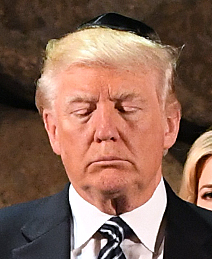
Donald Trump wearing a yarmulke

Yarmulke with face detail, President Trump by U.S. Embassy Tel Aviv is in the public domain, via Wikimedia Commons

A. “So I don’t think so,” said Ye (formerly Kanye West). Ye also recently said “the Jewish community, especially in the music industry…they’ll take us and milk us till we die.” He also stated that Jared Kushner only brokered the Abraham peace accords between Arab nations and Israel “to make money.”

B. “So I don’t think so,” said Democratic Los Angeles City Council President Nury Martinez. Martinez just resigned her seat following the release of audio tapes where she said (among many racist comments), referencing former state Assemblymember Richard Katz, the “judíos cut their deal with South L.A. They are gonna screw everybody else.”

C. “So I don’t think so,” said Doug Mastriano, Republican candidate for governor of Pennsylvania. Mastriano has attacked his Democratic Jewish opponent Josh Shapiro, who he said “attended one of the most privileged schools in the nation...sending his four kids to the same privileged, exclusive, elite school.” (Shapiro attended two Hebrew day schools). And Jenna Ellis, a senior advisor to Mastriano, stated that “Josh Shapiro is at best a secular Jew.”

D. “So I don’t think so,” said Michele Reynolds, Republican candidate for an Ohio state Senate seat. Reynolds previously wrote in a book geared toward business owners that “I learned from other cultures on how they spend their money. Have you ever heard the term ‘Jew you down’? This culture has a reputation for not wasting resources.” 

E. “So I don’t think so,” said Benjamin Netanyahu, former Israeli Prime Minister, who is running for reelection. “What’s wrong with that? He has a Jewish son-in-law and his daughter converted to Judaism. His children and grandchildren are raised as Jews.” Additionally, Netanyahu supported Trump’s criticism of the Jewish community, noting “I think it reflects his frustration, which happens to many politicians when they feel they don’t get all the credit they deserve for the things they did. By the way, I have to tell you, I’m not an exception. All of us belong to that.”

Click here for the answer.

Sukkah Symbols

Jews around the world are preparing for the celebration of Sukkot, which begins at sundown tonight. The most significant preparation is the building of a sukkah, a temporary outdoor structure, by many synagogues, schools, Jewish organizations, and individuals. The sukkah symbolizes the huts in which the Israelites lived during the Exodus, and also represents the structures that farmers lived in near their fields at harvest time. Many people decorate their sukkahs with items such as drawings by their children, colorful gourds, lights, or flowers. Which of the following is an example of a sukkah which had symbolic decorations?

Sukkah

A. A couple in Brooklyn collected books from the many Little Free Libary boxes that can be found all over “Brownstone Brooklyn” and built a sukkah with the books hanging from the bamboo covered roof, as a symbol of the problem of illiteracy in many of New York’s poorer neighborhoods. After the holiday they donated all of the books to a community center in Brownsville, a poverty-stricken neighborhood in Brooklyn.\

B. A Reform synagogue on the Upper East Side of Manhattan hung COVID face masks and used rapid test strips from the roof of their sukkah. The Rabbi explained that the sukkah decoration served as a symbol of the importance of testing, masking and vaccinations.

C. Two architects from Oakland purchased the cardboard signs held by homeless people begging on the streets and built a sukkah using the signs as sukkah walls, to symbolize and call attention to the problem of homelessness in the San Francisco Bay area.

D. An independent women’s minyan in Brookline, Massachusetts hung oranges from their sukkah roof. They chose an orange as this fruit is already used on many Passover seder plates, symbolically representing marginalized and excluded Jews, especially members of the LGBTQ community. The minyan organizers felt that extending the use of this seder symbol to the sukkah was another way of saying that nobody should be left out, or as they stated “Let no one be excluded as one of the seven ushpizin, the exalted guests, in our sukkah.”

E. A group of women in Georgia decorated their sukkah by covering the walls with “get well” cards sent to them by Herschel Walker, to symbolize, well, you know…

Click here for the answer.

Challah

Challah is the bread that is typically served by Jews on Shabbat as well as on holidays. The source of the word challah is a biblical command to separate a piece of bread dough as a tithe for the kohanim, the priests. This obligation is called hafrashat challah, or “separating the challah.” Challah is usually a braided loaf bread, but challah for the High Holidays is baked in a round shape. One explanation is that this symbolizes the circular nature of the seasons and the year. Another explanation says that the round challah resembles a crown, representing God as king. There are other less common traditions for enhancing the challah served on Rosh Hashanah and at the meal prior to fasting on Yom Kippur, including which of the following?

6 round loaves of challah

A. The challah is sometimes baked with dough laid on top that looks like wings, because on Yom Kippur people are seen as angels asking for forgiveness.

B. Some people place dough in the shape of a ladder on the top of the challah, symbolically indicating that on Yom Kippur God decides who will ascend or descend the ladder of life.

C. Some bakers include dough shaped like a hand on the top of the challah, symbolizing that we should be inscribed for a good year.

D. One tradition is to shape dough on top of the challah that looks like a bird, or even to bake the entire bread in the shape of a bird. This symbol references the verse in Isaiah: 31:5, “As hovering birds, so will the Lord protect Jerusalem.”

E. Many people place dough on top of the challah before Yom Kippur in the shape of an open mouth, with a circle around it and a diagonal line through it.

Click here for the answer.

The Shofar

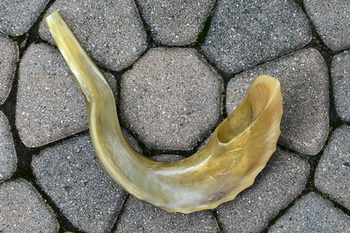
Jews around the world are listening to the blowing of the shofar during the holiday of Rosh Hashanah, and again on Yom Kippur. The shofar is typically a hollowed out ram’s horn, though other animals’ horns are also used, including goats, ibexes and kudus. While there is not a specific reference to the shofar in the Torah, it says in Leviticus Chapter 23 Verse 24, “In the seventh month, on the first day of the month, you shall observe complete rest, a sacred occasion commemorated with loud blasts.” What shofar-related event took place that made the Guinness Book of World Records?

Shofar

Shofar by slgckgc is licensed under CC BY 2.0

A. At the Reform Stephen Wise Temple in Los Angeles in 2018 a shofar blower set a record for the loudest recorded shofar blast, hitting 125 decibels (most shofar blasts are in the range of 90 decibels).

B. In 2014, the Partnership for Jewish Learning and Life sponsored the “Great Shofar Blowout” in Whippany, New Jersey, where 1,022 participants blew the shofar at the same time, breaking the old Guinness record of most shofar blowers by more than 300.

C. A Chabad rabbi set the record for the longest held tekiah gedolah note at Kfar Habad in Israel on Yom Kippur 2017. The blast lasted 1 minute and 55 seconds.

D. In 2012, at a synagogue in Safed (Tzfat), Israel, the record was set for the longest length shofar ever blown, a kudu horn measuring 34" long.

E. In 2021, a congregation in Jerusalem set a record for the most people infected with COVID-19 by a shofar blower. Within days of the Rosh Hashanah service, 53 people tested positive after the shofar blower, not knowing he was positive for the virus, unwittingly spread his germs throughout the congregation with his many tekiahs, shvarims, and teruahs, not to mention his outstanding tekiah gedolah.

Click here for the answer.