Wednesday, October 7th 2026   |

Jewish Trivia Quiz

from RASHI, RAMBAM and RAMALAMADINGDONG: A Quizbook of Jewish Trivia Facts & Fun by New Orleans native Mark Zimmerman

Laws & Judaism

Federal, state, and local authorities regularly consider and pass legislation that impacts Jews, as do authorities in other countries as well. What recent controversial legislation has gotten the attention of some in the Jewish community?
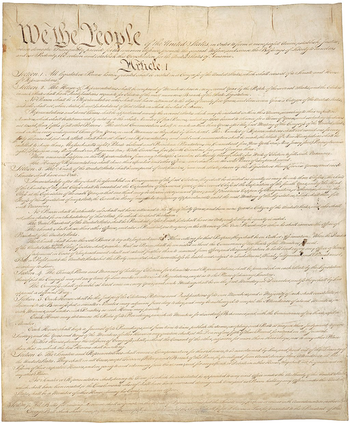
Constitution of the United States

Constitution of the United States of America (3679492168) from The U.S. National Archives is in the public domain, via Wikimedia Commons

A. The Supreme Court is apparently on the verge of overturning Roe v. Wade, the law guaranteeing women the right to an abortion. Most Jews and Jewish authorities support this right, as Judaism does not view life as beginning at conception. The state of Texas passed Senate Bill 8 last September, greatly restricting women’s access to abortion. The law bans most abortions after 6 weeks, as opposed to the standard set in Roe v. Wade, which generally allows abortion during the first 20 or so weeks of pregnancy. One Texas legislator, when speaking in favor of the law, stated, “It says in the Bible that God worked 6 days, and then he rested. With this law, abortion doctors can work 6 weeks, after which they must rest. Or be arrested.”

B. Many states have passed laws in recent months decriminalizing, and even legalizing, the use of marijuana. In Exodus 30:22-24, it says, “Adonai spoke to Moses, saying: ‘Take thou also unto thee the chief spices, of flowing myrrh five hundred shekels, and of sweet cinnamon half so much, even two hundred and fifty, and of kaneh-bosem two hundred and fifty...’ ” It has been suggested by some that kaneh-bosem is actually marijuana, and that this is the derivation of the word cannabis. YIVO (The YIVO Institute for Jewish Research) has just mounted an exhibit at their New York gallery about Jews and marijuana entitled, Am Yisrael High.

C. Along the lines of Florida’s so-called “Don’t Say Gay” law, a New York state senator representing Crown Heights in Brooklyn, home to many Chassidic communities, has introduced similar legislation. The Chassidic community wants to be able to control any discussions about homosexuality or other sexual identity issues in their day schools. Chassidic Jews and most other Orthodox Jews see homosexuality as a sin, based on Leviticus 18:22 which states, “Thou shalt not lie with mankind, as with womankind; it is abomination.” The proposed New York law is being referred to on social media as the “Don’t Pray Gay” law.

D. Many state and local authorities in the United States have passed laws banning the teaching of critical race theory (CRT). CRT views United States social institutions such as criminal justice, housing, and healthcare as embedded in racism, going back to the role of slavery in the history of this country. But opponents have expanded that view to criticize CRT, claiming that it casts all white people as racists. In Israel, the far-right Otzma Yehudit political party has introduced legislation based on anti-CRT laws, calling for a ban in Israel of any teaching in schools about the plight of the Palestinians, claiming that this is an effort to paint all Israelis as racist. Speaking about this issue, Fox News commentator Tucker Carlson recently said, “We shouldn’t be surprised that the same people who are calling you and me racist would also be calling Israelis racist.”

E. Many European countries have passed, or are considering legislation banning the kosher ritual slaughtering of meat. Some believe that this method of slaughter is not humane, and advocate for first stunning the animals, which is not allowed in kosher slaughter. In Belgium there has been much debate about this issue, with some municipalities passing such legislation while others have failed to do so, leading to a headline in the International Herald Tribune reading “Belgian Waffles on Kosher Meat.”

Click here for the answer.

Passover Gaffe

Passover 2022 is over, with a number of seders making the news. Vice president Kamala Harris and her husband Doug Emhoff hosted a seder at their residence at the Naval Observatory. Meanwhile many Ukrainian Jews celebrated seders in exile, while Jews world-wide added prayers for peace for the embattled country. In the United States, controversy surrounded a Passover product which was offered for sale before the holiday. What was that product?

Szyk Haggadah

szyk_Lo_Adonai by Karen is licensed under CC BY 2.0

A. Kosher Plus, a food supply company in Manhattan, offered many kosher for Passover products, including jams, candy, and tomato sauce. However, there was a mixup with their supplier in Indonesia who, based on language confusion, supplied a horseradish product that actually contained an extract from horses.

B. An alliance of young hipster Jews in Brooklyn called Broo-Jews offered a seder plate, created by one of their members, for sale on Etsy. But the plate was missing the section for Hazeret, a spot where most Jews place lettuce. Said a Broo-Jew spokesperson, “We’ve already got the Karpas slot for the parsley. No one I know could explain why there’s room for another green. Not even my rabbi. So we dumped it.” Some traditional Jews purchased the plate and were very surprised when they realized it was missing that section, and they posted angry reviews on Etsy’s website.

C. Impossible Foods created a gefilte fish based on their other non-meat products. The Impossible Gefilte, like their other products, closely mimics the flavor of the original product, yet is vegan and kosher/pareve. However, the company received criticism when they tweeted, “Impossible gefilte fish–no catfish were killed to create this product.” Apparently the person who wrote the tweet was not aware of what fish are typically used in gefilte fish, not to mention that catfish is not a kosher fish.

D. Kosher-Dekel, a New Jersey based company, offered a peel-and-stick product, designed to be easily applied to kitchen countertops, making the counters usable during Passover. The product adheres with a glue similar to that on Post-It notes, making removal extremely easy. Except that an error by the manufacturer of the product led to many consumer being unable to remove the paper, or ending up with torn shreds still sticking to countertops.

E. WonderWords, a greeting card company, produces a line of Jewish-themed cards under the name Schmooze Views. Among the cards they placed on store racks this year was a Passover card which on the outside read, “May your Passover joy rise, though your matzah should not.” However, there was an unnoticed  printing error, where the inside message on the card was swapped with one on an Easter greeting card. Thus, the inside message, instead of saying “Rejoice together on Passover,” showed a picture of Jesus with the message, “Rejoice. He is risen.”

Click here for the answer.

Marine Le Pen

French President Emmanuel Macron won reelection in a closely contested contest against Marine Le Pen. Le Pen, leader of the far-right National Rally Party, has been a controversial figure in French politics for many years, following in the footsteps of her father Jean-Marie Le Pen. She has alarmed many French Jews for a number of her views. She supports the banning of ritual meat slaughter (though she says kosher meat could be imported). And she has argued that France was not responsible for the round up and deportation of thousands of French Jews to Auschwitz. She claims that the French Vichy government did not represent France but rather was part of German authority, a position that French Jews, and Emmanuel Macron, reject. During the recent campaign, Le Pen was criticized for sending a “dog whistle” to supporters that led to criticism from the Jewish community, even including a Jewish group affiliated with her National Rally Party. What action did she take that provoked criticism?

Marine Le Pen

Marine Le Pen, Leader of the French National Front by Global Panorama is licensed under CC BY-SA 2.0

A. Le Pen raised her arm to the sky in what looked like a Nazi salute at a rally in the French city of Troyes, one of her strongholds. Le Pen claimed that she was only pointing to the people sitting in the balcony, but many in the audience responded with the same arm gesture.

B. Le Pen spoke at a meeting of the National Rally Party. In her talk she espoused support for the state of Israel. But following her comments, she raised her hand with fingers outstretched and her thumb closed across her palm, after which she closed her fingers over the thumb. This represents the international symbol for danger, a discreet code that originally developed as a way for women to call for help subtly when in a dangerous situation. But the Jewish community felt that this was a "dog whistle" to anti-Semites, telling them she was “too afraid” to publicly state her real views on Israel. Le Pen claimed she was simply waving goodbye to the meeting attendees.

C. Le Pen issued campaign posters in which she is shown to be offering the “OK sign” with her left thumb and finger. The gesture, which she claimed was innocuous, is in fact considered to be a white supremacist signal by the Anti-Defamation League among others, as the fingers are seen to be presenting as a “W” and a “P,” standing for White Power.

D. At a rally in Marseille, Le Pen raised her arm with her first finger and pinkie raised upward in what is known as the Hook’em Horns symbol. This was seen by some in the Jewish community as a reference to the anti-Semitic trope that Jews have horns, meant to incite anti-Semitic feelings among her right-wing supporters.

E. Le Pen addressed a Star Trek convention in Lyon, where she raised her hand with spread fingers in a Spock-like Vulcan salute. But many observers claimed that she was sending a “dog whistle” championing the Kohanim, the Jewish Priestly community. Many Jews fear that this signal indicated her support for reinstituting the duchaning ceremony, where the Leviim must wash the hands and feet of the Kohanim.

Click here for the answer.

Passover

Jews world-wide celebrated Passover this weekend. Many held family seders, some joined with friends, and others participated in larger events with their synagogues or other Jewish organizations. Some Jews are celebrating the holiday in more luxurious ways, such as at Magical Passover in Orlando, the Luxury Pesach at Paradisus Isla Mujeres in Cancun, and Amazing Pesach Spain Olam. At what Passover event was it once noted in the press that “It was estimated that the diamonds worn… were worth hundreds of thousands of dollars”?

Passover Seder Table

A. A community Passover seder held at the Wilshire Boulevard Temple in Los Angeles in 1961 which was attended by, among others, Samuel Goldwyn, David Sarnoff, Adolph Zukor and Laurence Tisch.

B. A Passover seder hosted in 1953 by Dorothy Schiff at the Plaza Hotel in New York. Schiff, granddaughter of financier Jacob Schiff, was the owner and publisher of the New York Post. Guests included Caroline and Harry Frank Guggenheim, Marian and Jacob Javits, and actress Shelly Winters.

C. A community dinner held at Congregation Beth Sholom in Long Island’s Lawrence, New York in 1967. The Orthodox synagogue held the event a couple of weeks before Passover to raise money for Tomchei Shabbos of the Five Towns which provided free matzah and other Passover food for needy residents.

D. Comedian and actress Tiffany Haddish is half-Jewish through her father, an Eritrean Jew. In 2019 she celebrated her bat mitzvah prior to the release of her Netflix special, Black Mitzvah. Last week Haddish held a pre-Passover seder, including her Girls Trip co-stars Regina Hall, Queen Latifah, and Jada Pinkett Smith.

E. The news story was about the annual Lower East Side Passover Parade, in this case specifically referencing the 1904 event which some said outshone New York’s 5th Avenue Easter Parade.

Click here for the answer.

Madison Cawthorn

Congressman Madison Cawthorn of North Carolina is in the news for his recent comments that he witnessed leaders in his party using cocaine, and that he had been invited to orgies by older prominent Republicans. Cawthorn has been a major supporter of President Donald Trump and Trump’s efforts to overturn the 2020 election. Cawthorn spoke at Trump’s January 6 rally before the insurrection and he later said to a Republican Party group that “if our election systems continue to be rigged and continue to be stolen, then it’s going to lead to one place—and it’s bloodshed.” Cawthorn recently attended the  American Friends of Lubavitch event honoring the 120th anniversary of the birth of the Rebbe Menachem Mendel Schneerson. At that event Cawthorn referenced Queen Esther and quoted from Proverbs, and also stated that “it is the duty of America to help provide assistance and protect the nation of Israel because I truly believe you are the chosen people of God.” Cawthorn previously tweeted about a place he visited, saying, it “has been on my bucket list for a while, did not disappoint.” What place was he referencing?

Madison Cawthorn by Gage Skidmore is licensed under CC BY-SA 2.0

A. The Western Wall in Jerusalem.

B. The United States Holocaust Memorial Museum in Washington, DC.

C. The North Carolina Museum of Art Judaic Art Gallery in Raleigh.

D. The Auschwitz-Birkenau Memorial and Museum in Poland.

E. Eagle’s Nest, which was Adolf Hitler’s vacation residence.

Click here for the answer.

Will Smith

Will Smith remains in the headlines following his smack of comedian Chris Rock at the Academy Awards. Smith announced that he has resigned from the Academy of Motion Pictures Arts & Sciences as he awaits the Academy’s review of his actions and possible disciplinary measures. Smith was the winner of the Simon Wiesenthal Center’s 2009 Humanitarian Award. He has been to Israel on a number of occasions, most recently in 2017 when he was filming scenes for the movie Aladdin. On a trip in 2016 Smith referenced Israeli actress Gal Gadot when he said of Israeli women, “Those are all over Tel Aviv... Wonder Women everywhere.” Whom did Will Smith meet with in Israel on another visit to the country?

Will Smith

TechCrunch Disrupt San Francisco 2019 - Day 1 by TechCrunch is licensed under CC BY 2.0

A. He met with Menachem Begin’s son Benny, and visited the Menachem Begin Heritage Center in Jerusalem. After watching a film about Begin and Anwar Sadat, Smith said, “Now I know what and who I want to be...someone who can reach across the aisle to my enemies and offer my hand in peace.” 

B. He met with David Ben-Gurion’s grandson Yariv Ben-Eliezer, and visited the Ben-Gurion House in Tel Aviv. After watching a film about Ben-Gurion and the founding of Israel, Smith said, “Now I know what and who I want to be...an inspiration to my people as he was to his people.” 

C. He met with Yitchak Rabin’s daughter Dalia, and visited the Yitchak Rabin Center in Tel Aviv. After watching a film about Rabin’s life, Smith said, “Now I know what and who I want to be...a soldier for peace.” 

D. He met with Moshe Dayan’s daughter Yael, and visited the Moshe Dayan exhibit at the Israel Museum in Jerusalem. After watching a film about Dayan and the Six Day War, Smith said, “Now I know what and who I want to be...a hero for my people.” 

E. He met with Benjamin Netanyahu, and visited the jail cell that many Israelis expect to see Netanyahu living in. After the meeting, Smith said, “Now I know what and who I want to be...a man who is the leader of his people for most of his adult life and then goes on trial for doing some terrible things, whether it’s fraud, breach of trust, bribery, or simply slapping someone.”

Check it out on our weekly quiz.

The Academy Awards

The Academy Awards ceremony took place this past weekend. Among the Jewish nominees were actor Andrew Garfield, film editors Myron Kerstein & Andrew Weisblum, documentary filmmaker Jay Rosenblatt, director Stephen Spielberg, and Maggie Gyllenhaal, who was nominated for her adapted screenplay, The Lost Daughter. Garfield played Jonathan Larson, the Jewish playwright, composer and lyricist, in the movie Tick Tick Boom, directed by Lin-Manuel Miranda. The film tells the story of Larson, best known for writing the musical Rent, which had its first off-Broadway preview on the day Larson tragically died as a result of an aortic dissection. A scene in Tick Tick Boom takes place in a diner where actors Howard McGillin (who starred in Phantom of the Opera on Broadway) and Chuck Cooper (a Tony winner in The Life) place a food order with Larson, who is working as a waiter. What is the dialog of that scene?

Academy Award statuette

Academy Award Winner by Davidlohr Bueso is licensed under CC BY 2.0

A. McGillin’s character asks Larson, “Do you have any of those wonderful Jewish crepes?”, to which Cooper’s character interjects, saying “It’s blintzes, dear. They call them blintzes.”

B. McGillin’s character asks Larson, “Do you have any of those wonderful rugeluhs?”, to which Cooper’s character interjects, saying “It’s rugelach, dear. They call it rugelach. With a CHHHHH.”

C. McGillin’s character asks Larson, “Do you have any of those wonderful Jewish rolls?”, to which Cooper’s character interjects, saying “It’s bagels, dear. They call them bagels.”

D. McGillin’s character asks Larson, “Do you have that any of that wonderful Jewish bread?”, to which Cooper’s character interjects, saying “It’s challah, dear. They call it challah bread.”

E. McGillin’s character asks Larson, “Do you have any of that wonderful Jewish bread?”, to which Cooper’s character interjects, saying “It’s holly, dear. They call it holly bread.”

Click here for the answer.

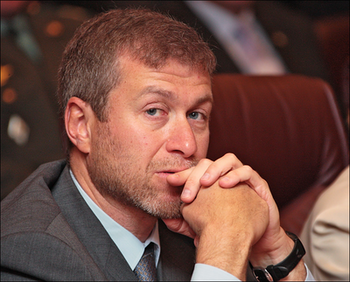
Roman Abramovich

The United States and other countries have placed sanctions on a number of Russian oligarchs, who are seen as major financial and political supporters of Vladimir Putin. Among the oligarchs is Roman Abramovich, the multi-billionaire owner of the Chelsea Football Club, one of the United Kingdom’s top soccer teams. Abramovich is Jewish and also holds Israeli citizenship. Just weeks ago he made a $3 million donation to Yad Vashem, Israel’s Holocaust Memorial Museum. On February 6, Yad Vashem chairman Dani Dayan, as well as Ashkenazi Chief Rabbi David Lau and many other Israeli leaders, sent a letter to the United States Ambassador to Israel asking that Abramovich not be sanctioned because of “his contribution to the Jewish people.” But on March 10, Yad Vashem issued a statement saying, “In light of recent developments, Yad Vashem has decided to suspend the strategic partnership with Mr. Roman Abramovich.” Many of the oligarchs have put some of their money into superyachts, which in some cases have been seized as part of sanctions. Both of Abramovich’s superyachts are currently cruising with no clear destination, hoping to avoid seizure. What are the names of Abramovich’s two superyachts (each of which is worth at least $600 million)?

Russian Oligarch Roman Abramovich

Abramovich Chukotka.jpg by Marina Lystseva is licensed under GNU Free Documentation License

A. Andromeda and Cygnus.

B. Solaris and Eclipse.

C. Exodus and Deuteronomy.

D. Beluga and Balalaika.

E. Minnow and Jenny.

Click here for the answer.

Airbnb

Since Russia invaded Ukraine, Airbnb users have booked rooms in Ukraine with a value of more than $2 million. This represents more than 60,000 nights of rental of Ukrainian houses, apartments and guest rooms. Yet none of the renters will be staying in those dwellings. In fact, these rentals are a way that people all over the world are funneling donations to Ukrainians who in normal times would be renting out their properties. And to assist in this effort Airbnb is waiving all guest and host fees for these unusual rentals. One renter shared the online conversation she had with her Ukrainian “host,” who wrote, “The world is not without good people. Now I have tears in my eyes and I cry with happiness in the first of these terrible days. Thank you very much. I will be happy to hug you when we meet in peacetime.” Airbnb was involved in a different action in 2018, leading to criticism by some in the Jewish world. What was the incident that led to criticism of the corporation?

Toronto Airbnb office

AirbnbToronto5.jpg by Raysonho is licensed under CC0 1.0 Universal

A. Airbnb was criticized when it was learned that property renters in some Arab nations, including Saudi Arabia and Bahrain, were allowed to refuse rentals to Jews. The renters stated that since Israel did not have diplomatic relations with their governments, they should be allowed to make that choice. But the company was criticized for letting these renters violate the company’s terms of agreement, which forbid any religious discrimination. Airbnb officials apologized for their error, but did confirm that renters in these countries could refuse Israelis as opposed to Jews.

B. Airbnb banned the rental of Jewish-owned properties in the West Bank, but not properties owned by Palestinians. A company statement read, “Many in the global community have stated that companies should not do business here because they believe companies should not profit on lands where people have been displaced.” Yet there were no such restrictions in other areas of occupied or disputed land, such as in Russian-occupied Ukraine.

C. Airbnb allowed Orthodox Jews to charge triple the standard cleaning fee, which property owners said was to re-kosher their kitchens after guests departed, as they could not be sure the renters followed the rules of kashrut. But this charge violated the normal terms of agreement between renters and the corporation, which limits the amount that can be charged for cleaning. A company official stated that “we erred in viewing this type of cleaning as within the bounds of our 5-step enhanced cleaning process and we will refund any customers who were charged these extra fees.”

D. Following a period of heightened tension between Israelis and the Palestinians in Gaza, Airbnb temporarily allowed Israeli Jews not to rent to Israeli Arabs and vice versa. While the company claimed that it was being sensitive to the current political situation, many Israeli Arabs and Jews protested that the decision fed into prejudices, rather than lowering tension. And there was no similar policy in other areas of religious conflct, such as rentals between Hindus and Muslims in India.

E. Airbnb was criticized by leaders of a number of synagogues in New York City when it was learned that synagogue members had rented out their valuable High Holiday seats through the company’s website. One listing read, “Comfortable rental for 4. Prime location within walking distance of the bima. Central air and heat, street parking, wifi, smoke alarms  dedicated prayerspace and security camera on premises.” Many synagogues were not aware of these rentals until after services ended, when cleaning crews showed up and began wiping down specific pews and prayer books where the renters had sat during services.

Click here for the answer.

The Supreme Court

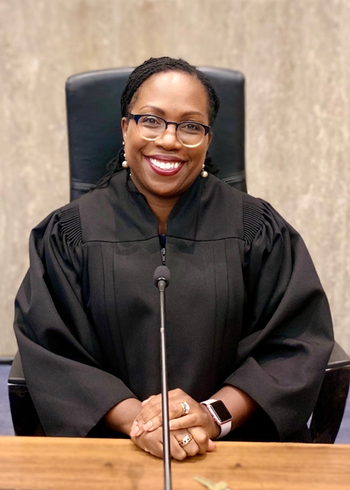
President Joe Biden nominated Ketanji Brown Jackson to replace retiring Justice Stephen Breyer on the Supreme Court. The Supreme Court has weighed in on many cases over the years which have directly affected the Jewish community, including Greece v. Galloway (which upheld the right of governments to open public meetings with a religious prayer) and Shaare Tefila Congregation v. Cobb (wherein the Court ruled that a synagogue that was desecrated with anti-Semitic graffiti could sue the perpetrator for “racially discriminatory interference with property rights.” A lower court had ruled that this so-called “white-on-white” crime was not a form of racial discrimination). In 1954, police in Springfield, Massachusetts, arrested Howard Chernock, owner of the Crown Kosher Super Market, following purchases made by the police at the store on three Sundays in violation of the state’s Blue Laws. The Blue Laws, first enacted in 1653, stated that “whoever, on the Lord’s day, keeps open his shop, warehouse or workhouse, or does any manner of labor, business or work, except those of necessity or charity, shall be punished by a fine of fifty dollars.” The Massachusetts law did allow the market to open on Sunday, but only until 10:00am. Chernock was fined, but in response Chernock and some of his customers sued Raymond P. Gallagher, the Springfield police chief, claiming that the law violated the Establishment Clause of the First Amendment (basically, that it violated their religious rights). The District Court ruled in Chernock’s favor, and Chief Gallagher appealed the case to the Supreme Court. What was the result of that appeal, in the case of Gallagher v. Crown Kosher Super Market of Massachusetts?

Official portrait of Judge Ketanji Brown Jackson

Official portrait of Judge Ketanji Brown Jackson by H2rty is licensed under CC BY-SA 4.0 via Wikimedia Commons

A. The Supreme Court upheld the District Court ruling in a 6-3 decision, noting that though the State might legally be able to require a day of no commercial operations, the Blue Laws clearly were based on the Christian view of Sunday as the Lord’s day of rest rather than a non-religious view of the best interests of the State.

B. The Supreme Court refused to hear the case. While the Court does not announce why it chooses not to take up any particular case, it was speculated that the Court saw absolutely no flaw in the ruling of the District Court, so left their ruling in place that the Blue Laws were unconstitutional.

C. The Supreme Court overturned the District Court ruling, stating in a 7-2 decision that, despite the original religious basis for the Blue Laws, these restrictions no longer had religious intent, and therefore the state had a right to declare a commercial day of rest.

D. The Supreme Court decided against Chernock and his customers, noting that since the Massachusetts law allowed him to operate until 10:00am, it was not valid to claim that there was a religious preference given to Christian theology. As a result, many states whose Blue Laws allowed no opening hours on Sunday changed their laws to allow very limited operating hours, but this ultimately led to hours being extended more and more, eventually leading to the revocation of most Blue Laws.

E. The nine member Supreme Court ruled 8-2 to uphold the Blue Laws, with the seven non-Jewish justices (Earl Warren, Hugo Black, Stanley Forman Reed, William O. Douglas, Robert H. Jackson, Harold Hitz Burton, and Tom C. Clark) all voting in favor, while the two Jewish members of the court (Felix Frankfurter and Arthur Goldberg), voted 1 in favor, 2 against, upholding the classic model of “2 Jews, 3 opinions.”

Click here for the answer.