Wednesday, October 7th 2026   |

Jewish Trivia Quiz

from RASHI, RAMBAM and RAMALAMADINGDONG: A Quizbook of Jewish Trivia Facts & Fun by New Orleans native Mark Zimmerman

Ringo Starr

RASHI, RAMBAM and RAMALAMADINGDONG will be on vacation next week, so this week’s question will have to satisfy you for two weeks. If you find yourself starved for more Jewish trivia questions and answers, you can download our trivia books - just click here.

✡  ✡  ✡  ✡  ✡  ✡  ✡  ✡  ✡

Ringo Starr was just inducted into the Rock and Roll Hall of Fame. Everyone knows of Brian Epstein’s role in discovering and promoting the Beatles. What role did another Jew play in Ringo’s earlier life that contributed to his future success as a Beatle?
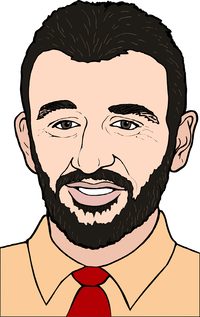
Ringo Starr

A. Prior to joining the Beatles, Ringo was the drummer for another Liverpool band, Rory Storm and the Hurricanes. Rory Storm, whose real name was Richard Stern and who was Jewish, is credited with giving Ringo the professional career start that eventually led him to the Beatles.

B. In 1946, Ringo, then known as Richard Starkey, received as a birthday gift from Eleanore Goldschmidt, his Jewish next door neighbor, a toy Dick Tracy decoder ring. This was the first ring he ever owned, and he went on from there to develop a love of rings which eventually led to his adopted name of Ringo.

C. Growing up, Ringo was friends with Manfred Mann (whose real name was Manfred Lubowitz). Ringo was invited to Manfred’s bar mitzvah, the first time that Ringo had ever been in a synagogue. At the reception, everyone (including Ringo) danced a hora while the band sang the a capella Chassidic chant Ai Diddy Die, Diddy Die. At school the next week, Ringo told his friend Manfred how much he enjoyed dancing to that doo-wop “diddy diddy” song. Five years later, inspired by that memory, Manfred wrote the song "Do wah diddy diddy dum diddy do" and asked Ringo to play drums on the recording. Rory Storm heard the record and invited Ringo to join his band, which eventually led to Brian Epstein asking Ringo to replace Pete Best in the Beatles.

D. As a child, Ringo suffered from many serious health problems. At age six he developed an infection as a result of appendicitis, which eventually left him in a coma. Because of England’s system of socialized medicine, his family was able to obtain medical care at the Royal Liverpool University Hospital despite their inability to afford the expensive treatment. Ringo’s parents credit Dr. William Shearer (who was Jewish), the hospital’s Director of Pediatric Care, with saving their son’s life. The Beatles song With a Little Help From My Friends, sung by Ringo and which starts with a “shout out” to Billy Shears, is an homage to Ringo’s doctor.

E. Ringo’s parents had divorced when he was five. When he was thirteen, his mother married a Jewish man, Harry Graves, who was a music fan. Graves introduced Ringo (then known as Ritchie) to the music of performers including Dinah Shore, Sarah Vaughan and others, and on Christmas Day 1957, he gave his step-son his first drum kit, which included a snare drum, a bass drum, and a cymbal fashioned from a garbage can lid.
Click here for the answer.


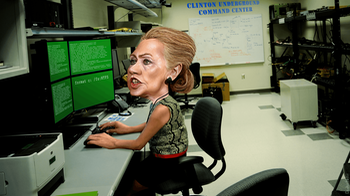
Hillary

In 2008, at a fundraiser honoring Rahm Emanuel, Hillary Clinton described her relationship with him using a Jewish reference. What did Hillary say?

Hillary Clinton.

A. You know, Rahm and I have been through a lot together. Now, there’s a word my family always used when I was growing up to describe the relationship you have with someone who understands where you come from, your roots, your values. That’s the word we used in the Rodham household in Park Ridge, Illinois. The word was…“landsman.” So, Rahm, we’re proud to consider you a landsman, an honorary member of the Rodham clan.

B. You know, Rahm and I have been through a lot together. Now, there’s a word my family always used when I was growing up to describe someone who always did the right thing, who always put others first, who always showed caring and compassion. That’s the word we used in the Rodham household in Park Ridge, Illinois. The word was...“mentsch.” So, Rahm, we’re lucky to have someone as special as you in our world, someone whose very being defines the word mentsch.

C. You know, Rahm and I have been through a lot together. Now, there’s a word my family always used when I was growing up to describe the feeling you have when someone you care deeply about does well in life. That’s the word we used in the Rodham household in Park Ridge, Illinois. The word was…“naches.” So, Rahm, I take great pride, great naches, from your success.

D. You know, Rahm and I have been through a lot together. Now, there’s a word my family always used when I was growing up to describe the relationship you have with someone who has shared triumph and hardship with you. That’s the word we used in the Rodham household in Park Ridge, Illinois. The word was...“mishpucheh.” So, Rahm, we’re lucky to have you as part of our family.

E. You know, I’ve been friends with Rahm’s father Gazzi, for many years. I remember attending Rahm’s bar mitzvah, and how moving it was when I heard the words, “Ya’amod, Rahm ben Gazzi ha-Maftir.” I saw the look of pride in Gazzi’s eyes at that moment as his son was called up. Rahm ben Gazzi. Rahm ben Gazzi. I knew that moment would always stay with me, and even now those words follow me every day. Rahm ben Gazzi. In my dreams (and nightmares) I still keep hearing those words. Ben Gazzi. Ben Gazzi.

Click here for the answer.

Iran & Israel

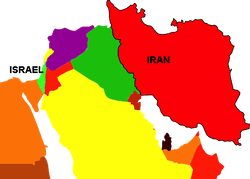
In 1998, despite the fact that Israel was called an “illegal state” and a “parasite” by Iranian president Mohammad Khatami, there was a controversy when it was reported that Israel and Iran were in fact involved in some type of business dealings. What was the controversy?

Map-Israel and Iran

A. California pistachio growers were unhappy that Israel was importing most of its pistachios from Iran. Israel claimed that it was importing its pistachios from England and Germany, which was suspicious as these countries do not produce pistachios. And as Israeli wholesaler Moshe Mussafi stated, “It’s no secret. The taste [of the Iranian nut] is better.”

B. Israel was reported to have sold antitank guns and shells to Iran for use against the regime of Saddam Hussein of Iraq. Israel denied the claim, but Iraqi newspapers printed pictures of unexploded shells launched from Iran toward Baghdad that had Hebrew writing on them.

C. While Israel had been a major importer of Iranian oil under the regime of the Shah, it was assumed that this trade had ended with the Iranian revolution in 1979. However, the New York Times reported in April 1998 that despite the Ayatollah Khomeini’s reference to Israel as the “Little Satan,” he had allowed Israel to continue purchasing Iranian oil as Israel paid with American dollars, which were very valuable to the Islamic government of Iran.

D. Iran was the world’s largest producer and exporter of pomegranates. However, in 1998, the crop suffered from a disease known as Alternaria Fruit Rot, which decimated the harvest. Concerned that their enemy Iraq, the second largest exporter of pomegranates, would overtake the market, Iran secretly purchased 10,000 kilograms of Israeli pomegranates which they relabeled as Iranian in order to fulfill their outstanding orders.

E. In July 1998, a strike by Mifal Ha-Ashpah, the Israeli waste removal company, left garbage piling up in the streets, causing a serious health problem in the hot summer weather. The rat population proliferated, leading to the threat of epidemic diseases spread by the rats. Benjamin Netanyahu, serving in his first term as Israeli Prime Minister, secretly met with Iranian president Mohammad Khatami in Aqaba, Jordan, to arrange for the purchase of 20,000 Persian cats to use for the control of the rats. The cats were flown into Israel on board an El Al flight dubbed “Operation El Ali Katz.”

Click here for the answer.

Reverend Theodore Parker & Passover

Four Questions is so passé. Add today’s question to your seder for Five Questions. Then, click here to obtain a free copy of RASHI, RAMBAM and HAGGADAH-LAMADINGDONG: A Quiz Haggadah of Jewish Trivia Facts & Fun and you will have another twenty five questions, for a total of Thirty Questions.

Had He led us to the Promised Land and not given us Thirty Questions, it would not have been enough. Only when you add RASHI, RAMBAM and HAGGADAH-LAMADINGDONG to your seder can you say Dayenu.

✡  ✡  ✡  ✡  ✡  ✡  ✡  ✡  ✡

The Reverend Theodore Parker, a renowned abolitionist in the 1800's, inspired Abraham Lincoln and Dr. Martin Luther King, Jr., among others, with his writings and speeches. What statement did Reverend Parker make in reference to the Jews and Passover?

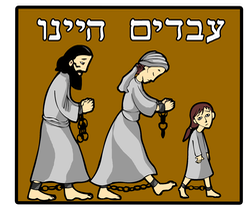
Avid Hayeenu. We were slaves.

A. Representative James Buffinton of Massachusetts invited Revered Parker to deliver the opening prayer for the House of Representatives in April of 1860, as many southern states were discussing secession. Said Parker to Congress, “As our Jewish brothers and sisters gather together this week to observe Passover and celebrate the freedom of their ancestors, let us all pray today for the freedom of our Negro brothers and sisters in the south. I call on all of you, our Representatives of this great nation, to join with me in the words of the spiritual. Let my people go. Let my people go. Let my people go. Amen.”

B. In an 1860 meeting with President Lincoln to discuss the issue of slavery, Reverend Parker said, “Mr President. I stand with you in working to combat the evils of slavery. In the Old Testament, we read of the plight of the Israelite people and their long march to freedom, crossing the Red Sea, traversing the Sinai Desert, and finally crossing into the Promised Land. I will work with you to help the Negroes of the south on a similar journey. However, I beseech you to provide them loaves of bread for their journey. This matzah is just too constipating.”

C. Reverend Parker was not involved in the anti-slavery movement until he was invited to a Passover seder by Rabbi David Einhorn, a leader of the reform movement in the United States and a staunch abolitionist. On the Sunday following the seder in 1859, Reverend Parker delivered a sermon at his church stating, “Having recently heard the story of the Jewish people bravely crossing the Red Sea to freedom, I recognize that we all must take responsibility for those who are enslaved today. Therefore I am committing myself to a life devoted to the abolition of slavery. I will not rest until every slave is free to cross the Mason-Dixon line, our symbolic Red Sea.”

D. Delivering a sermon to his congregants at the 28th Congregational Society of Boston in 1858, Parker said, “Just as the wrath of the Lord rained down upon the Pharaoh in Egypt to bring freedom to the Israelite people, so shall the Lord in our time bring his wrath upon the slave masters and those who would lead our country to war to protect this evil institution.”

E. In his book, Life and Correspondene of Theod. Parker, Minister of the 28th Congregational Society, Boston, Parker wrote, “I doubt not that they [the Jews] did sometimes kill a Christian baby at the Passover.”

Click here for the answer.

Haggadot

This week’s question comes from RASHI, RAMBAM and HAGGADAH-LAMADINGDONG: A Quiz Haggadah of Jewish Trivia Facts & Fun. Click here to find out how you can obtain your free copy.

Your seder guests can recite the Four Questions in their sleep. In fact, they probably are sleeping at your seder. With RASHI, RAMBAM and HAGGADAH-LAMADINGDONG, you get 25 more questions and answers guaranteed to keep your guests awake no matter how late your seder drags on.

✡  ✡  ✡  ✡  ✡  ✡  ✡  ✡  ✡

Which of the following are all real Haggadot?

Haggadah

A. Sixty-Minute Seder, Reudor's the Doodled Family Haggadah, and Fifty Shades of Haggadah.

B. Sammy Spider's First Haggadah, Haggadah in Another Dimension, and The Celebrated Jumping Frog of Calaveras County Haggadah.

C. Haggadah Good Feeling About This, So Called Seder: A Hip Hop Haggadah, and Ina Gada Haggadah.

D. Uh! Oh! Passover Haggadah, The Un-Haggadah, and Haggadah Be Me.

E. Haggadah for Jews & Buddhists, Haggadah for the Liberated Lamb, and Haggadah for Stoners.

Click here for the answer.

San Diego

RASHI, RAMBAM and RAMALAMADINGDONG welcomes readers of the San Diego Jewish World, which is now publishing our weekly Jewish Trivia quiz. As a shout-out, here’s a question about San Diego Jewish history.

✡  ✡  ✡  ✡  ✡  ✡  ✡  ✡  ✡

In San Diego in 1888, Congregation Beth Israel hired its first rabbi, Samuel Freuder. What career move did Rabbi Freuder subsequently make that he later considered a mistake?

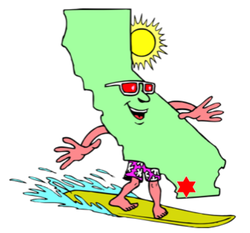
California Map featuring San Diego.

A. In 1889, Rabbi Freuder converted to Christianity and became a missionary. Twenty years later, having failed in that calling, he returned to Judaism and wrote, “If ever I preach in any Christian pulpit again, may my right hand forget its cunning and may my tongue cleave to the roof of my mouth.”

B. At the start of World War I, Rabbi Freuder joined the military as a chaplain, originally serving at Naval Base San Diego. However, he found that anti-Semitism was so rife in the Navy that even the Christian chaplains would have nothing to do with him. As a result, he resigned his commission and left the Navy after only one year of service.

C. In 1901, Rabbi Freuder left the rabbinate and opened a kosher fish restaurant, the first kosher establishment in southern California. However, he regretted this decision when the Lox and Sable Conservation Society launched a campaign against his restaurant, claiming that his smoking of these species was cruel, inhumane, and too salty.

D. Rabbi Freuder was a friend of Samuel Goldwyn, the movie producer, both having been born in Nemet Keresztur in Hungary. Rabbi Freuder moved to Los Angeles from San Diego and partnered with Goldwyn to create Goldwyn Pictures. Freuder, however, could not adjust to Hollywood culture and sold his partnership back to Goldwyn. Goldwyn Pictures eventually became Metro-Goldwyn-Mayer, and Rabbi Freuder, who returned to the rabbinate, stated that “I don’t regret leaving Hollywood. I’m just sorry I didn’t hold onto my stock for a few more years.”

E. The Panama-California Exposition, a World’s Fair, was hosted by San Diego in 1915-1916. Rabbi Freuder was hired by the Los Angeles Jewish Community Council to coordinate an exhibit on Jewish life in southern California. However, when Exposition organizers learned that this “Goldeneh Medinah California” exhibit would not be open on Friday nights and Saturdays, they canceled the exhibit despite Rabbi Freuder’s efforts to explain to them the importance of Sabbath observance in the Jewish community.

Click here for the answer.

Selma

Many rabbis, most notably Rabbi Abraham Joshua Heschel, participated in the marches and other civil rights movement activities in the 1960’s. The wearing of a yarmulke was adopted by many black marchers, necessitating the special delivery of 1000 yarmulkes for the march from Selma to Montgomery 50 years ago this month. What did the black marchers call their yarmulkes?

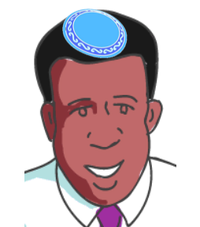
African-American wearing yarmulke

A. Afro caps.

B. Freedom caps.

C. The Rab-beret.

D. Heschel Hats.

E. My brother’s kippas.

Click here for the answer.

Happy Purim

A Purim bonus question. Chag Sameach!

✡  ✡  ✡  ✡  ✡  ✡  ✡  ✡  ✡

Ashkenzaic Jews remember Haman's evil by making noise with a greggar whenever Haman's name is said at the Megillah reading. How do Moroccan Jews note Haman's wickedness?

Megillah reading.

A. They make a three cornered pastry similar to a hamantashen, but it is filled with red strawberries, representing the blood of Haman.

B. Whenever Haman's name is read in the Megillah, Moroccan Jews ululate, emitting the high-pitched sound that is common in Arabic cultures as a sign of great emotional intensity.

C. They bake a bread which includes two hard boiled eggs, representing Haman’s eyes, which they proceed to pluck out.

D. They tie closed the top and bottom of a kaftan after filling it with Hamanis, which are traditional triangular Moroccan Purim candies. They hang the kaftan from a pole, and children strike it with small bats, releasing the candies for everyone to enjoy (similar to a Mexican piñata).

E. They dress up as Bob Hope, Bing Crosby, and Dorothy Lamour and sing We're Off on the Road to Morocco.

Click here for the answer.

Leonard Nimoy, z”l

At one point in his life, Leonard Nimoy scheduled a speaking tour, but a number of synagogues then canceled his scheduled appearances. What was their objection?

Vulcan hand gesture

A. Nimoy produced and starred in the movie Never Forget, based on the true story of Mel Mermelstein, a Holocaust survivor who confronted a Holocaust-denying organization in court. Nimoy was booked to speak in many synagogues to publicize the movie, but when some Orthodox synagogues learned about the Vulcan hand greeting based on the Priestly Blessing of the Kohanim, they took offense at this secular use of the religious ritual by Nimoy and canceled his appearances.

B. Nimoy, an accomplished photographer, published a book of his photographic work entitled The Shekhina Project, which explored the feminine side of G-d. He was “intrigued with scriptural mythology that tells us that G-d created a divine feminine presence to dwell amongst humanity…” The book featured photographs of women wearing tefillin (phylacteries) and nothing else. A number of synagogues had booked Nimoy for the accompanying book tour, but canceled the appearances when they learned about these photographs, which they considered offensive.

C. Nimoy was a frequent speaker at synagogues, where he shared stories of his early exposure to anti-semitism in Boston, his later embrace of Judaism, and his professional connections to the Jewish people, including playing Golda Meir’s husband in the TV movie A Woman Called Golda, his performances as Tevye in Fiddler on the Roof, and his portrayal of Holocaust survivor Mel Mermelstein in a film which Nimoy also produced, Never Forget. But in 2014, Nimoy reunited with William Shatner to film a Star Trek-themed Volkswagen commercial, touting the auto company’s electric cars. A number of synagogues canceled speaking engagements they had booked with Nimoy in objection to his participating in the commercial for the German car company.

D. Nimoy was on a book tour for his first autobiography, I Am Not Spock, and was scheduled to speak at a number of synagogues. However, many synagogues canceled his talk when one of the passages in his book was publicized. In the book, Nimoy mentioned that one of his favorite meals was chopped tribble liver, which he first tasted when filming the iconic Star Trek episode The Trouble With Tribbles. Nimoy noted that it was much tastier than the chopped chicken liver his mother used to serve. Some traditional synagogues objected because tribble is not a kosher animal; while it has a cloven hoof, it does not chew its cud.

E. Nimoy was on a book tour in 1995 following the publication of his second autobiography, I Am Spock. When it became known that in the book Nimoy advocated for the establishment of a Palestinian state alongside Israel, a number of synagogues canceled his appearance in protest of his beliefs on this issue.

Click here for the answer.

The Oscars

What is Best Supporting Actress Oscar winner Patricia Arquette’s Jewish connection?

Movies.

A. Her paternal grandfather Cliff Arquette (also known as Charley Weaver) was Christian, her father was Muslim, and her mother was Jewish. She and her four siblings (all actors) were raised with no religion. She is the only one who now considers herself Jewish. Her sister Rosanna is Catholic, her brother Richmond is Muslim, her sister Alexis is Protestant, and her brother David is Buddhist.

B. Arquette, who is Jewish, had her first performing role as Queen Esther in a Hebrew School Purim Shpiel at the Chicago Sinai Congregation. Though only 11 years old at the time, she told her parents that she knew acting was what she wanted to do with her life. She even refused her parents’ offer to get her braces because she said that her crooked teeth would help her with character acting.

C. Boyhood, in which Arquette starred, was filmed over 12 years, with the cast and crew working together for a couple of weeks annually. In year thirteen, sad that there was no plan to film again, Arquette (who is Jewish and had never had a bat mitzvah) decided that it would be fun to bring everyone together again, so she invited all involved to a “Boyhood Bat Mitzvah” celebration. She read a haftorah, gave a speech comparing her movie son Mason to the Biblical Isaac (each had issues with his father), and led everyone in the hora.

D. Her father (who was Muslim) and her mother (who was Jewish) sent her to a Catholic school, where a teacher told her she couldn't take communion because “your mother is Jewish and she’s going to hell.” Arquette replied, “I think your Jesus and my Jesus are different.”

E. When Arquette was 6 years old, she appeared on Hollywood Squares, sitting in the lap of her grandfather Charley Weaver (Cliff Arquette), who was the regular occupant of the show’s bottom left square. When host Peter Marshall asked her, “Is this the most exciting event you've ever been to?” Patricia replied, “No, I had more fun at my brother David’s bris.”

Click here for the answer.