


Centrist Chris Pappas beats progressive foe in NH Democratic Senate primary filled with Israel criticism
By SHARON UDASIN
(JTA) — U.S. Rep. Chris Pappas swiftly defeated progressive opponent Karishma Manzur in a Democratic Senate primary in New Hampshire on Tuesday, capping off one of several races in which criticism of Israel and AIPAC became prominent talking points.

New Hampshire Democratic Senate candidate, U.S. Rep. Chris Pappas (D-NH) speaks to supporters as he campaigns for office on September 6, 2026 in Manchester, New Hampshire. (Photo by Joseph Prezioso/Getty Images)
The Associated Press called the race just an hour after polls closed, at 6 p.m., when 22% of the votes had been counted. As the night wore on, with 88% of the votes tallied, Pappas had accrued 65% of the votes to Manzur’s 32.8%.
Israel featured heavily in the race, with both Pappas and Manzur attacking Prime Minister Benjamin Netanyahu. Pappas, however, supports Israel’s right to security and condemned the Hamas-led Oct. 7 attack on Israel, whereas Manzur questioned Israel’s right to respond to it.
“Today, the voters of New Hampshire have sent a clear message: They’re fed up with what’s happening in our politics, and they’re ready for change,” Pappas told supporters on Tuesday evening. “We’ve got to turn the page on Donald Trump’s reckless leadership, on corruption, on the rigged economy.”
Having secured the Democratic nomination, Pappas is seeking to fill the seat of three-term Sen. Jeanne Shaheen, who is not seeking reelection this year. As he and Manzur spoke to the press during the final weeks of the campaign, their messaging often included condemnations of Israeli leadership.
New Hampshire Democrats chose Pappas, a four-term congressman, as their Senate nominee at a time when their party is hoping to take control of both houses of Congress. Their selection of Pappas, seen as the establishment candidate, could play a pivotal role in November, in a swing state where many voters still split tickets.
Pappas will face former Sen. John Sununu, a Republican who received President Donald Trump’s endorsement, in the general election. Sununu served one term in the Senate, from 2003 to 2009, immediately following three terms in the U.S. House.
Two other Democratic primaries, for neighboring U.S. House seats, likewise focused outsized attention on Israel in recent weeks. But one of the races featured a decisive victory on Tuesday, while in the other there was a very narrow margin between the two candidates.
Rep. Maggie Goodlander, a one-term incumbent, trounced progressive state lawmaker Paige Beauchemin in the 2nd Congressional District, which includes New Hampshire’s capital, Concord, and the city of Nashua. The AP declared Goodlander the projected winner an hour after polls closed. Later in the night, with 84% of the votes tallied, Goodlander had 81.5% to Beauchemin’s 18.3%.
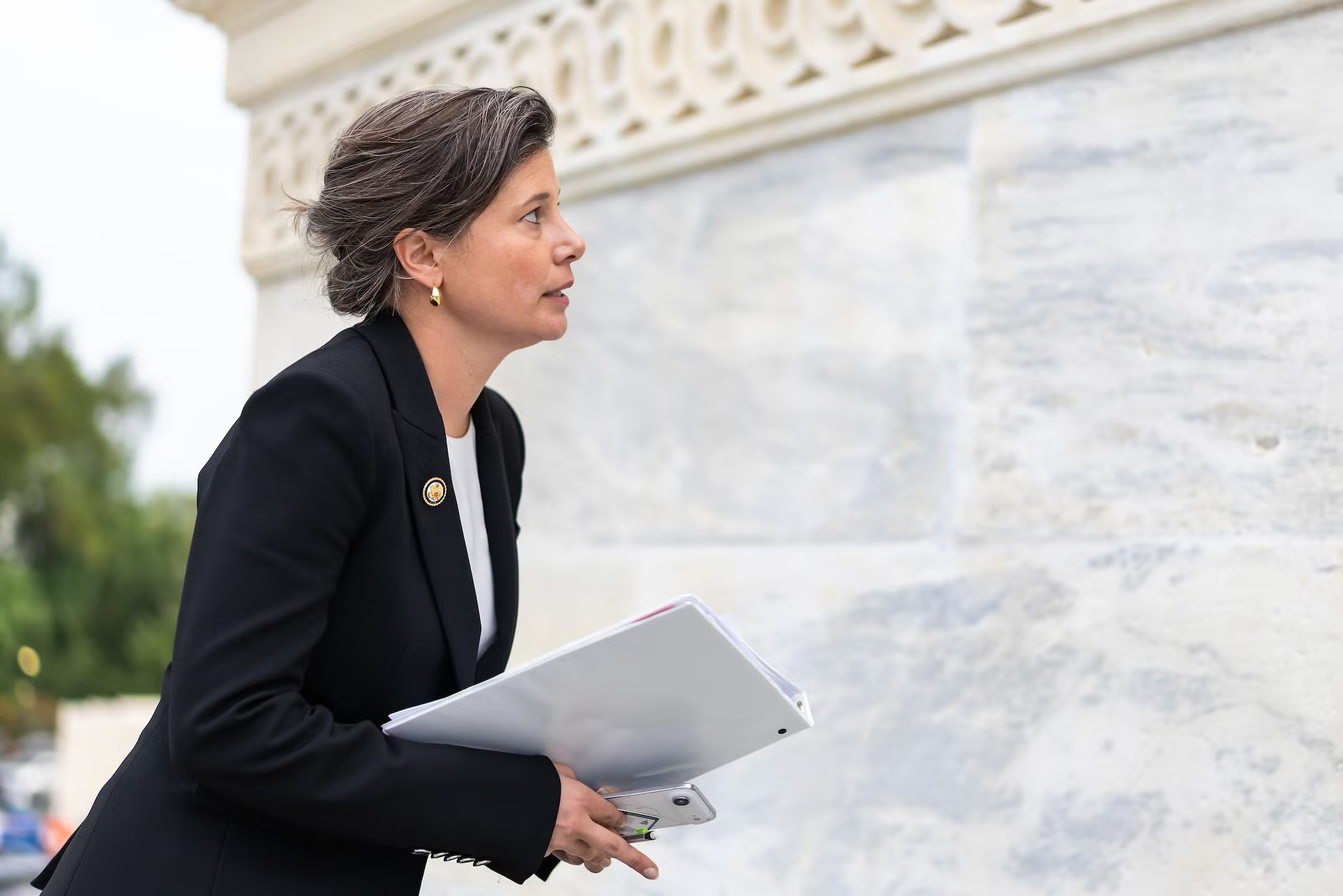
U.S. Rep. Maggie Goodlander, a Democrat from New Hampshire, enters the U.S. Capitol on August 31, 2026 in Washington, DC. (Photo by Finn Gomez/Getty Images)
In the next-door Democratic primary for the 1st Congressional District, City Councilor Stefany Shaheen narrowly defeated former U.S. Marine Capt. Maura Sullivan in a contest that included numerous other candidates. According to the Associated Press, Shaheen had 37.3% of the votes compared to Sullivan’s 35%, with 91% of the ballots tallied.
The winner of that race will face Republican Anthony DiLorenzo, an automotive executive who has Trump’s support, in the November election.
Shaheen is a healthcare advocate and daughter of Jeanne Shaheen, whose Senate seat Pappas is hoping to secure in November. Her opponent, Sullivan, served as the assistant secretary for Veteran Affairs in the Obama administration.
Similar to the U.S. Senate primary hopefuls, candidates in these two races seemed to share near-unanimous disdain for Israeli Prime Minister Benjamin Netanyahu. They, too, had a spectrum of opinions on the Jewish state, with moderates asserting Israel’s right to defend itself and progressive placing most of the blame for the Gaza war on Israel.
The candidates in the U.S. House races also spent significant airtime in recent weeks blasting the American Israel Public Affairs Committee, the pro-Israel lobbying group. AIPAC has rejected comparisons to corporate PACs, noting that it is membership driven, and claims to be transparent about its funds.
Both Shaheen and Beauchemin accused their opponents of taking AIPAC funds, simply because donors who contributed to the lobby also gave to their campaigns. Sullivan and Goodlander denied these allegations, maintaining that they took no money from AIPAC.
