Chabad celebrates ‘Chasidius New Year’ with references to Dr. Seuss
By ALAN SMASON
Theodor Geisel, the popular illustrator and author known affectionately as Dr. Seuss, was never Jewish, but several of his works were recently used to explain the concept of living with faith as practiced by the three major strains of chasidism.
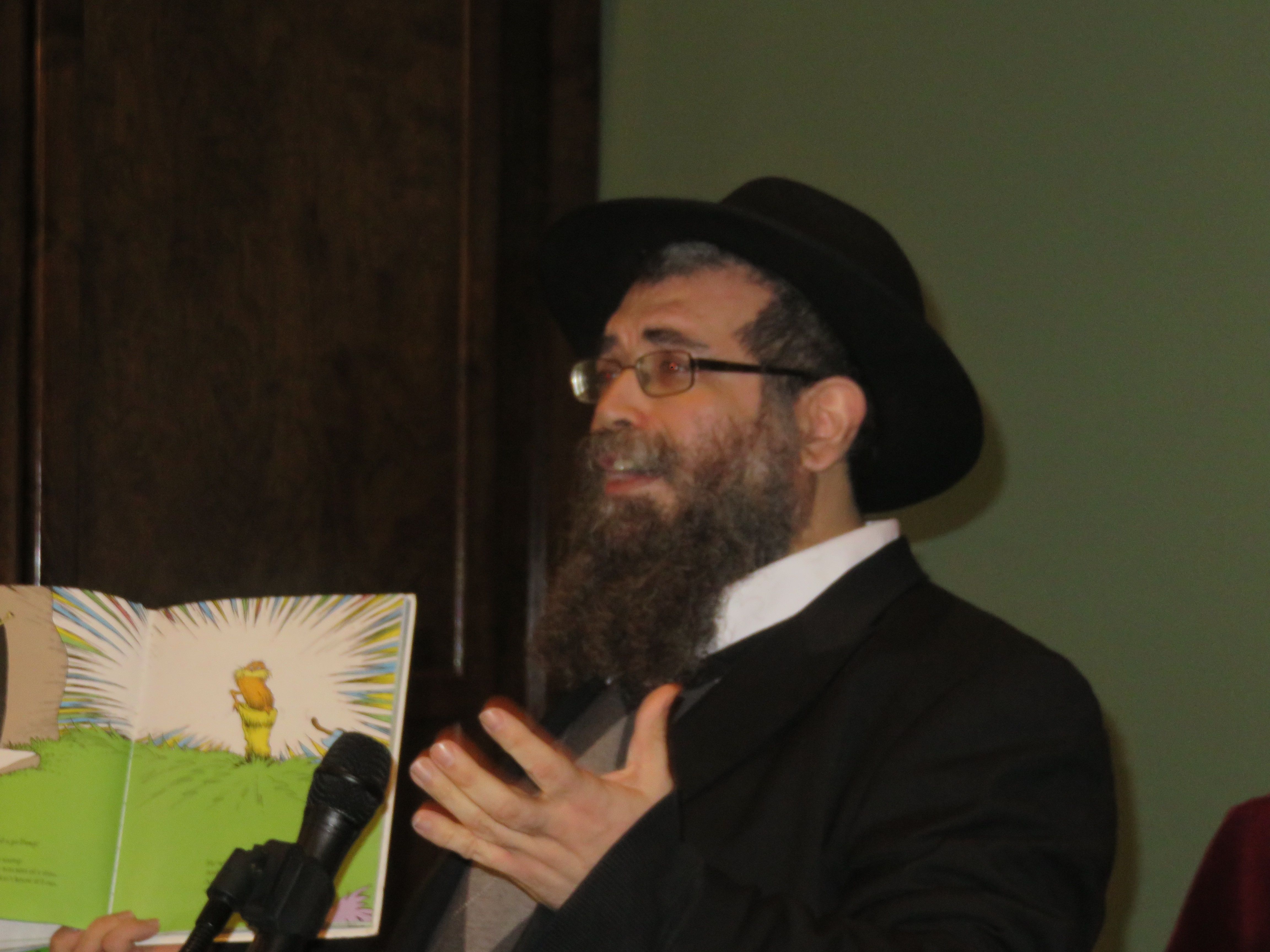
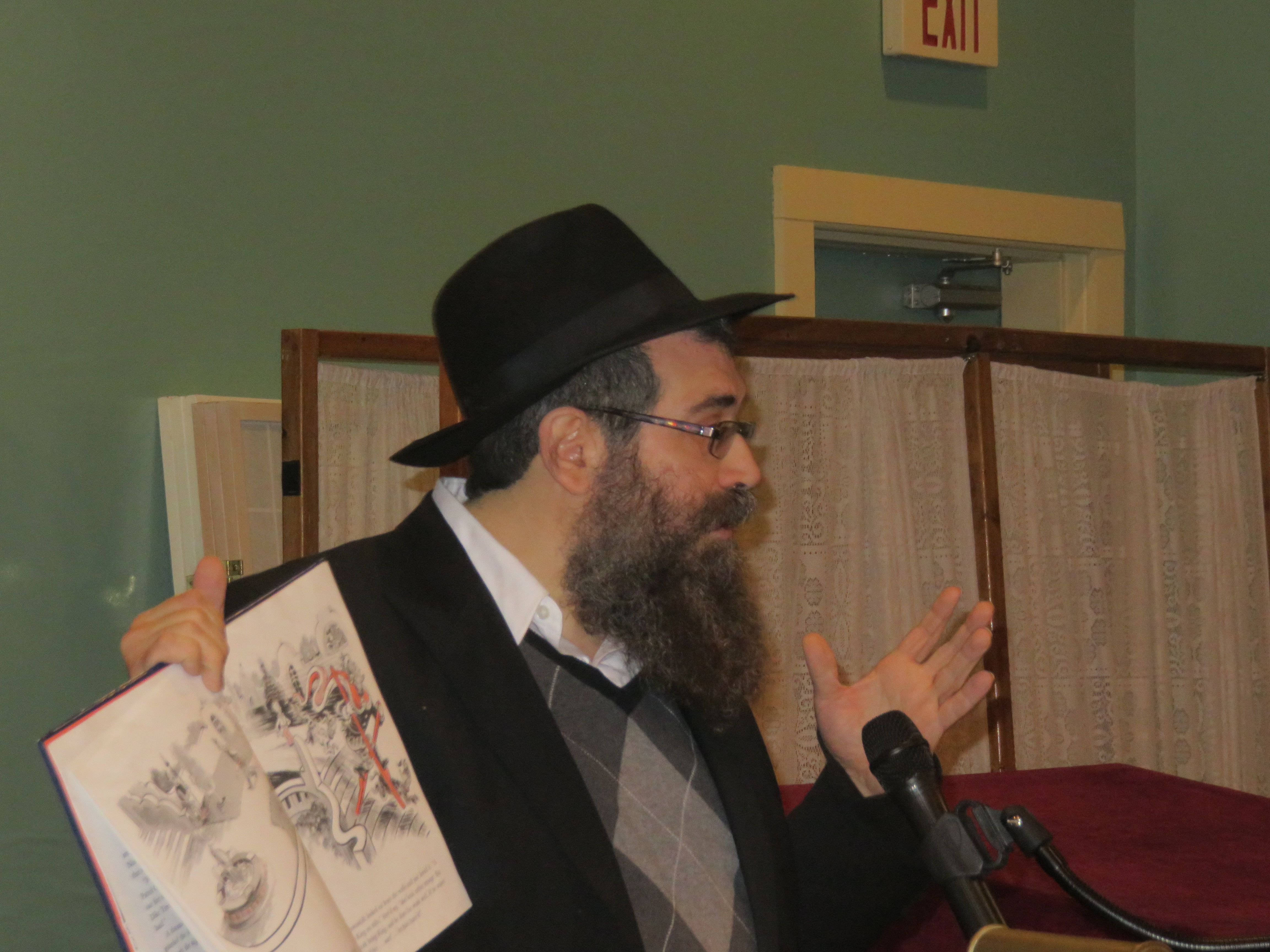
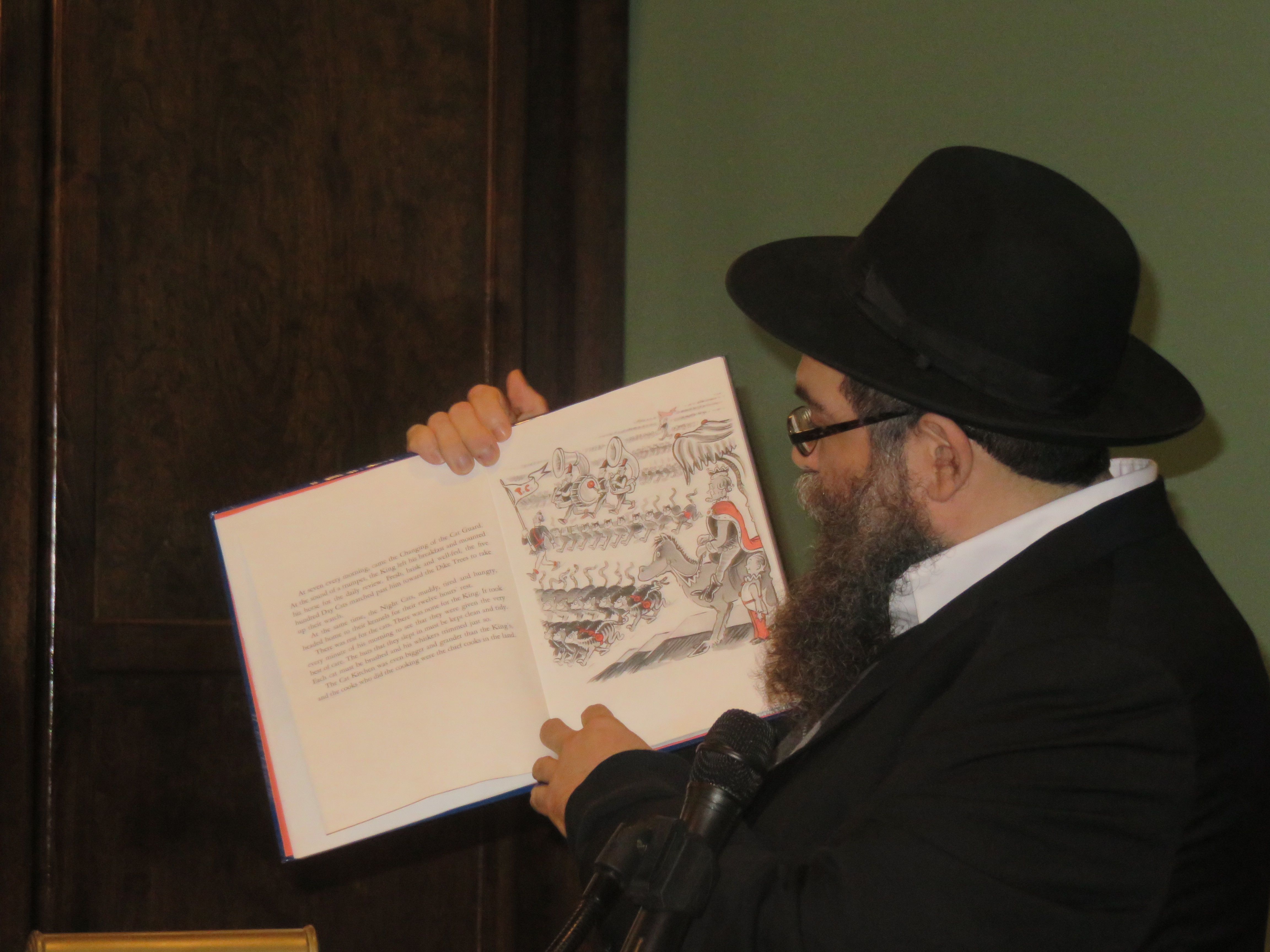
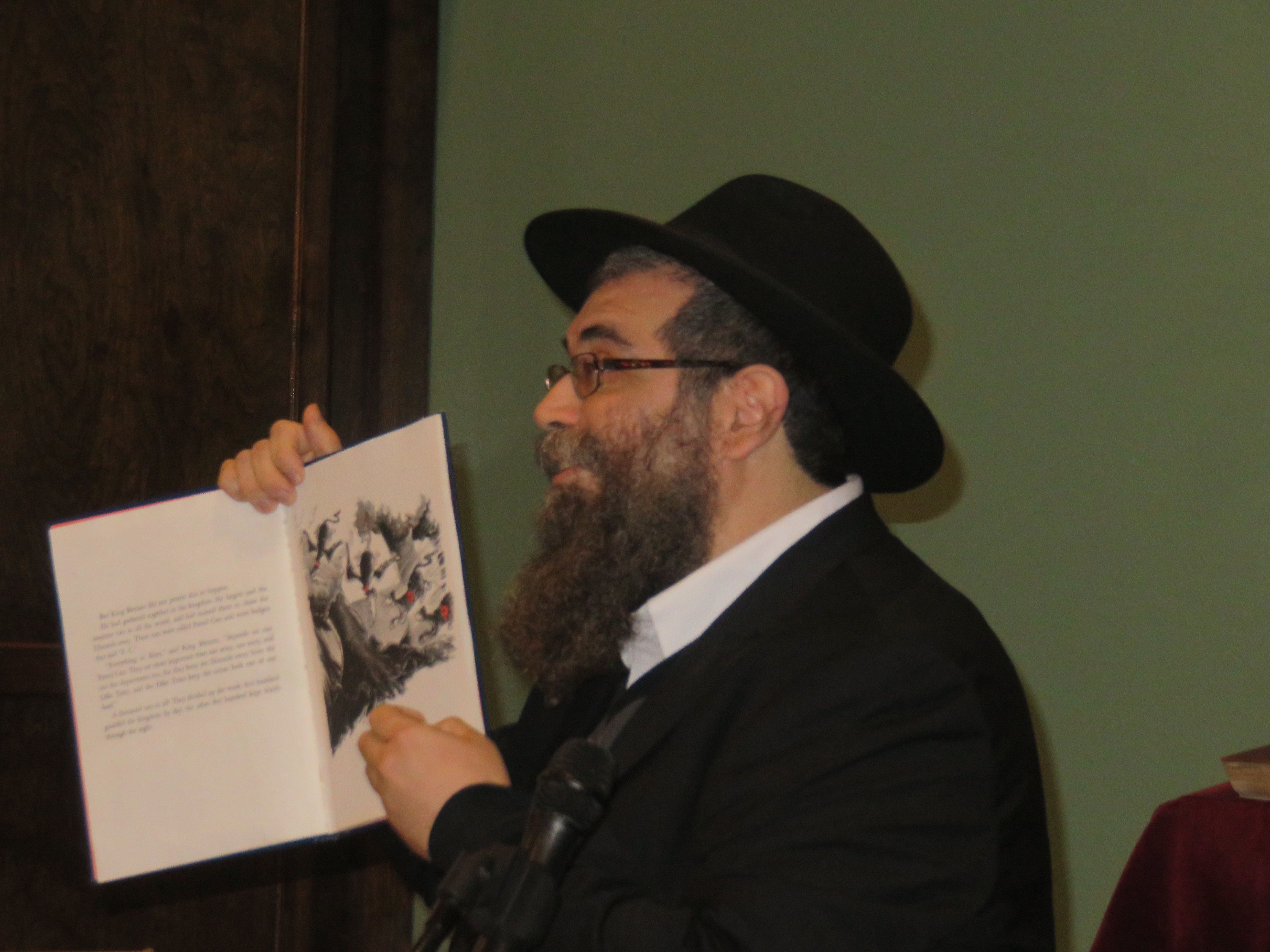
Rabbi Mendel Rubin using a Dr. Seuss book to illustrate his talk on “Live by Faith” at the Btesh Family Chabad House on Dec. 18. (Photo by Alan Smason)
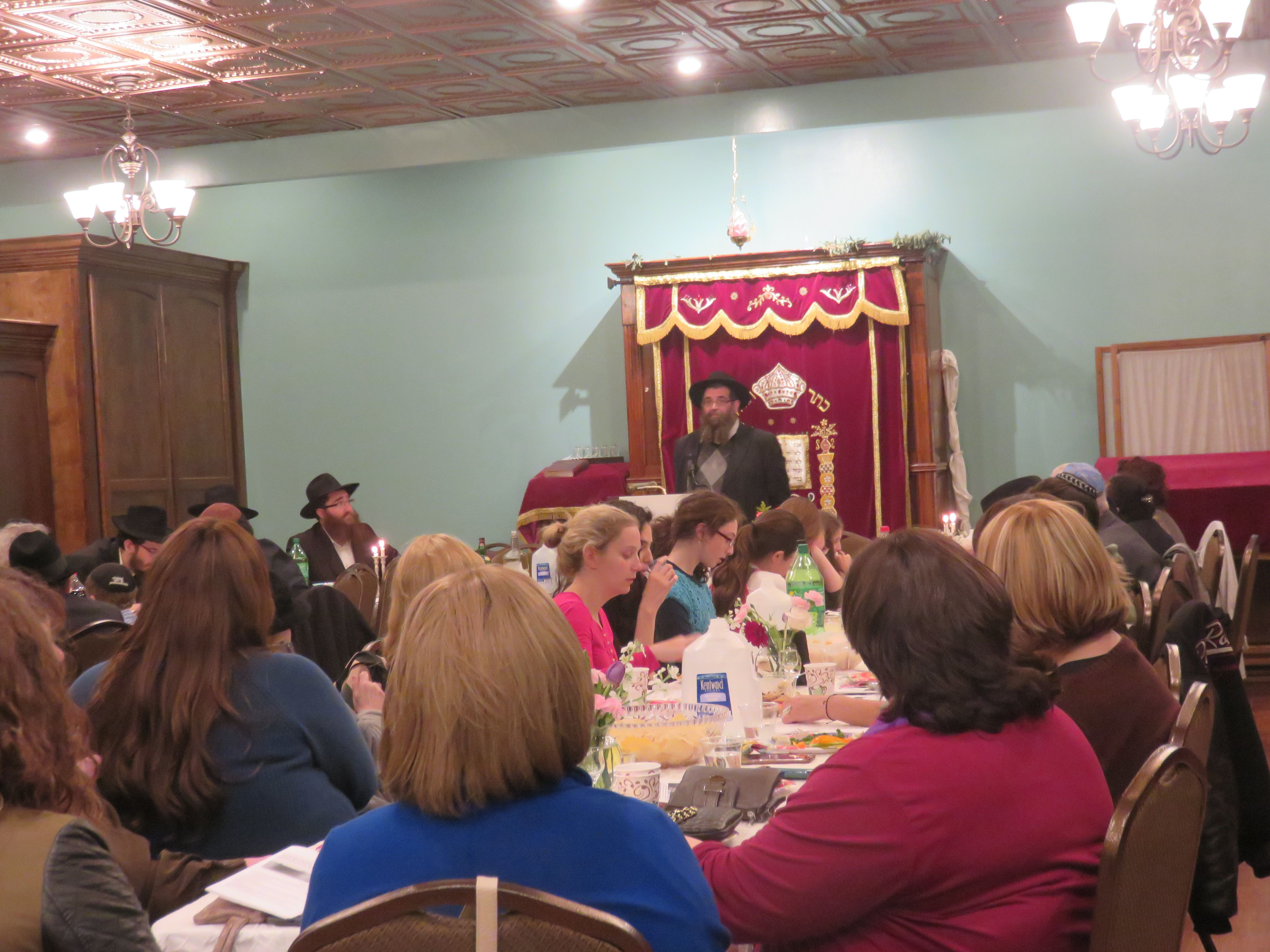
The talk by Rabbi Mendel Rubin given at a fabrengen (joyous gathering) at the Btesh Family Chabad House on Sunday evening, Dec. 18, the date which corresponded to 19 Kislev. That date on the Hebrew calendar recognizes the liberation from prison of Rabbi Shneur Zalman, known today as the Alter Rebbe. Zalman was critical in establishing chasidism and the date of his liberation is considered pivotal and promoted as the “New Year of Chasidius.”
At the gathering of about 40 men, women and children, Rubin spoke about the Alte Rebbe and two others, Rabbis Shlomo Karliner, an early chasid leader, and Yisrael Salanter, the founder of the Mussar movement.
Rubin likened the three strains of chasidism to the three figures, Karliner to the general chasidic movement, Salanter to the Mussar movement and the Alte Rebbe (Zalman) to the Chabad-Lubavitch movement.
Rubin used the three examples of “The Lorax,” “The King’s Stilts” and McElligot’s Pool” – all books by Dr. Seuss – as further examples of how the righteous live with faith.
As the character of the Lorax notes when the forest is depleted, there are consequences to actions that are found in reward and punishment. This is Salanter’s connection. When King Bitram recognizes in “The King’s Stilts” he must not neglect the protection afforded by the dike trees, it recalls faith in and a connection to tzadikim emblematic of Karliner, Rubin said.
Finally, a connection and closeness to G-d is revealed through the study of Dr. Seuss’ “McElligot’s Pool” in which the optimistic Marco fishes in a pool, exclaiming it to be connected to a brook, fed by a stream, enlarged by a river, all of which flow into the ocean. That is Zalman’s connection and closness to G-d, Rubin said.
The fabrengen was punctuated at times by the singing of nigunim and a light meal was served for the occasion.