New Orleans community mourns with Israel
By ALAN SMASON
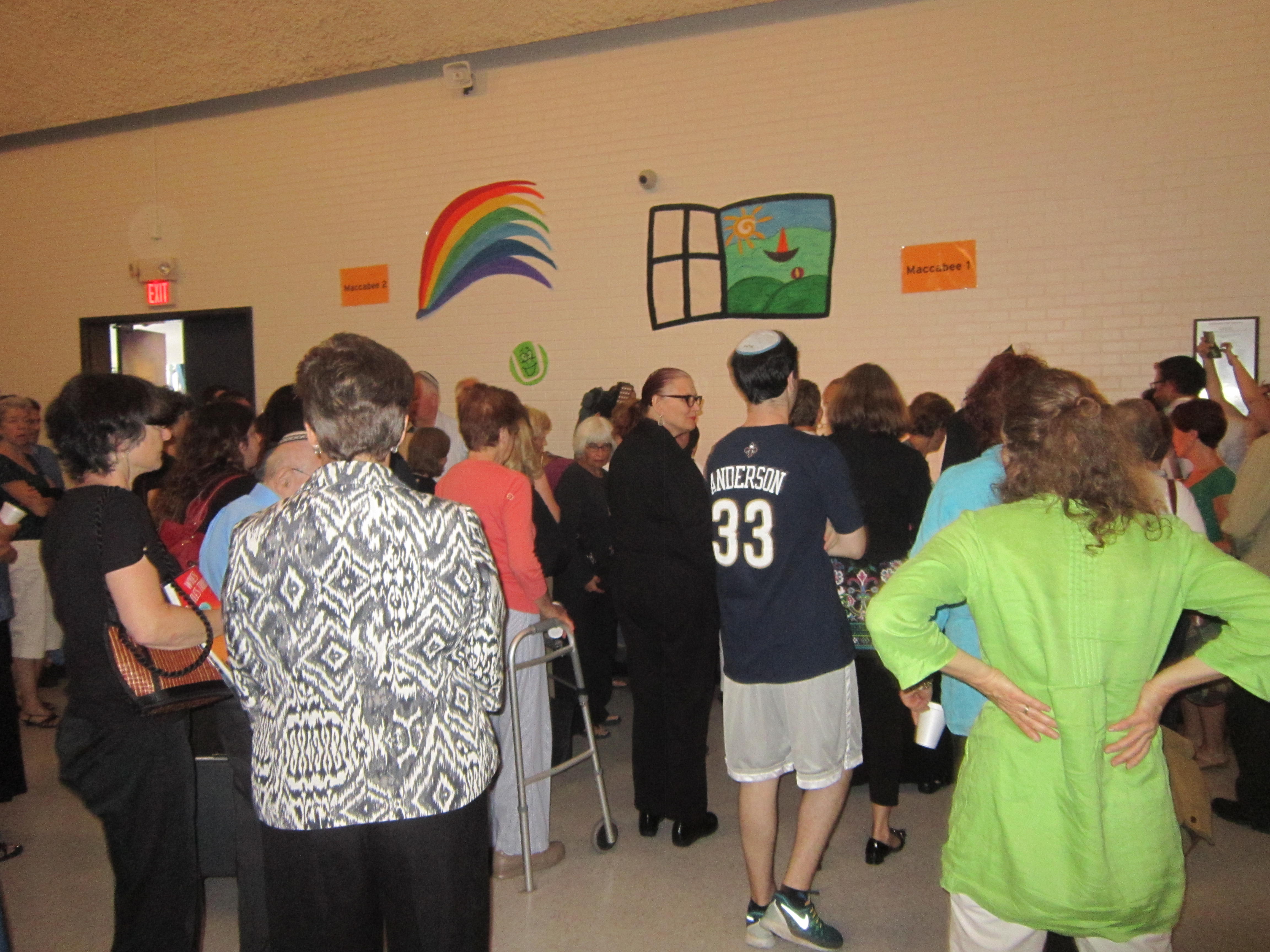
New Orleans Jews gathered together Tuesday night, July 1, at the Jewish Community Center to mourn the murders of Naftali Frenkel, 16, Gilad Shaar, 16 and Eyal Yifrach, 19, the three Israeli teenagers, whose bodies were discovered in a shallow grave in Hebron on June 29.
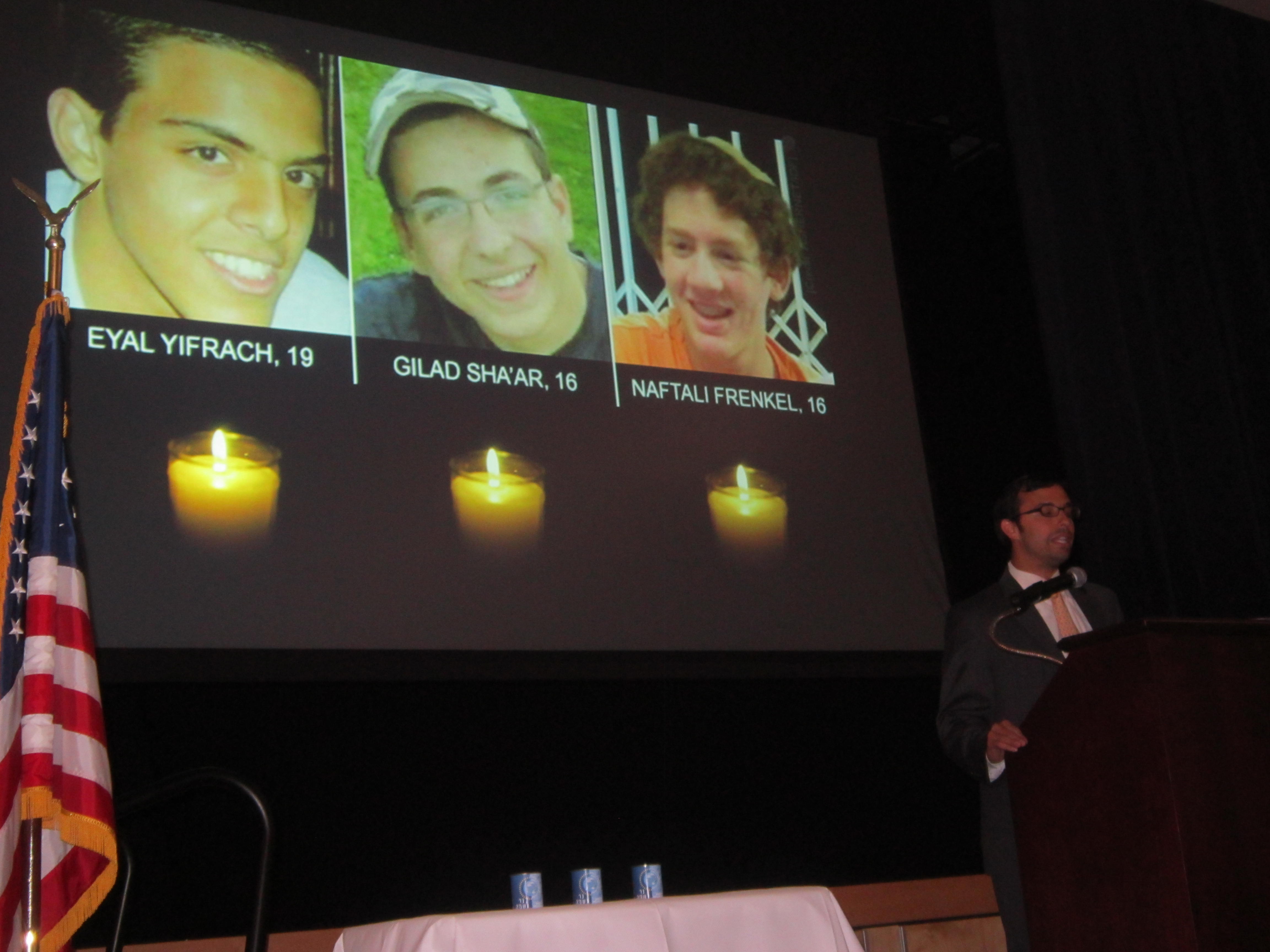
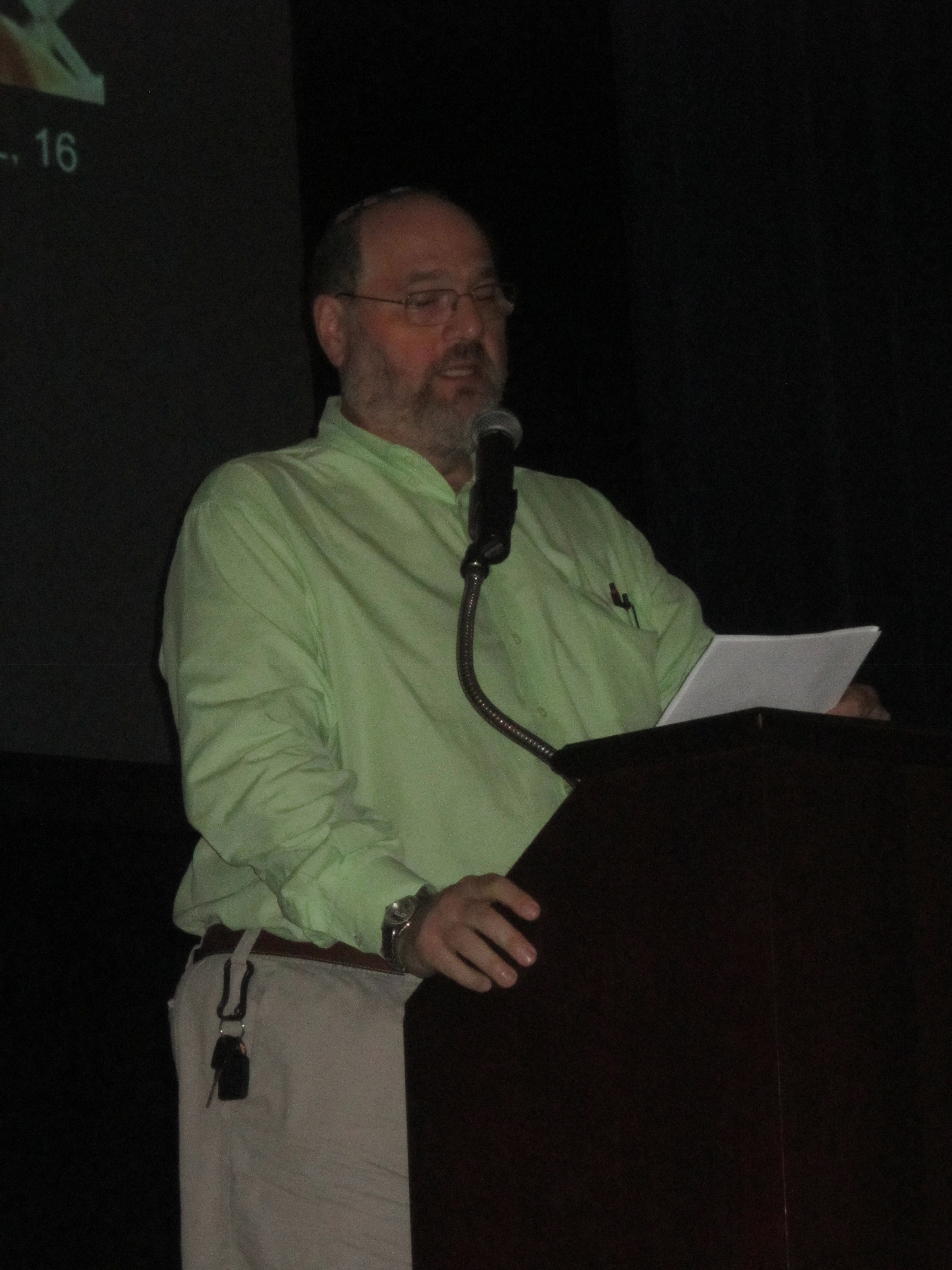
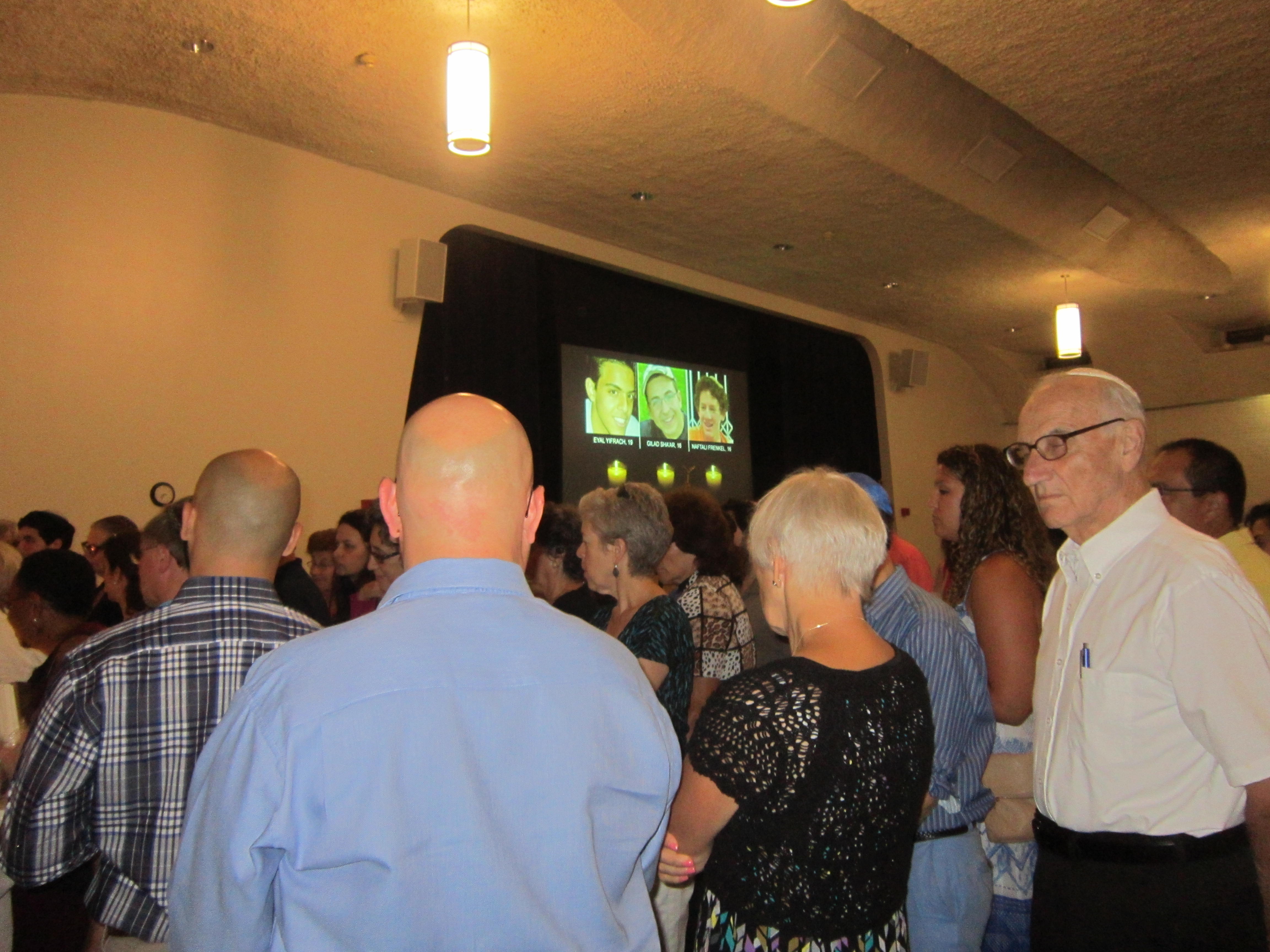
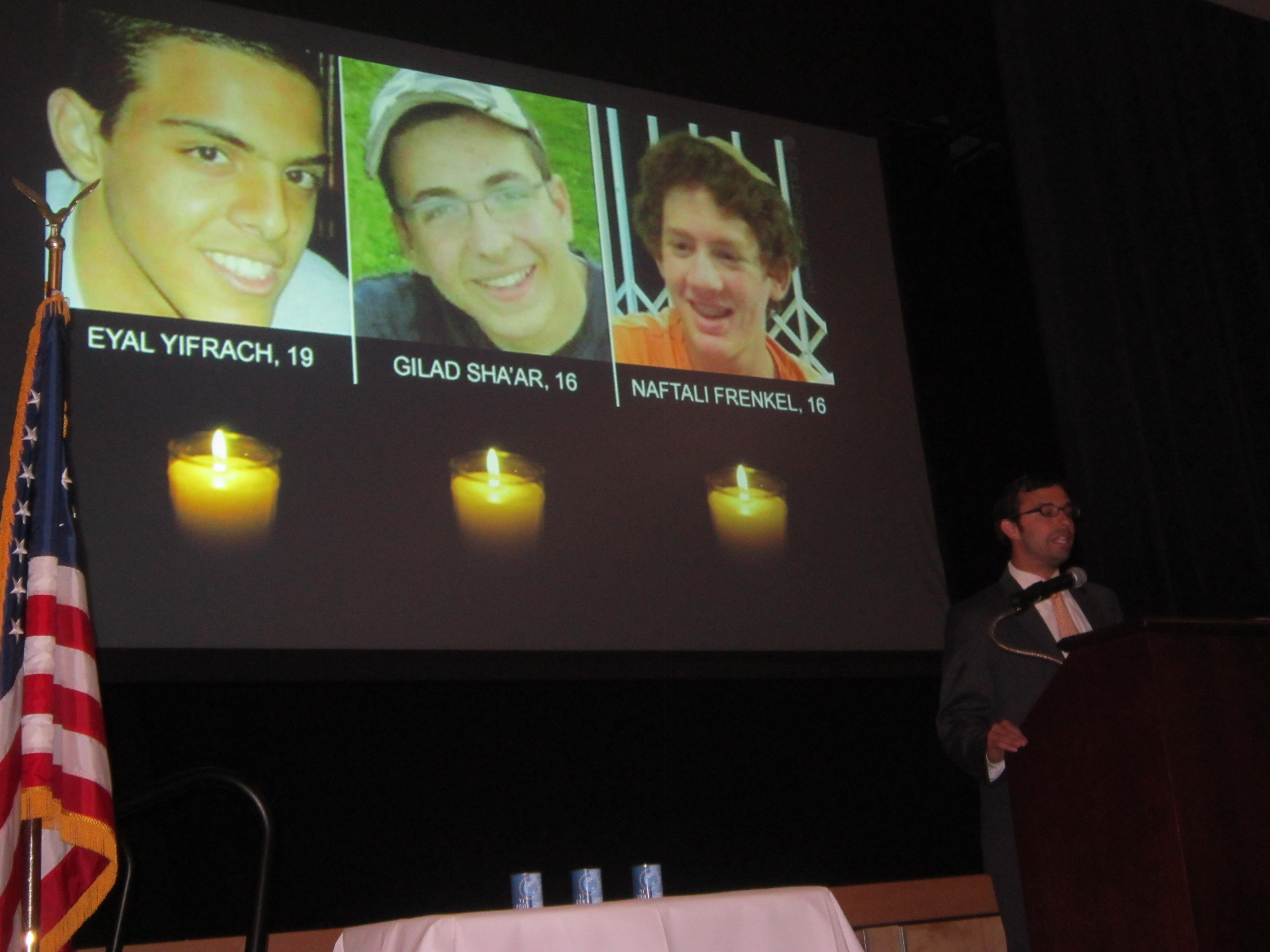
Rabbi Ethan Linden speaks at the community vigil (“Peace for Our Boys”) at the JCC on July 2 with images of slain students behind him. (Photo by Alan Smason)
That discovery, after 18 days of exhaustive searches by Israeli police and Israel Defense Force (IDF) members, brought to a close the last vestiges of hope that the three yeshiva students – allegedly captured in Gush Etzion by known members of the Hamas terrorist organization – would be found alive and returned to their families.
The event, organized by the Jewish Federation of Greater New Orleans and sponsored by the JCC, was originally planned as a means to show support for the return of the teens under the popular “hashtag” of “Bring Back Our Boys.” When news of the recovery of the bodies was revealed, however, Federation officials quickly transformed the rally into a memorial and community vigil under the new “hashtag” of “Peace to Our Boys.”
Rabbi Ethan Linden, the president of the Rabbinic Council of Greater New Orleans, chaired the event and delivered the opening and closing notes to the short, solemn program. He likened the vigil to the time of respect and consolation shown in the observance of shiva, which follows a funeral, as a “a sense of community, (and) a sense of joined sadness.”
Speaking behind a massive screen bearing the images of the three slain students, Linden continued: “We offer our presence in the face of enormous darkness. At times like these, our presence is all we have to give.”
The crowd of approximately 100 attendees listened attentively as Linden added more words of consolation. “We reach out to parents who have lost a son, to siblings who have lost a brother, to teachers who have lost a student and to friends who have lost a friend,” he said.
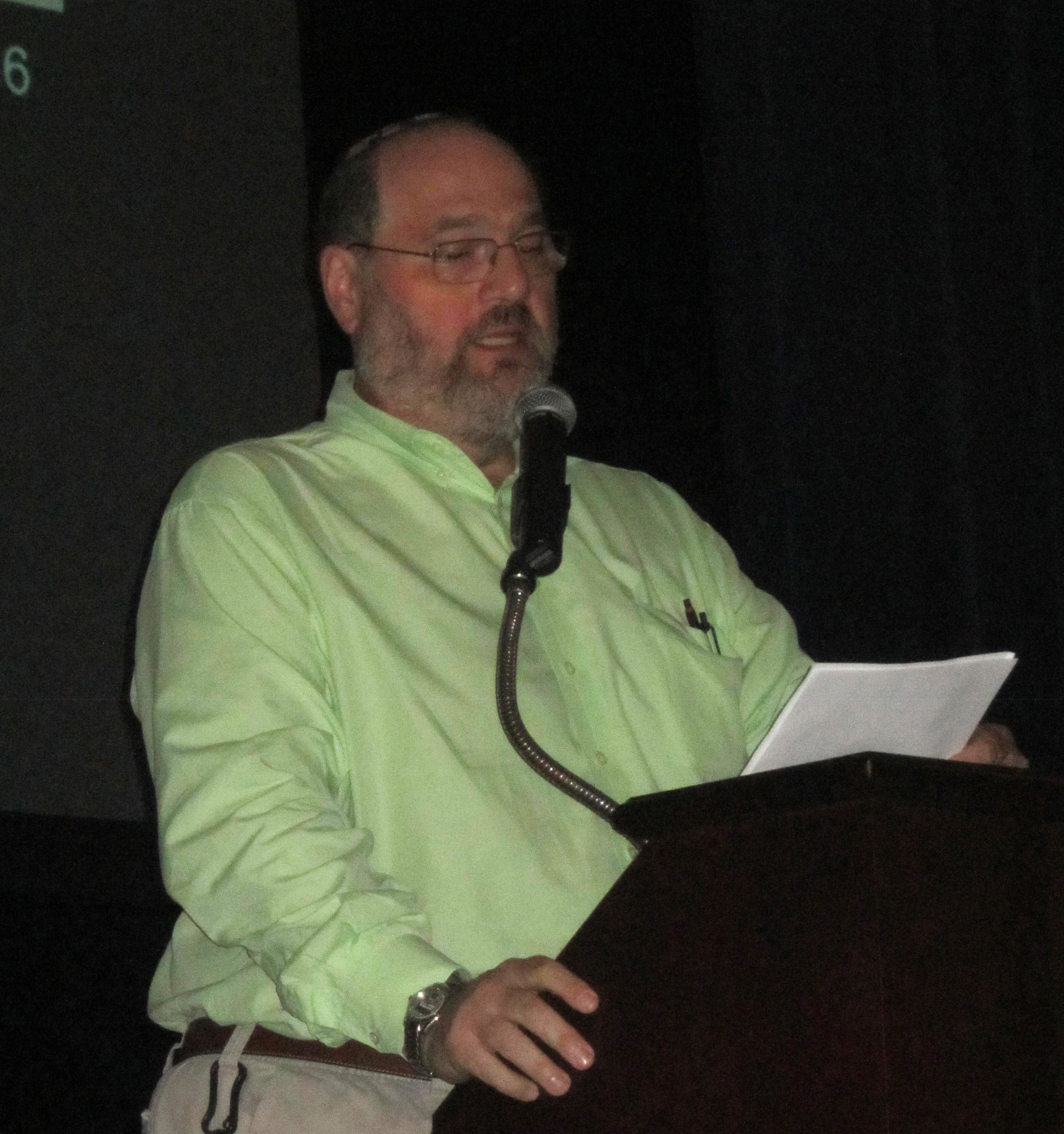
Temple Sinai Cantor Joel Colman speaks about his son Josh, a member of the IDF, at the community vigil (“Peace for Our Boys”) at the JCC on July2. (Photo by Alan Smason)
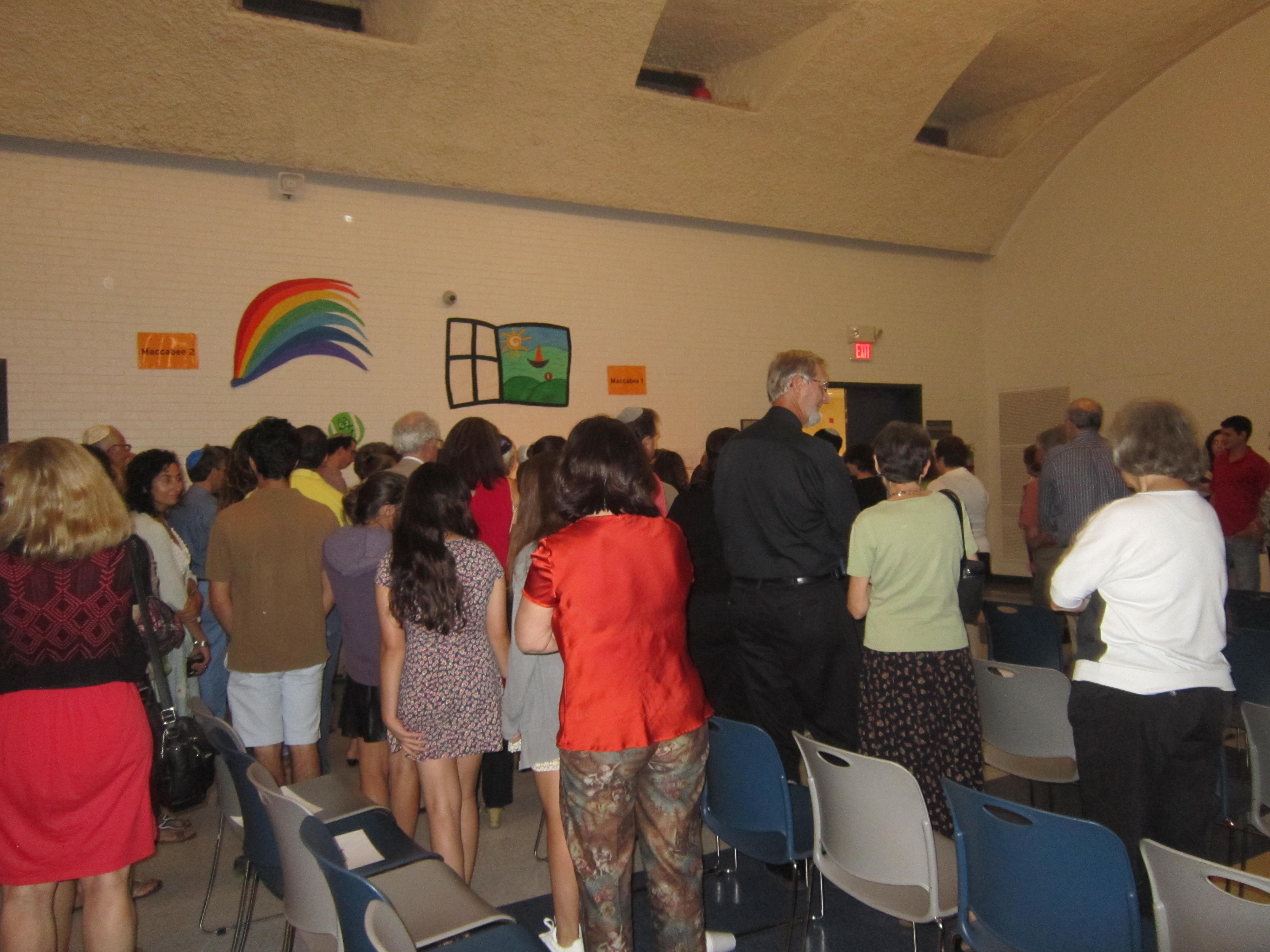
Offering the traditional Hebrew expression “HaMakom yenachem et’chem b’toch shar avay’lay Tzion vee’Yerushalayim (“May the Omnipresent comfort you among the mourners of Zion and Jerusalem”), Linden called upon all the other members of the Rabbinic Council of Greater New Orleans to join him in standing and reciting together with the audience the Kaddish prayer.
Following Kaddish, Linden called upon Temple Sinai Cantor Joel Colman to lead the assembly in the singing of “The Star Spangled Banner,” which was followed by the singing of “Hatikvah,” led by the two community schlichim (emissaries) from Israel.
Community relations director Brenda Brasher gave brief snippets of the lives of each of the three students, giving attendees insight into their hobbies and interests. “We pray for peace. We hope for an end to violence and we hope for an end to the hate that fuels it,” she concluded.
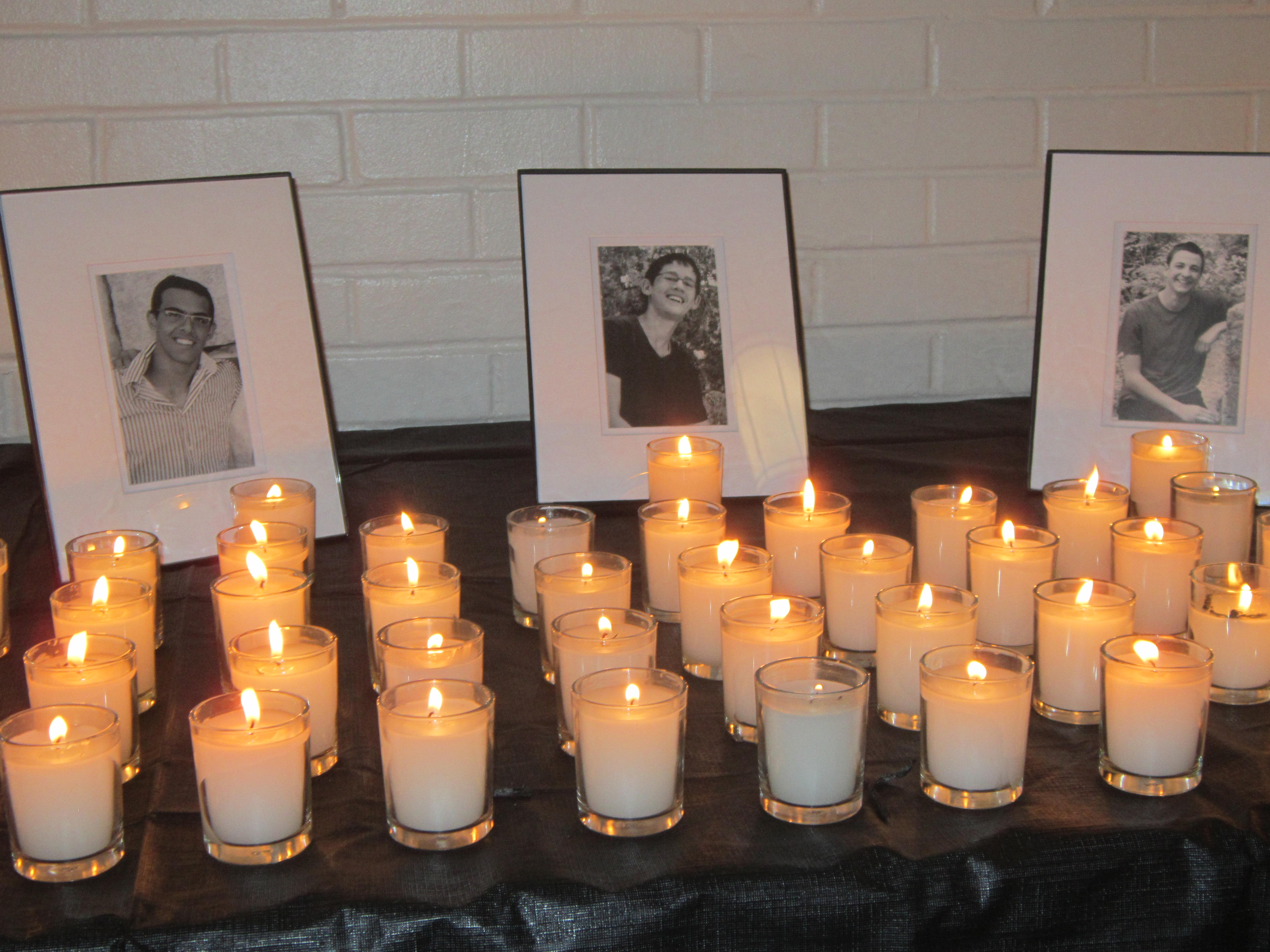
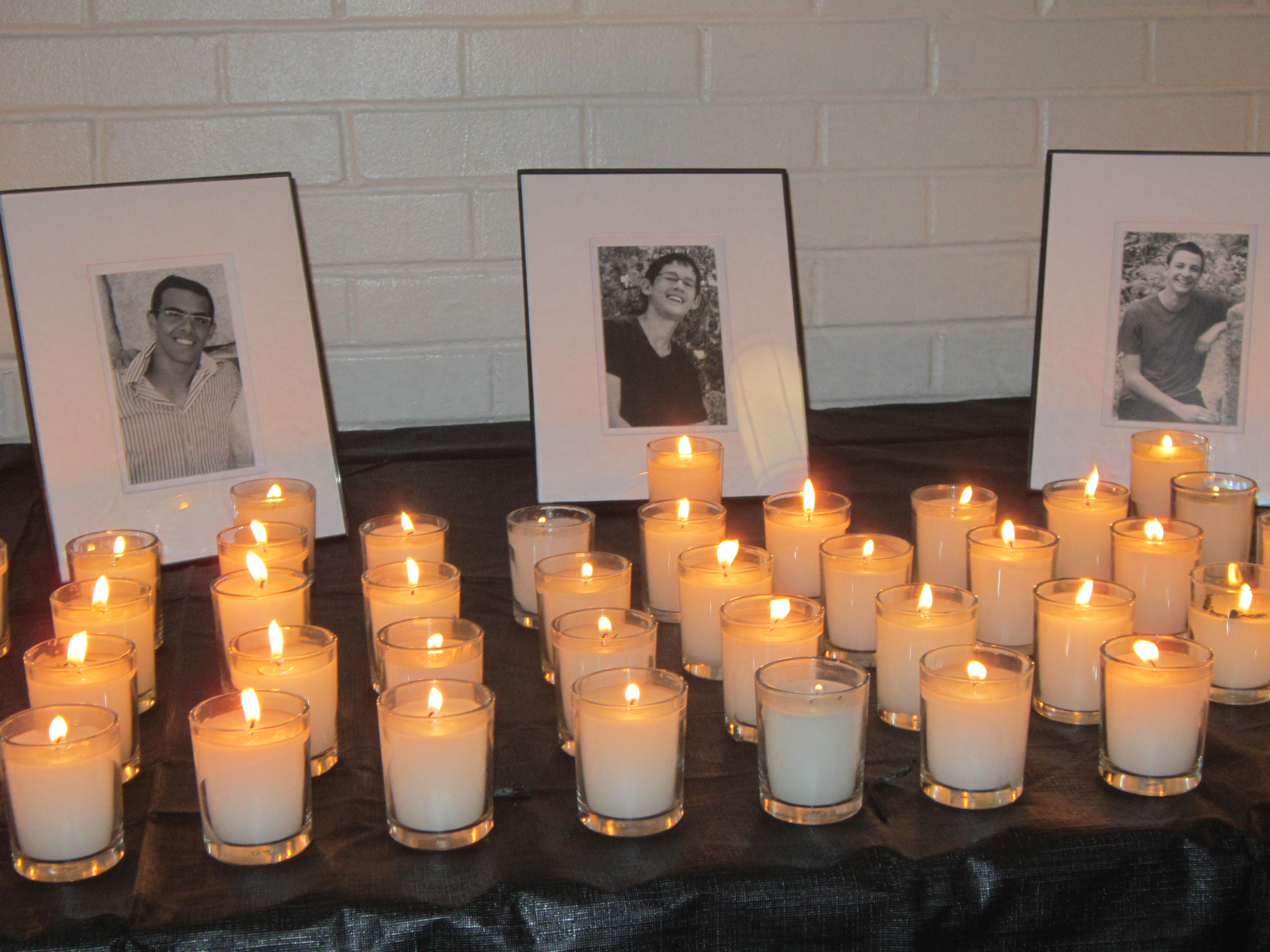
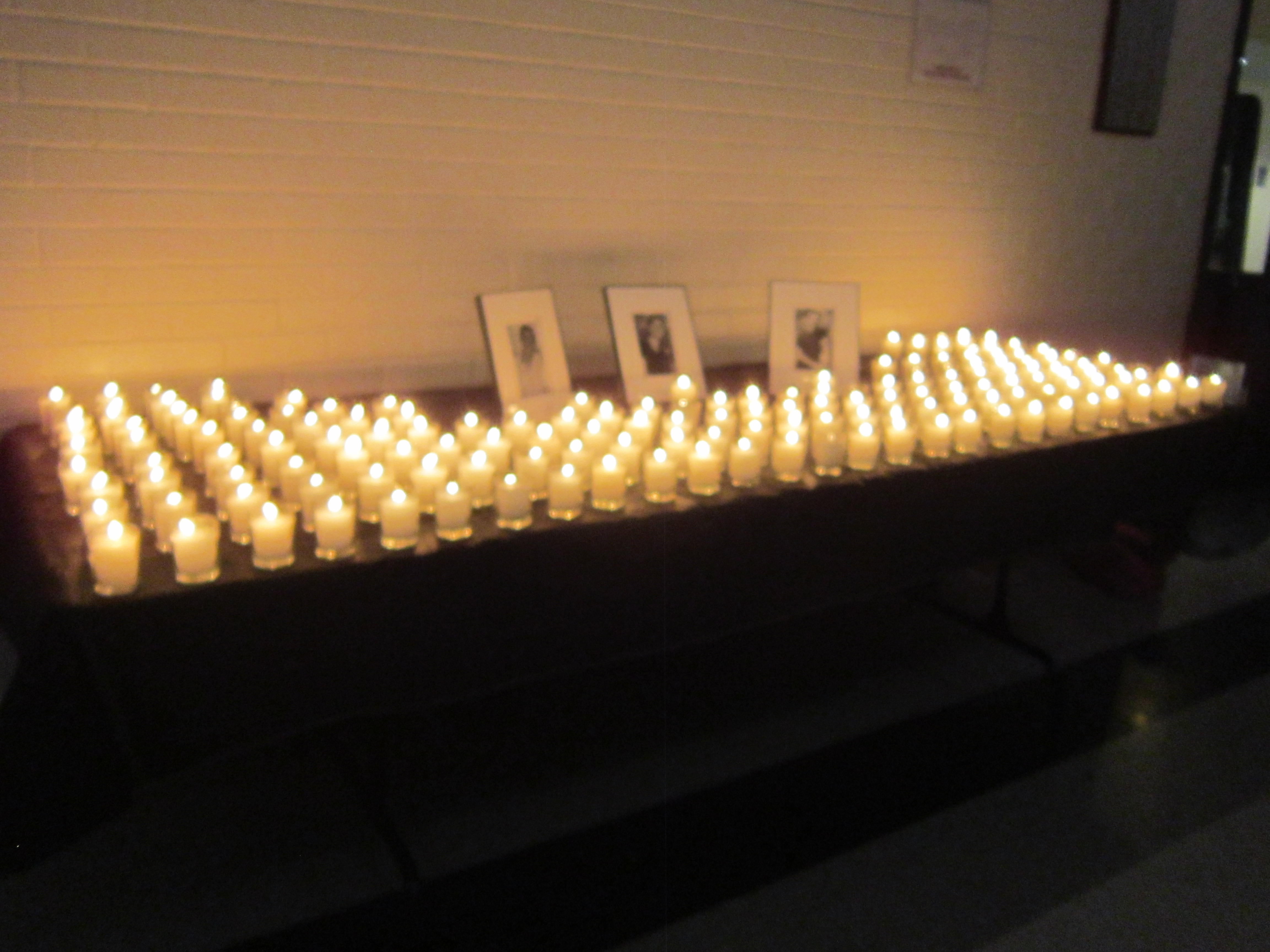
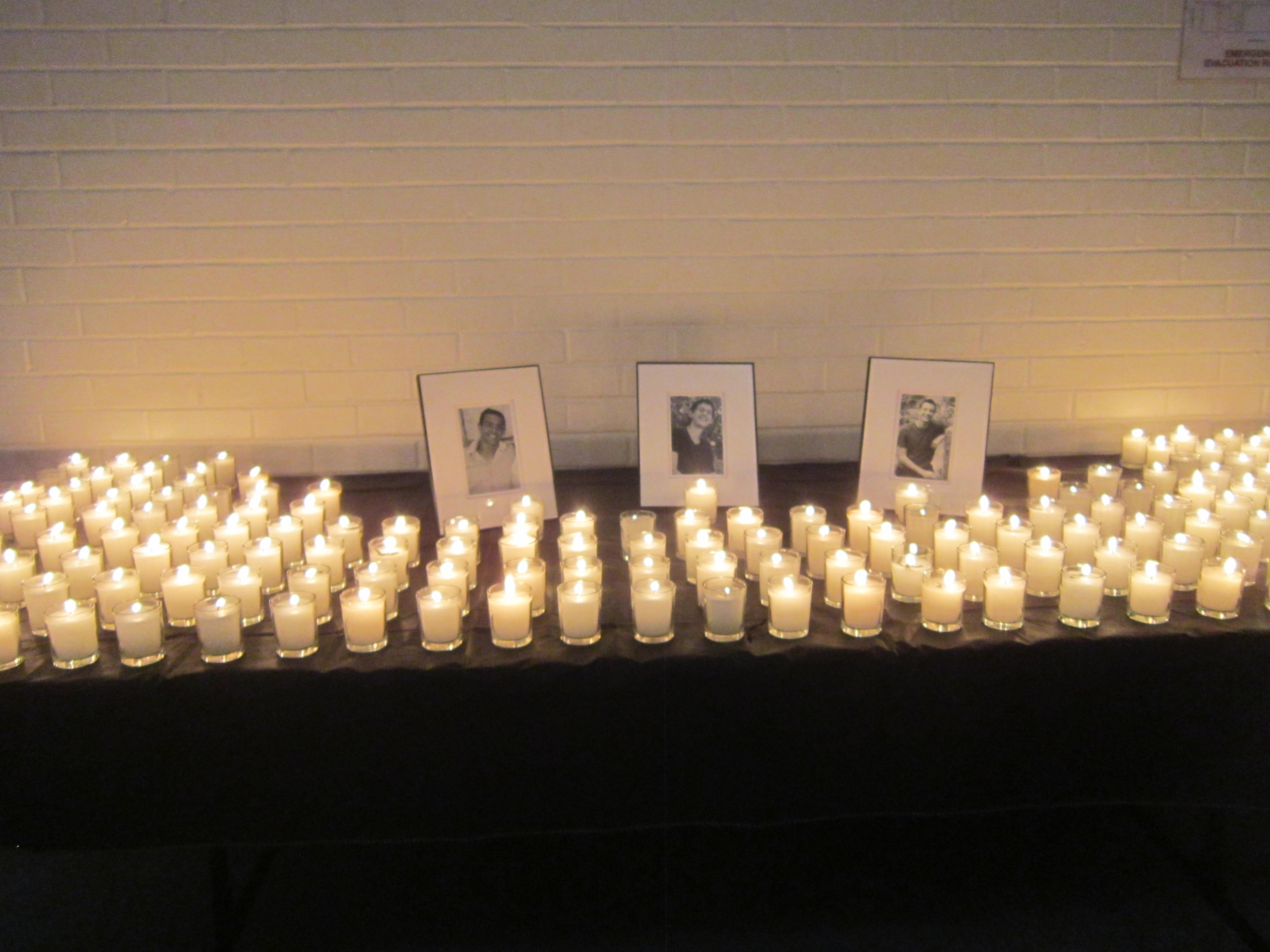
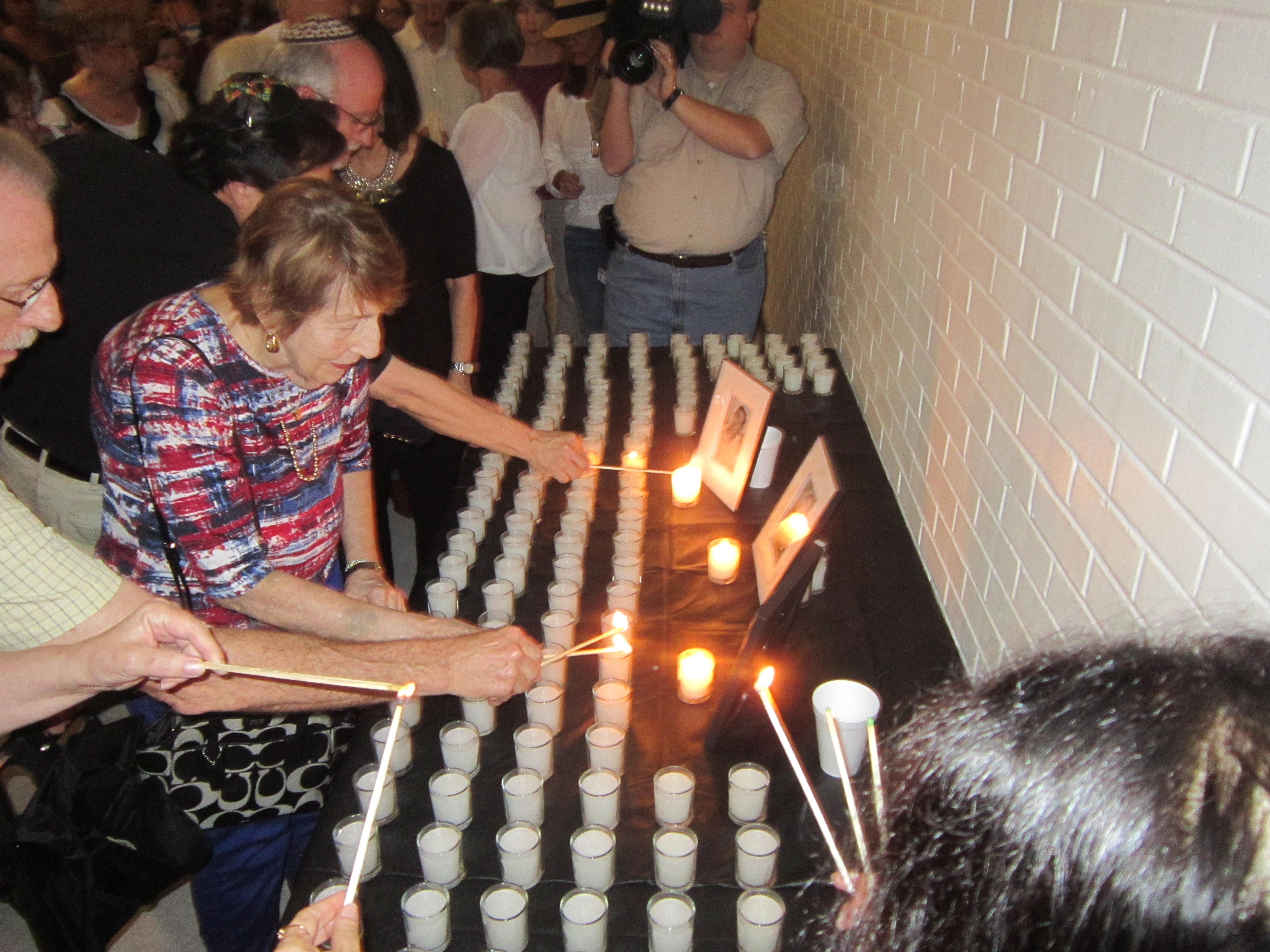
Memorial candles are lit aside the framed photos of slain Israeli students Naftali Frenkel, Gilad Shaar and Eyal Nifrach. (Photo by Alan Smason)
Colman returned to the podium to talk about his sense of loss. “In some ways don’t we all feel as if we have lost one of our very own children?,” he posited. “It’s the worst feeling a parent can experience.”
Colman talked of his own son Josh, a former student at St. George’s Episcopal and graduate of Ecoule Classique, who is in the middle of a two-year volunteer stretch with the IDF. The cantor told how he received two unexpected calls from Josh the week prior: the first being his report on the successful interception of a missile by the Iron Dome defense system and the second being the tragic discovery of the bodies of the three boys.
Colman offered the traditional prayer for the safety of the Israel Defense Force in English before turning the podium back over to Linden.
Earlier in the program Linden had reminded the audience of the inability of words to express sorrow effectively at moments of grief. “Our tradition prefers silence at moments like this because there is precious little we can say,” he had rejoined.
Linden’s closing words centered on the upcoming three-week period of mourning that begins with the 17th day of Tammuz and ends with Tisha B’Av, the saddest day on the Hebrew calendar.
“Our three weeks began early this year,” he stated. “This evening, as we leave this room I will ask that we light a candle for each of these three boys and leave in silence.”
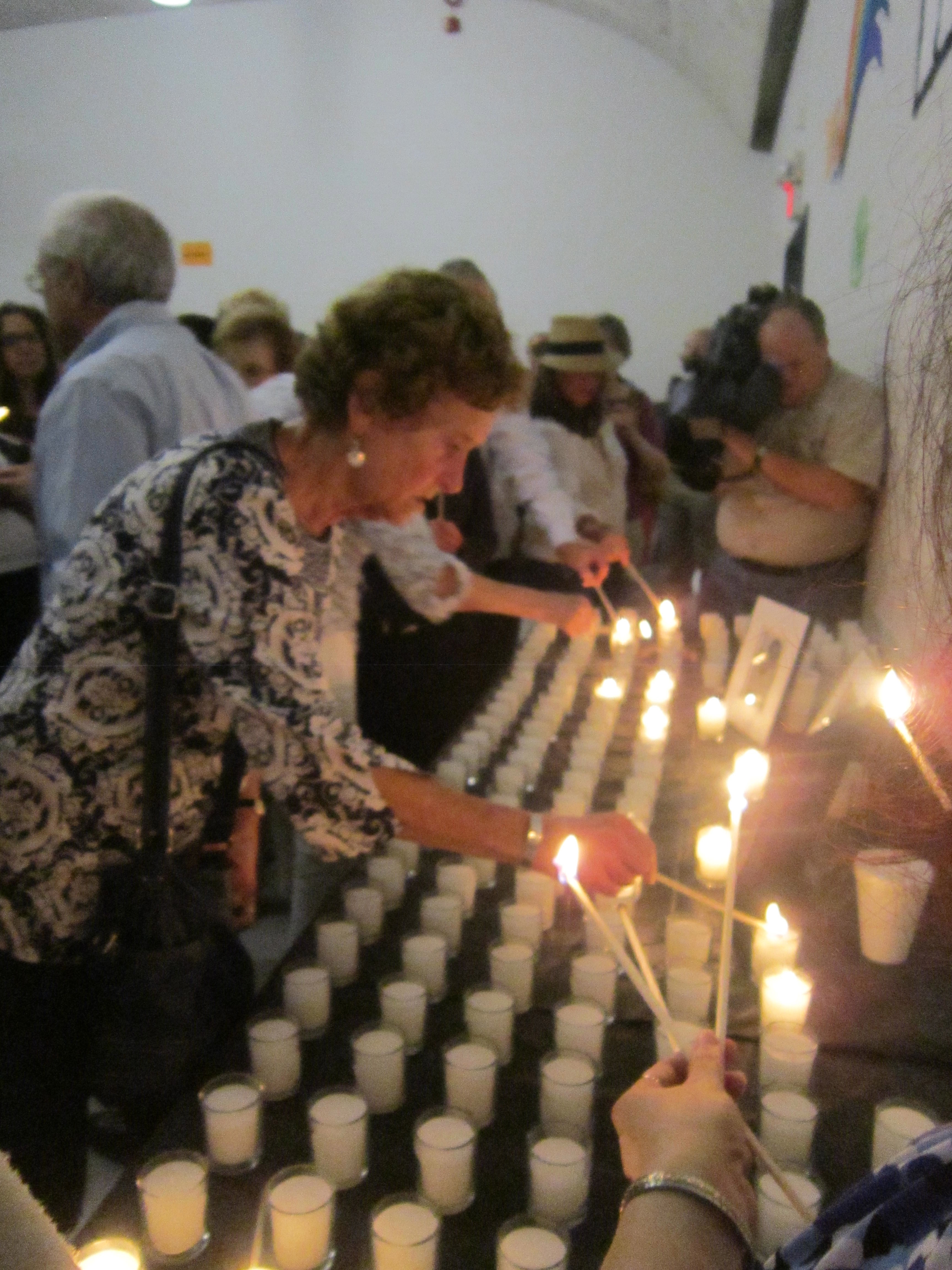
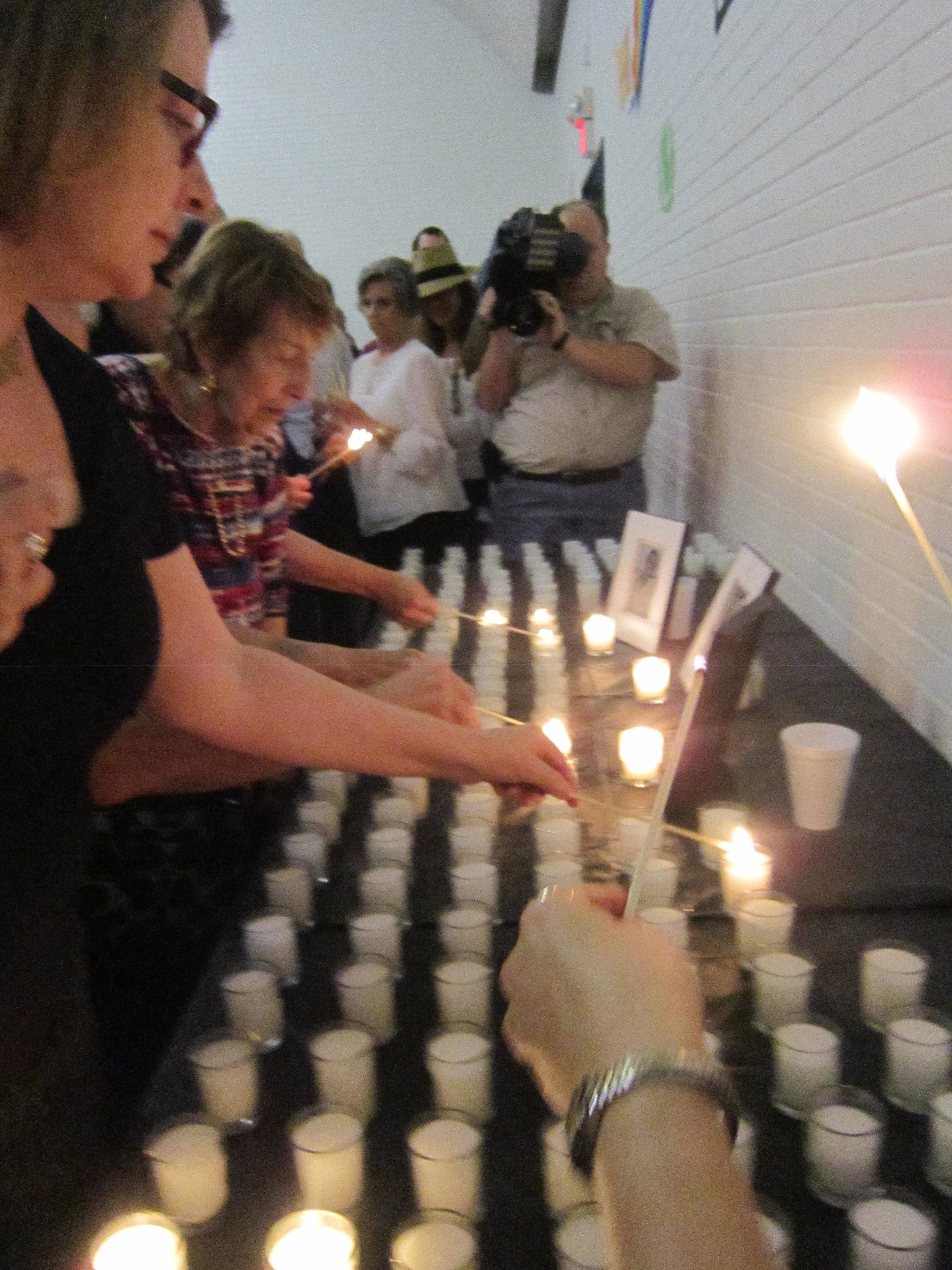
Attendees then took part in a solemn, silent procession to a large table bearing yartzheit (memorial) candles and arranged with framed photos of Frenkel, Shaar and Yifrach. They each lit a candle before departing the room and made their way collectively toward the exit.