


OU top exec Allen Fagin grants exclusive interview
Exclusive interview found only in the CCJN
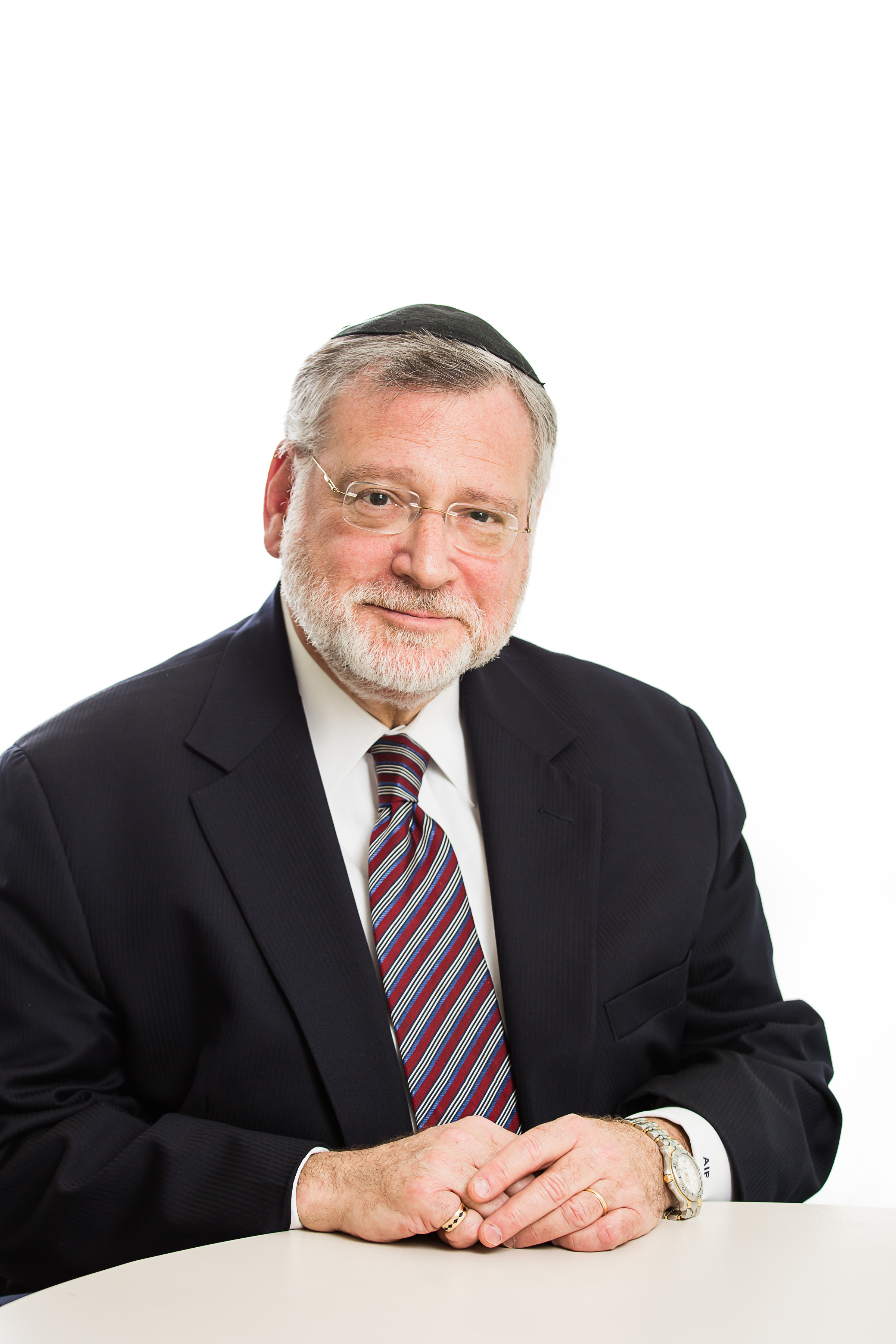
Ou executive vice president and chief professional officer Allen Fagin. (Photo courtesy OU)
In the spring, Allen Fagin was unanimously named the new executive vice president and chief professional officer of the Orthodox Union (OU), the governing body of Orthodoxy. Fagin is a successful lawyer from the firm of Proskauer and Rose and a dynamic and well known civic leader. He is the first executive officer of the OU not to hold smicha (rabbinical status). He was in New Orleans this weekend to speak at the installation of Rabbi Gabriel Greenberg as the new rabbi at Congregation Beth Israel. Prior to his arrival and shortly after his selection, he graciously agreed to engage in an exclusive conversation with the CCJN.
CCJN: First of all, we congratulate you on your unanimous selection. In a world where our favorite expression is two Jews, three opinions, one doesn’t hear the word unanimous all that often. How does that make you feel?
Fagin: I felt pretty good.
CCJN: With regard to the executive vice presidency, previously Rabbi Steven Weil had served for six years and previous to him Rabbi Tzvi Hersh Weinreb for six years. Are you in fact about to serve for six years or do you expect the term of office to be longer?
Fagin: I don’t know what to expect the term to be. I’ve committed through the year of our 2016 fiscal year and have indicated to the board that we can certainly see what’s happening at that point and decide further. I’ve made that commitment through that period of time and we see how that develops.
CCJN: Then the obvious follow-up question. You graduated from Ramaz Upper School, but all of your academic work was at Columbia College and Harvard Law School. You are not a rabbi. Is this a first for the OU?
Fagin: I’m told that it is. I’m the first executive vice president to not have smicha. I suppose in that sense it is a first.
What do you feel are your greatest strengths or abilities that you bring to the executive vice presidency?
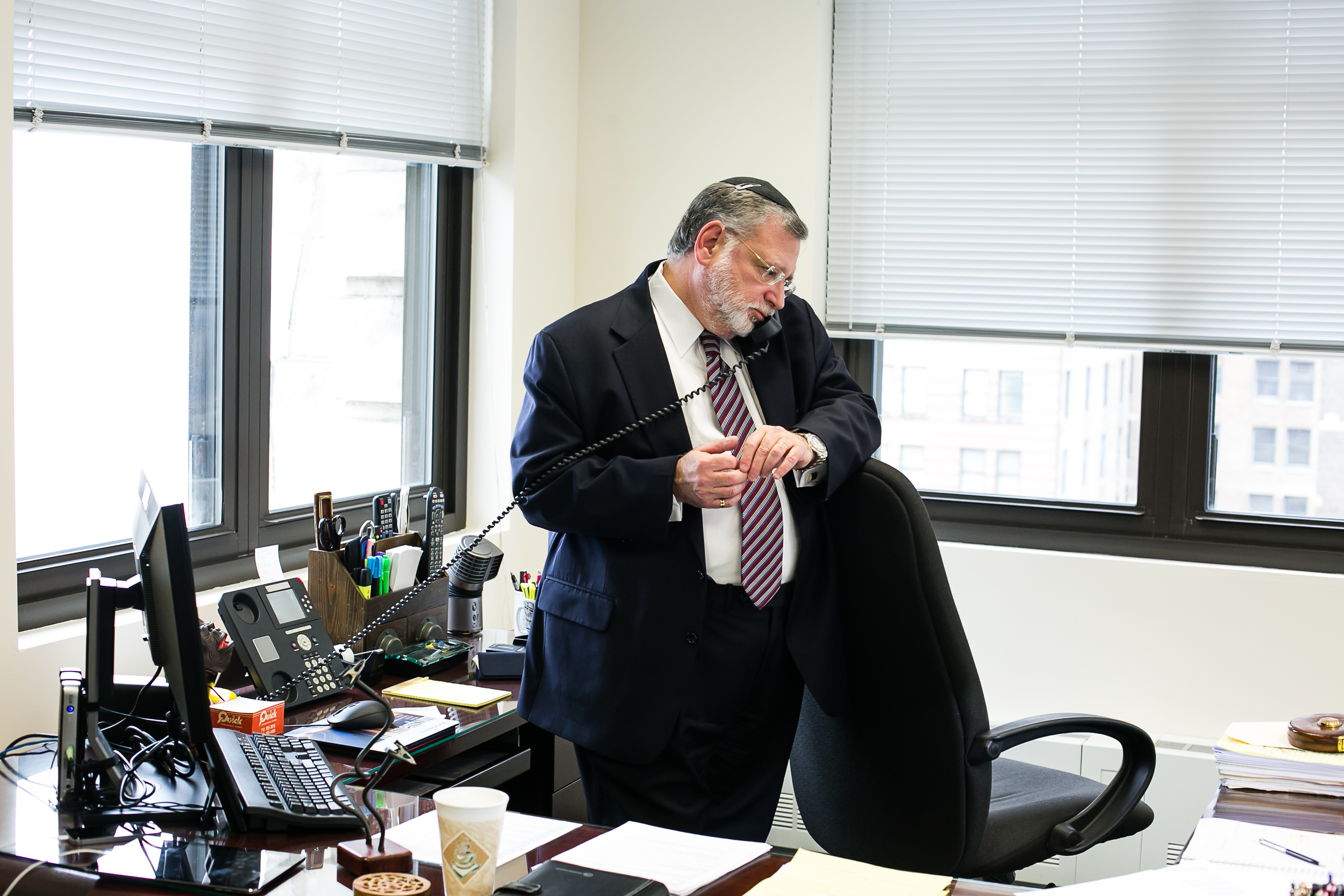
OU executive vice president Allen Fagin at his office in New York. (Photo courtesy OU)
Fagin: I don’t focus on having ordination or smicha or not having smicha. For me the issue is to focus on those areas of the OU’s operations that require much greater emphasis. I think my strengths have been and the reason I’m here is to superimpose a sense of managerial coherence to a very, very far-flung set of operations and programs that now constitute the union.
CCJN: Do you feel there are areas you need to shore up especially when dealing with some of the most learned and respected rabbinical thinkers in the world?
Fagin: Yes, to me a lot of this is the return to basics, making certain that we have in place really excellent systems for insuring that every penny we spend we spend wisely. For making certain that we will have in place appropriate development efforts, that we take full advantage of our human resources by developing and fostering the professional development of our staff by engaging in career planning and succession planning, in effect by bringing some of the management basics to bear on all of the myriad activities of the OU.
During the summer Rabbi Yaakov Perlow of Agudath Israel of America complained about the Conservative and Reform movements saying they would (and we quote) “be relegated to the dustbins of history.” Such animus towards Reform and Conservative Judaism can be seen as counterproductive. Have you any comments?
Fagin: I’m not commenting on his comments, but I will say that a large portion of our activities are specifically designed to reach out to the totality of the Jewish community. Many of our programs service the entire community. Our program for people with special needs has a multitude of participants from every stream of Judaism. Our advocacy efforts in the government arena are designed in many respects to the broader Jewish community. Probably the largest of the OU Programs, which are the youth activities of NCSY, are open to high school students with deep Jewish backgrounds and those with none. We take our responsibilities to all of Klal Yisrael (“the whole of Israel”) very seriously.
CCJN: At the same time and closer to your home, Perlow condemned Rabbi Avi Weiss of Yeshiva Chovevei Torah (YCT) in Riverdale for opening the roles women may play in Orthodoxy. He called it “heretical.” Have you a response?
Fagin: There’s probably not a whole lot that I can say or that I can make clear other than to point to various statements that we’ve made over time. We’re not a rabbinic organization. We’re a membership organization. Our position is clear that we represent a constituency that believes in the eternal values and requirements of Torah and halacha.
(Editor’s note: Rabbi Asher Lopatin, the current president of YCT, will be speaking at the installation brunch on Sunday. Rabbi Avi Weiss, the founding president of YCT, was also originally scheduled to be there as well, but was forced to cancel at the last minute due to “a family matter.”)
CCJN: What are the biggest challenges you think the OU faces? How do you expect to deal with them?
Fagin: I think probably one of the largest challenges I face is insufficient resources to accomplish the enormity of our mission. There’s an assumption that the OU has significant resources at its disposal and we’re not in need of additional assistance and the fact is nothing could be further from the truth. There are communities that cry out for us to bring our programs to their synagogues and to their communities and we simply lack the resources to do it. The development of additional sources of revenue to allow the expansion of our activities where it is absolutely critical to do so is at the top of my agenda.
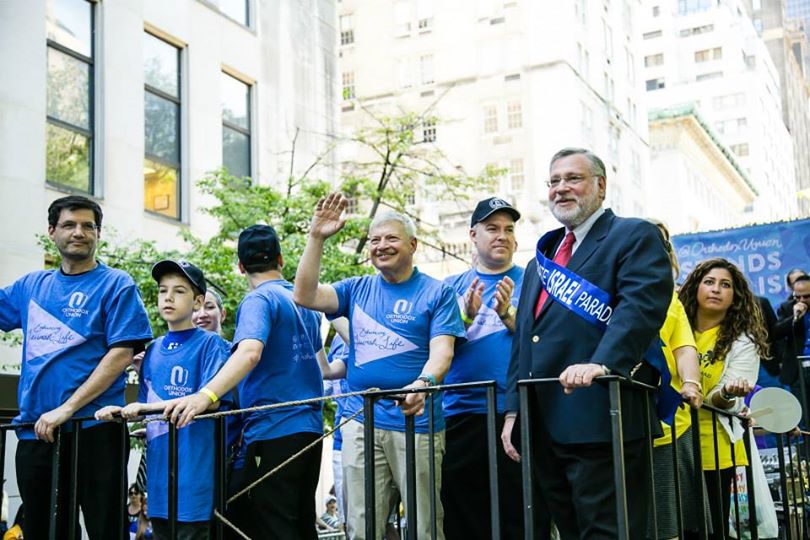
To make Mardi Gras participants happy, here is Allen Fagin, right, seen at a New York City parade as part of an OU float. (Photo courtesy OU)
CCJN: The OU was especially helpful to Congregation Beth Israel in helping it recover from the effects of Hurricane Katrina. Closer to home, Hurricane Sandy gave New Jersey and New Yorkers a taste of what destruction there is from such devastating storms. Do you feel more needs to be done to protect institutions whether on the Gulf Coast or on the Atlantic Coast?
Fagin: Absolutely, as you know we respond when our brothers and sisters are in peril. Following the hurricane we helped to raise, as you probably know, several hundred thousands of dollars for Beth Israel, so the economic assistance is certainly part of it. I think equally the majority of support, the knowledge that your disaster was our disaster – that wherever there are Jews who are in need, they know that the entire community stands behind them and with them in moments of crisis is one of the most important things we can do. I was proud not only of the degree of economic assistance we provided, but I was equally proud that Rabbi Weinreb was with you when Beth Israel was rededicated in 2012. It was important to be with you when times were difficult and important to be with you when you celebrated having stepped out of that adversity.
CCJN: Anything else to add before closing?
Fagin: It is also enormously important that our young people learn and continue to learn these same lessons. I know our NCSY chapter in New Jersey has over the last several years made 12 trips to Beth Israel. These are public school kids and (Jewish) day school kids all learning as part of their NCSY experience the need to give back to their own communities and to share with communities that are having difficulties. This process continues now years after the hurricane. We cooperate with Beth Israel and the day school. I believe there is another trip planned in February. We’re going to keep doing this because we feel it is important. We’re gong to continue doing this as part of the educational experience we provide to our kids. This is a lesson that is enormously important, not in the abstract, but very important in terms of “hands on.”
