


It’s the most confusing time of the year!
By ARLENE WIEDER, First person exclusive to the CCJN
I was very lucky to have been raised in a very protective and insulated bubble in the uptown section of New Orleans during the early 1960’s. It was a time when “Jim Crow” laws were still followed because that was the expected behavior of the era. I instinctively conformed and accepted these rules. I never openly questioned why certain guidelines were placed on individuals of color.
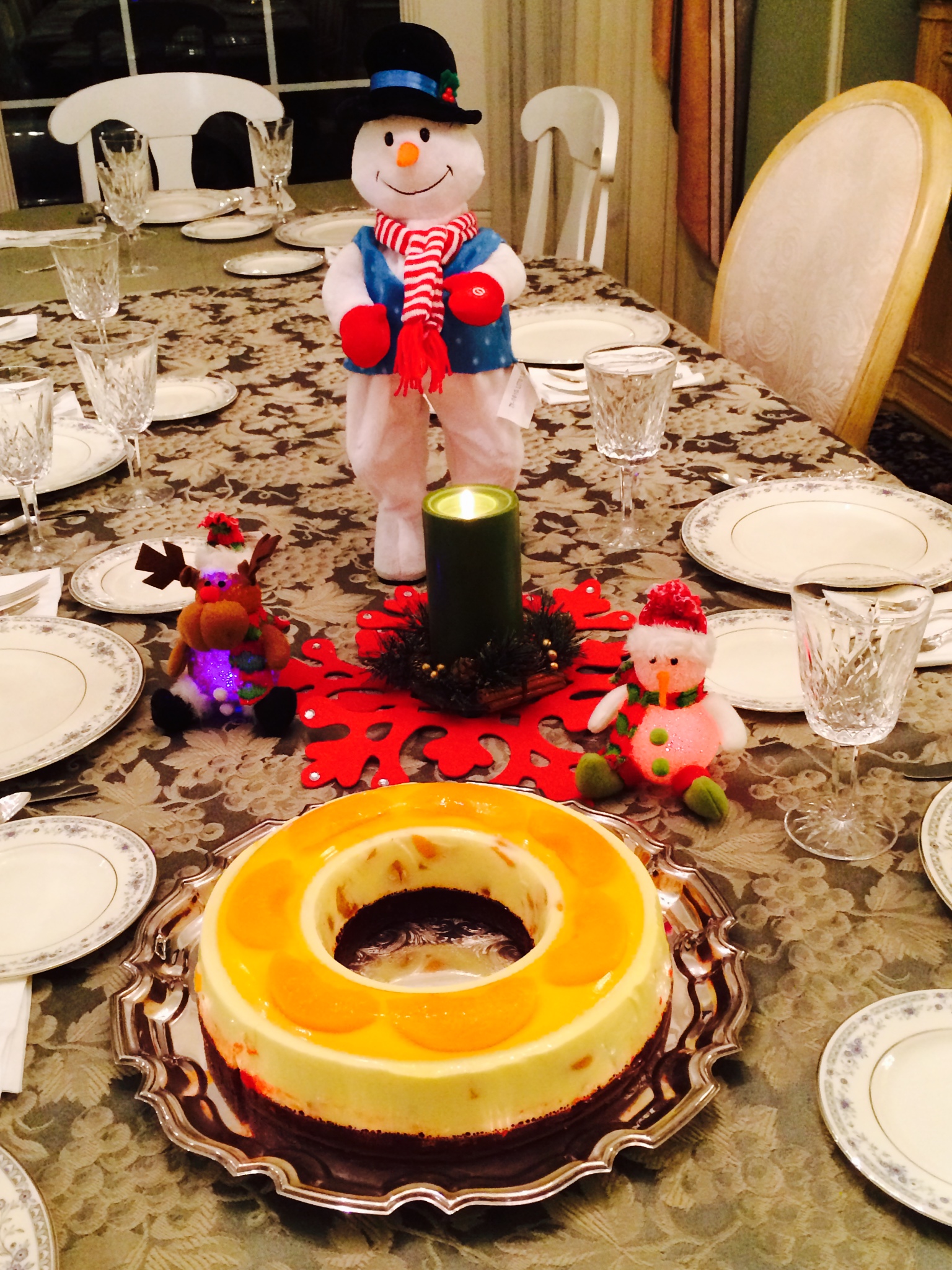
A holiday place setting replete with snowmen, a reindeer and a jello mold. (Photo by Douglas Wieder)
The truth was the restrictions did not apply to me, so I simply acted in accordance. However, because I was Jewish, I too had some limitations placed upon me for about one month each year. Starting right after Thanksgiving Day, the Christmas metamorphosis would take place in New Orleans.
Overnight the city shifted its focus from turkeys to reindeer. I dreaded this time of the year, because it caused in me tremendous uneasiness and anxiety. Throughout every neighborhood decorations would appear on the houses and in front yards. Some of the houses had long strands of colored lights that sort of resembled long Mardi Gras beads hanging from the gutters of the roofs. Many people would add white lights to their large live oak trees. The effect of the flickering lights on these trees was truly breathtaking.
Even the simplest house decorations that only had a traditional wreath hung on the front door looked inviting. The most stately homes that generally had drawn curtains throughout the year exhibited the most beautifully decorated trees for all bystanders to view. The less affluent areas of the city also had lavishly decorated houses with exterior colored lights that flickered throughout the night.
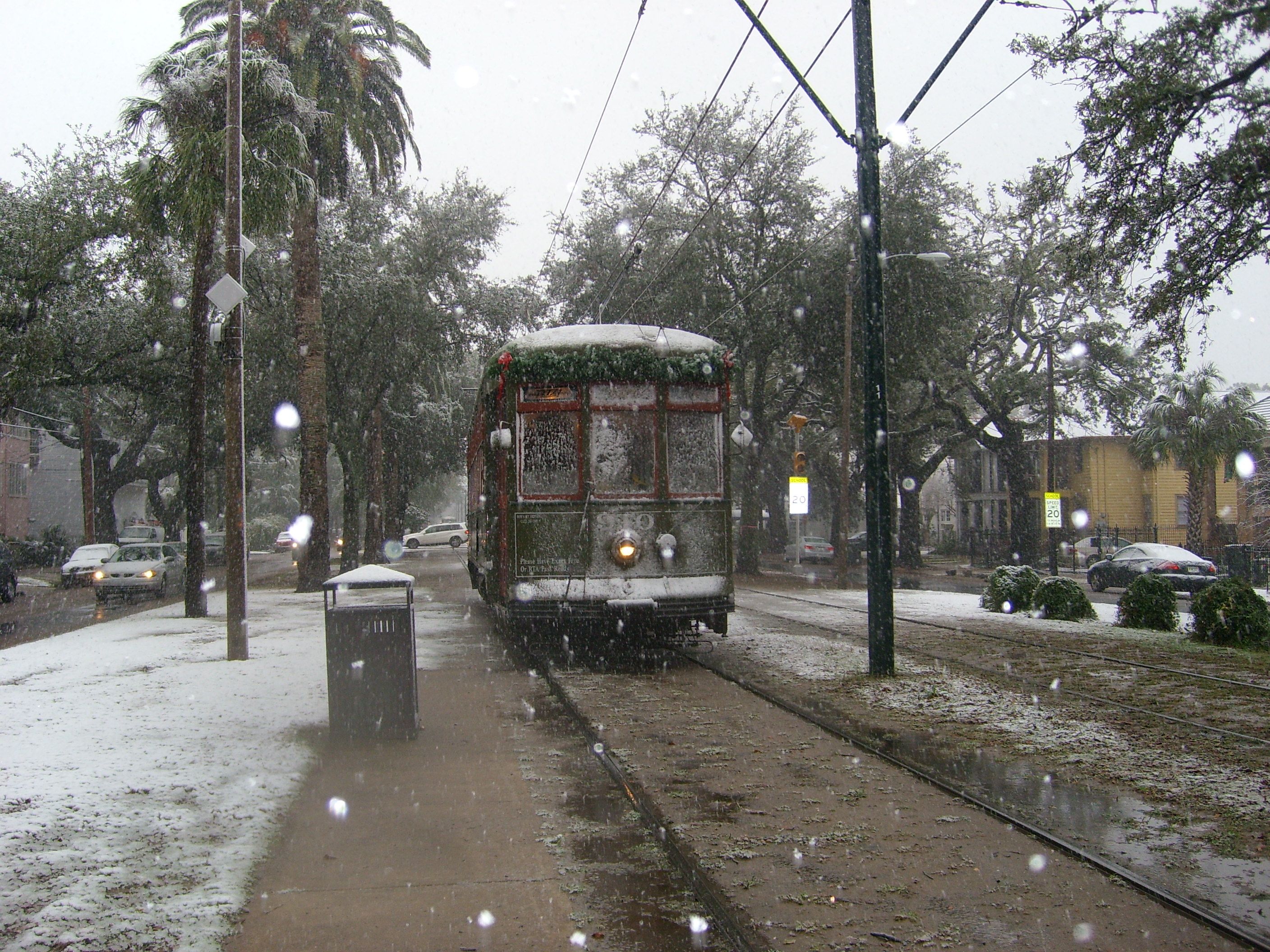
The St. Charles Avenue streetcar decorated in holiday trim during the December 11, 2008 snowstorm. (Photo by Alan Smason)
The final decorative touch in the metropolitan area was the seasonal decorated St. Charles Avenue streetcars. They were garnished with holiday greenery and red trim ribbons to help create holiday cheer. Besides noticing the physical changes in all the neighborhoods, my first indication as a youngster that the Christmas season was approaching was the addition of the seasonal advertising campaign skits inserted in the after-school television programming to target children.
In New Orleans we had (“Jingle, jangle, jingle here comes…”) Mr. Bingle, who was a flying snowman puppet with a very high pitched voice.* The daily skits were proudly sponsored by the Maison Blanche department store, the largest in the South at that time. Mr. Bingle would act in these daily vignettes both on television and in live shows performed inside the large display windows. These shows were silly and fun to watch for all ages.
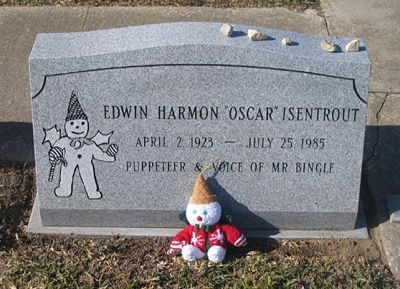
Grave of “Oscar” Isentrout.
Apart from being Santa Claus’s helper, I honestly can’t recall what this funny and quite animated little character had to do with the holiday of Christmas, but he was an annual treat to watch on TV. He always wore his ice cream cone hat, carried a peppermint stick candy cane and had wings fashioned from holly leaves that enabled him to fly. Mr. Bingle became one of New Orleans’ biggest icons. *(As an adult I found out that the voice of Mr. Bingle was actually that of local Jewish puppeteer named Edwin Harmon “Oscar” Isentrout. His grave in Hebrew Rest Cemetery No. 3 is seen here.)
Even though I was Jewish, it was an important yearly ritual to go downtown sometime during the month of December and see the decorated department store windows. Some of these windows included beautiful animated scenes with seasonal music for the shoppers’ entertainment. Of course, my first destination was to go to Maison Blanche’s fifth floor. This was the home of Mr. Bingle, Santa Claus and all the most popular toys that were available for purchase.
At Maison Blanche, I would stand in a long line and impatiently wait for my turn with Santa. Once it was my turn, someone dressed as an elf or helper would lead me to the main man! I was immediately guided to the area where Santa was located and I would sit on his lap. Then I had to pose and smile for a picture that I knew would never be purchased. When I was finished someone would guide me away and present me with a free gift!
Then, without missing a beat, I would leave the store and walk another block to D.H. Holmes Department store’s fourth floor. There I would experience and recreate the same scenario with yet another Santa Claus. Additionally, I also received a free gift from that store, too. For me, the toy was a well-earned reward and the primary purpose for the excursion.
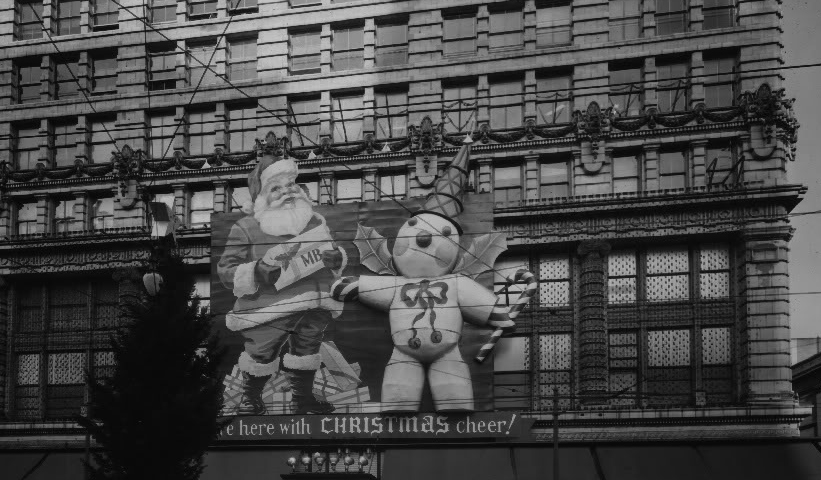
The flagship Maison Blanche department store on Canal Street during the 1950s.
At my elementary school there was a different experience. The PTA would purchase live trees for each classroom. It was the responsibility of the classroom teacher to coordinate the decorating in each classroom. Many times I was expected to make an ornament for my non-existent tree at home. Other times, my teacher would single me out and announce to my classmates that I was Jewish. My teacher would explain that being Jewish meant that I wasn’t allowed to have a tree at home for Christmas. I don’t know what felt worse—being singled out for being different or being told that my religion was lacking because it didn’t include a Christmas celebration!
Some teachers made it their job to see that I was placed first in line to place the ornaments on the tree. After all, the trimming of a Christmas tree was an important lifecycle event of which I was deprived in my “Jewish” home. I remember once a classmate stood next to me and cried because she knew my life was so incomplete. I never understood why the teachers each year felt it was their obligation to share my personal information. I was Jewish, however I didn’t feel my life was lacking anything until I was told by my teacher that I was a disadvantaged and horribly deprived child. I felt so embarrassed and certainly not one of the “chosen.”
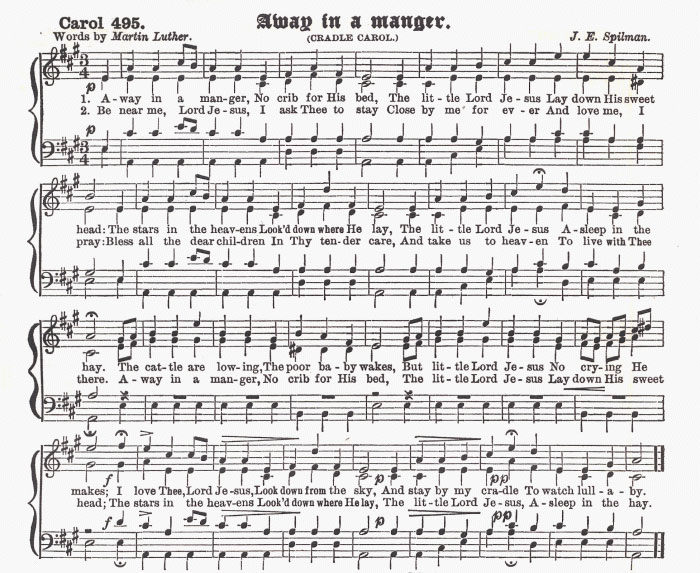
The other annual tradition at my school included weeks of preparation to present the annual Christmas program to our families. The band would play some musical numbers and the school choir (of which I was a member) was required to sing numerous seasonal songs. I always recall the difficulty I had with the song, “Away in a Manger.” I cringed because it was an extremely uncomfortable song for me to sing the lyrics about loving the lord Jesus. I remember in fourth grade I actually cried to the music teacher and requested that she eliminate this song from the revue. I expressed my discomfort and frankly I didn’t think it was an unreasonable request. Well, I was naïve. Not only did the music teacher ignore my request, but she made it her mission to keep this song in the concert each year. She also would purposely single me out and demand that I sing the line for the class to hear my beautiful voice. I felt this was her way of trying to convert me to her way of thinking.
 All I know is from that day on I knew there were mean people that existed in the world. I concluded this because although she praised my singing skills, I sang as an alto, not as a soprano. Even I knew my voice was not exceptional.
My only recourse and satisfaction came on the actual day of the concert. I would stand up with the rest of the choir, but in protest I just smiled during the entire rendition of that song. I purposely would not utter a word. It was a private war played out annually between the music teacher and me. From my perspective, the season of Christmas was just a very awkward time to be Jewish.
I remember the teachers at Sunday school telling me about the miracle of the Maccabees’ oil that sustained the ner tamid’s (eternal light’s) illumination for eight days. It was a fascinating tale, but it just didn’t compare to all the stories associated with Christmas and the beautiful music of the season. It didn’t matter what rationalized explanations I would be told, Chanukah was not magical like Christmas! It was lame to compare the two. I felt it was like comparing our local amusement park of Ponchatrain Beach and claiming it even came close to the magic of Disneyland.
Later I realized I wasn’t the only Jewish person who felt that something was lacking and a little envious of the Christian holiday. Irving Berlin and Mel Tormé created two of the most popular Christmas season songs and they were both Jewish. Within my extended Jewish family in New Orleans, some of my cousins were raised with Christmas trees and exchanged holiday gifts in Christmas wrap. My immediate family, however, did not. I must admit these actions only helped to cement my confusion and anxiety. During that generation, my family still had very little interfaith marriages, unlike today. I must admit, though, that I secretly envied my Christmas-celebrating Jewish cousins.
The most baffling behavior was from my shomer Shabbat grandmother who worshipped at an Orthodox Synagogue and maintained a kosher home. She would consistently present me with a Christmas – not a Chanukah gift – sometime around the December 25th date. Of course, she made it into a secret ritual. If asked, I was not allowed to tell my parents that she gave me the additional Christmas toy. Years later I did confront my grandmother and she explained that she didn’t want me to feel deprived or denied the perks of Christmas!
I also recall that one year at Christmas time while I was not yet a teen, I made a pact with myself. I decided when I had a family, “Christmas would not enter into my house.” My children would not feel uncomfortable with their own religion. Christmas would be a moot issue.
As an adult I relocated to the Midwest and found myself living in a much larger Jewish community than New Orleans. I remembered the pact I had made to myself made years earlier. Unfortunately, in the United States it is unrealistic to believe that one can make it through December and ignore Christmas.
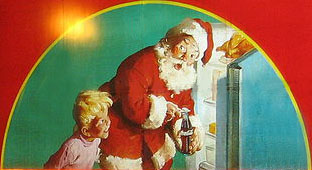
A detail from a holiday poster by the Coca-Cola Company. (Photo courtesy of Wikimedia)
Through research over the years I discovered that Christ was not born anytime close to December 25th. Our present day Santa Claus was a creation by the American artist named Haddon Sundblom. He was commissioned by the Coca Cola Company to develop a drawing for a 1931 advertising campaign. He based his drawing on the image conjured through Clement Moore’s 1822 poem—Twas the Night Before Christmas. Rudolph was a reindeer story that came out of a Montgomery Ward marketing campaign.
A few years back someone developed the tradition during the Christmas season of the Elf on the Shelf. This year for Chanukah two Jewish versions, The Maccabee on the Mantel and the Mensch on the Bench, were marketed.
My family traditions have developed over the years. We have Chinese food every Christmas Eve and I usually serve a “Christmas” dinner the next day at my home. It’s not a celebration of the holiday, but it’s a family day that brings everyone together. No one has work on Christmas Day and because our extended family and friends are usually too busy to make time for each other during December (which is our sad reality), our traditional gift exchange occurs at our December 25th dinner.
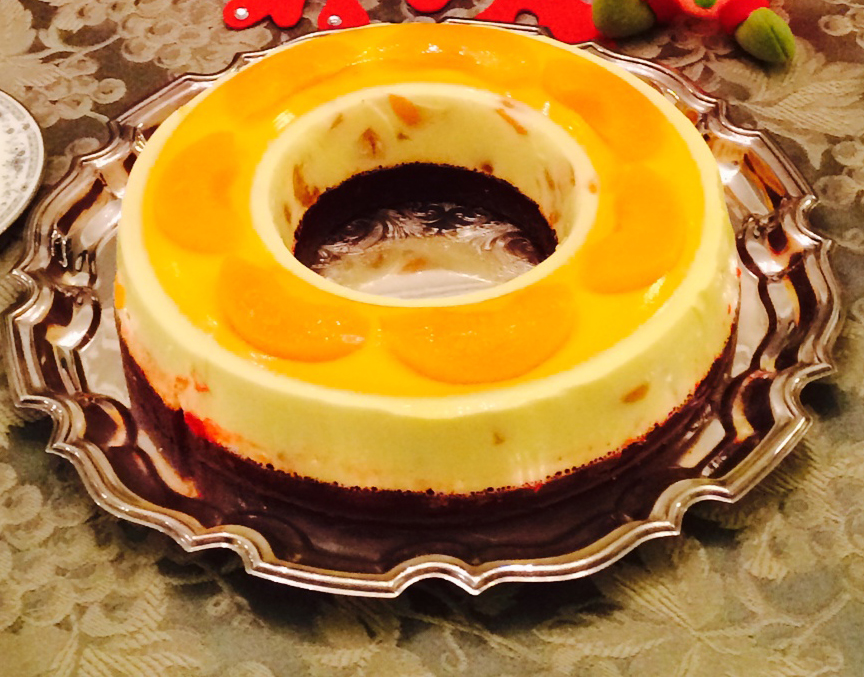
Red and yellow jello mold for the holidays. (Photo by Douglas Wieder)
Everyone brings either dessert or a side dish. My sister-in-law always arrives with her seasonal multi-colored and layered gelatin mold, oftentimes red and green in color. This causes me to think back to my frustrated days as a child. Now, as a seasoned adult, I realize that unless a Jewish family lives an extremely observant and isolated existence, it’s hard to ignore the Christmas holiday.
Additionally, now with so much intermarriage in many Jewish American families, we don’t want to be unreasonable and make any of our family members unwelcome in our homes. Although I don’t go out of my way to celebrate Christmas in my home, I would be a fraud to say that I didn’t enjoy the music and the beautiful decorations of the season. It’s a great time to watch the movie, “It’s a Wonderful Life” or chuckle in one of Tim Allen’s “Santa Clause” movies.
As most of us appreciate it, Chanukah only became a popular holiday in the 1920’s as a response to the Jewish populations’ feeling of guilt that our indulged children were lacking something in our American way of life. As Jews we should be tolerant of others’ beliefs and we need to be more respectful of our own holidays. Chanukah is a time for candles, dreidels, chocolate coins, sofganyot (jelly donuts) and believing that miracles can happen.
It is wrong to make Chanukah into some holiday it was never intended to be. For the Christians they, too, have a mission at this time of year. They need to remember the reason for their season and be more in tune to their faith.
In short, we all need to just listen to the message of peace and love at this time of year. Appreciate the good things in life and be respectful of others. Here in New Orleans we can also celebrate the fact that king cakes and Carnival activities are just around the corner!
