


Historic battle has meaning for Jewish New Orleans
By ARLENE WIEDER, Exclusive to the CCJN
Two hundred years ago – January 8, 1815 – the final of four skirmishes between a ragtag army of American defenders and an invading force of seasoned British soldiers took place on a field in present-day Chalmette. We know this decisive victory as the Battle of New Orleans, but the effect of an earlier battle on January 1 may have had far bigger consequences for the Jewish community than most realize.

The Battle of New Orleans. (Photo courtesy of Wikimedia)
The Red Coats, the aggressive interlopers who had first landed at Lake Borgne on December 12, were a well-trained and disciplined fighting force, having had experience fighting the Napoleonic Wars. They outnumbered their opponents by a factor of two-to-one.
Despite having home field advantage, the American underdogs were composed of a diverse group of players from varied backgrounds, experiences and communities. This eclectic group was formed from a combined force of local Creoles, freemen of color, Choctaw Indians and volunteer riflemen from Tennessee and Kentucky. And, yes, there were pirates, too!
Many historians go on at length to point out that the Treaty of Ghent that officially ended the war had been signed on December 24 and that the decisive battle fought during the early days of 1815 was not necessary. It is doubtful, however, that the British would have returned the land had they secured a victory.
More to the point, New Orleans and the still young United States of America might have emerged as different entities. First, Andrew Jackson would not have become a celebrated national hero, eventually propelled into office as our nation’s seventh president. Jean Lafitte would most likely be known more for thievery and privateering and not for supplying the necessary ammunition and manpower he offered to the home defenders from his foothold of Barataria Bay.
But probably, most important to the local Jewish community was that our greatest 19th Century figure, Judah Touro, might never have emerged as the great community leader and philanthropist we remember him as had he not been critically injured during the opening volleys of the first of the battles.
In his article “When Bad Things Happen” on the Aish HaTorah site, David Baum is quoted as saying: “We can understand the rules, but we cannot begin to fathom all the calculations that go into God’s interactions with us, balancing our eternal needs, the needs of our society and the needs of mankind.”
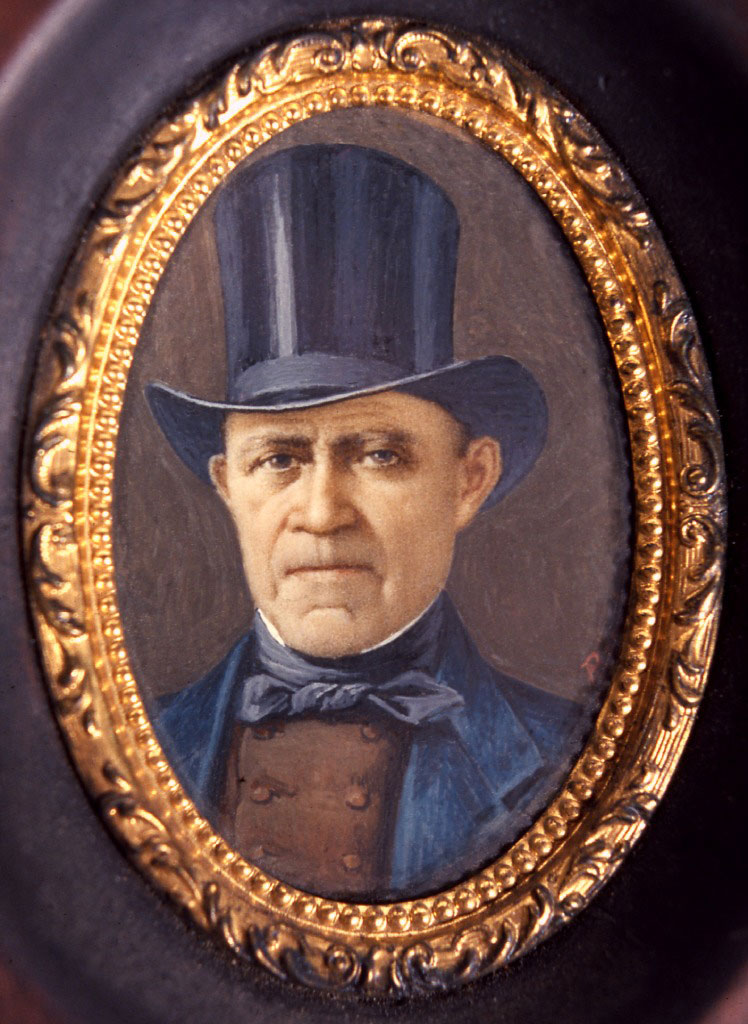
Judah Touro (Courtesy of The Historic New Orleans Collection)
In Touro’s case, few locals know he was one of the first casualties of the battle against the British forces.
Jerry Klinger of the Jewish American Society for Historic Preservation reported his research on the bravery of Touro, who had volunteered to stem the British invasion.
“Mr. Touro was attached to the regiment of Louisiana militia… After performing severe labors as a common soldier in the ranks, Mr. Touro on the first of January volunteered his services to aid in carrying shot and shell from the magazine to Humphrey’s battery,” Klinger wrote.
“In this humble but perilous duty he was seen actively engaged during the terrible cannonade with which the British opened the day, regardless of the cloud of iron missiles which flew around him and which made many of the stoutest hearted cling closely to the embankment or seek some shelter. But in the discharge of duty this good man knew no fear and perceived no danger.”
Touro was struck in the leg by a twelve-pound shot fired from one of the British cannon. It was a ghastly wound and he was carried off the field to the nearby field hospital. A physician there, Dr. Kerr, examined the soldier, but pronounced his wound beyond his medical capabilities to cure. Touro was essentially left alone, made comfortable and given up for dead.
Luckily, for Touro, his friend Rezin Davis Shepherd, attached to a horse troop, was working as an aide to Commodore Patterson, assisting him with the charge of defending the city by erecting a battery on the right bank of the Mississippi River.
“While engaged in this task, Shepherd crossed the river to procure two masons to do some work on the Commodore’s battery,” Klinger continued. “The first person Shepherd saw on reaching the other side of the river told him of the condition of Touro. He was shocked. Shepherd rushed to the place where Touro was lying.”
Near a wall of an old building at the rear of Jackson’s headquarters, Shepherd confronted the doctor.
“Kerr, who was dressing Touro’s wounds, shook his head, indicating that there was no hope for Touro,” Klinger recounted. But Shepherd refused to accept that prognosis for his friend.
“He commandeered a cart and brought Judah back to his home,” Klinger continued. “Rezin refused to stand by and let his friend simply die. For a full year Touro lay in a bed of agony and pain. Shepherd hired nurses, attendants and personally assisted his injured friend,” Klinger stated.
In the end Touro survived and went on to amass one of the greatest fortunes in the nation. “He never forgot the selfless act of his friend,” Klinger said.
So, had the British not invaded and Touro not suffered a near-death experience, it is possible that much of what we have come to know and love about our Jewish community in New Orleans might be drastically different.
The confidence his friend placed in him not being left for dead, insured that Touro would respect life and appreciate what a positive outlook could overcome. His desire to be healthy no doubt contributed to his drive in business.
We should not forget that without his philanthropy, Touro’s immense wealth might never have been used to help establish sections of the Jewish community that survive into present-day time. And for that we should all be grateful.
