50th anniversary of Vatican II pact with Jews commemorated
By DEAN M. SHAPIRO
Representatives of the Archdiocese of New Orleans and the New Orleans Jewish rabbinate gathered before an audience on the campus of Loyola University on November 23 to commemorate the 50th anniversary of the Vatican II declaration that led to formalized relations between the Roman Catholic Church and other religions, including the world Jewish community.
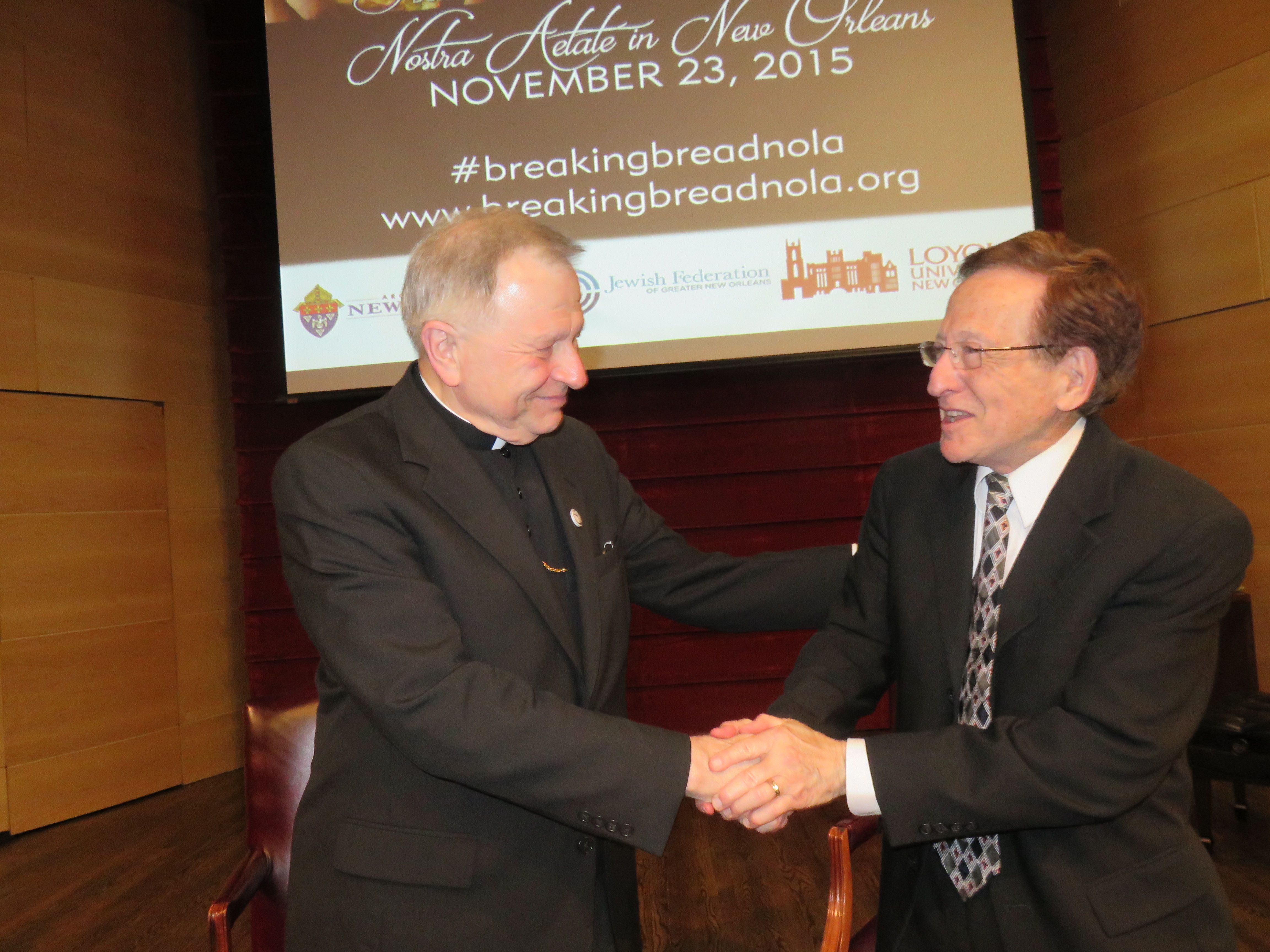
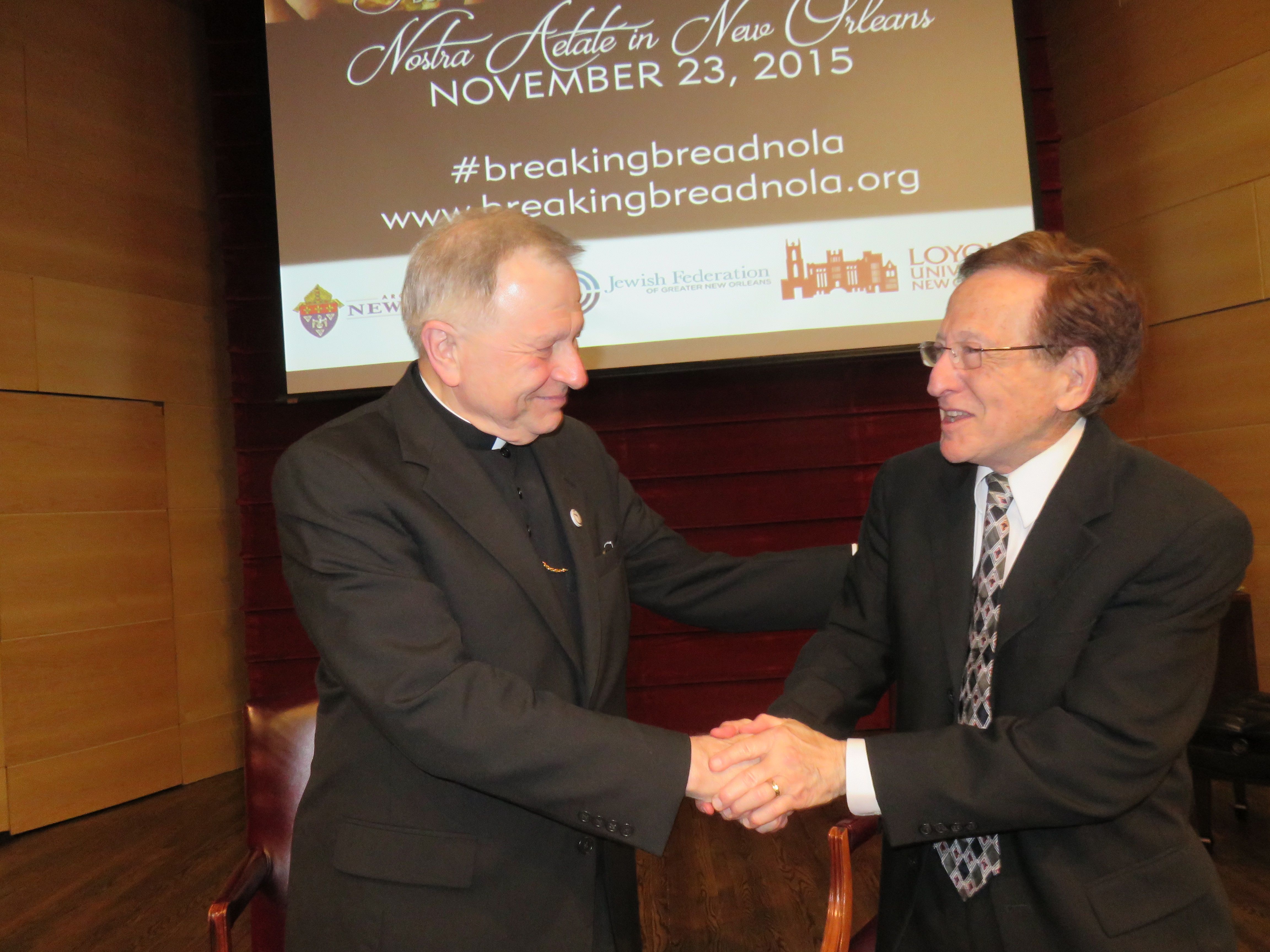
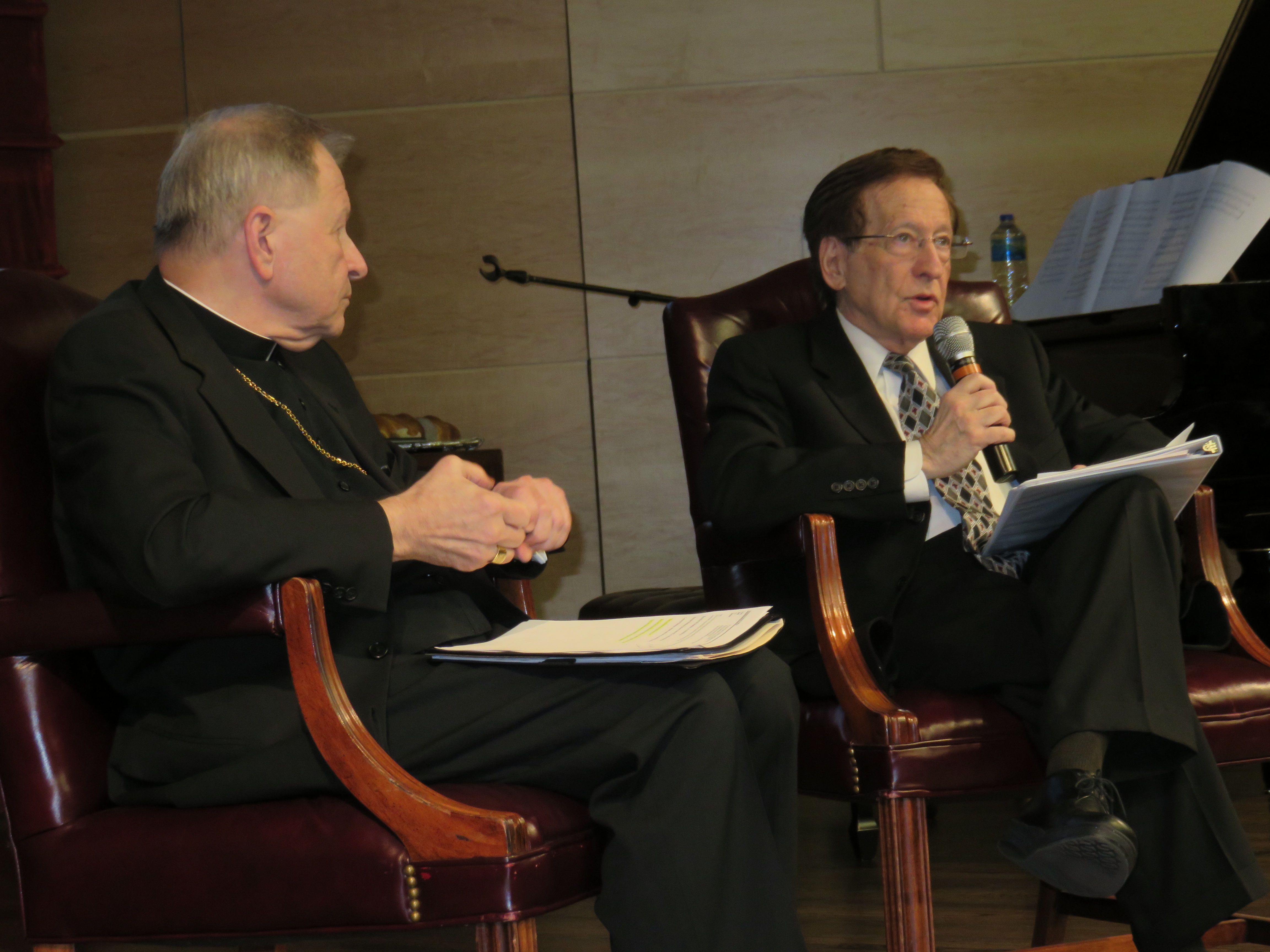
New Orleans Archbishop Gregory Aymond greets Rabbi Michael Cook at the 50th anniversary of the Nostra Aetate document that eased tensions between the Catholic Church and Jews. (Photo by Alan Smason)
New Orleans Archbishop Gregory Aymond and several local and visiting rabbis were on hand to mark the occasion when, in 1965, the bishops assembled in the Vatican ratified the Nostra Aetate Declaration on the Relation of the Church with Non-Christian Religions.
Latin for “In our time,” Nostra Aetate was a significant step forward in ending centuries of alienation between the Catholic and Jewish faiths. Among the most far-reaching provisions of the document was a formal declaration by the Church absolving the Jews of guilt for the death of Jesus.
Members of both the Catholic and Jewish faiths attended the gathering, which was emceed by WDSU-TV6 anchor Scott Walker in Nunemaker Hall. In addition to Archbishop Aymond, the honored guest was Rabbi Michael Cook from the Hebrew Union College-Jewish Institute of Religion in Cincinnati, a leading authority on interfaith relations.
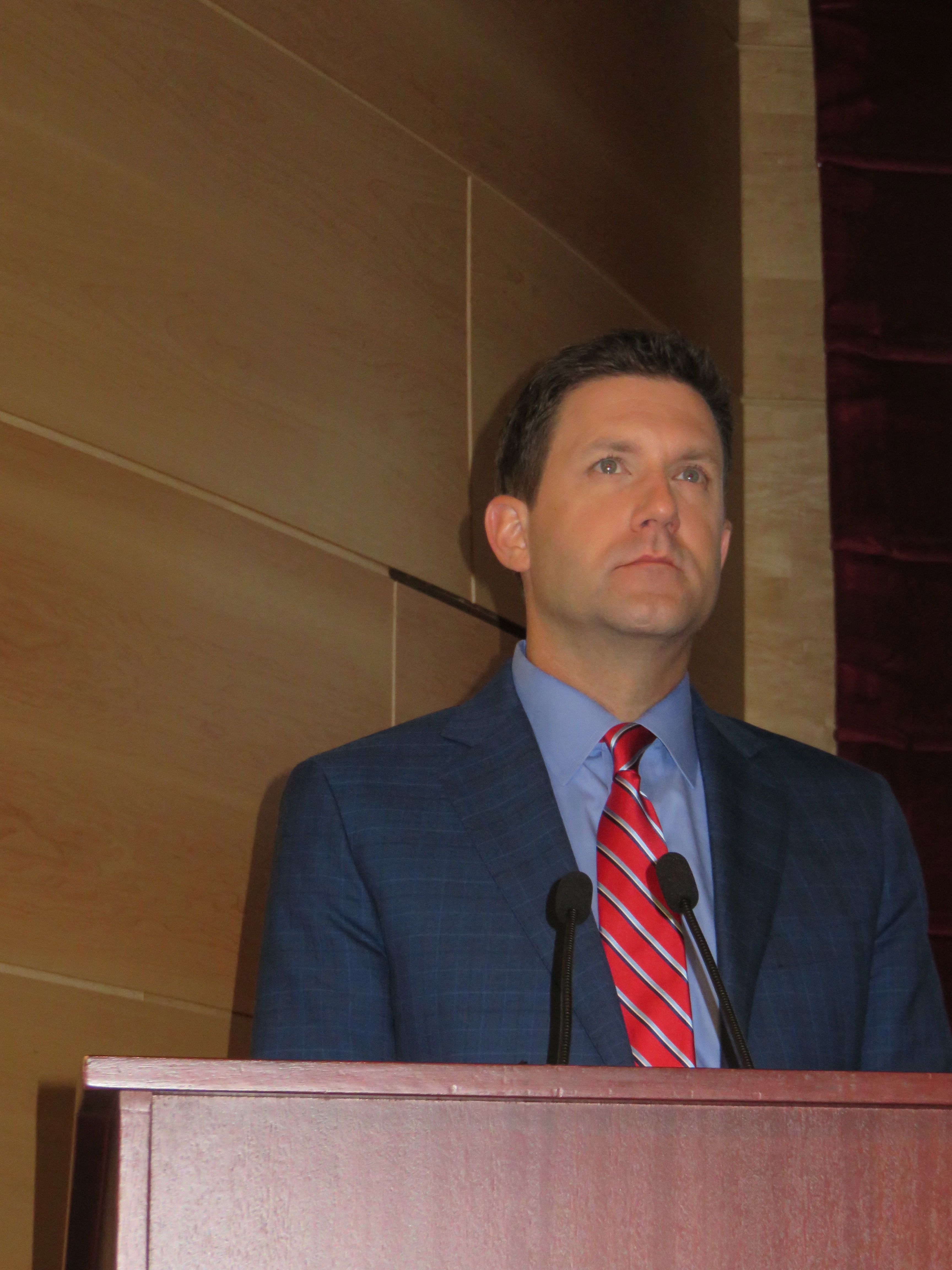
Rev. Kevin Wildes, president of Loyola University, opened the program with words of welcome and recognition of the occasion. “Tonight we are recognizing the established relationships that exist among the Catholic and Jewish communities, as well as the ways in which they offer greater opportunities for collaboration and exchange among the communities in promoting existing programs and energizing new ideas,” Wildes said.
Following Wildes’ opening remarks, Father Buddy Noel, Ecumenical and Interfaith Director of the Archdiocese, and Rabbi Edward Paul Cohn of Temple Sinai came forward to ceremonially break bread, a traditional gesture of friendship and cooperation among Western faiths. Cohn said the traditional blessing in Hebrew, while Noel said one in English.
In his brief remarks, Noel said, “I just wanted to say what this means to us, as Christians and Jews, to break bread together. We are communities of faith and share faith in God and, because of Nostra Aetate, we are able to do this.
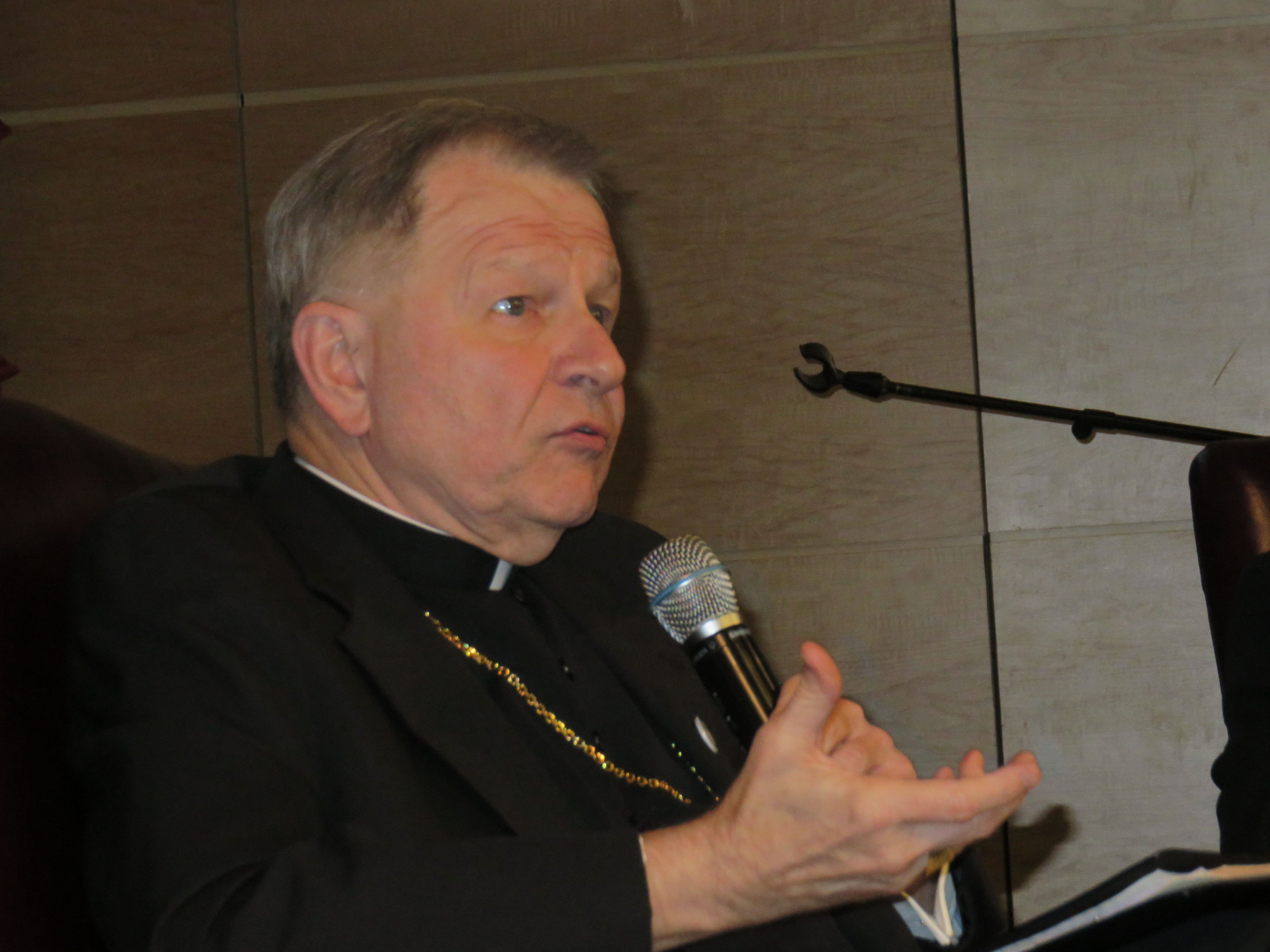
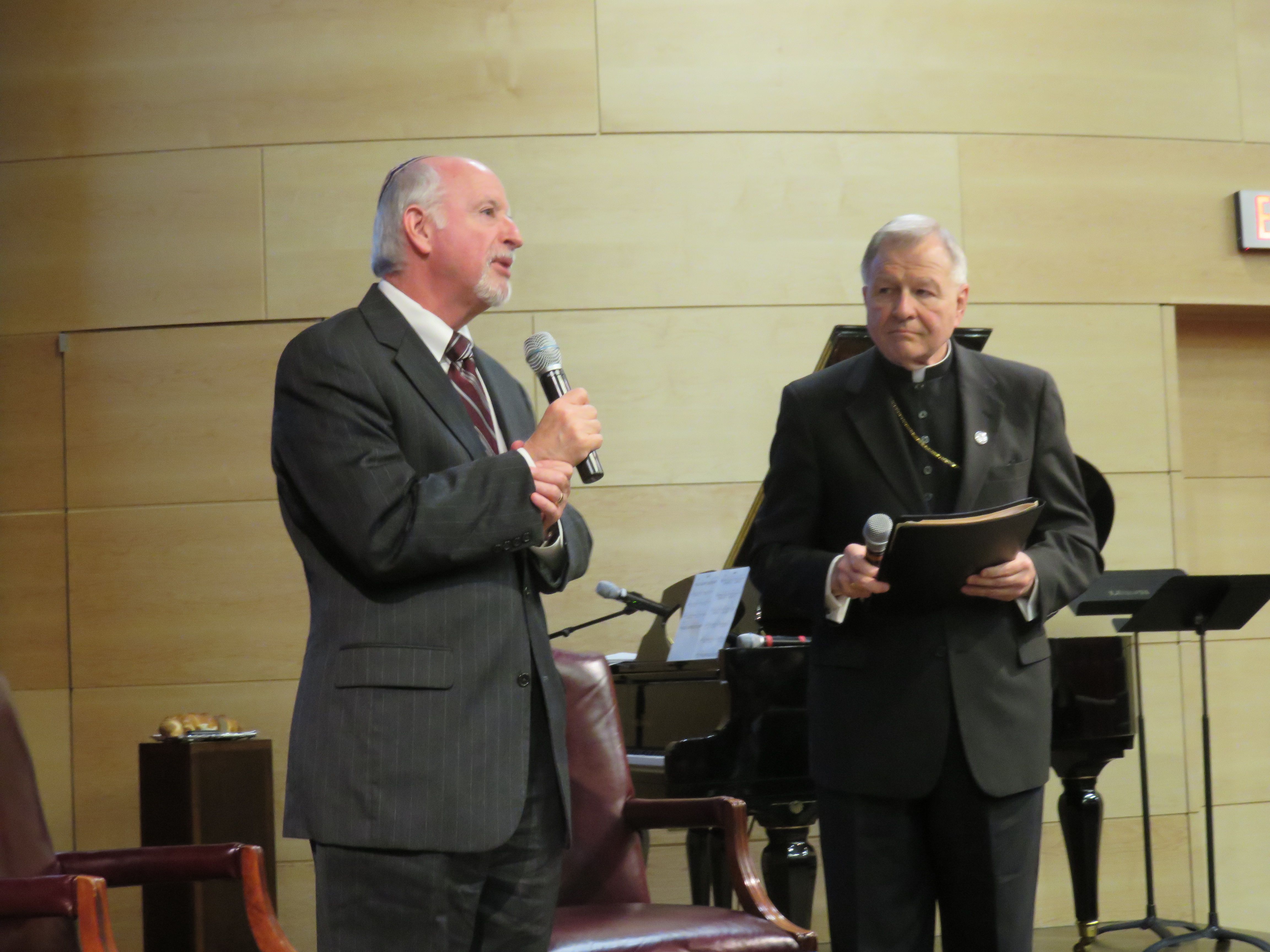
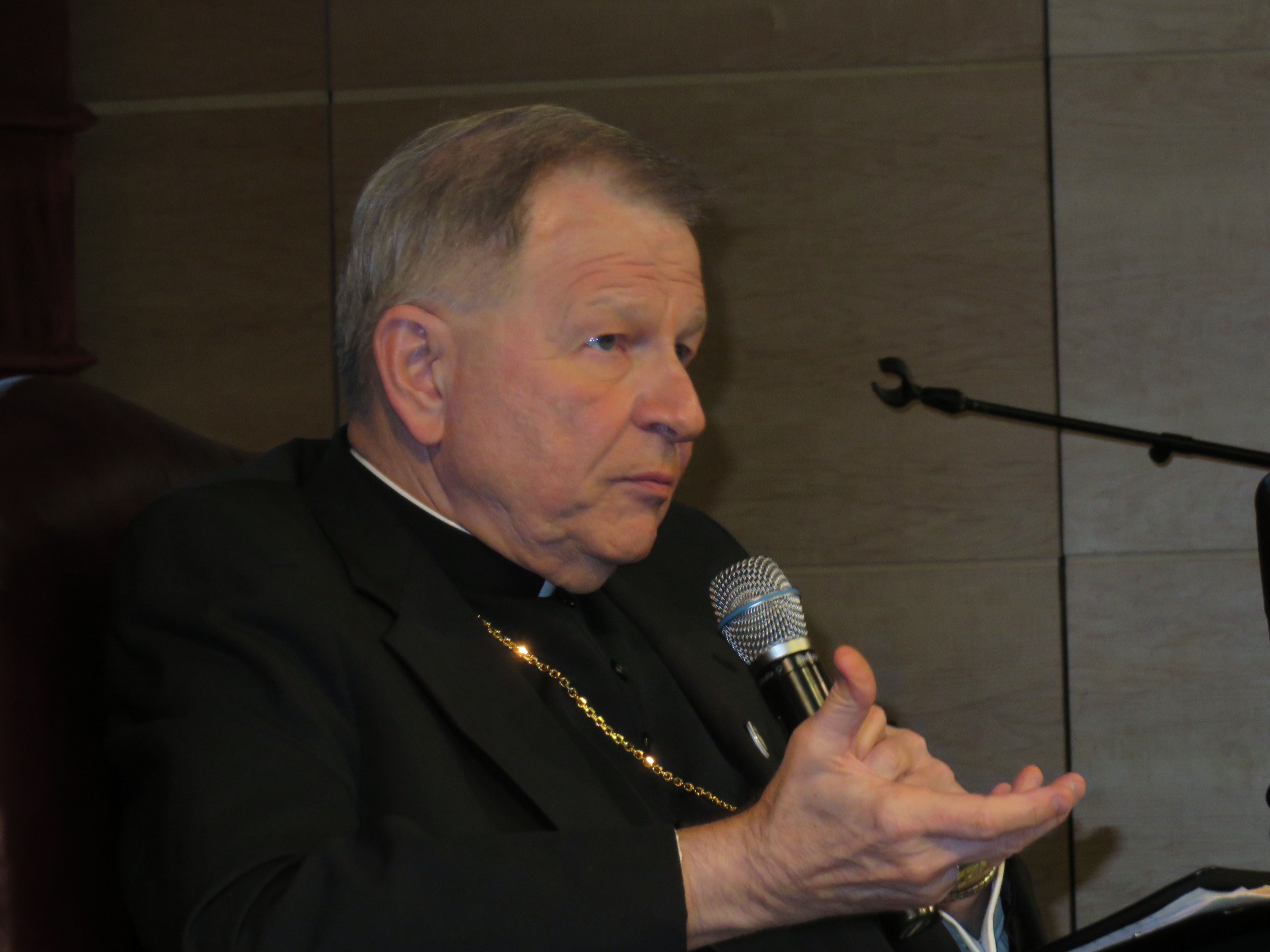
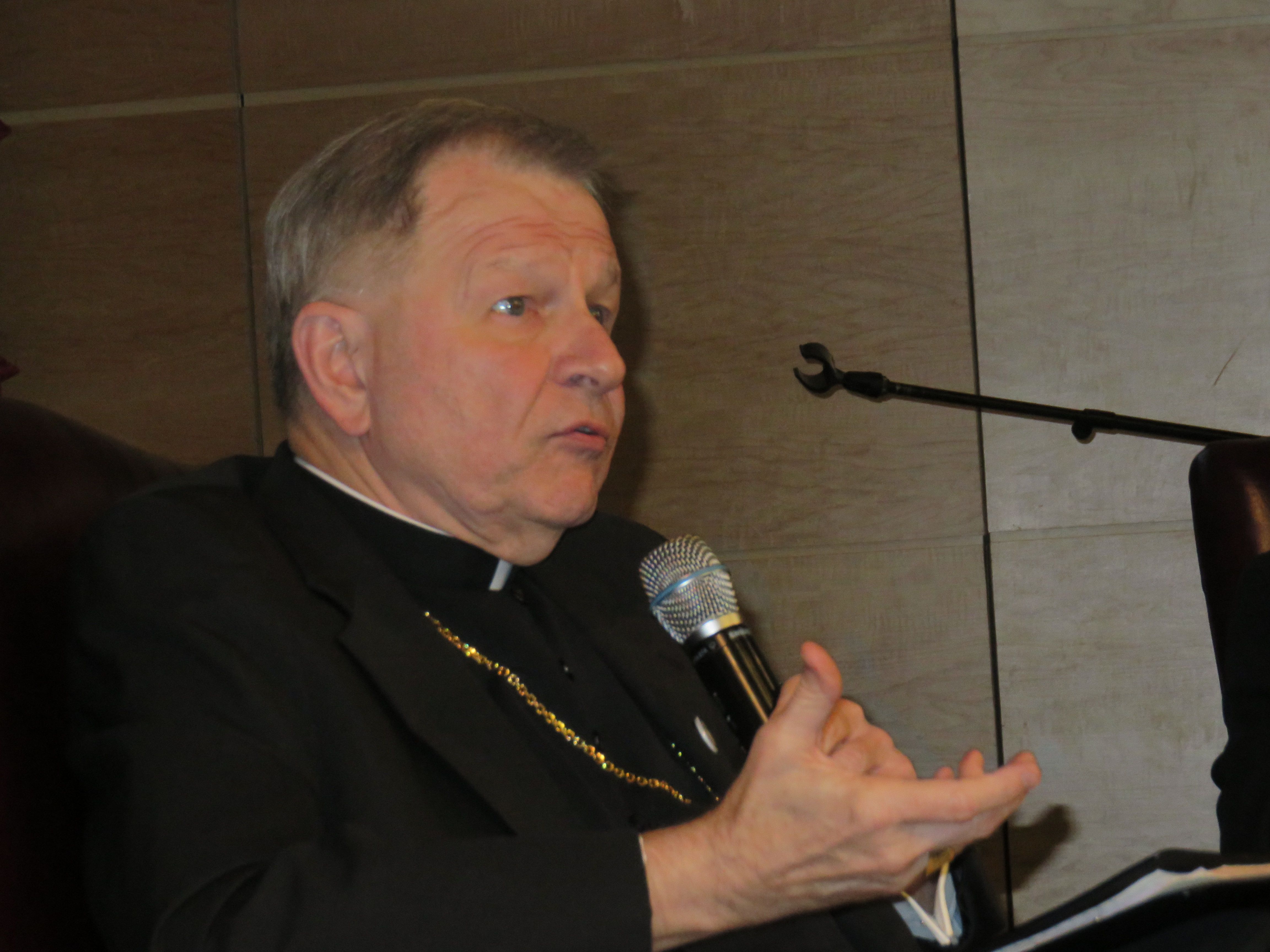
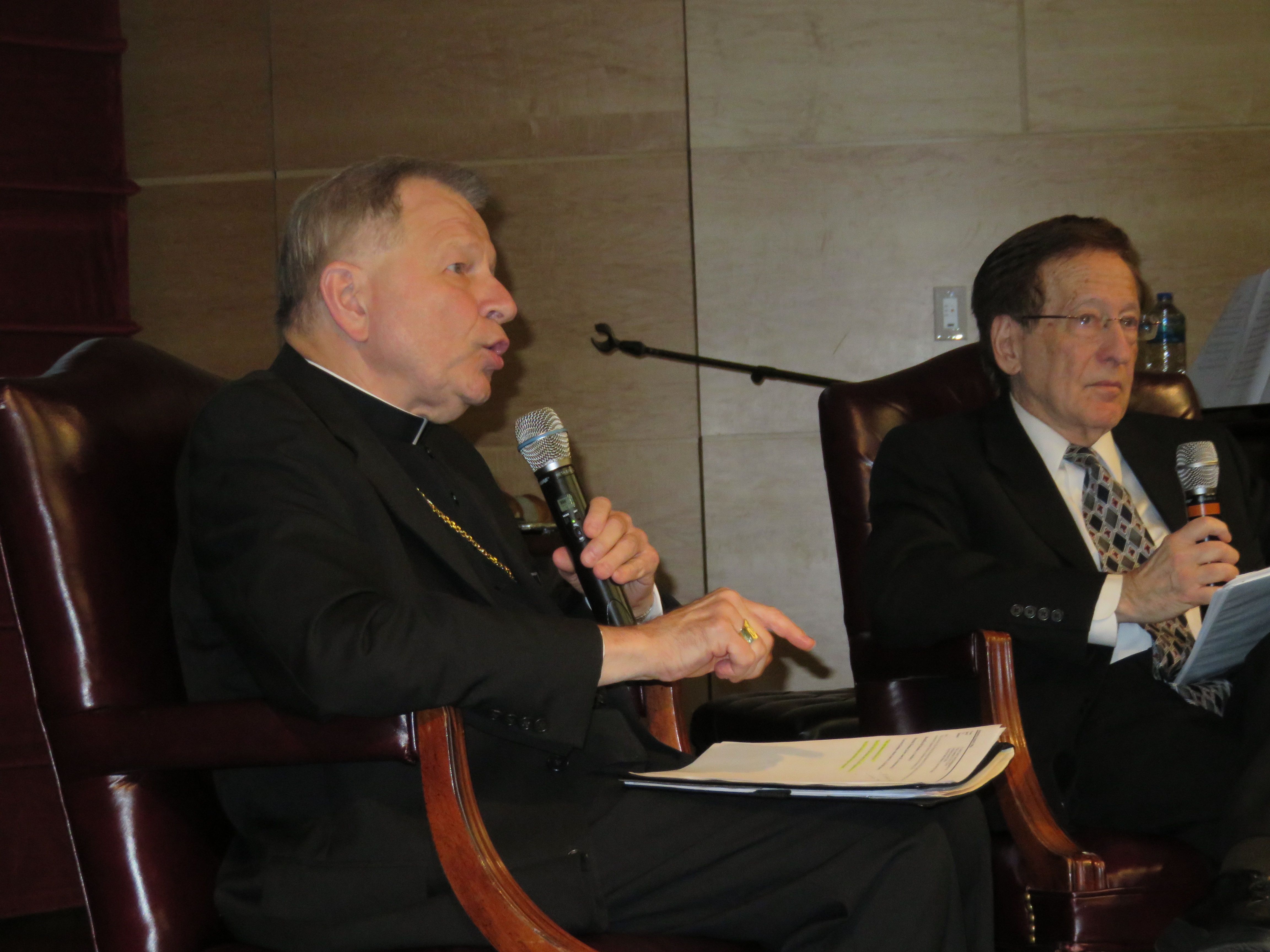
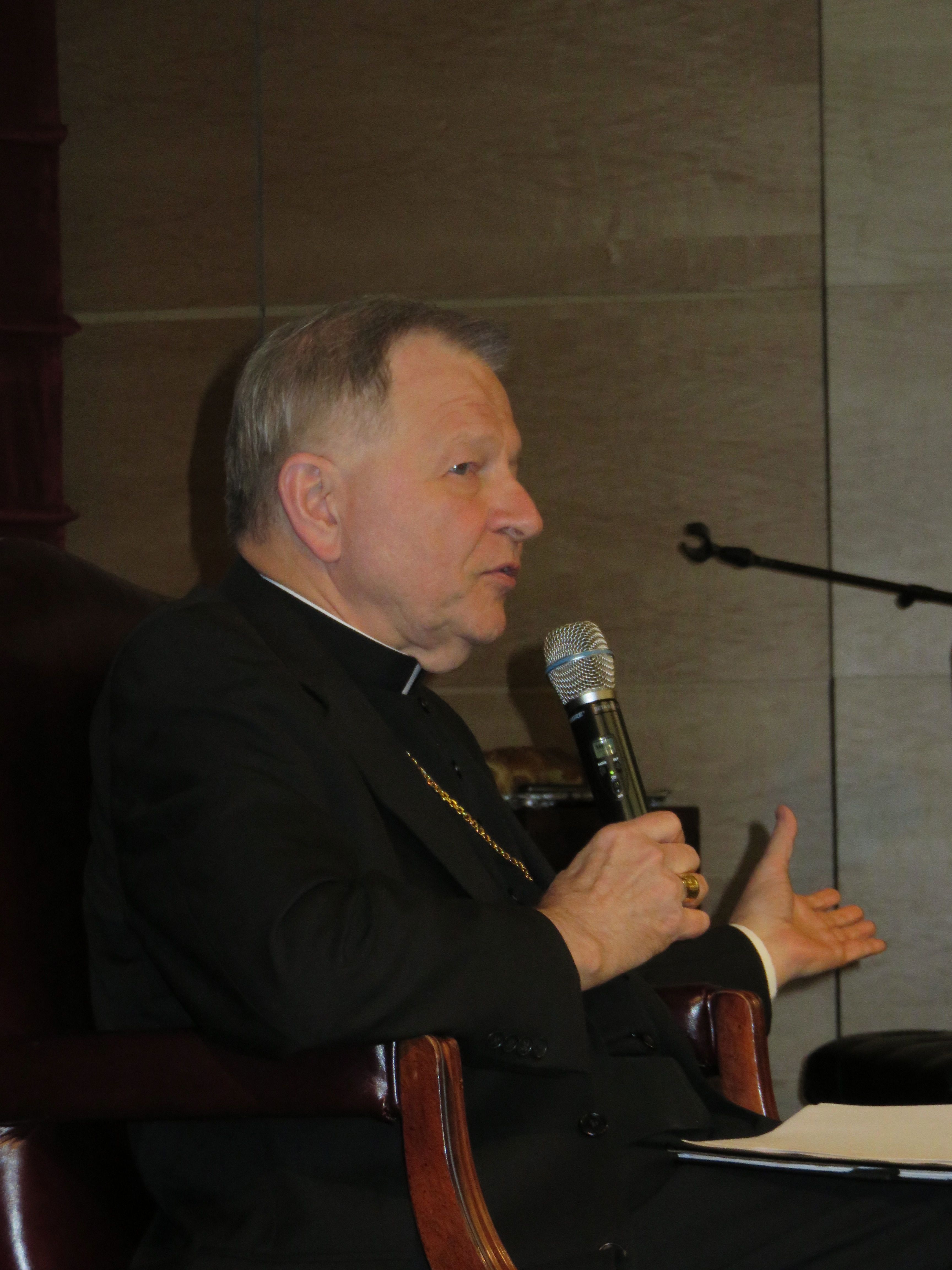
New Orleans Archbishop Gregory Aymond speaks on the 50th anniversary of Nostra Aetate at Loyola University. (Photo by Alan Smason)
During his talk, Cohn spoke of growing up in a small town in Maryland where, in the early 1960s, his best friend, a Roman Catholic, was not allowed to go to shul with him because of Church restrictions.
“As we look at the world and we despair over how things have gotten worse, we need to cherish and embrace those areas of our lives where we have grown and where things are, in fact, so much better,” Cohn said. “This is one such time to cherish one another and to learn from one another and to help the future become even better, brighter and more peaceful through our faiths.”
Aymond, who was installed in 2009 as the city’s first New Orleans-born archbishop, alluded to Cohn’s story, saying, “We’ve come a long, long way since then. That’s what we’ve come to talk about and celebrate tonight.”
The archbishop related the series of events that led up to the enactment of Nostra Aetate, starting with a meeting between Pope John XXIII and Jewish historian Jules Isaac shortly before the opening of Vatican II. The pope who, as Archbishop Angelo Roncalli, saved tens of thousands of Jews in Eastern Europe during the Nazi-perpetrated Holocaust, “listened not only with his ears, but also with his heart” as he and Isaac discussed a book Isaac had written saying that “hatred of Jews was rooted in Catholic doctrine and teachings,” Aymond explained.
Pope John then brought on board a Polish-born American rabbi, Abraham Joshua Heschel, to assist him and Isaac in drafting wording for the document up for consideration by the bishops, Aymond continued.
“The background of Nostra Aetate shows the providence of God and the working of the spirit of God, calling us to honesty, respect for one another, and to a shared faith in many ways,” Aymond said.
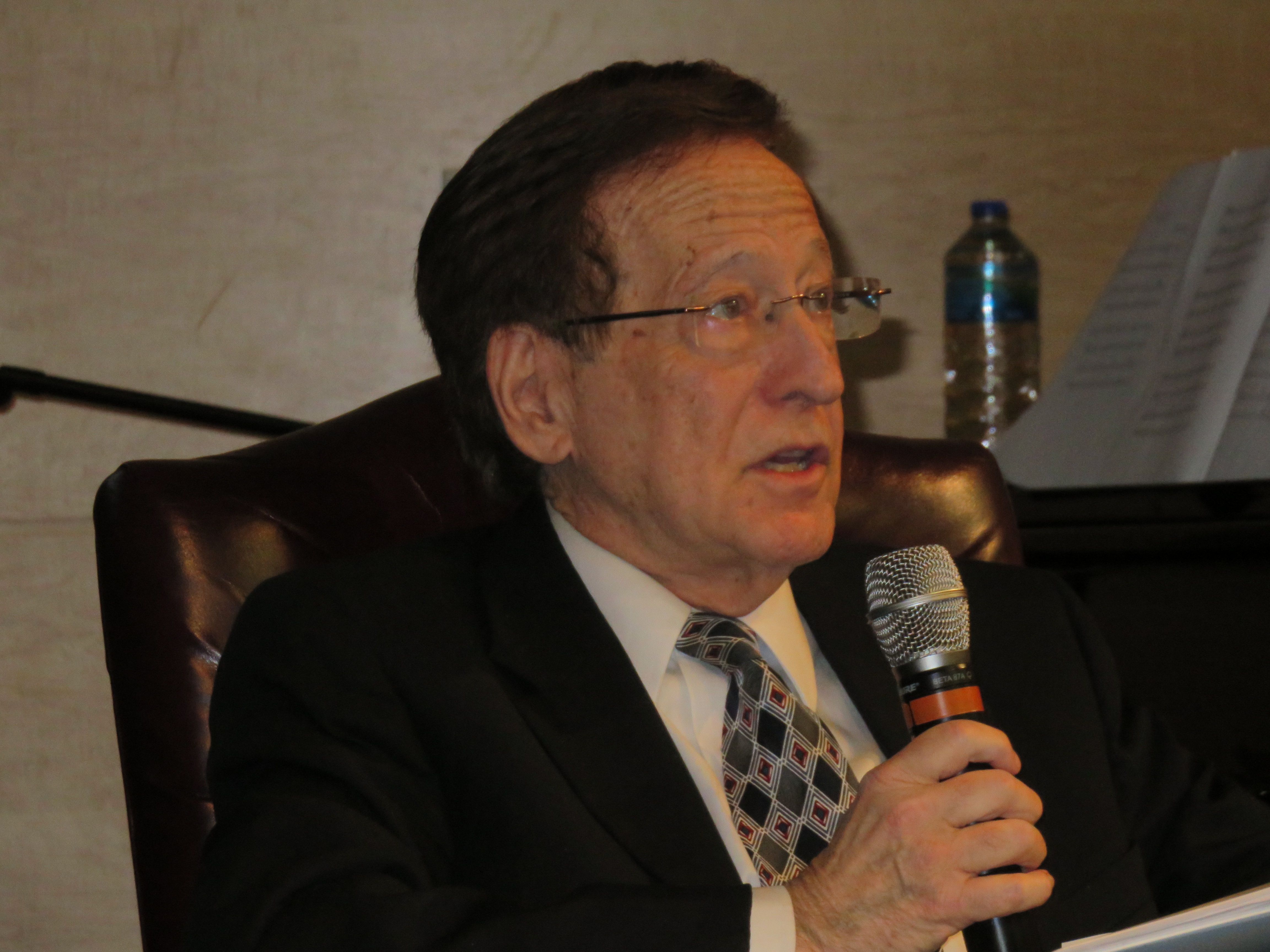
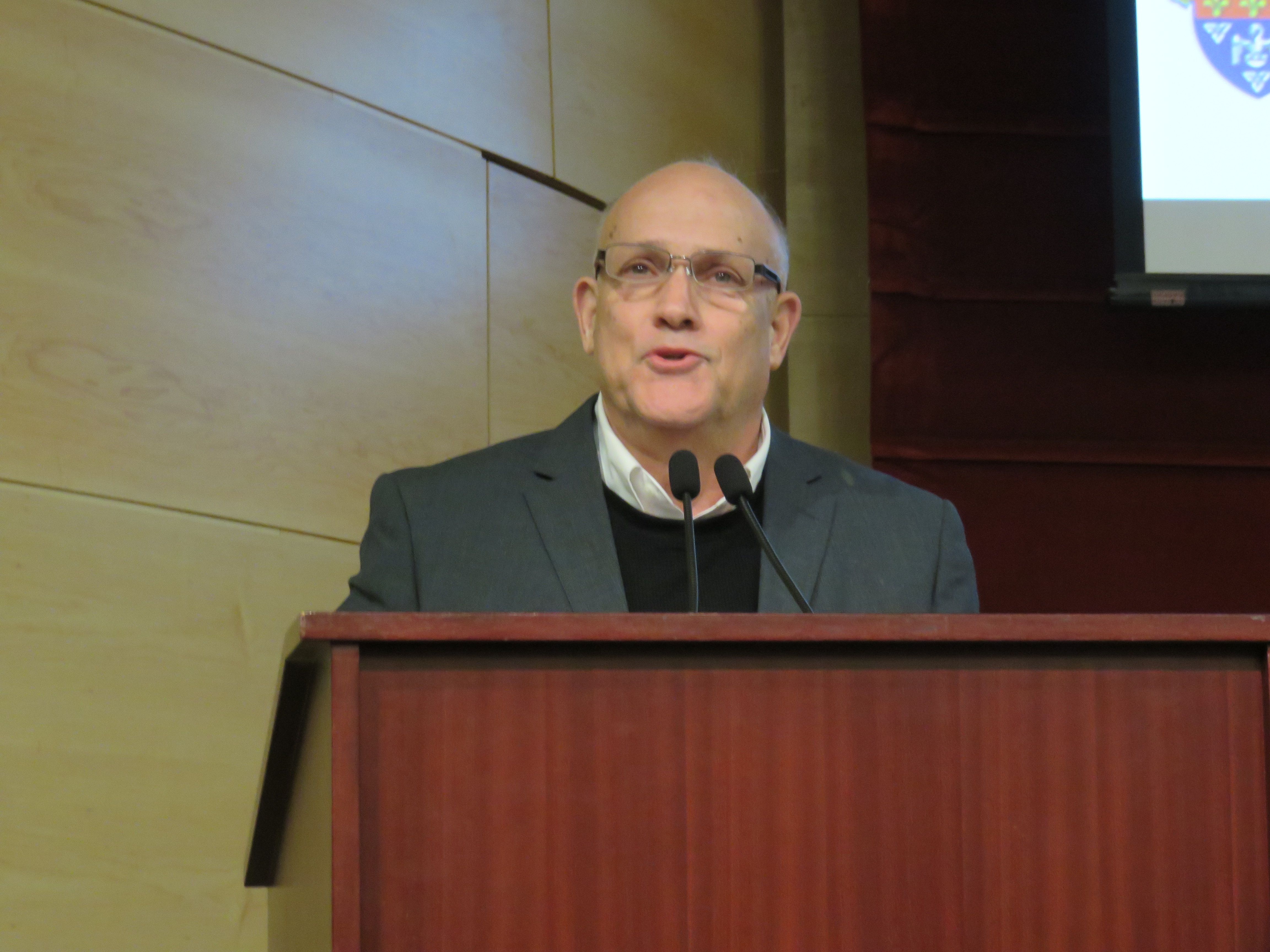
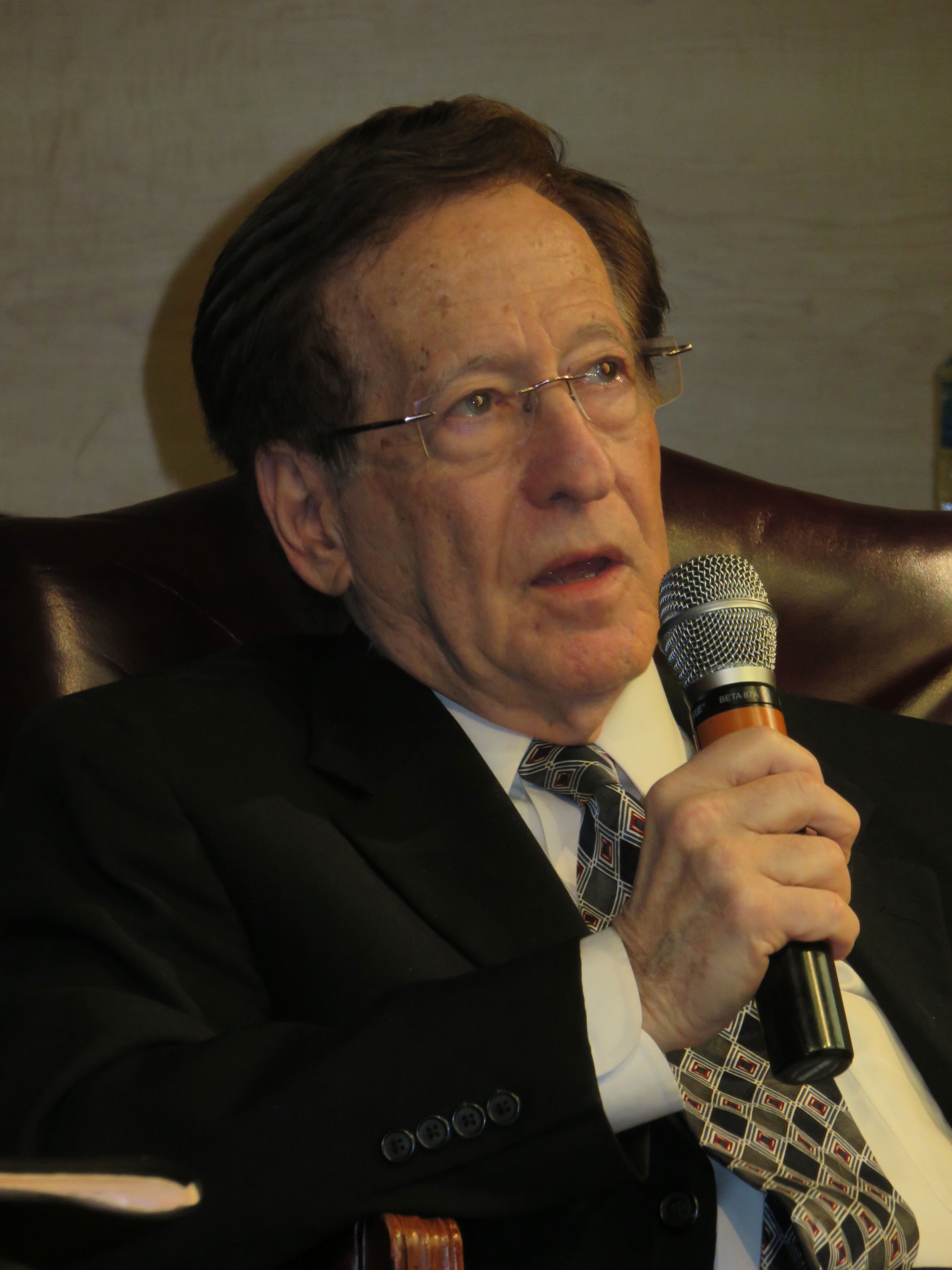
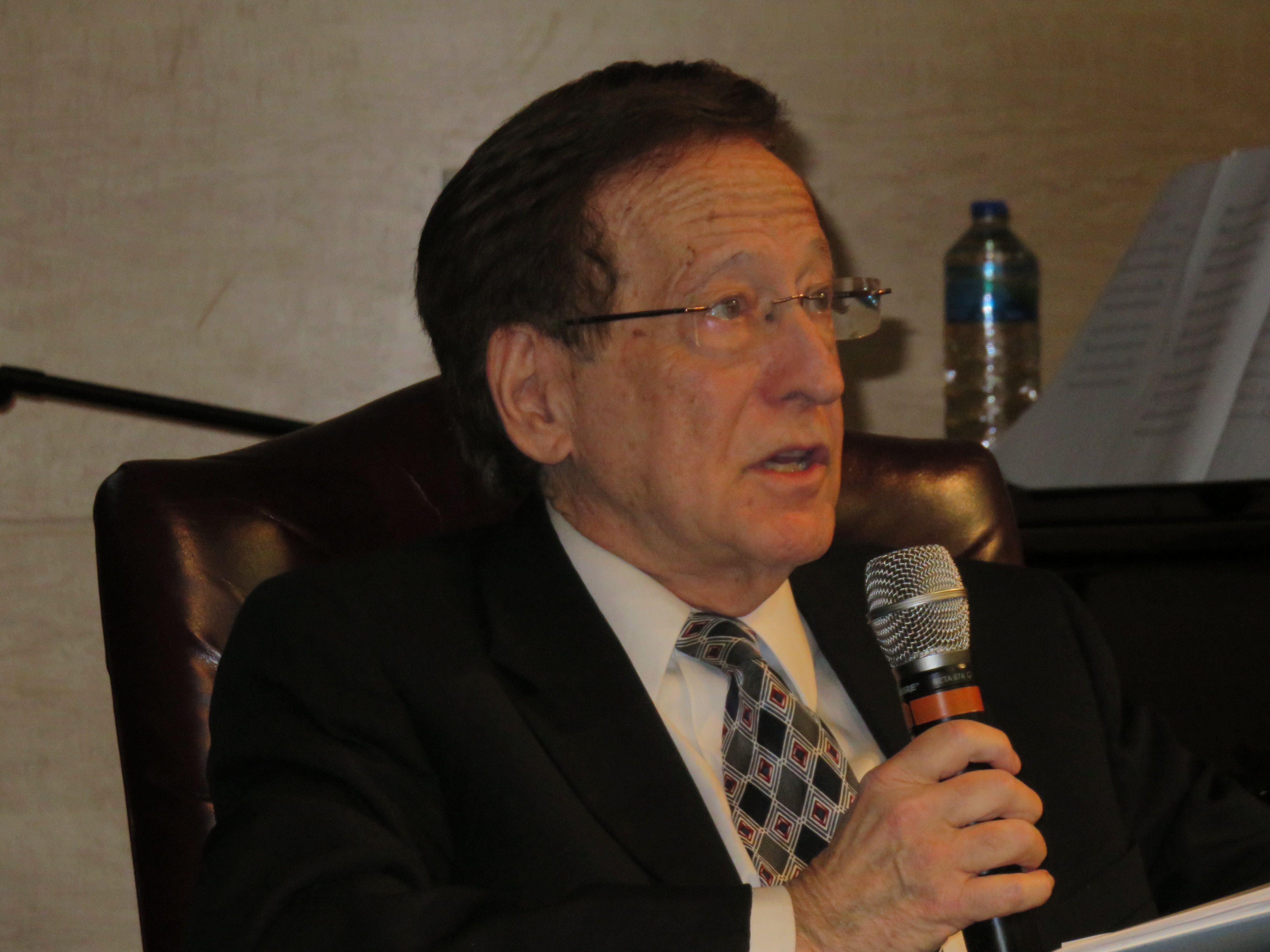
Interfaith authority Rabbi Michael Cook of the Hebrew Union College-Jewish Institute of Relgion. (Photo by Alan Smason)
The archbishop went on to explain the significance of the fourth paragraph of the Nostra Aetate. “It said that the death of Jesus was not to be blamed on all Jews collectively, in the past, present or future. . . . It also condemned any form of anti-Semitism. The Catholic Church acknowledges, with gratitude and with great respect, the validity of God’s abiding covenant with Israel. We believe that to be an important covenant between the Jewish community and for us as Christians and as Catholics. The council said it would foster and recommend a mutual knowledge and respect between Jews and Christians and anything less than that would not be tolerated. The Catholic Church and all Christians should never preach or teach anything that would express hatred or contempt or questioning of the Jewish faith.”
The document was promulgated by Pope John’s successor, Pope Paul VI, as official church doctrine on October 28, 1965 after being vetted by a 2,221 to 88 margin. It was embellished and further clarified by additional guidelines in 1974 and again in 1985.
“This document established a solid foundation for future decades and a respectful and loving relationship between the Jewish and Christian communities,” Aymond said. “An ability to pray together and respect one another and for Christians to realize that our faith is very much rooted in the Jewish tradition. As Catholics, we are proud to say our roots are in the Jewish faith and scriptures and we are grateful.”
During his remarks, Cook expressed a more cautionary approach to the significance of the occasion. While praising the work that went into the historic pact, Cook warned about “resting on our laurels.”
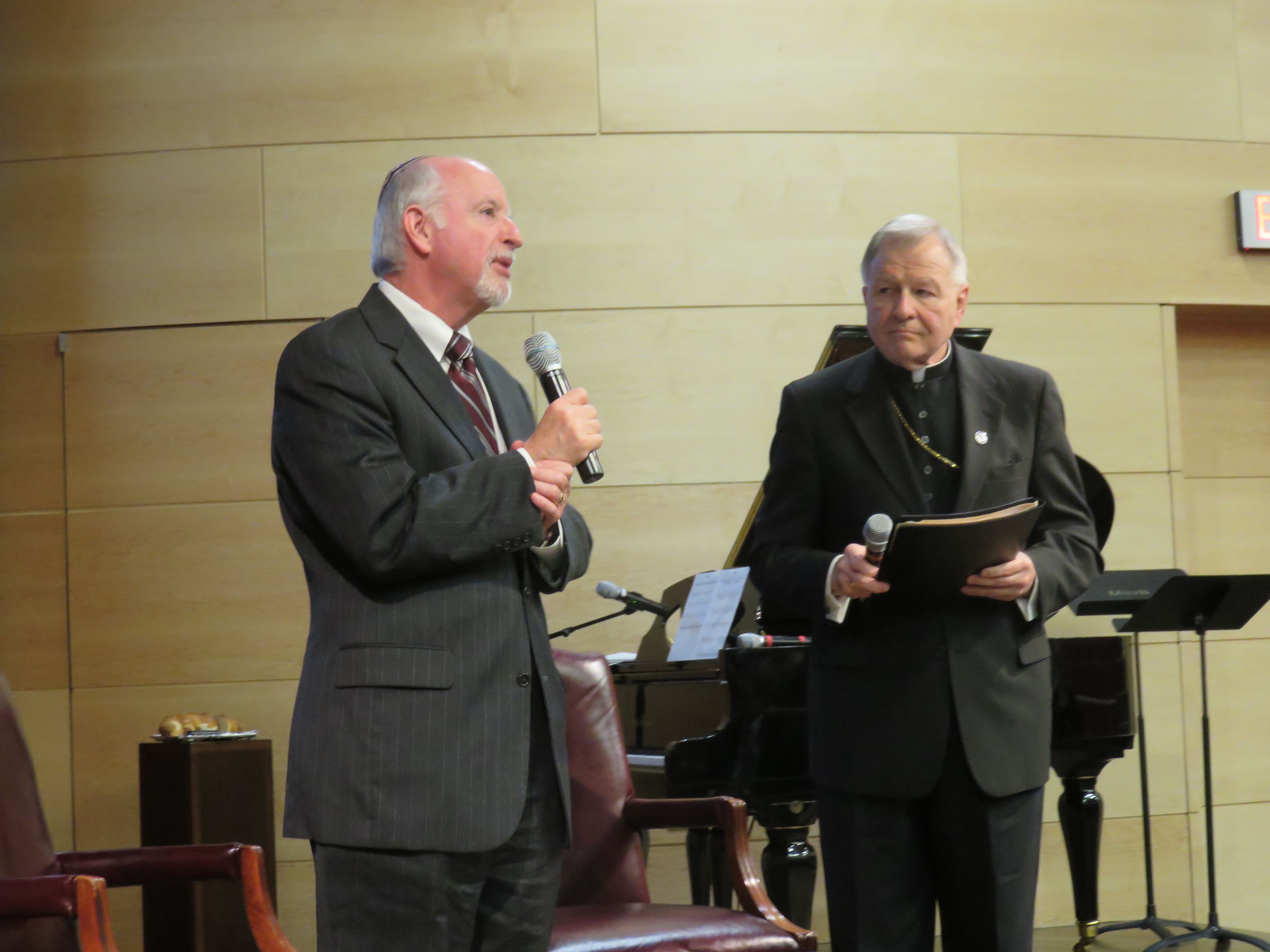
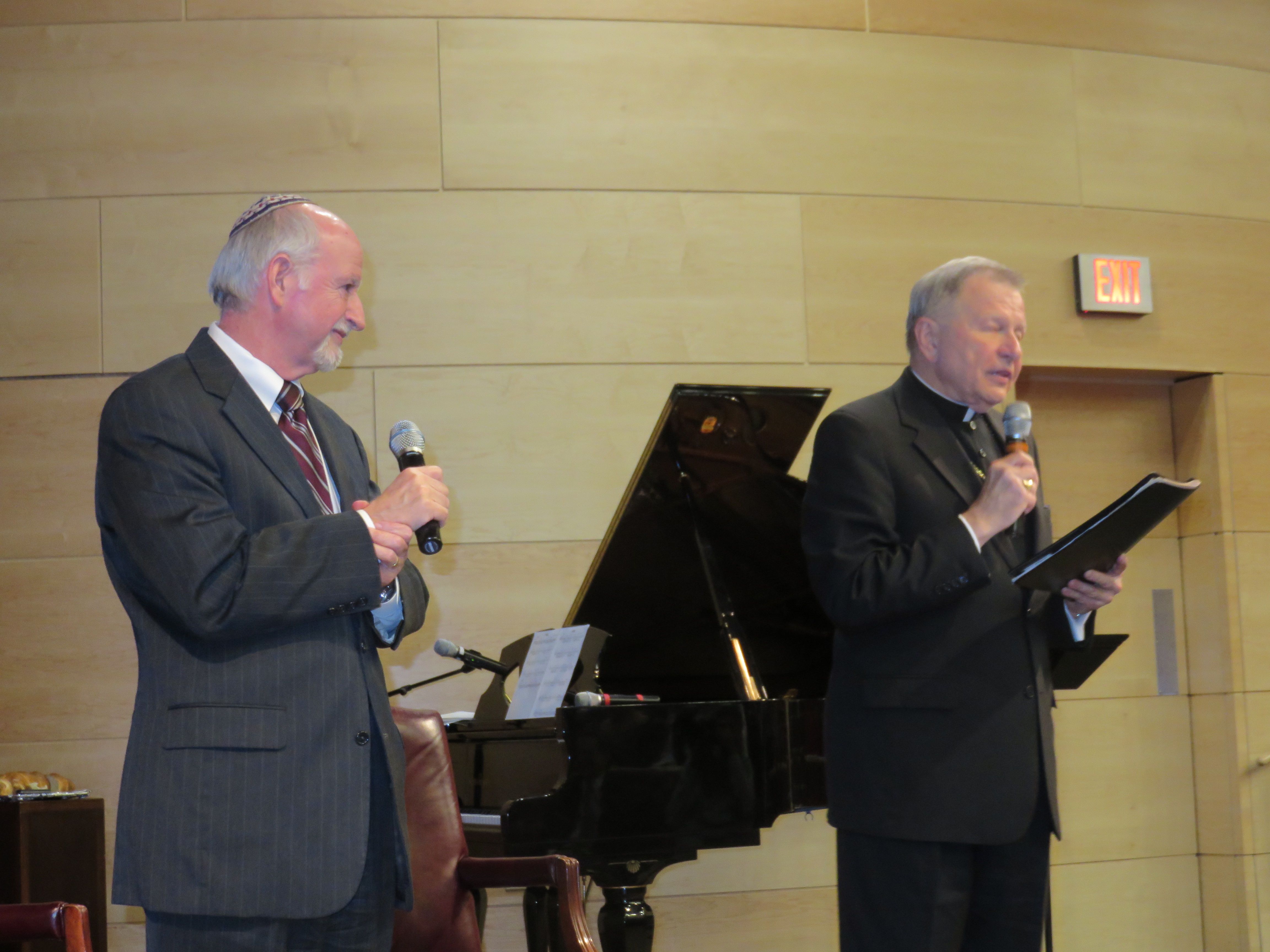
Rabbi Robert Loewy of Congregation Gates of Prayer delivers the priestly blessing in Hebrew as Archbishop Gregory Aymond prepares to read its translation in English. (Photo by Alan Smason)
Recounting many of the historical rationalizations for hatred of the Jews, Cook compared the “euphoria” that was felt by many Jews in 1965 to “watching a gigantic ocean liner gradually turning 180 degrees. But that euphoria could atrophy and historical amnesia could set in,” he added.
Cook, who played a major role in examining and purging anti-Semitic doctrine and other wording from Catholic liturgical texts and Catholic school textbooks for the Archdiocese of Louisville, expressed some reservations about completely stripping all anti-Semitic references from Catholic school texts.
“Thankfully, Catholic school texts may be purged of anti-Jewish canards, but do our Catholic students sufficiently know the ‘before and after’ comparisons?” Cook asked. “If they see modern textbooks stripped of anti-Judaism, have they ever been shown the textbooks before 1965 that happen to pose a contrast? That would be a learning experience in itself.”
Citing the late Cardinal Joseph Bernadin of Chicago, Cook noted that Bernadin “issued a clarion call in 1995 that the history of anti-Semitism and anti-Judaic theology be restored, not eliminated, so that the teaching materials tell the full story of the church’s treatment of the Jews over the centuries, ending with a rejection of the shadow side of that history.”
Cook also discussed the damage to Catholic-Jewish relations caused by Mel Gibson’s top-grossing 2004 film epic, “The Passion of the Christ,” a project Cook spent 14 months analyzing and critiquing along with several other Catholic and Jewish scholars.
“Church leadership failed to expose the movie as a carrier of classical Christian anti-Semitism in light of the experience of the Holocaust,” Cook said. What was needed was a clear-cut repudiation of the film in this regard but, instead, silence and even outright support of the film dominated Christian institutional responses, including Roman Catholic institutions as well.”
However, Cook ended his prepared remarks on a more upbeat note. “Even if the implementation of Nostra Aetate does fall somewhat short of its supporters’ highest hopes, it’s never too late to boost what can be accomplished on that particular basis. It signals a historic turning point.”
Following a question and answer period, the evening’s program concluded with the traditional priestly blessing in Hebrew by Rabbi Robert Loewy of Metairie’s Congregation Gates of Prayer and in English by the archbishop.