


Viva le difference? For Israelis and Americans, a Great Divide
By ALAN SMASON, SPECIAL TO THE CCJN
Prime Minister Benjamin Netanyahu began his press briefing from the Foreign Ministry building by acknowledging the issue of pluralism at the Kotel or Western Wall for the mostly European and American journalists gathered there.
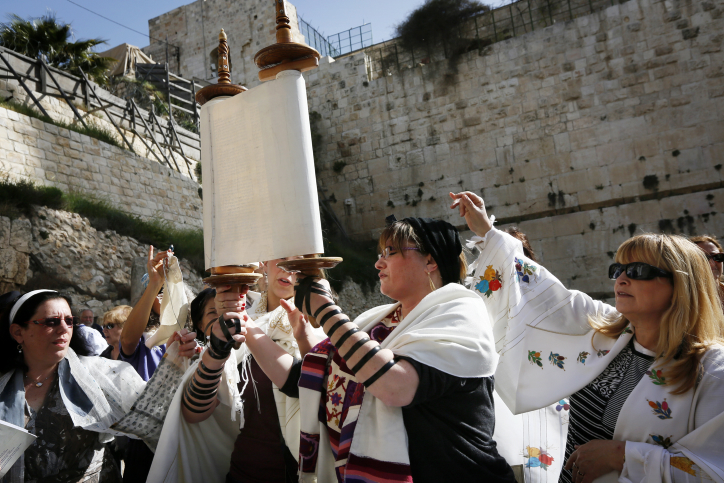
Women of the Wall holding their monthly Rosh Chodesh service at the Western Wall, in contravention of rules barring women from wearing prayer shawls or reading from the Torah at the site, March 12, 2013. (Miriam Alster / Flash90/JTA)
But for most Israelis, the issue of whether women have an equal-sized prayer area or whether an egalitarian area for men and women to pray together at Robinson’s Arch exists, is really more of a non-issue. “The average secular Israeli just doesn’t care what goes on at the Kotel,” explained Channel 2 Israeli TV personality and panel moderator Efrat Shapira Rosenberg at a session for the recently concluded Jewish Media Summit this past week. “It’s just not relevant.”
“If you happen to fall upon a religious Israeli, religious being haredi or national religious,” Rosenberg continued, “you will hear what they think about it and they will be against any arrangement or any changing of the status quo.”
So, how can this be? How can an issue be so galvanizing and important throughout American synagogues and up for discussion at Shabbat tables when it hardly registers comment among the citizens in whose very land the holy structure stands? Is it that Israelis don’t believe in equality for women? The numbers of teenage women carrying loaded arms in the streets and serving their country as Knesset Members (MKs) would seem to dispute that.
Or is it that there is a great divide between Americans and Israelis when it comes to politics and religion?
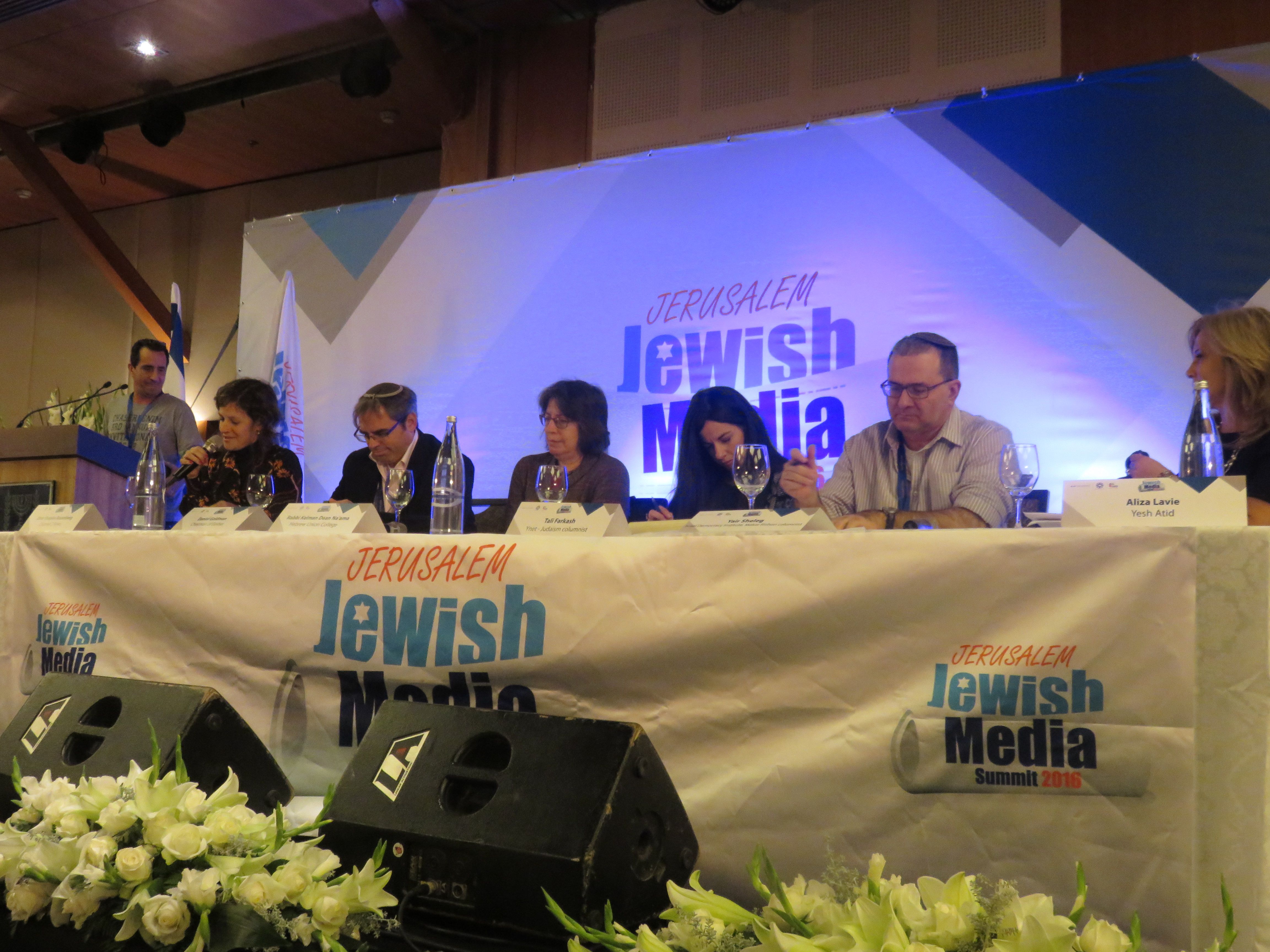
Panelists discussing pluralism in Israel on December 5, 2016. (Photo by Alan Smason)
In America the mostly liberal Jewish agenda has been to fight against discrimination wheresoever perceived. Jews were notably at the forefront in the battle for civil rights for blacks, for example. Jews not only formed the Anti-Defamation League to protect themselves from threats from the right, but also were fundamental in the founding of the Urban League and the National Association for the Advancement of Colored People. The Reform, Conservative and Reconstructionist branches have all staunchly advocated for feminist and gay rights in recent years. To allow women equal access to the Kotel would seem to be a no-brainer for most American Jews.
While it is true that the Orthodox and ultra-religious factions in the U.S. have not been as supportive, there are cracks in the facade of opposition, most notably in Modern Orthodox congregations and yeshivas like Yeshivat Chovevei Torah founded by Rabbi Avi Weiss and Yeshiva Maharat co-founded by him and Rabba Sara Hurwitz. Equality for women to worship like men and to act as spiritual leaders has been fully embraced by Reconstructionist and Reform Jewish congregations and seminaries beginning four decades ago and Conservative Judaism followed suit.
According to the most recent Pew Research report, 35% of American Jews identify as Reform and 18% identify as Conservative. Only 10% constitute the Orthodox movement, which includes traditional synagogues and the outreaching Chabad-Lubavitch and other ultra-religious groups.
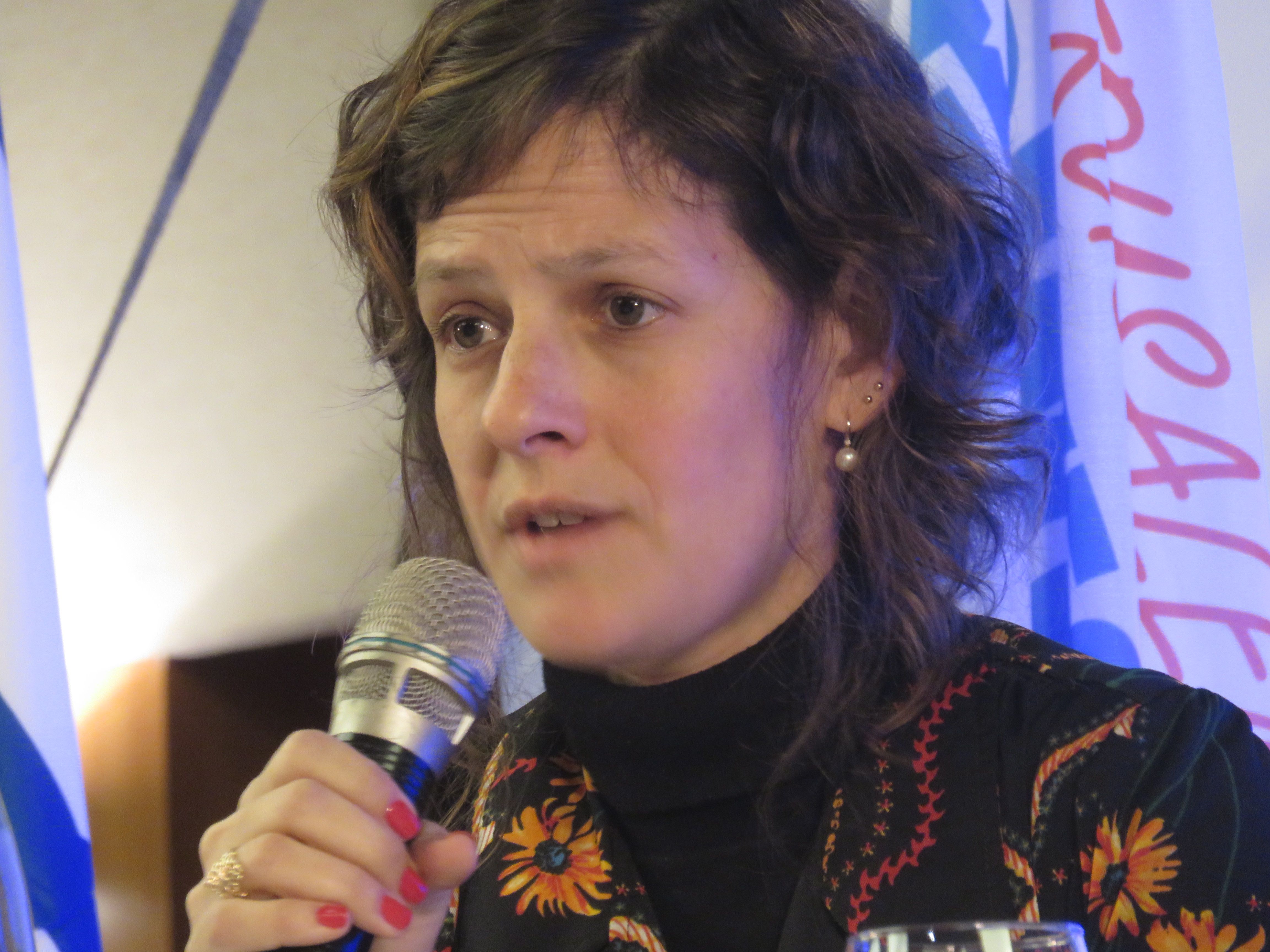
Channel 2’s Efrat Shapira Rosenberg, the panel moderator. (Photo by Alan Smason)
But in Israel the Conservative and the Reform movements account for a mere 5% of the total Jewish makeup. The largest faction of Israeli Jews identify as Orthodox at 50% with 41% not affiliated with any of the movements. Hiloni Jews are truly secular Jews who, according to the research, rarely or never attend religious services and who consider religion as largely not important in their lives.
With such apathy towards religious affiliation, it is no wonder that the Orthodox, through its large numbers should hold sway over politics. But even there the haredi movement is largely fractured, according to Daniel Goldblum, the chairman of Gesher Israel. “It’s important to stop ignoring what goes on inside the haredi world and to assume that they act as one or that there is one representative haredi ,” he said. “There are 250 different styles or what we call in Gesher…250 shades of black.”
So if egalitarian worship, equal opportunities for women and men and equal access to prayer are not at the top of items for consideration in Israel, why are these hot button issues in America, some 6,000 miles away? Is it a simple case of attempting to impose our own American ideals on our Israeli Jewish siblings? Or are we Americans just out of touch with what is important to Israelis?
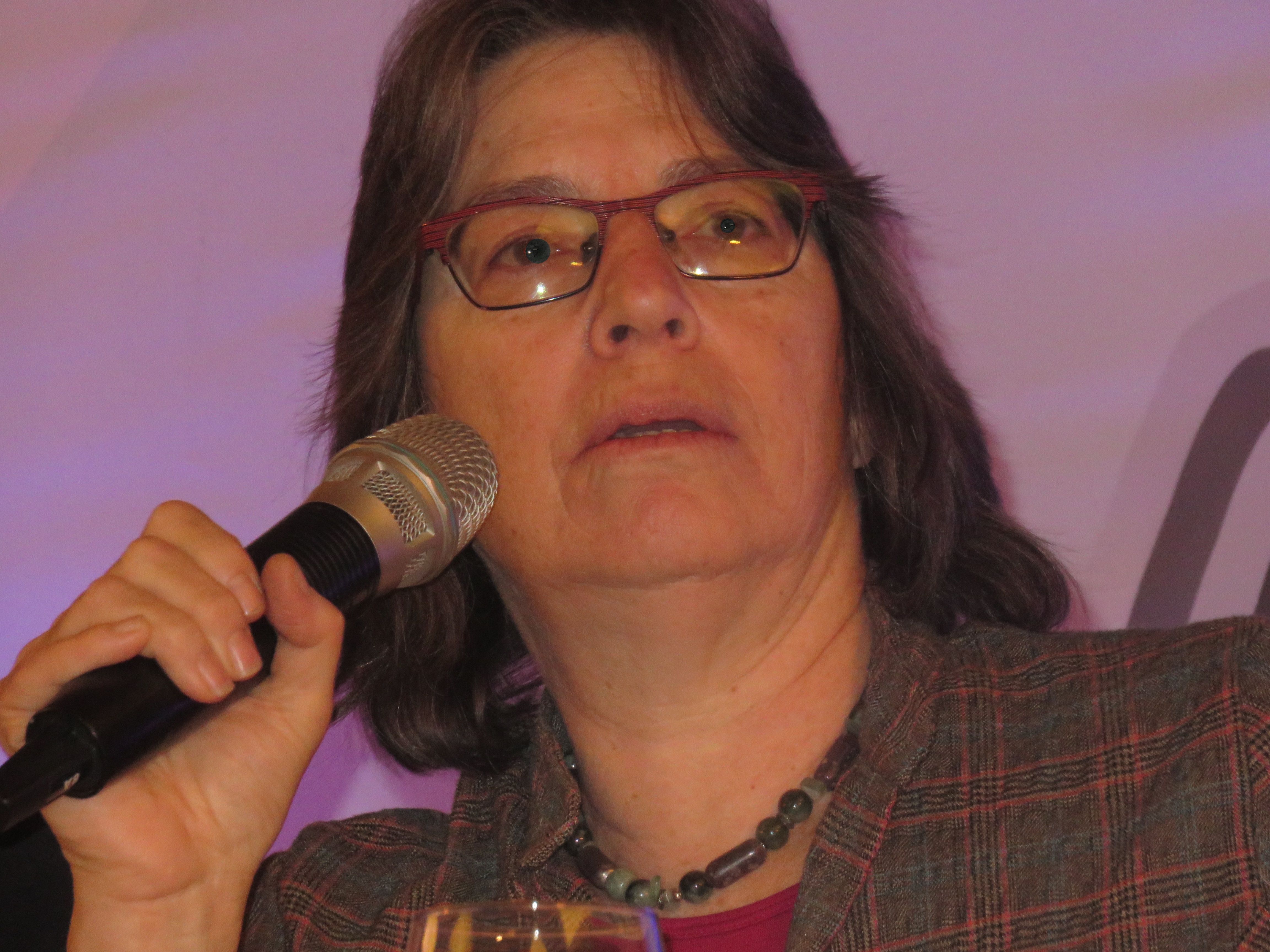
Reform Rabbi Na’ama Kelman, the dean at Hebrew Union College (Israel). (Photo by Alan Smason)
Rabbi Na’ama Kelman, the dean of Hebrew Union College in Israel, is one of the Reform Judaism leaders who feels strongly about advocating for change at the Kotel. A resident of Israel for the past 40 years, she understands what she terms as the North American model in which congregations gather together and lobby for or against change. She compares it to the Protestant Church, a decentralized structure with power that is largely spread across the system. That model is not embraced in Israel, she claimed. Indeed, she compares the religious model in Israel to be closely allied with the Catholic Church, a centralized structure with a Chief Rabbinate and with power emanating from the top down.
More than two years ago, Naftali Bennett, acting on his own authority, built an egalitarian area for worship at Robinson’s Arch, which is used today, but which created tremendous pushback in the haredi community for him politically. In recent years, Natan Sharansky, head of The Jewish Agency for Israel, oversaw a commission in which a compromise was achieved, but has yet to be implemented. The deadline for its implementation has failed because of politics.
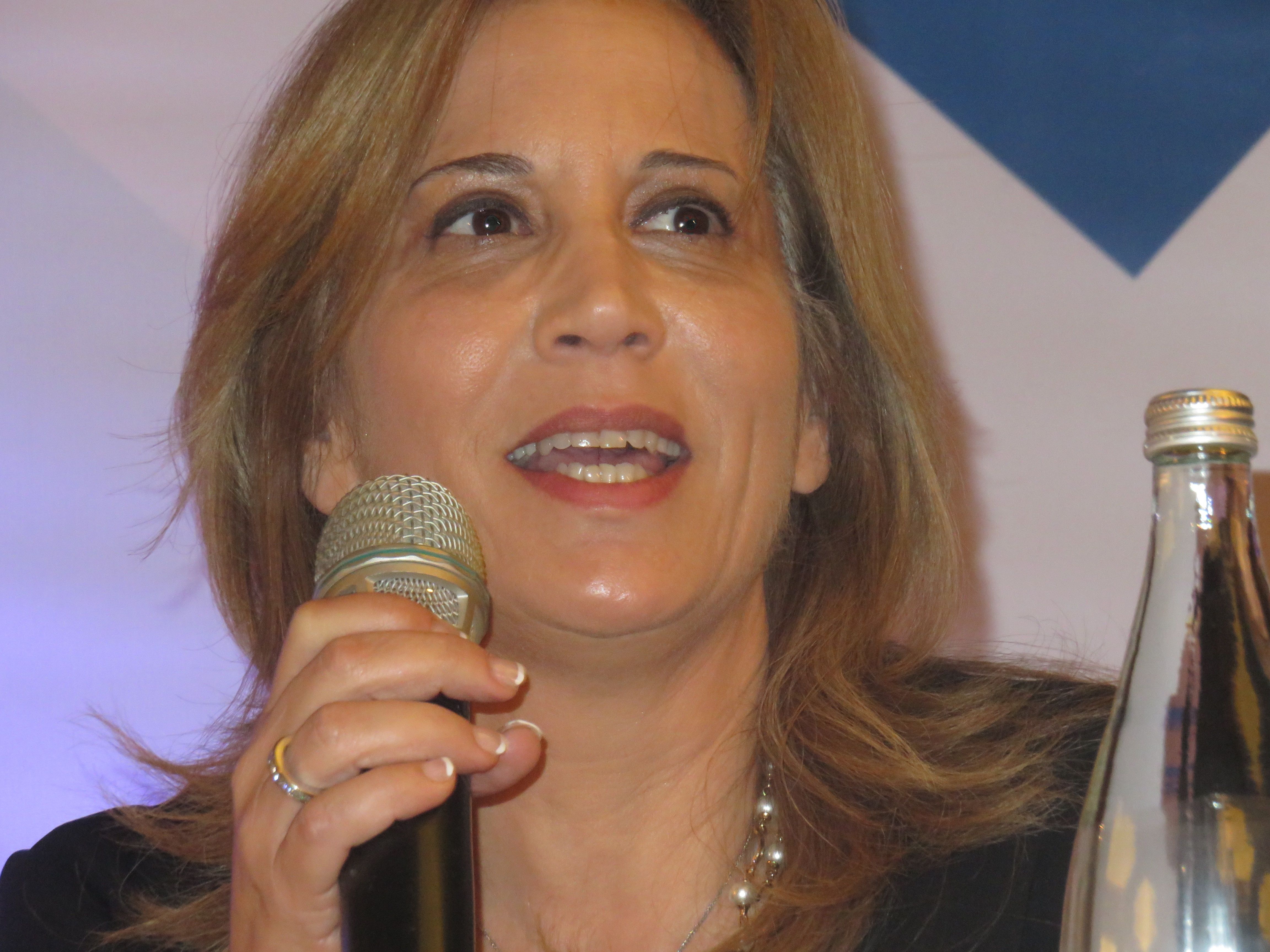
Aliza Lavie, a Knesset member with Yesh Atid. (Photo by Alan Smason)
Kelman acknowledged that the problem with acceptance of Reform Judaism and equal prayer opportunities for women goes back to the formation of the Jewish State. She regrets that the compromise plan Sharansky helped iron out is still in limbo. “It’s an outrage that it hasn’t been implemented,” she blurted before the other panel members.
Yair Sheleg, a columnist for Makor Rishon, who also works at the Israel Democracy Institute, believes it comes down to Jewish identity and how the nation state was founded. Because the Orthodox were unchallenged at the beginning of its formation, the state failed to reign in their political sway.
MK Aliza Lavie, a member of the Yesh Atid Party with a large secular base, believes it will be resolved in time, although she was unable to give insights as to how long the issue will continue to be played out at the Kotel.
In the end American Jews should think of Israeli Jews in the way George Bernard Shaw famously commented about that which divides the United States and Great Britain (“a common language”). Jews in America are a people divided by their politics with religious overtones, while Jews in Israel are a people divided by their religion with political overtones. And never the twain shall meet.
