


Dr. Joseph Caspi: Saving Young Lives Through the HeartGift Foundation
By DEAN M. SHAPIRO, Special to the CCJN
Doctors, especially heart surgeons who save lives, are blessed with rewards that go beyond monetary compensation. The gratitude from the families of those whose loved ones are saved is priceless and it can sometimes translate into something greater and more personal – like the naming of child.
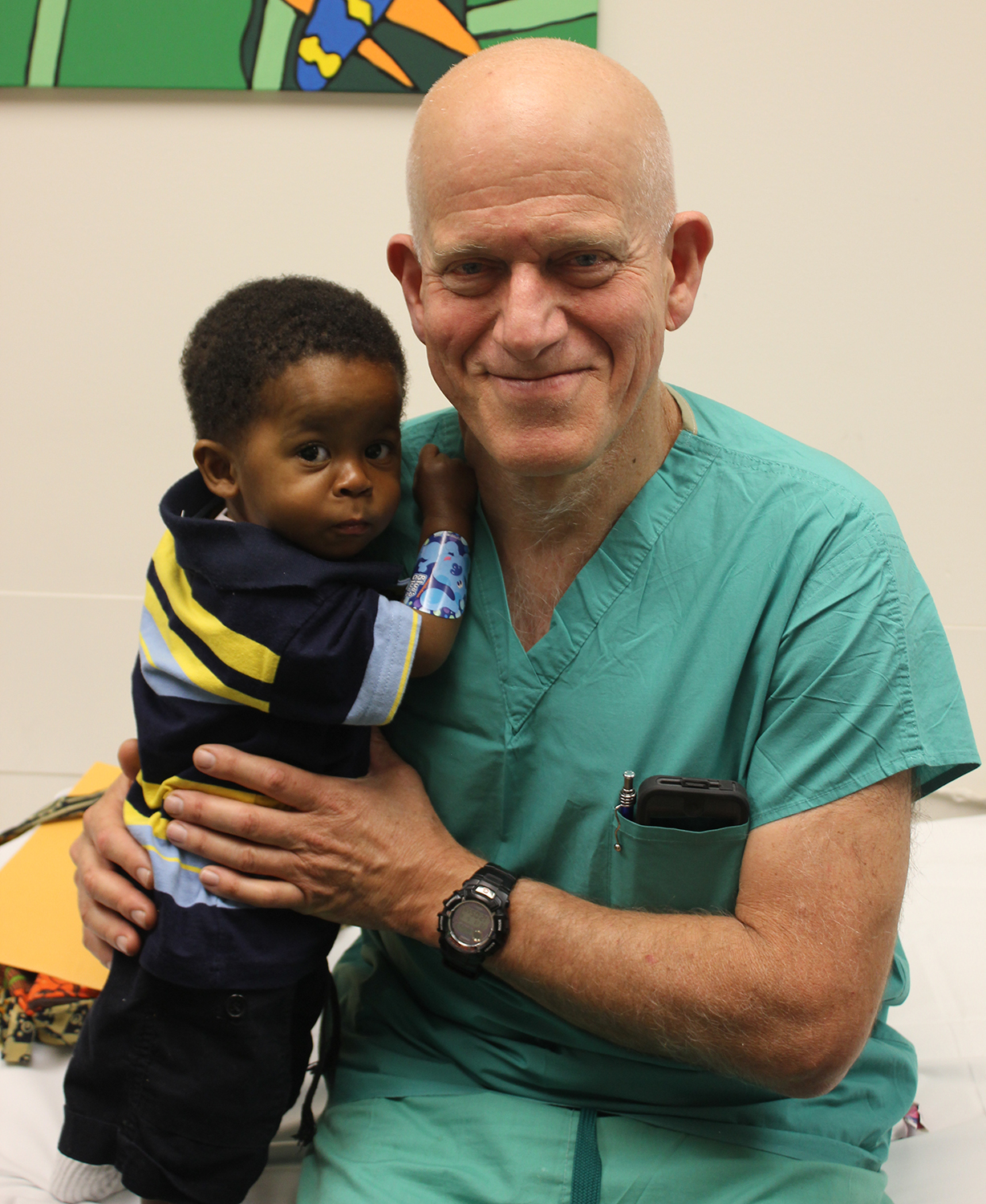
Dr. Joseph Caspi with one of his young patients. (Photo courtesy HeartGift)
Dr. Joseph Caspi knows firsthand what that experience is like. The family of a Nicaraguan baby whose life he saved named their next child after him.
Caspi, a pediatric cardiothoracic surgeon at Children’s Hospital of New Orleans who has performed several thousand heart operations on children during his 20 year tenure there, has generously donated his skills toward saving the lives of 41 children from some of the world’s less developed countries, thanks to HeartGift Louisiana, a division of the Austin, Texas-based HeartGift Foundation.
Since its founding in 2000, the HeartGift program has served over 300 children from 30 medically underdeveloped countries, including the 41 here in New Orleans. Caspi has been the chief surgeon for the New Orleans-based Louisiana chapter since its establishment six years ago.
Born and raised in Israel where he received his medical training at the Hebrew University of Jerusalem, Caspi has been affiliated with Children’s Hospital since his arrival in New Orleans in 1996. He and his family – consisting of his wife of 30 years, Tali, and their four children ranging in age from 17 to 27 – are active members of Touro Synagogue. The Caspis’ three daughters and their son all attended religious school there.
While awaiting the arrival of a Mongolian child with a serious heart defect, he took some time from his other duties at the hospital to share his feelings about the HeartGift program and his key role in it.
“I have been involved with HeartGift Louisiana since it began here,” the surgeon said. “I met with some of the community leaders of New Orleans and we met with some of the other chapters in Texas. They wanted to start a new chapter here. We discussed this with Children’s Hospital and the hospital was very enthusiastic and supportive. The agreement was that we would operate on six patients every year. The hospital would subsidize the physicians and they would waive their fees. So all the work provided by the physicians, the nurses, the therapists and everyone else is voluntarily done.”
Explaining how the program works – from the review process through the operation and beyond – the doctor said, “The first part of the process is the application (to a HeartGift selection committee) and then they refer all the data to us and our surgical team. We review the data and, based on certain criteria, we choose the patient that can come here. The HeartGift criteria is that this will be a corrective operation because it would be impossible to bring these babies or children back from their own countries for another surgery.”
According to the latest statistics, about one percent of the world’s population is born with some form of heart disease, making it the most common birth defect in children. Many countries are not equipped to provide pediatric cardiac surgery or even access to adequate medical diagnoses. An estimated 93 percent of the world’s population falls into this category. HeartGift was formed to address this disparity, providing lifesaving surgery to repair congenital heart defects in children who live in those countries where this necessary medical care is not available.
The ages of the children treated here through HeartGift have ranged from four months to 14, Dr. Caspi noted.
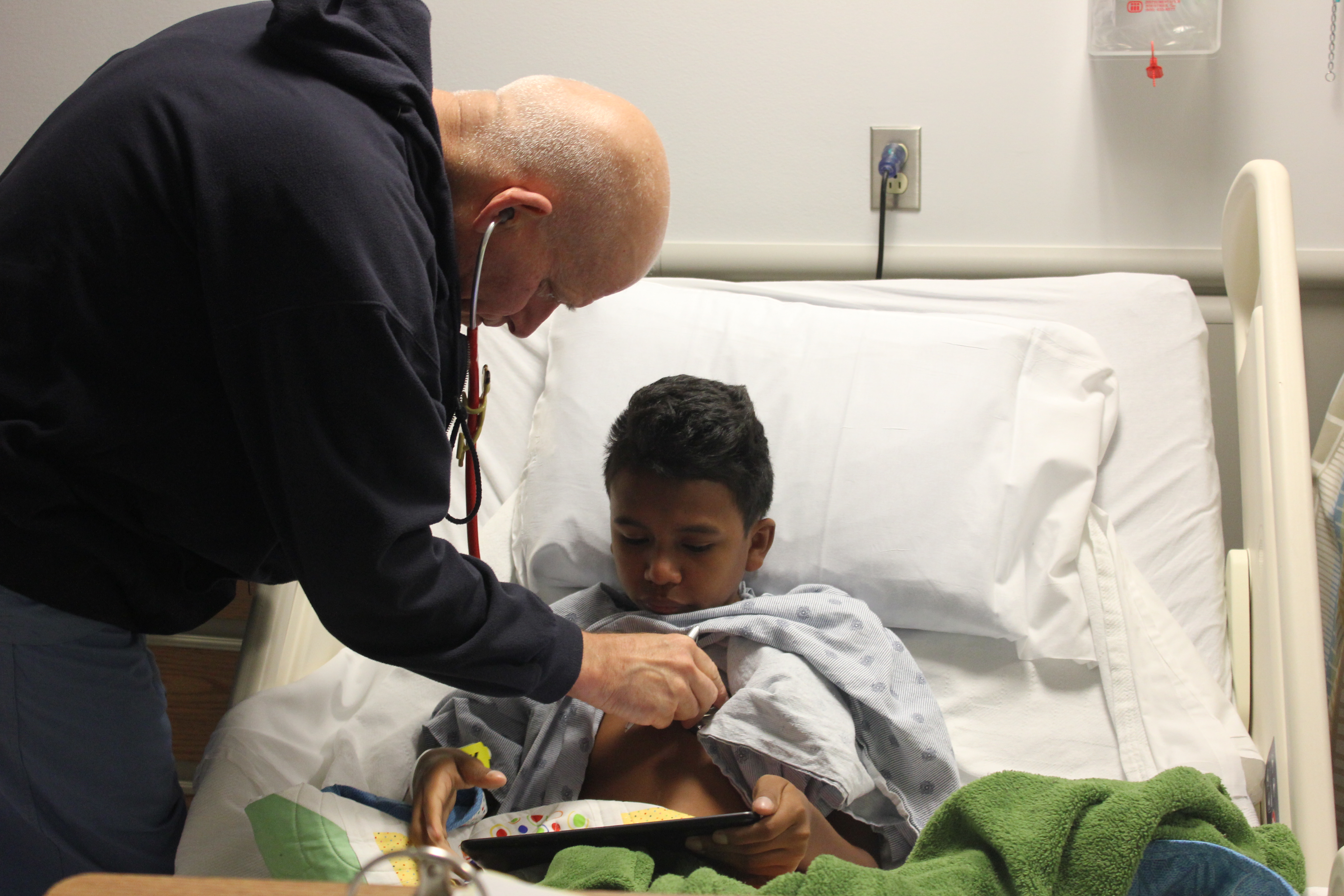
Dr. Caspi checking out a young heart patient. (Photo courtesy HeartGift)
He also noted that although there are multiple types of congenital cardiac defects with medically technical names, they basically break down to congestive heart failure resulting from a diminished blood flow. An echocardiogram (ultrasound) is performed on the child to determine more precisely where the blockage is occurring. Once that more precise diagnosis is made, a treatment plan can be formulated and the corrective surgical procedure can commence.
Recovery time in the hospital, Dr. Caspi pointed out, usually ranges from 7-10 days. After that, when the children are physically stable, they are often introduced to the community and given opportunities to interact with children their own age before returning to their home countries. The average stay per child is 4-6 weeks.
Following the surgery, most of the young patients are put on special low-fat, high-protein diets, Dr. Caspi explained. However, a good number of them may be in need of nutrition prior to surgery, he added. “Many of these babies are coming here in relatively malnourished condition because they didn’t get the optimum care before the surgery. So many of them come here in need of a tuneup before and after the surgery.”
Children treated through the local chapter of the HeartGift program have come from China, Russia, Serbia, the Philippines and a number of nations in Africa and Latin America.
In addition to subsidizing the costs of the actual surgery and hospital stay for the children, HeartGift also pays the costs of round-trip airfare for the young patients and their accompanying adult caretakers, plus the costs of local transportation, medicine and related expenses. The HeartGift stipend is $15,000 to the participating hospital; services that would normally cost in the $175,000 range. With the addition of travel and other non-medical care costs, the average expense for each HeartGift child is $25,000.
Volunteers from the community offer to greet and receive the children and an accompanying family member at the airport and provide a safe, caring home for them while they are in the United States. The volunteers also provide transportation and meals, make hospital visits, plan recreational outings, and introduce the children and their accompanying family members to the community.
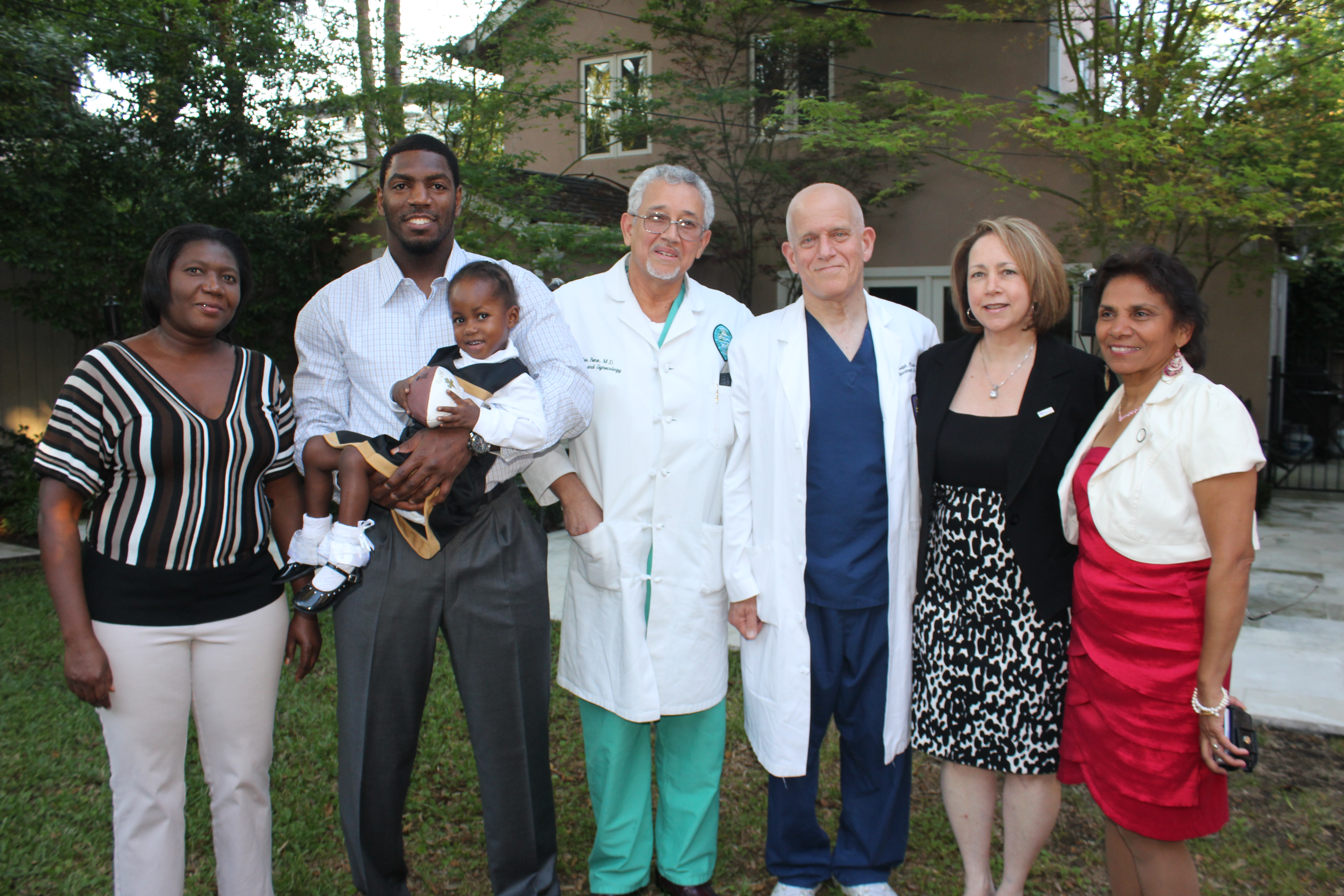
Dr. Joseph Caspi, third from right, with his staff and colleagues and a young family forever in his debt. (Photo courtesy HeartGift)
HeartGift has earned a sterling reputation within the international pediatric cardiac care industry. Medical professionals visiting developing countries are aware of HeartGift and its program criteria. These professionals refer children to HeartGift based on diagnoses made in the field.
Additionally, HeartGift collaborates with non-governmental organizations and international humanitarian agencies such as Rotary’s Gift of Life, the Chinese Agape Foundation and Samaritan’s Purse.
In addition to Austin and New Orleans, HeartGift has chapters in Houston, Dallas and San Antonio.
For its funding HeartGift has enjoyed the support of many individuals, businesses, civic groups, corporations and foundations in the New Orleans area community. Other funds are raised from HeartGift’s participation in the annual GiveNola Day each May, plus the “HeartGift Heroes” Golf Tournament in October and an “Eat, Drink and Be Giving” Gala each November.
For his efforts, Dr. Caspi has received a number of awards recently, including being named as a “Health Care Hero” by the New Orleans CityBusiness publication. However, while expressing gratitude for the honors, in a gesture of humility he was quick to give credit to the members of his surgical team.
“It’s not just me,” he said. “It’s a team. A big team that has worked with me for many years and they’re very passionate about these babies. I’m the surgeon but I get a lot of help from the anesthesiologists, cardiologists, nurses and everyone else involved. It’s a very big team that cares for these babies.”
Wrapping up with his feelings about HeartGift, Dr. Caspi said, “I think this is a great program. It helps us to learn about other cultures. I’m glad that the families who come here go back home and they become good ambassadors for New Orleans and Children’s Hospital. It’s a nice feeling to know that.”
To view a short video on Dr. Caspi go to: https://vimeo.com/187692653
