


Meet Touro’s Cantor Kevin Margolius
By ALAN SMASON, Exclusive to the CCJN
When Cantor Kevin Margolius was growing up as a boy in Shaker Heights, Ohio, he attended Surburban Temple – Kol Ami. The Reform temple nestled in an exclusive suburb of Cleveland offered a great many amenities including a respected rabbi and a very competent religious school. There was one thing they were missing, though.
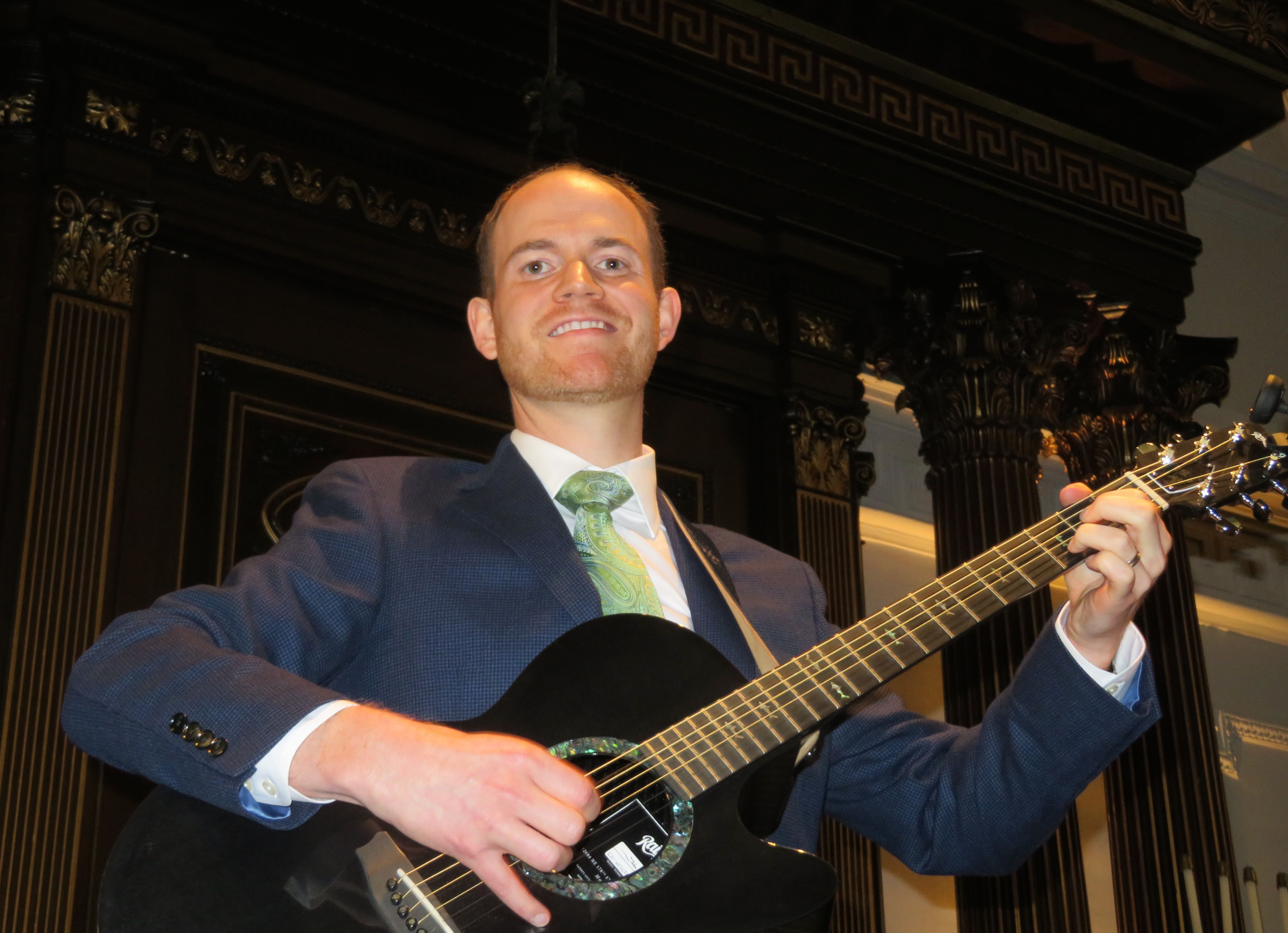
Cantor Kevin Margolius on the Touro Synagogue bimah. (Photo by Alan Smason)
“I grew up in a congregation that didn’t have a cantor,” he admitted in an interview with the CCJN in his Touro Synagogue office. “I had never heard of a cantor growing up.”
The story of how Margolius became the newest member of the Touro Synagogue clergy is fascinating and seems somewhat predestined for the ginger-haired cantor with the beaming smile from ear to ear.
A gifted musician, Margolius learned to play piano starting when he was just six years old. “I was always interested in music,” he noted. He became a bar mitzvah student and went on to high school when he was selected to study in the remote German town of Goslar for his sophomore year. He was 16.
It was the longest time he had spent away from home and was the first occasion when he was away from other Jews. “I had my first Passover without a seder when I was there,” he recalled. “There’s something about that experience when you’ve been immersed in religious settings for so long, you don’t realize how special it is until you miss it.”
On a bus being driven to Milan, he reflected on just how much he missed the seder and the entirety of the Passover celebration. Several of his fellow students would inquire of him certain aspects related to Judaism. Some things he knew instinctively. Others he did not.
When he returned him, he met with Rabbi Eric Bram, who agreed to meet with him on a regular basis every week and provide him with the answers he needed.
“I had all sorts of questions – things that we didn’t learn in religious school,” Margolius continued. On a fact-finding mission, he began visiting as many different types of synagogues as could. He attended services at other Reform temples, a Reconstructionist chaverei and several Conservative synagogues.
“I wanted to get a sense of what the Jewish world was like broadly,” he added. “That’s kind of how my foundation was set up through this experience.”
He was fairly certain this curiosity would lead him to college and work towards becoming a rabbi. He was advised to take up non-Jewish coursework during his undergraduate career at Tufts University. Margolius concurred that seminaries tend to be deeply involved with Jewish courses, but don’t have many other options for liberal arts studies.
Once enrolled, he liked the opportunity to work with mathematics, statistics and economics under the major field of study of Quantitative Economics.
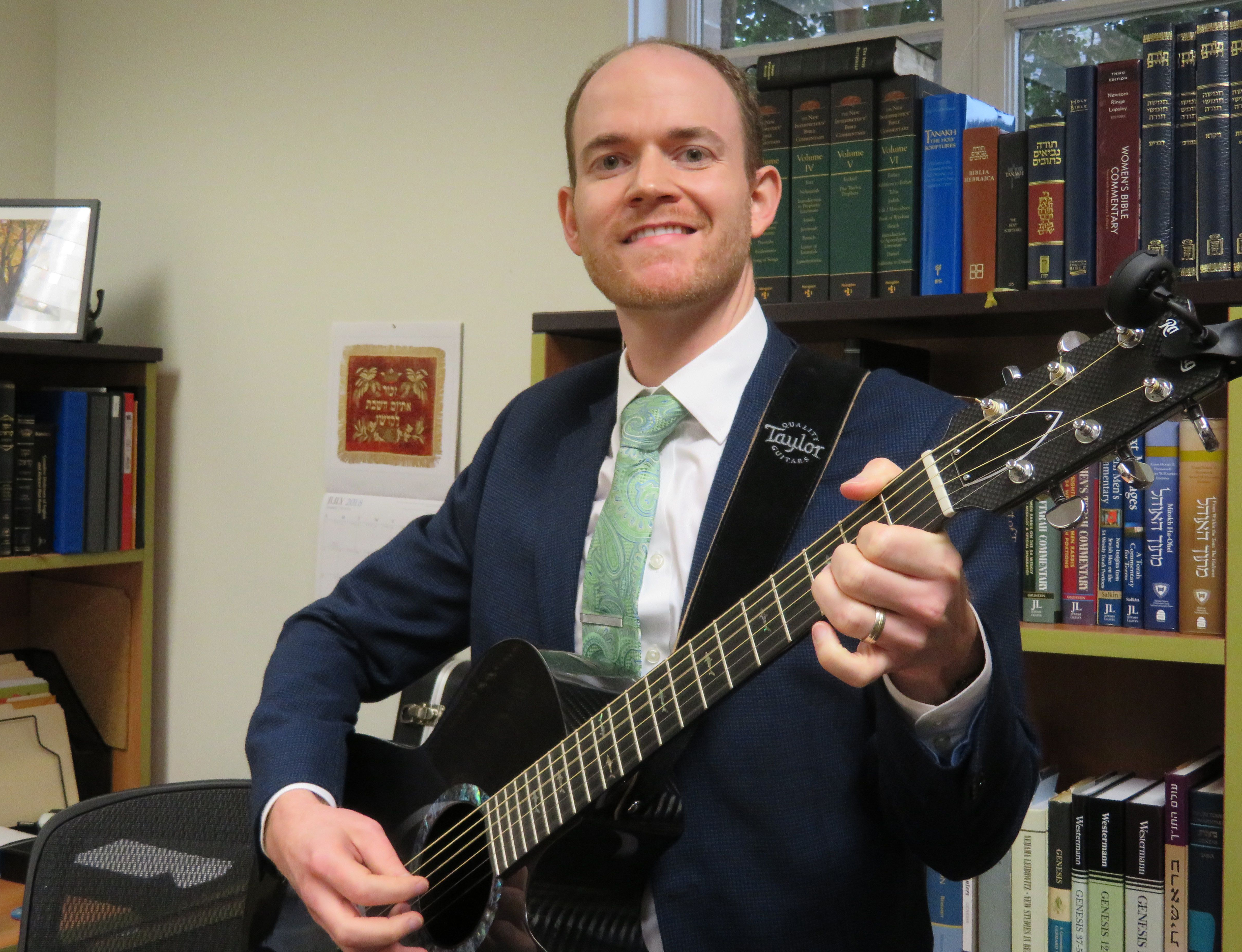
Cantor Kevin Margolius in his office at Touro Synagogue. (Photo by Alan Smason)
After graduating with his bachelor’s degree, he journeyed across the Charles River to attend Hebrew College in Boston, a pluralistic seminary that offered both rabbinic and cantorial ordination recognized by the Reform, Conservative and Reconstructionist movements. At first, he felt determined he was going to become a rabbi.
But then something curious occurred.
“When I went to Hebrew College, I didn’t know if my future was with the Reform movement or the Conservative movement,” he explained. “I was maybe even leaning more towards the Conservative movement.”
Margolius began studying Hebrew texts and delved into the meanings within the Hebrew language. He also learned about pastoral care and counseling at the same time, but his passion for studying texts became more pronounced. “I really loved studying Talmud,” he said.
Slowly, but surely he found himself drawn back to the Reform movement while he was in seminary.
He maintained his interest in music, but elected to join a Jewish acapella group to help him get over his fear of speaking in public. He learned that it was a great way to overcome the nerves he had.
“I thought I wanted to be a rabbi for years and years and years,” the cantor confided. “Slowly I spent more time singing and more time leading services at Hillel and realized that the cantorial program might be a better fit for me.”
He honed his basic skills as a cantor during his internship at Temple Beth Shalom (since renamed to Temple Tifereth Shalom) in Peabody, MA. He worked there for three to four days a week while continuing his studies at Hebrew College.
Honors were afforded him at that time too. He received the Myer and Anna Wolf Prize for Judaic and Hebraic Studies, was named the Cantor Rick Boyer Prize for Hazzanut and was rewarded with an honorary diploma from Prozdor High School, the local school administered by Hebrew College.
Following his ordination, he became a member of the American Conference of Cantors and, with his love of music as an inspiration, learned how to play guitar with precision over the course of one summer. He credited fellow Cantor Jeff Klepper with teaching him the basics in weekly hour and a half sessions and instilling in him the drive to master the stringed instrument. By the end of the summer, he had callouses on his fingers, but by then was able to pull off a position as a cantor for services in which he extensively played guitar.
With his background in Hebrew text and studies, Margolius was selected to be both the cantor and the religious school educator at Temple Beth Tikvah in Madison, CT, a position he held until he became aware of the cantorial vacancy at Touro Synagogue in December of 2017.
He applied for the position in January and arrived with his spouse, Jason Gaines, in February. While Margolius interviewed at Touro, Gaines interviewed for a position of visiting assistant professor at both Loyola and Tulane Universities. He was eventually offered a position at Tulane’s Department of Jewish Studies.
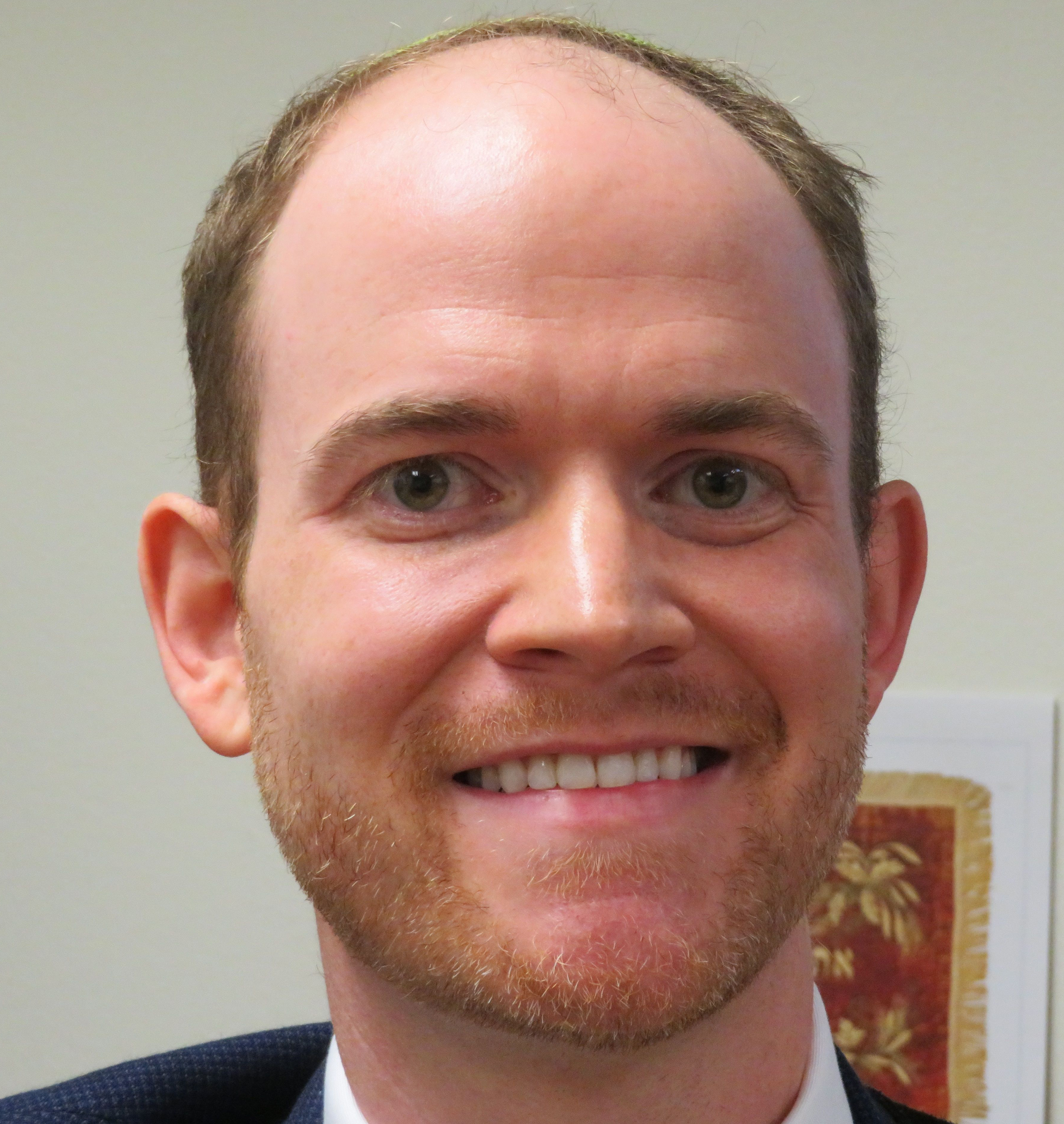
Touro Synagogue’s Cantor Kevin Margolius. (Photo by Alan Smason)
Back at Touro, the cantorial candidate was able to lead a model service. He heard the congregation sing back to him and he was lovestruck. “When I heard this whole congregation singing back, it was beautiful,” he thought to himself. “This is the place for me for sure.”
The people and their friendliness also won him over. He followed several live streaming broadcasts of services prior to his arrival. “When I came here, I just fell in love with the community,” he stated. “It was love at first sight.”
Margolius hopes to work closely with b’nai mitzvah students in teaching them cantillation and trope. He utilizes a color coded system of his own design and a website to engage his younger students and has also worked with older adults.
The most important thing is to capture the joy he has in singing and spread it to his students, he mused.
“If we have a community that can really smile in the sanctuary, really smile when coming together, that’s kinda number one,” he said. “I see that as a really good guiding principal. I see that at Jazz Fest, of course. I mean what an event to bring people together!”
But that’s not all, he added. “The synagogue is a beit knesset – (it) is first and foremost a house of gathering. It’s also a beit midrash and a beit tefilah – a house of learning and a house of prayer. I take that quite seriously. There’s so much potential to do that with joy. That is number one for me. In song. In study. For whatever it may (be) and to do it with joy, to do it with meaning and to get to bring people together,” he concluded.
