


Mardi Gras madness continues for last big weekend
The celebrations from last week’s Super Bowl XLVII had barely been stilled when the bifurcated Carnival season sprang up anew. Although there is a great deal of Catholic theology attached to the celebration of Fat Tuesday, Jews have always enjoyed a special status with the holiday as more than dedicated outsiders wishing to take part.
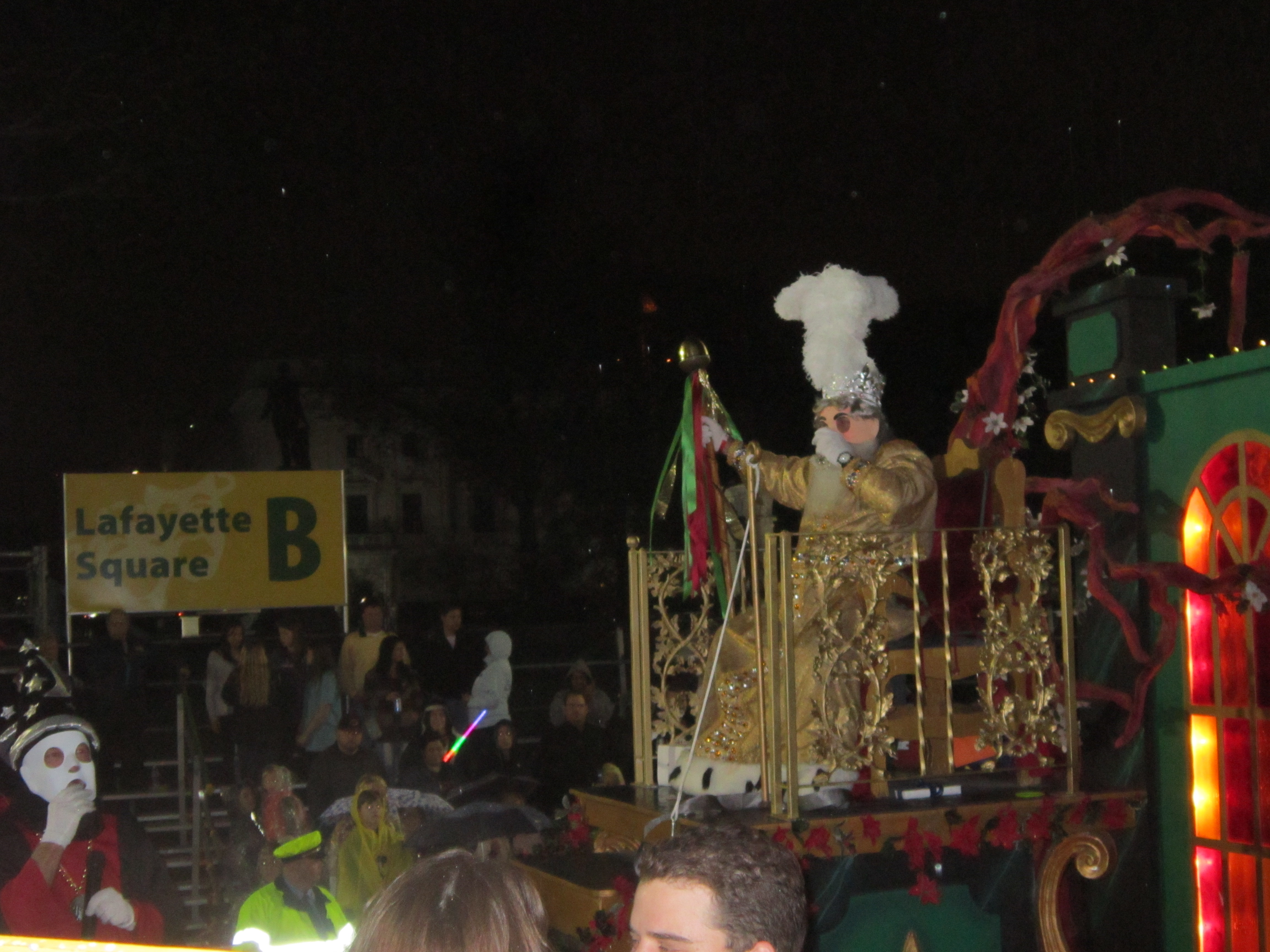
Wearing a mask is an integral part of the Carnival celebrations. (Photo by Alan Smason)
The very first Rex in 1872 was Jewish, although successful merchant Louis Solomon’s funding was largely behind the first parade and explains the fact he was selected as the monarch for the second oldest “krewe” in New Orleans.
New Orleans Carnival captains have included the late clothier Irving Zoller, whose parading Krewe of Mecca eventually merged with the non-parading Knights of Sparta and permitted the latter to take over Mecca’s uptown parade route when their numbers decreased. Sparta’s present captain, whose identity is traditionally kept secret, is Jewish.
The Krewe of Hermes supposedly split from its parent, the Knights of Babylon, over a question of Jewish participation. Ironically, there are several Jews who participate as riders in Babylon these days.
Touro Synagogue, whose address is located along the parade route for the Krewes of Hermes, D’Etat and Morpheus tonight and the Krewes of Iris and Tucks on Saturday, is billing its observance for its casual Friday night service as “Shabbati Gras.” The stands erected in front of the synagogue are typically available for youth group members and selected charities. The parades on Sunday, Monday and Mardi Gras will also give reviewers there great views and special opportunities for throws.
The philosophy of masking, an integral part of the parading process, is one that has traditionally been of interest to Jews. The ability to anonymously participate as a masker means that Jewish krewe members would not be readily seen by other community members.
