AVODAH executive director makes stop here
By ALAN SMASON, Special to the CCJN
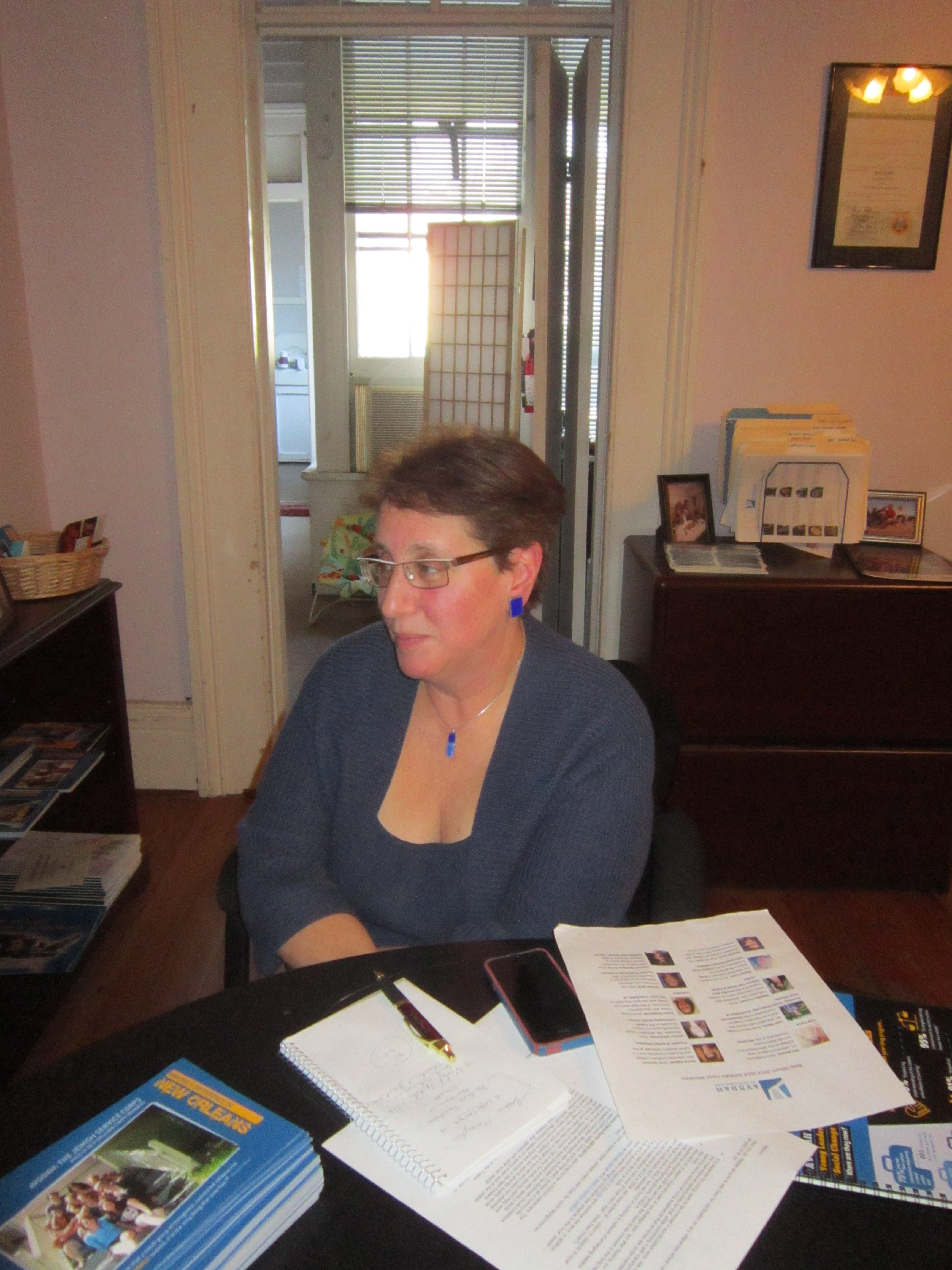
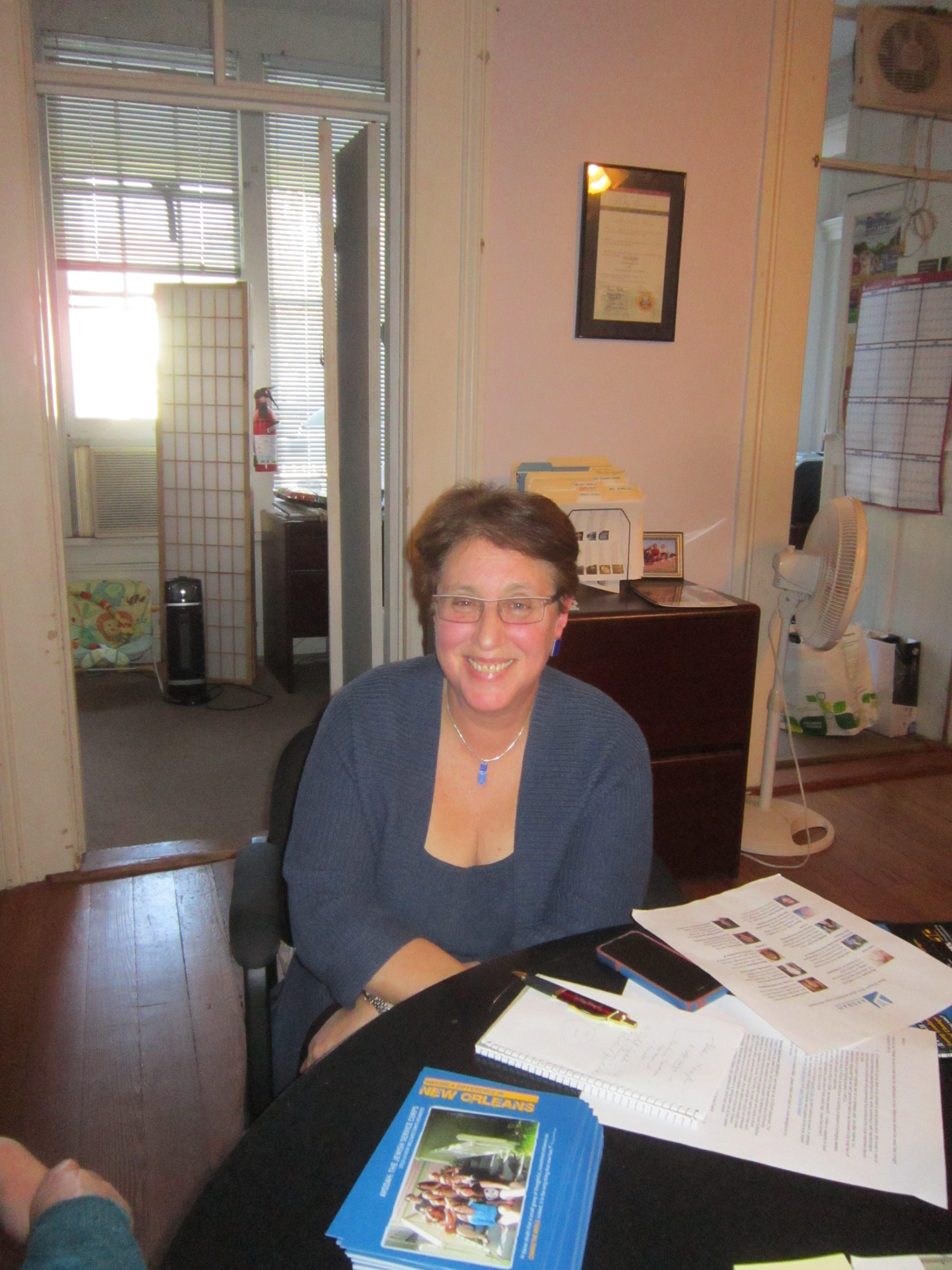
Marilyn Sneiderman, the executive director of AVODAH, the Jewish Service Corps, left her well-appointed offices in Washington, D.C. to make her way to the more modest AVODAH House and office in New Orleans this week.

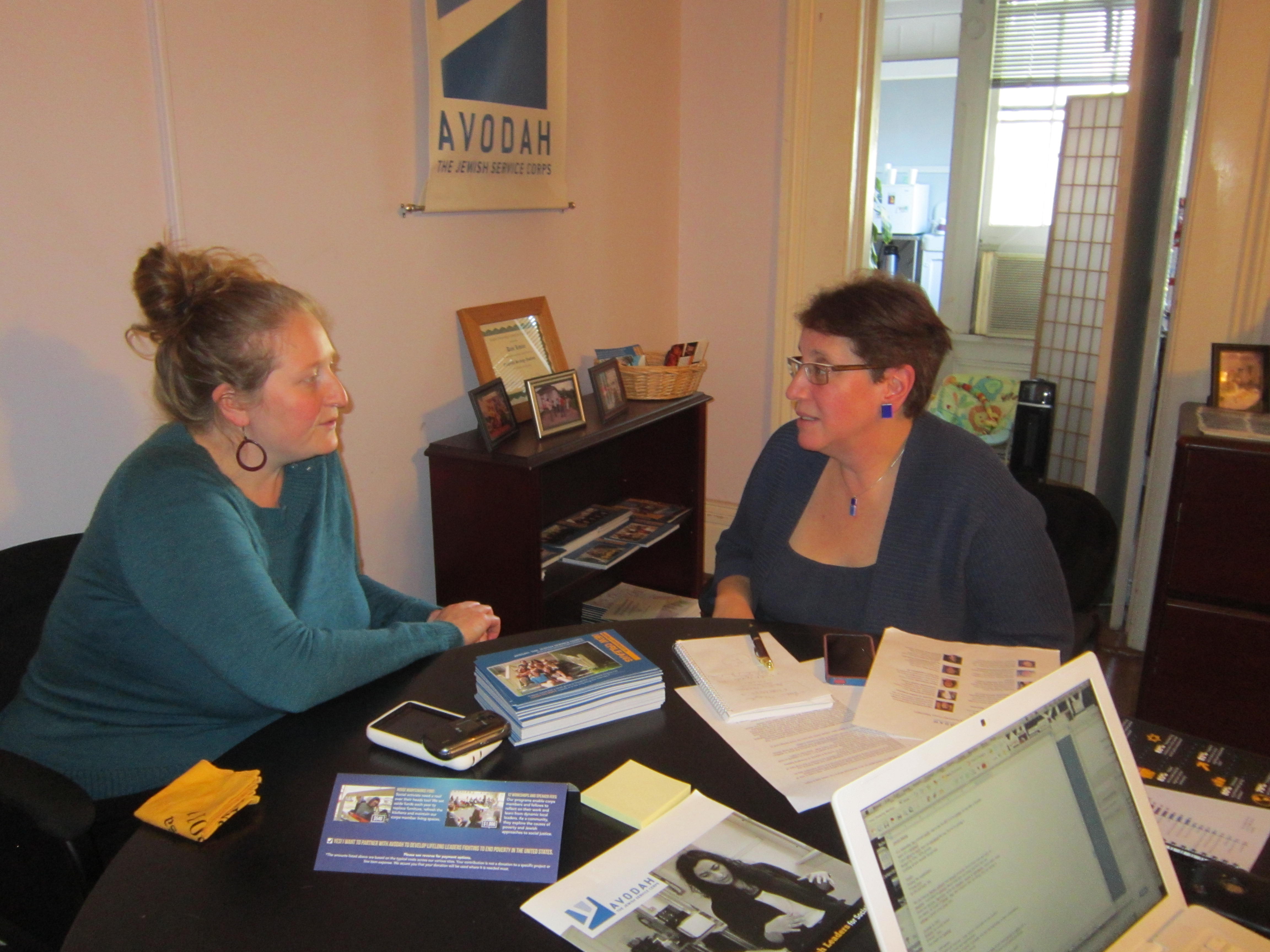
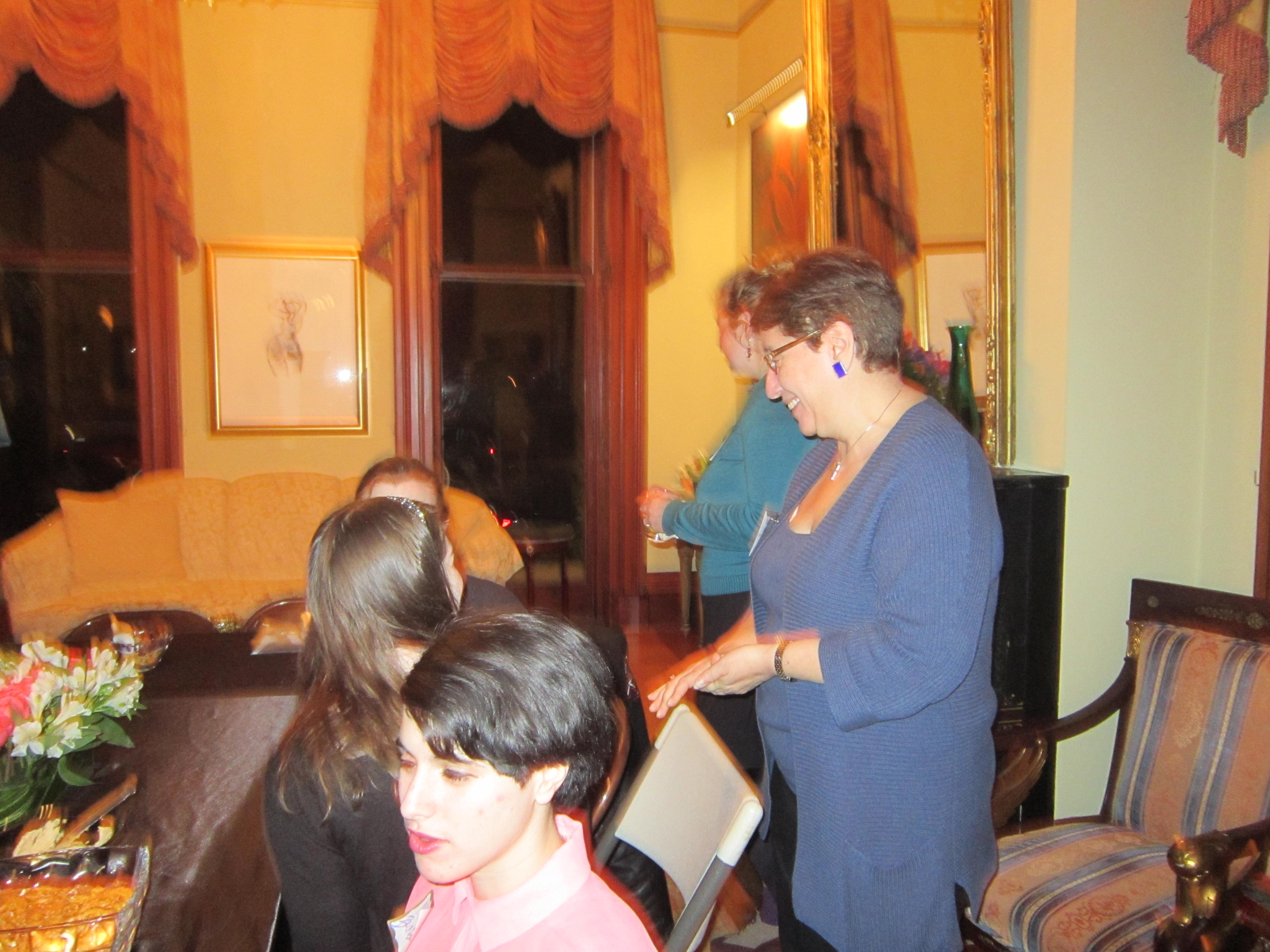
AVODAH executive director Marilyn Sneiderman, right, with local director Dani Levine at the AVODAH Jewish Service Corps offices uptown. (Photo by Alan Smason)
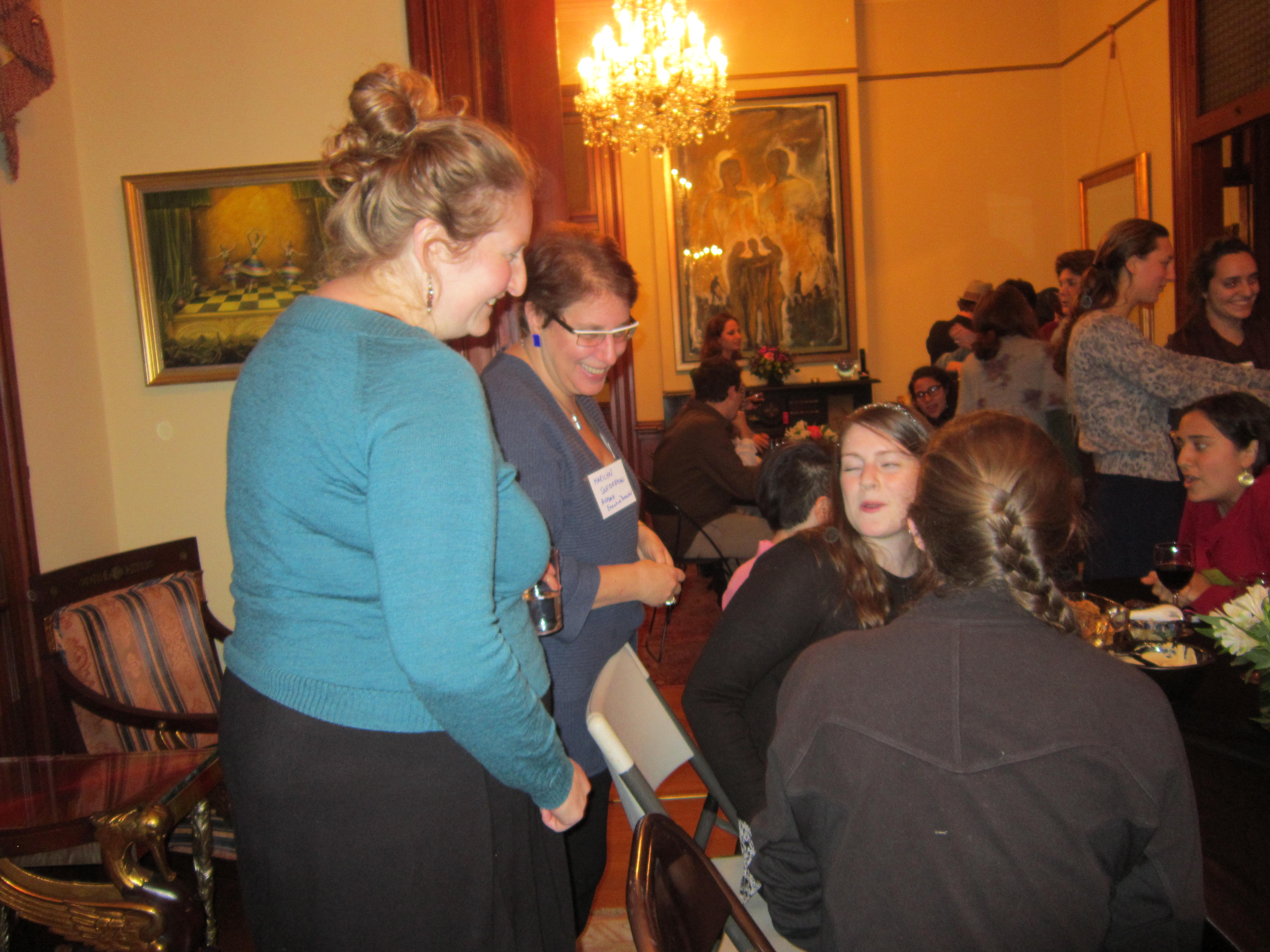
Sneiderman, who arrived on Monday and left yesterday, toured the local facilities as she usually does twice a year, meeting with AVODAH members, staffers, alumni and board members. She even put in an appearance on Wednesday night at AVODAH’s Tu B’Shevat Seder, held at the Garden District home of Marc Behar.
A passionate speaker for the rights of the downtrodden, Sneiderman took over as executive director three and a half years ago following the departure of AVODAH founder, Rabbi David Rosenn.
“I would say David was a total mensch,” Sneiderman revealed in an exclusive CCJN interview. “I feel blessed about the organization I inherited from him. AVODAH, which he built, is based on social justice as a corps that live together in a bayit (house) and build a community to support each other.”
AVODAH, the Jewish Service Corps, was founded in 1998 to address social needs in low-income communities. The first AVODAH home was founded in New York City and quickly spread to another location in the city and,later, to Washington, D.C., Chicago and in 2007 to New Orleans.
Following the evacuation and rebuilding from the flooding associated with Hurricane Katrina, the AVODAH national board determined their presence would be instrumental in helping survivors and the disenfranchised return to normalcy. “After Katrina, the board said how could we not be there?” Sneiderman recalls.
The response to the AVODAH House, established in 2008 on Jefferson Avenue in Uptown New Orleans, has proven to be of major import to both AVODAH corps members and to those they serve, most of whom are directly afflicted by poverty, according to Sneiderman. “The experience in New Orleans has been extraordinary,” she acknowledged.
Sneiderman knows first hand how important the work of corps members has been and what a difference their advocacy has made. She has been on the front lines fighting poverty for most of her adult professional life, beginning first as a social worker and education director with the Teamsters union and the American Federation of Labor-Congress of Industrial Organizations (AFL-CIO). She has served on the faculties of three universities: the Georgetown University School of Law, the University of Illinois and Cornell University.
“To me my entire life has been focusing on fighting poverty,” she reflected. “I found that central to my Jewish values. Then to find AVODAH with young Jews fighting poverty through a Jewish lens and to get to know the corps members and spend time with them was so inspiring.”
New Orleans AVODAH director Dani Levine agreed with Sneiderman. Levine believes what separates AVODAH, the Jewish Service Corps, from other similar organizations is “the abilty to make real and lasting change and be involved in a community that’s working toward that,” she said. “It’s really supportive here,” Levine acknowledged.
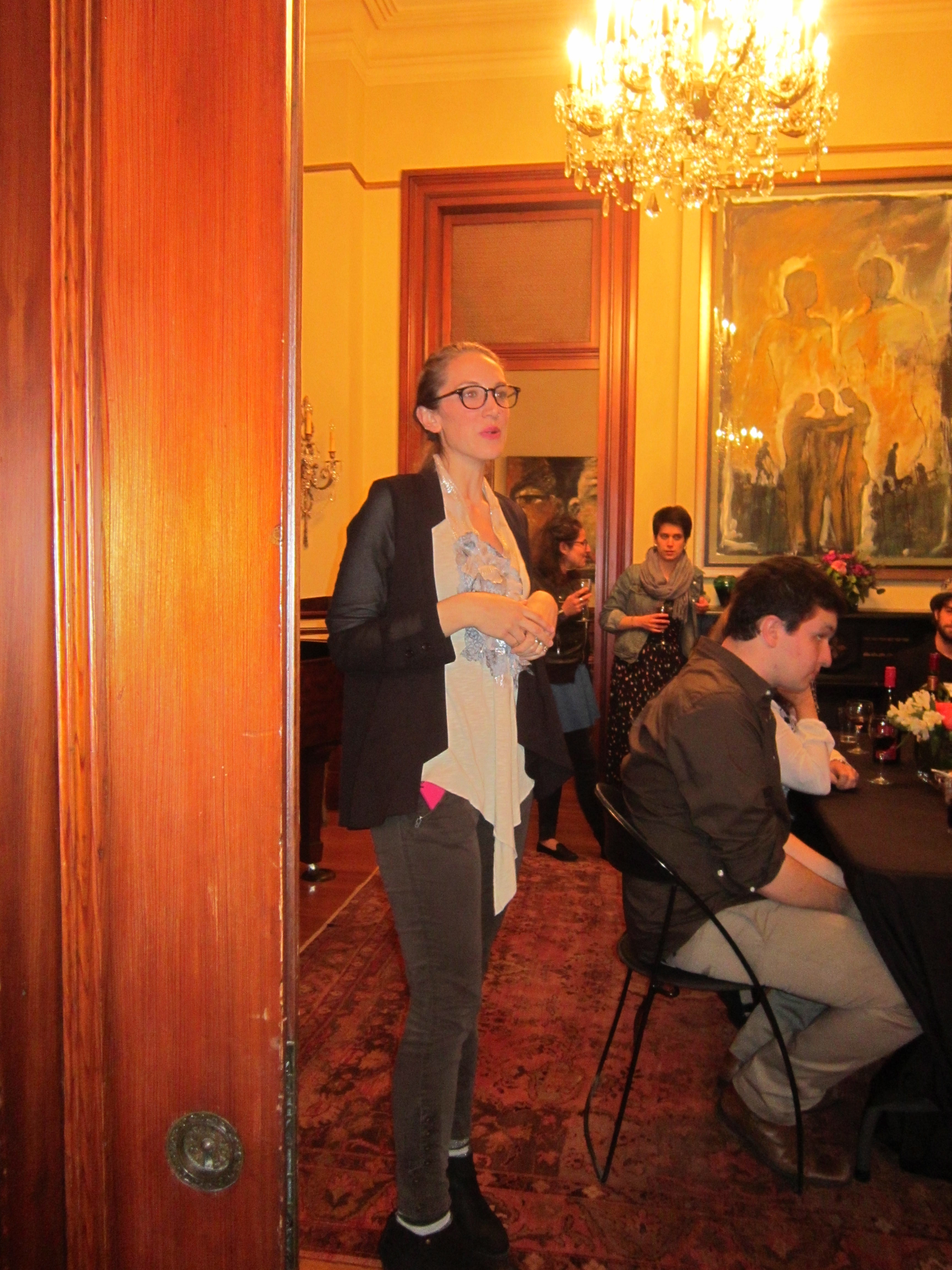
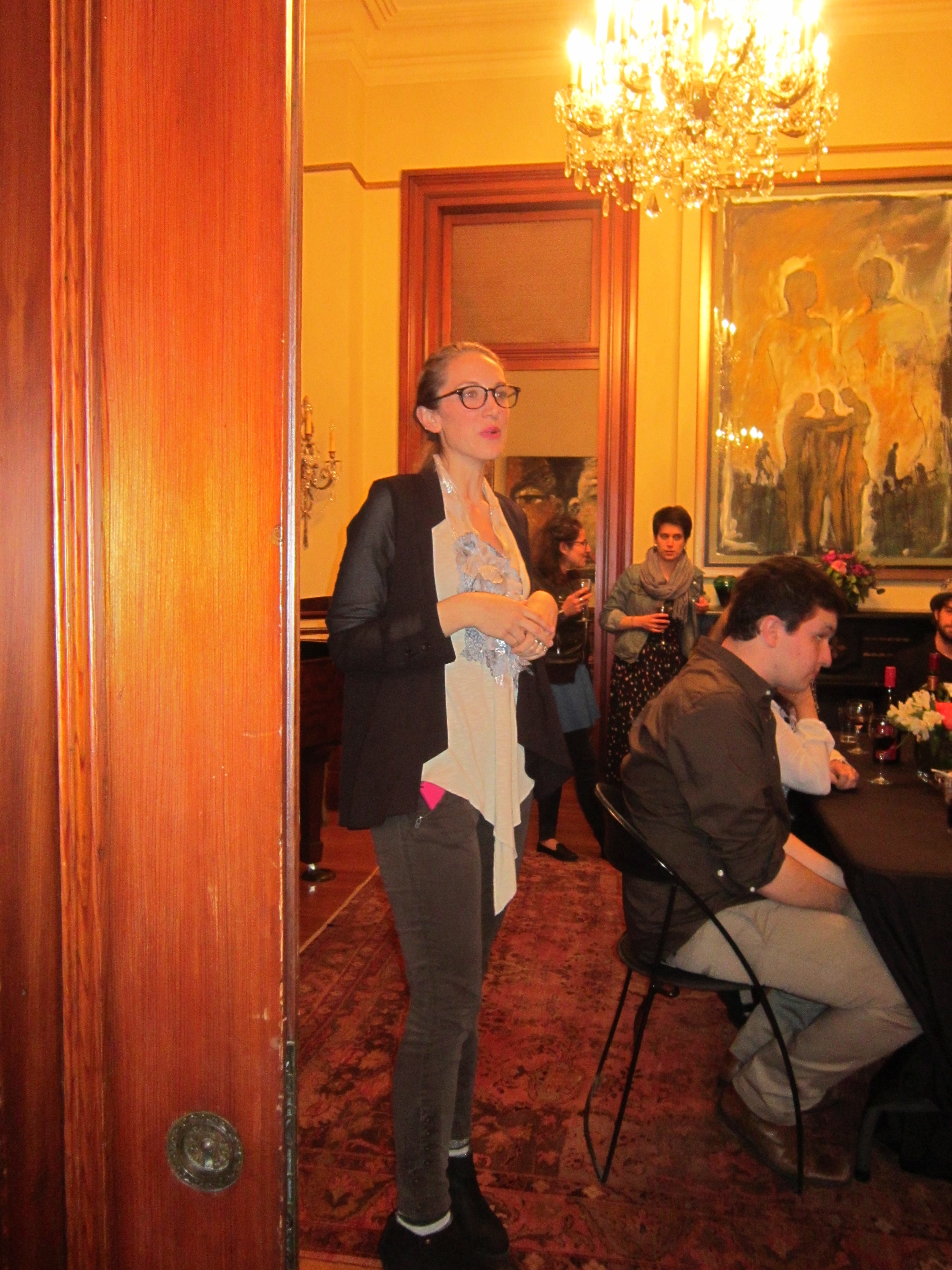
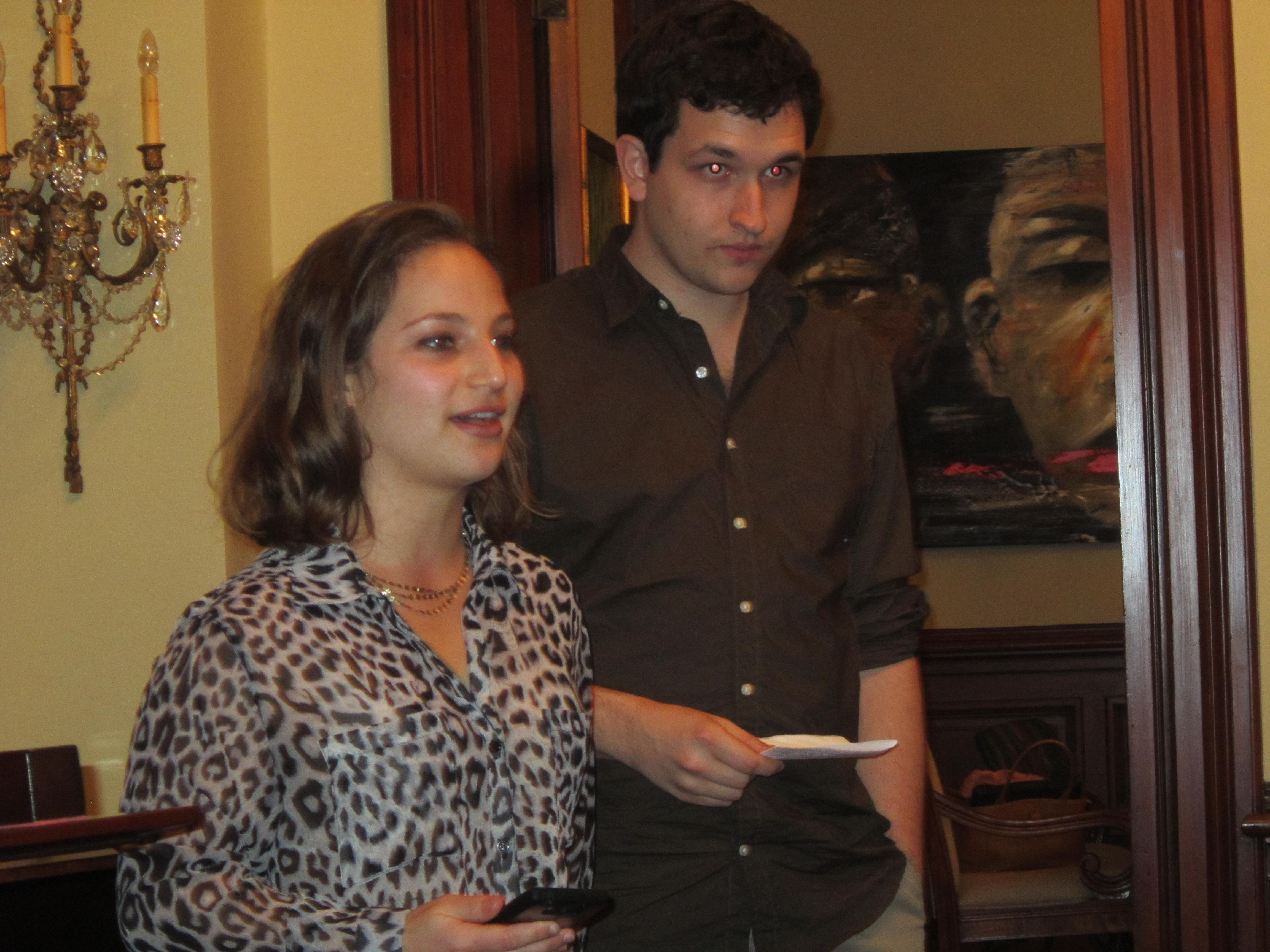
Alana Himber, an AVODAH alumna, introduces present bayit members. (Photo by Alan Smason)
An alumna, who now works for AVODAH, Alana Himber, had another take on why AVODAH is so effective. “In a lot of ways because the bayit’s small, we’re able to give a lot more to the community and we’re loved and supported by the community.”
“I live in Washington, D.C., which is where AVODAH has two houses. Before I actually worked for AVODAH, I used to meet with the corps members both during the orientation week in August and meet with them again later in the year sometime,” she continued.
Sneiderman, pointed to the unusual neighborhood, Shepherd Park, in which she has worked with both the Jewish and African-American communities to share common goals to alleviate poverty. “It’s an example of what was really wonderful and really important,” she opined. “This was one example we could point to with real pride. The Jewish and African-American communities came together with trying to keep the schools integrated, trying to deal with redlining from the banks, and also real estate in general trying to encourage real estate agents to understand the makeup of the neighborhood and what we wanted was to show it was possible.”
Many of the AVODAH: the Jewish Service Corps members who have moved to New Orleans for their one year of service have ended up staying and contributing to the welfare of their adopted city many times over. At present 20 AVODAH alumni now call New Orleans home and with the ten members presently living at the bayit, it means 30 past and present AVODAH Jewish Service Corps members live in and around the city.
Sneiderman’s appearance at the Tu B’Shevat Seder at Behar’s home on Jackson Avenue was part of introducing the local community and board members to AVODAH House residents.
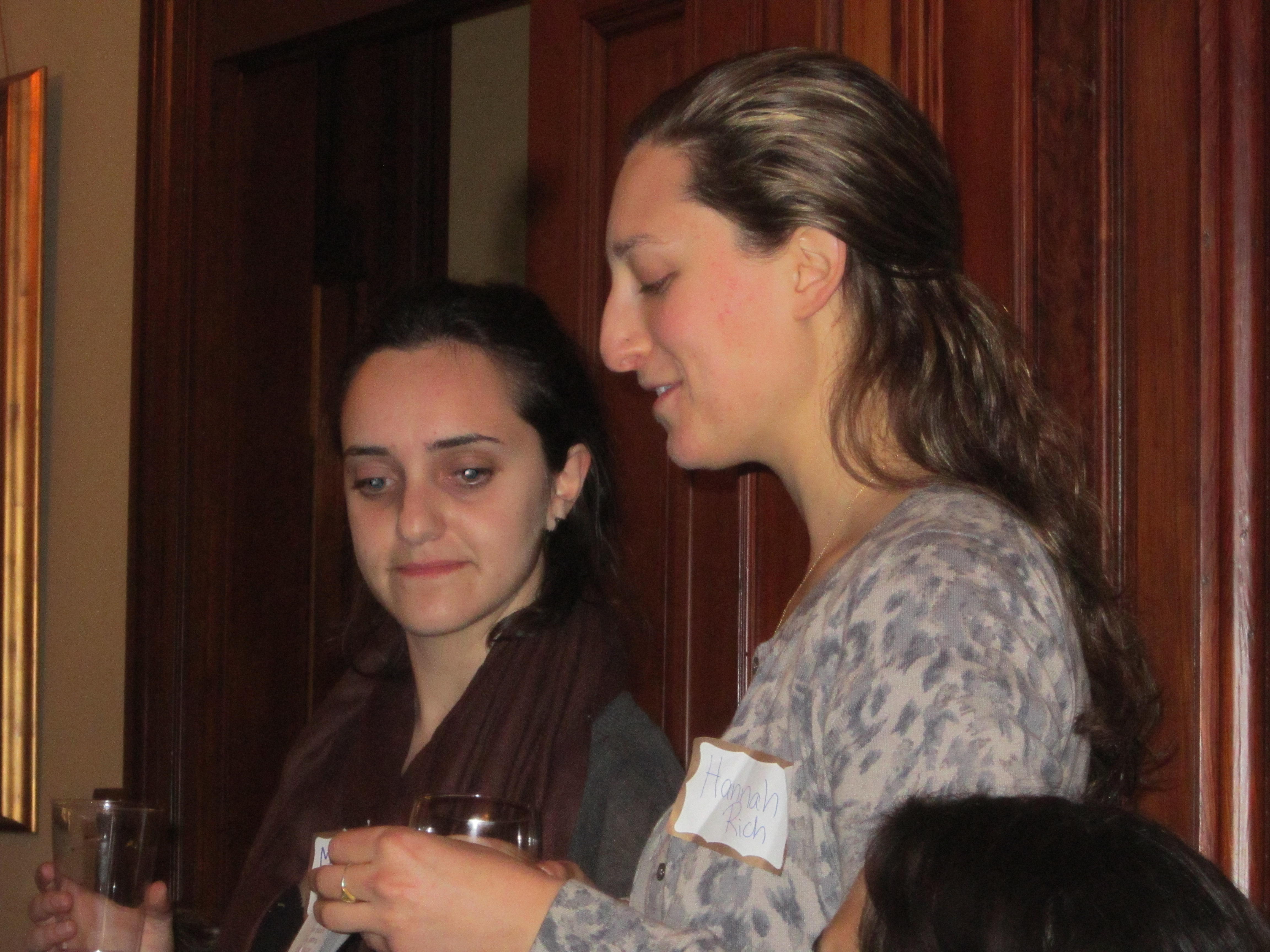
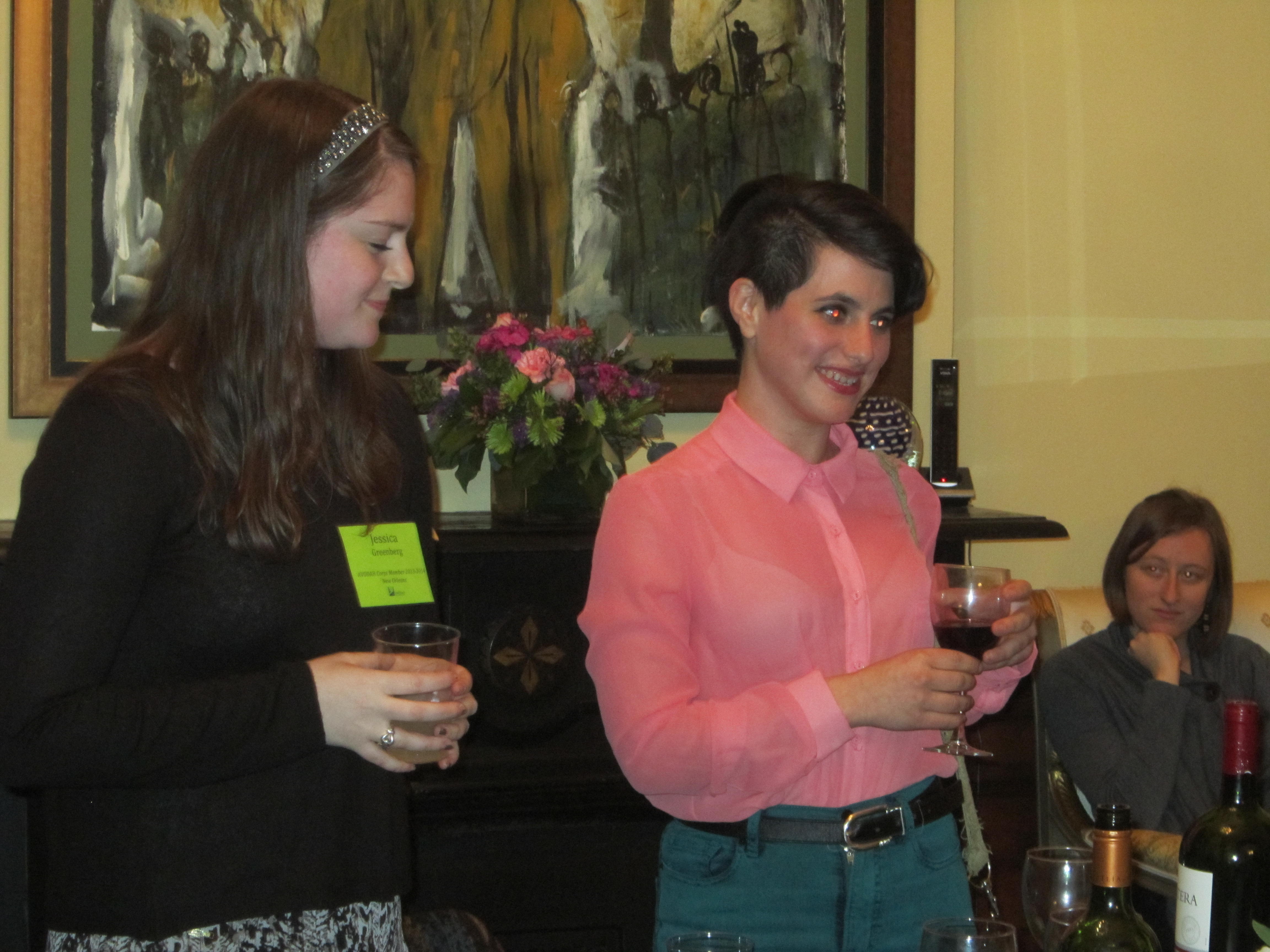
Martha Carol from Boulder, CO; Hannah Rich from San Francisco, and Leah Effron from West Orange, NJ. spoke about the work they are doing for the Southern Poverty Law Center, the Success Preparatory Academy, and the Vietnamese American Youth Leadership Association of New Orleans, respectively.
They were followed by David Gabriel from Newton, MA and Rayza Goldsmith from Chevy Chase, MD, who spoke on their work with the Promise of Justice Initiative and the American Civil Liberties Foundation of Louisiana, respectively.

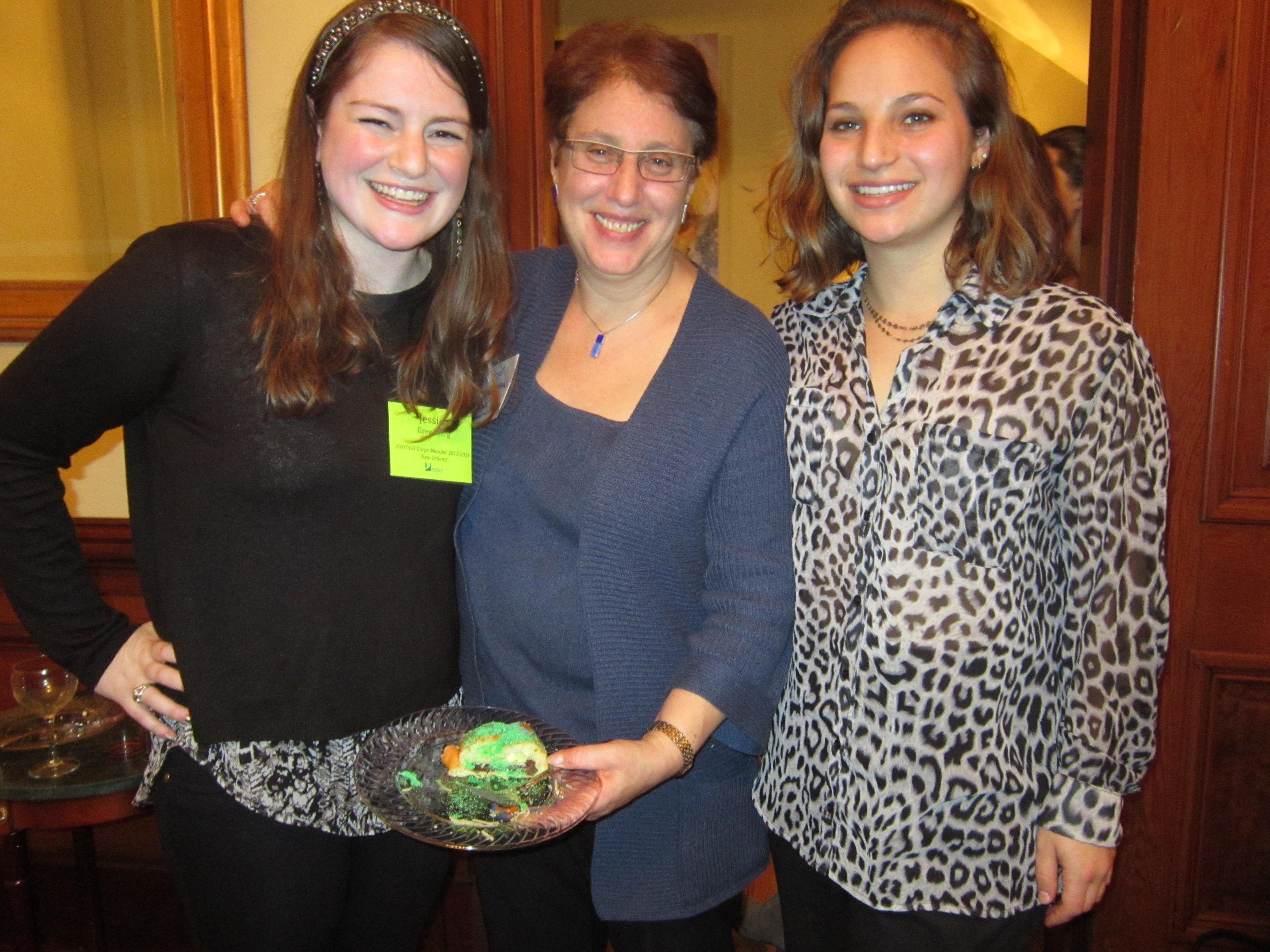
Jessica Greenberg, left, and Rayza Goldsmith, right, flank AVODAH executive director Marilyn Sneiderman
The last three members present were Jessica Greenberg from Memphis; Mia Bruner from Calabasas, CA.; and Hannah Wolfman-Arent from Washington, D.C., who spoke about their work with the Tulane Community Health Center, the NO/AIDS Task Force and and Kids Rethink New Orleans School, respectively.
Sneiderman acknowledged how lucky she feels she is at the helm of AVODAH.
“It’s interesting because several people said to me how difficult it is to continue an organization after a founder leaves,” she admitted. “Not only have we have sustained the organization, but we’re growing it.” Sneiderman points to upward numbers in members as well as increased budgets nationwide.
Pictures taken at the seder can be viewed here: