


Better Than Chicken Soup: Healing and Charity in the Big Easy
By ALAN SMASON, Special to the CCJN
The traditional Jewish mandate of caring for the sick and infirm has evolved since the time of New Orleans’ founding 300 years ago. Today we live in a vastly different period than those days in which factors of self-preservation and prejudice required, if not demanded, a local Jewish hospital.

Better Than Chicken Soup: Healing and Charity in the Big Easy
Jewish tradition holds that pikuach nefesh – “the saving of a life” – soars above all other Commandments. The Talmud even permits violation of Biblically mandated laws, such as observance of the Sabbath, if done in the furtherance of saving a life. During the Middle Ages, Jews were afforded equal opportunities to learn the art of healing. No less than the noted Jewish philosopher and scholar Moses Maimonides, also known as the Rambam, was himself a 12th-century Spanish physician.
It was the Rambam who wrote that “the study of medicine has a very great influence on the acquisition of the virtues and of the knowledge of God, as far as on the attainment of true spiritual happiness. Therefore, its study and acquisition are preeminently important religious activities.”
Once Jewish immigration increased in this country, there were organized efforts in Jewish communities to establish their own hospitals for the care of their own people, lest they become a burden on the mainstream society. There was some concern that Jews on their deathbeds might become proselytized or converted by well-meaning Christians interested in their “salvation.” Jewish hospitals respected Jewish observance including the laws of kashrut and visitation by Jewish clergy. In later years anti-Semitism reared its ugly head with the imposition of quota systems that restricted the number of Jews accepted at medical schools and on staff at hospitals. Jewish teaching hospitals and medical schools sprang up in response.
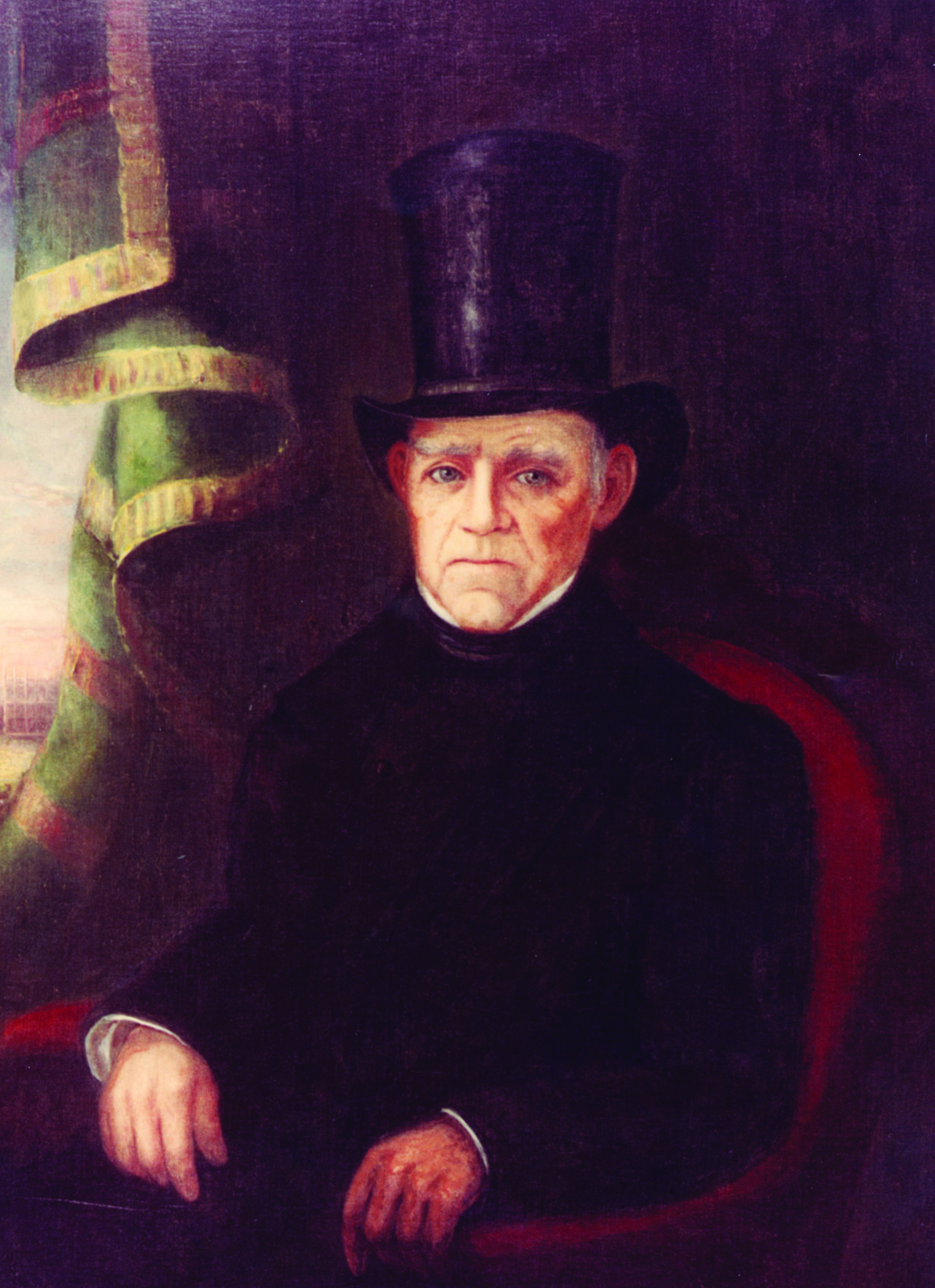
Judah Touro
Beginning in the pre-Civil War era and up through the late 20th century, there were an estimated 113 Jewish hospitals founded across this country in response to this particular form of anti-Semitism and a desire to care for those members of the Jewish community who required healing and recovery.
One of these was “the Hebrew Hospital of New Orleans” established in 1852 by Judah Touro and later name the Touro Infirmary in his honor.
At the time of the hospital’s founding, New Orleans was the nation’s busiest port. Local commerce was led by the twin commodities of sugar and cotton, aided respectively by the process of granulation and the invention of the cotton gin. Slaves and stevedores stacked sugar sacks and bales of cotton along the riverside wharves awaiting transport by steam-powered vessels cruising the Mississippi River.
A busy port meant a steady stream of foreign visitors and proper medical care for those mariners – many of them afflicted with malaria, syphilis and typhoid – as well as overworked slaves and several sick indigent Jews. Summertime brought waves of yellow fever victims, who also required a place of healing and qualified doctors and a medical staff that could care for them.
Mosquitoes left unchecked meant regular yellow fever attacks, which cut across all cultures in the diverse society of antebellum New Orleans. When Touro arranged for the purchase of the Paulding Mansion on Gaienne and Old Levee Streets with the intention of converting it into a hospital, it was just prior to the worst of the outbreaks to ever hit the city in 1853. An estimated 10,000 people died that year.
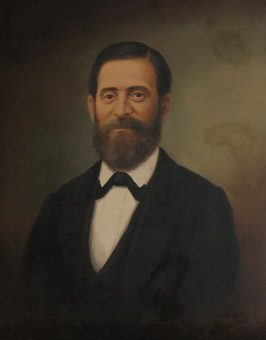
Dr. Joseph Bensadon, Judah Touro’s personal physician. (Photo Courtesy Touro Archives)
The first Touro Infirmary located along the bustling riverside was just 28 beds and was leased to Touro’s personal physician, Dr. Joseph Bensadon, until the advent of the Civil War when he accepted a commission and appointment as the Surgeon General of the Confederacy. Bensadon had leased the hospital for a modest annual sum of $75 and records show that slaves and seamen accounted for a majority of those admitted for care at that time. Advertisements at the time indicated patient charges from $1 to $5 per day with slaves assessed a $1 per day charge to be collected from their masters.
However, without its now-deceased benefactor and its medical administrator in the Confederate Army, the hospital languished, further threatened by the possible occupation of the city by Union forces and the confiscation of all medical facilities. So, when no bid was received at public auction, it was determined by the non-sectarian board composed of both Jews and non-Jews in 1861 that the facility should be converted into a home for the Jewish aged.
Following the actual capture of the city in 1862 by Union naval forces under the command of Admiral Farragut, the Jewish home was maintained and within a few years slowly converted back into a hospital.

Image of Touro Infirmary taken in 1882. (Courtesy Touro Infirmary Archives)
While still under the yoke of Reconstruction, the board of managers – now composed entirely of Jews – set about the task of renovating the existing structure and preparing Touro Infirmary for its most expansive period. In very late December of 1868, the hospital reopened in its original location along the busy and noisy riverfront. It was just in time because another major yellow fever outbreak was to occur in 1870.
That yellow fever abated during Reconstruction is attributed in part to the forced sanitary regulations and quarantining of victims put into place during the short, but iron-fisted reign of General Benjamin “The Beast” Butler. The regulations he imposed lasted much longer than the eight months of his tenure and were, perhaps, the only good outcome of his administration of New Orleans. Yellow fever returned with a vengeance, though, after Reconstruction with major outbreaks in 1878 and 1879, severely taxing the 24-bed facility.
Records indicate that more than 1,000 patients were being cared for annually at the relatively small facility in 1878. During this time the Gentlemen’s Hebrew Benevolent Association had merged with the hospital, resulting in the Touro Infirmary and the Hebrew Benevolent Society, which made the hospital the recipient of its largesse. The District Grand Lodge of the Independent Order of B’nai Brith, the Jewish service organization, forged an alliance with Touro that allowed members older than 60 years of age or those afflicted with chronic illness access to the facilities for the sum of $1 per year.
During this time care for the aged and infirm began to take on larger proportions as residents in the “asylum department” increased. There was a concern by the Touro board of managers that, because of the special relationship with B’nai B’rith, their members might demand admission to the facilities, resulting in the removal of long-term residents who were not members.

Julius Weis (Photo courtesy Touro Infirmary Archives)
The board of managers realized the facilities needed to expand and sought leadership in the form of the legendary figure of Julius Weis (pronounced “wise”), whose name was heralded as one of the greatest benefactors of the New Orleans Jewish community.
As president of the board of managers, Weis oversaw massive capital campaigns that were aided by innovative programs culminating in the first Touro Fair, which enhanced public awareness of the hospital’s worth in the eyes of outsiders. Subscriptions to a New Hospital Fund increased the coffers needed to establish Touro Infirmary’s free clinic in 1881, which opened at a new facility at its present-day site at Prytania and Aline Streets on a $5,000 plot of land previously used for cow pasture. One of the most brilliant of Weis’ fund-raising efforts was to then raffle off the old building
By the time the World’s Industrial and Cotton Centennial Exposition was being held at nearby Audubon Park in 1884, Touro was expanding the number of pay patients to supplement its continuing charitable commitment to providing care for the needy and indigent. A 40% paying and 60% non-paying patient ratio remained static throughout this period. A free clinic opened in 1886.
Touro firmly established itself as a premier medical complex, establishing major departments and implementing new technologies just in time for what became the largest wave of Jewish and other immigrants to land in New Orleans from Europe. Would-be residents were tested under the supervision of house surgeon Dr. Frederick Loeber, establishing a long relationship between the Tulane and Louisiana State University Schools of Medicine.
In further consideration of its attachment to the principles of a sound medical education, a School of Nursing was established in 1896 to provide skilled nurses as Touro careened into the 20th century. Additional plots of land at nearby Foucher and Coliseum Streets were purchased and a drainage system installed paid for in part by proceeds raised from the most recent Touro Fair. The expanded wooden facility was outfitted with telephone service and central heat, but most remarkable was that it was lit by electricity.

Dr. Elizabeth Cohen, the first female physician in New Orleans. (Photo courtesy National Institutes of Medicine)
At the time the board also considered its long-term care options for its elderly residents. Among the longtime residents was Dr. Elizabeth Cohen, the first female physician to practice in New Orleans and who managed the sewing and linen room following her retirement in 1887. Faced with the continuing need to provide care for the elderly, the board of managers recommended the erection of a separate home for the aged and issued $15,000 in bonds to cover the expected cost of $25,000. Following a magnificent donation of that very figure from his children, the facility which included a small synagogue, was named the Julius Weis Home for Aged and Infirm in his honor. Weis died in 1909, but Dr. Cohen lived at the new brick facility until the time of her death in 1921 at the age of 101.
The early decades of the 20th century, the period associated with the operation of Storyville and the birth of jazz , was a productive one for Touro as a new brick facility was finished and dedicated. A dormitory to house nurses and other students was opened in 1915. As the country entered the Great War and Storyville was shuttered, the hospital worked in concert with the American Red Cross training non-commissioned officers, soldiers and seamen in the medical field. By the time the war had ended, the hospital was severely taxed by the worldwide pandemic of Spanish influenza that killed more people than had died during the previous four years of war.
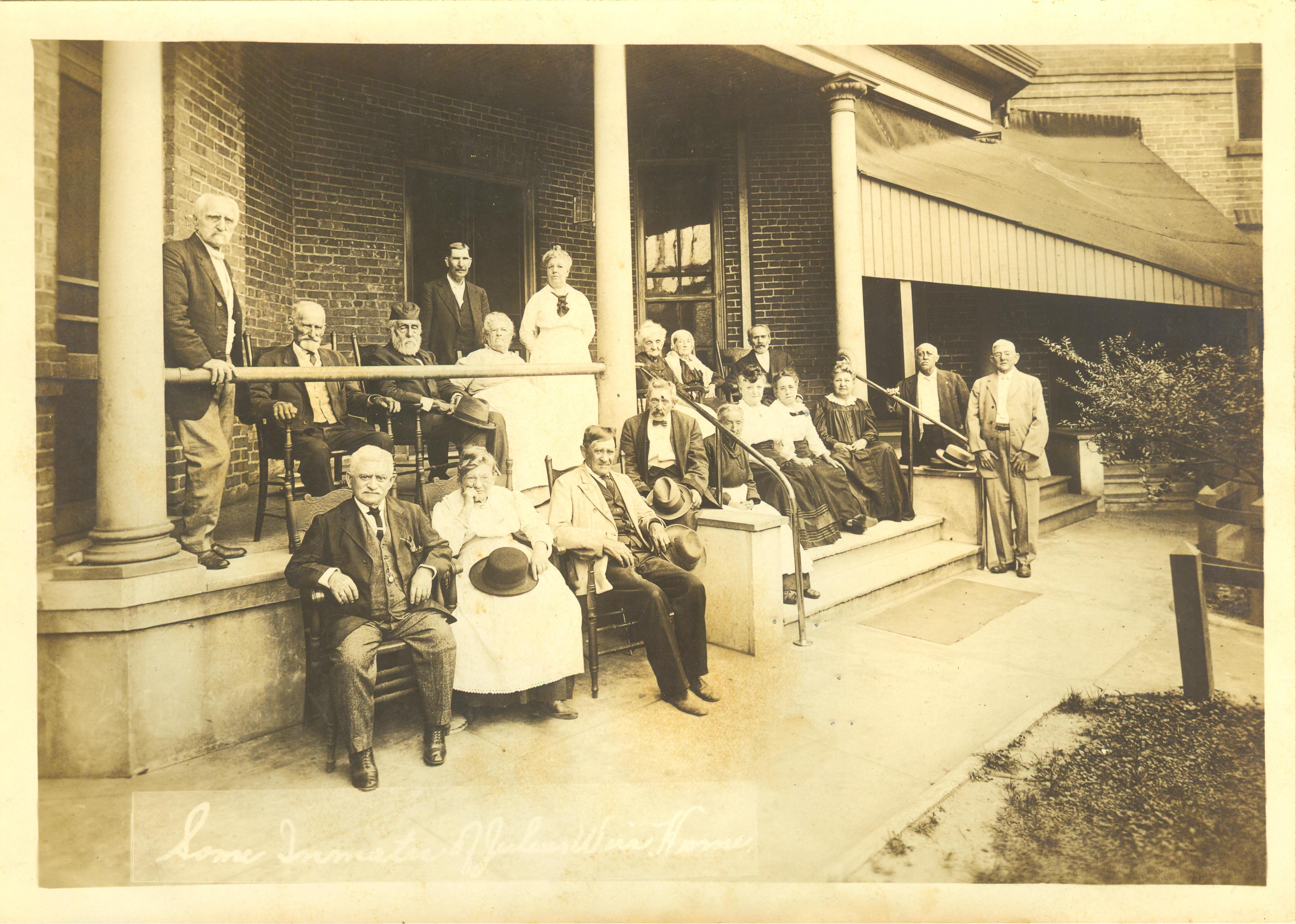
Julius Weis Home for Aged residents in 1909. (Photo courtesy Touro Infirmary Archives)
One of the great shining medical stars who made New Orleans his home at this time was Dr. Abraham Louis Levin, the designer of the Levin duodenal catheter, a nasogastric device still used in modern operating theaters and employed in post-surgical settings to reduce possible complications. Levin was a noted researcher, who devised ways to reduce blood sugar levels before the discovery of insulin. A Polish Jew who served in the Russian Army during the Boxer Rebellion, he received a medal from the Czar, before immigrating to America, where he graduated from the Tulane University School of Medicine in 1907 and became a member of Touro’s staff almost immediately. He was a protégée of the renowned Touro chief surgeon Dr. Rudolph Matas and an associate professor at Tulane University until 1931. He later became associated with Charity Hospital as its chief gastroenterologist, while also serving as a visiting physician at Hotel Dieu. Dr. Levin also served as the president of Congregation Beth Israel and was stationed at Camp Beauregard in the Medical Reserve Corps during World War I.

Dr. Abraham Levin, whose self-named catheter is still used in medicine today. (Photo courtesy Touro Infirmary Archives)
While Prohibition was the law of the land and a firebrand named Huey Pierce Long presided over the seat of government in Baton Rouge as governor, Touro expanded into its most recognizable form with the construction of a four-story structure now known as the “A” building and following that the “B” building on the Foucher Street side of Prytania.
The Julius Weis Home was closed after the remaining few residents were accepted for processing at the B’nai B’rith Home in Memphis in 1930. It marked the first time that since the hospital’s early founding that residents were not housed on site.
The period prior to the nation’s entry into World War II was a busy one for Touro and other Jewish hospitals across the country. Following the war, construction at Jewish hospitals exploded and several additions to existing buildings expanded Touro’s total bed capacity to more than 450 beds.
Cutting edge treatments in departments ranging from nuclear medicine to hemodialysis and cardiovascular surgery were offered and a number of other modern buildings were erected or acquired over decades for physicians’ use and ancillary services.
Anti-Semitic quotas designed to restrict Jewish acceptance at medical schools and at hospitals had limited the number of Jewish interns and those given staff privileges at many institutions. However, in the post-war era fondly characterized by the administration of Mayor deLesseps Story “Chep” Morrison, the heinous practice began to decline affording opportunities for Jewish physicians to become residents or staff physicians at medical facilities that were not Jewish.
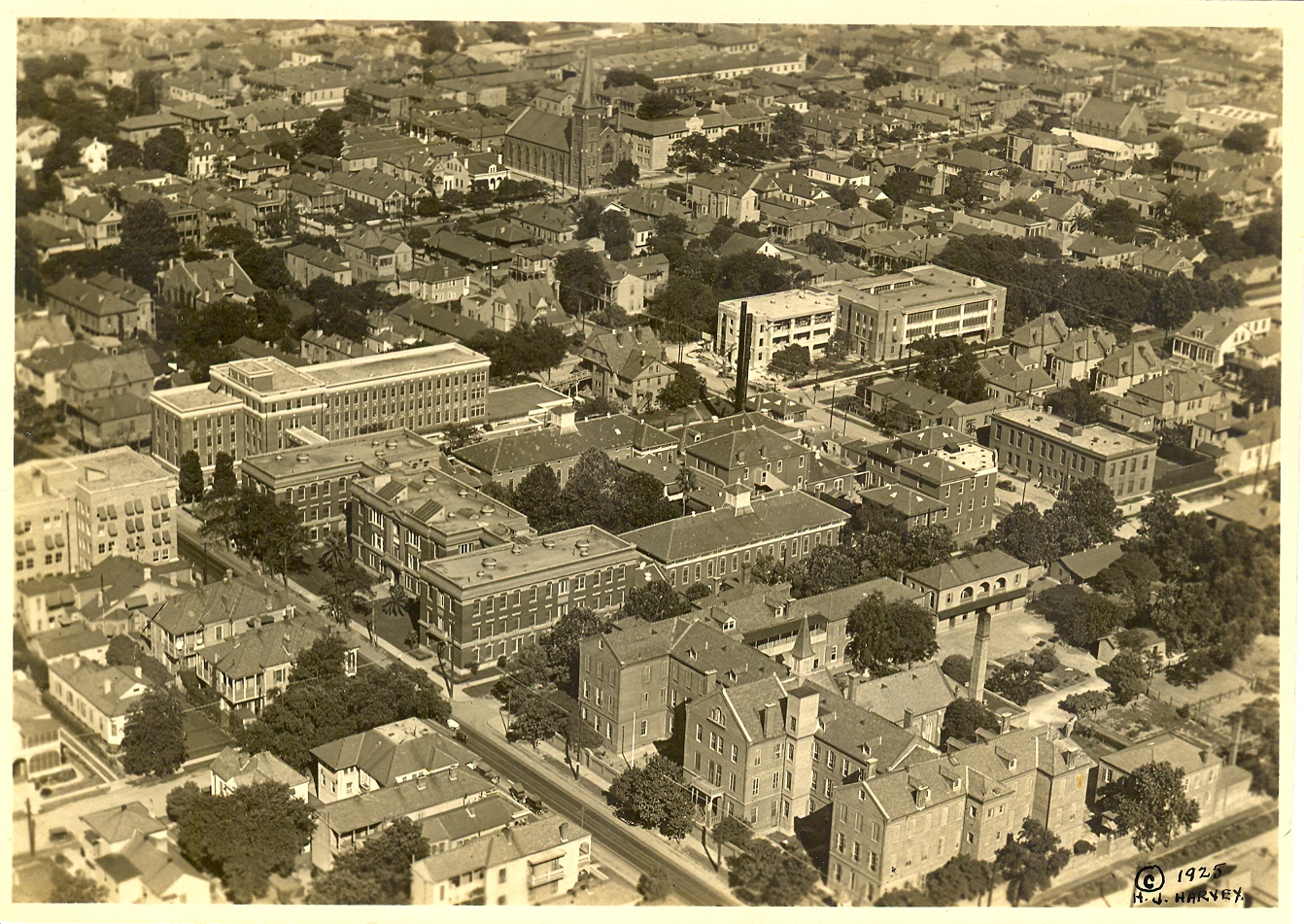
An aerial view of Touro Infirmary’s campus taken circa 1925. (Photo courtesy of Touro Infirmary Archives)
Although such quota systems are highly illegal and socially unacceptable now, a major change that further affected Jewish hospitals took place in the 1970s and 1980s during Maurice “Moon” Landrieu and Ernest “Dutch” Morial’s city administrations. This was due to the appearance of health maintenance organizations and physicians preferred organizations, which funneled Medicare-funded monies. It shifted the way in which physicians were paid and the manner in which hospitals were reimbursed.
Many not-for-profit hospitals were bought out by profit-seeking enterprises in the 1990s and at the turn of the present century. Smaller entities, some Jewish, were unable to compete against these major corporations and were forced to close. The imposition of such major for-profit hospitals resulted in a paradigm shift for the medical profession. The Touro Foundation was created to raise additional funds at this time. (See sidebar)
Nationwide the number of Jewish hospitals has waned to just 22, due to these factors and other outside influences. Touro remains firmly committed to the Jewish community of New Orleans, while still maintaining its non-profit status and is a member of the LCMC Health network of five hospitals, which includes nearby Children’s Hospital.
The Touro Infirmary of the pre- and post-Hurricane Katrina eras during the administrations of Marc Morial, Ray Nagin and Mitch Landrieu has continued its commitment to ensuring the finest care for its patients and the best facilities for its staff, all of which are in concert with the continuing tradition of Jewish faith and practice with regard to charity and medicine.
