South African President Cyril Ramaphosa met with Donald Trump last week to discuss Trump’s cutting of all U.S. aid to South Africa. At the meeting Trump confronted Ramaphosa with false claims and videos accusing the South African government of white genocide.
South Africa currently has a Jewish population of approximately 50,000, the majority of whom live in Johannesburg and Capetown. Most of the population is Orthodox, and there are many kosher restaurants in the country, as well as three kashrut-certifying organizations. There are more than 50 synagogues in the country as well as a number of Jewish Day Schools.
The first Jews to arrive in South Africa likely came with Portuguese explorers in the 16th or 17th century. The first record of a religious service was Yom Kippur in 1841. As the population grew, Jews became active in shipbuilding, the mohair industry, whaling, and the diamond trade.
There was both Jewish support for, and Jewish opposition to, the apartheid policy of the Afrikaner-dominated National Party which came to power in 1948. When Nelson Mandela was arrested and sent to jail for life, there were a number of Jews among his codefendants.
Israel and South Africa developed a close relationship, including arms sales and collaboration on nuclear weapons research. Relations between the two countries worsened after the fall of apartheid and the election of Nelson Mandela as president. More recently, South Africa has been very critical of Israel’s policies toward the Palestinians, though the two countries still maintain diplomatic relations.
One group of Jews in South Africa were distinguished by their housing arrangements, known as “ostrich palaces.” What does that refer to?
A. Many Jews who lived in Oudtshoorn, a town in the Western Cape province of South Africa, were leaders in the ostrich industry, at first trading in ostrich feathers, and eventually in ostrich meat, eggs, leather, and ostrich rides for tourists. These wealthy merchants built private villas on large estates, reflecting the financial success of their work.
B. Ostriches have been important to South African culture for centuries, for clothing, meat, and religious ceremonies. They are considered to be symbols of strength and courage. In an effort to be accepted by the majority Afrikaans population, many Jewish immigrants placed a stuffed ostrich at their front door as a sign of their respect and support of the Afrikaans traditions.
C. There was a large immigration to South Africa of Austrian Jews prior to the start of World War II. Many members of this community settled together in a neighborhood in Capetown. They built houses in the style of their homeland, with steeply sloped roofs, though this feature was not necessary in South Africa, which rarely had snowfalls. The Jews called these structures Austria houses, in German known as Österreich houses. The local population derisively referred to these houses as ostrich palaces.
D. In the early 1900’s, the majority of Jews in South Africa were poor immigrants who settled in Hillbrow, an inner city area of Johannesburg. The simple huts which these Jews built typically had roofs covered in ostrich feathers, which were plentiful and much cheaper than clay tiles, shingles, or other products used by those with more money.
E. Eastern European Jewish immigrants in the early 20th century were very afraid in their new surroundings, where they didn’t speak the language or know the local customs. Many of these immigrants built small underground rooms at their homes where they could hide in fear, leading these homes to be called ostrich palaces, reflecting the idea that the Jews were burying their heads in the ground like an ostrich.
Donald Trump announced that he is directing the Bureau of Prisons to rebuild and enlarge Alcatraz Prison “to house America’s most ruthless and violent Offenders,” though even Trump admits that reopening the prison would be a major undertaking, calling it “a big hulk that’s sitting there rusting and rotting.” The prison, officially known as United States Penitentiary, Alcatraz Island, and often referred to as The Rock, is located on an island in San Francisco Bay. Opened in 1934 and closed in 1963, the site is now a public museum under the auspices of the National Park Service, with more than 1.4 million visitors annually. Among the most famous prisoners housed at Alcatraz were Al Capone, Machine Gun Kelly, and Robert Stroud, the Birdman of Alcatraz. When the prison first opened in 1934, there were already 7 Jewish inmates, whose religious needs, including a Passover seder, were served by prison chaplain Rabbi Rudolph Coffee. Among the better known Jewish inmates who served time at Alcatraz was Irving Wexler, better known as Waxey Gordon (based on the excellent pickpocketing skills he developed as a child on New York’s Lower East Side). Another Jewish prisoner was George Brooks, who was serving time at Leavenworth in Kansas for drug trafficking until he was transferred to Alcatraz. This was done as punishment when Brooks led an inmate strike of white, Indigenous, Jewish, and Catholic prisoners. In particular, however, Brooks helped lead the “Colored Committee” of Black inmates, an unusual activity for a white man. Another prominent Jewish prisoner at Alcatraz was Meyer Harris “Mickey” Cohen, whose parents had immigrated to Los Angeles from Kiev. Before he was 10 years old, Cohen was sent to Reform School for petty theft and shoplifting. He continued his criminal activities, working with Benjamin “Bugsy” Siegel among others. Among his criminal activities were bookmaking, tax evasion, and a number of violent crimes. He went to Alcatraz in 1961 for tax evasion, where he was the only prisoner there who was ever released on bail, with his bond signed by U.S. Supreme Court Chief Justice Earl Warren. What else is true of Mickey Cohen?
Alcatraz Guard Tower by Mark D. Zimmerman is in the public domain
A. The best man at his wedding was William “Stumpy” Zevon, father of the American rock singer-songwriter Warren Zevon.
B. He was an ardent supporter of Menachem Begin’s paramilitary organization the Irgun.
C. Cohen’s bodyguard Johnny Stompanato was killed in self-defense by Cheryl Crane, the daughter of actress Lana Turner.
D. Cohen helped establish the Flamingo Hotel in Las Vegas, the oldest continuously operating resort on the Strip.
E. While in prison, Cohen earned the nickname, the Loxman of Alcatraz, as he caught salmon in San Francisco Bay and cared for them in the prison bathtub.
Shortly before his inauguration, Donald Trump announced the creation of his own cryptocurrency, $TRUMP, a venture which many consider to be a conflict of interest given his role as president in setting governmental cryptocurrency policies. Cryptocurrency is a digital currency that operates independently of any governments, unlike traditional money. The first cryptocurrency, Bitcoin, was released in 2009. As of now, it is believed that the market value of all cryptocurrency is almost 3 trillion dollars. There are a number of controversial issues surrounding cryptocurrency, particularly because it is generally unregulated. It has become a preferred currency for many illegal operations, including money laundering, terrorism, and the illegal drug trade. In 2017, a Russian Jewish entrepreneur, Vyacheslav Semenchuk, launched a cryptocurrency specifically marketed to Jews. Billed as the “first kosher crypto currency in the world,” 10% of all profits are designated to go to interest-free loans for Jews. The currency is available for purchase on Shabbat, the Jewish Sabbath, because the system is entirely automated, according to Semenchuk. What is this “Jewish” cryptocurrency called?
Donald Trump is having an impact on the politics of countries around the world, affecting their own trade and tariff policies, and elections. In Canada, the Liberal Party trailed the Conservative Party by as much as 20% in the polls until Trump imposed huge tariffs and threatened to take over the country as our 51st state. As a result, the Liberals won the election. Germany’s far-right party did well in their election, but not nearly as well as expected, in backlash to the support they received from Trump and in particular Elon Musk.
And in Australia, Prime Minister Anthony Albanese was elected to a second term, though his party had been trailing significantly in the polls leading up to the election. Charles Edel, the Australia chair at the Center for Strategic and International Studies, suggested that the impact of Trump on the results was significant, noting that “There were enough similarities to the Canadian election to suggest that the conservatives’ fortunes fell as Trump’s tariffs and attacks on America’s allies ramped up.”
Australia’s Jewish population currently numbers around 150,000. Mount Scopus Memorial College in Melbourne and Moriah College in Sydney are both co-educational primary and secondary Jewish Day Schools. The University of Sydney and Monash University in Melbourne both have Jewish Studies departments, and there are active chapters of B’nei B’rith, National Council of Jewish Women, and Kadimah (which focuses on Yiddish culture). The Jewish Museum of Australia in Melbourne was established in 1982, and in 1992 the Sydney Jewish Museum opened, dedicated to the Holocaust and Australian Jewish history. There are approximately 80 synagogues in the country. Who were the first Jews to arrive in Australia?
A. In 1493, the first Jewish immigrants arrived in Perth, having fled the Inquisition in Spain. They quickly established a cemetery, and the first synagogue, Comunidad de los Judíos, was built in 1495.
B. At the same time as massive Jewish emigration from Russia and Eastern Europe in the late 19th century to Western Europe, America, and Palestine, smaller groups emigrated to the East, including a significant number of Jews who settled in Shanghai. In the early 1900’s, a small group of those immigrants sailed to Australia and established the first Jewish community in Canberra.
C. Among the early European settlers in Australia were sailors from Great Britain, who established a penal colony at Botany Bay. Eight Jewish prisoners were among those who were transported to Botany Bay in 1788.
D. The first Australian Jewish community were emigrants from Germany who fled prior to the Holocaust. As the United States and other Western nations refused to take in many fleeing Jews, some managed to find passage to Australia, leading to the founding of the first synagogue in the port city of Brisbane in 1939.
E. On Noah’s Ark, two of Noah’s grandchildren, Lud and Aram, were playing hide and seek by climbing into the pouches of the two kangaroos who were aboard the ark. They did not realize that the kangaroos left the ship after it settled on Mt. Ararat after the flood, and before they knew it, the kangaroos arrived in Australia with their stowaways still on board.
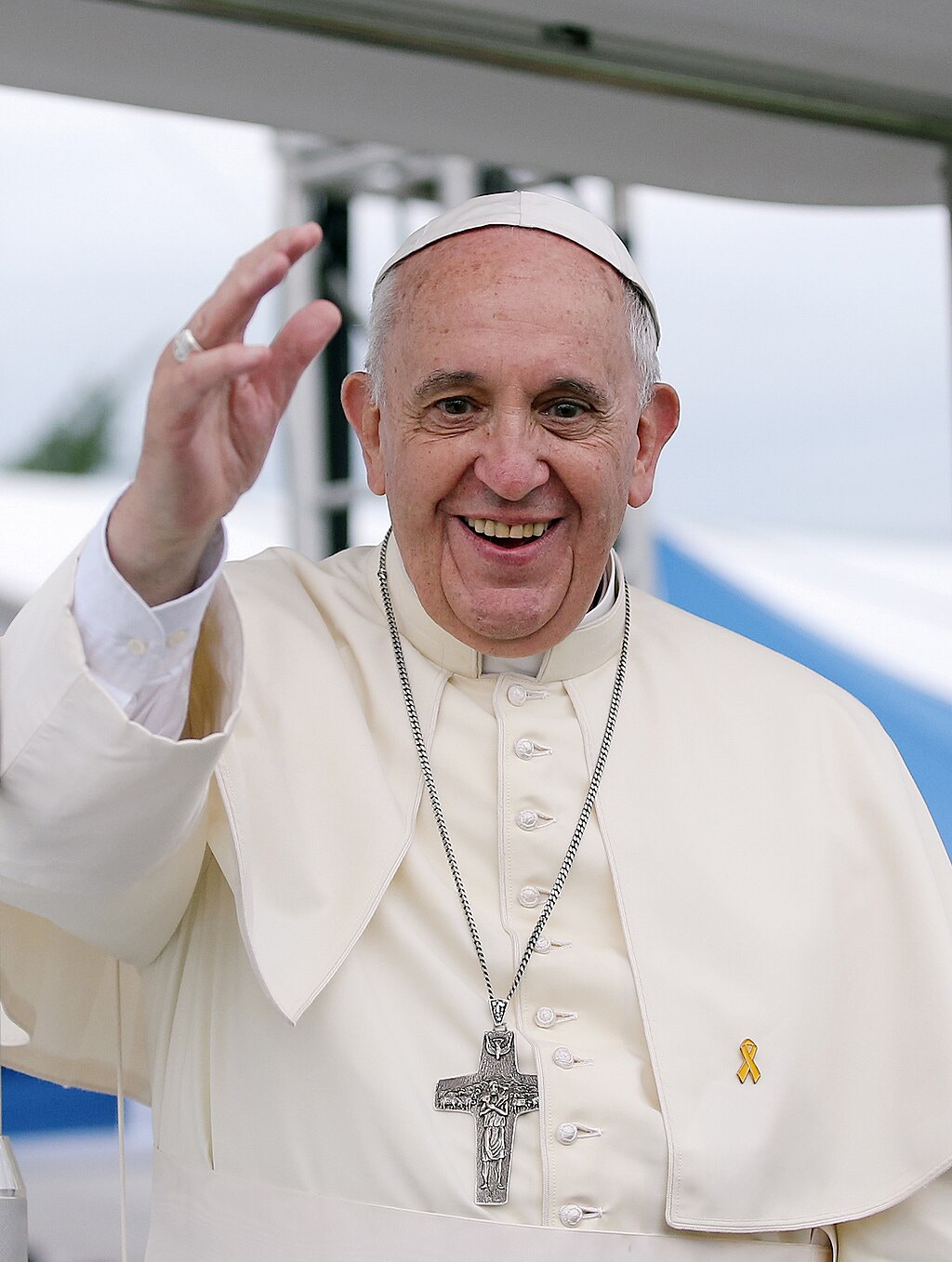
Pope Francis died last week at the age of 88, after serving as the leader of the Catholic Church for 12 years. He was the first Jesuit to serve as Pope, and the first Pope who was born in the Americas. Pope Francis was born in Buenos Aires, Argentina as Jorge Mario Bergoglio, and he became a priest, eventually being named the Archbishop. He was an advocate of peace between Israelis and Palestinians, and he signed the Vatican’s first treaty with Palestine. He visited Israel in 2014, where he was the first Pope to visit the gravesite of Theodor Herzl, while also visiting Yad Vashem and the Western Wall. More recently, Pope Francis condemned the Hamas terrorist attack of October 7, while also criticizing Israel for its actions in the subsequent Gaza War. While serving as the archbishop of Buenos Aires, Bergoglio developed a close relationship with Rabbi Abraham Skorka, a prominent leader in the local Jewish community. The two clerics held a series of inter-religious talks on such topics as God, atheists, homosexuality, and capitalism. What was the circumstance that led Archbishop Bergoglio to say to Rabbi Skorka, “I guess this year we are going to eat chicken soup.”?
A. In 1996, Rabbi Skorka attended an Easter celebration at the home of Archbishop Bergoglio. The next year, the Rabbi invited the Archbishop to attend the Passover seder at his home, leading to Bergoglio’s remarks.
B. Archbishop Bergoglio ended up in the hospital during Lent in 1995 because of a respiratory infection. Rabbi Skorka paid him a visit there, where he noted that “our people have the perfect cure for your ailment, chicken soup.” The archbishop replied jokingly that, “though it is Lent, I guess this year we are going to eat chicken soup.”
C. The two clerics were attending the annual Buenos Aires Clergy Council dinner. While the menu usually includes locro, the traditional Argentinian stew which includes veal, pork and chorizo, that year’s dinner took place at the rabbi’s Benei Tikva Synagogue, with a kosher menu.
D. As part of the annual Buenos Aires Carnival Street Fair celebration, the Clerical Council of Argentina sponsored an event where different faith groups would cook their favorite recipes to sell as a charity fundraiser. The Archbishop made that comment when he came upon Rabbi Skorka at the Asociación Mutual Israelita Argentina (Argentine Jewish Community Center) table.
E. The Archbishop was a fan of the championship San Lorenzo soccer team and the Rabbi was a fan of the lowly River Plate team, whose fans were known as “gallinas,” which means chickens, leading to the Archbishop’s remarks in a soccer discussion with the Rabbi.
Pope Francis died last week at the age of 88, after serving as the leader of the Catholic Church for 12 years. He was the first Jesuit to serve as Pope, and the first Pope who was born in the Americas. Pope Francis was born in Buenos Aires, Argentina as Jorge Mario Bergoglio, and he became a priest, eventually being named the Archbishop. He was an advocate of peace between Israelis and Palestinians, and he signed the Vatican’s first treaty with Palestine. He visited Israel in 2014, where he was the first Pope to visit the gravesite of Theodor Herzl, while also visiting Yad Vashem and the Western Wall. More recently, Pope Francis condemned the Hamas terrorist attack of October 7, while also criticizing Israel for its actions in the subsequent Gaza War. While serving as the archbishop of Buenos Aires, Bergoglio developed a close relationship with Rabbi Abraham Skorka, a prominent leader in the local Jewish community. The two clerics held a series of inter-religious talks on such topics as God, atheists, homosexuality, and capitalism. What was the circumstance that led Archbishop Bergoglio to say to Rabbi Skorka, “I guess this year we are going to eat chicken soup.”?
A. In 1996, Rabbi Skorka attended an Easter celebration at the home of Archbishop Bergoglio. The next year, the Rabbi invited the Archbishop to attend the Passover seder at his home, leading to Bergoglio’s remarks.
B. Archbishop Bergoglio ended up in the hospital during Lent in 1995 because of a respiratory infection. Rabbi Skorka paid him a visit there, where he noted that “our people have the perfect cure for your ailment, chicken soup.” The archbishop replied jokingly that, “though it is Lent, I guess this year we are going to eat chicken soup.”
C. The two clerics were attending the annual Buenos Aires Clergy Council dinner. While the menu usually includes locro, the traditional Argentinian stew which includes veal, pork and chorizo, that year’s dinner took place at the rabbi’s Benei Tikva Synagogue, with a kosher menu.
D. As part of the annual Buenos Aires Carnival Street Fair celebration, the Clerical Council of Argentina sponsored an event where different faith groups would cook their favorite recipes to sell as a charity fundraiser. The Archbishop made that comment when he came upon Rabbi Skorka at the Asociación Mutual Israelita Argentina (Argentine Jewish Community Center) table.
E. The Archbishop was a fan of the championship San Lorenzo soccer team and the Rabbi was a fan of the lowly River Plate team, whose fans were known as “gallinas,” which means chickens, leading to the Archbishop’s remarks in a soccer discussion with the Rabbi.
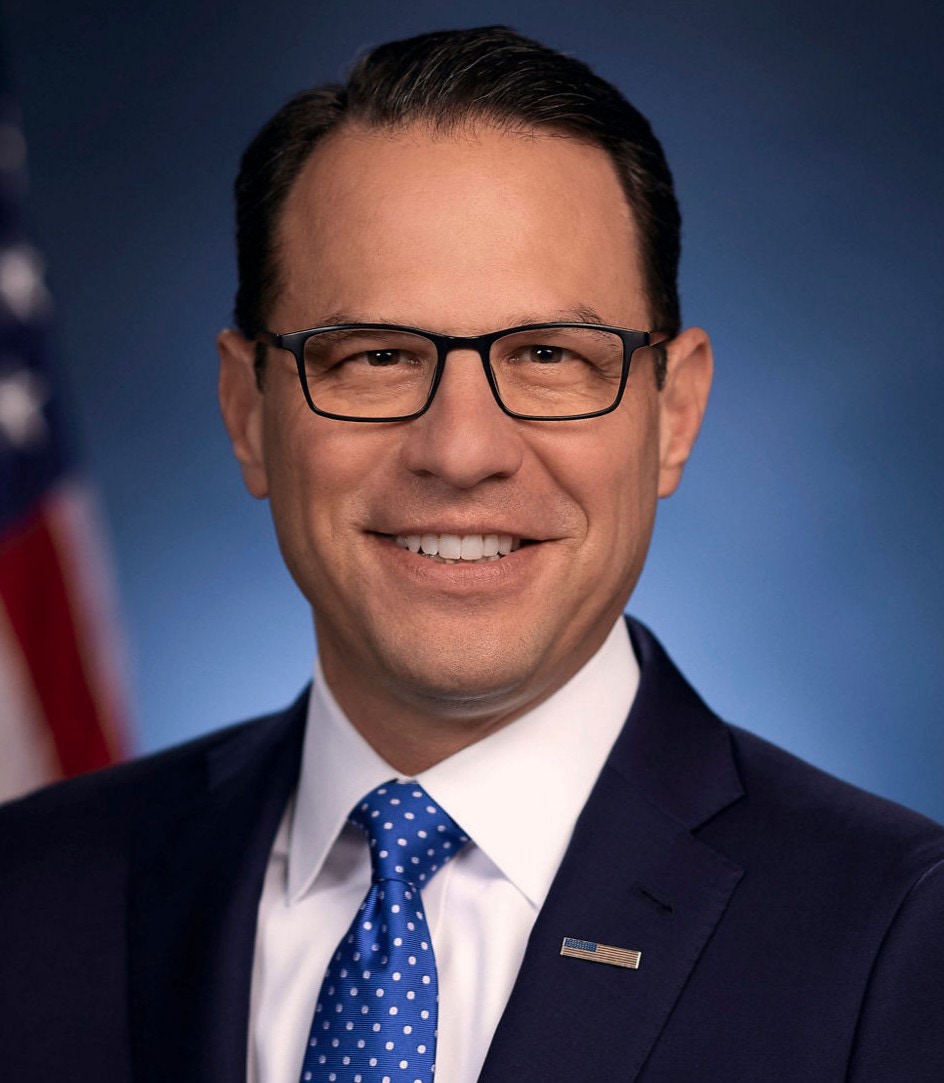
Pennsylvania Governor Josh Shapiro and his family celebrated the first night of Passover with a seder at the Governor’s Residence in Harrisburg. He, his wife Lori, and their children finally went to sleep around 1:00am, only to be awakened an hour later when a state trooper assigned to security woke everyone and rushed them out of the house because of a fire. Thankfully no one was hurt, as it was discovered that the fire resulted from an arson attack. The attacker referenced Palestinians as a motive for his assault on the residence of the Jewish governor, saying that Shapiro needed to know that the attacker “will not take part in his plans for what he wants to do to the Palestinian people.” Shapiro was raised in an observant Jewish home and attended Jewish day schools. His family celebrated Shabbat dinners together, a tradition he carries on with his family in the Governor’s Residence, where the Shapiros arranged for the kitchen to be kosher. Shapiro, who was on Kamala Harris’s short list for a running mate, is a strong supporter of Israel, and he says that his Jewish upbringing guides him in his life, noting that “I think we all have a responsibility to do tikkun olam and to do our part, and that’s what my faith has taught me.” Last year Donald Trump referred to Shapiro as “the highly overrated Jewish Governor of the Great Commonwealth of Pennsylvania,” to which Shapiro responded, “He’s someone who has routinely peddled antisemitic tropes like this.” Where did Josh Shapiro propose to his wife, who he first met in 9th grade at Akiba Hebrew Academy (now known as Barrack Hebrew Academy)?
The White Lotus completed its third season of storytelling about the wealthy guests at beautiful resorts, focusing as always on their pettiness, their self-centeredness, their air of superiority, and their despicable behavior. Season 3 took place in Thailand, featuring characters including actress Jaclyn and her childhood friends Kate and Laurie, wealthy (but crooked) businessman Timothy Ratliff and his family, and troubled Rick Hatchett and his girlfriend Chelsea, plus Belinda, the masseuse returning from Season 1. While there have been no Jewish characters among the guests at the resorts over the past three seasons, Season 3 did feature a Hebrew song during one episode. What was that song?
Passover begins on Saturday night, April 12. Jews worldwide are beginning to shop, change over their dishes, and cook and bake in preparation for the seders and week-long holiday where only Kosher-for-Passover certified foods are traditionally eaten. Because of the tariffs President Trump imposed on Canadian goods earlier this year, Canada retaliated by banning imports from the United States. This has resulted in a Canadian shortage of Manischewitz sweet Passover wine, which can no longer be imported from the Manischewitz Company in New York. Remaining stocks of the wine have been snatched off the shelves as there are no locally made alternatives. Meanwhile, food manufacturers continue to expand their selection of Kosher-for-Passover certified items. For example, Manischewitz is now offering frozen gluten-free knishes while Tuscanini is now selling Passover savory tomato jam and Italian chocolate truffles. Gefen has introduced hot honey, and Heaven and Earth now offers a grain-free pasta line for the first time. What marijuana product, certified Kosher-for-Passover by Rabbi Yaakov Cohen and Whole Kosher Services, is being offered for the first time in 2025?
Manischewitz! by infowidget is licensed under CC BY-SA 2.0 via Flickr
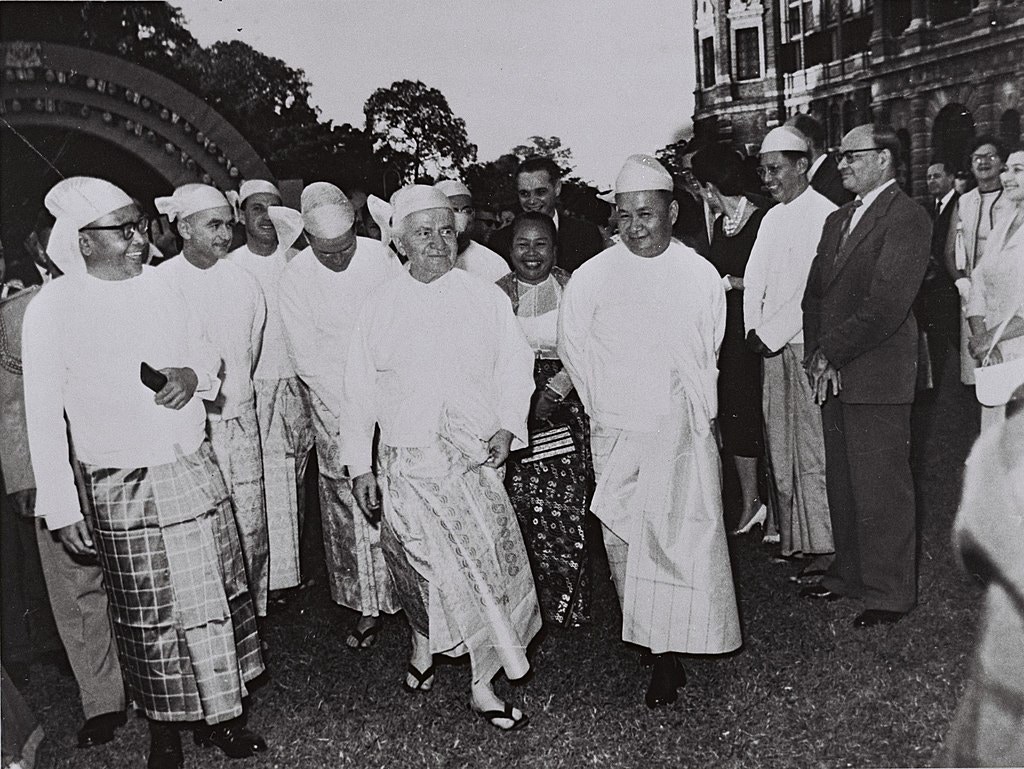
A 7.7 magnitude earthquake struck Myanmar (known as Burma until 1989) and Thailand last week, resulting in much destruction and huge numbers of dead and injured. Among the many countries offering assistance is Israel, which has dispatched disaster-relief experts to the region, including representatives of SmartAID, an Israel-based humanitarian organization. Burma was one of the first Asian nations to recognize the state of Israel, and Israel sent its first ambassador to Burma in 1953. The two countries have cooperated in the areas of arms production and sales as well as agricultural ventures. In 1961, Prime Minister David ben-Gurion visited Burma where he dressed in traditional Burmese clothing and studied Buddhism at a spiritual retreat. The first record of a Jew in Burma was in the 18th century, when Solomon Gabirol served as a commander in the army of King Alaungpaya. The Jewish population peaked at about 2500 members, with a synagogue and a cemetery, where 700 people are buried, but the current Jewish population may be less than two dozen. Where did a portion of Burma/Myanmar’s Jewish population come from?
A. Jews from Cochin in India came to Burma in the middle of the 19th century as merchants and traders, in particular in the cotton and rice industries.
B. After Kristallnacht, many German Jews attempted to flee the country, hoping to go to Palestine. But restrictions on admission by the British mandate government led many to travel elsewhere, including further east into Asia. Approximately 100 of these German immigrants reached Burma in 1939.
C. While the large migration of Russian Jews at the end of the 19th century traveled west, there were some who traveled east, further into Asia. One group of these immigrants reached Burma at around the turn of the century, establishing not only a synagogue and cemetery, but kosher butchers, a mikve, and a yeshiva as well.
D. Many of the Jewish immigrants came from Iraq, having fled from persecution and pogroms in the mid-1800’s.
E. A Jewish peddler traveled with his wife from Poland to Burma in the early 20th century. He noticed that the Burmese people had a lot of facial hair, which they would cut with primitive tools. The peddler, Menachem Zaken, saw an opportunity and began to sell razors (which had been invented by another Jewish immigrant from Poland, Jacob Schick) and cans of shaving cream. Zaken settled in Burma and established a company which he named after his new home. He marketed his products by placing billboards along the roadway, breaking up the wording over a succession of signs. Among his ads were the following: “Ben Met Anna/Made a hit/Neglected beard/Ben-Anna split/Burma-Shave”, “Use our cream/And we betcha/Girls won't wait/They’ll come and getcha/Burma-Shave”, and “Religious Jews/don’t shave their faces/But others want/close razor embraces/Burma-Shave.”










.jpg)

