Writer, comedian, and talk show and podcast host Conan O’Brien is in the news, having recently served as host of the Academy Awards. He will again host the Oscars in 2026, and he was just honored with the Mark Twain Prize at the John F. Kennedy Center for the Performing Arts, following in the footsteps of such performers as Richard Pryor, Carol Burnett, Tina Fey, and Jon Stewart. O’Brien visited Israel in 2017, where he went to the Tel Baruch Central Synagogue in Tel Aviv to convert to Judaism. But he did not have much time in his schedule for that task, saying, “I have about an hour and 25 minutes to absorb 4000 years of culture and deeply held belief.” When the synagogue’s rabbi, Dov Halbertal, told him he would have to be circumcised, O’Brien replied, “Can we skip that part, because I need everything I got down there.” O’Brien did not convert, but he did throw himself a bar mitzvah party at the synagogue, where teenagers lifted him on a chair and Rabbi Halbertal played foosball with Conan. What did Prime Minister Benjamin Netanyahu say when told that Conan O’Brien would be visiting Israel?
A. “Even in difficult times, it is always important that we are able to laugh together. We welcome Conan O’Brien to the Promised Land.”
B. “The Hebrew word קונן (Conen) means ‘to lament’ and so I must say I was lamenting the upcoming visit of Conan O’Brien. But I’ve been told that he has planted a tree from JNF in my honor, so I look forward to meeting Mr. O’Brien.”
C. “The most famous Irishman to come to Israel is Chaim Herzog, our sixth president. I look forward to the visit from another famous Irishman, though he is not likely to be elected to office here.”
D. “When Rebecca gave birth to her elder son, it says in the Bible, ‘The first one emerged red, like a hairy mantle all over; so they named him Esau.’ I look forward to meeting this Irish descendent of Esau.”
The movie No Other Land won the Academy Award for Best Documentary. The film, made by two Israelis and two Palestinians, chronicles the experience of Palestinians living in the Masafer Yatta region of the West Bank from 2019 through 2023. The focus is on a Palestinian activist, Basel Adra, who recorded the destruction of many Palestinian homes by the Israeli military and West Bank settlers. Adra befriended a Jewish journalist, Yuval Abraham, and they worked together to tell the story of the local Palestinian community. The film has won much critical acclaim in addition to the Oscar award, while others have criticized the film. Israel Culture Minister Miki Zohar called it a “defamation of Israel” while the Palestinian Campaign for the Academic and Cultural Boycott of Israel criticized the film because of the Palestinian/Israeli partnership that produced it. Miami Beach Mayor Steven Meiner called the film antisemitic and called for a cancellation of the film’s screening by a local independent movie theater which leases space from a city-owned building. Because the showing proceeded, the mayor is now trying to cancel the theater’s lease.
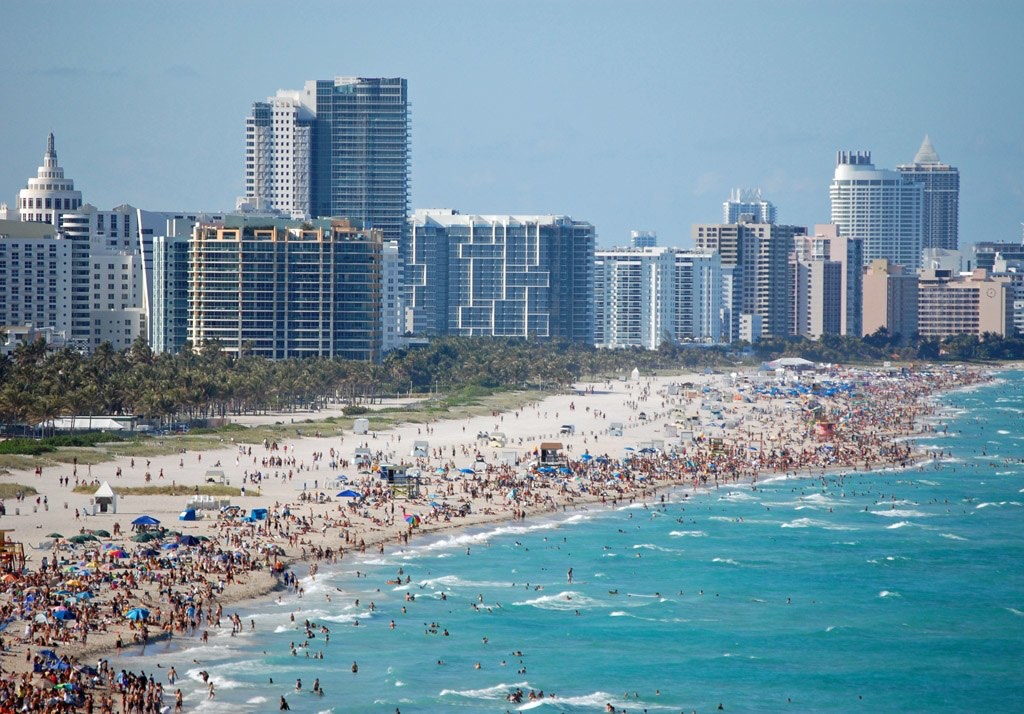
Miami Beach has a long Jewish history. While some Jews settled there during the Jewish immigration from Eastern Europe in the late 19th century, yellow fever and a major fire wiped out the community. But Jews began to return, and upon the death of a Jewish tourist in 1913, the 35 Jewish residents established a cemetery and a synagogue. Florida banned discrimination in real estate and hotels in 1949, leading to a huge growth of the Jewish population and the building of many hotels that attracted Jews from the North. In the 1970’s, as much as 80% of the Miami Beach population was Jewish. What was a nickname for Miami Beach which arose based on the large Jewish population?
SpaceX, the private company founded by Elon Musk, suffered a failure last week as they launched the latest model of their Starship rocket, only to see it explode less than ten minutes after liftoff. This comes on the heels of an explosion less than two months ago of their previous Starship craft. At the same time, President Trump’s Department of Government Efficiency, under Elon Musk’s leadership, is reviewing the program of NASA, including the audit of NASA contracts, reduction of the NASA workforce, and suspension of advisory committees, among other things. For example, the research group MEXAG which coordinates NASA’s study of Mercury, now has a website that only says “The MEXAG website is being reviewed in response to guidance given by NASA leadership.” NASA has also frozen all other upcoming decisions regarding their space exploration program.
NASA has worked together with Israel on projects, including Israel’s ULTRASAT space telescope, which NASA plans to launch in 2026. Israel’s space program is managed by ISA, the Israel Space Agency, which was formed in 1983. Israel is the smallest country in the world with a space agency. The agency’s goals include building satellite systems for research, developing technologies for space research, and promoting international cooperation in space research and exploration. Among the space programs operating under the ISA auspices is what program which goes by a “Jewish-style” acronym?
The 97th annual Academy Awards ceremony took place last night, hosted by Conan O’Brien. Many nominated movies had Jewish-related themes or plots, including A Real Pain, September 5, The Brutalist, and No Other Land (which won the Best Documentary Feature Oscar). Jewish nominees included actor Timothée Chalamet (for A Complete Unknown), composer Daniel Blumberg (for The Brutalist), Jesse Eisenberg (writing for A Real Pain), and Mikey Madison (who won the Best Actress Oscar for her role in Anora). Saturday Night Live, which has had no shortage of Jewish-themed sketches (click here to see last month’s trivia question on this topic) almost ran another Jewish-themed sketch during the Christmas/Hanukkah season last year. The sketch, based on a movie from this past year, was axed following a poor reception during the show’s dress rehearsal. What was the name of that sketch?
President Trump appointed himself chairman of the John F. Kennedy Memorial Center for the Performing Arts and fired the Board president, David Rubenstein. He also removed board members who had been appointed by President Biden. Most analysts see this move as revenge by Trump in response to events related to the Kennedy Center in Trump’s first term. This started with television producer Norman Lear and choreographer Carmen de Lavallade who had pulled out of the 2017 Kennedy Center Honors ceremony as a protest against the president. Since Trump’s decision, other board members have resigned and many artists have canceled their performances at the Center.
The Kennedy Center was authorized by Congress and President Eisenhower in 1958 as the National Cultural Center, and was renamed after the assassination of President Kennedy. The Kennedy Center presents performances in all areas of the arts, including ballet, opera, musical theater, pop music, classical concerts and more. In addition, the Kennedy Center facilities are available for rental for private events. Among the rental options are the Main Concert Hall (2465 capacity) for $39,000, the Eisenhower Theater (1161 capacity) for $18,080, the Opera House Circles Lounge (180 capacity) for $2560, and the PT-109 Board Room (capacity 85) for $1280. What other space at the Kennedy Center is available for rental, which has a “Jewish” connection?
A. The Schusterman Lounge, which seats 75 and rents for $1500. This space was funded by a grant from Jewish philanthropists Charles and Lynn Schusterman of Tulsa, Oklahoma. The Schusterman Foundation is also a major funder of Birthright Israel.
B. The Israeli Lounge Concert Hall, seating 80 and renting for $1700. This space is dedicated by the State of Israel and was inaugurated by Yitchak Rabin in 1971. The facility is designed with Jerusalem stone and art panels representing the Biblical tribes of Israel.
C. The David ben-Gurion Library can be rented for small meetings, up to 25 people, for $500. The space, funded by AIPAC in honor of the Israeli Prime Minister who was in office during the presidential term of John F. Kennedy, includes shelves of book about the arts, as well as artwork, records, sheet music, and CDs.
D. The Batsheva Dance Company Dance Studio. The practice space used by dance troupes who are performing at the Kennedy Center can also be rented for $1200. The room was funded by philanthropist Baroness Bethsabee de Rothschild, founder of the Batsheva Dance Company, which was the first foreign dance troupe to perform at the Kennedy Center.
E. The Robert F. Kennedy Jr. Kosher Kitchen. The facility includes full sets of milchig (dairy) and fleishig (meat) dishes, pots, pans, and blenders. Above the fleishig blender is a sign stating “Because this is a kosher kitchen, this meat blender can only be used with baby chickens, not mice.”
Saturday Night Live just celebrated their 50th anniversary with a 3 hour special on NBC. The list of Jews associated with the show over the years is substantial, starting with producer and creator of the show Lorne Michaels, and including Gilda Radner and Laraine Newman in the original Not Ready for Prime Time Players cast. Other Jewish cast members have included Paul Shaffer, Al Franken, Billy Crystal, Ben Stiller, Rachel Dratz, Adam Sandler, Sarah Silverman, Andy Samberg, and Sarah Sherman. And many Jews can be found among the writers, musicians, and other staffers of SNL. There have been many sketches with Jewish themes and Jewish characters. Among these are Adam Sandler’s Hanukkah Song, Vanessa Bayer’s character Jacob the Bar Mitzvah Boy, Sarah Sherman as Jewish Elvis, Gilda Radner selling Jewess Jeans, and writer Robert Smigel’s video Christmastime For The Jews, featuring Darlene Love. Among the lyrics she sang were the lines, They can finally see King Kong without waiting in line/They can eat in Chinatown and drink their sweet-ass wine/They can crank Barbra Streisand on the streets they cruise/Christmastime for the Jews. Which of the following was a less memorable Jewish-themed Saturday Night Live sketch?
A.Sabra Price Is Right in 1992, with Tom Hanks playing an Israeli gameshow host, Uri Shurinson, broadcasting from 47th Street in New York City. Hanks asks contestants to guess the price of items such as a clock radio, but after he goads them to a higher number, they learn they have in fact bid on the items and now must pay for them.
B. In his 2019 hosting appearance, John Mulaney appeared as Josh Kleinberg in a sketch called Summer in the Catskills, along with Chloe Fineman as his wife Sarah, and their children Beth and Davey, played by Melissa Villaseñor and Mikey Day. The sketch featured the Kleinberg family visiting an amusement park in the Catskills, where they played Whac-a-Bagel, a game based on Whac-a-Mole. In this case, the characters had mallets which they used to smash bagel sandwiches which popped up before them, leading to everyone hysterically breaking character as they were covered by bagel bits, pieces of lox, schmears of cream cheese, and other bagel sandwich detritus.
C. In 1988, Dana Carvey, playing his recurring character Enid Strict, known as Church Lady, sat down with her Jewish neighbor Theodore Goldstein, known as Temple Teddy. In their conversation, Church Lady asks Temple Teddy if he wants to go get dinner. When he says “No, I don’t date non-Jewish ladies, and anyway I have a girl friend, our neighbor Sadie,” Church Lady responds, “Well, isn’t that special?”.
D. The sketch My Son the Doctor featured Rachel Dratch as the receptionist and mother of Dr. David Sheinblum, played by Chris Parnell, in the 2004 season. Patients would come in to be seen, and Rachel would check them in saying, “Don’t you worry, my bubbeleh is going to take good care of you.” She would then walk in on the examinations bringing a tray of rugelach to her son and the patient, saying, “Eat. It's good for you.”
E. An episode in 2001 of the recurring sketch NPR’s Delicious Dish, featuring Molly Shannon and Ana Gasteyer as NPR hosts. In this sketch, the hosts interview Alec Baldwin as baker Pete Schweddy and Jon Lovitz as Mel the Mohel in a sketch called Schweddy Balls meet Mel the Mohel.
The Philadelphia Eagles dominated the Kansas City Chiefs in their 40-22 victory in Super Bowl LIX in New Orleans. The list of Jews who have played in the Super Bowl is pretty short (there were no Jewish players in this year’s game). Included on the list are Josh Miller, punter for the New England Patriots, San Francisco 49ers tight end John Frank, defensive end Lyle Alzado of the Los Angeles Raiders, and Pittsburgh Steelers tight end Randy “The Rabbi” Grossman. Grossman got his nickname from teammate Dwight White, and he was fine with that, saying, “What choice did I have? What else are you gonna to call a Jewish kid from Philadelphia?” Another Jewish player, Dallas Cowboys offensive lineman Alan “Shlomo” Veingrad, later became a follower of the Chabad-Lubavitch Hassidic movement. Reflecting on his football career and later religious path, Veingrad said in an interview: “I don’t think it would be a possible thing for me to say to the coaching staff or the ownership of the team that I am shomer Shabbos and therefore I can’t make the team meetings on Friday because I have to travel Friday and I can’t travel with the team on Saturday and keep Shabbos. I think if I took that approach, I would no longer be in the National Football League.” Since 2014, radio host Nachum Segal has presented the “Kosher Halftime Show” as an online alternative for religious Jews to watch while the players are in the locker room for the mid-game break. This year’s Kosher Halftime Show broadcast featured singer/songwriter Eli Begun, composer of such songs as In Our Darkest Times and Shabbos Hayom. Why does Nachum Segal provide this halftime program for Jewish football fans?
A. Because the Super Bowl takes place on Sunday evening (this year’s kick off was at 6:30pm eastern time), Segal always includes a maariv service on his broadcast, to ensure that listeners do not miss the evening service because of the football game.
B. Many TV watchers of the NFL Championship Game are really there for the iconic commercials, such as Coca Cola’s Mean Joe Green “Hey Kid, Catch” ad, the Budweiser Frogs, and Apple’s famous 1984 commercial. But many of the ads feature non-kosher foods, such as Totino’s Pizza Rolls, Cool Ranch Doritos, and Big Macs. Segal made a deal with the NFL to allow him to run an “official” alternate halftime show, including Jewish content and the official entertainment, but featuring only commercials for kosher food products, including Manischewitz wine, Lenders Bagels, and Hebrew National Hot Dogs.
C. Segal started his broadcast after years of watching the Super Bowl and constantly being offended by some of the rhetoric of the commentators. Specifically, Segal offers twenty minutes of commentary about the first half action without even once uttering the word “pigskin.”
D. He is giving religious Jews an opportunity to avoid the sexy halftime shows that are often broadcast, such as Janet Jackson’s “wardrobe malfunction” (2004), rapper M.I.A.’s raised middle finger (2012), and Jennifer Lopez’s black leather bodysuit with thigh-high boots (2020).
E. Segal’s Kosher Halftime Show features an Animal Planet Puppy Bowl-inspired contest called the Rebbe Bowl. A gaggle of rabbis is let loose on a field as fans cheer them on, trying to guess which rabbi will finish davening the quickest. When a rabbi completes the Aleinu and the Mourners Prayer, he must do a dance and raise his arms over his head in a touchdown salute. Any rabbi who spikes his siddur, however, is automatically disqualified.
President Trump instituted the tariffs he had been threatening, 25% on products coming in from Canada and Mexico and 10% on products from China. Trump says that the purpose is to stop the flow of immigrants and fentanyl into the country. Canada and Mexico have announced the implementation of their own tariffs against the United States while China has said it will file a case against the United States at the World Trade Organization. It is expected that consumers will see increases in prices, and that there may be shortages of some products. As a result of The United States–Israel Free Trade Agreement signed in 1985, there are few tariffs or duties on goods traded between the United States and Israel. But there are still some tariffs in effect between the two countries. This includes United States tariffs on Israeli “meat of bovine animals,” and Israeli tariffs on live fish including tilapia, carp, and trout. What tariffs has Israel imposed on other countries?
Elon Musk is in the news because of an arm motion he made at President Trump’s inauguration. Many interpreted the motion as a Nazi salute and were very critical of Musk for this antisemitic gesture. However, the Anti-Defamation League (among others) dismissed this as “an awkward gesture in a moment of enthusiasm, not a Nazi salute.” Musk tweeted that “The ‘everyone is Hitler’ attack is soo tired.” Musk also posted a Nazi-pun-filled response which generated further criticism, including a statement by Jonathan Greenblatt, CEO of the ADL, who wrote “the Holocaust was a singularly evil event, and it is inappropriate and offensive to make light of it. @elonmusk, the Holocaust is not a joke.” This is not the first time that Musk was criticized for antisemitic statements. In 2023 an X user posted that “Jewish communities have been pushing the exact kind of dialectical hatred against whites that they claim to want people to stop using against them.” Musk replied that the X user “said the actual truth,” though he later apologized, saying that “it might be literally the worst and dumbest post I’ve ever done.” Musk has also endorsed the German far-right AfD party, and at an AfD rally he offended many Jews, Germans and others when he said that “I think there’s, like, frankly, too much of a focus on past guilt.” What interaction did Elon Musk once have with a rabbi?
A. Musk posted on X that “Instead of teaching fear of pregnancy, we should teach fear of childlessness.” Rabbi Shlomo Litvin, a Kentucky Chabad shaliach, posted a picture of his wife and seven children and replied, “I’m working on it @elonmusk. Now please make a Tesla big enough for my family.” Musk responded “That’s great to see! Tesla Robovan is in development,” leading Rabbi Litvin to post, “Thank you, sir! My family would happily be the test family for the Tesla Robovan.”
B. After Elon Musk apologized for his support of an X user’s antisemitic post, he made a visit to the Auschwitz-Birkenau death camp site, where he was given a tour by Rabbi Menachem Margolin. At the end of the tour, he had only one question for Rabbi Margolin, “What can I do to help?” The Rabbi responded, saying, “Our message is always ‘Never Again.’ So for you personally, ‘never again’ give a platform to the antisemites,” to which Musk replied, “You have my promise.”
C. During the pandemic in 2022, Canadian Prime Minister Justin Trudeau ordered banks to help cut funding to truckers who protested Trudeau’s health policies. In support of the truckers, Elon Musk posted a picture of Adolph Hitler with the caption, “Stop comparing me to Justin Trudeau.” Rabbi Aaron Gorman of the the Toronto Board of Rabbis issued a statement noting that “it is not our place to get involved in political discussions, but we will not stand idly by when the evils of Adolph Hitler and the Holocaust are diminished by petty comparisons such as this.” Musk then tweeted in response, “Okay, my bad, Trudeau is not like Hitler. Maybe just Mussolini.”
D. In 2023, Elon Musk was among the speakers at the Zeh Mizeh Satmar Business Expo at the New Jersey Convention and Exposition Center. The topic was “Technology, Artificial Intelligence, and the 7th Day,” focusing on how technology can be used in ways which are consistent with the Shabbat. Rabbi Yitchok Jacobowitz asked Musk for his thoughts and Musk replied, “As you know, we are developing a Tesla car which will be completely driverless. I am told that there is a question as to whether this will meet your religious requirements. But I know you have Sabbath elevators. I promise that if you work with me, there will be a Sabbath Tesla in your future.”
E. Two Chassidic businessmen invited Musk to a meeting to discuss business issues. They also invited Chabad Rabbi Mordechai Lightstone, director of social media for Chabad.org and the founder of Tech Tribe to join them and answer any questions Musk might have about Judaism. After the business portion of the meeting ended, Musk noted that this was his first personal encounter with Chassidim. Rabbi Lightstone asked if Musk had any questions, and Musk said that he had one. Referencing the mens’ payos (side curls), Musk asked, “How do you curl your hair so nicely?”
Donald Trump was inaugurated as the 47th president of the United States. Among the speakers at the ceremony was Rabbi Ari Berman, president of Yeshiva University. Berman prayed that Trump and Vice President Vance “choose the right and the good, unite us around our foundational biblical values of life and liberty, service and sacrifice, and especially of faith and morality.” The first time that clergy offered prayers at a presidential inauguration was in 1937, when Franklin Roosevelt’s second inauguration included an invocation by Chaplain ZeBarney Thorne Phillips and a benediction by Father John A. Ryan. The first rabbi to participate was at Harry Truman’s inauguration in 1949, when Rabbi Samuel Thurman of the United Hebrew Congregation in St. Louis offered a prayer. Since then, most, but not all, presidential inaugurations have included a rabbi in the ceremony. What rabbi spoke at a presidential inauguration and then at a later time criticized that President?
A. Rabbi Thurman, who had offered the prayer at Harry Truman’s inauguration. In 1950 he criticized Truman for remarks made at the Washington Hebrew Congregation commemorating the Holocaust, because Truman failed to mention Israel.
B. Rabbi Seymour Siegel, a professor at the Jewish Theological Seminary, offered a prayer at the second inauguration of Richard Nixon in 1973. Years later, when the Nixon tapes were released, Siegel heard the many antisemitic comments by Nixon (eg, “The Jews are just a very aggressive and abrasive and obnoxious personality”) and he stated that in hindsight he regretted having participated in the inauguration.
C. Rabbi Marvin Heir, Dean of the Simon Wiesenthal Center, offered a benediction at Donald Trump’s first inauguration, in 2017. Heir criticized Trump later that month for offering remarks on International Holocaust Memorial Day that failed to specifically mention Jews.
D. Rabbi Abraham Rosenberg from Congregation Bnai Brith Jacob in Savannah, Georgia, offered the benediction at Jimmy Carter’s inauguration in 1977. In 2006, he criticized Carter upon the publication of Carter’s book, Palestine: Peace Not Apartheid, noting that apartheid was not an appropriate description of the situation of Palestinians in the West Bank and Gaza.
E. Rabbi Amal E. Litella spoke at the inauguration of John F. Kennedy in 1961. He later criticized President Kennedy for what he called antisemitic remarks, when he heard Kennedy say the famous words, “Ask not what your country can do for Jew—ask what Jew can do for your country.” Told that Kennedy said, “you,” not “Jew,” Rabbi Litella replied, “Oh, that’s very different. Never mind!”






.jpg)


.jpg)
.jpg)
.jpg)