It’s often said that Christmas music far surpasses the quality of Chanukah music, thanks to the many Jewish composers who wrote such beautiful songs as White Christmas (Irving Berlin), The Christmas Song/Chestnuts Roasting on an Open Fire (Mel Tormé and Robert Wells), and I'll Be Home For Christmas (Buck Ram and Walter Kent). Adam Sandler has elevated Chanukah music with lyrics such as “Guess who eats together at the Carnegie Deli, Bowser from Sha Na Na and Arthur Fonzarelli” while also debasing Chanukah music with lyrics including “So drink your Jaegerbomb-ukah and smoke your medical-chron-ukah.” Though most of us only sing a few Chanukah songs (Dreidel Dreidel Dreidel, Maoz Tzur, and Chanukah Oh Chanukah), there are many more Chanukah songs to be sung. Which of the following are actual lyrics from a Chanukah song?A. From the song Hanuka Gelt:
Hanuka, Hanuka, ‘Leven and Seven!
Hanuka Geltula, Dance me to Heaven!
Tickle me! Feed me a pickeldy peach!
Makes me love myself, self, self!B. From the song Hanukah Dance:
Jump real high! Happy Hanuka!
Jump jump high! My little fruitcake!
On your toes! Happy Hanuka!
And around and around you go!C. From the song Hanukah Bell:
Dinga lingle lingle, I ring your bell
Knocka knock knockie knock at your door
The week of Hanuka now is here
And you must be sad no more
D. From the song Hanuka’s Flame:
Now as I light my first and my last
Of all nine candles to guide you past
Through these winds of blowing snows
To take you to your Hanuka home.E. From the song Honeyky Hanukah:
It’s Honeyky Hanukah, kiss me some more,
We’ll sing and go dancing around on the floor,
Your kiss is nicer than cakes from the store,
It’s Honeyky Hanukah time.Click here for the answer.
A fast food chain is offering a special Chanukah menu item in Israel. What is that item?A. Based on the Chanukah tradition of eating fried foods such as latkes, McDonald’s is offering the Big Mac-abees, a traditional Big Mac that is dipped in the deep fryer prior to being served.B. Chick-fil-A, a company whose culture is driven by the Southern Baptist beliefs of its founder Truett Cathy, is offering an interfaith special. Instead of on a bun, they are serving their chicken sandwich on egg bread which is topped with sesame seeds that have been dyed red and green. The sandwich is called the Deck the Chick with Boughs of Challah.C. Burger King is offering the SufganiKing, their homage to the traditional Israeli sufganiyah, the fried jelly doughnut. The SufganiKing is a burger with all the trappings (well, all except the cheese), sandwiched between two pieces of fried dough, with a squirt of catsup on top representing the jelly.D. For the duration of the year, Starbucks has rebranded its Chai Latte as To Life, To Life, Chai Latte. The drink is served in a seasonal blue and white cup featuring the Starbucks Siren lighting a menorah.E. Jamba Juice is offering a Chanukah smoothie, known as the Jamba Jews, which is described as a blend of oil, grated potatoes and chopped onions, with a boost of flaxseed, sufganiyot, whey protein, rabbiflavin and crumbled Chanukah gelt. The drink is pas Yisroel, pareve, Cholov Yisroel, milchig, glatt, mevushal, fleishig and non-kitniyot. It is gluten-free, dairy-free, rennet-free, gelatin-free, nut-free, peanut-free, and tree nut-free; however, because of the inclusion of sufganiyot, the smoothie is not doughnut-free. It is certified kosher by O-U, Kof-K, Diamond-K, Scroll-K, Star-K, O-K and Not O-K. And it is guaranteed not to have been boiled in its mother’s milk. Though you will pray for a miracle that the Jamba Jewswill only affect your digestive system for one day, it is guaranteed to last for eight days and nights.Click here for the answer.
The past year has seen a rise in anti-Semitic incidents and attitudes across Europe. In Germany, home to the world’s fastest growing Jewish community, the Munich-based European Janusz Korczak Academy recently launched a program to support the Jewish community there, promoting dialogue with non-Jews, and fighting anti-Semitism. What is this program called?
A. The program is called “The German/Jewish Alliance,” with a tagline “Learn From the Past/Change the Future.”
B. The program is called “Jews and Germans Together,” and their symbol is the German national flag with its black, red and gold stripes, featuring a Star of David in the middle, similar to the Israeli flag.
C. The program is called “Frieden/Shalom,” (“peace” in German and Hebrew).
D. The program is called “To Life/L’Chaim/Zum Leben” with a tagline “Where Jewish and German Lives Matter.”
E. The program is called “Rent-a-Jew,” with the tagline “You never forget your first.”
While the Dollywood theme park in Pigeon Forge, Tennessee was spared by the wildfires that consumed thousands of acres in the Great Smoky Mountains National Park, the death and destruction resulting from the fires has moved Dolly Parton to help those left in need. With funding from Dollywood as well as her Dollywood Foundation, she has established the “My People Fund” which will donate $1000/month to families who lost their homes in the disaster. Earlier in Dolly Parton’s life, she did something that provided an inspiration to someone in the “Jewish” world. What was that?
A. In 1996, Parton established the Imagination Library to distribute free children’s books in Sevier County, Tennessee. The program has grown and now provides free books to children in over 1600 communities in the United States, Canada, and the United Kingdom. Philanthropist Harold Grinspoon learned of the program and helped establish a branch in Western Massachusetts. This became his inspiration to create the PJ Library which has distributed nearly 10 million Jewish children’s books to families throughout the United States and in Jewish communities around the world.
B. In 1980, Dolly Parton starred in the movie 9 to 5, about three working women and their sexist, somewhat crazy boss. Following the success of the movie, Parton was instrumental in the creation of the 9 to 5 Foundation, which worked to empower women in the workplace, fighting discrimination and providing training to enable women to advance in the corporate environment. In 1984, an Israeli delegation from the Association for Civil Rights in Israel visited the United States to learn about organizations which were helping women, and they met with Parton and representatives from the 9 to 5 Foundation. As a result, they set up an Israeli NGO, Tisha Ad Chamesh (Nine to Five) with a particular focus on helping Sephardic women who had immigrated from Arab countries and who were struggling with cultural and educational issues that prevented them from working and succeeding in the workplace.
C. One of Parton’s biggest successes as a composer and performer was with the song Coat of Many Colors, written in 1969. The song is about a coat which her mother had stitched together from rags, and which her mother described in connection to the story of Joseph’s coat of many colors in the Bible. Though the other children laughed at her ragged coat, Parton was not ashamed, because this coat was made by her mother with such pride. When Parton performed in Tel Aviv in 1981, the producers of the show organized a coat drive called “Dolly’s Coats of Many Colors,” and concert goers donated more than 5000 new and gently-used coats which were distributed to Israeli families in need.
D. In 1980, there was an incident in Sevier County, where Dolly was born. A gay teenager attempted suicide, leaving a note that he felt no one loved him. After visiting the boy in the hospital, Parton founded a non-profit agency to support young gay people, and named the organization the “I Will Always Love You Foundation,” after her most famous song. In 1994, following a similar incident involving a gay Orthodox boy in Jerusalem, an Israeli businessman who was familiar with Parton’s organization started a social service agency in Israel providing support to gay Orthodox teens in a confidential setting. The organization is called Ahavah l’Yeladim (Love for the Children).
E. In 1986, Dolly Parton took over the amusement park called Silver Dollar City and reopened it as “Dollywood.” She was pleased to expand the park, bring more jobs to the area, and highlight the history, culture, food and music of the part of Tennessee where she grew up. In 1997, an Israeli entrepreneur visited Dollywood and was inspired to do something similar in Israel. He opened an amusement park in the Galilee with a theme built around the chalutzim, the pioneering founders of the state. The park offers rides, animatronic figures including David Ben-Gurion and Chaim Weizmann, and a music venue featuring Israeli performers and an original musical about the founding of the state. The park is called Zum Gali Gali Wood.
A. Until 1973, Israel and Cuba had diplomatic relations, and one of the strongest ties was in the area of agricultural assistance provided by Israel to Cuban farmers. Much of this connection came through the Kibbutz Movement, both because of the expertise of the kibbutz farming industry as well as the socialist underpinnings of the kibbutz movement. As a result of these connections, in 1966 Fidel Castro arranged for his oldest son, Fidel Ángel Castro Diaz-Balart, to spend six months on Kibbutz Ramat Yochanan. In order to keep this quiet, the young man used the name Ángel Diaz-Balart and did not disclose his relationship to the Cuban leader.
B. Raised as a Catholic, Castro recalled that every year at Easter time, he would hear that “God is dead” because the Jews killed him. He said he didn't know what a Jew was, other than a bird with a big nose that was called a Jew bird, so he assumed a bird had killed God. He said that this childhood experience contributed to his belief that anti-Semitism was wrong and based on ignorance.
C. Rum has been distilled on sugarcane plantations in Central and South America as well as in the Caribbean since the early 1600’s, with Jews playing a prominent role, both as owners of many of these plantations as well as through liquor importing businesses led by Samuel Bronfman and Lewis Rosenstiel among others. In Cuba, one of the first distillers of rum was a Jew named Pedro Diago, known as the father of Cuban rum. When Fidel Castro was 16 years old, he got a job working in the sugarcane fields on Diago’s plantation, and because of the poor pay and working conditions he found there, he organized a strike of the plantation workers. This was the beginning of his involvement in socialist politics, as well as his dislike for capitalists, whom he associated largely with Jews because of Pedro Diago.
D. While there have been some Jews living in Cuba for centuries (including many Marranos who had emigrated from Spain to Cuba and other Caribbean Islands), the population grew significantly in the early 1900’s, with immigration from Turkey after the breakup of the Ottoman Empire, and as part of the major Eastern European Jewish emigration, particularly after the United States closed their borders to most immigrants in the 1920’s. A number of these Jews, including Fabio Grobart and Enrique Oltuski, played prominent roles in the Cuban revolution, working alongside Fidel Castro and Che Guevara to overthrow the Cuban President Fulgencio Batista.
E. As a boy Fidel Castro learned to play the drums, and by the time he was in high school, he had gained quite a reputation as a performer. At that time Desi Arnaz was just starting out as a bandleader in Havana, and he brought Castro into his band. Many of their gigs were for bar mitzvahs and Jewish weddings. At one bar mitzvah, Castro spontaneously started pounding a rhythmic beat as the bar mitzvah boy’s parents, Anna and Louis, were lifted on chairs. Castro began chanting “Ima Anna, Abba Lou. Ima Anna, Abba Lou,” and the entire crowd chimed in as they circled the parents. Years later, after the Cuban Revolution, Desi Arnaz emigrated to the United States where he gained fame as a singer and bandleader, with his most famous song being one he wrote based on his slightly misremembered gig at that bar mitzvah–Babalú.
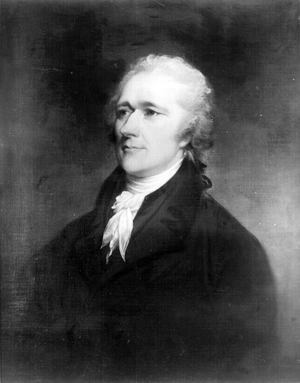
The Broadway play Hamilton is in the news, as the cast addressed Mike Pence the other night when he attended a performance of the show. Alexander Hamilton had a little-known connection to Jews. What was it?
A. Hamilton and his wife Elizabeth Schuyler had eight children, including their daughter Eliza. Eliza married a Jewish physician and converted to Judaism. Because Hamilton was killed by Aaron Burr when Eliza was only four years old, he was not around to see his daughter grow up; however, Hamilton’s wife Elizabeth attended Eliza’s wedding and later attended the bar mitzvah of Eliza’s son Alexander, at Congregation Shearith Israel on Manhattan’s Upper West Side.
B. While little is known about Hamilton’s mother, she was known to be of French Hugenot and British ancestry. There is some evidence that she was the illegitimate daughter of a member of the Rothschild banking family. While this has not been proven, one piece of evidence for this story is that when Hamilton founded the Bank of New York, among the original members of the bank’s board of governors was Jakob Mayer Rothschild, who was part of the French branch of the family and was one of the two Jewish financiers (the other being Haym Solomon) of the American Revolution.
C. Because Hamilton’s mother had never divorced her first husband, Alexander was considered illegitimate in the eyes of the Anglican church. As a result, he was not allowed to attend the local Anglican school, but instead attended a Jewish Day School where he learned to recite the Ten Commandments in Hebrew.
D. Charlestown, where Hamilton grew up on the island of Nevis, had a large Jewish population as a result of immigration from Spain and Portugal at the time of the Inquisition. Hamilton’s best friend growing up was a Jewish boy named Moises de Leon. Hamilton later wrote that he first learned about what freedom meant by going to a Passover seder at his friend Moises’ house, and this influenced his views on liberty and religious freedom in the newly independent United States.
E. A number of Jewish newspapers published under Orthodox or Chassidic auspices, such as Hamodia and Di Tzeitung, do not print pictures of women, believing that this violates the custom of tznius, or modesty, and would be offensive to readers. Some papers have even removed women from photographs that they published (for example when Secretary of State Hillary Clinton was airbrushed out of the iconic picture at the White House Situation Room as she and others watched the raid on Osama bin Laden’s compound by Navy Seals). In a similar vain, one Jewish newspaper covered last week’s incident in which Mike Pence attended the Hamilton performance and was addressed by the cast, but rather than print the name of the show, they referred to the show as “Beefilton.” Editors explained that using the actual name of the show would violate the laws of kashruth and would be offensive to readers.
Surely the most famous song written and performed by Leonard Cohen, who passed away last week, is Hallelujah. The song, with its Biblical references to Samson and Delilah and David and Bathsheba, has been covered by hundreds of performers, including Bob Dylan, Jeff Buckley, Rufus Wainright, Willie Nelson and Justin Timberlake. The song was also featured in the movie Shrek. Which of the following also performed or recorded the song Hallelujah?
A. The Canadian Tenors sang a version which was described in Newsweek magazine as a “vomitously overstuffed murdering of the track.”
B. British singer/songwriter Alexandra Burke won the 2008 X Factor competition, having performed Hallelujah in the final week of competition. A poll in the United Kingdom found Burke’s commercially released version of the song to be the tenth worst cover song of all time (behind such choices as William Shatner’s version of Lucy In The Sky With Diamonds and Madonna’s cover of American Pie).
C. Bono recorded a version of the song on the Leonard Cohen tribute album, Tower of Song: The Songs of Leonard Cohen, which included an odd rap delivery backed by drum machines and falsetto background vocals. The song was universally panned; even Bono later said of this recording, “I didn’t just let myself down, or my parents, I let the whole school down.”
D. Adam Sandler sang a version of the song at a Hurricane Sandy Relief Concert, including new lyrics such as “the mayor’s ban on 32-ounce Mountain Dew-ya” and “Turnpike Exit 13 stinkin’ like poo-ya.”
E. A 7-foot-tall clown known as Puddle Pity Party sang the song. Director Gary Yost filmed a performance of this version, about which he said, “The soul and heart can come through despite any costume we wear.”
No matter what happens in the election, the nation will have a first son-in-law who is Jewish. So the big question:
Is that good for the Jews or bad for the Jews?
While we may not know the answer to that question for some time, what we do know is that it is good for the Jews (and for everyone) that the election season is finally over. But before we move on to other delights, enjoy this bonus double weekly quiz, one question about Donald Trump and one about Hillary Clinton. Today’s questions come from
RASHI, RAMBAM and PRESIDENTIAL-DINGDONG
A Quizbook of Presidential Jewish Trivia Facts & Fun
What? You don’t already have RASHI, RAMBAM and PRESIDENTIAL-DINGDONG? Not to worry–there’s still time, especially as you start feeling nostalgic for the good old days when everyone you ever heard of was running for president.
When Hillary Clinton’s daughter Chelsea was preparing to marry Marc Mezvinsky, the couple met with Rabbi James Ponet, the head rabbi at Yale who performed the ceremony. The rabbi told them that they could use any cloth with meaning to the family for their chuppah (wedding canopy). Marc said “My bar mitzvah tallit, that could be used, but I don’t know where it is.” What did Chelsea say?
A. “I still have my Ace of Base t-shirt from when they performed at the White House when I was in 9th grade. Would that be okay?”
B. “Why don’t we use the shawl I wore on our first date?”
C. “I know where it is.”
D. “I’m sure my mother has a spare pantsuit we could use.”
In 2006, Donald Trump announced plans to build an office tower in Tel Aviv that would be the tallest building in Israel. The plan never came to fruition, but what was the building going to be called?
A. Trump Tower Zion.
B. Beit Trump.
C. The Trump Tower of David.
D. Trump Tower Israel.
E. One more ostentatious, overpriced monument to a self-important New Yorker.
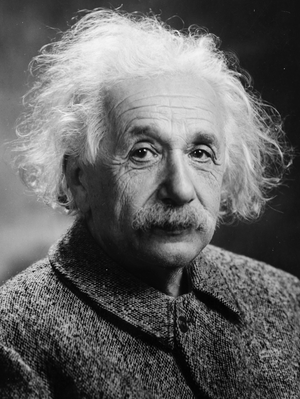
The FBI is in the headlines regarding their investigation of Hillary Clinton and her e-mails. The FBI has a long history of being involved in investigations that may not make any sense. The FBI file on Albert Einstein was over 1400 pages in length. Why did the FBI conduct an investigation of Albert Einstein?
A. In 1932, an organization known as the Woman Patriot Corporation wrote a letter to the State Department arguing that “not even Stalin himself” was connected to as many “anarchic-Communist” organizations as Einstein.
B. Einstein helped singer and civil rights activist Paul Robeson organize a rally against lynching in 1946.
C. In the 1950’s, Einstein appealed for clemency for Julius and Ethel Rosenberg, who had been sentenced to death for espionage.
D. In 1953, Einstein encouraged a number of individuals not to testify at hearings before the Senate Permanent Subcommittee on Investigations, led by Senator Joseph McCarthy.
E. In the early 1950’s, there was fear that Einstein was involved in passing nuclear secrets to the Russians (and we all know that anyone with crazy hair who is connected to the Russians should not be trusted around nuclear weapons).
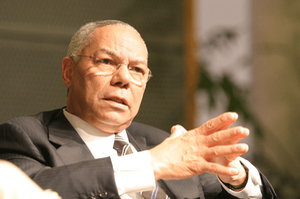
Former Secretary of State Colin Powell, a Republican, just announced that he is endorsing Democratic nominee Hillary Clinton for president in the upcoming election. Colin Powell has some knowledge of Yiddish. Where did he learn to speak this language?
A. Powell grew up in the South Bronx, directly across the street from the Intervale Jewish Center. When he was a teenager in the early 1950’s, Powell was hired as the synagogue’s “Shabbos Goy,” responsible for turning on and off the building’s lights and heat on Friday night and Saturday. In Powell’s autobiography, My American Journey, published in 1995, Powell wrote, “I was very lucky to get that job, and to get to know the Jewish people at that synagogue. Many were Holocaust survivors, and hearing of their experiences greatly influenced my decision to join the military and fight for freedom. Of course, I had no idea at that time that the Yiddish words I learned would come in handy years later as I met with many of Israel’s leaders.”
B. Powell’s mother worked as a maid/housekeeper for a Jewish family in the South Bronx. When Colin was young, his mother would often bring him with her to her employer’s house, where he became friendly with the children his mother was caring for. The Jewish family, who had immigrated from Poland, often spoke Yiddish, and Colin’s mother and Colin both learned many words and phrases from this family. Powell often told the story of attending the bar mitzvah of one of the children, and joining in as everyone yelled “Mazel Tov” at the end of the ceremony.
C. When Powell was a teenager, he worked part-time at Sickser’s, a baby equipment store in the South Bronx, where Powell lived. The Sickser family was Jewish, as were many of their customers, immigrants from Eastern Europe whose native language was Yiddish. As a result, Powell picked up some basics of the language and was able to communicate with the Jewish customers.
D. When Powell was Secretary of State, he briefly studied Yiddish with Rabbi Levi Shemtov, the Chabad rabbi who was founder of TheSHUL in Washington, DC and who organized the annual Chanukkah Menorah lighting across from the White House. Rabbi Shemtov, known as the rabbi of Capitol Hill, worked and studied together with many politicians and Washington bureaucrats, and he had suggested that Powell learn some Yiddish as it might provide a bit of an “in” for Powell in working with Israeli politicians.
E. Before he was born, Colin Powell’s mother Maud worked as a custodian at Congregation Hope of Israel near Yankee Stadium. Because many of the members were immigrants from Eastern Europe, she picked up a smattering of Yiddish, which she later taught her son. Part of her responsibility at the synagogue was to ready the building for the Yom Kippur services every year. She would then listen to the service and was moved by the beautiful sounds of the cantor’s voice. As a result (and with some slight misunderstanding of the words), when she gave birth to a son a few years later, she named him Colin Idray Powell.