Bob Dylan just received the Nobel Prize for Literature, “for having created new poetic expressions within the great American song tradition,” as noted by the Swedish Academy which chooses the winners. In 1975, Dylan appeared at a congregational seder at Hollywood’s Temple Israel. What song did he perform at the seder?
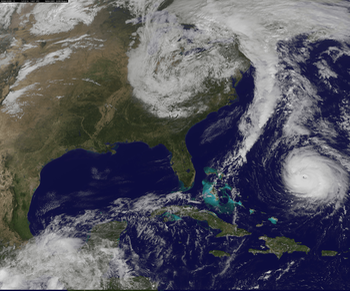
A committee of the United Nation’s World Meteorological Organization chooses the list of names that will be given to hurricanes and cyclones around the world. One name that was selected by this group turned out to be controversial, and eventually was removed from the list. What was that name?
A. In 2005, the designated name for the letter Y in the Pacific Ocean was Yasser. Given that Yasser Arafat had died the year before, many Jewish and Israeli groups objected, saying that Yasser Arafat should not be honored in this way. At the same time, Arab countries objected, saying that naming a killer storm after Yasser Arafat would be insulting to his memory. The World Meteorological Organization said they had chosen that name only because it is a common Arabic name, however, they decided to change the Y name to Yusef.
B. In 2001, the designated name for the letter I in the Pacific Ocean was Israel, and Jewish groups protested that this was not appropriate. There was concern that there might be headlines reading “Israel Wipes Out Thousands in Manila.” The World Meteorological Organization said that the name was chosen because it is a common Spanish name, however, they did decide not to use the name Israel.
C. In 1979, the designated name for the letter G in the Atlantic Ocean was Golda. Given that Golda Meir had died the year before, many Muslim and Arab groups objected, saying that Golda Meir should not be honored in this way. At the same time, Israel objected, saying that naming a killer storm after Golda Meir would be insulting to her memory. The World Meteorological Organization said they had chosen that name only because it is a common Jewish name, however, they decided to change the G name to Gilda.
D. In 1983, the name list for the coming year was announced, and it included the name Hymie for the H storm in the Atlantic. At that time, there was no conversation at all about this choice. However, in early 1984, Jesse Jackson had begun his campaign for the Democratic nomination for president, and news stories came out about his disparaging use of the term Hymies for Jews, and Hymietown for New York City. Jackson at first denied saying this, and then tried to downplay it as an insignificant private conversation, but it became part of the national conversation surrounding his candidacy. At some point the name Hymie on the hurricane list was noticed by mainstream Jewish organizations, who pressured the World Meteorological Organization to remove it from the list, which they did.
E. In 2003, the designated name for the letter A in the Atlantic Ocean was Abram. Because of complaints from the Chief Rabbi of Israel, the World Meteorological Organization agreed to change the name, issuing a statement saying “And you shall no longer be called Abram, but your name shall be Abraham, for I make you the father of a multitude of storms.”
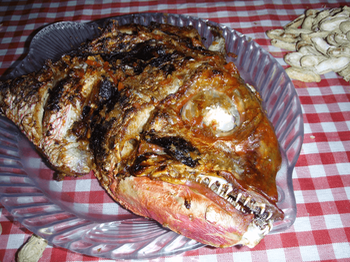
In many Sephardic communities, Rosh Hashanah is celebrated with a seder meal, a custom which dates to the Talmud (Horayot 12a), when Abaye, a Babylonian rabbi, listed a variety of foods that should be eaten at the New Year. The foods are placed on a “Yehi Ratzon platter,” and each is eaten following a “Yehi Ratzon” blessing, which is a blessing that begins, “May it be God’s will…” A different prayer is invoked for each food. For example, we say “May it be God’s will that our enemies be decimated” when eating leeks, and “...that our merits increase” over fenugreek or carrots. What is the Yehi Ratzon blessing when eating a fish head, which is also traditionally included on the platter?
A. The video was made in 1995 following the assassination of Prime Minister Yitzhak Rabin. In the film, Peres calls for unity and peace in the divided country, so that the country can focus on healing and on the external threats which face Israel.
B. So Now What? was actually a series of short videos made by the Israel Broadcasting Authority in 1967. Each of the 12 segments featured an interview with a leading public figure discussing the future of Israel, following the Israeli victory in the Six Day War and Israel’s newly-gained control over the Sinai Peninsula, the West Bank, and East Jerusalem. Besides Peres, others who were interviewed included Moshe Dayan, David ben-Gurion, and Jerusalem mayor Teddy Kollek.
C. The movie was made in 1994 by the Norwegian Nobel Committee, the group that awards the Nobel Peace Prize. The film, which presented a vision for peace between Israel and the Palestinians, was shown at the award ceremony when Peres, Prime Minister Yitzhak Rabin, and Palestinian leader Yasser Arafat jointly received the Nobel Peace Prize.
D. In 1996 Shimon Peres founded the Peres Center for Peace. The video was made at the time to introduce the Center to the public and to potential donors. In the film, Peres talks about the mission of the Peres Center, detailing its focus on such areas as agriculture, water and the environment; civil leadership; medicine and healthcare; and social media and technology.
E. The video follows Peres as he finds himself unemployed after the end of his term as President of Israel in 2014. In the film, we see him meet with a job counselor who tells him that his past experience as a shepherd is not useful because everyone is now vegan. Peres does eventually get work as a gas pumper, a supermarket check out clerk, and a pizza delivery guy, but sadly, he is not very successful at these jobs.
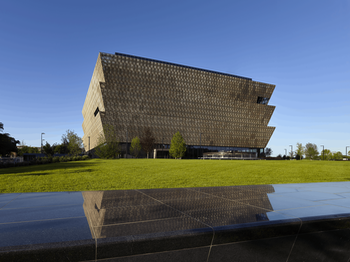
The Smithsonian’s National Museum of African American History and Culture opened this weekend in Washington, D. C. The museum, with more than 36,000 artifacts, tells the story of African American life, history, and culture. One display in the museum contains an item or items with a Jewish connection which is tied in some way to Michelle Obama. What is this item or items?
A. In the museum’s section on slavery in America, there is a Hebrew Bible which had belonged to a Jewish slaveholder named Solomon Davis, a South Carolina tobacco plantation owner. Michelle Obama’s great-great-grandfather, Jim Robinson, was enslaved on Davis’s plantation.
B. The museum contains a copy of the speech that Michelle Obama offered at the 2016 Democratic National Convention last July. In her remarks, Mrs. Obama said that the Republican convention had been sadly divisive, noting that “Peace will come when the Republicans love their children more than they hate us.” Mrs. Obama has since been accused by Melania Trump of plagiarizing Golda Meir’s statement about the Arabs, “Peace will come when the Arabs love their children more than they hate us.”A spokesman for the Obamas defended the First Lady. “Michelle Obama said, ‘Peace will come when the Republicans love their children more than they hate us.’ Twilight Sparkle of My Little Pony said, ‘Peace will come when Pinkie Pie loves Fluttershy and Applejack loves Rainbow Dash.’ There’s no cribbing of Golda Meir’s speech. These were common words and values. She cares about her family. To think that she’d be cribbing Golda Meir’s words is crazy.”
C. In an exhibit about the Obamas there is a letter of recommendation that was written by Rabbi J. H. Margolis of the South Side Hebrew Congregation (now the Central Synagogue of Chicago on the north side of town) on behalf of Michelle Obama’s father, Fraser Robinson, III. As a young man, Robinson had worked as a porter at the synagogue, eventually applying for and obtaining a job at the city water plant. Rabbi Margolis’s letter stated that “Mr. Robinson has shown himself to be a diligent young man, respectful of our people and our culture, and always dedicated to hard work.”
D. One of the major exhibits at the museum is about the Civil Rights movement. Included among the displays is the iconic picture of the Reverend Martin Luther King, Jr. marching in Selma, Alabama in 1965, flanked by John Lewis, Ralph Abernathy, Ralph Bunche and other black leaders, along with Rabbi Abraham Joshua Heschel. Behind Rabbi Heschel is Pastor Kenneth B. Smith of the Trinity United Church of Christ in Chicago. This was the church that Michelle Obama’s family belonged to when she was growing up, as Pastor Smith was Michelle Obama’s uncle. This is also the church that she and President Obama later attended under the leadership of the controversial Pastor Jeremiah Wright.
E. The museum has a display about worship in the African American community that includes a Torah scroll, tallit and shofar which were donated to the museum by Rabbi Capers Funnye, spiritual leader of Beth Shalom B’nai Zaken Ethiopian Hebrew Congregation in Chicago. Rabbi Funnye is a cousin of Michelle Obama.
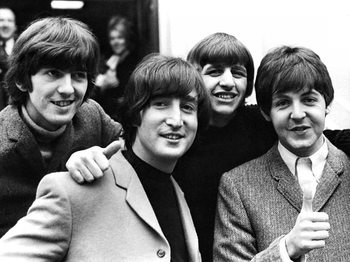
The Beatles: Eight Days a Week–The Touring Years, a documentary directed by Ron Howard, opened this past Friday. The film covers the years 1962-1966 as the Beatles performed more than 800 live concerts around the world. What Jewish-related event took place during the Beatles 1964 tour of America?
A. The Beatles performed a concert at the Milwaukee Arena on September 17, 1964. The band had arrived only hours before the concert as an early season snow storm had closed the highway from Indianapolis, where they had performed the night before. During the storm, one of their equipment trucks had slid off the road and overturned. While no one was hurt, a Hammond organ was destroyed. On short notice, calls went out to locate a replacement organ, and one was procured from Temple Menorah, a reform synagogue located only a mile from the Milwaukee Arena. The Beatles all autographed the organ, which is still in use at the temple to this day.
B. Linda Eastman was majoring in Fine Arts at the University of Arizona, where she studied photography. On September 5, 1964, she received a phone call from one of her professors, telling her that a colleague who was a professional photographer needed a student who could assist with a bar mitzvah party shoot that night, as his assistant had taken ill. Eastman took the job and worked the bar mitzvah party. After the party, the photographer told Eastman that he had press access to the after-party following the Beatles concert that had taken place that night at the Rialto Theatre in Tucson. They attended the bash and Linda had the opportunity to meet and photograph Paul McCartney for the first time. This was the start of an on-going relationship between McCartney and Eastman, at first professional as her phototgraphy career grew, and eventually as a romantic relationship and marriage.
C. Brian Epstein, the Beatles manager, was with the band during their 1964 American tour. When the band performed in New Orleans on September 16, Epstein reached out to Ivor Davis, a Jewish reporter who was covering the tour for London’s Daily Express and asked if he could arrange for tickets to Yom Kippur services, which were to be held the next day. Davis called the local Conservative Synagogue and secured the tickets, but Epstein ended up leaving New Orleans early the next morning and did not show up at services.
D. The Beatles were scheduled to perform in New York City on September 8 at Forest Hills Stadium. That night was in fact the first night of Rosh Hashanah, and as the concert approached, city officials became concerned that there would be an insufficient number of police, transit, and other critical workers available to ensure safety at the concert. Mayor Robert Wagner called a meeting of the city council, who approved overtime funds to enable non-Jewish city workers to put in the extra hours necessary to cover for Jewish employees who would be taking off for the holiday, thus preventing the cancellation of the concert.
E. The Beatles’ final concert on their 1964 American tour took place at the Paramount Theater in New York City on September 20. When the Beatles arrived in New York on the day before the concert, John Lennon gave an interview to the Jewish Week newspaper, where he said, “Judaism will go. It will vanish and shrink. I needn’t argue about that. I’m right and I’ll be proved right. We’re more popular than Moses now. I don’t know which will go first, rock ‘n’ roll or Judaism. Moses was all right but the prophets were thick and ordinary. It’s them twisting it that ruins it for me.” The remarks led to threats and protests outside the theater by Jewish groups, a major reason why the Beatles decided not to tour in America again (or ever in Israel).
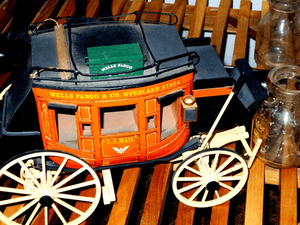
Wells Fargo Bank has just been fined $185 million for fraudulently opening credit card and checking accounts in the names of people who were not aware and did not approve. The original Wells, Fargo & Company provided express delivery and banking services in California. In 1905 the company separated its delivery and banking services, followed by the merger of the bank with the Nevada Bank which was operated by Isaias W. Hellman, forming the Wells Fargo Nevada National Bank. Following additional mergers and name changes, the bank became the Wells Fargo Bank in 1954. How did Isaias Hellman, a Jewish immigrant from Bavaria, become a banker in the first place?
A. Hellman’s father was a banker in Bavaria, and Hellman began working in the bank as a young man. The family fled Germany in 1839 following a pogrom in their town in which the Hellman Bank was broken into, robbed, and set on fire. When the family arrived in California in 1840, Isaias Hellman and his father borrowed money from the Hebrew Immigrant Aid Society and established a bank in Los Angeles.
B. Isaias W. Hellman had emigrated from Germany in the mid-1800’s with his family and they settled in California. Every month the Hellman family and all of their neighbors would await the arrival of the Wells Fargo wagon, delivering packages to the residents. In December 1853, the Wells Fargo Wagon was a-comin’ down the street. One resident got a delivery of a box of maple sugar on his birthday. Another got a gray mackinaw, while a third got some grapefruit from Tampa and a fourth person got a bathtub and a cross-cut saw from Montgom’ry Ward. Little Isaias got a present that his father had ordered for Chanukkah–a piggie bank. Isaias told his father that this present was “thump’n thpethyul just for me,” and it became his inspiration to eventually become a banker.
C. Isaias Hellman had immigrated to Los Angeles in the mid-1800’s, where he established a dry goods store. His store was located in an area that was largely populated by Mexicans, the majority of whom were members of the Catholic church. Hellman was approached by the local bishop and asked if he would consider providing loans for the members of the church, as church rules forbid the charging of interest on loans by Catholics. Hellman consented to do so, and eventually opened a bank next door to his store, the first official bank to be opened in Los Angeles.
D. Mayer Amschel Rothschild established a banking business in Frankfurt, Germany in the 1760’s, and this bank went on to become an international banking institution as members of the family established Rothschild Banks throughout Europe. Isaias Hellman worked for the Rothschild Bank in Bavaria in the mid-1800’s, before deciding to emigrate to America. Upon arriving in California, Hellman partnered with Francisco Temple to established Hellman, Temple and Co., Los Angeles’s first official bank, with funding from the Rothschild family.
E. Hellman arrived in California in 1859 and worked as a clerk in his cousin’s dry goods store. He eventually opened his own store, where as a courtesy he would store his customers’ valuables in the store safe. One customer who kept gold in the safe would often come in while drunk and withdraw some of his gold. At one point, this customer went to retrieve some of the gold when he was sober, and upon discovering much of the gold gone, he wrongly accused Hellman of theft and attacked him. Hellman realized that this informal storage system was not a good idea, so he printed business cards reading “I.W. Hellman, Banker” and began providing deposit books to customers.
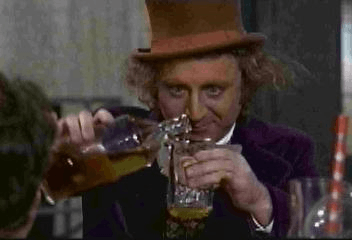
The great Gene Wilder, star of such wonderful movies as Blazing Saddles, The Producers, The Frisco Kid, Willy Wonka & the Chocolate Factory, and Young Frankenstein, passed away last week. How did Wilder describe the role of Judaism in his life?
A. I’m not at all religious, although I am certainly Jewish–which, to me, means that my mother showed up at my Hebrew school in the afternoon and brought me a piece of kugel or a bialy so I wouldn’t starve before dinner.
B. I’m not at all religious, although I am certainly Jewish–which, to me, means that my parents stopped talking to me when I married my first wife, who wasn’t Jewish, and continued not to talk to me when I married my second wife, who also wasn’t Jewish (though they did speak to my wives.) Only when I married my third wife, Gilda, who of course was Jewish, did my parents finally start speaking to me again.
C. Of course, The Producers was brilliantly written by Mel Brooks. But I did contribute a few lines, including when my character, Leo Bloom, said: “I’m hysterical! I’m having hysterics. I’m hysterical. I can’t stop when I get like this. I can’t stop. I’m hysterical. Oh my god. Ah-la-la-la.” That basically summed up my world view on being Jewish.
D. I’m not at all religious, although I am certainly Jewish–which, to me, means that my father, who came from a shtetl in Poland would sing niggunim on Friday night. So my Judaism was just a feeling I got from that music. I can still hear him now. “Ay, di di di die die die.” “Bum diddy dum dum bim bum bum bum.” “Oy yoy, oy. Yoy diddly doy.” “Oompa loompa doom-pa-dee doo.”
E. I’m not at all religious, although I am certainly Jewish–which, to me, means that my parents hugged and kissed me a lot as I was growing up.
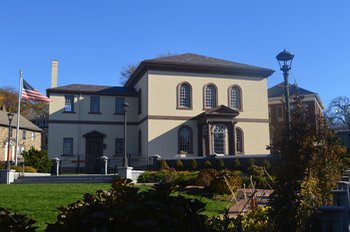
Tim Kaine, Democratic nominee for vice-president, recently visited the historic Touro Synagogue in Newport, Rhode Island. Jeshuat Israel, the congregation that is housed in the Touro Synagogue building, was recently in the news as a result of its winning a lawsuit against Congregation Shearith Israel of New York City. What was the dispute about?
A. Shearith Israel was founded in 1654 and is the oldest congregation in the United States. The Touro Synagogue building was built in 1763, and is the oldest surviving Jewish synagogue building in North America. Shearith Israel sued Jeshuat Israel for marketing itself as the “Oldest Synagogue in America” based on the status of its building. Shearith Israel claimed that this infringed on its claim to be the oldest synagogue, based on the founding date of the congregation. A judge ruled in Jeshuat Israel’s favor, confirming that “synagogue” refers to the building, not the congregation, and therefore Jeshuat Israel can continue to say they are the “Oldest Synagogue in America.”
B. Touro Synagogue was established in 1763, but by 1776, most Jews had fled Newport as the Revolutionary War erupted. Some of the Jeshuat Israel members moved to New York and joined Shearith Israel, in the process taking with them the keys, Torahs, and Torah scroll rimonim (finials) from the Touro building. Shearith Israel eventually returned these items to Newport, but continued to claim ownership of them, preventing Jeshuat Israel from selling the valuable finials to raise funds to support the congregation. After a 4-year legal battle, a federal judge ruled Shearith Israel no longer had any legal trusteeship over the Newport congregation or building, and that Jeshuat Israel has the right to sell the finials.
C. Touro Synagogue was established in 1763, but by 1776, most Jews had fled Newport as the Revolutionary War erupted. At that time, Congregation Shearith Israel of New York took stewardship of the Newport synagogue’s Torah scrolls and other possessions, and continued to serve as trustee for the then-empty building in Newport. After the war, Jews returned to Touro Synagogue, though the New York congregation continued to act as trustees of Touro. In August of 1790, President George Washington visited Touro Synagogue as part of his effort to bring about passage of the Bill of Rights (including the First Amendment clause guaranteeing freedom of religion). Washington followed up with a letter, “To the Hebrew Congregation at Newport,” which is one of America’s most historic documents in support of religious freedom in America. The letter, which is still housed at Touro Synagogue, includes the statement, “May the children of the stock of Abraham who dwell in this land continue to merit and enjoy the good will of the other inhabitants—while every one shall sit in safety under his own vine and fig tree and there shall be none to make him afraid.” Shearith Israel sued Jeshuat Israel, the congregation that now operates in the Touro Synagogue building, claiming that they owned the letter and it belonged in their building in New York, as they were trustees of the synagogue at the time of Washington’s visit. A federal judge ruled in favor of the Newport congregation, however, stating that the document is part and parcel of the historic congregation in Newport, and that the New York congregation’s previous support of Touro did not confer ownership to them of this historic letter.
D. Rabbi Ezra Stein, the former rabbi at Shearith Israel, moved to Newport upon being hired as the rabbi of Jeshuat Israel. Shearith Israel sued, claiming that Rabbi Stein’s contract included a noncompete clause which prohibiting him from taking a pulpit within 200 miles of the Shearith Israel building. Lawyers for Jeshuat Israel successfully argued that the noncompete clause was not valid as the New York congregation is modern orthodox, while the Newport congregation is conservadox. Noncompete clauses cannot be enforced when the two jobs are sufficiently different. A federal judge ruled that because of the variations in practice and beliefs of the two congregations, the rabbi’s job would be sufficiently different to negate the noncompete clause.
E. The Board of Trustees of Jeshuat Israel needed to raise funds to support its operation, and as part of that effort, they sold a horse to Shearith Israel. After the delivery of the horse to the New York congregation, the president of Shearith Israel called the president of Jeshuat Israel and stated they had received a mule. “It was a horse,” responded the Jeshuat Israel president. “It was a mule,” countered the Shearith Israel president. “Horse,” the Jeshuat Israel president retorted. “Mule,” averred the Shearith Israel president. “Horse.” “Mule.” “HORSE!” “MULE!” Seeing no resolution, the case went to court, where a District Court Judge ruled that it was a horse, and that we should all live in simple peace and harmony.
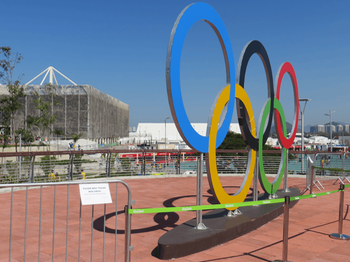
A. Kosher meals. Senecio is a food delivery service which delivers meals from restaurants throughout Israel (similar to Seamless in the United States). Senecio applied for and was granted a license in Rio de Janeiro to deliver kosher meals to visitors at the Olympic games. The company is working with all the local kosher restaurants in Rio, including Kosher Planet and Bar-Ilan Restaurant, and will deliver meals to hotels, bed and breakfasts, and even to the various Olympic venues.
B. Security video. Senecio is a high tech security startup in Israel, whose area of expertise is security monitoring via drone aircraft. They have been hired by the Organizing Committee for the Olympic and Paralympic Games Rio 2016 to provide drone aircraft which are taking aerial photography and videography from above the various Olympic venues. The pictures are then delivered to the Brazilian Intelligence Agency that has overall responsibility for security at the Olympic Games.
C. Mosquitos. The company is involved in the fight against the Zika virus. A major effort in this regard is to release millions of sterile male Aedes aegypti mosquitos that will mate with the female Zika mosquitos, thus preventing the females from becoming pregnant and laying eggs. However, there was no good way to deliver these sterile mosquitos into the environment until Senecio developed a system of mass storage and safe release of millions of the sterile mosquitos from airplanes.
D. Kosher meals. Because of the nature of athletic training for the games, it is critical that the athletes are able to eat meals that are a part of their training regimen. In the case of the Israeli athletes, the special meals that each prefers must also be kosher, and these items are not available in Brazil. Senecio is the company which was contracted by the Olympic Committee of Israel to purchase, store, and ship the food from Israel to Brazil on a daily basis throughout the Olympic games, assuring that the athletes have the meals they need on a timely basis.
E. Mezuzahs. Senecio is an online supplier of religious articles, including tefillin, Shabbat candlesticks and challah covers, all sold online with overnight, and sometimes same-day delivery. The company has set up a program in Rio de Janeiro called Rent-A-Zuz, which enables Jewish visitors to the Olympic Games to order mezuzahs for use at their hotels, bed and breakfasts, and AirBnB’s. The mezuzahs are designed to temporarily adhere to doorposts without damaging the structures, and they can be returned when the travelers go home.