Dansker’s program looks for Kern’s ‘Silver Lining’
By KAREN LOZINSKI, Exclusive to the CCJN
The first installment of 2015’s Jewish Composer Lecture Series presented by librarian, writer, music critic, and scholar George Dansker took place in the Garden Pavilion at Touro Synagogue this past Friday. Titled “Look for the Silver Lining: The Exquisite Music of Jerome Kern,” it focused on Kern’s substantial influence on the growth of distinctly American musical theater, as well as the personal life of the composer. Naturally, it included a selection of his songs.
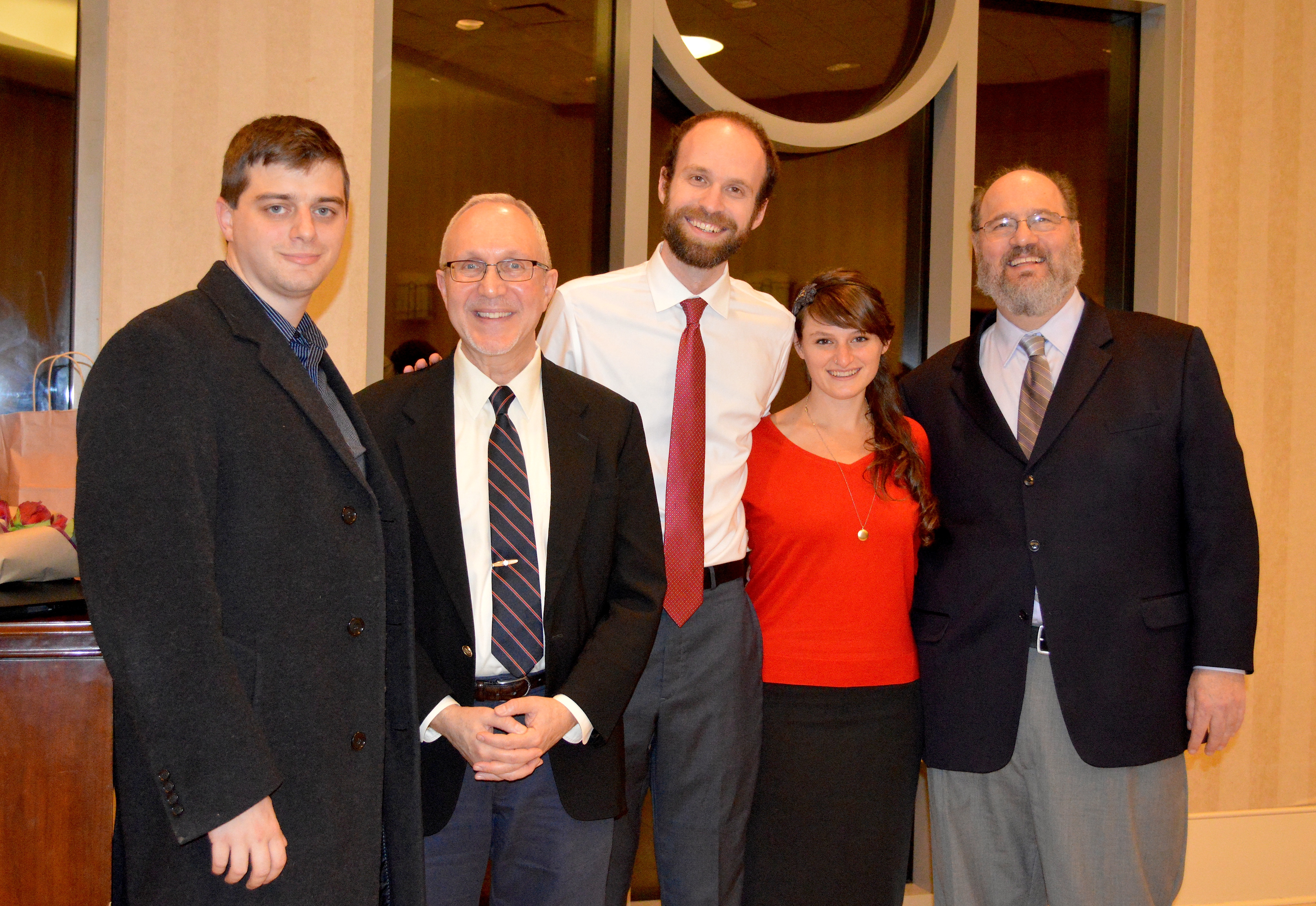
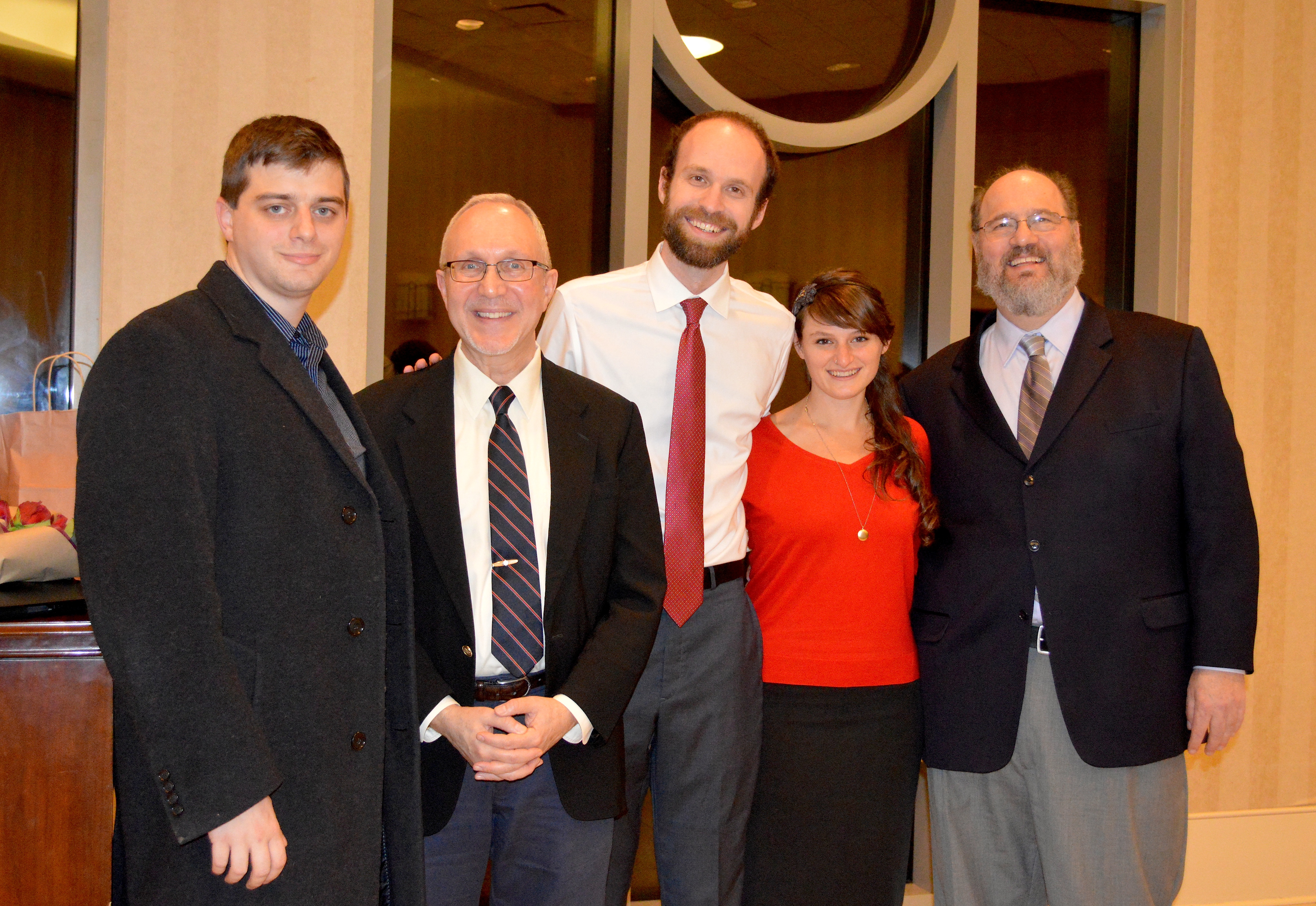
The Jerome Kern “Silver Linings” program included (from left) keyboardist Jesse Reeks, historian George Dansker, Cantor and Deborah Mintz and Cantor Joel Colman. (Photo by Karen Lozinski)
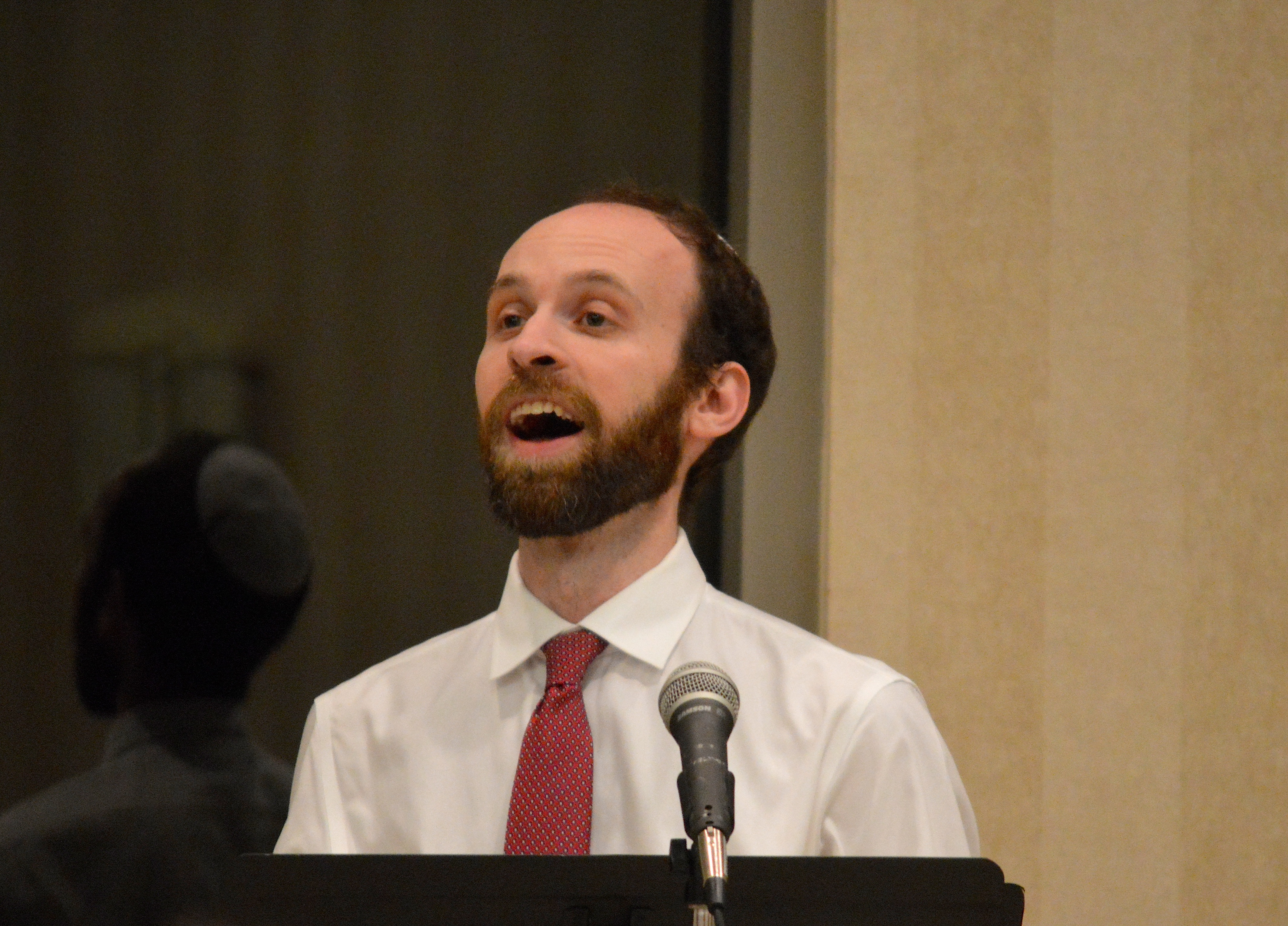
Dansker helmed the evening for the seventh time in the run of the series as guest lecturer, and orchestrated an ambitious yet user-friendly program punctuated with snippets of Kern’s compositions. The lecture flowed effortlessly around performances of Kern’s music by Dansker himself and the community’s two Cantors David Mintz of Touro and Joel Colman of Temple Sinai. In addition Jewish educator Deborah Mintz, David’s wife, performed in song, accompanying herself on guitar.
Jesse Meeks adroitly provided much of the music for the evening, on piano and accordion, though Cantor Mintz took over keyboard duties when his wife, Deborah, sang “The Way You Look Tonight.”
Every performance was lively and beautiful, infused with joy or pathos and expertly delivered. Colman filled the Garden Pavilion with his sonorous bass-baritone voice, especially with his rendition of “Old Man River” gleaned from Kern’s most important musical “Showboat.”

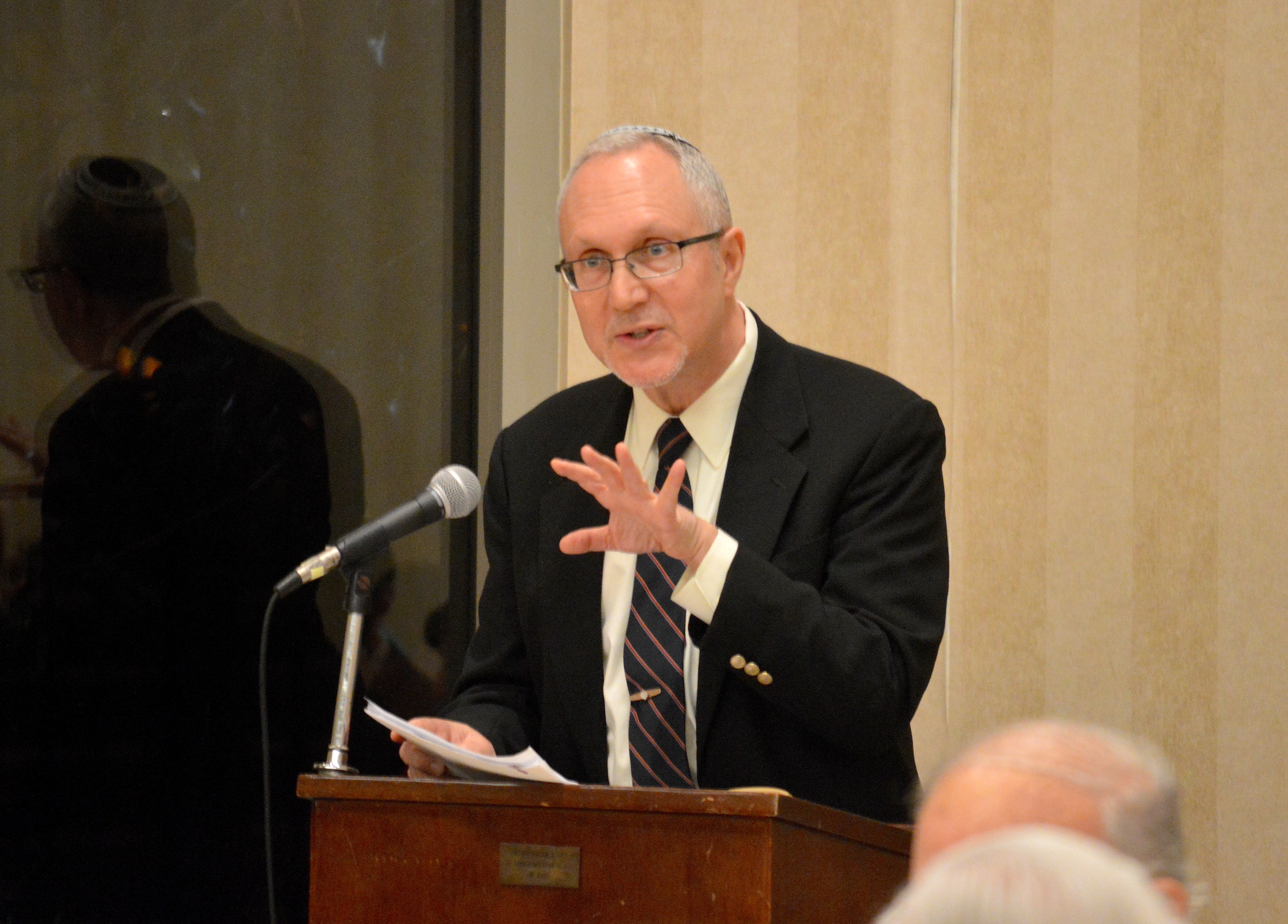
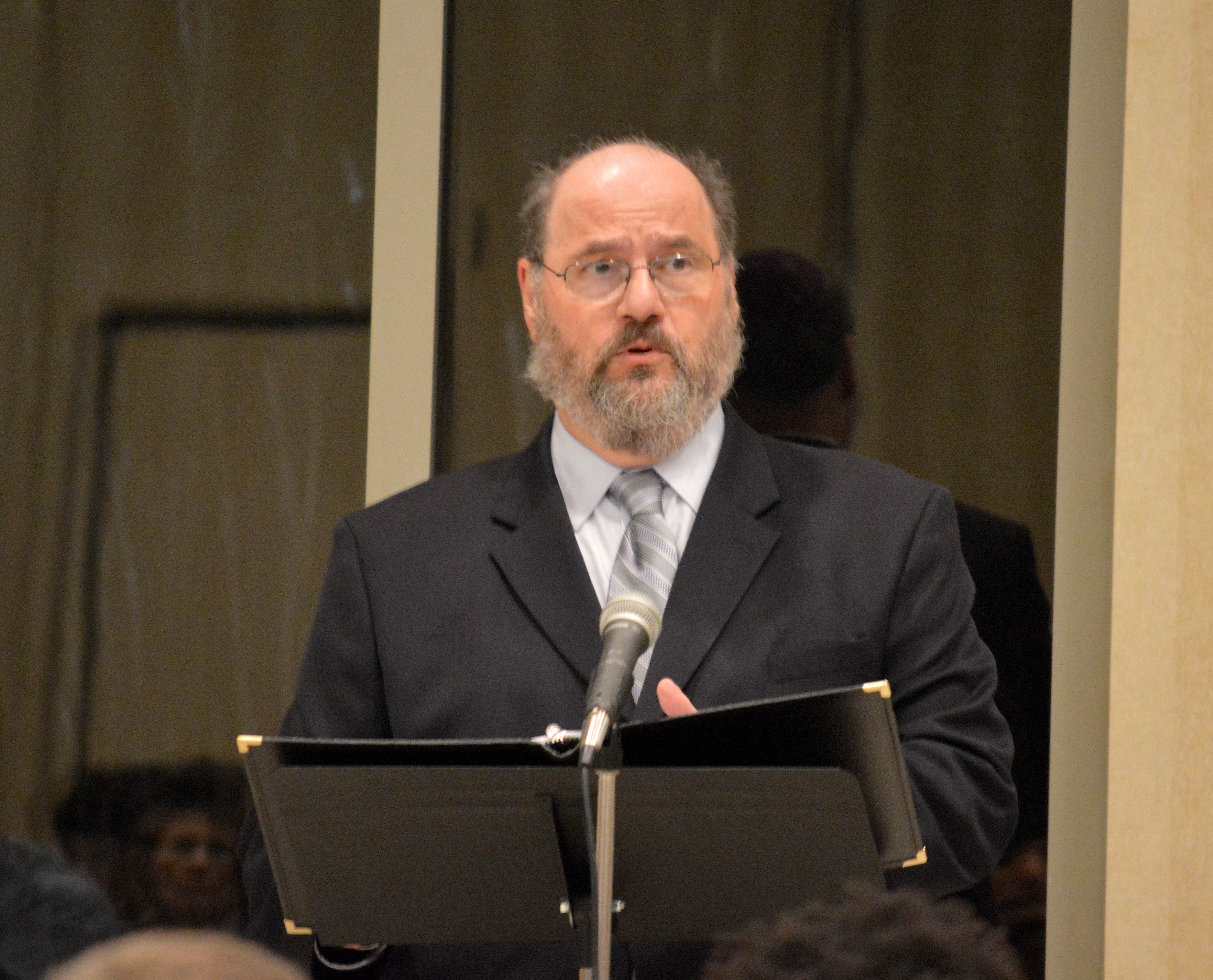
Music enthusiast and scholar George Dansker. (Photo by Karen Lozinski)
Dansker was sure to bring up the very salient point that though Kern, as a composer, is remembered more for his individual songs rather than his stage works, the major exception is “Showboat,” based on the story first published by Edna Ferber.
Dansker talked of Kern’s life and work in elegant detail, asserting that Kern not only stood at the crossroads of American musical theater and the more popular form of the day, the European operetta, but that he changed the course of American music. Dansker called on Kern’s friend and colleague, composer Richard Rodgers, to provide some perspective on the significance of this change:
“He was a giant with one foot in Europe and the other in America. Before he died he picked up the European foot and planted it squarely alongside the American one. Jerome Kern was the first man to break with European tradition in theater music, in much the same sense that Beethoven was the last of the classicists and the first of the romanticists,” Dansker quoted Rodgers. “Thus, as American musical comedy began to replace European-style operetta as the most popular stage genre, Kern was again incredibly important in being one of the first to provide a bridge between the two forms.”
Kern spent his early life growing up in New York City and Newark, New Jersey. His experience differed from fellow composers Irving Berlin and George Gershwin, as Kern was a product of a Jewish middle class upbringing, and therefore identified strongly as American, as opposed to having had to face the struggles of being a first generation immigrant.
Despite his proclivities for music, the young Kern was eventually put to work in the family business, a department store in Newark. His father eventually agreed to allow him to pursue music after Kern purchased two hundred pianos from a salesman instead of the required two.

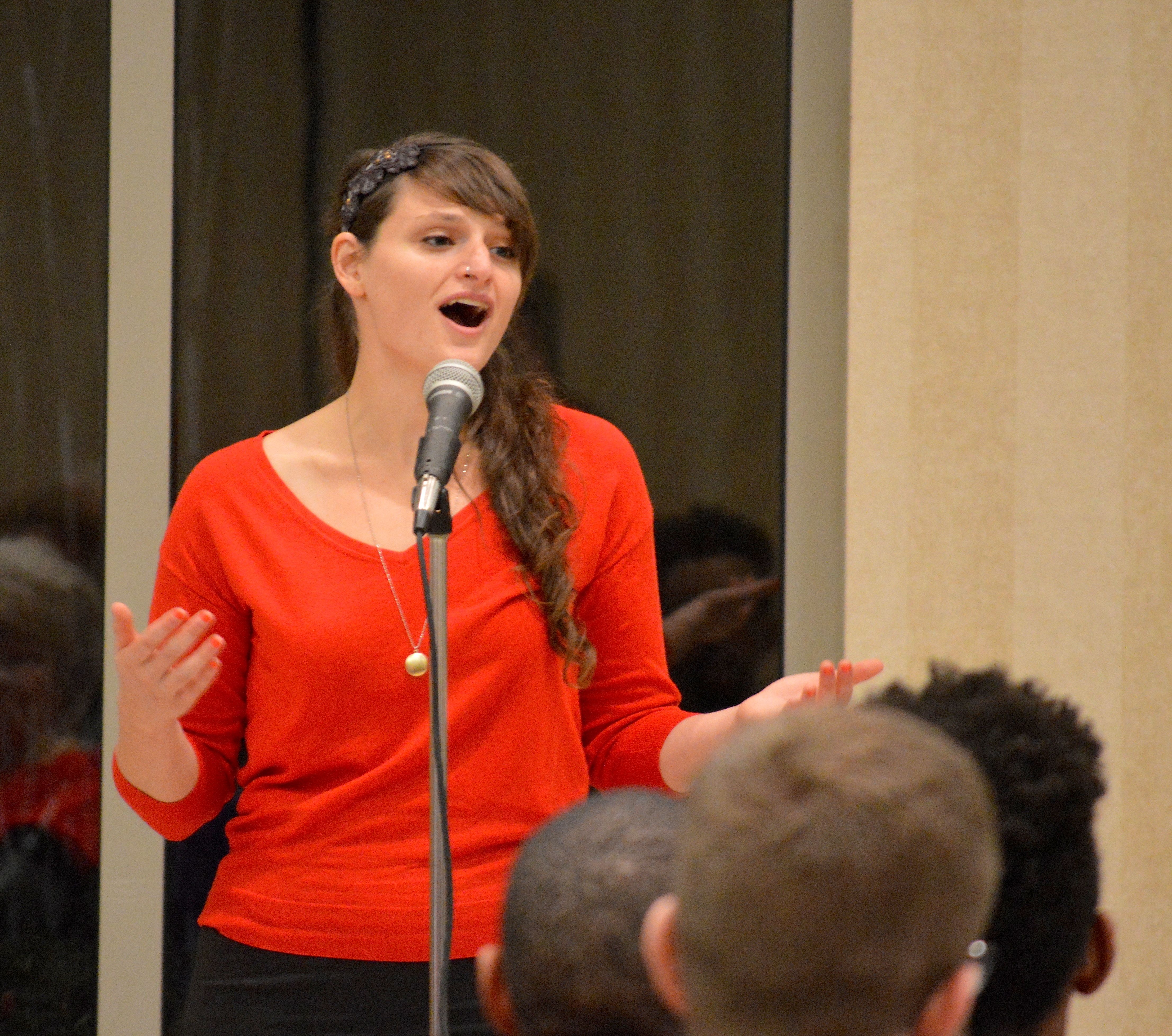
Deborah Mintz sings Jerome Kern. (Photo by Karen Lozinski)
He went on to write over 1,000 songs and over 100 works for the stage, Dansker pointed out. Though Rodgers and Hammerstein’s “Oklahoma!” is frequently given the designation as having paved the way for the modern American musical form, “Showboat” and Kern’s influence, penned almost a generation earlier, cannot be understated, Dansker asserted.
From the 1930s onward, Kern spent the bulk of his career in Hollywood, writing some of his best known songs such as “The Way You Look Tonight,” which garnered him one of his two Academy Awards. He was nominated for an Oscar six times.
Kern suffered an untimely demise due to a cerebral hemorrhage at the age of 60 in New York City. In the moments that preceded his death, his dear friend and collaborator, Oscar Hammerstein II, sang one of Kern’s favorite songs, their joint effort “I’ve Told Every Little Star,” softly in his ear in an effort to extend some comfort to him. It was during that touching rendition of the song they shared that Jerome Kern passed away.
Though it would be a near impossible task to touch on all the rich detail and relevant information researched, curated, and lovingly delivered by Dansker in his lecture, suffice to say the event provides an engaging learning experience for the novice and more initiated alike. The lecture and performance was brought to a close with a warm sing-along of the song “Look for the Silver Lining,” from which the presentation received its title.