


First Yiddish musical in America, ‘The Sorceress,’ is casting a spell in New York
By ALAN SMASON, Special to the CCJN
When renowned Yiddish theatre figure and impressario Boris Thomashefksy began his storied career, he was all of 14 years of age. Unlike the Europe of his earlier upbringing, there were no theaters or performances halls to mount a production on the mean streets of New York, a rather unforgiving and busy place.

Josh Kohane, left, consults with Bobe Yahkne (Mikhl Yashinsky). (Photo courtesy National Yiddish Theatre Folksbeine)
The wily, would-be singer and actor found an expansive home on Albion Place* that seemed suitable for mounting a production. With the assistance of bar owner Frank Wolf, Thomashefsky arranged for the steamship passages of an established troupe of Yiddish actors who had performed Avrom Goldfaden’s “Di Kishefmakherin” (“The Sorceress“) in Europe.
They sold tickets in advance and promoted the run to cover their costs with Thomashefsky playing the title role of Bobe Yahkne, sometimes referred to as a “witch.”
“It was a natural fit for him,” said Mikhl Yashinsky, the actor who is playing the same dame role in the current National Yiddish Theatre Folksbeine (NYTF) production. After several previews, it opened on December 7 at the Museum of Jewish Heritage in New York City.
“He knew of the charm it held for audiences,” the actor and and student of Yiddish theatre told the CCJN in a phone interview. “It was the most popular of the day.”
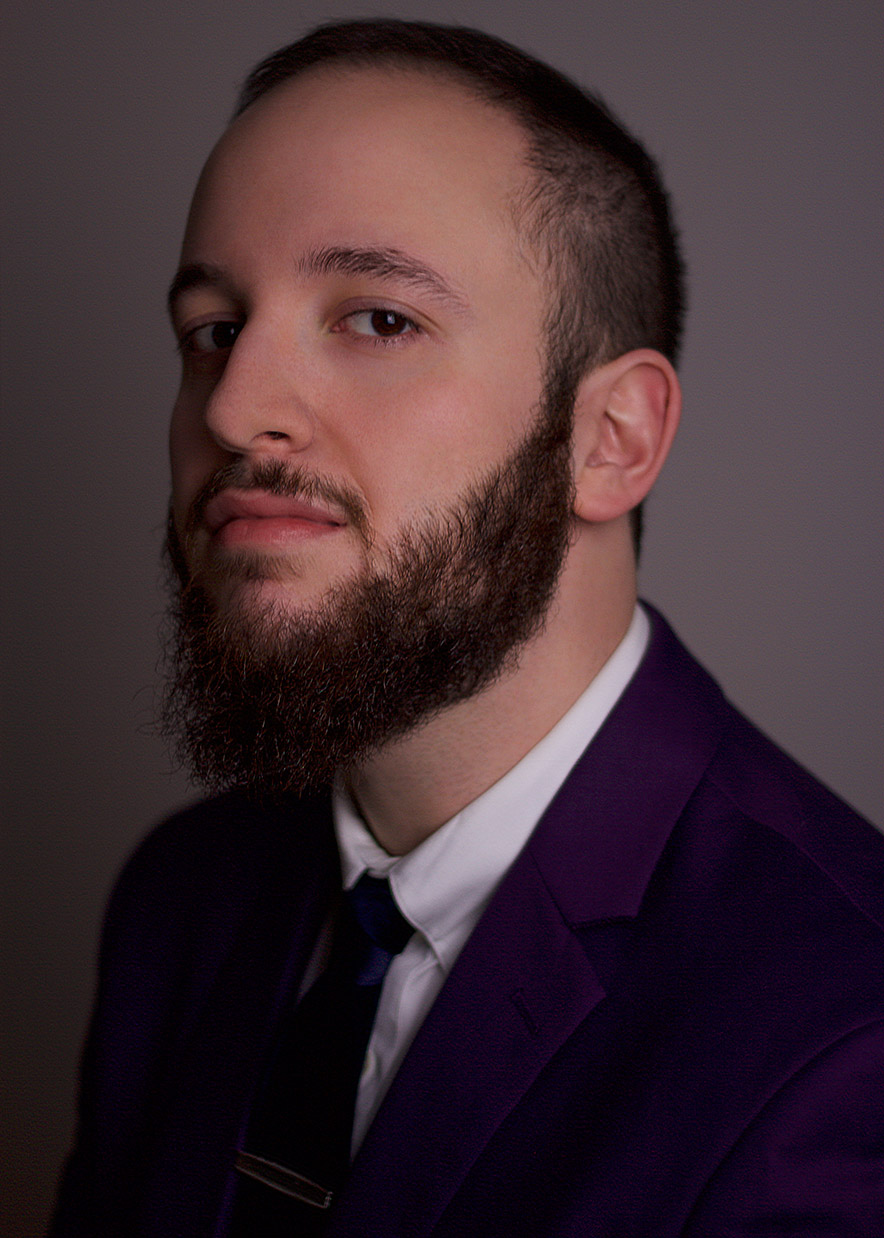
Mikhl Yashinsky, who plays Bobe Yahkne in “The Sorceress.” (Photo courtesy National Yiddish Theatre Folksbiene)
Set in Romania, “The Sorceress” concerns the central figure of a beautiful Jewish girl, Mirile, whose mother dies and whose father unwittingly remarries a woman with designs on his fortune. In league with Bobe Yahkne, she frames her husband and has Mirile sold into slavery in Turkey.
Goldfaden’s work might easily be compared to something out of “Grimms’ Fairy Tales.”
“This is a piece that’s well suited to that sort of make believe,” Yashinsky continued. “It feels like a fairy tale the way it is presented – like an archetypal fairly tale with a Jewish twist.”
“The Sorceress” was the very first Yiddish musical seen on an American stage and the spark that triggered a torrent of Yiddish theatre during the golden age that followed over the next 50 years and Thomashefsky was at its forefront nearly all of that time.
Last summer NYTF opened the highly successful, Joel Grey-directed Yiddish production of “Fiddler on the Roof” (“A Fidler Afn Dakh”) at the museum. NYTF extended performances of the open-ended production for an additional six months before transferring it Off-Broadway earlier this year, where it will continue until next month. This Yiddish “Fiddler” with Russian and English supertitles followed similar previously successful runs of “Di Goldene Kale” (“The Golden Bride“) in 2015 and 2016 and “Amerike: The Golden Land“ in 2017.
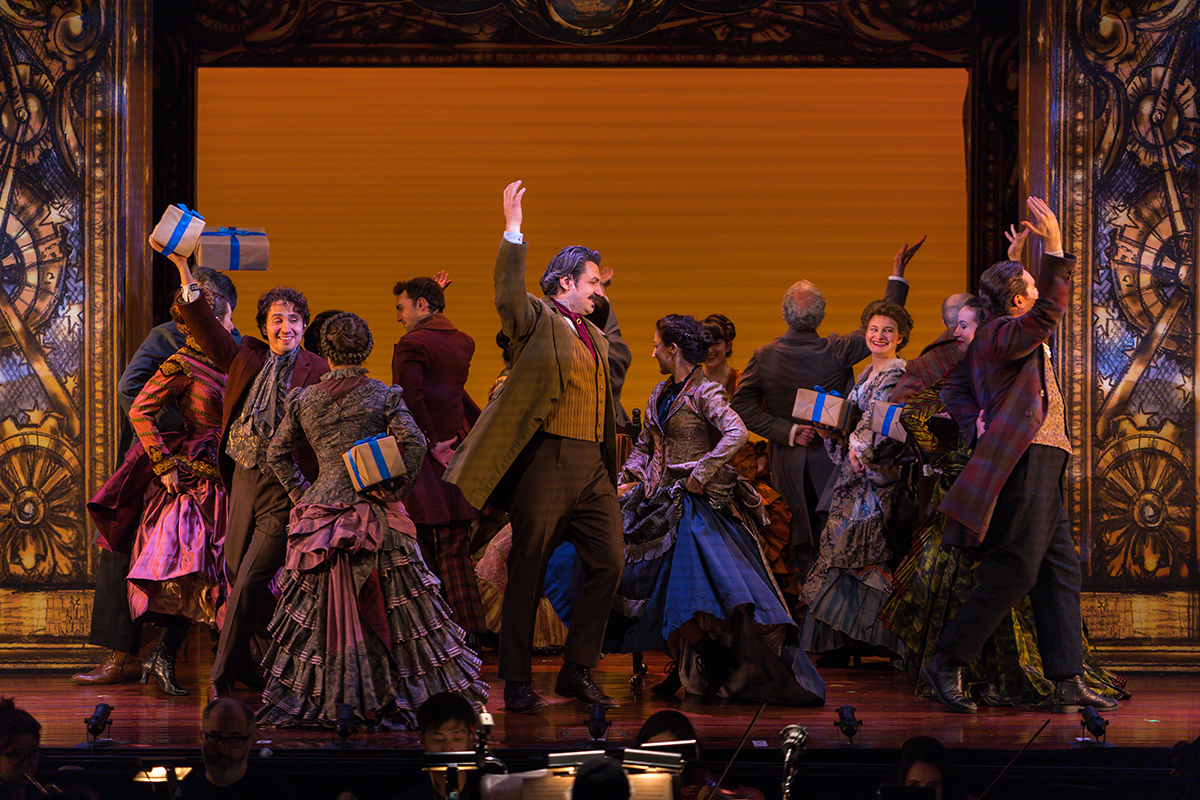
The cast of “The Sorceress” now playing at the Museum of Jewish Heritage. (Photo courtesy of NYTF)
Director Moti Didner had been a driving force in mounting those works. He said he was fully aware of “The Sorceress” as an important historic work. “It’s one of the first pieces that I encountered in the Yiddish theatre,” he also recounted with the CCJN via telephone. “I’ve been with the company for 16 years and they did what I would call a rudimentary concert version of it the first month that I was working here.”
Over the years, selected pieces from “The Sorceress” were presented in concerts. “The music was just so wonderful and the characters so rich that it always stuck with me,” Didner continued.
Following the success of “The Golden Bride” inspiration set in at NYTF. Didner and the company decided to launch the Global Restoration Initiative, an ongoing project intended to bring back jewels from Yiddish theatre’s glorious past.
Didner went back to “The Sorceress” with the intent of fully restoring the historic work. Along with conductor Zalmen Mlotek and musicologist Dmitri Sleptovitch, they tasked themselves with resetting an intact production and began painstakingly reconstructing and arranging the score and restoring the scenes.
Last year Yashinsky played Bobe Yahnke in a concert version that was well received and he was offered the opportunity to play the role by Didner once the new version was finalized in 2019.
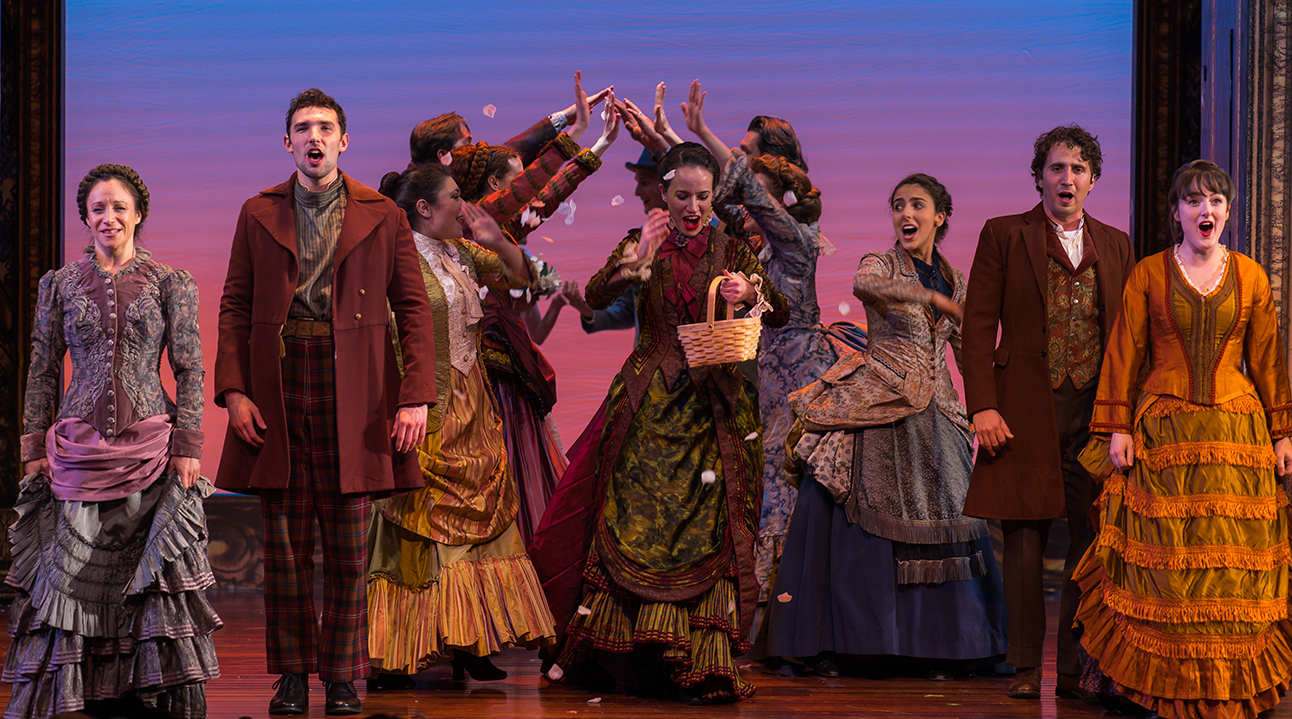
The oldest American Yiddish musical piece, “The Sorceress,” presented at the Museum of Jewish Heritage in New York City. (Photo courtesy NYTF)
“This is the definitive ‘Sorceress,'” Didner stated. “There was one song that we chose to cut because it doesn’t seem to fit into the narrative very well. It’s the full score. We found these historic orchestrations for violin, viola, cello, bass, trumpet, flute, clarinet, percussion and piano. This is a full orchestration.”
Yashinsky, who played Mordke the innkeeper since the inception of the Yiddish “Fiddler,” had maintained a full beard while playing Off-Broadway and while also rehearsing the role of Bobe Yahnke, a female part written expressly for the male voice (a dame role).
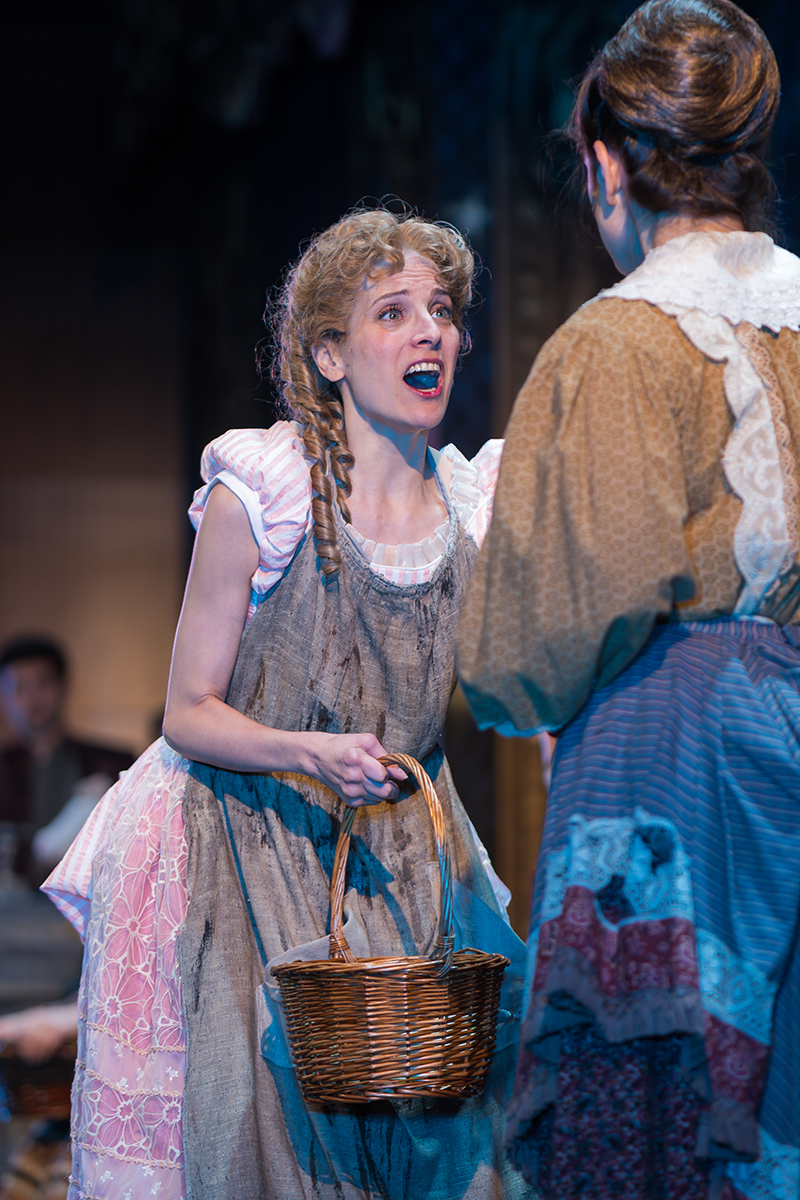
Jazmine Gorline plays Mirele, the young Jewess who is the protaganist of “The Sorceress.” (Photo courtesy NYTF)
“It’s always done basically by a man. There were women in the companies that put on this work, but it was always a man who placed the sorceress,” Yashinsky explained.
It is not unlike an operatic trouser role in which a woman is called upon to play a young man’s part. Theatre folk will recall that Peter Pan, for example, has been cast by a woman ever since the first play was cast in 1904 and in later Broadway musicals, Yashinsky noted.
“It does certainly fit into that landscape,” Didner added. “It’s as old as theatre itself. People playing the other gender. People putting on masks and costumes and playing people that they’re not.”
Didner described the character of the sorceress as possessing a darker voice that intersects the character with both “a masculine and feminine quality co-existing.”
While the role is written in the mezzo range, either a tenor or a baritone can accomplish that. “It’s not meant to be sung falsetto,” he insisted. “It’s not a counter-tenor.”
As to the plot of “The Sorceress,” the story depicts a world where the wicked are done in by their own actions. It is, therefore, not unlike a fairy tale with a moral. “Whereas it’s very familiar sort of in a fairy tale realm like ‘Into the Woods,’ it also operates on a much deeper, (and) mature level as allegory,” Didner added.
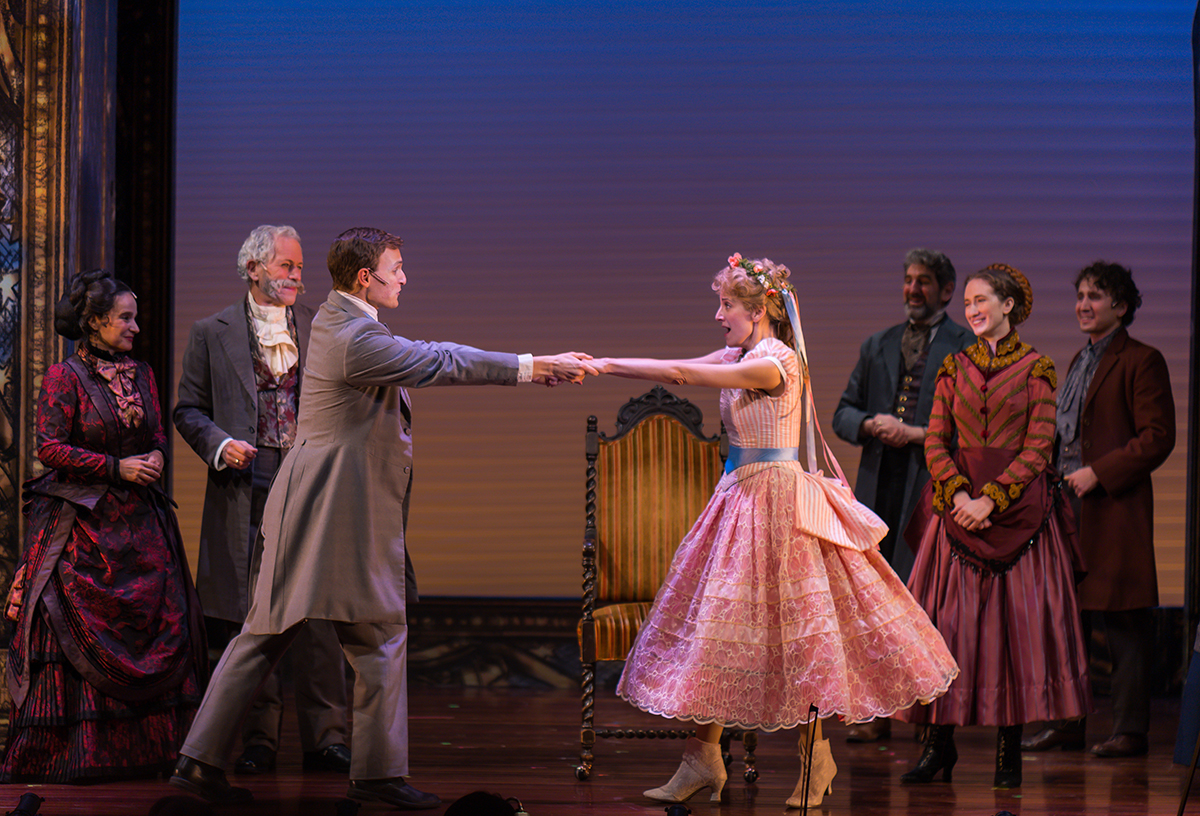
A scene from “The Sorceress.” (Photo courtesy of NYTF)
Once “The Sorceress” began its rehearsal period, Yashinsky was forced to shave his own full beard and began wearing a fake one for his “Fiddler” role. Since the previews began, he has taken a leave of absence from playing Mordke, concentrating instead on his role as Bobe Yahnke. When “The Sorceress” closes on December 29, he plans to return to “Fiddler” and will be with the cast for the show’s closing in January.
Meanwhile, Didner is riding on the wave of popularity and goodwill from “Fiddler,” which established a new record for NYTF. “It’s the most well-known, beloved Jewish musical probably ever created,” he admitted.
“Being done in Yiddish, the emotion of it gave it a greater authenticity,” Didner mused. “It brought Yiddish into the consciousness of many more people (than) who were aware of us previously.”
But, he said, it’s not been an overnight success. “I’ve been with this company since 2003 and I’ve seen steady growth trend since that time. I think we’ve had eight shows that have been nominated for Drama Desk Awards,” he boasted. (Being Off-Broadway, none of their shows are eligible for Tony Awards.)
*(Editor’s note: The original home on Albion Place became Turn Hall some years later and today is the home of last year’s Tony Award-winning La Mama Experimental Theatre Club at 66 E. 4th Street.)
“Di Kishefmakherin” (“The Sorceress“) finished its run on Sunday, December 29 at the Museum of Jewish Heritage, 36 Battery Place in New York City. Directed by Moti Didner, the musical was spoken and sung in Yiddish with English and Russian supertitles.
