


French-Jewish Spy Recalls World War II Exploits
By NICHOLAS HAMBURGER, Special to the CCJN
Lying face-down in a field on the Swiss-German border, Marthe Cohn was frozen with fear. As a French-Jewish spy serving in the French Army during World War II, she had already made 14 unsuccessful attempts to infiltrate enemy territory. Now, on Cohn’s 15th attempt, with dusk falling and nothing obstructing her from Nazi Germany, she dreaded not only the tremendous danger of her assignment but also the consequences of aborting a mission. In the end, Cohn writes in her memoir “Behind Enemy Lines,” “I only did it . . . because the fear of being called a coward was worse than the fear of dying.”
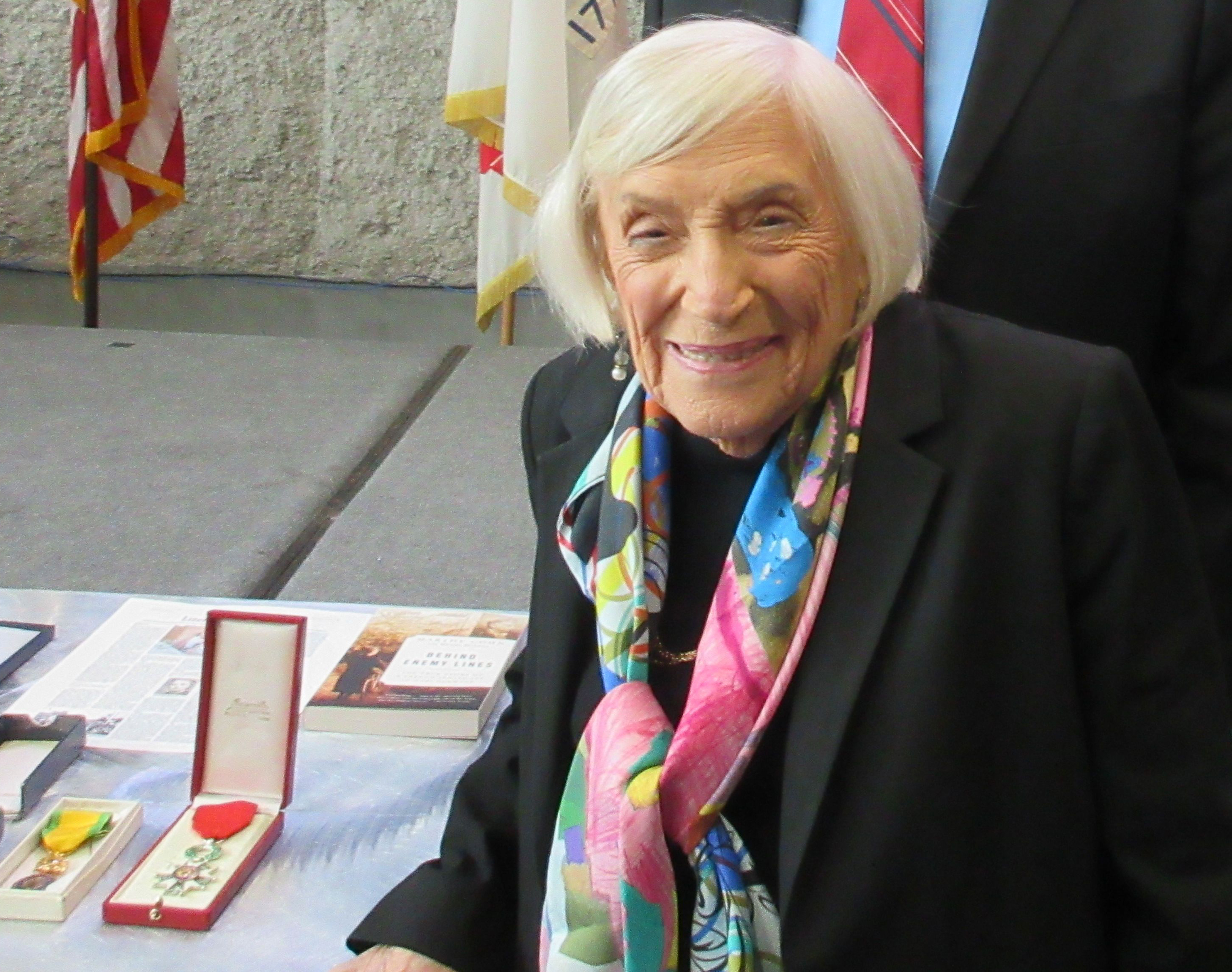
Marthe Cohn at the World War II Museum, next to several medals honoring her work as a spy during World War II (photo by Nicholas Hamburger)
Disguised as a German nurse desperate for news of her fiancé, supposedly a front-line Nazi soldier, Cohn gathered and relayed crucial intelligence in 1945 to the French Army regarding a planned German ambush in the Black Forest. Now 97, she has received numerous awards for her espionage, most notably France’s Medaille Militaire, a medal bestowed on Winston Churchill and one of the country’s highest honors, and Germany’s Cross of the Order of Merit, a similarly prestigious honor.
All of Cohn’s medals were on display Thursday night in New Orleans. In anticipation of International Holocaust Remembrance Day on Saturday, January 27, Cohn recounted her stint in the French intelligence service at the National World War II Museum, attracting a crowd that filled the Louisiana Memorial Pavilion. Following her chronicles of espionage, she signed copies of “Behind Enemy Lines,” which was published in 2002.
Born in 1920 in Metz, a city in northeast France near the French-German border, Cohn grew up speaking French and German fluently. While Cohn initially intended to serve in the army as a nurse, her bilingualism proved to be more valuable. After receiving numerous rejections on account of her Jewishness, and then enduring various reprimands for her lack of involvement with the organized resistance, Cohn was granted a position as a social worker, and later as a spy, in the French Army.
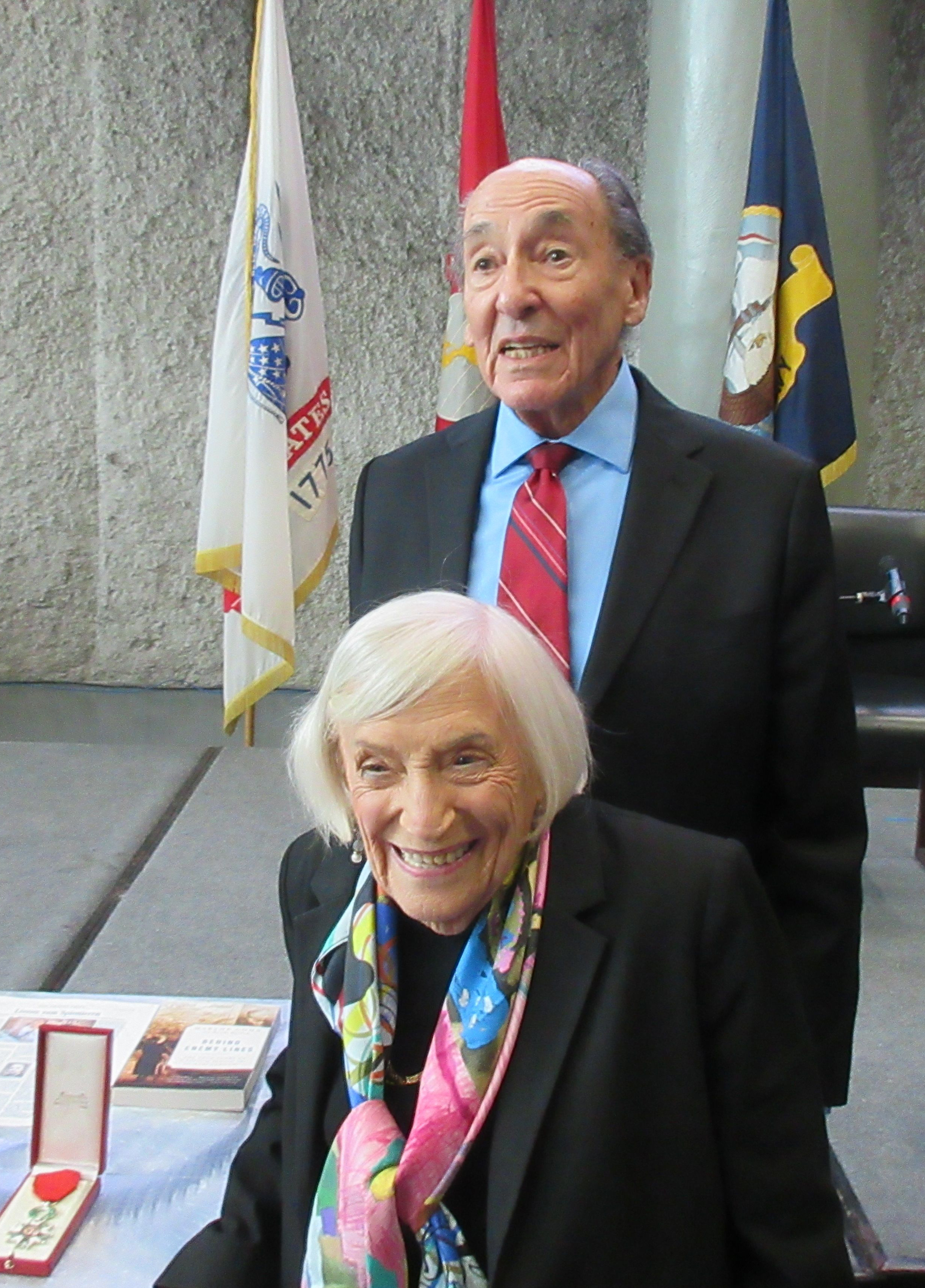
Cohn and her husband Major Cohn (photo by Nicholas Hamburger)
At the National World War II Museum, Cohn regaled the audience with her stories of subterfuge in the final year of the war. While walking with a cadre of German women one day, Cohn listened to a noncommissioned SS officer boast about his slaughter of Poles and Jews. When he unexpectedly fainted, Cohn tended to him on the side of the road, and, after earning his trust, coaxed information regarding the upcoming German ambush out of him. She bicycled across Germany gathering intelligence wherever she could, concealing her communication with the French Army by sending coded messages embedded in her favorite Baudelaire poems.
Prior to Cohn’s successful breach of Nazi Germany’s border, she survived several precarious incidents. In an attempt to infiltrate the enemy, a French officer confused Cohn’s intended path with a frozen canal. In the middle of winter, Cohn recalled, she fell through the ice and only barely managed to climb out. A short time later, German artillery bombarded a file of tanks in which Cohn was traveling. Every Frenchman in the tank directly in front of her died. Cohn escaped unharmed.
But though Cohn survived the war, thirty members of her immediate family did not. Her fiancé, Jacques, was an active member of the French Resistance, and his involvement in the murder of a collaborationist French doctor, as well as his sabotage of an enemy supply train, precipitated his arrest and execution. Cohn’s younger sister, Stéphanie, perished in Auschwitz following her deportation on the day of Yom Kippur.
As a Holocaust survivor, Cohn said that her Jewishness underlies much of her personal story. “I’m not very observant, but that doesn’t matter,” she explained in an interview with the CCJN. “I never lost my Jewish identity.” Cohn’s grandfather was an Orthodox rabbi, and she described her mother’s religiousness as a devout and “authentic faith.” To this day, Cohn honors her sister on Yom Kippur, as well as before every event she participates in while touring her memoir across the United States and Europe.
Given the losses she has suffered, Cohn suggested she places a particular importance on remembrance. “For me, remembrance is every day. It’s not just one day a year,” she stressed. “I am constantly dreaming. I always daydreamed as a child, too. My husband asks me very often ‘Where are you now?’ I always think about my past – always.”
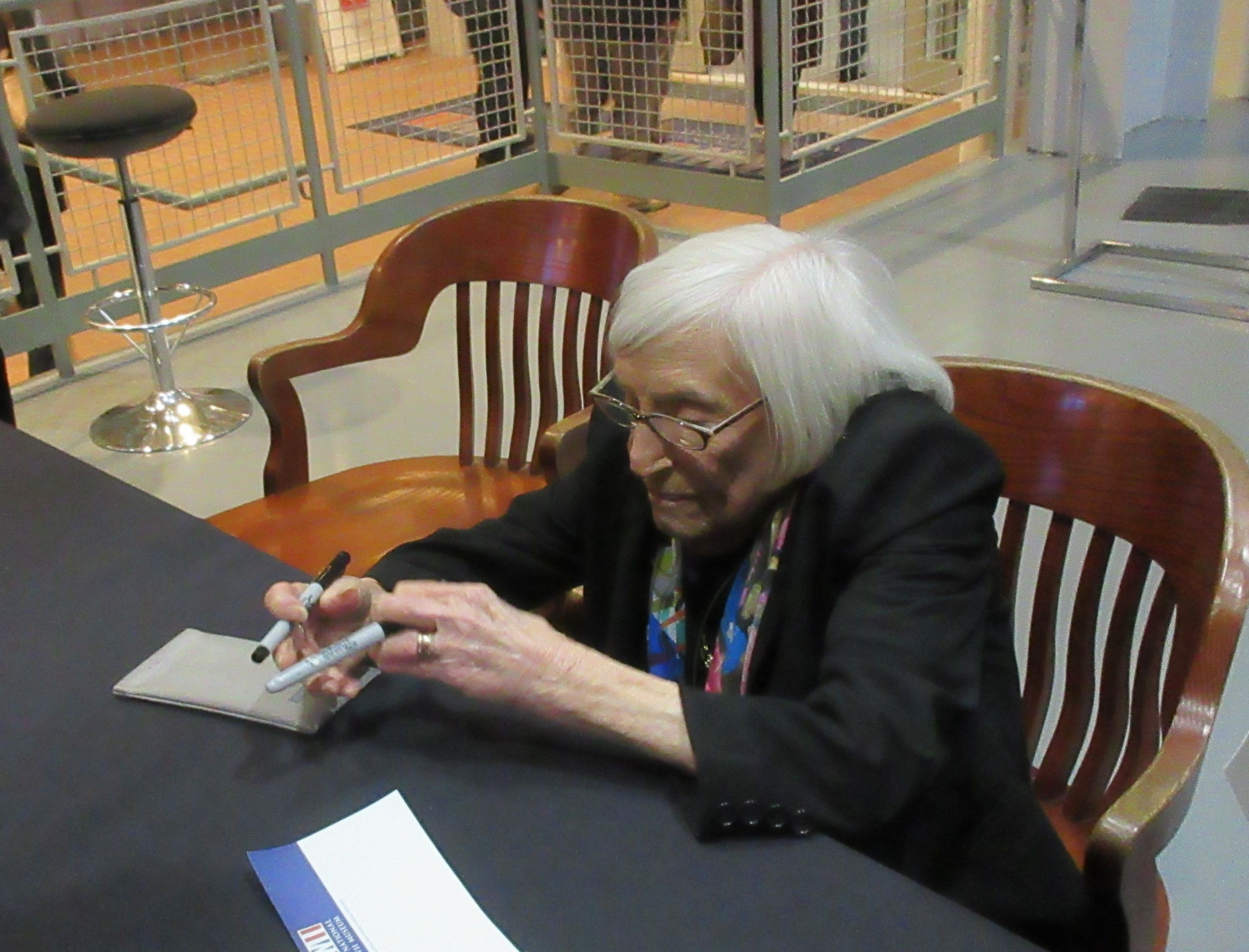
Cohn signs copies of her book at the National World War II Museum (photo by Nicholas Hamburger)
International Holocaust Remembrance Day, of course, is a day of collective remembrance. Created by the European Union in 1950 to mark the liberation of Auschwitz-Birkenau on January 27, 1945, the memorial day has been officially honored by the United Nations since 2005. This year’s commemoration of the date, however, has been marked by unrest.
Last week, JTA, the nation’s oldest Jewish news agency, reported that a senior Hungarian lawmaker planned to participate in a ceremony honoring Miklos Horthy, a Nazi collaborator and the regent of Hungary until 1944, on the same day as International Holocaust Remembrance Day. In June, Hungarian Jews protested Horthy’s upcoming ceremony. On Thursday, the event was canceled amid strong backlash.
Controversy surrounding the memorial day has also embroiled Austria, Hungary’s western neighbor. Austrian Jews planned to refrain from participating in any official events on Saturday as long as far-right Freedom Party (FPÖ) law-makers were in attendance, the Algemeiner Journal reported last week. The FPÖ was founded in 1956 by a former SS officer, and, after Austria’s elections last October, now holds over a quarter of the country’s parliamentary seats.
Cohn, however, was quick to point out that far-right nationalism has surfaced beyond Europe, too. “What’s happening here with Trump is very close to what happened in the ‘30s in Germany,” Cohn said, referring to the rapid rises of President Donald Trump in 2016 and Hitler’s National Socialist German Workers’ Party in the early 1930s. “You cannot accept it. You have to fight it from the first day. If you don’t, you will lose the fight.”
