


Jewish Media Summit’s first full day
By ALAN SMASON, Special to the CCJN
The first full day of activities at the Jewish Media Summit in Jerusalem began with a connection to a well-known former member of the New Orleans Jewish community, Judah Touro. The State of Israel-sponsored conference, which is being attended by 100 of the world’s leading Jewish media participants from 25 different nations, was held at Miskenot Sha’anaim, the first Jewish neighborhood built outside the walled portion of the city.
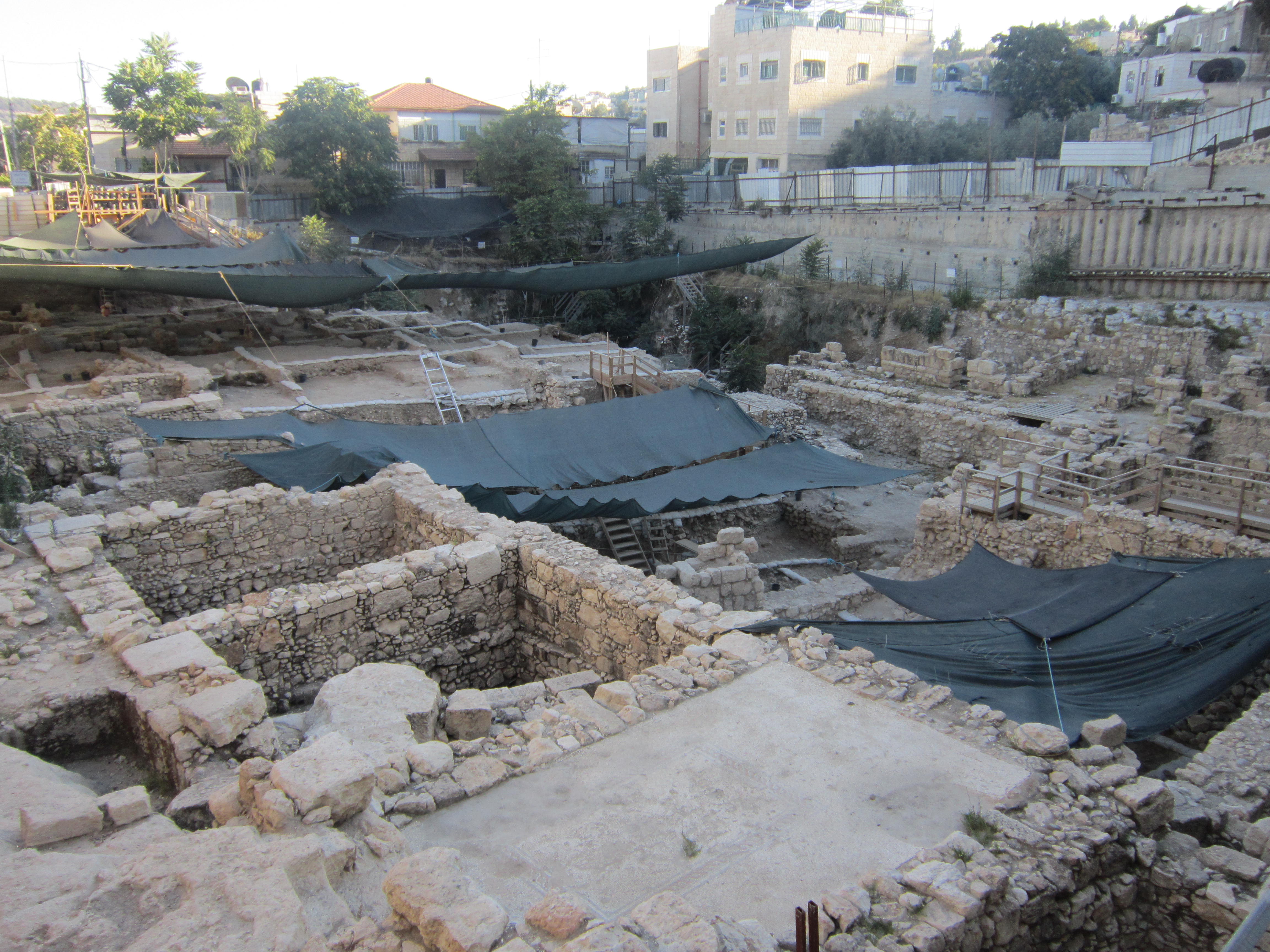
The City of David is the largest active excavation site in Israel. (Photo by Alan Smason)
With its iconic working windmill, Mishkenot Sha’ananim was constructed with monies supplied by the highly visible New Orleans merchant and philanthropist at the end of the 19th Century.
The complex of buildings houses several meeting rooms and restaurants and affords a spectacular view of much of the old portion of the city. It was utilized for four plenary sessions featuring panels of speakers, each covering an aspect of Jewish life or Israeli politics.
The morning session began with a panel of five journalists from Europe and America. Moderator Shmuel Rosner of the New York Times kept a tight leash on his panel of speakers that included Jennifer Frazer from The Jewish Chronicle in London; Henrique Cymerman, a Middle East and international affairs expert; Gary Rosenblatt, editor and publisher of The Jewish Week from Baltimore; and Marshall Weiss, the president of the American Jewish Press Association from Dayton, OH.
Rosner engaged the panel on the topic of “The Role of Jewish Media in Maintaining Jewish Life.”

ADL national director Abraham Foxman speaks on anti-Semitism with David Horovitz of the Times of Israel. (Photo by Alan Smason)
The second session moderated by David Horovitz, the publisher of the online Times of Israel, was a conversation with Abraham Foxman, the national director of the Anti-Defamation League (ADL). Much of the talk centered on the specter of anti-Semitism and the recent ADL report that showed the worldwide instances of what the ADL has termed as anti-Semitic activity.
Following a lunch break of Israeli delicacies at the nearby outdoor Touro Restaurant, participants heard from two former “refusenik” Jewish prisoners of the Soviet Union, who are major leaders in the Israel of today: Yuli Edelstein, Speaker of the Knesset, and Natan Sharansky, chairman of the Jewish Agency for Israel. That discussion was led by Jewish Forward editor-in-chief Jane Eisner.
Among invited members in the audience from the Jewish Agency were National Hadassah president Marci Natan and New Orleanians Julie Wise Oreck and Bill Hess.
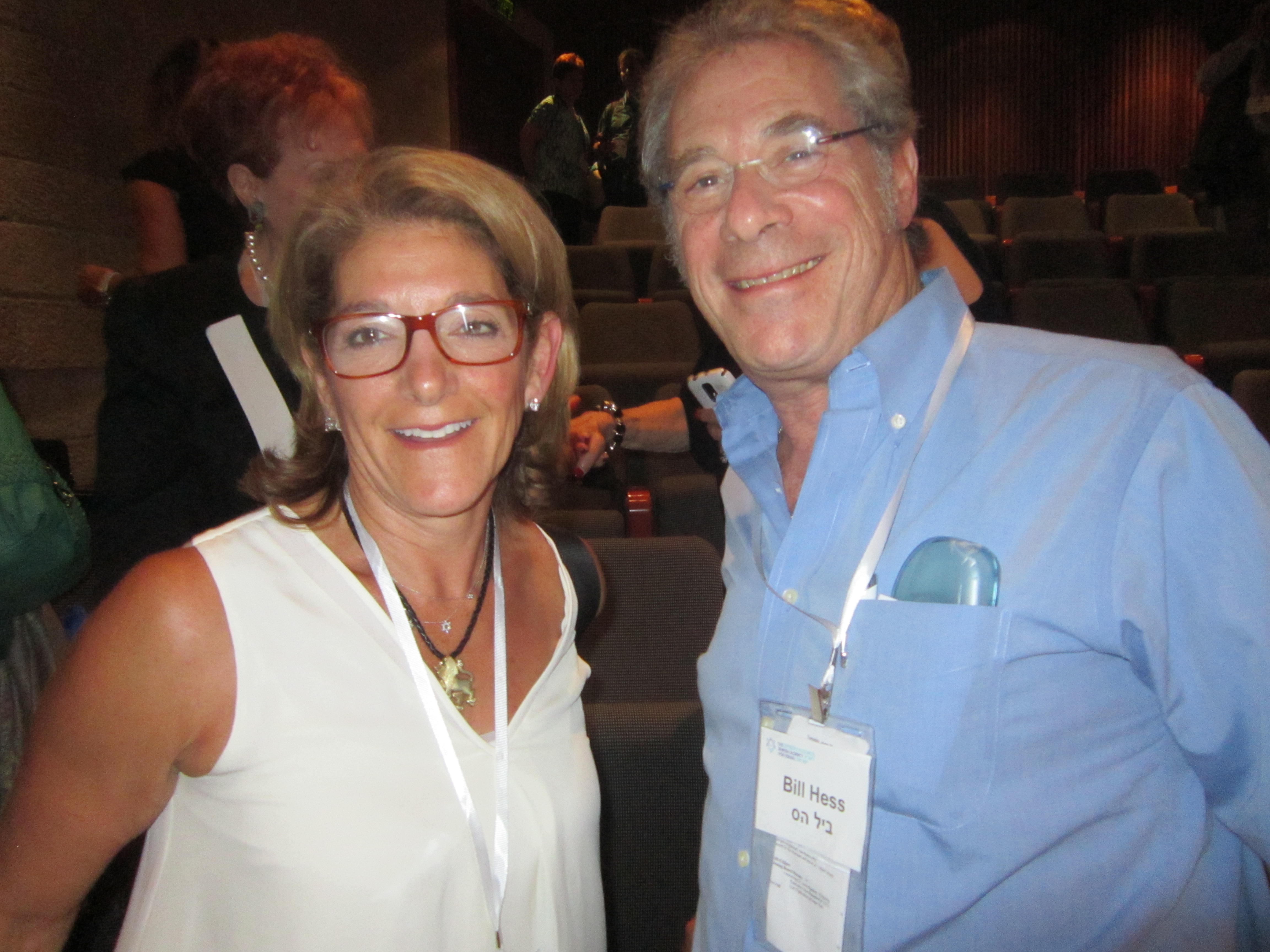
New Orleanians Julie Wise Oreck and Bill Hess at Mishkenot Sha’ananim in Jerusalem. (Photo by Alan Smason)
After a short break, two simultaneous sessions on areas of interest to summit attendees were held in separate rooms. The first on “Iran at the Crossroads,” featured Emily Landau and retired Major General Amos Yadlin from the Institute for National Security Studies.
A more contentious panel moderated by Uri Dromi of the Jerusalem Press Club consisted of several Palestinian and Israeli journalists and spokesmen, who gave their take on why the recent peace process initiatives failed. Haaretz correspondent Barak Ravid, Joel Greenberg from the McClatchy newspaper syndicate and Israeli journalist Asaf Gibor took varying positions on the failed talks with Palestine Tomorrow CEO Elias Zananiri and Samer Shalabi, chairman of the Foreign Press Association.
A fascinating tour of the City of David, the largest active archeological excavation in Israel, followed the morning and afternoon sessions. Guides brought the attendees to the excavated site of what is now believed to be the original location of the palace of the conqueror King David. Archeological evidence gathered at the site and at adjacent locations document five different civilizations that built on top of one another near the walled city.
An underground tour led to a view of the Western Wall and the now exposed Robinson’s Arch proposed as a site for egalitarian prayer.
If approved, the controversial platform created in secret under the direction of Naftali Bennett, the Minister of Jerusalem and Diaspora Affair, would be the first non-Orthodox area for prayer and would encourage more access for women at the holy site. Discussions between parties are ongoing and being promoted through Sharansky’s Jewish Agency for Israel.
Both Bennett and Akiva Tor, the director of the Bureau of World Jewish Affairs and World Religions, spoke at a special dinner held at the City of David complex for the journalists, which disbanded late in the evening.
