


National World War II Museum dedicates Liberation Pavilion
By ALAN SMASON, Special to the CCJN
The National World War II Museum dedicated the Liberation Pavilion, the final piece of its sprawling campus this morning in official ribbon cutting ceremonies on the Col. Battle Barksdale Parade Ground.
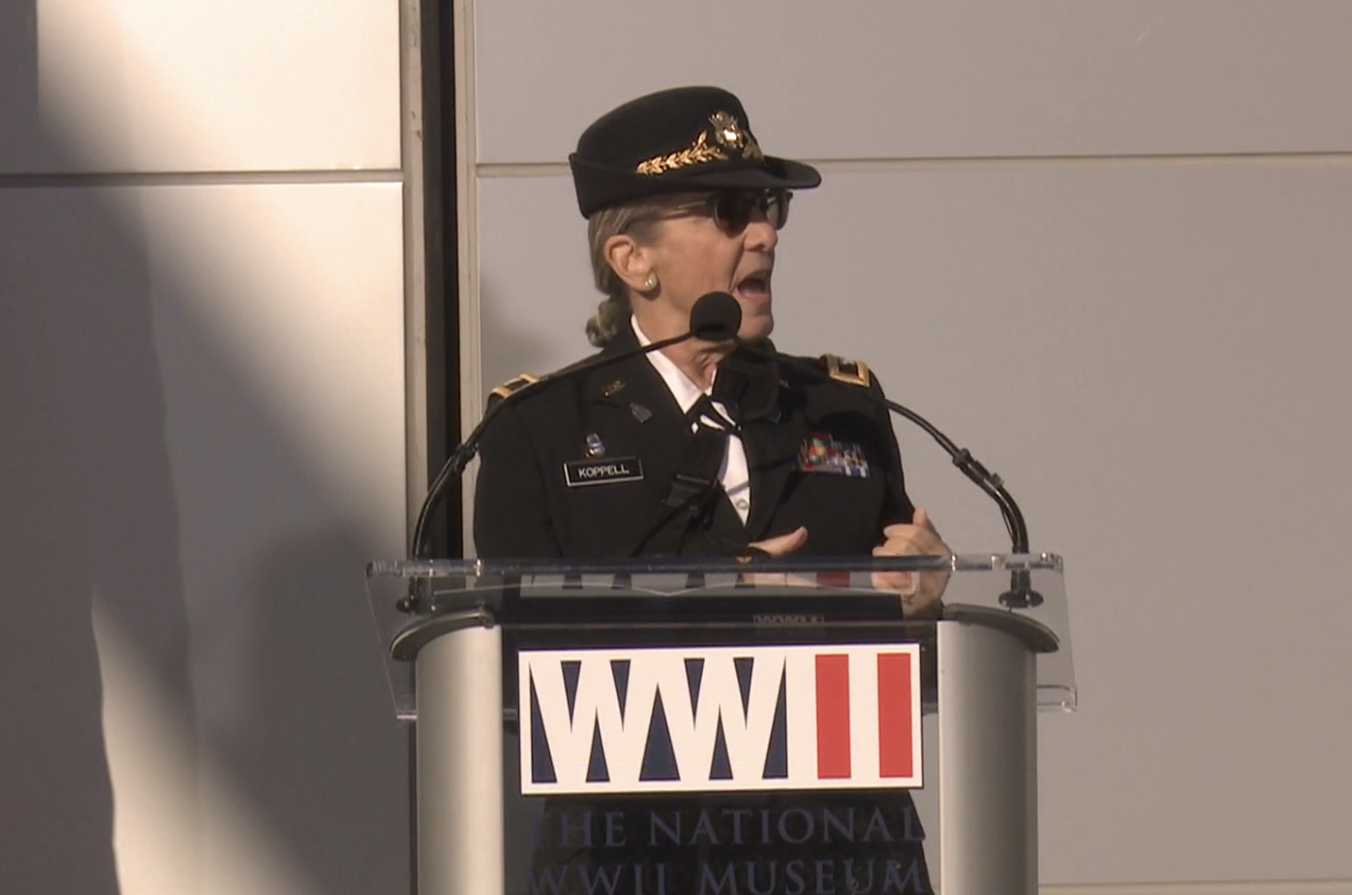
Rabbi Bonnie Koppel, the first female rabbi to serve in the U. S. military. (Screenshot)
The Liberation Pavilion is housed in a three-story building and is designed to tell the story of the final portion of the war, the Holocaust and how the fight against fascism still reverberates for America today. It is the seventh building erected on the campus since the museum was founded more than two decades ago as the D-Day Museum.
Rabbi Bonnie Koppel, the first female rabbi to serve in the United States armed forces, gave an invocation before the crowd of 500 visitors, some of whom were World War II veterans and Medal of Honor recipients, as well as many celebrities and dignitaries.
“This morning we have the honor and privilege of dedicating this Liberation Pavilion, which completes the campus of this incredible institution,” she began. “As a rabbi reflecting on the horror inflicted on the people of Israel during this past month, the role of those who rescued the Jewish people from the reign of Nazi terror has been exponentially highlighted.”
“I am profoundly grateful to the National World War Two Museum for ensuring that the message of ‘Never again!’ will resonate for generations to come,” she continued.
She then turned to honoring those who gave the ultimate sacrifice during World War II in liberating Europe.
“It is with the most profound sorrow that we acknowledge these heroes today,” she considered. “When we contemplate their courage and loss, we are overwhelmed with both humility and pride. We can best honor their memory by renewing our commitment to the ideals for which they lived and died: freedom and justice for all, to government of the people, by the people and for the people, to one nation under God.”
Also speaking at the opening ceremonies were Louisiana Governor John Bel Edwards, museum CEO and president Stephen Watson, former CEO Nick Mueller, who founded the museum with his fellow colleague from the University of New Orleans Stephen Ambrose and movie star and longtime supporter Tom Hanks.
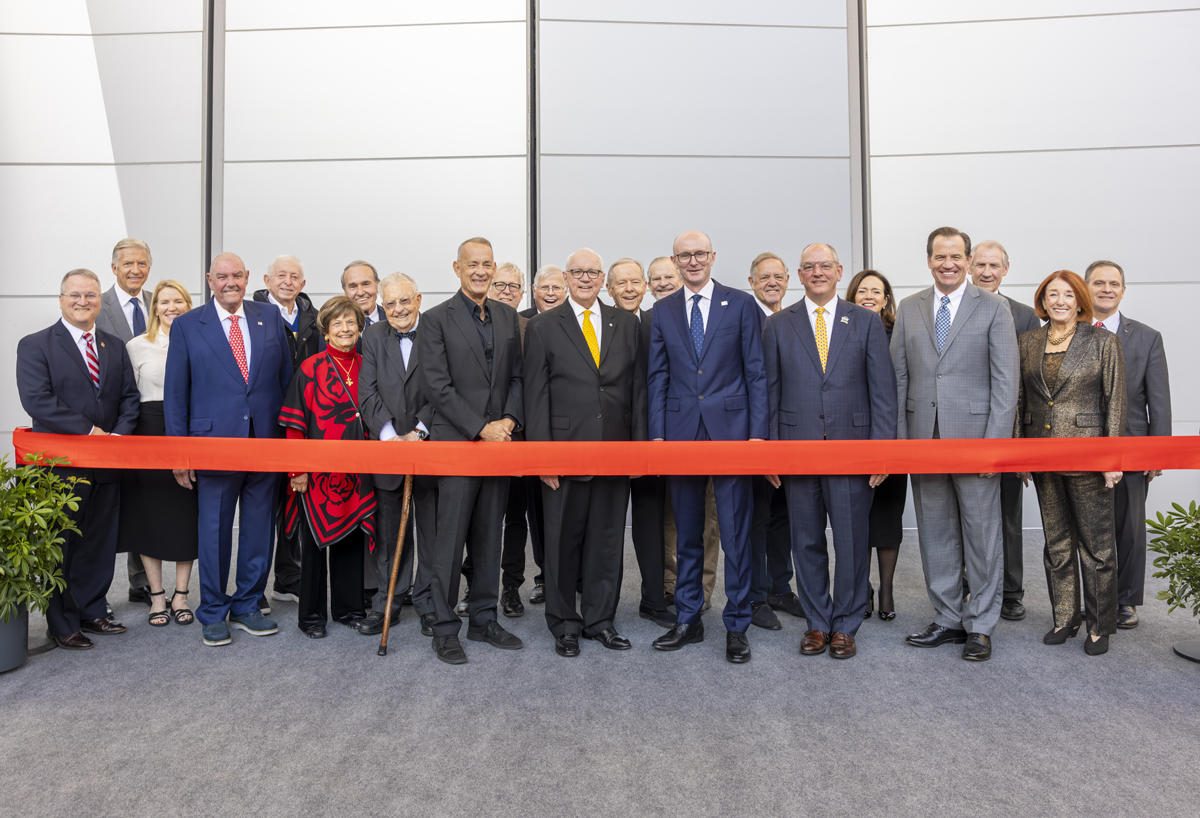
Dedication of the new Liberation Pavilion at The National World War II Museum in New Orleans on Friday, November 3, 2023. (Photo courtesy National World War II Museum)
Hanks acknowledged the sacrifices made by the World War II generation and echoed earlier comments from Watson and Mueller that hope and faith had guided the museum’s master plan imagined more than 30 years ago by Ambrose and Mueller. “Hope and faith and collective effort,” Hanks continued, “may even lead to LSU beating Alabama tomorrow.”
“If that happens, we can accomplish anything we set our mind to,” he concluded to laughter and thunderous applause.
Since the museum opened to the public on June 6, 2000 – the 56th anniversary of the invasion that launched the liberation of Europe from the Axis Powers – it has changed its focus from honoring the local contribution to the war effort in the building of the Higgins boats that allowed the landings to take place to an overall study of World War II.
It was University of New Orleans professor Ambrose who quoted General and President Dwight David Eisenhower as acknowledging the success of the Allies was due to the Higgins boats making amphibious landings possible during D-Day.
The Capstone Liberation Pavilion houses an exhibit about the Holocaust on the first floor. Higher floors house exhibits on the aftermath of World War II and its significance today.
