NCJW installs new officers, board members at year-end event
By DEAN M. SHAPIRO, Special to the CCJN
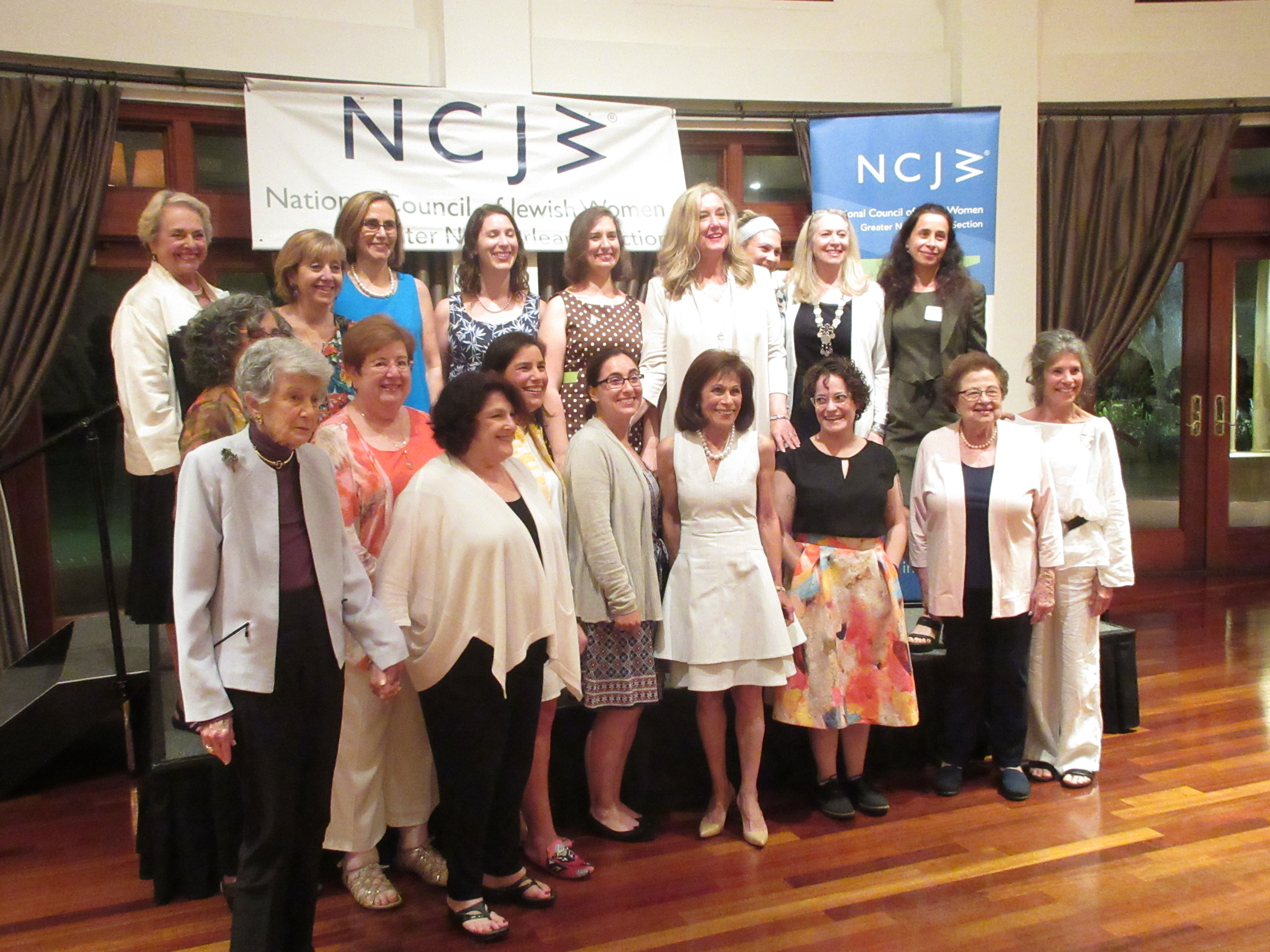
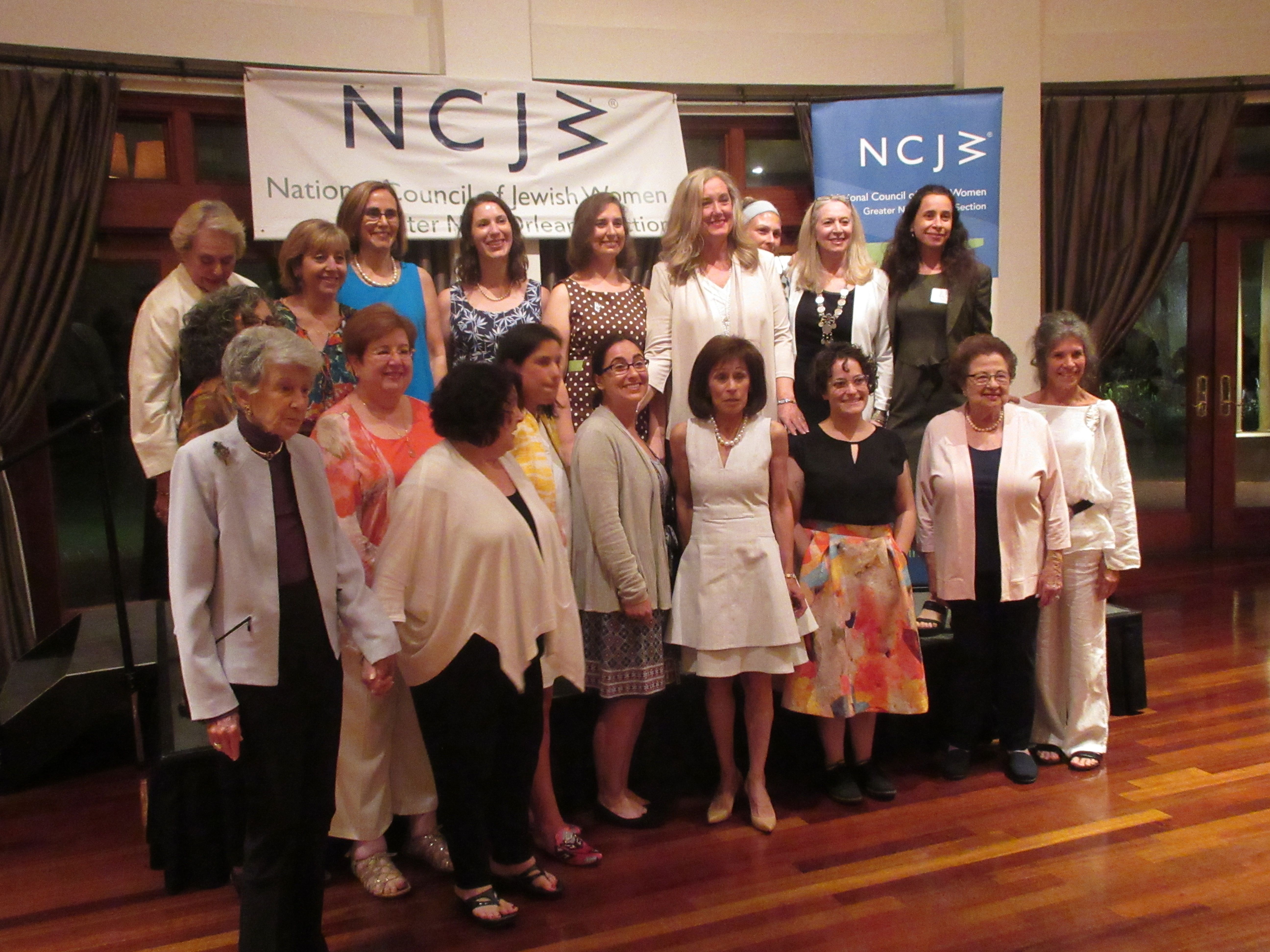
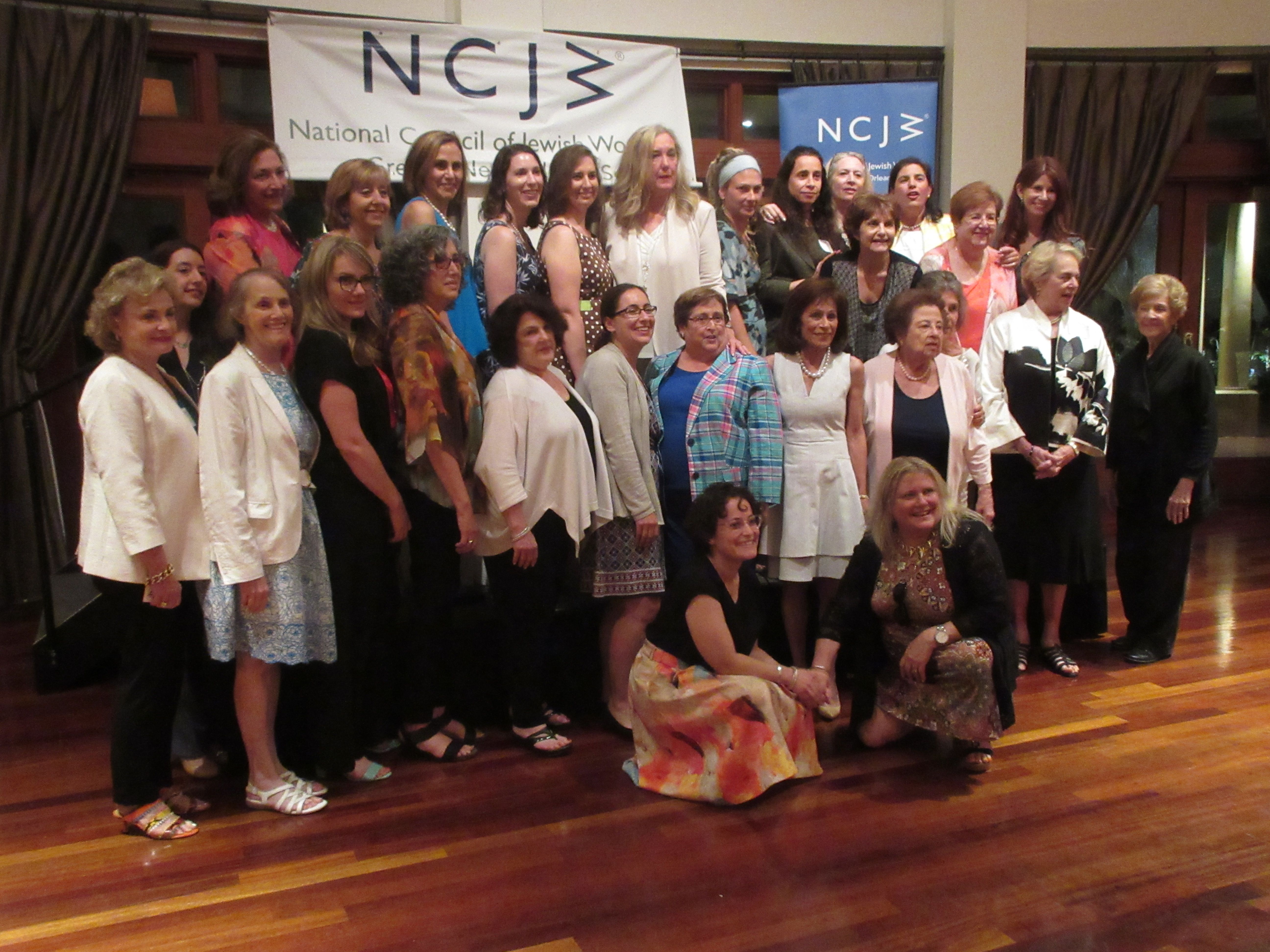
Signing on for another year or, in some cases, another two years, a new slate of officers, board members and nominating committee members was officially installed by the Greater New Orleans Section of the National Council of Jewish Women (NCJW) on Tuesday, May 22.
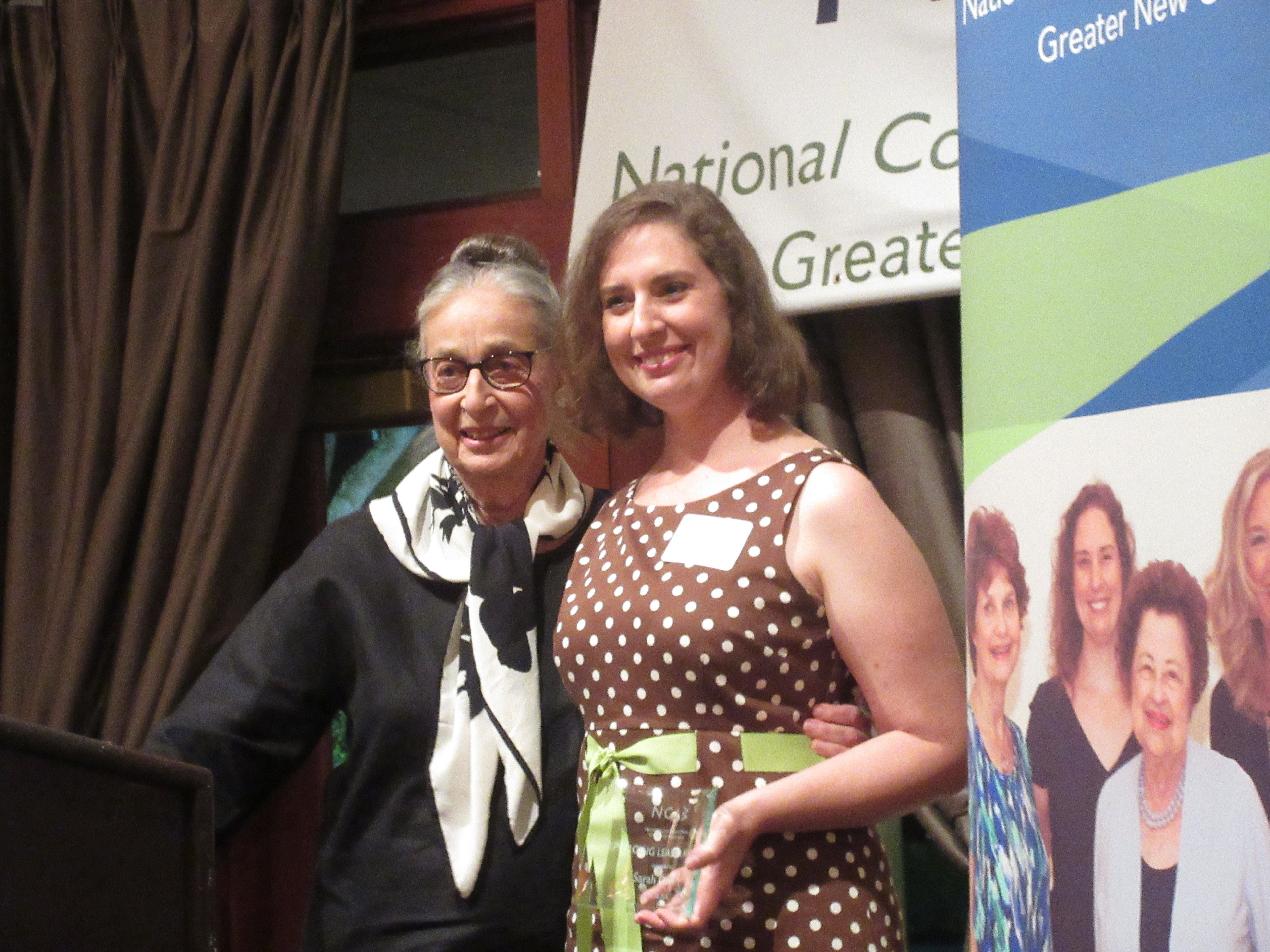
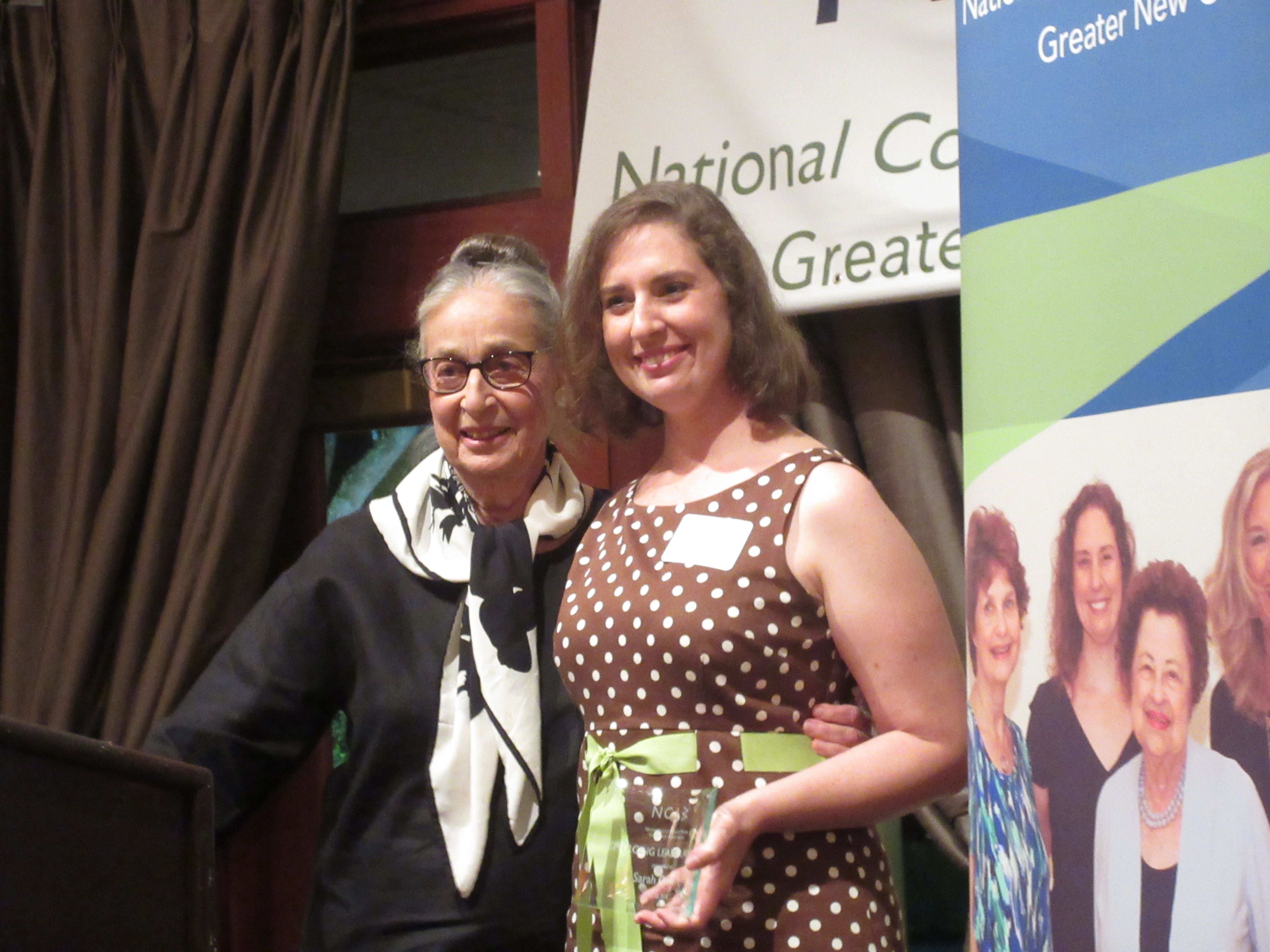
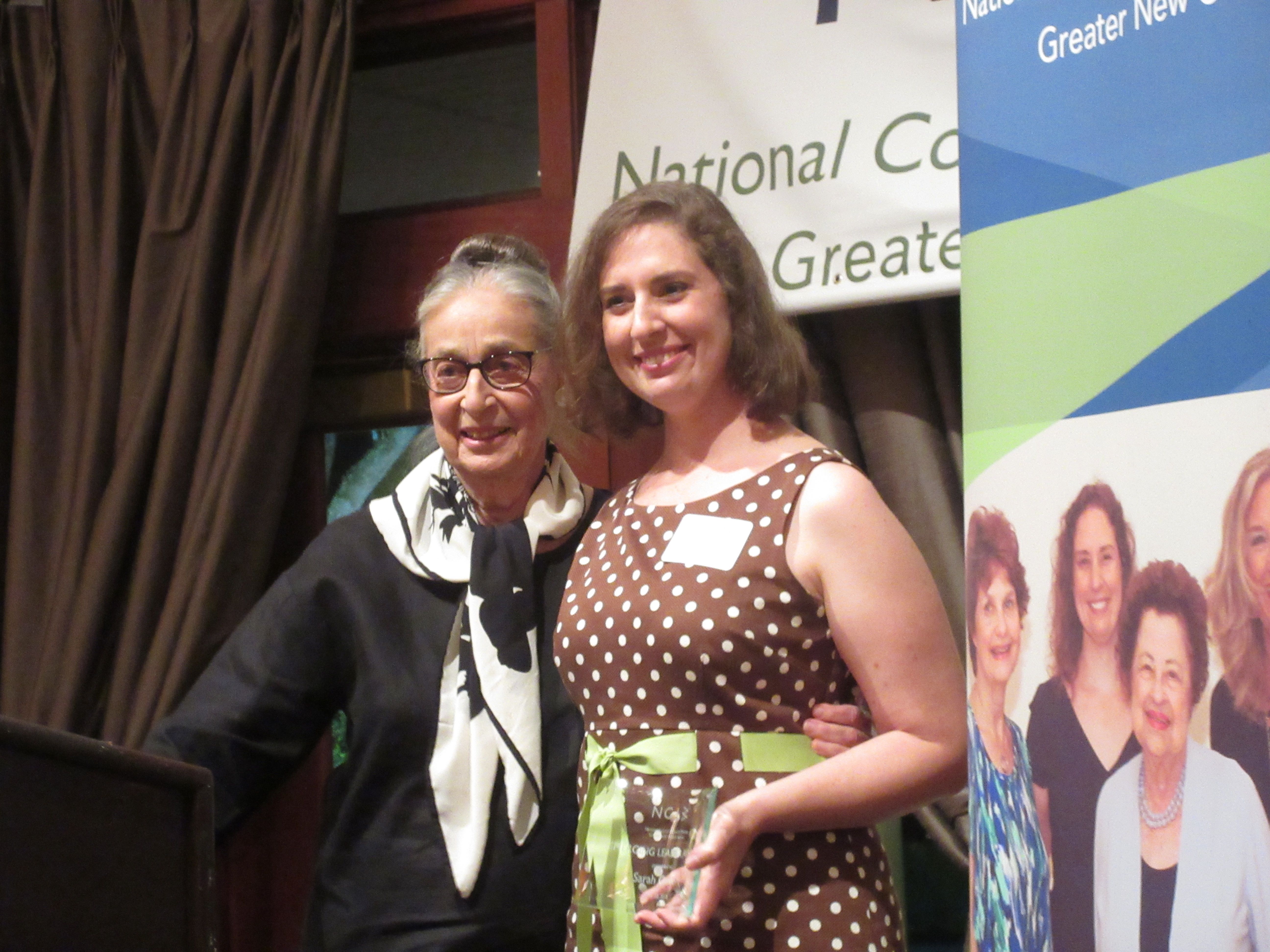
Sarah Covert, right, accepts the Emerging Leader Award from Celia Katz. (Photo by Dean Shapiro)
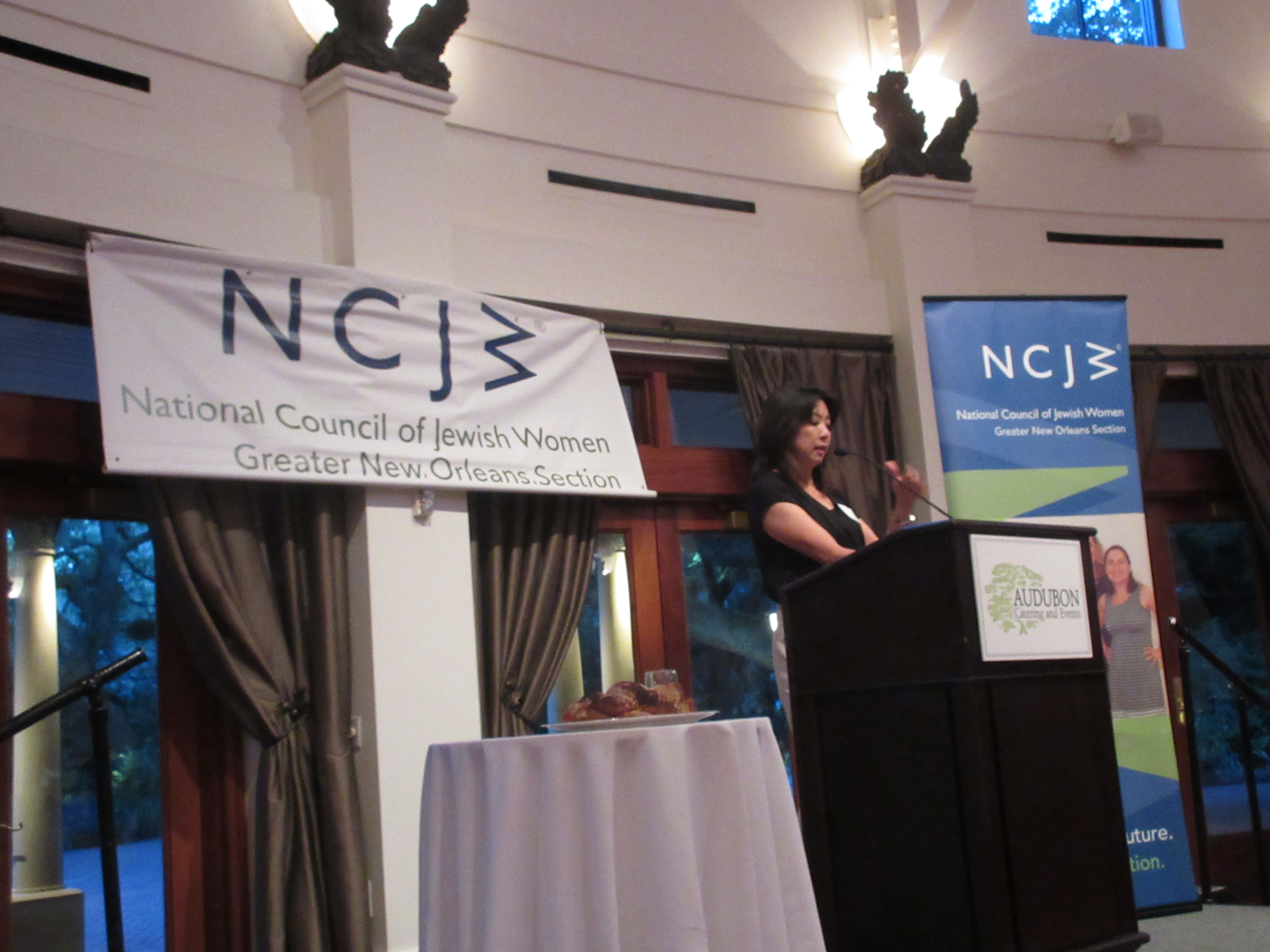
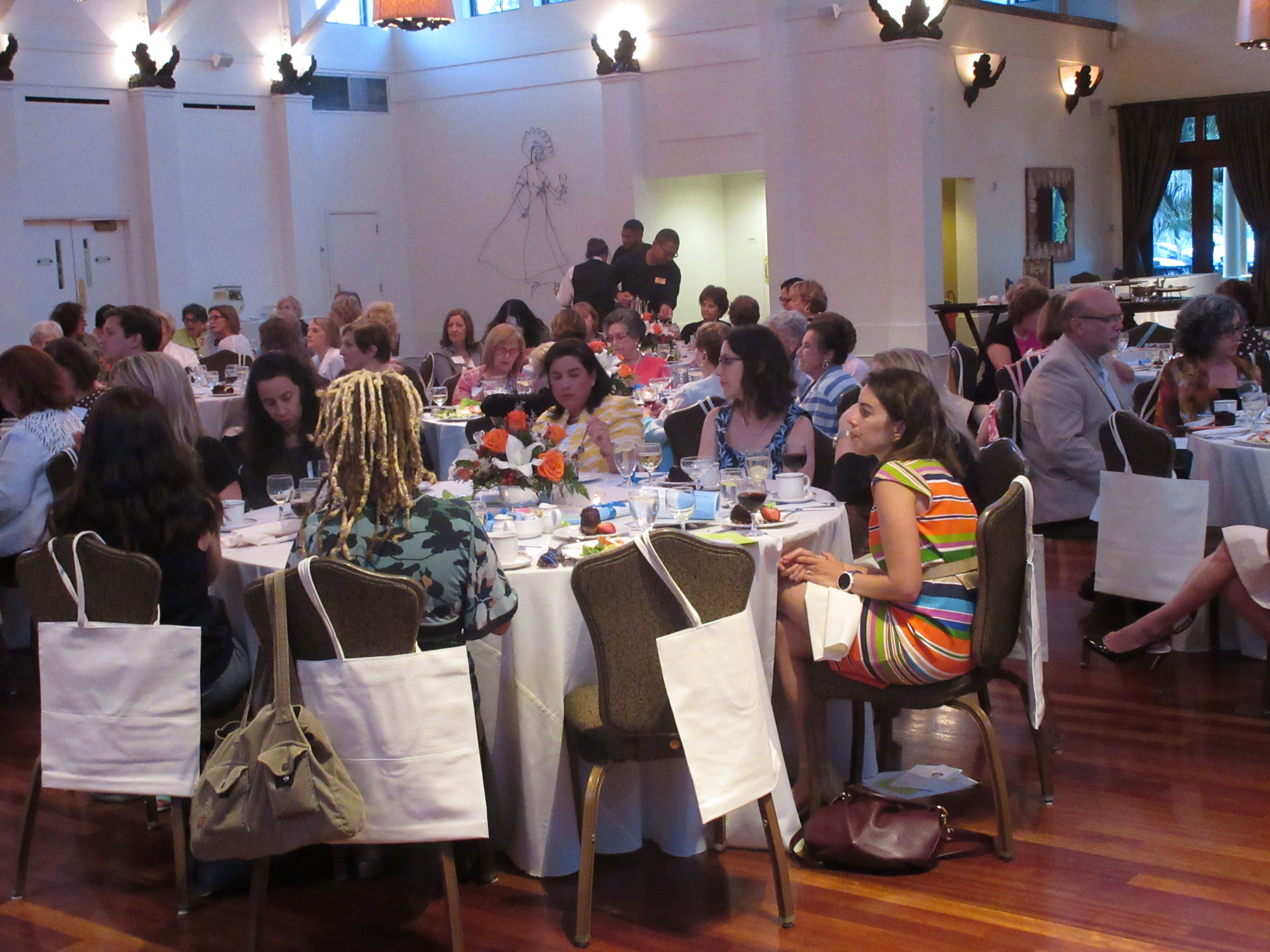
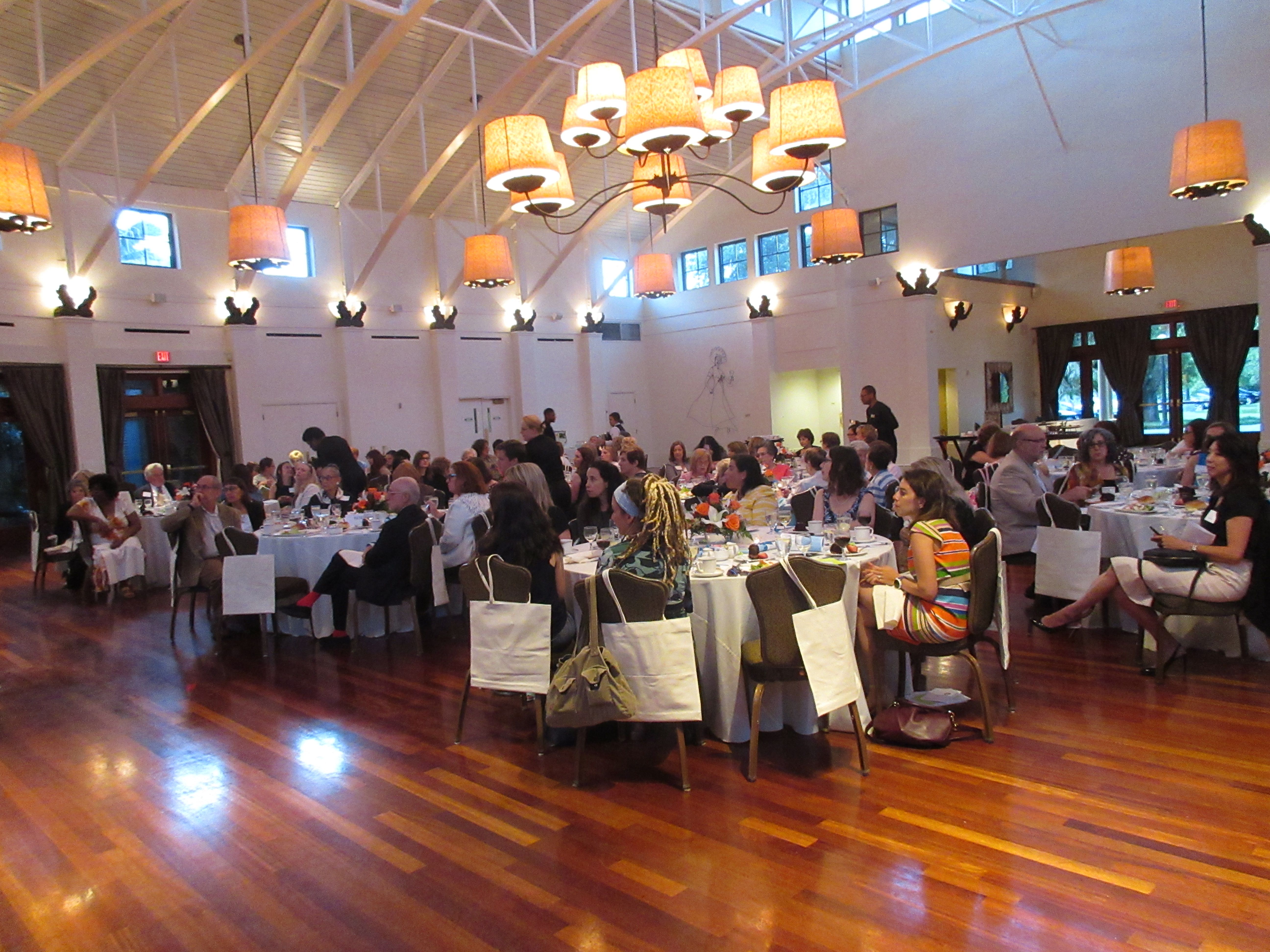
Prior to the installation, those gathered at the Audubon Tea Room for the organization’s annual closing event and dinner heard keynote speeches by two local women holding at-large seats on their respective governing bodies. Newly elected New Orleans City Council member, Helena Moreno, and Jefferson Parish Council member, Cynthia Lee Sheng, spoke about their legislative priorities and gave encouragement to the audience members to speak out and take action on issues that most concern them.
Also on the evening’s agenda was the presentation of the NCJW Emerging Leader Award to Sarah Casey Covert.
NCJW president Barbara Kaplinsky emceed the event and delivered the section’s annual report. Ina Davis, past president and NCJW Washington Office Policy Liaison, formally installed the officers, board members and nominating committee members. Sue Singer, program co-chair, introduced the guest speakers.
In her opening remarks, Moreno, a former investigative reporter for WDSU-TV and State Representative from District 93, spoke about her experiences in the Louisiana Legislature and some of the battles she fought for issues she felt most strongly about. “Over the eight years I spent in the legislature I focused on a variety of issues from criminal justice reform to the opioid crisis, healthcare, child education and improvement of care for the disabled and the elderly, just to name a few.”
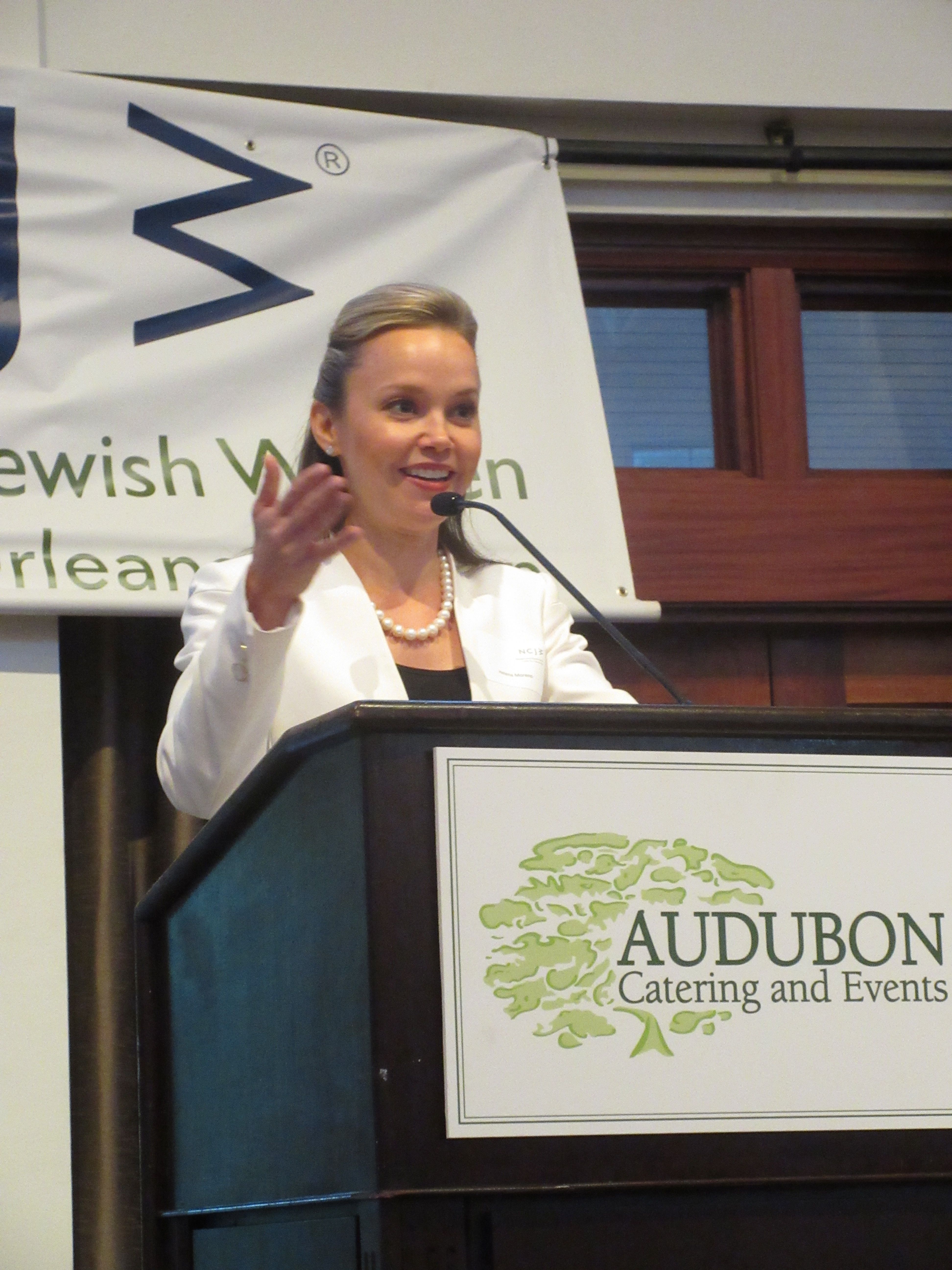
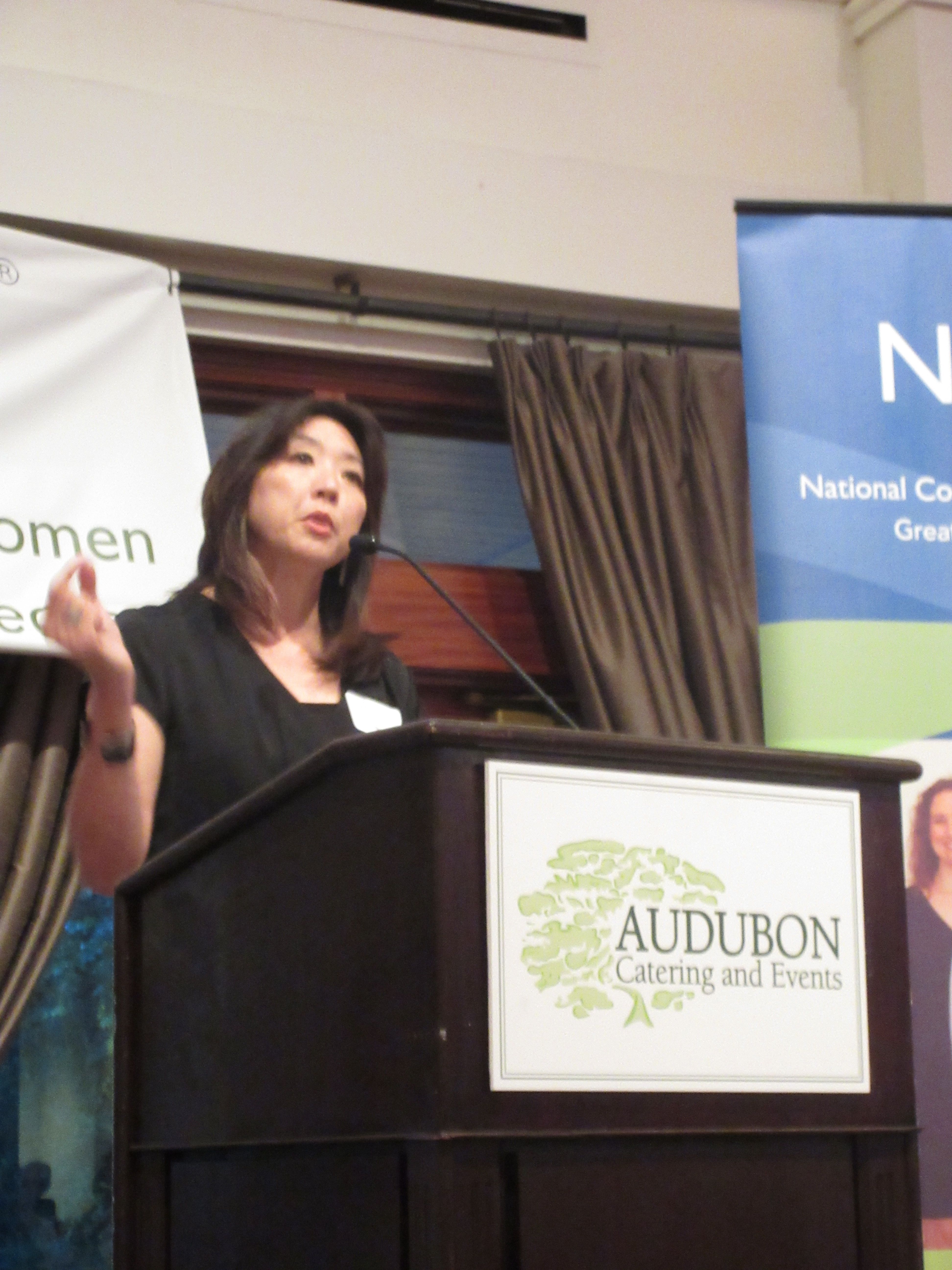
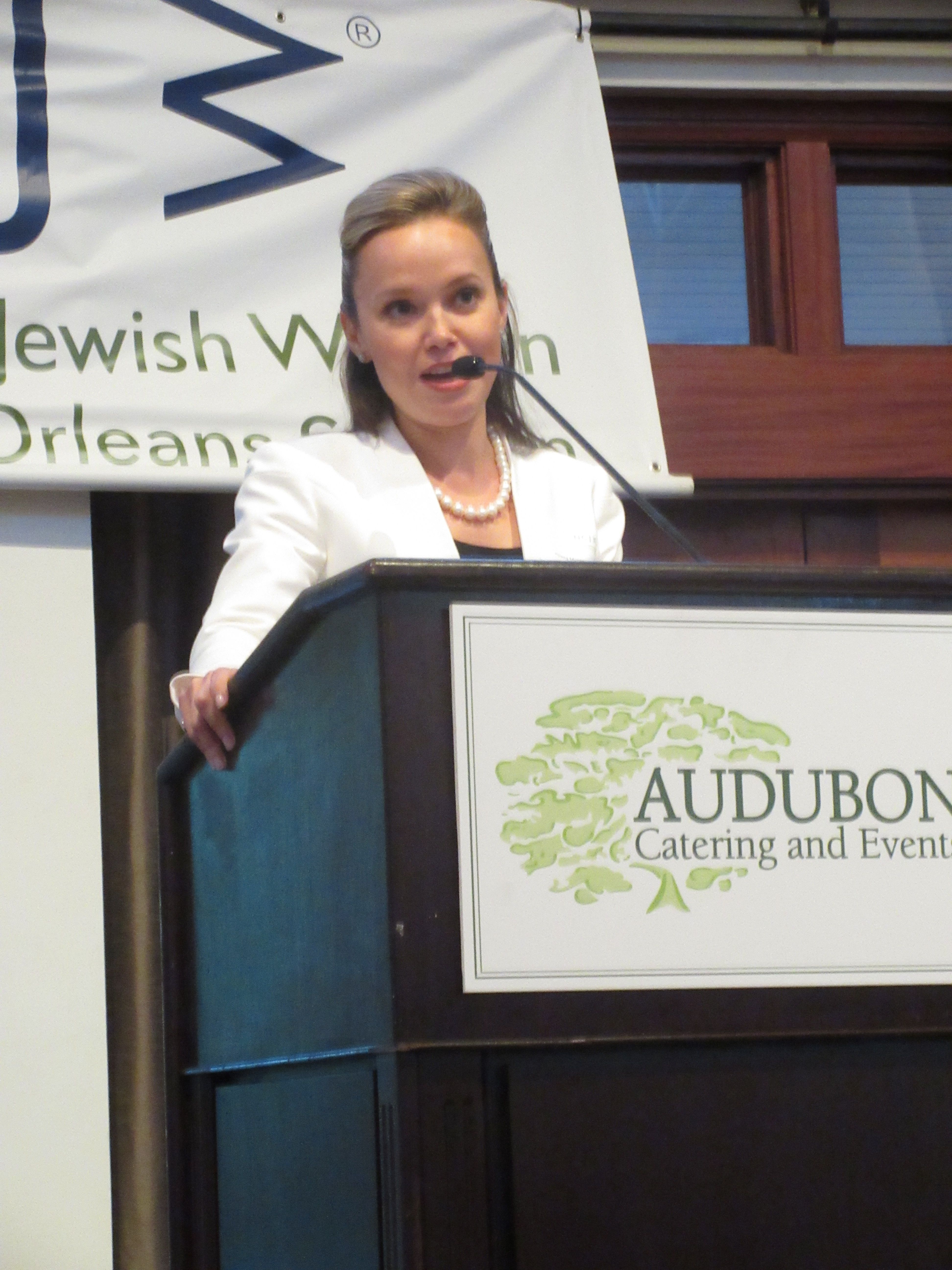
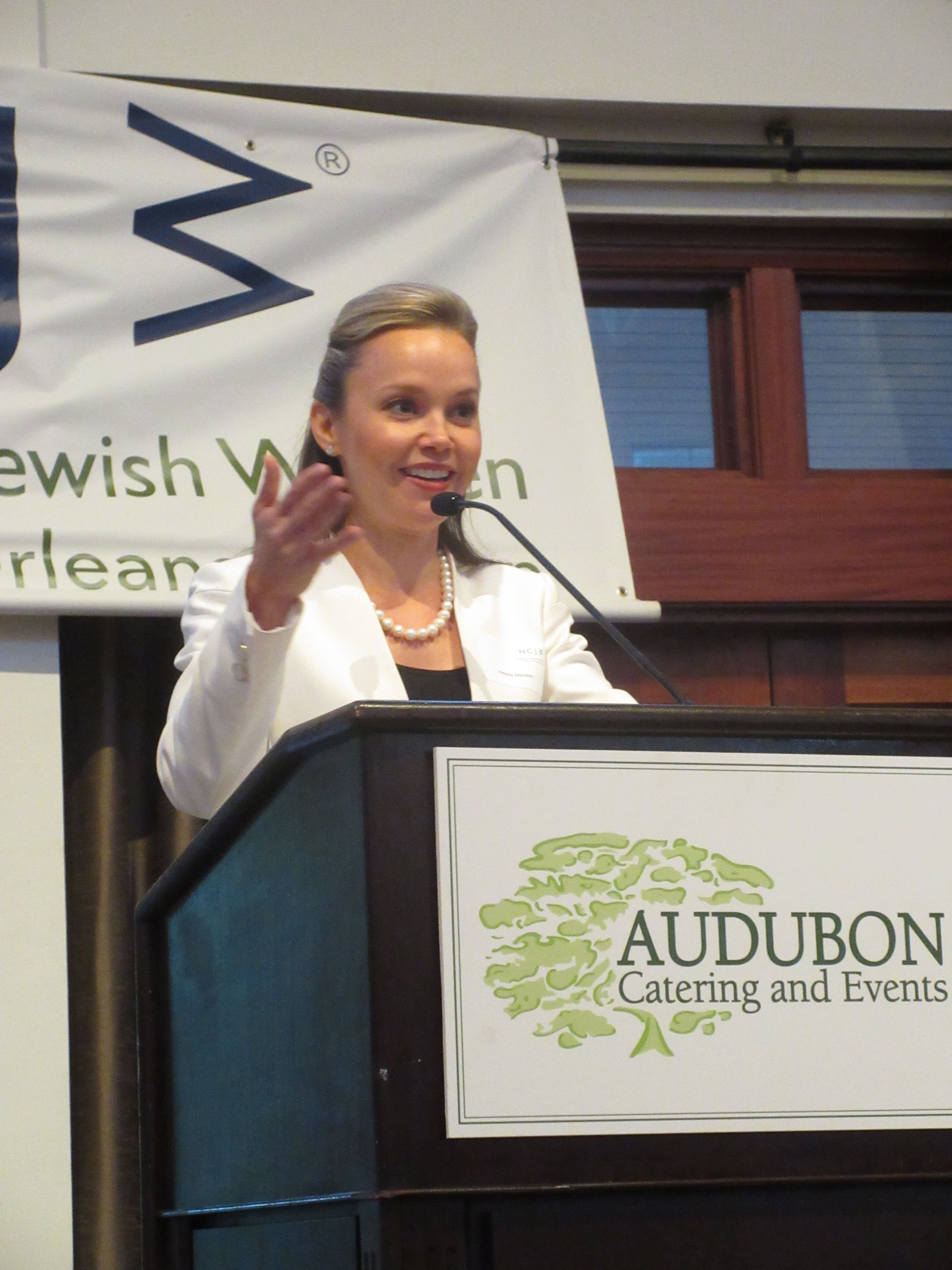
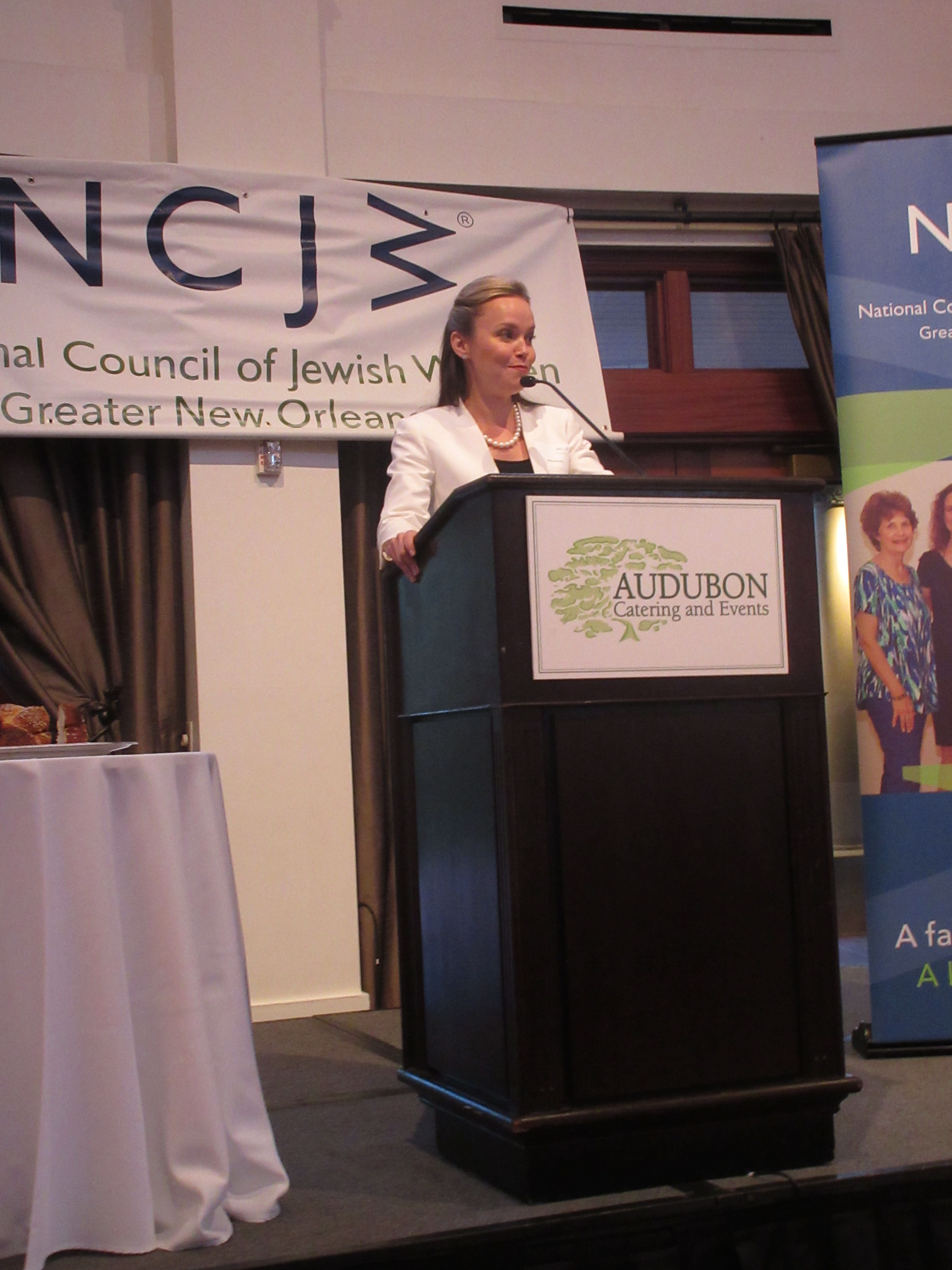
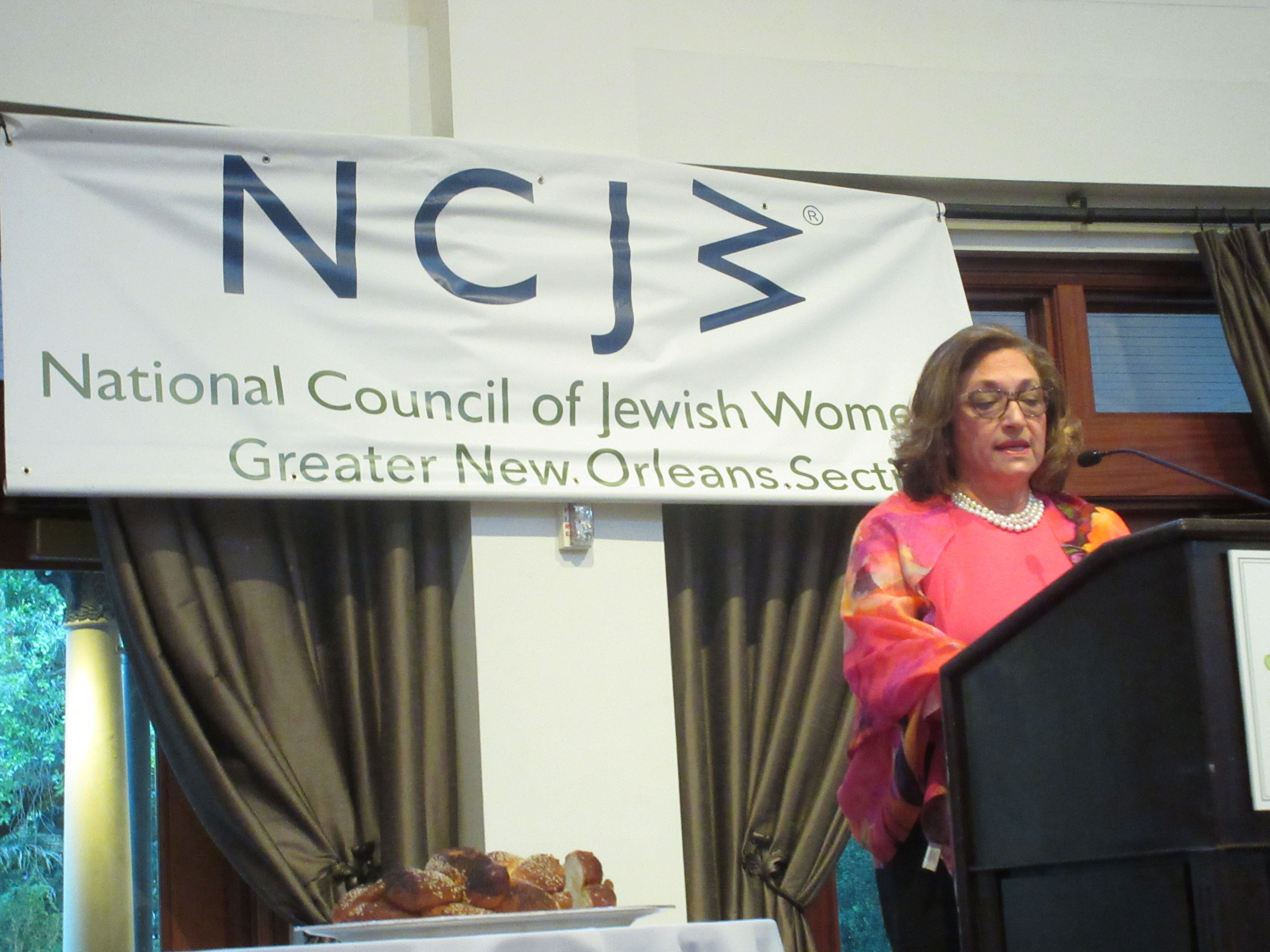
City councilperson-at-large Helena Moreno speaks about her work with the Louisiana Legislature. (Photo by Dean Shapiro)
But an issue that was especially close to her heart was that of rectifying the way the justice system treated women who had been physically or sexually abused. Moreno detailed how she focused on efforts to change the laws and mandate stronger punishments for those convicted of domestic violence offenses.
“When I entered the legislature I really didn’t have a lot of these issues in front of me,” Moreno said. “It wasn’t until my fourth year in the legislature in 2014 that I had two women (United Way’s Charmaine Caccioppi and Kim Sport) come into my office and want to specifically talk about domestic violence laws and some of the loopholes that were in them.
“Both of them sat across from me and put this huge stack of paper in front of me and it was all these different statutes and bills that they had drafted,” Moreno continued. “I started to go through all the different proposals of what they wanted to change. These included enhanced penalties for domestic violence offenders, firearms rules, protective orders and provisions for immediate divorce from those convicted of domestic violence. I told them this would be a very heavy lift, especially the firearms prohibition because, as you all know, the NRA is a very powerful lobby. I have seen one firearms prohibition after another die in the legislature.”
Moreno said that, with assurances from Caccioppi and Sport they would stand firmly behind her, she proceeded to introduce legislation they requested. To show widespread support for these bills, the two women rallied United Way members from all over Louisiana to pack the legislative committee hearing chamber. The massive turnout convinced the Criminal Justice Committee to pass the five bills Moreno introduced and all five of them were unanimously passed by the state legislature, she told the audience.
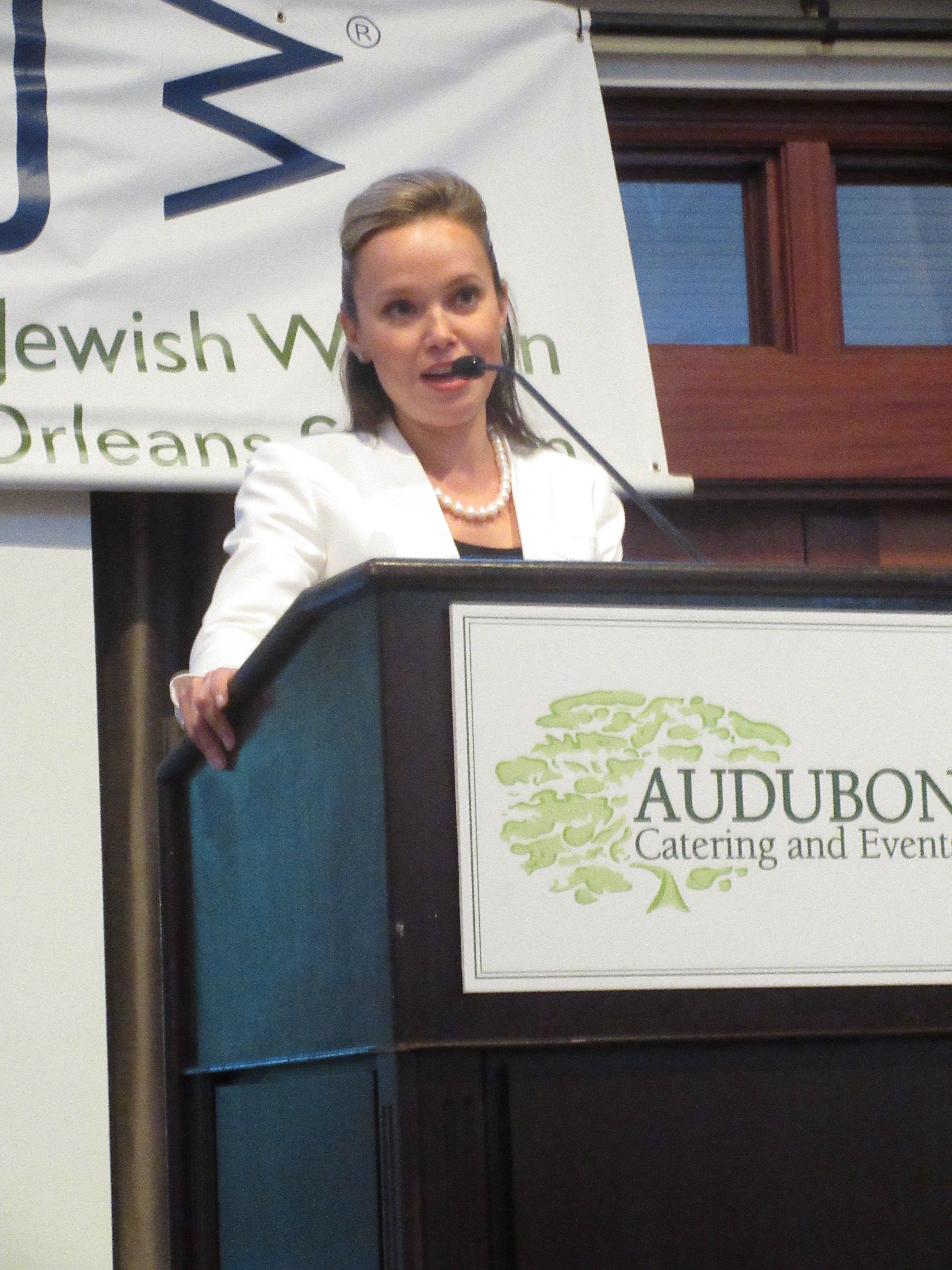
Helena Moreno at NCJW event at Audubon Tea Room on May 22. (Photo by Dean Shapiro)
“At the end of the day, we created the strongest domestic violence laws in the country,” Moreno proudly declared. “And so what these two women did was, by being ever-present and working so hard, they ended up being change-makers.”
From that point, Moreno began focusing on the laws governing sexual assault which, at that time was only classified as a misdemeanor for the first offense. She also joined forces with an advocacy organization to attain state funding sources to help sexual assault victims pay for medical exams and treatments. To that end she recalled bringing a sexual assault victim into the hearing room of the House Appropriations Committee to testify about her traumatic experiences.
“Just a few weeks later (after the assault), she received thousands of dollars in medical bills that she could not pay for,” Moreno said. “She brought the stacks of bills with her (to the hearing) and she looked every member of the Appropriations Committee in the eye as she told her story. By the time she finished there was not one member of the committee who was going to vote against her. Her story made a difference. She was also a change-maker.”
In her new position on the New Orleans City Council, Moreno pledged to continue fighting for the same reforms she advocated while serving in the legislature, in addition to tackling issues unique to the city like crime, re-entry programs for those released from incarceration, flood protection and upgrading the Sewerage & Water Board.
“The more I dig into it the more I realize it (the S&WB) is truly broken from top to bottom and there are unbelievably large numbers of improvements that are necessary,” Moreno said. “We really have to work on upgrading a lot of the inefficiencies in technology, as well as improving communications and engagement with the public.”
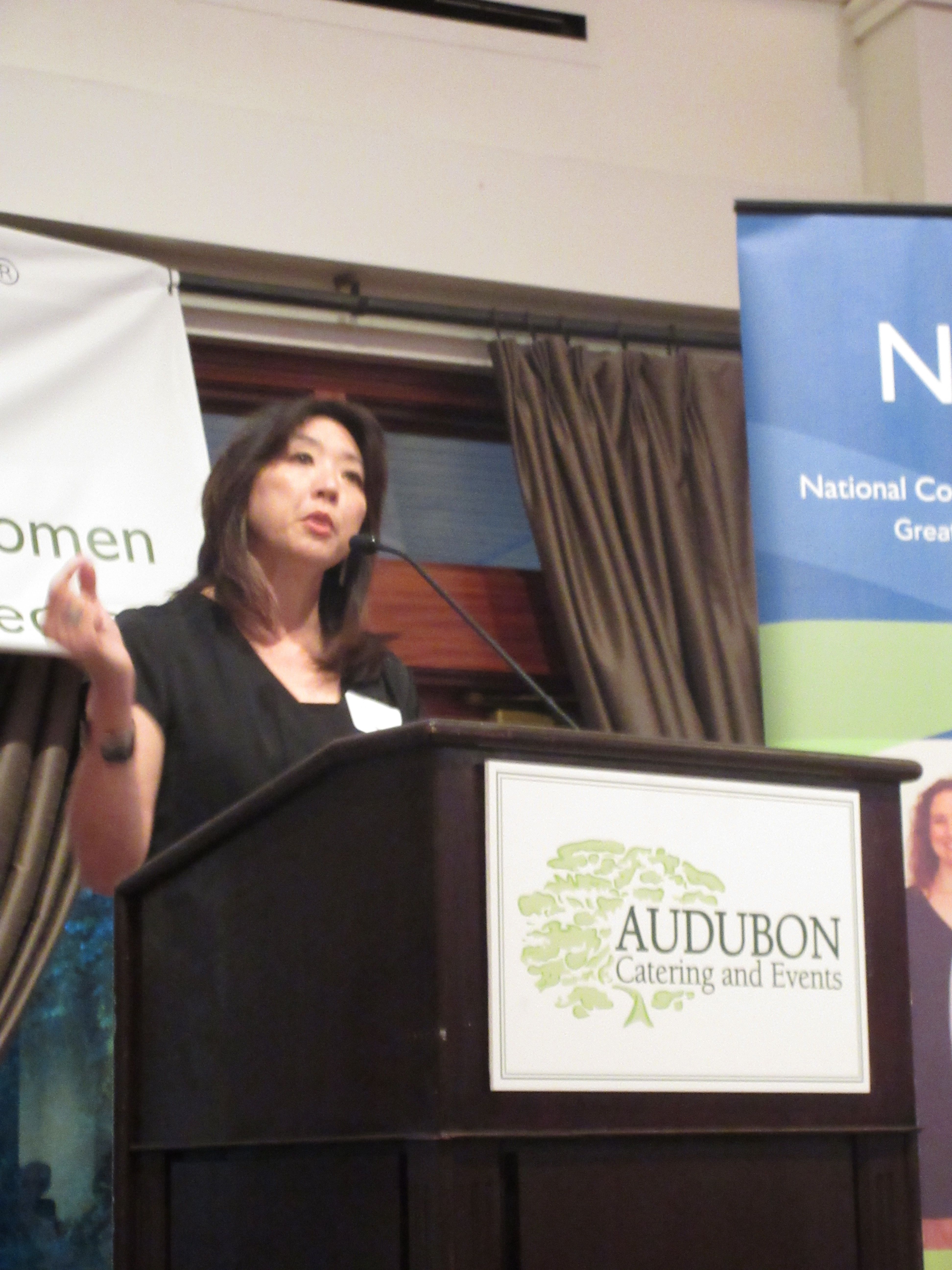
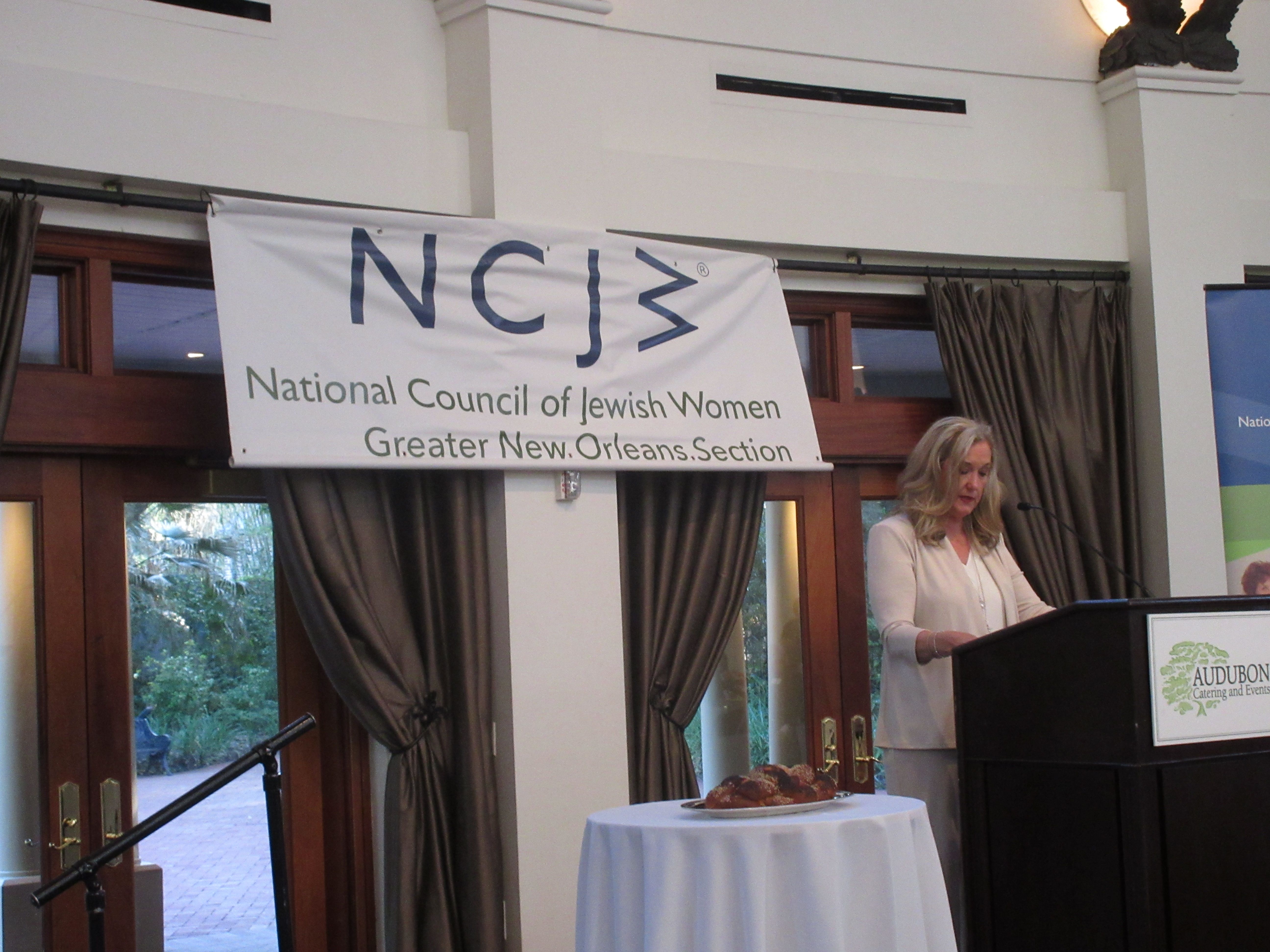
Jefferson Parish Councilmember Cynthia Lee Sheng. (Photo by Dean Shapiro)
Moreno called on the S&WB to make better use of social media to immediately alert citizens about dangerous flooding conditions and other issues relating to water quality.
Concluding her remarks, Moreno said, “I’m going to be pushing a very strong agenda over the next few years. I’m going to need all of you to help me advocate on these issues.”
Up next, Sheng, the daughter of the late, longtime Jefferson Parish Sheriff Harry Lee and a Jefferson councilmember since 2009, spoke briefly about her strong affinity for issues related to immigration, being the descendent of immigrants from China. After attaining a Masters Degree in Public Administration from George Washington University and graduating from the Federal Law Enforcement Training Center, she served ten years as a federal law enforcement officer with the Immigration and Naturalization Service in Washington, Baltimore and Newark.
Tying in the immigration theme with the American Jewish experience, Sheng launched into a seven-minute history discussion about how the game of mahjong traveled from its ancient origin in China to the U.S. where it became a favorite pastime in Jewish communities, especially among Jewish women. She cited this as an example of how the two cultures merged through a byproduct of the immigration process.
During her annual President’s Report, Kaplinsky announced that the state legislature recently passed House Bill 265 which restores voting rights to formerly incarcerated citizens and is expected to be signed into law by Governor John Bel Edwards next week. The new law will go into effect in March 2019. Kaplinsky praised NCJW Advocacy Chair Miriam Waltzer and NCJW State Policy Advocate Maddie Fireman for their work in pushing for the bill’s enactment.
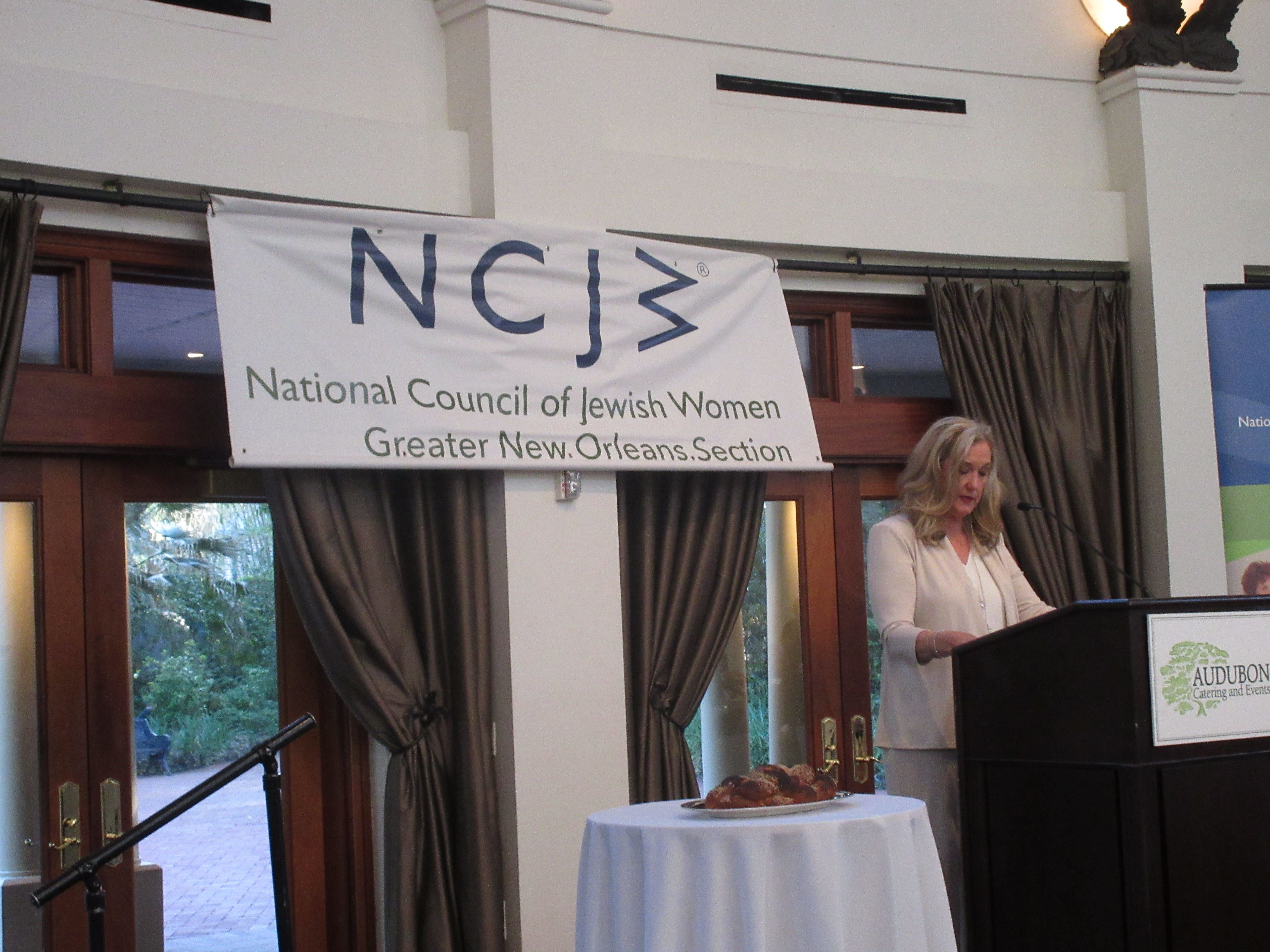
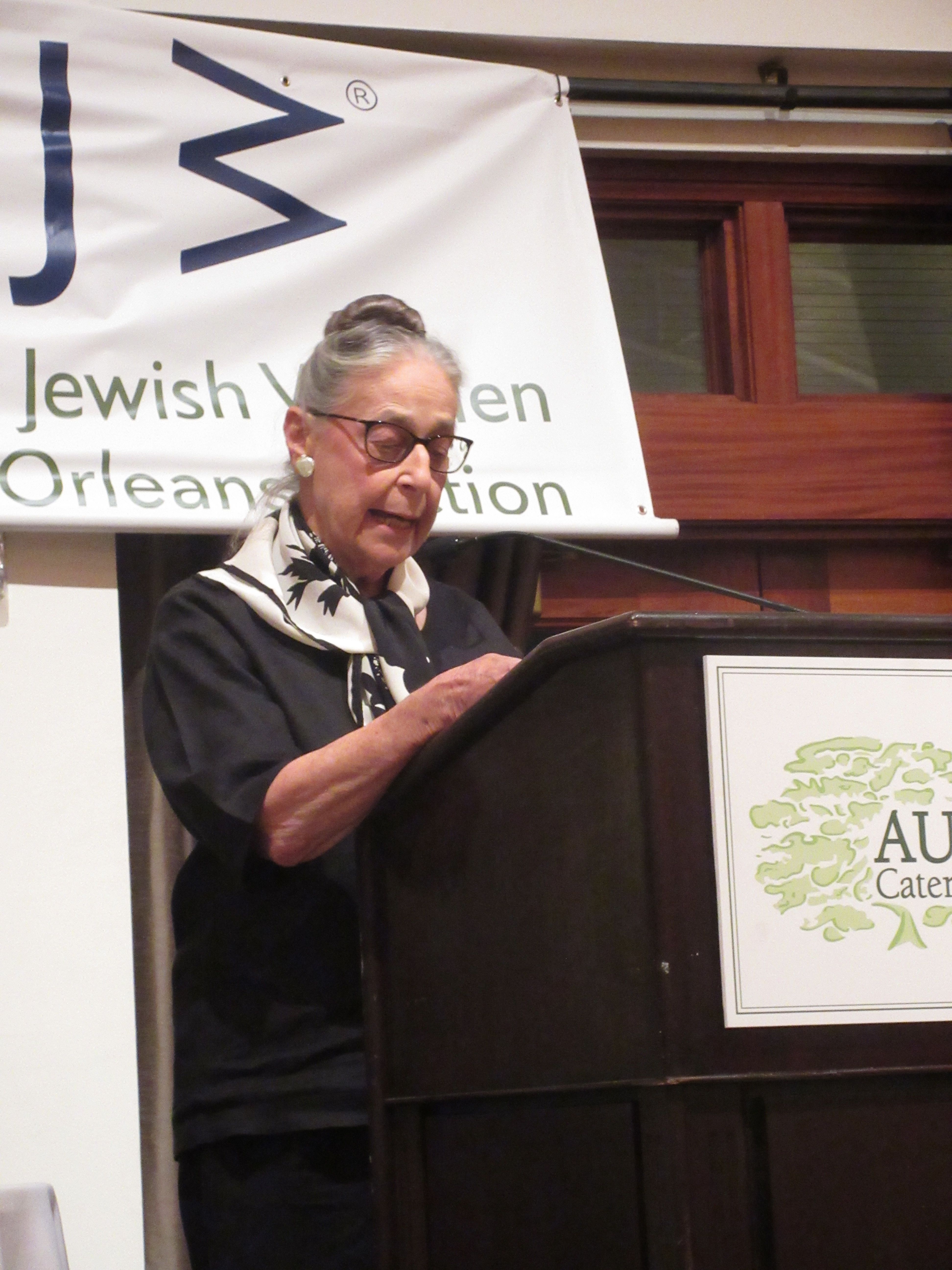
NCJW Section president Barbara Kaplinsky. (Photo by Dean Shapiro)
“Potentially this means many thousands of new Louisiana voters,” Kaplinsky said. “Now we’re going to have to work to get all of them registered. As Helena said, this victory is a demonstration of what can happen when we educate, engage and mobilize our constituents to contact their senators and representatives.”
Next up on the agenda, Celia Katz presented the Emerging Leader Award to Sarah Covert who, she said, “has become a leader, dedicated to advancing the well-being of women, children and families by working with like-minded people in a volunteer capacity.” Covert, a vice president on the NCJW Executive Committee, was further praised for “a career dedicated to improving the quality of life for those in need.”
In the evening’s final order of business, presided over by Section Past President Susan Kierr, the slate of officers, board members and nominating committee members was put up for a vote after two nominations were taken from the floor and unanimously approved by the membership. Liz Yager was elected to fill a vacancy for a fifth vice president on the Executive Committee and Gail Chalew was elected to fill the vacancy created by Yager’s elevation to the Executive Committee. Chalew will serve during the 2018-20 term.
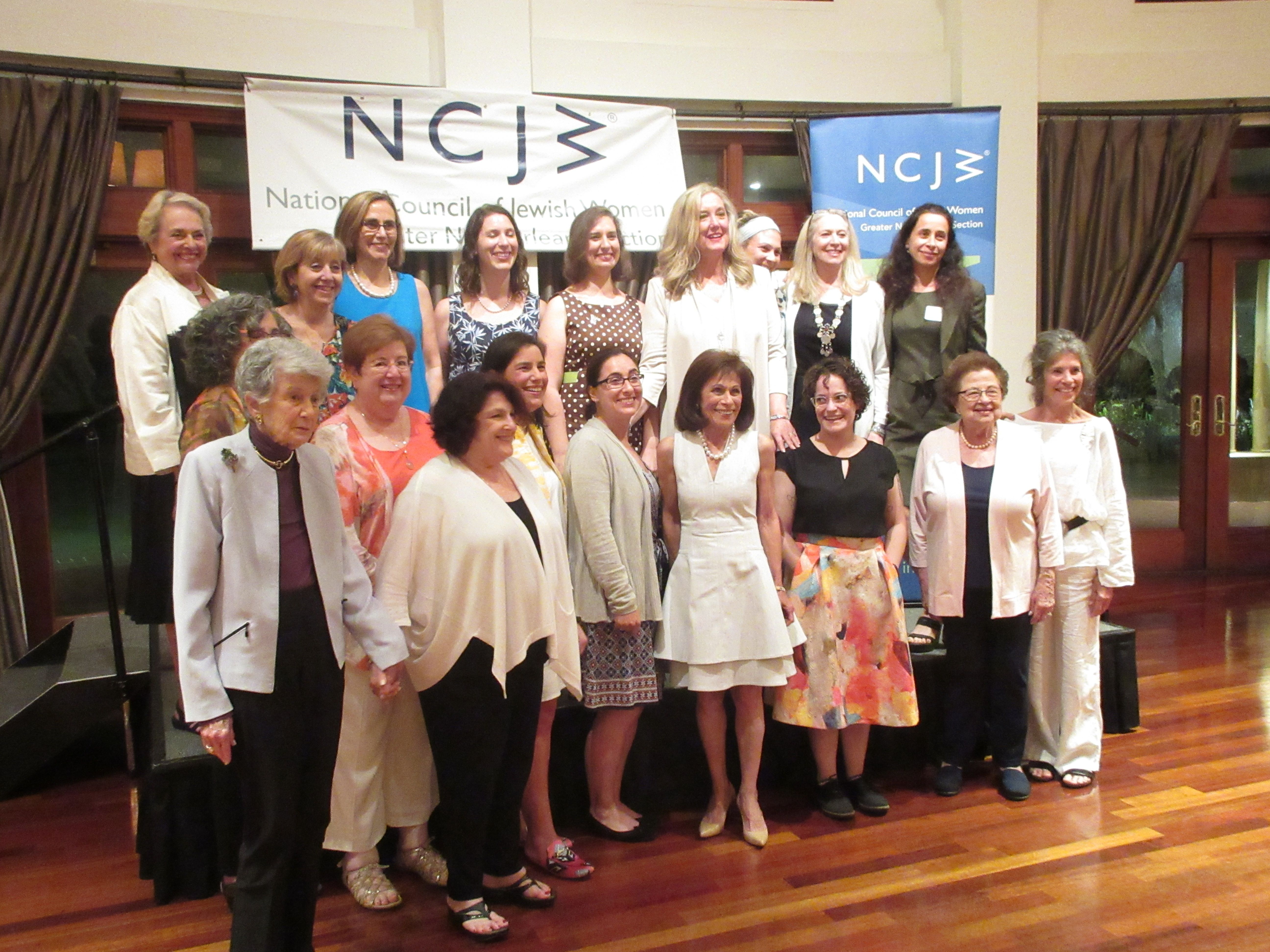
Former NCJW Section presidents and current president Barbara Kaplinsky. (Photo by Dean Shapiro)
Continuing the second year of their two-year terms are Section Executive Committee members are Kaplinsky, president; Kathy Shepard, treasurer; Tricia Kirschman, assistant treasurer; Jennette Ginsburg, financial secretary; Fran Dinehart, recording secretary; Gail Pesses, corresponding secretary; and Rollie Rabin, vice president. Other vice presidents continuing for another two-year term are Covert and Barbara Greenberg and beginning her first two-year term through 2020 is Simone Levine.
Nominated and elected to their second two-year terms on the Board of Directors were Fireman and Dana Keren. Nancy Timm, Ann Thompson and Karen Sher were nominated and elected to their first two-year terms. Other board members serving through 2019 and approved by voice vote were Robin Giarusso, Patty Barnett, Millie Kohn, Jenny Nathan Simoneaux, Robin Goldblum and Eileen Wallen.
The 2018-19 Nominating Committee was also approved for a unanimous vote. Chaired by Florence Schornstein, its ex-officio members are Kierr and June Leopold. Committee members from the Board of Directors are Barnett, Pesses, Shepard and Simoneaux and representing the general membership on the committee are Vivian Cahn, Phyllis Feran, Joyce Pulitzer and Waltzer.
Following the election, the committee and board members were formally installed by Davis. Praising members of the outgoing leadership and wishing the newly elected officials well, she read several quotes from NCJW founder Hannah G. Solomon.
“Today, the reported news, both real and fake, is filled with threats of violence, war and retribution,” Davis said. “Over a hundred years ago, Hannah said, “I have long dreamed about being able to plant a better world, one promising freedom from the tyranny of wars forever.” What a foundation she created for us,” Davis concluded.