Son of decorated Nazi speaks of his Jewish faith
By ALAN SMASON
In addition to the annual remembrance honoring the six million Jewish souls slain in the Holocaust, the 2016 Yom Hashoah Community-Wide Holocaust Memorial Program offered a short work from a children’s opera and the unlikely story of a son of a decorated Nazi hero who became a righteous convert to Judaism.

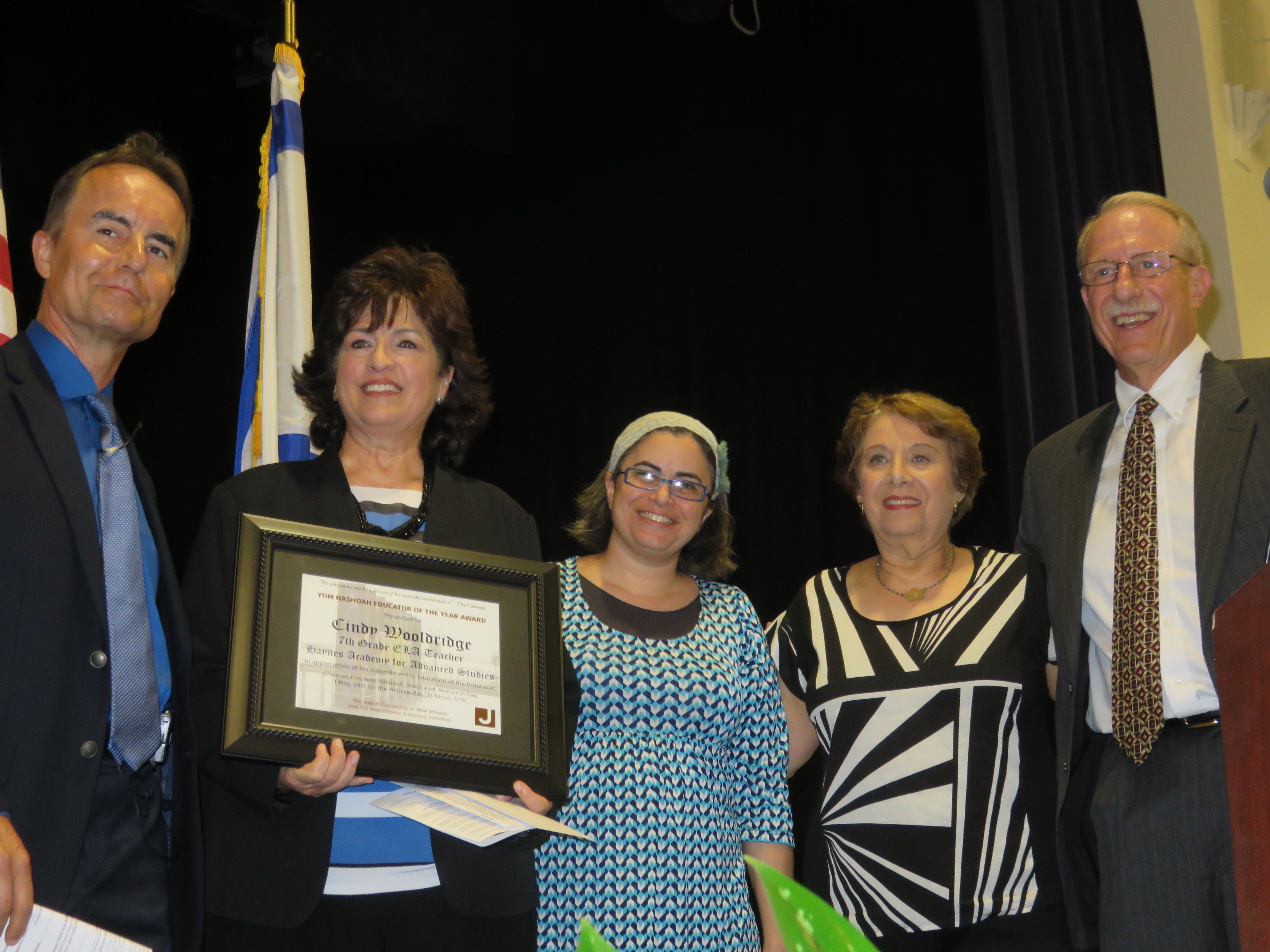
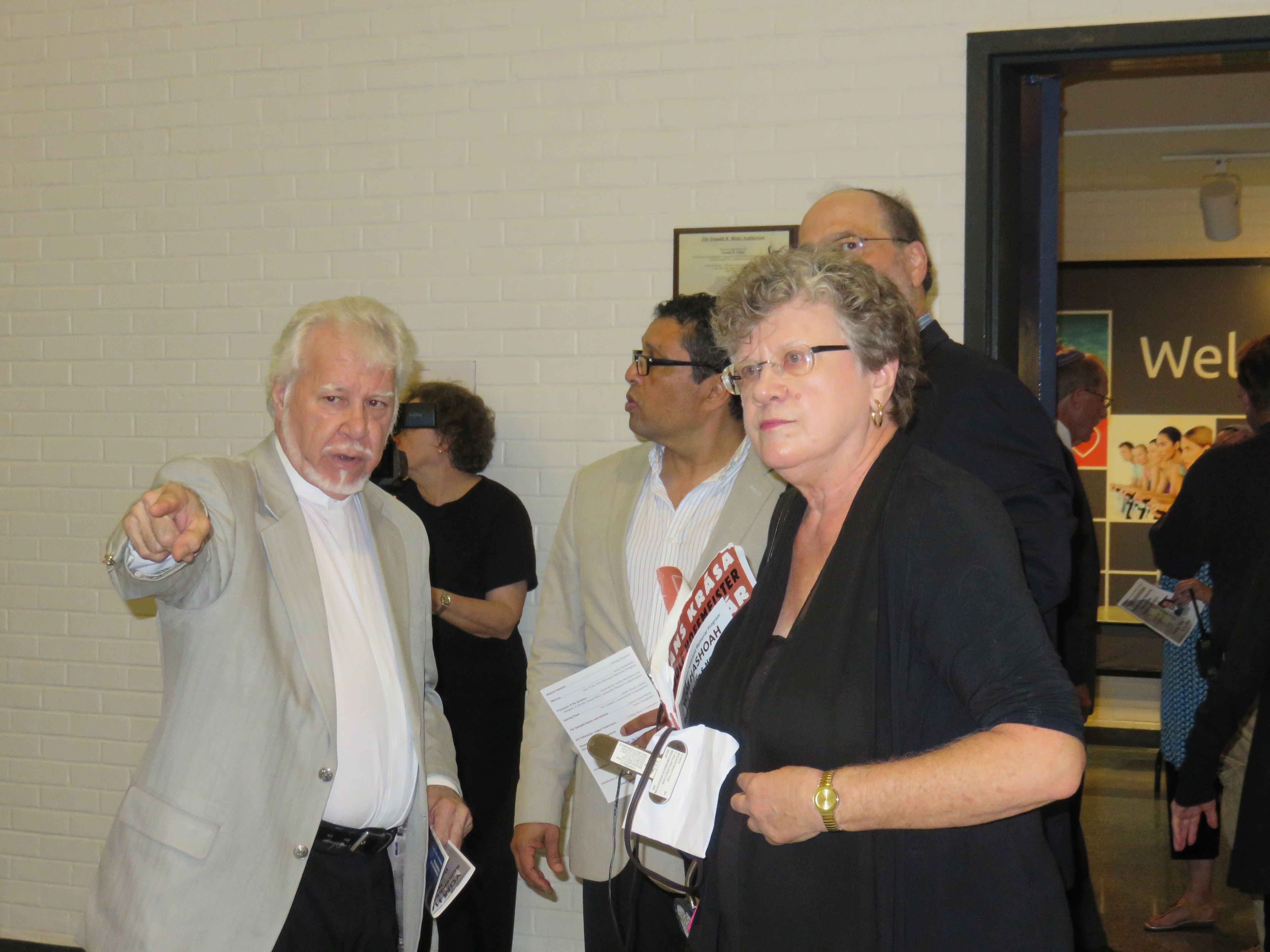
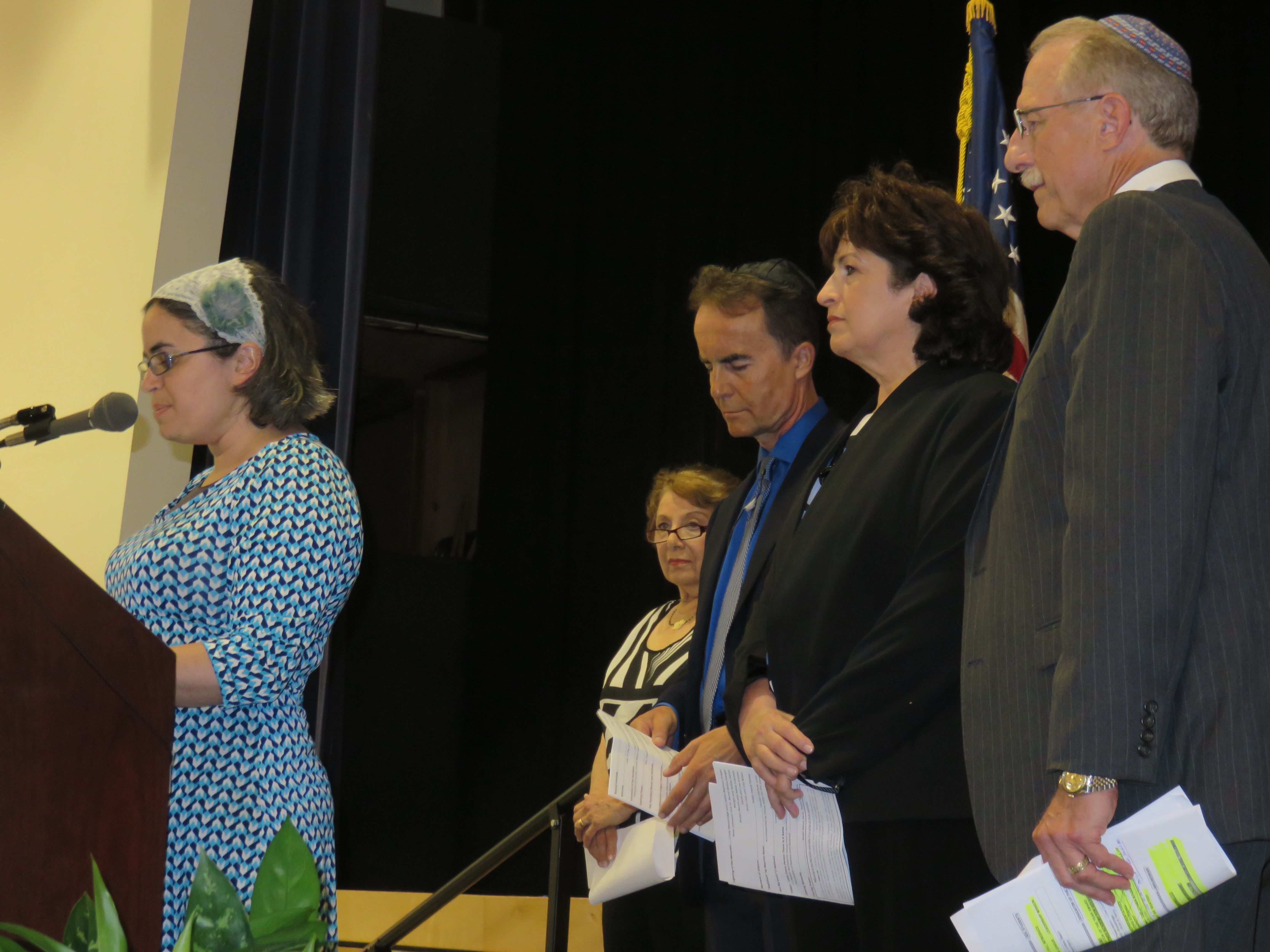
Dr. Bernd Wollschlaeger, left; Liba Kornfeld, center; Ruth Loeffelholz and Henry Rosenblatt, right, congratulate Cindy Wooldridge, second from left, on her Educator of the Year Award. (Photo by Alan Smason)
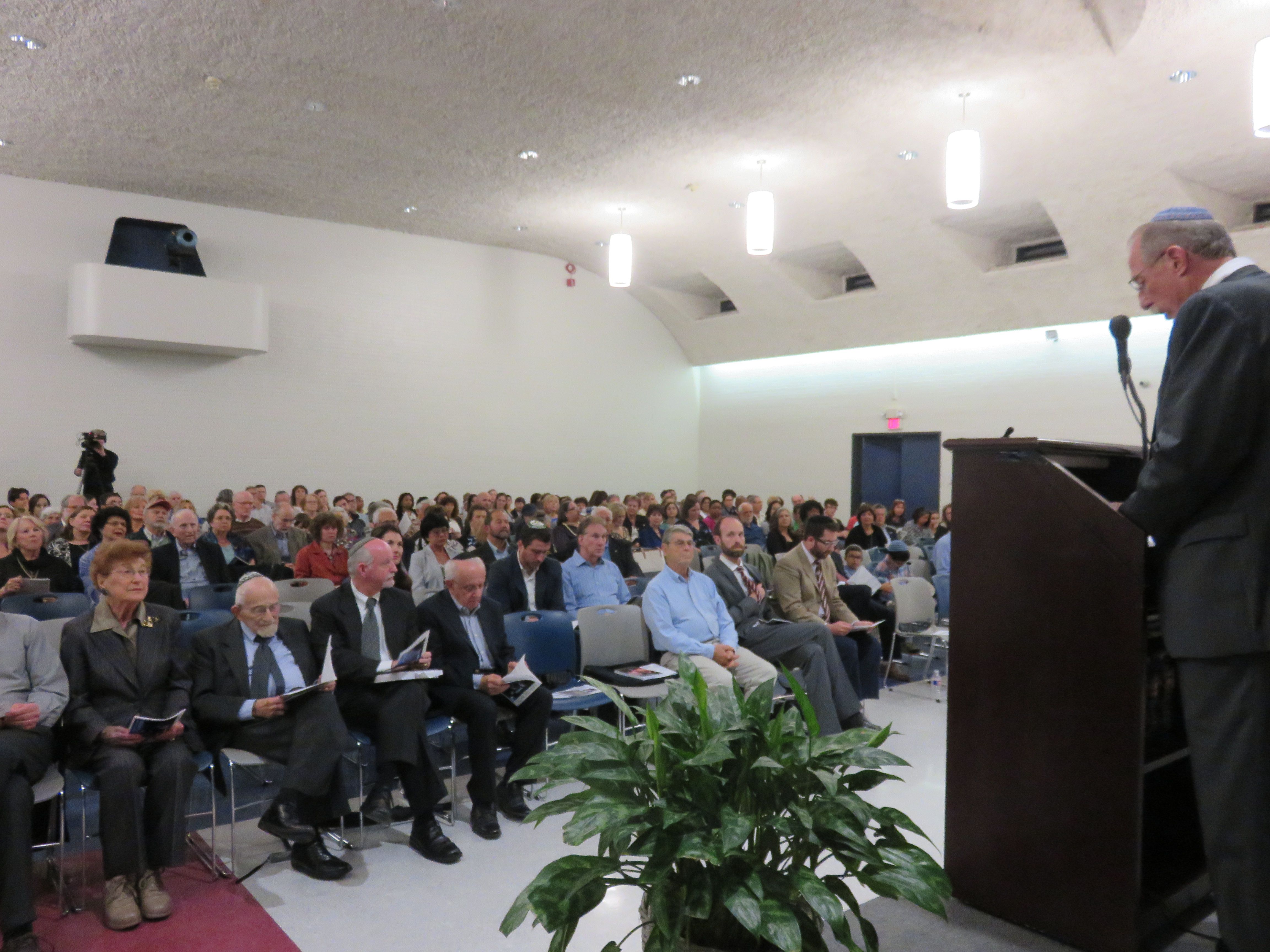
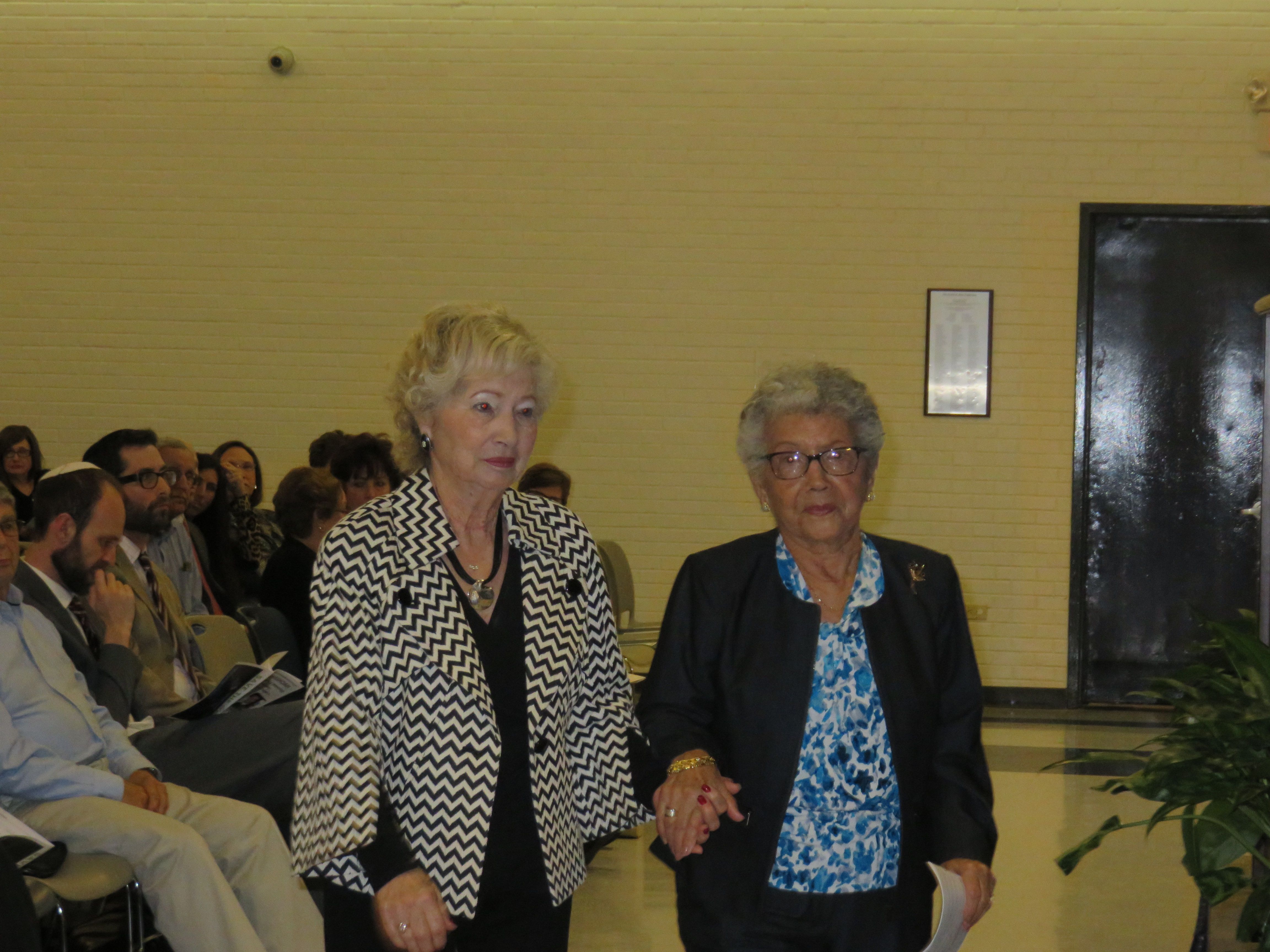
The two-hour long event, held last Sunday night, May 1, at the Uptown Jewish Community Center, began at 6:30 p.m. with the Procession of the Survivors, four of whom holding memorial candles were escorted by family members as well as student delegates of the Anti-Defamation League’s Donald Mintz Leadership Mission to Washington, D.C. into the Mintz Auditorium.
“If the heavens were paper and all the water in the world were ink and all the trees turned to pens, you could not begin to record the suffering and horror (of the Shoah),” Rabbi Ethan Linden quoted a chaplain witness in his opening prayer. “Despite the fact that we can’t do full justice to all that happened to our people in those days, we ask God for the strength and the perseverance and to remember those that we lost,” he concluded.
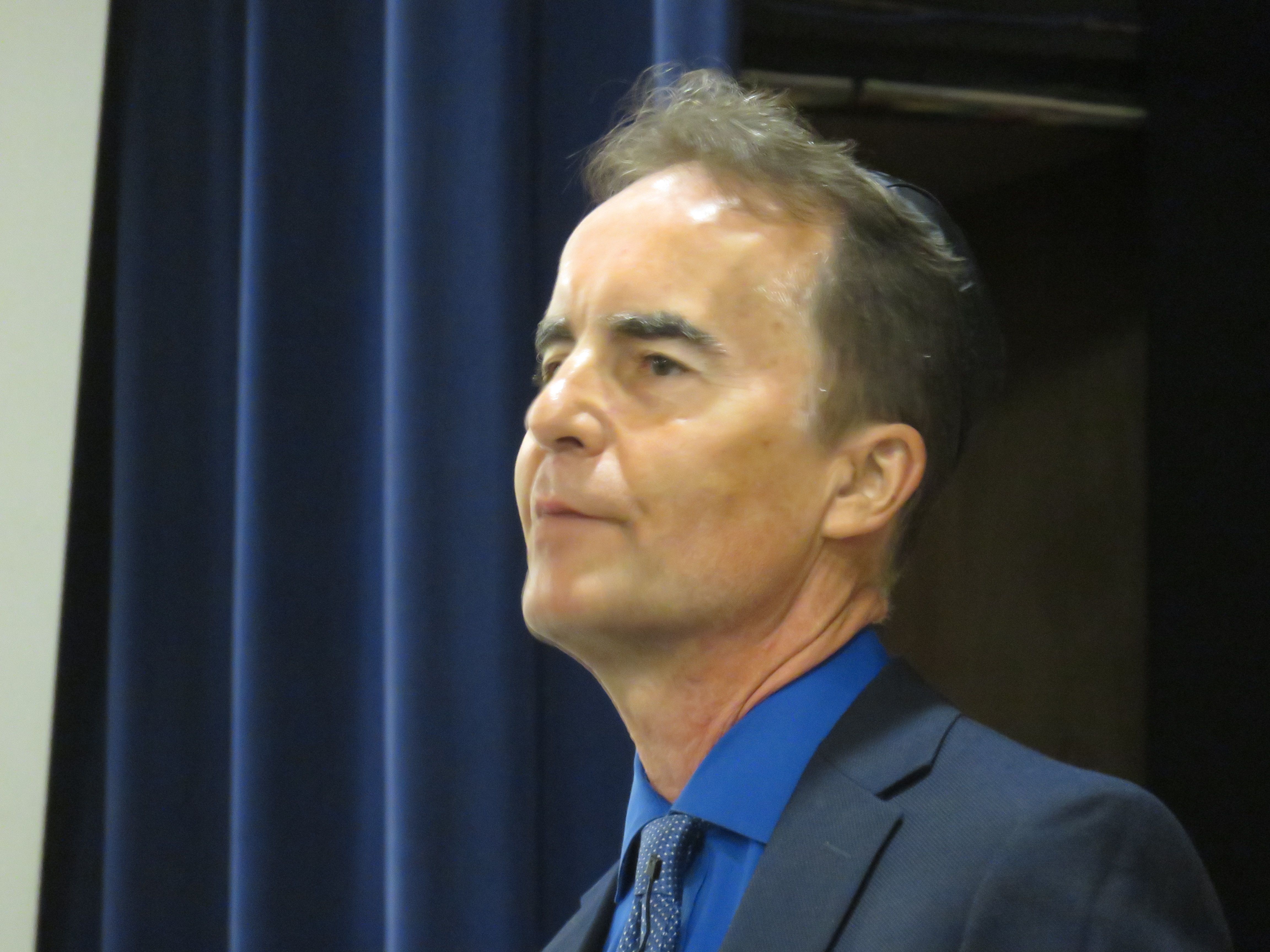
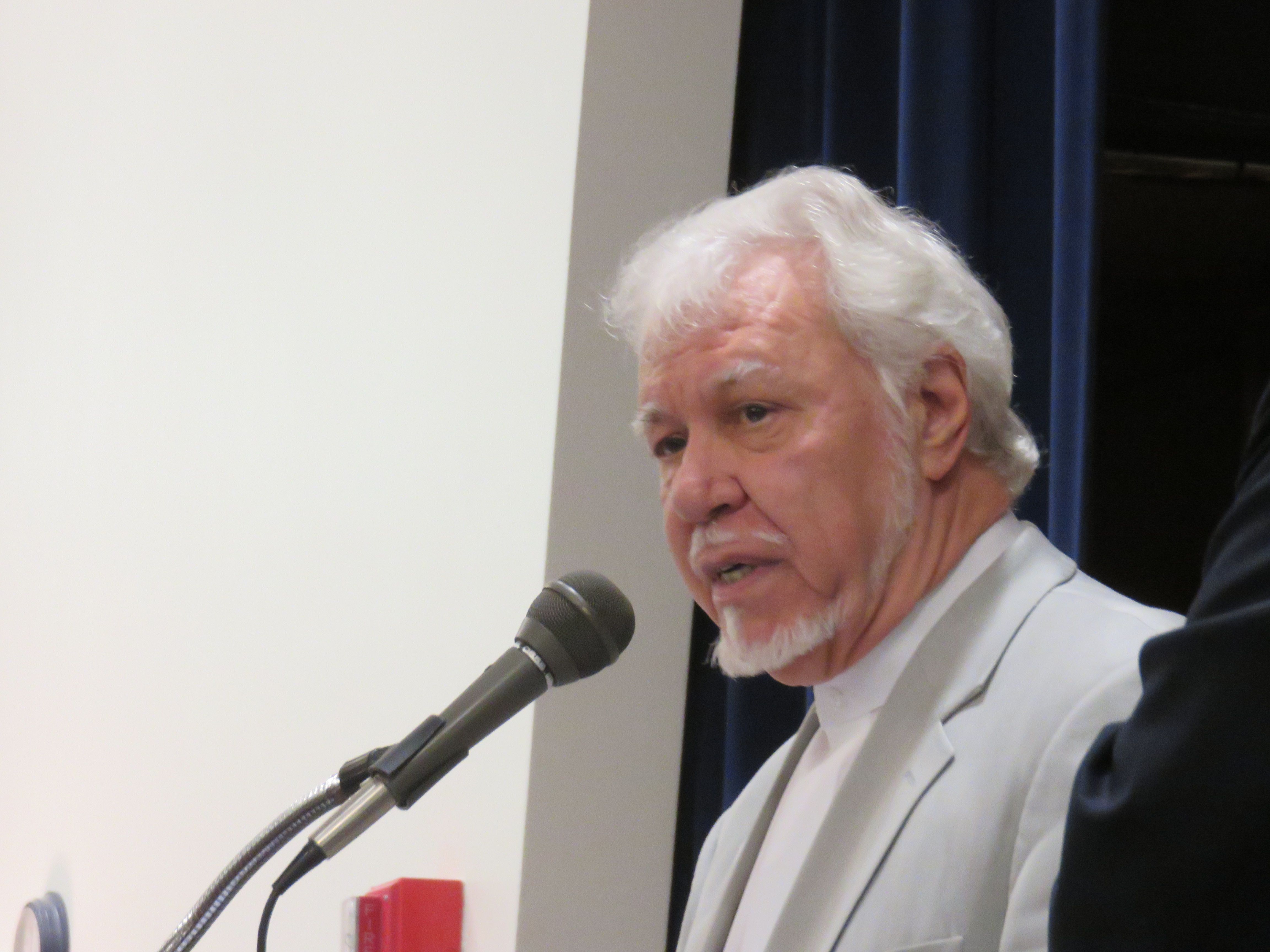
The keynote speaker could not have been more compelling. Dr. Bernd Wollschlaeger, recounted his unlikely metamorphosis from the progeny of Nazis to that of a righteous convert. Growing up in the idllic town of Bamberg, Wollschlaeger heard differing accounts of the war from his parents.
He learned that his father was the youngest tank commander of the Nazi war machine on the front lines of the Blitzkirieg into Poland, France and the Soviet Union and that he had been personally awarded the Knight’s Cross by Adolf Hitler for his service to the Third Reich. “On the other hand, my mother told me about a completely different story of the war,” he brooded. “Everything was lost. The war for her was a catastrophe.”
With his parents resistant to talking about their participation in the war, Wollschlaeger began to learn more gradually about the rise of the Nazis. He was barely a teenager where he was personally affected by the hosting of the 1972 Olympics in Munich. His father had called West German Chancellor Willy Brandt “a traitor.” When he investigated, Wollschlaeger found that Brandt had fled Germany when Hitler came to power and that he had been associated with those that fought against the Nazis. When the Israeli team entered the stadium, there was “an embarrassing silence,” Wollschlaeger related. Sadly, many of the same Israeli team competitors were to be kidnapped and killed by the Black September terrorist group several days later.
The massacre had a profound effect on him. “The headlines read ‘Jews killed in Germany again.’ I didn’t understand the meaning. I asked my father what does it mean?” “It means nothing,” his farther retorted angrily. That was when Wollschlaeger began to inquire more about Jews being killed and he ran across references to six million Jews.
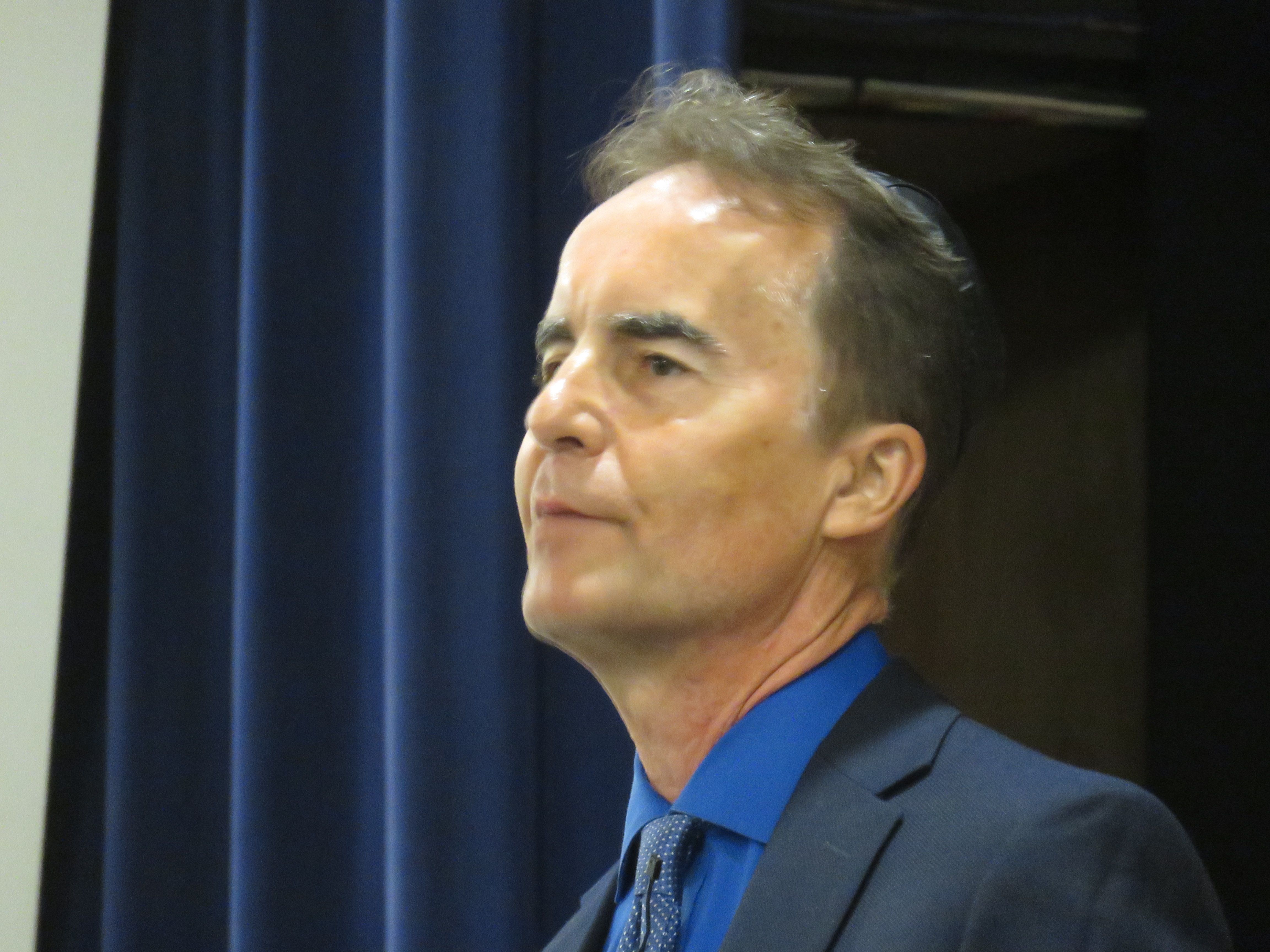
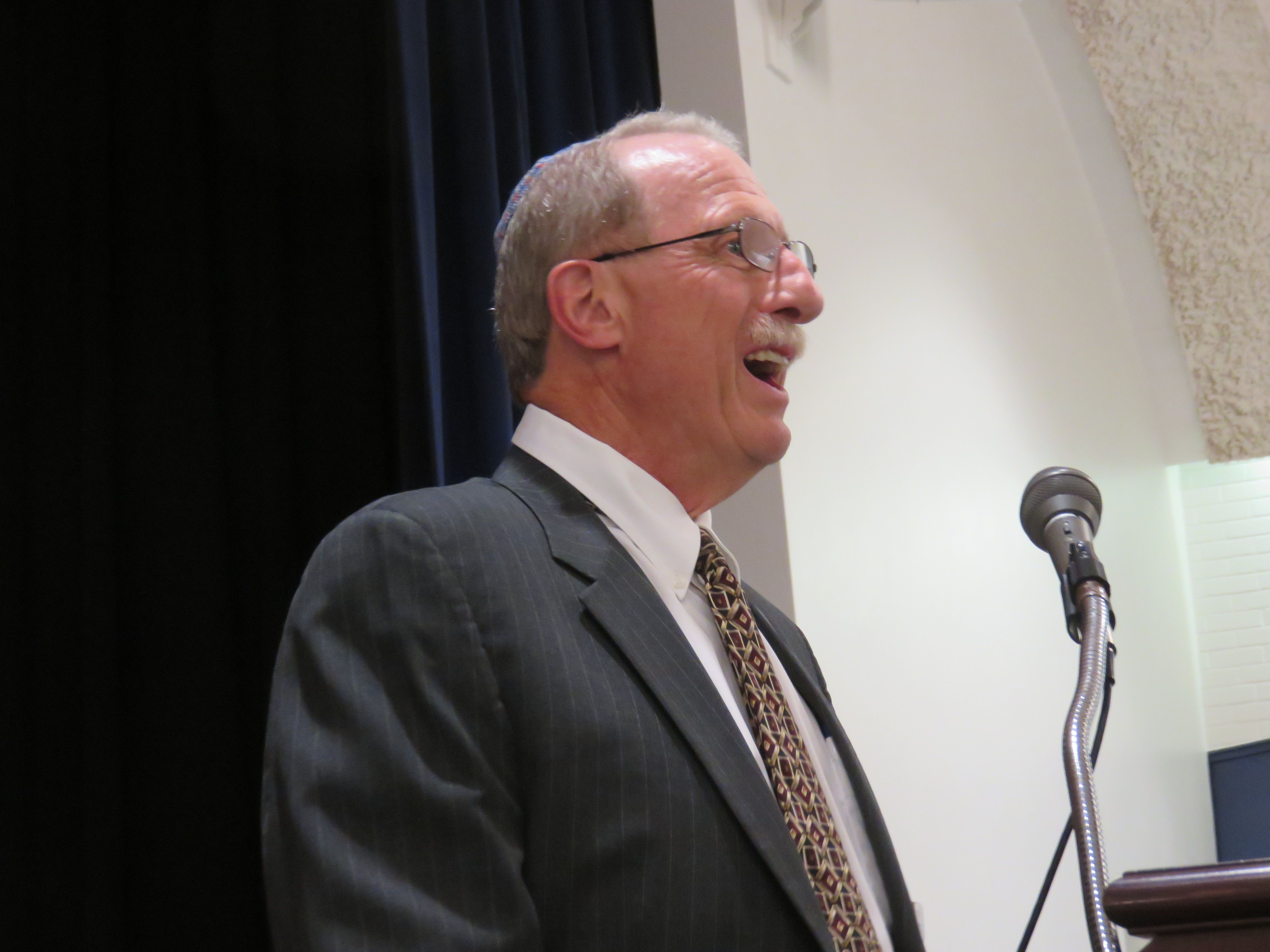
Son of a Nazi hero, Dr. Bernd Wollschlaeger describes how he became a righteous convert to Judaism. (Photo by Alan Smason)
“It changed the direction of my life,” he admitted. “I was shocked. I had never heard about it, but my father must have known about it.”
“My father looked at me,” Wollschlaeger continued. “The Holocaust is a lie. Its teachers are communist. It is just propaganda.”
The teenager started reading everything he could lay his hands on. “The fact that my father was unwilling to talk about it, gave me my own answer,” he said.
The other factor Wollschlaeger was dealing with at the time was his father’s rampant alcoholism, which made him vicious and aggressive.
Without informing his parents, Wollschlaeger started on a path of connectivity to the Jewish people. He became a Shabbos goy to the community of 25,000 Jews that were left in his area.
One Christmas Eve, his parents expected him home to celebrate, but since this coincided with a Friday night his duties at the synagogue required him to be present there. His father demanded an explanation. “‘I don’t want to sit at the same table as one who is wearing a blood-stained cross around his neck,'” Wollschlaeger remembered saying. “‘I don’t want to celebrate the birth of Christ with you.'”
The answer from his father was “Raus! (“Out!”). They never spoke again.
One day after his father had died, a German military historian brought him a suitcase. When he opened it, he found ripped pieces of Torah scrolls that had been removed from synagogues and deliberately destroyed. “He was one of the murderers,” Wollschlaeger told the crowd. “This was hard to accept.”
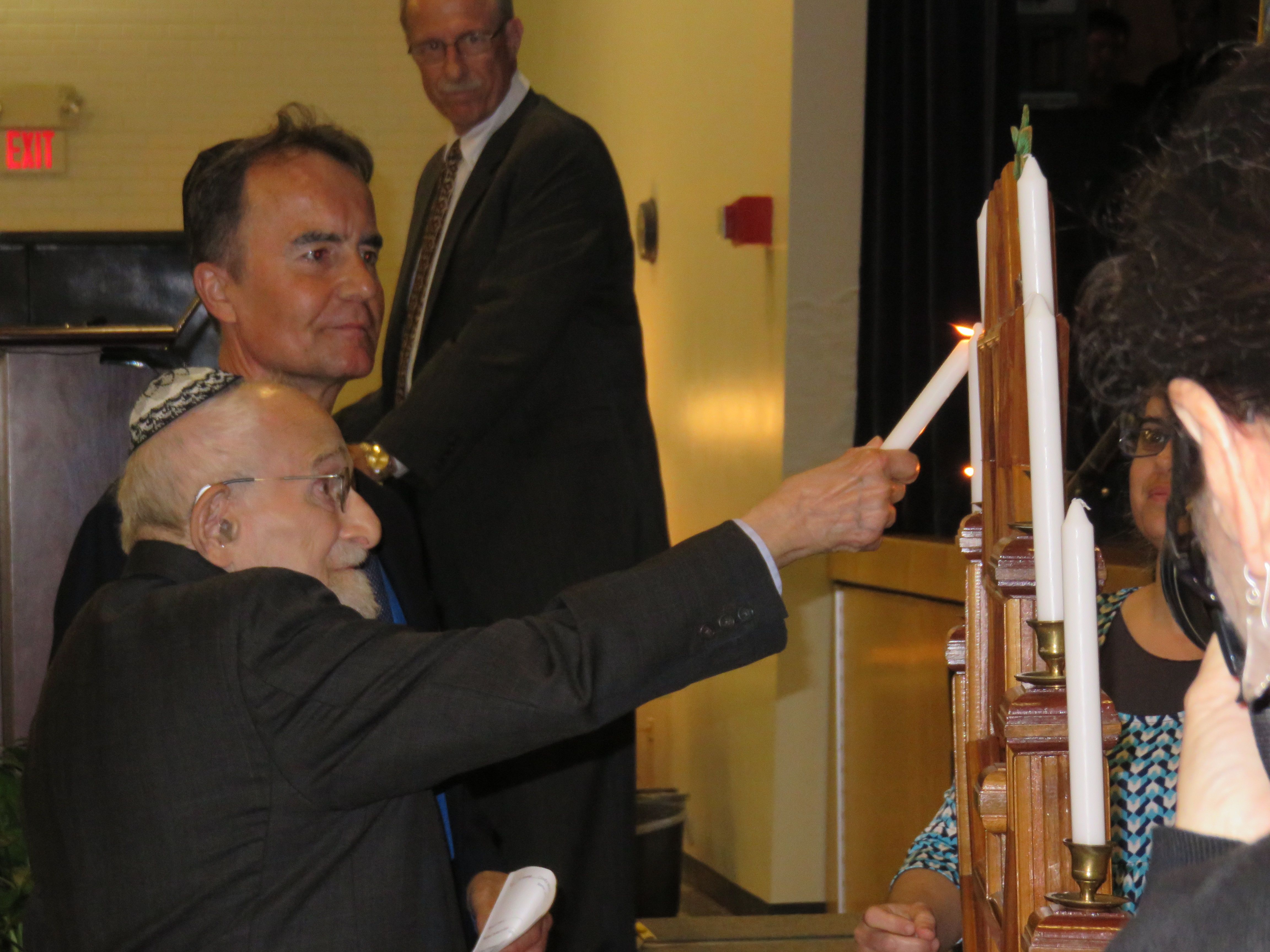
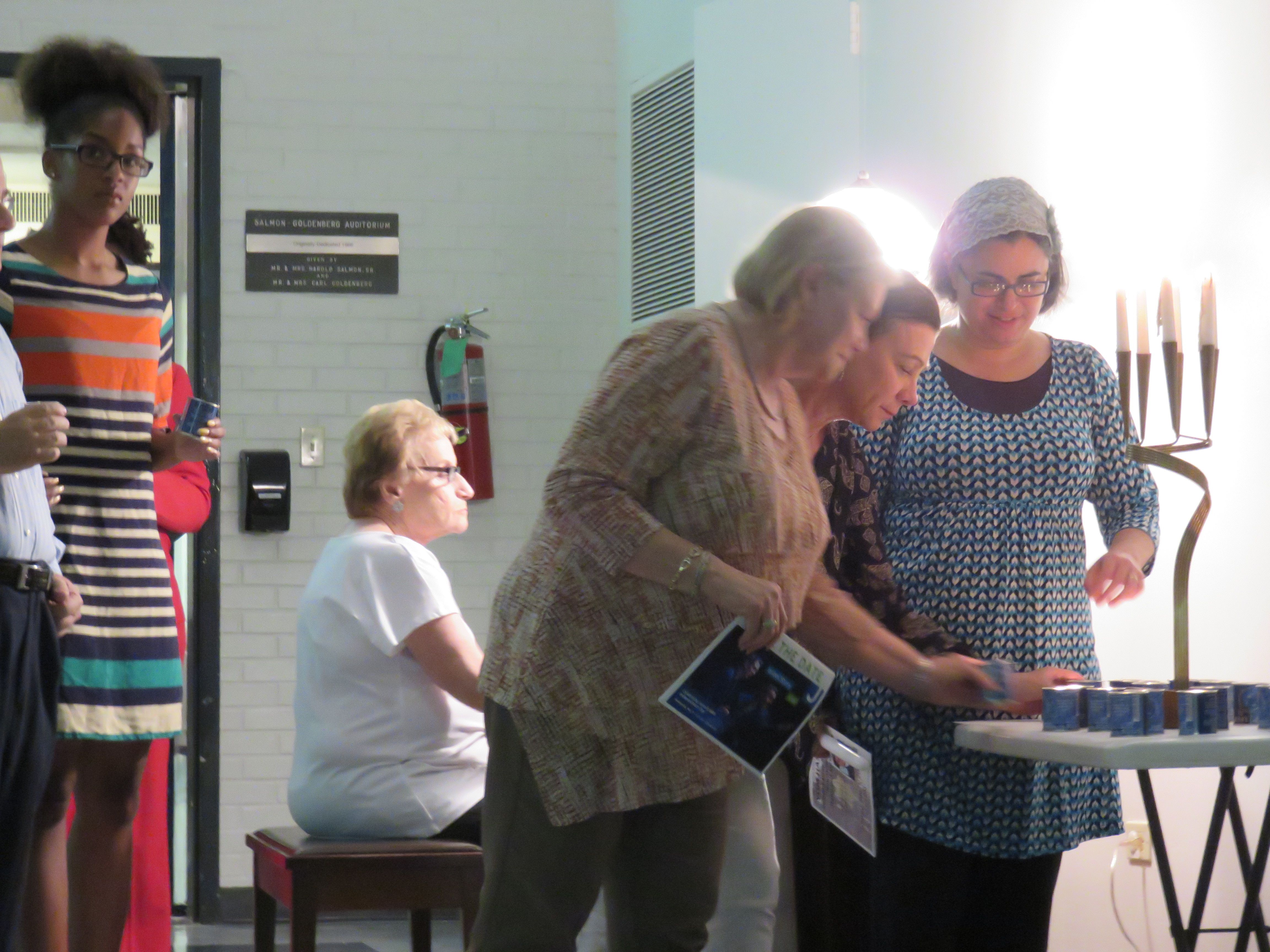
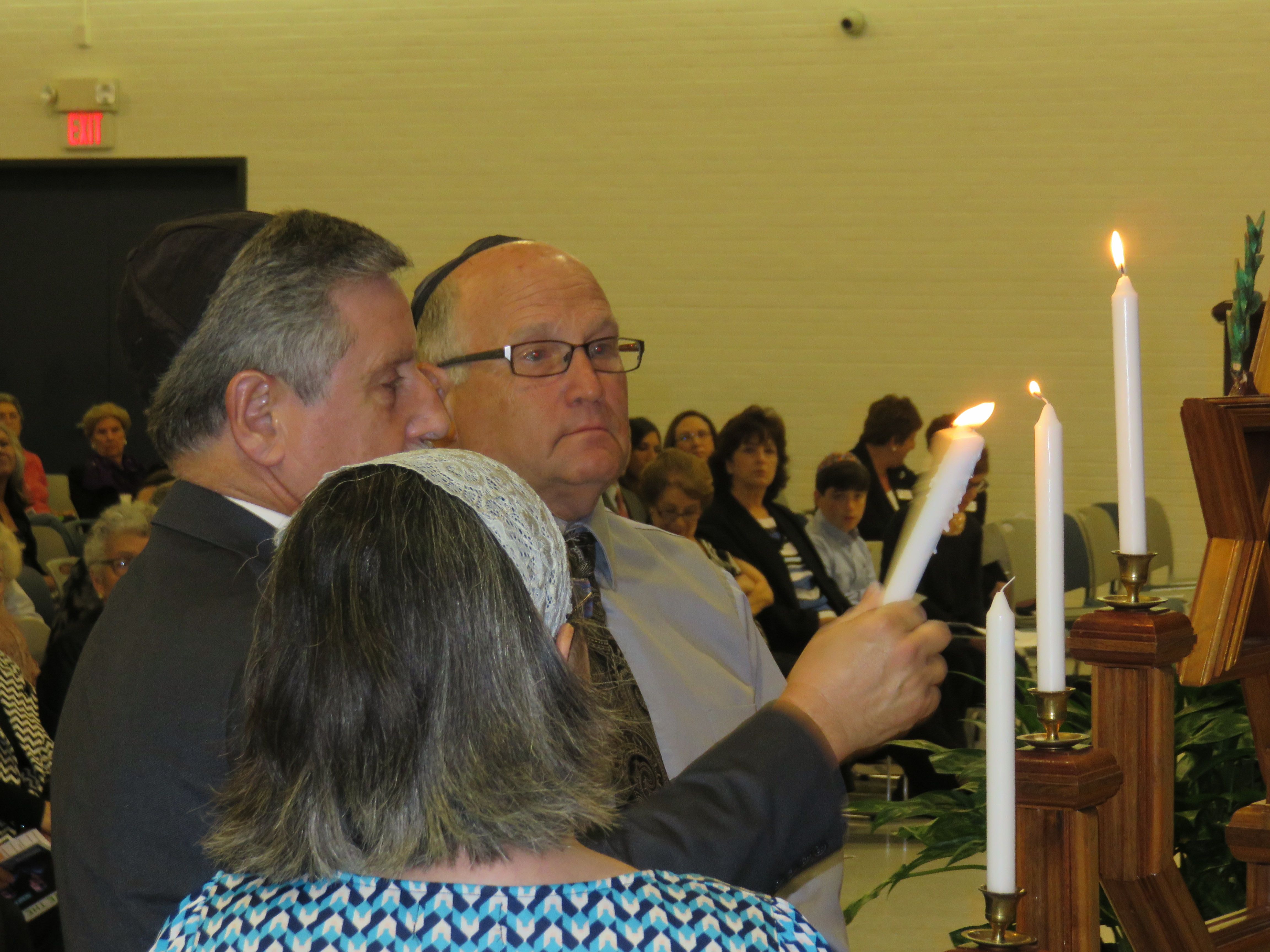
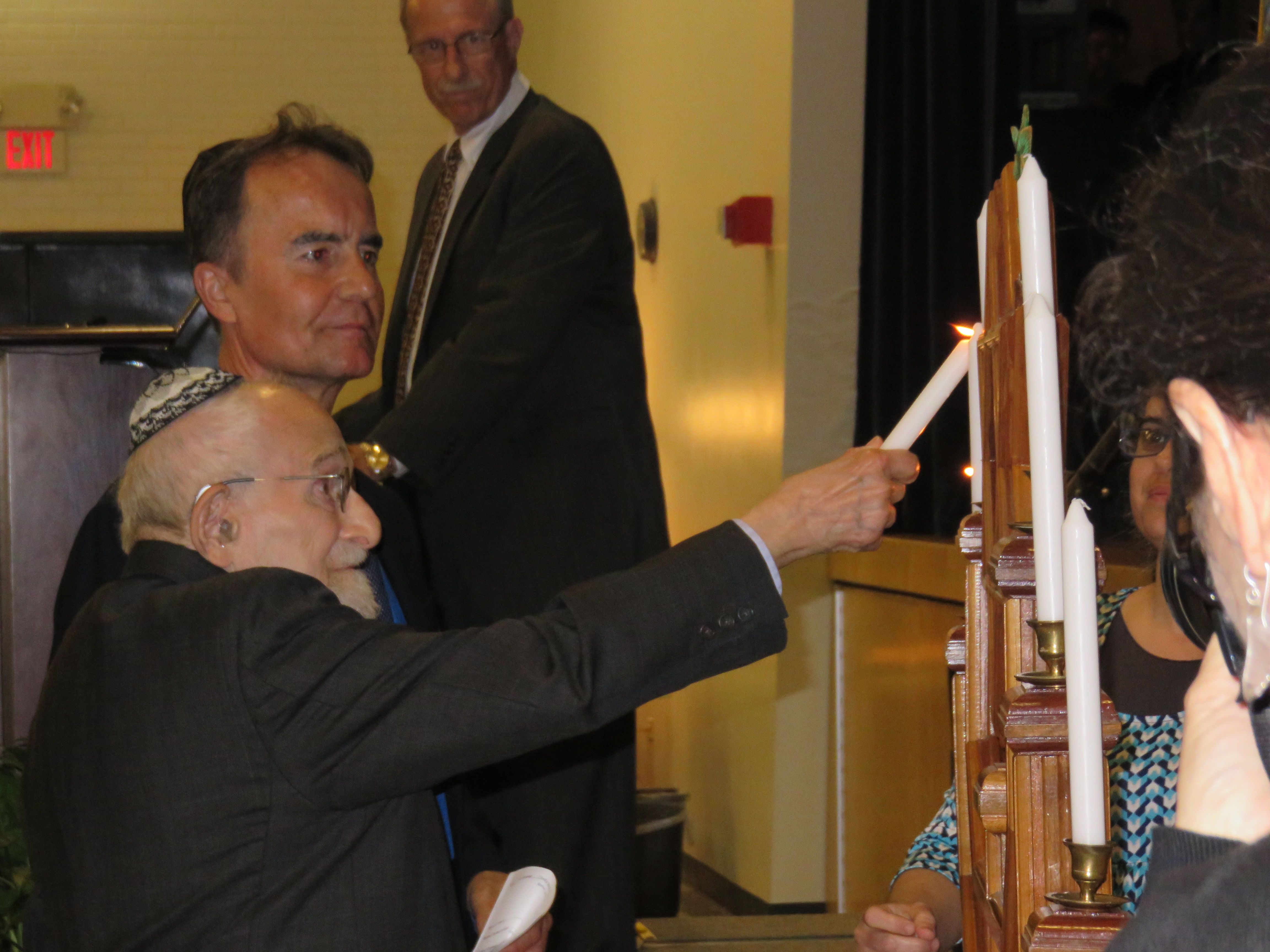
Rene Lehmann lights one of the candles on the Holocaust Menorah with Dr. Bernd Wollschlaeger as chair Henry Rosenblat looks on. (Photo by Alan Smason)
As he learned more about Judaism, Wollschlaeger decided he wanted to take the ultimate step and convert. In the spring of 1986 he was accepted for a rigorous path of study and dedication. Many tried to talk him out of it. With each barrier, he became more and more entrenched.
He endured what he called “a little plastic surgery,” a reference to a brit milah (circumcision).
When he presented himself to the rabbinic committee, “they wanted to know who I am, why I am doing this and why I made my decision,” Wollschlaeger recalled.
His answer was that he wanted to become a Jew and go to Israel through the Law of Return. On January 7, 1987, he left Germany and landed in Tel Aviv.
Immediately, he became eligible for the draft and eventually found his wife and began to raise a family. Wollschlaeger eventually went to college and studied medicine.
One day his son asked him who his grandfather was. “In that moment I knew I had to tell him,” Wollschlaeger confessed.
When his son blurted out to his classmates that his grandfather was a famous Nazi, it created quite a stir. “Needless to say this caused a problem in the Jewish zone,” he said.
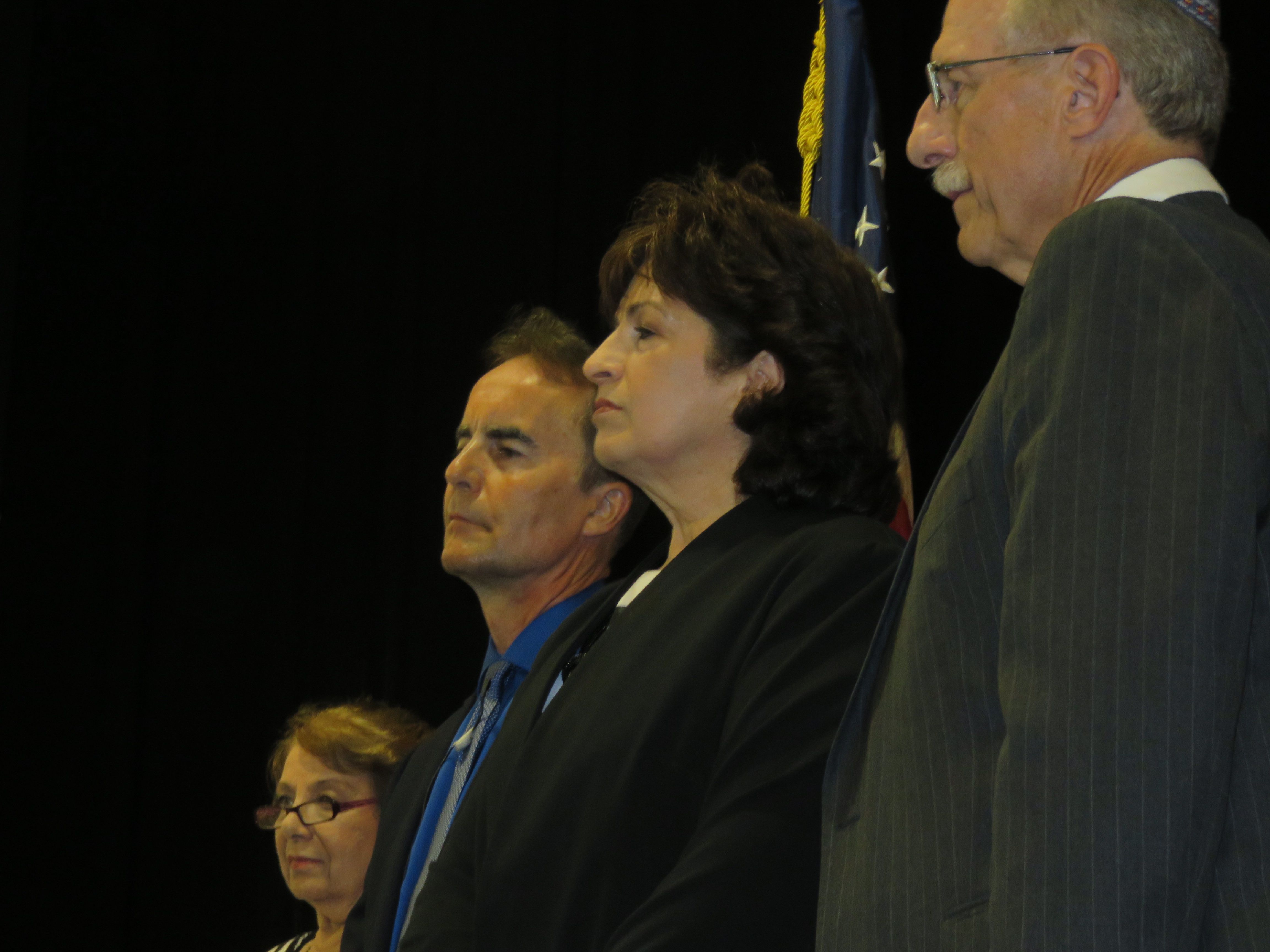
From left: Ruth Loeffelholz, Dr. Bernd Wollschlaeger, Cindy Wooldridge and Ralph Rosenblat (Photo by Alan Smason)
Eventually, a rabbi prodded him to tell his story, which he wrote as “A German Life,” the book he signed after his talk.
He returned to Germany after reunification to close the early chapter of his life. “Hate is not this dark energy that pervades the universe and that we have to act upon,” he mused. “No, hate is words. These words sprout into deeds. These deeds sprout into habits. These habits, if unchecked, can become social norms.”
Wollschlaeger urged everyone to be vigilant and speak out whenever they see injustice. He recalled Auchwitz and the included more modern examples of genocide found in Uganda, Serbia and Cambodia.”You have to speak up,” he concluded. “Otherwise you’re guilty as charged.”
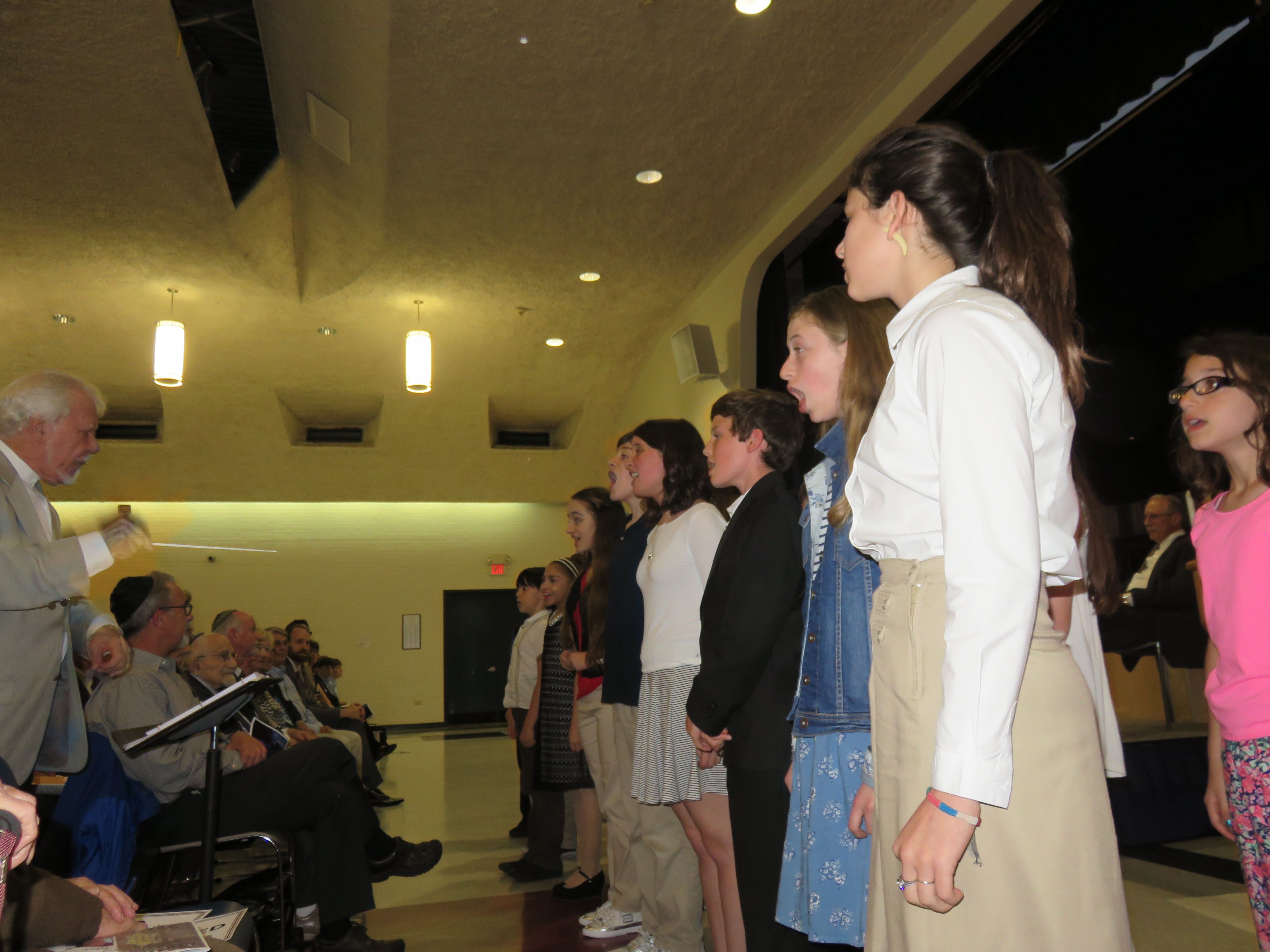
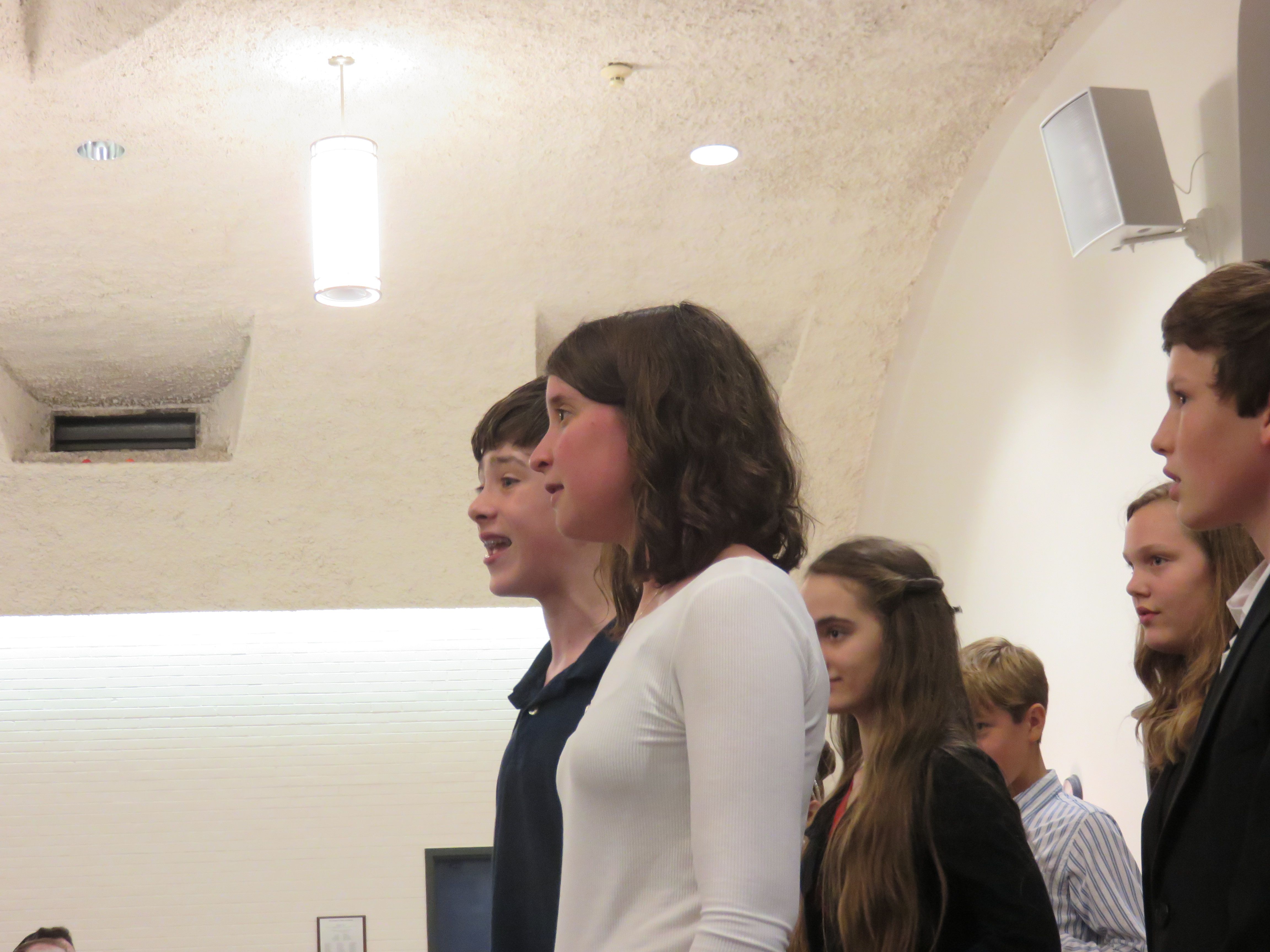
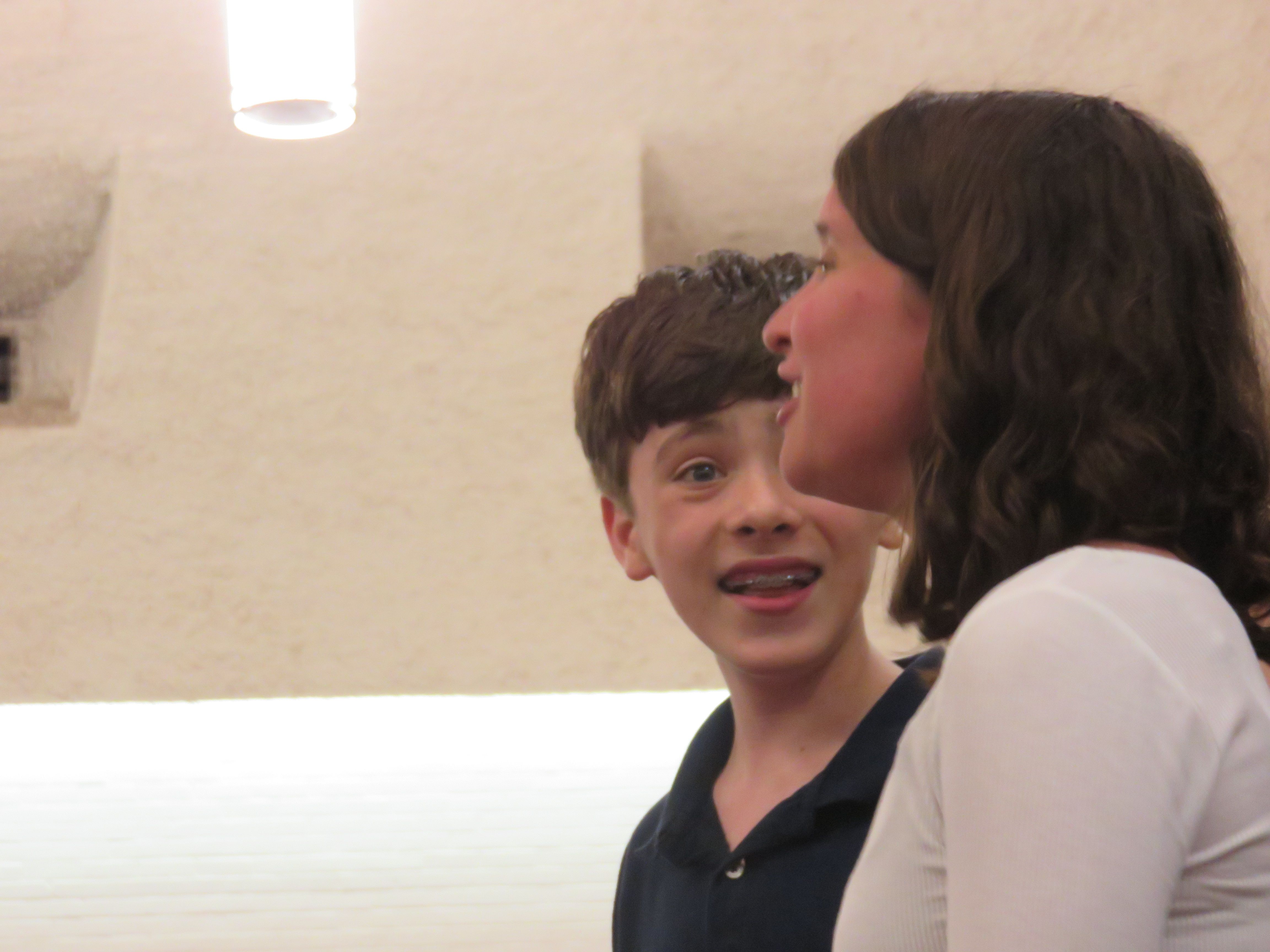
The program also allowed for a short presentation from the upcoming children’s opera “Brundibár,” which plays next weekend at the National World War II Museum Freedom Pavilion on May 14 and 15.
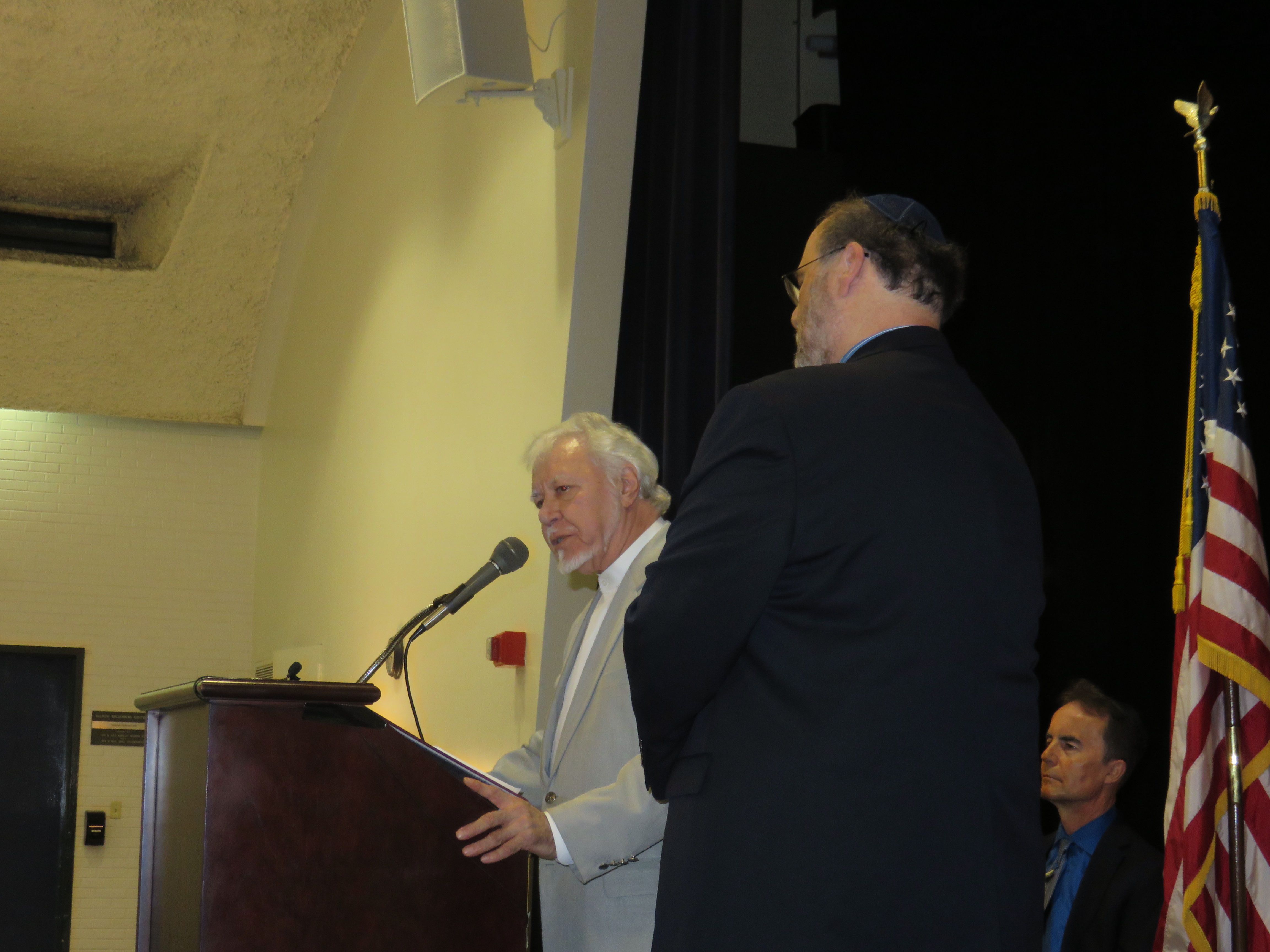
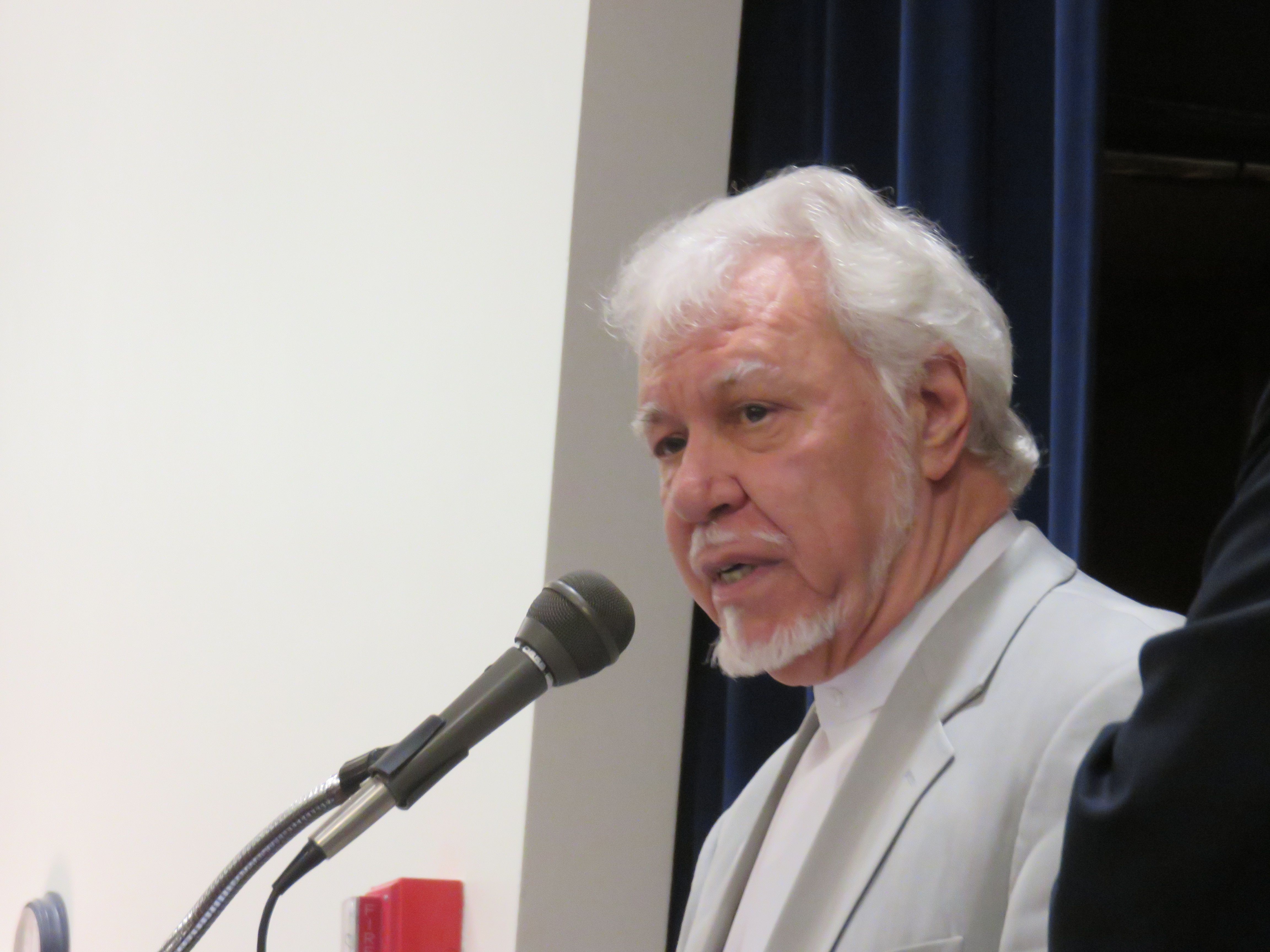
Robert Lyall, the general and artistic director and maestro of the New Orleans Opera Association, introduced the concluding chorus from the work by Jewish Czeck composer Hans Krása. The work is performed entirely by children.
The New Orleans Opera Association’s general and artistic director Robert Lyall describes “Brundibar.” (Photo by Alan Smason)
Before conducting the chorus, Lyall explained that of the 15,000 children imprisoned at Thereseinstadt concentration camp where the work was composed and performed, only 100 survived.
“The only survivor, Ela Weisberger, will be here in 11 days,” Lyall told the crowd. “She will be speaking at Temple Sinai and attending all three shows.”
Children were taught art at Thereseinstadt as a means of coping, Lyall said. It helped to focus an emotional situation into something that was positve and would, at lesst, momentarily relieve the horrors of the situation. He is helping to sponsor a campaign put out by the Jewish Museum in Paraguay in which one a half million ceramic butterflies would serve as reminders of the number of Jewish children killed in the Holocaust and displayed around the world.
Earlier, the Jewish Educator of the Year Award was presented to Cindy Wooldridge, the seventh grade English Language Arts (ELA) teacher at Haynes Academy for Advanced Studies. Siblings Henry Rosenblat and Ruth R. Loeffelholz presented Wooldridge with a check for $1,500.00 in memory of their survivor parents, Ralph and Gertrude Rosenblat of blessed memory.
Wooldridge thanked her administrators Mrs. Paul Russo and Mrs. Deidra Miller for their support and her colleague, Judy Case. She saved her most special thanks to survivor Jeanine Burk, who had spoken to her class on several occasions.
“Whenever she came to speak to my seventh graders, it touched them in such as way that they will never forget,” she said.
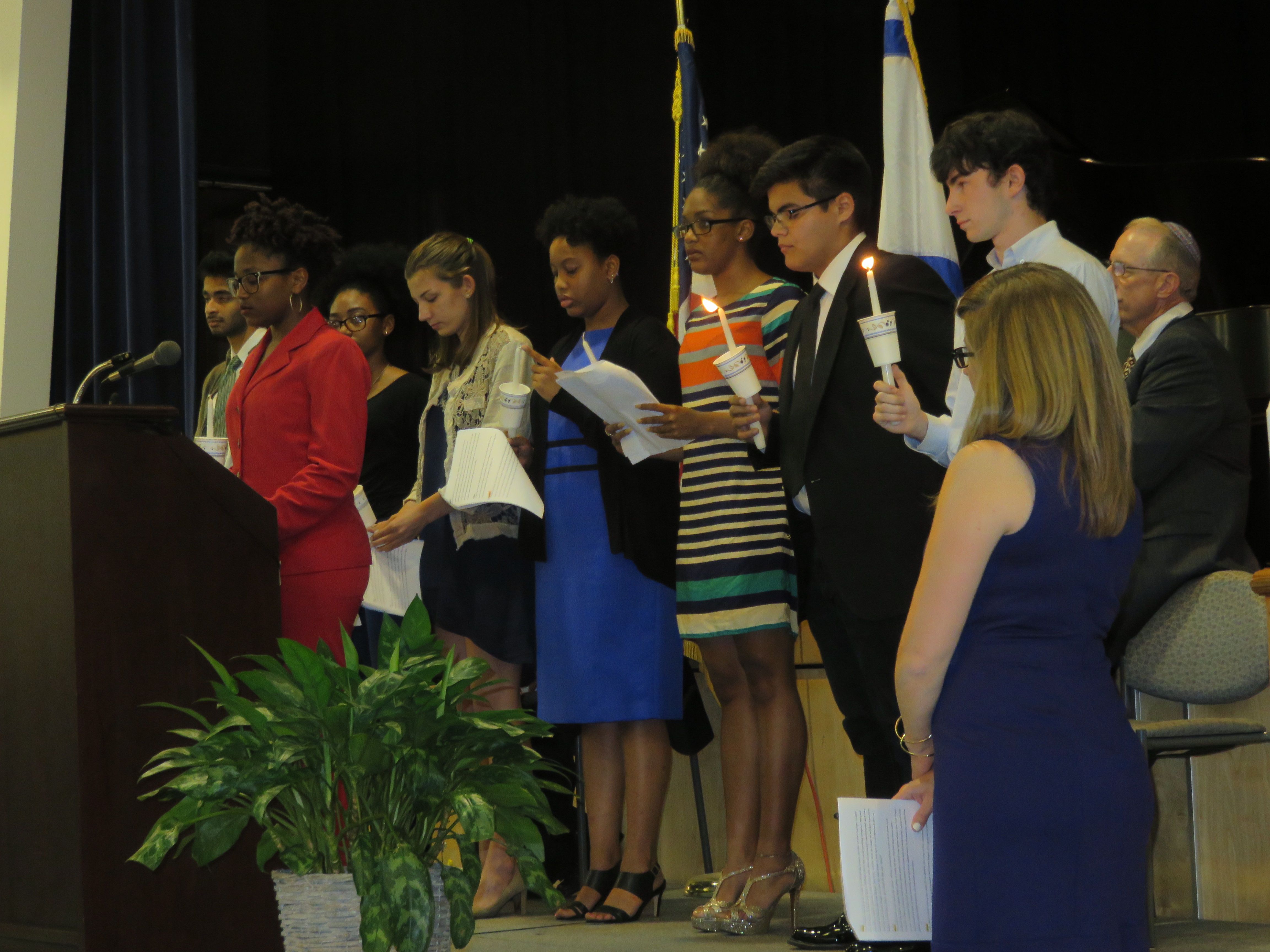
Members of the ADL’s Donald Mintz Leadership Mission to Washington, D.C. stand with Lindsay Baach Friedmann, right. (Photo by Alan Smason)
Liba Kornfeld, the Jewish Family Life director at the Jewish Community Center, who helped organize the event with the Holocaust Memorial Committee, presented a special plaque to Wooldridge. “I am so proud to be a part of this living community,” Wooldridge said at her acceptance.
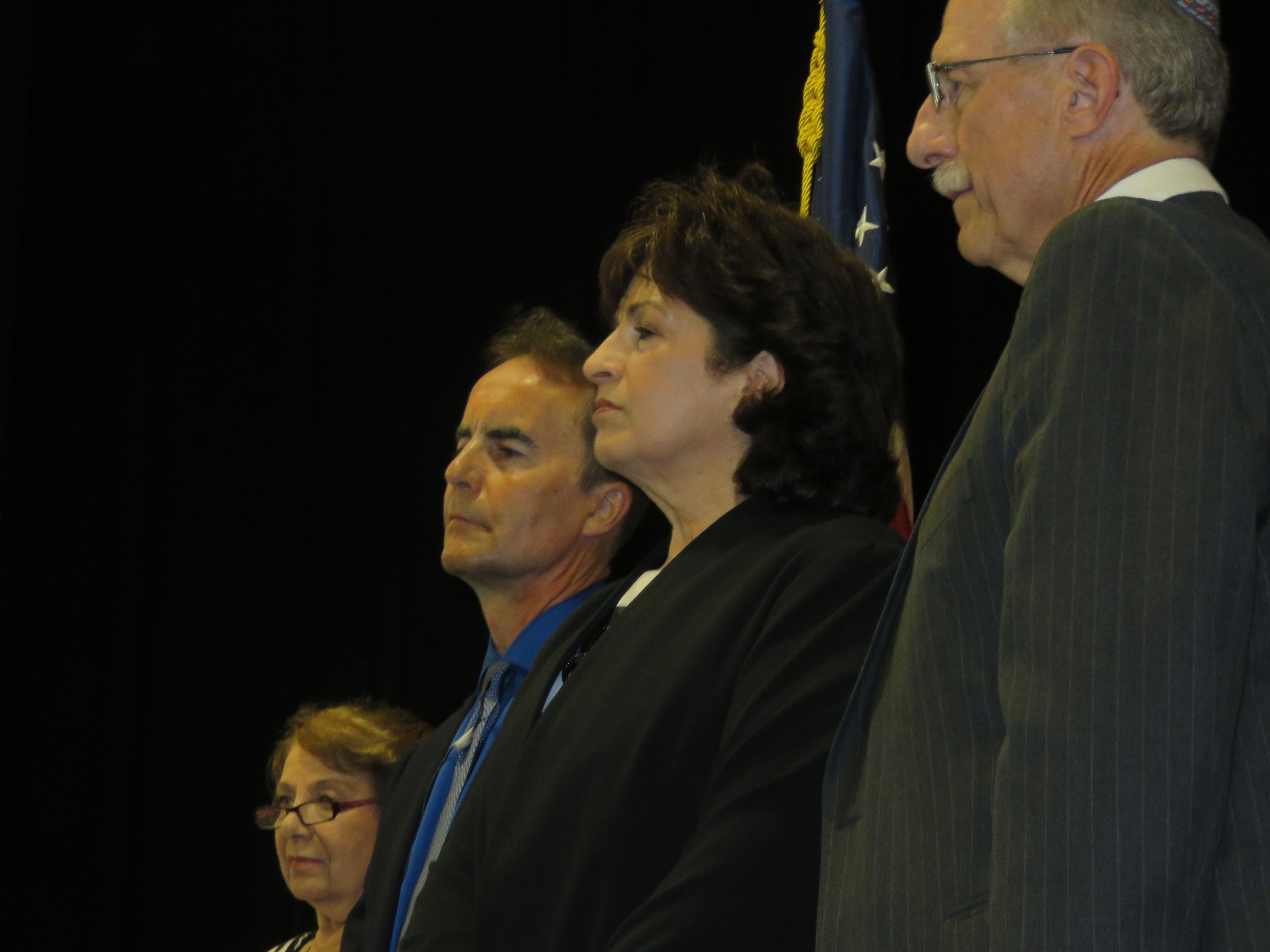
The delegation of members of the ADL’s Donald Mintz Leadership Mission to Washington each held candles and told of their trip to Washington, D.C., where they learned about the Holocaust from educators in addition to making a stop at the National Holocaust Museum.
Nine of the ten members were in attendance. These were Ram Ayyala from Isidore Newman Upper School, Josh Balkin from Benjamin Franklin High School, Karriem Bennett from Warren Easton Charter High School, Sydney Briscoe-Curtis from De La Salle High School, Daisha Calliet fromRiverdale High School, Jaíme Colón from Jesuit High School, Steffie Hernandez fromInternational High School, Margaux Schexnider from Benjamin Franklin High School and Alyssa Tripps from George Washington Carver Prepatory School.
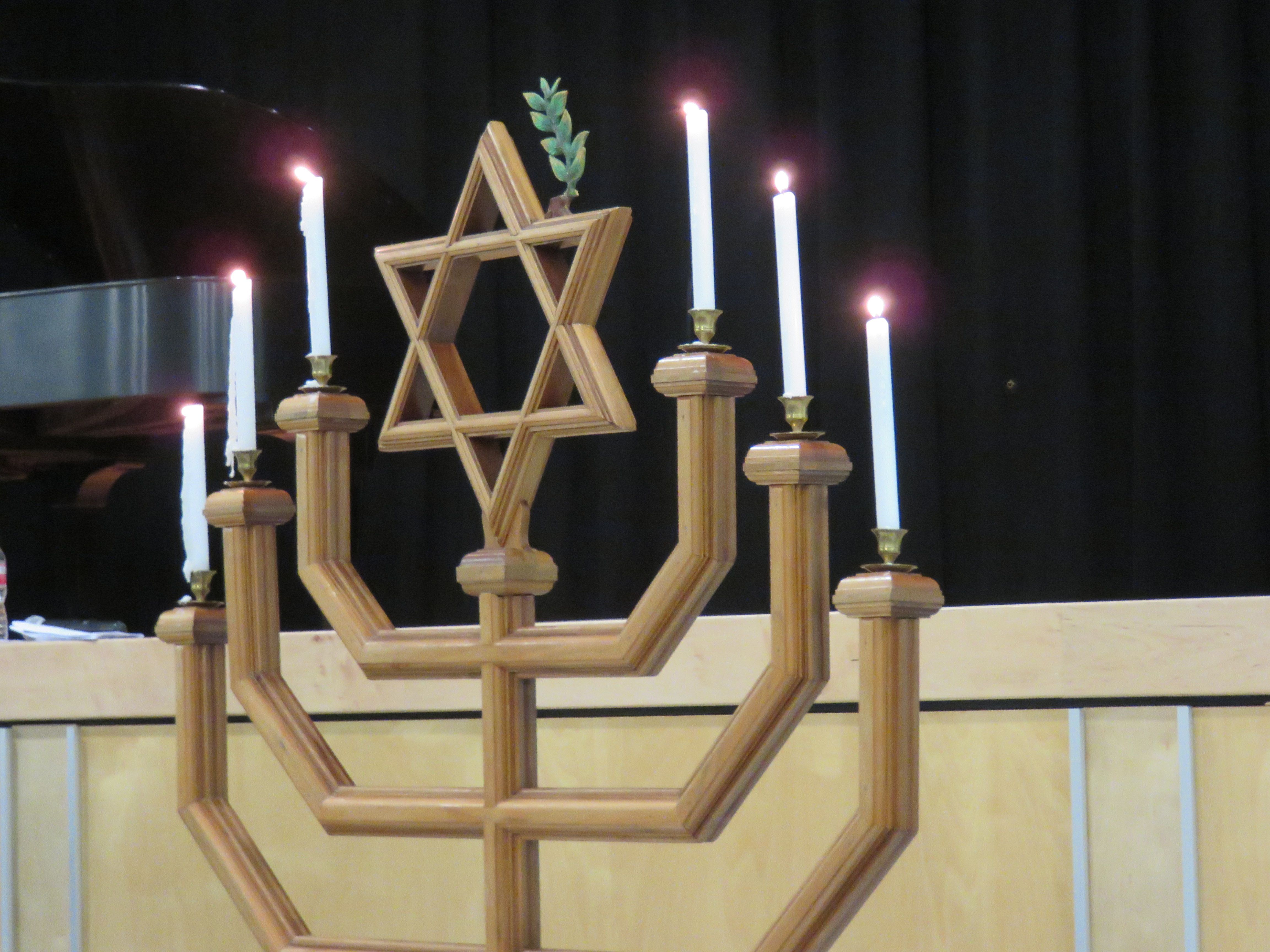
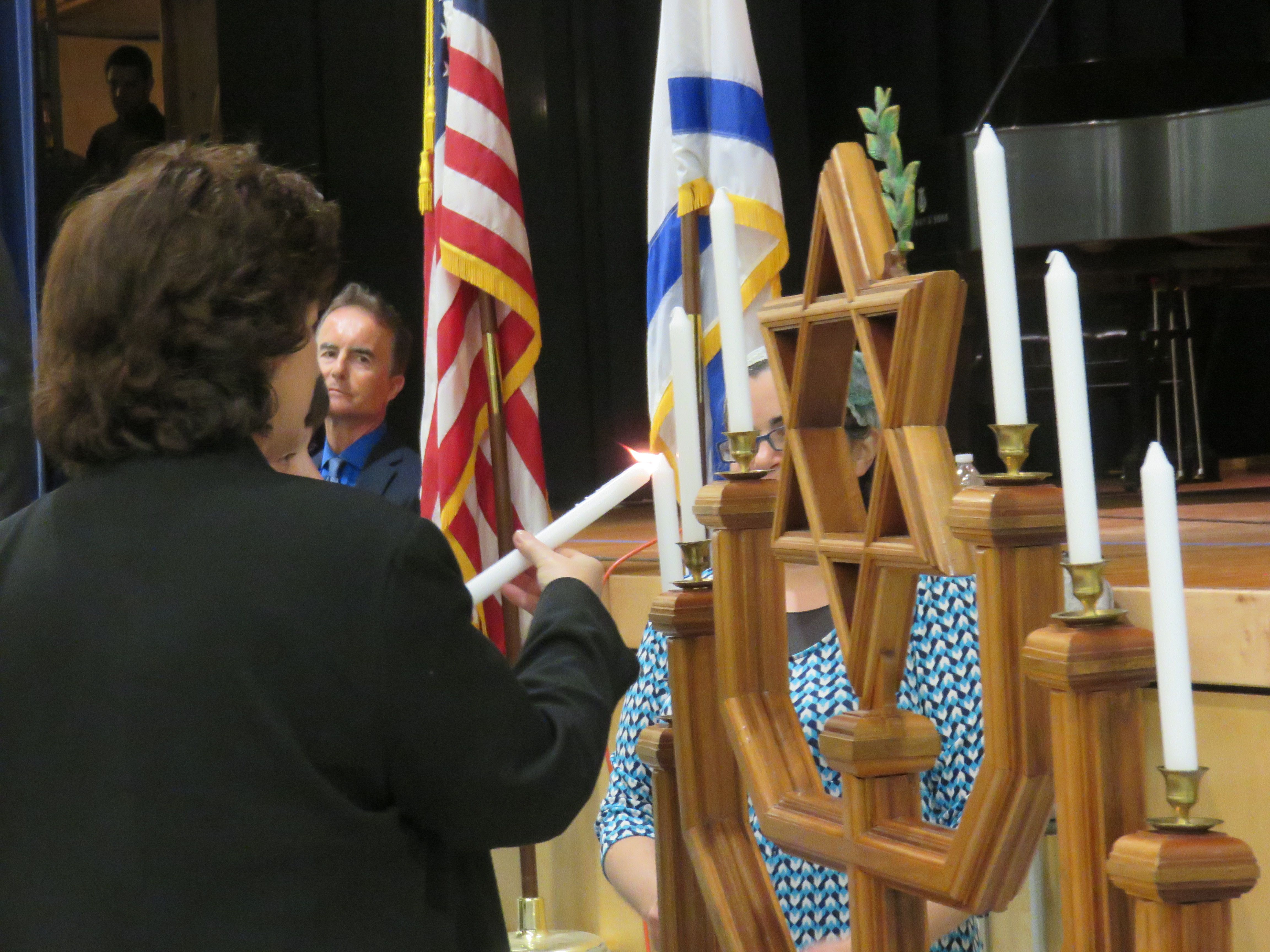
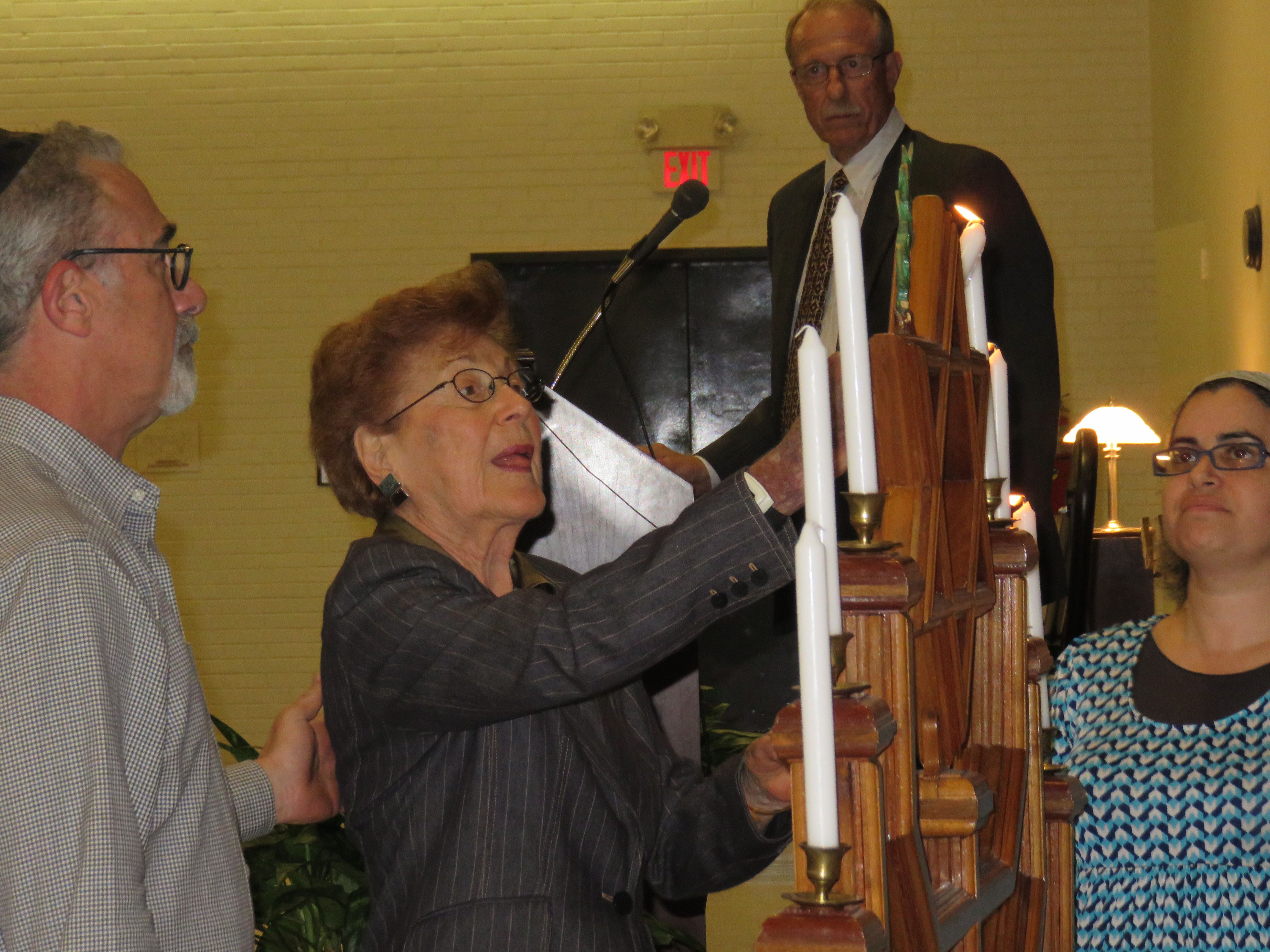
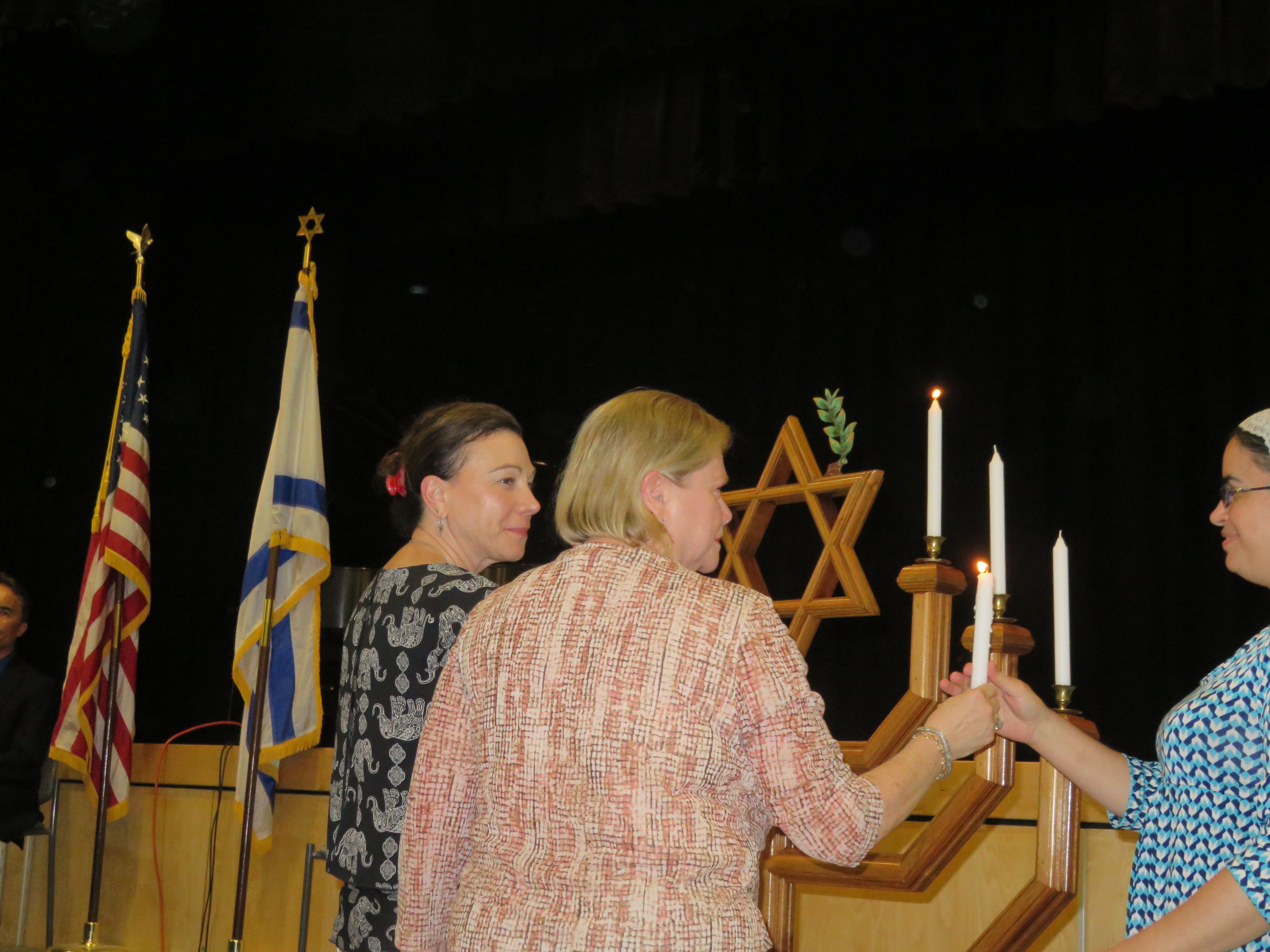
The six candles in the wooden Holocaust menorah constructed by survivor Isak Borenstein of blessed memory were lit in the final minutes of the service. Wooldridge and Caitlin Meehan-Draper lit the first candle. They were followed by Rene Lehmann and Wollschlaeger, Margot and Bobby Garon, Roslyn Morris and Abbie Fuksman, David and Lee Kirzner and finally sibling survivors Anne Lvey and Lisa Millen.
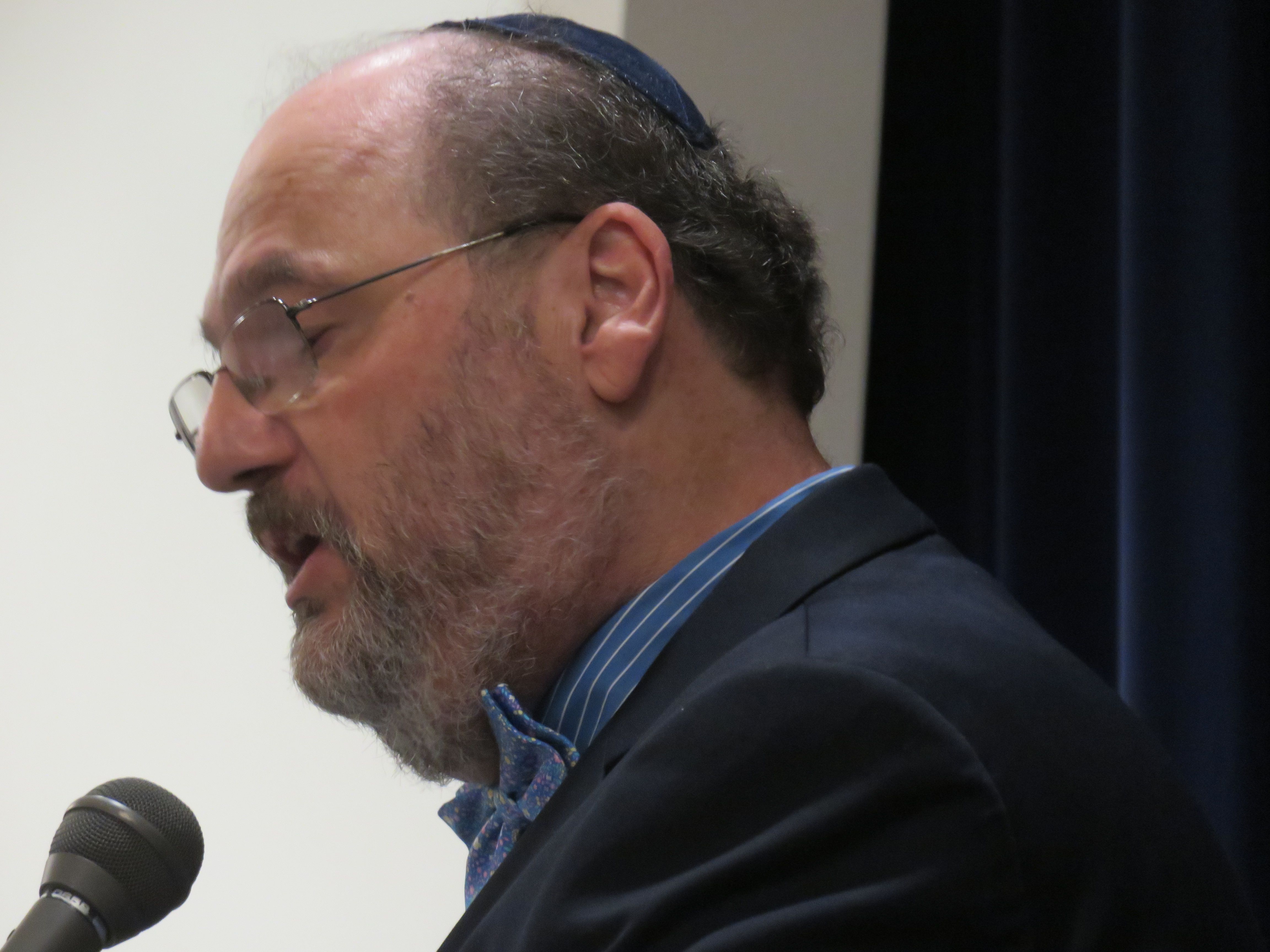
Anshe Sfard Rabbi David Polsky read a short piece before asking for a moment of silence.
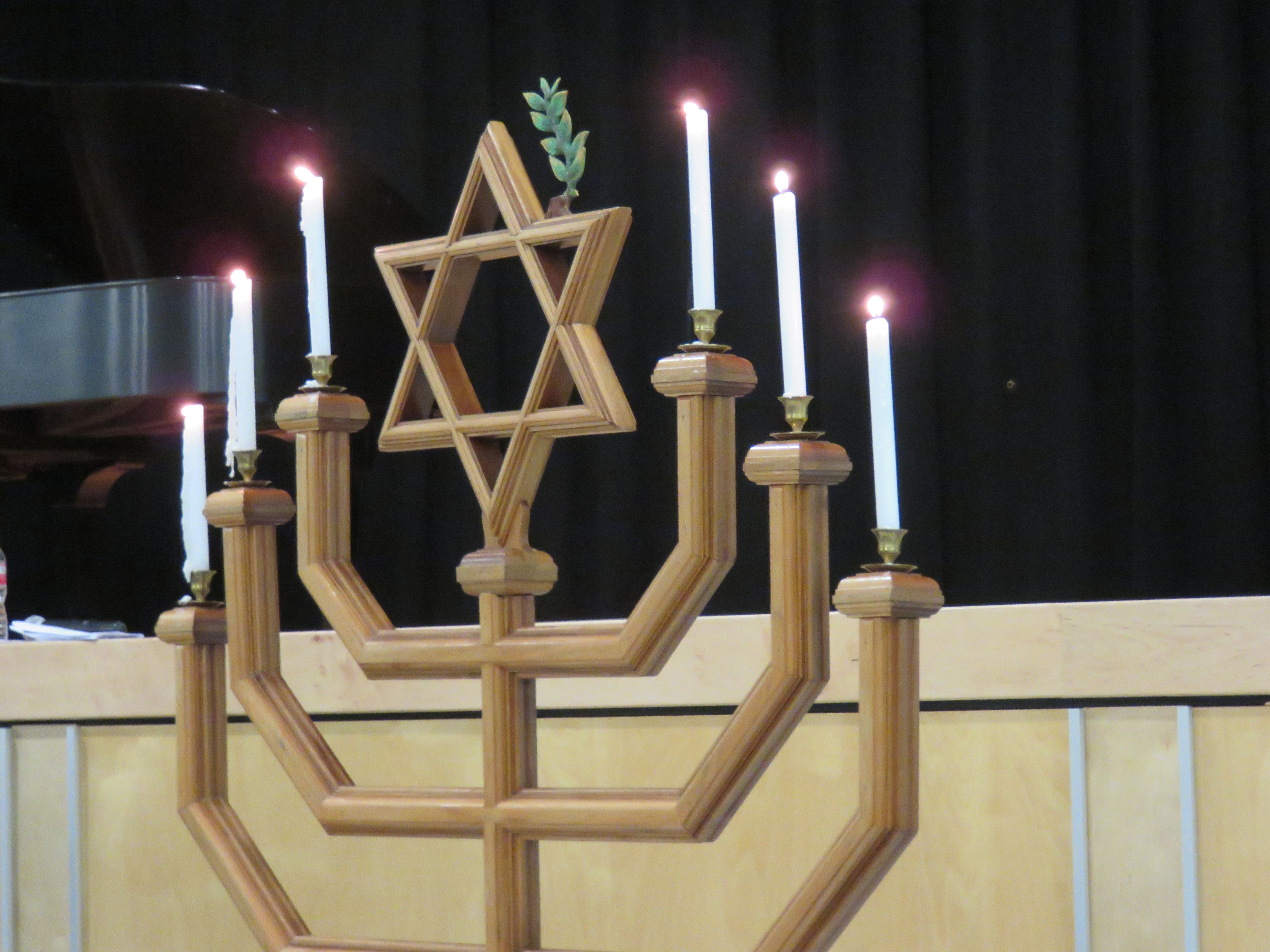
The Holocaust Menorah constructed by survivor Isak Borenstein. (Photo by Alan Smason)
Afterwards Rabbi Robert Loewy of Congregation Gates of Prayer sang “Ani Ma’anim” (“I Believe”), based on Moses Maimonides’ “Thirteen Principles of Faith and which became known as the “Hymn of the Camps.”
A Yizkor service was conducted by Leopold Sher, representing the second generation of survivor families, in which he recited a special El Maleh Rachamim prayer for mourners. Sammy Borenstein read the names of the survivors and led the crowd in the recitation of the Kaddish prayer.
Holocaust Memorial Committee chair Henry Rosenblat closed the event with dignity and silence.