Tel Aviv museum hosts impressive Bob Dylan exhibit
By ALAN SMASON, Special to the CCJN
When it was announced several weeks ago that Bob Dylan had received the 2016 Nobel Prize for Literature, there were shock waves felt around the world, resonating within the literati, many of whom could not fathom that his song lyrics and music could be considered as legitimate heirs to the luxuriant prose of William Faulkner, Saul Bellow and John Steinbeck or the lyric poetry of Pablo Neruda and William Butler Yeats.

Bob Dylan outside his Byrdcliffe home, Woodstock, NY, 1968. (Photo ©Elliott Landy, LandyVision Inc.)
In the speech read at the ceremonies last Saturday for him by the U.S. ambassador to Sweden, Dylan, who apologized for his absence before the Swedish Academy, seemed to echo those sentiments himself. “If someone had ever told me that I had the slightest chance of winning the Nobel Prize, I would have to think that I’d have about the same odds as standing on the moon,” he wrote. “I recognize that I am in very rare company, to say the least.”
Self-effacing like his hero and mentor Woody Guthrie and with his simple, commonplace, but forthright lyrics, Dylan has proven to be a man of the people. We in unconventional New Orleans, a city with unique architecture, music and a stubborn streak about doing things our own way, are proud to call Dylan, the iconoclast and rebel, as a fellow resident.”There are a lot of places I like, but I like New Orleans better,” he has been famously quoted.
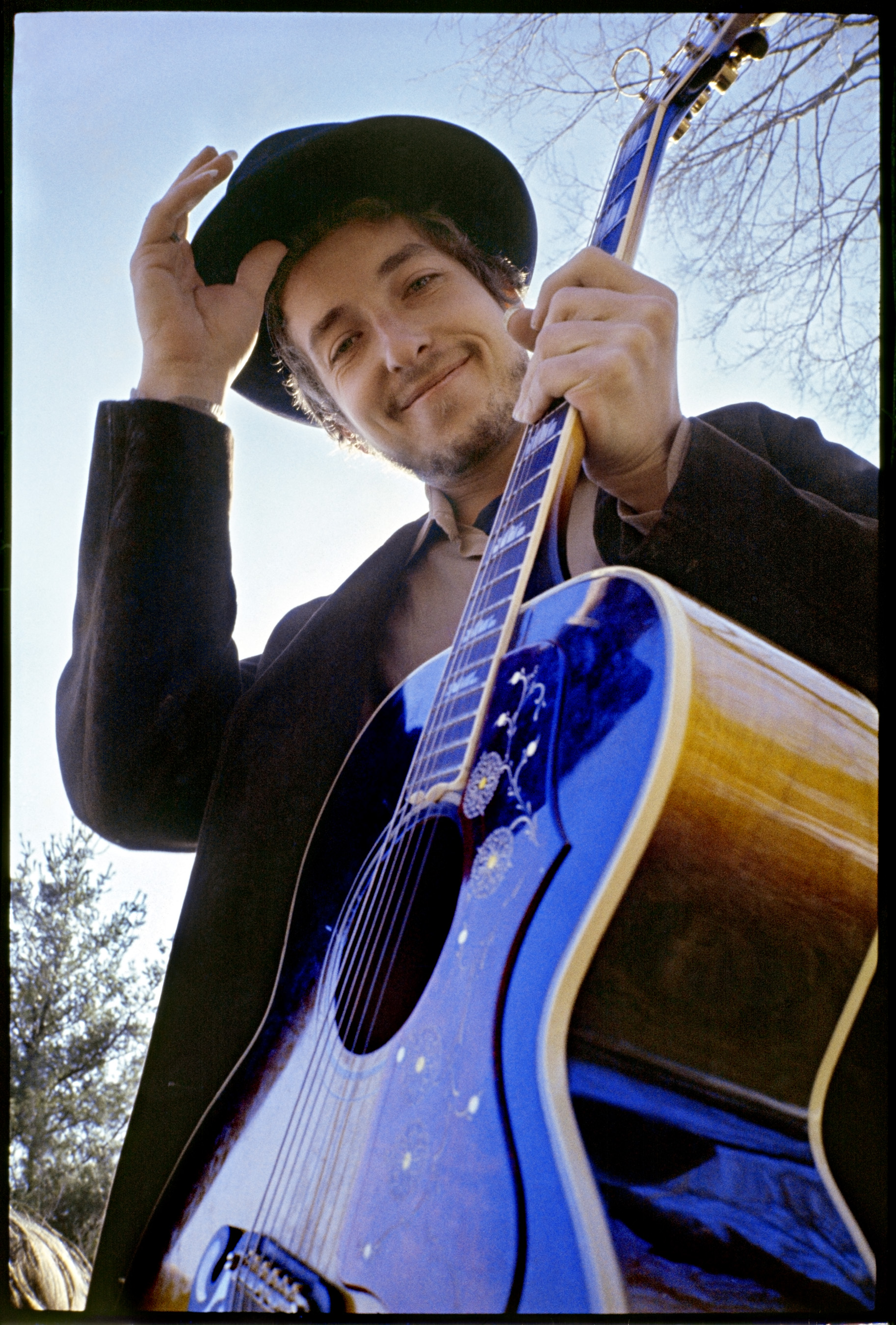
The Nashville Skyline album cover, 1969. (Photo ©Elliott Landy, LandyVision Inc.)
Born in Duluth, Minnesota to a small, but close Jewish family in 1941, Robert Allen Zimmerman spent much of his formative years in nearby Hibbing prior to transforming himself into a beloved American pop icon. Barely seven years old when Israel announced its independence in 1948, the American pop icon bearing the Hebrew name Shabtai Zisl ben Avraham has found a temporary home to be admired and studied from afar for the next year in a land 6,000 miles away where Hebrew is the language of the people and music is deeply appreciated. And it’s all in time for his 75th birthday.
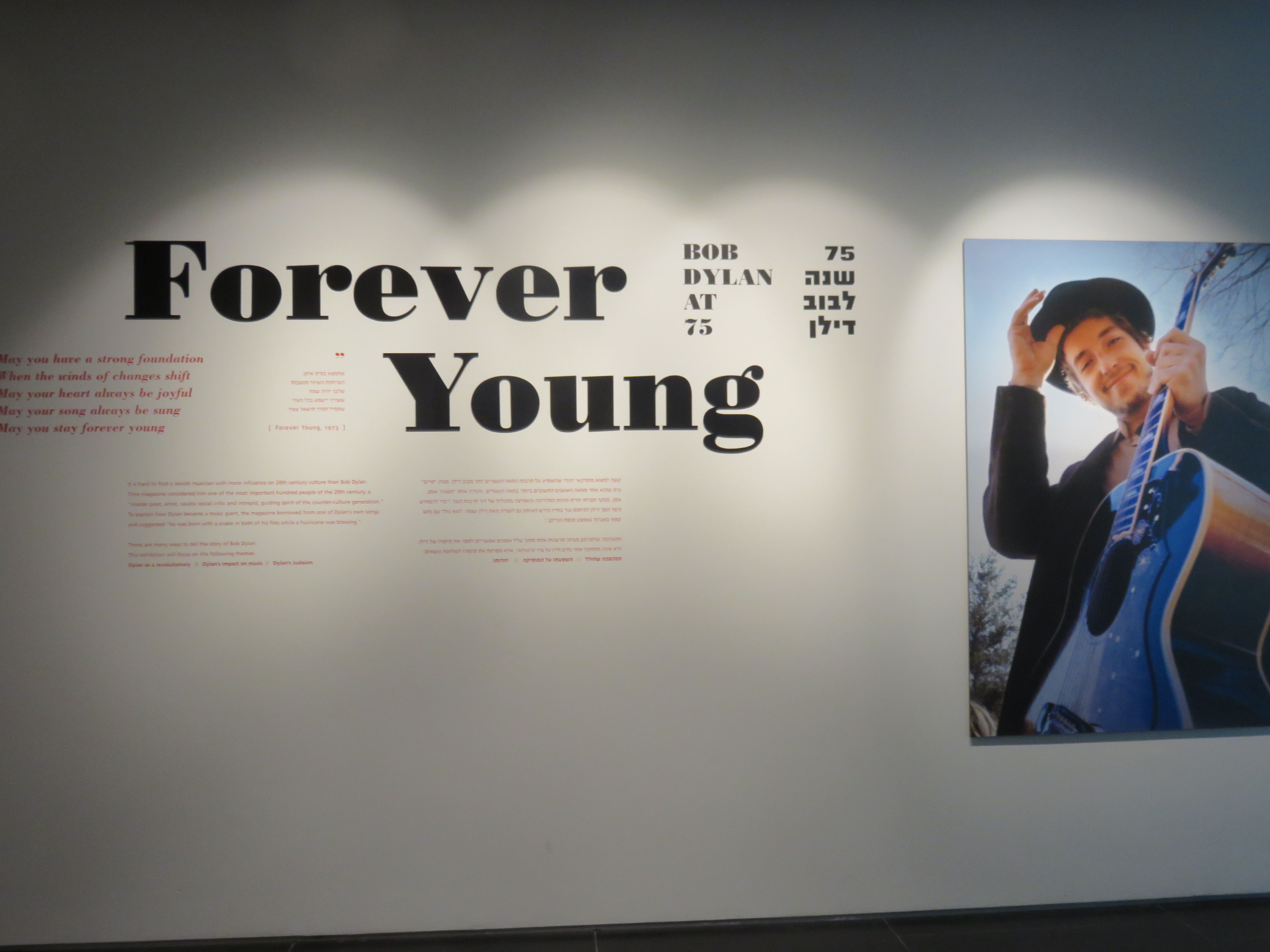
Beit Hatfutsot, the Museum of the Jewish People (formerly the Museum of the Diaspora), located on the campus of Tel Aviv University, has unveiled “Forever Young,” a very accessible and well-researched multimedia exhibit on the life and works of the enigmatic figure.
It all began more than two years ago. Following a successful exhibit at the London Jewish Museum on the work of tragic Jewish singer Amy Winehouse, Beit Hatfutsot purchased and arranged for its transfer to their third floor exhibit area. The exhibit opened to great fanfare in October of 2014 and indicated to the museum staff that there was a base of support for similar exhibits on musical heroes.

Bob Dylan playing guitar in a restaurant,1964. (Photo by Douglas R. Gilbert, courtesy of the Library of Congress)
Curator Amitai Achiman began to think about mounting his own original exhibit on a major Jewish musical figure for the museum timed to help launch its new wing slated to open in 2018.
“If you are doing an exhibition about musicians, Bob Dylan should be the first one,” Achiman mused. When he learned the songwriter was about to turn 75, the concept of a Dylan exhibit seemed to be beshert (destined), to use an appropriate Yiddish term.
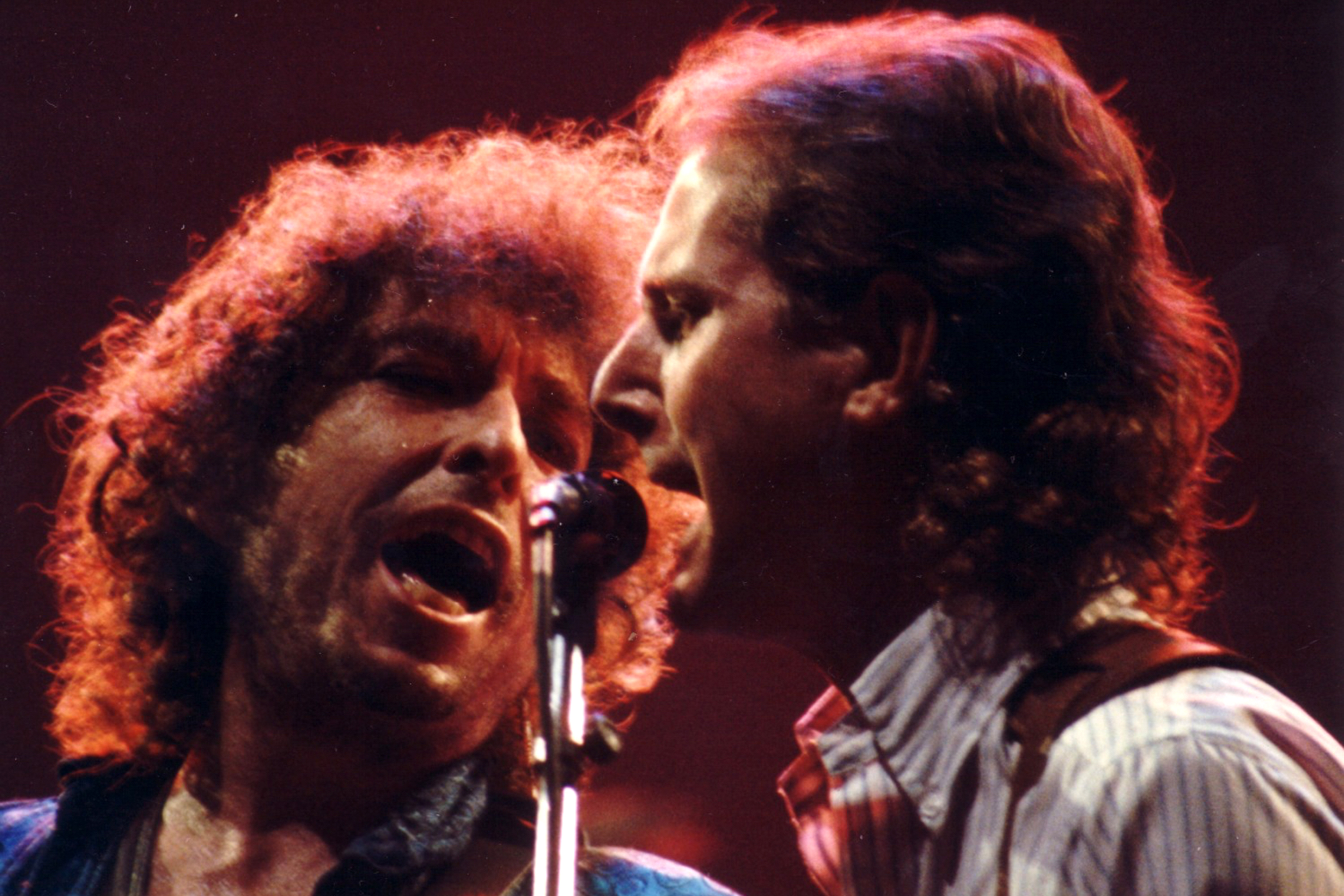
Immediately, Achiman set his sights on finding appropriate photos of Dylan that would tell his story to Israelis. He didn’t especially want studio session portraits or images shot live in concert under the garish glare of theatrical lighting. He craved intimate pictures of the artist.
There was just one problem.
Dylan was a secretive man who rarely allowed photographers into his sanctum santorum. In recent years no one fit that bill, but early in his career – during the late 1960s – Elliot Landy, the photographer who captured Dylan’s image for the famous “Nashville Skyline” photo, was allowed inside that select circle of friends and family.
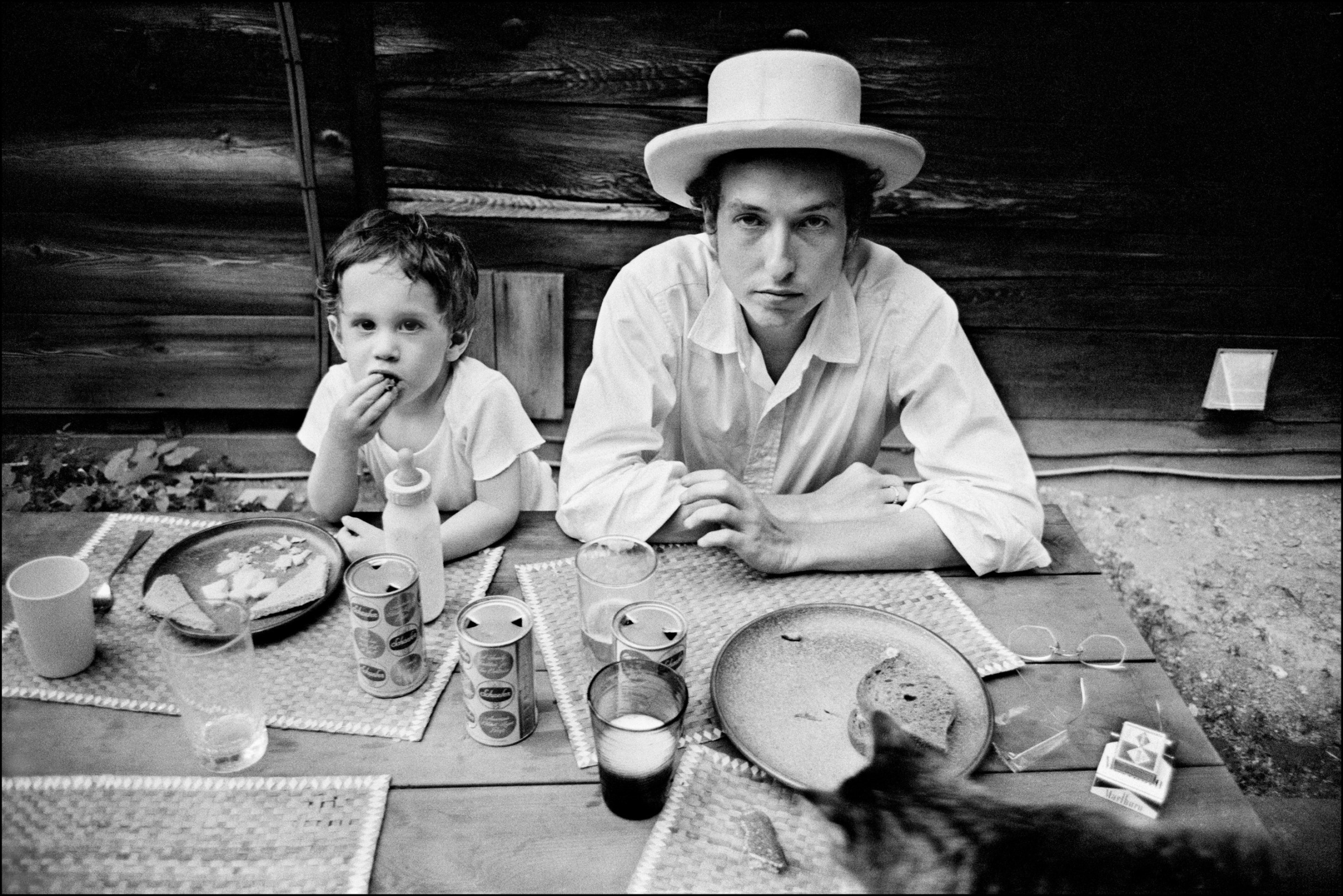
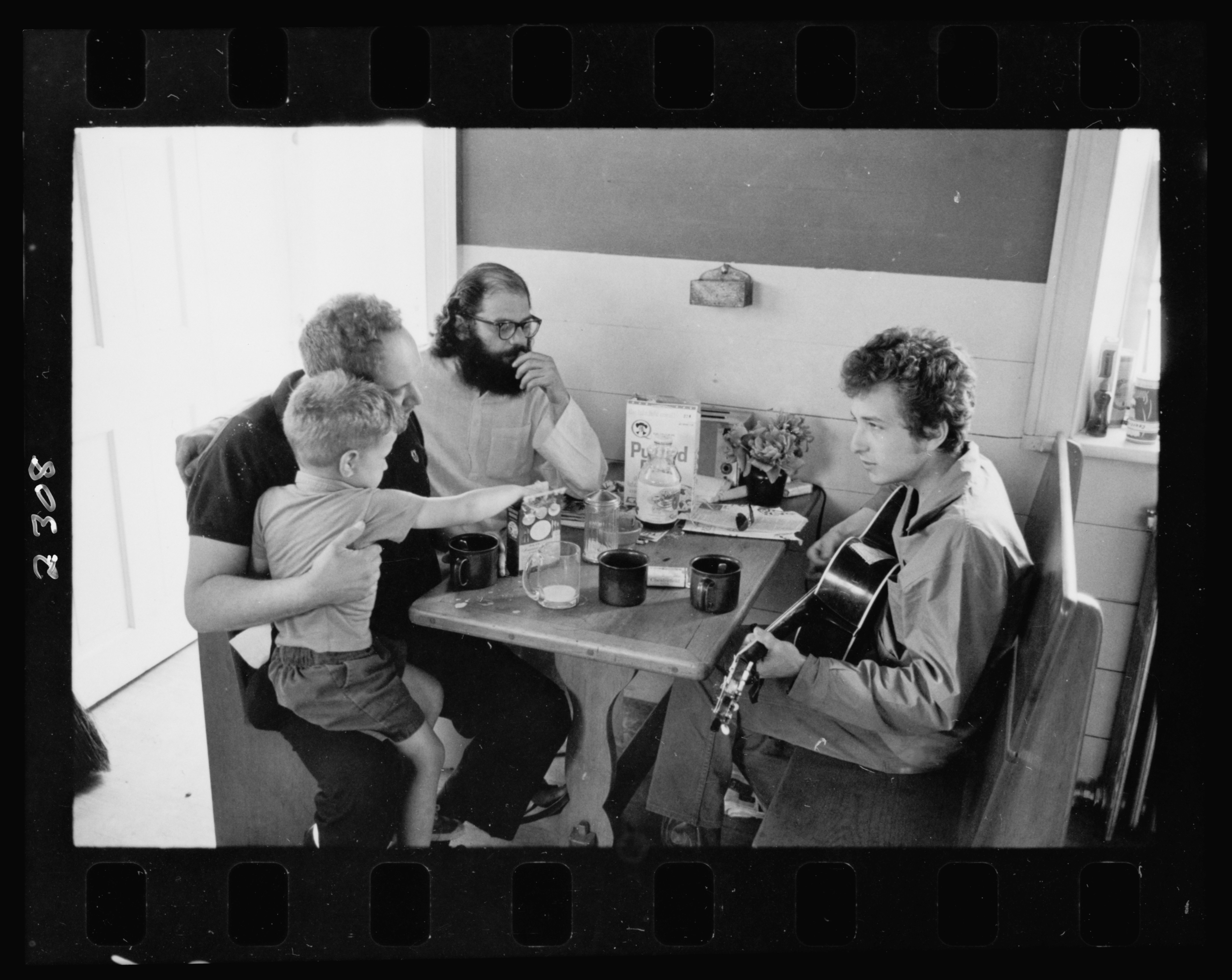
Bob Dylan with son Jesse Dylan at his Byrdcliffe home, Woodstock, NY (Photo ©1968 Elliott Landy, LandyVision Inc.)
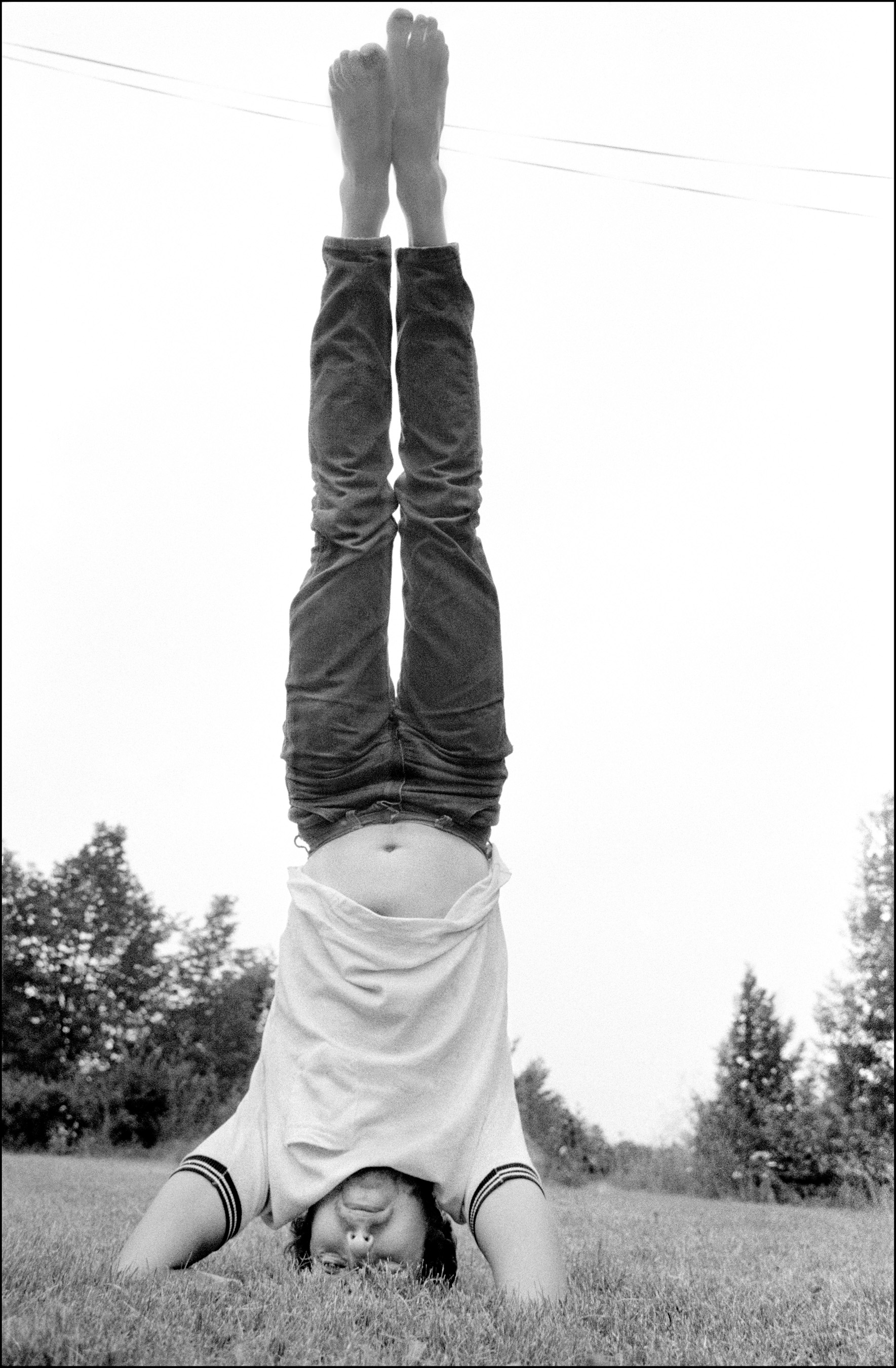
Achiman contacted Landy and secured 31 photos to adorn the walls, which became the backbone of the Beit Hatfutsot exhibit. Shot around the time of the pivotal Woodstock Folk Festival at Dylan’s home in upstate New York, Landy captured images of a very young Dylan with his wife Sara Lounds, the inspiration for his song “Sad Eyed Lady of the Lowlands” on his best-selling “Blonde on Blonde” album. There are also simple photos of a restive Dylan playing father to his three young children or more whimsical pictures like one in black and white in which he executes a perfect headstand on a verdant knoll. To these he would add other historical images, videos, album covers and short articles to more fully tell Dylan’s story.
But the Landy photographs were critical in Achiman’s estimation. These would afford very personal glimpses into Dylan’s world that few were ever privileged to see.
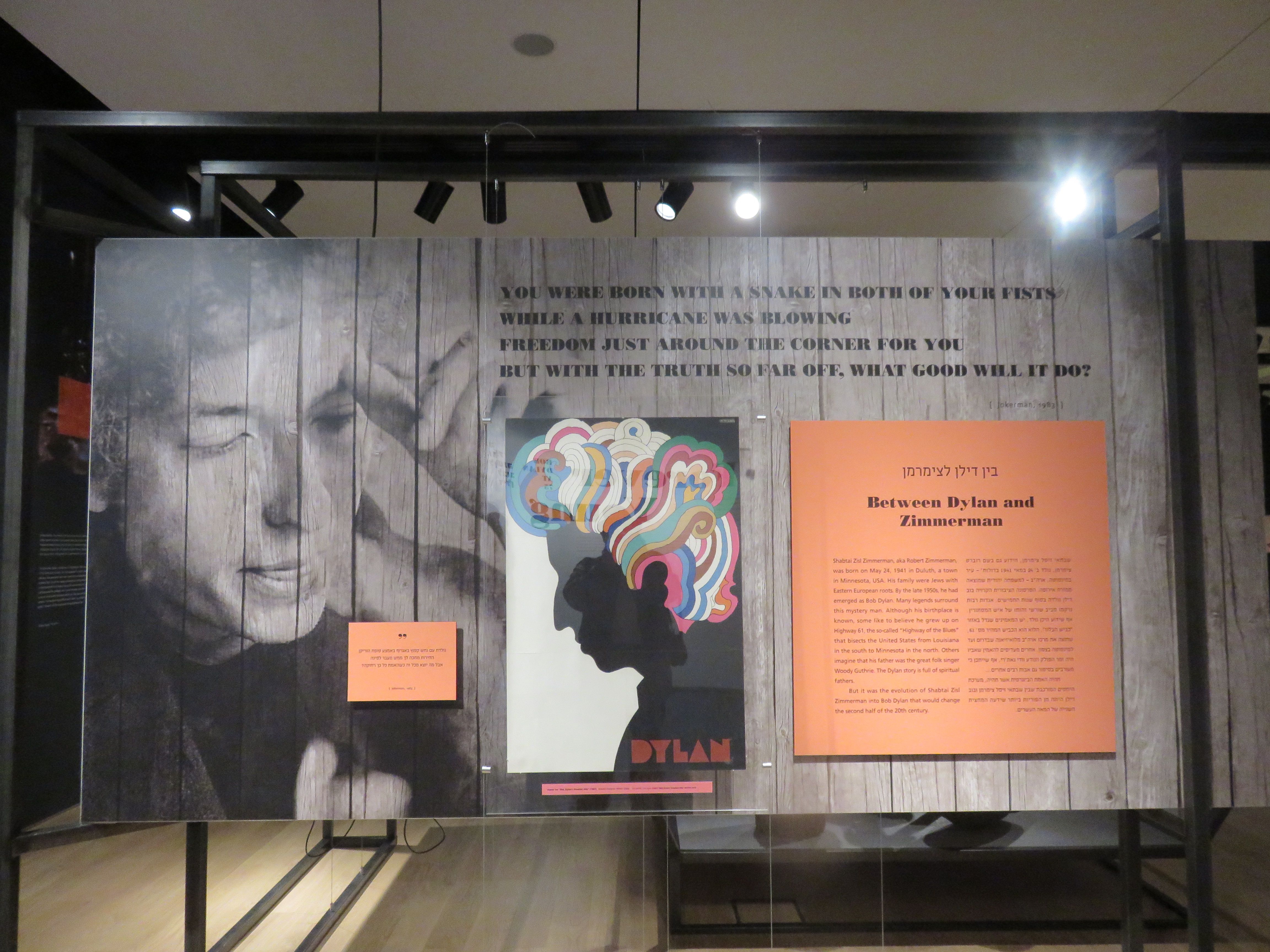
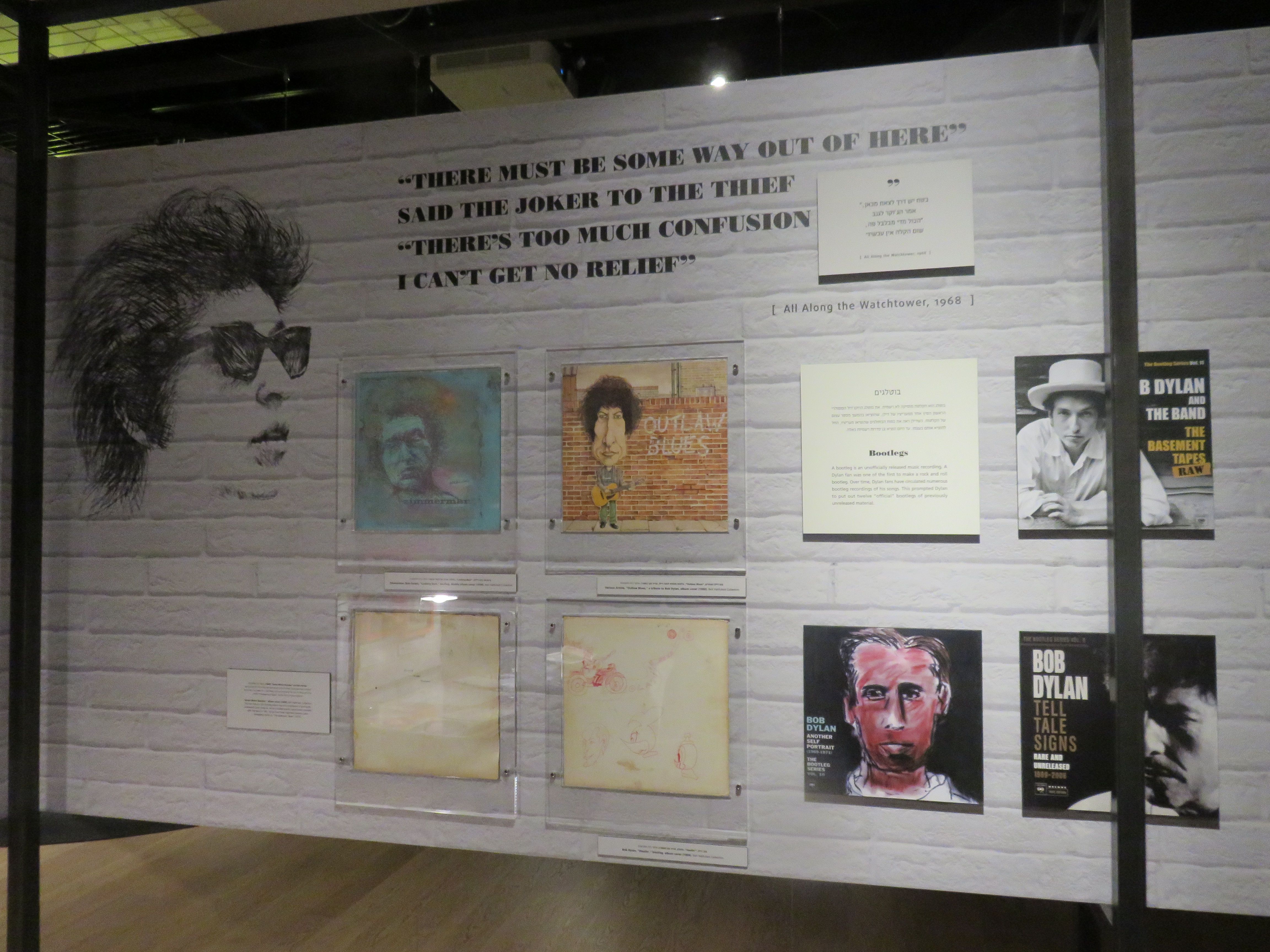
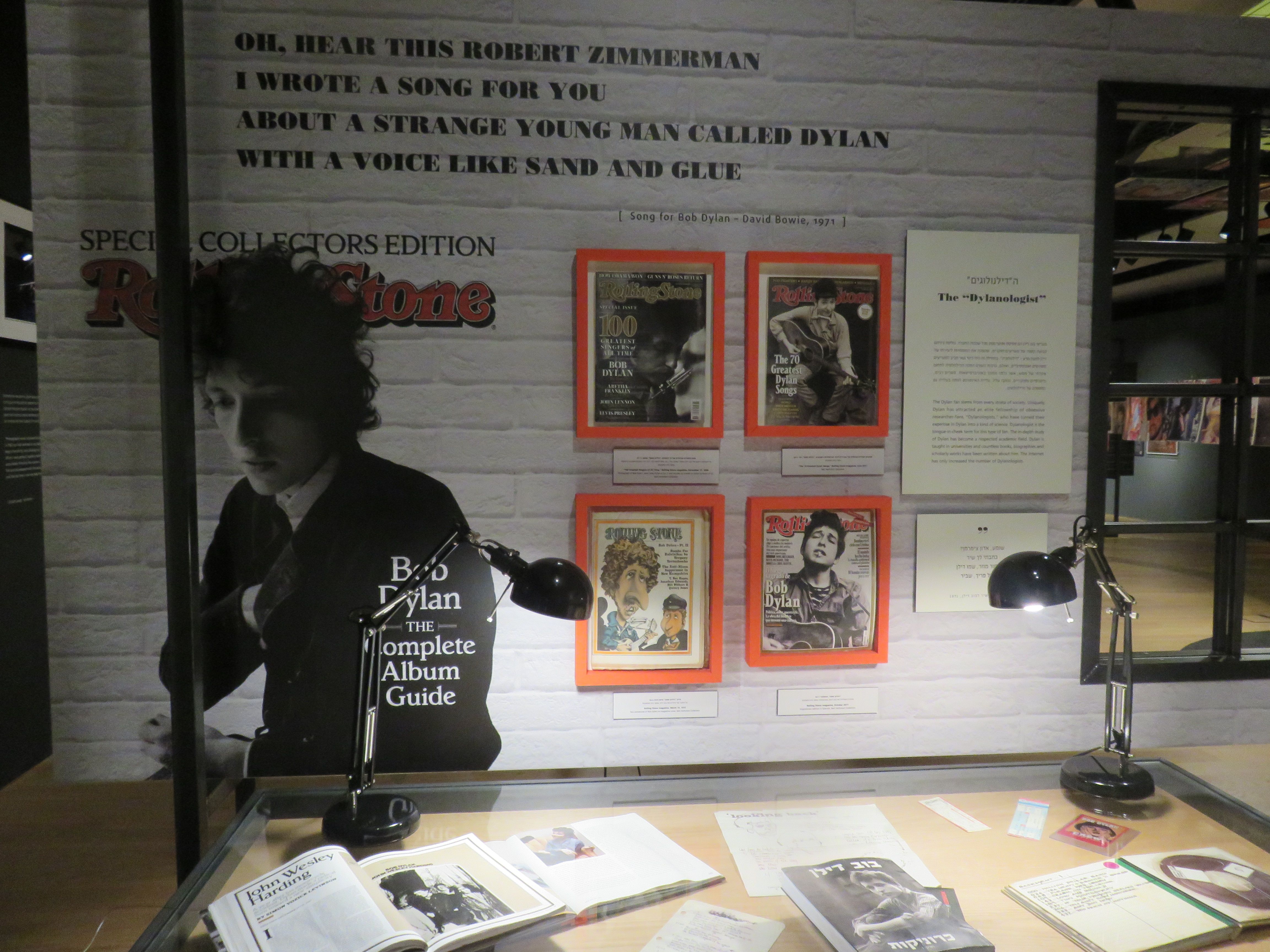
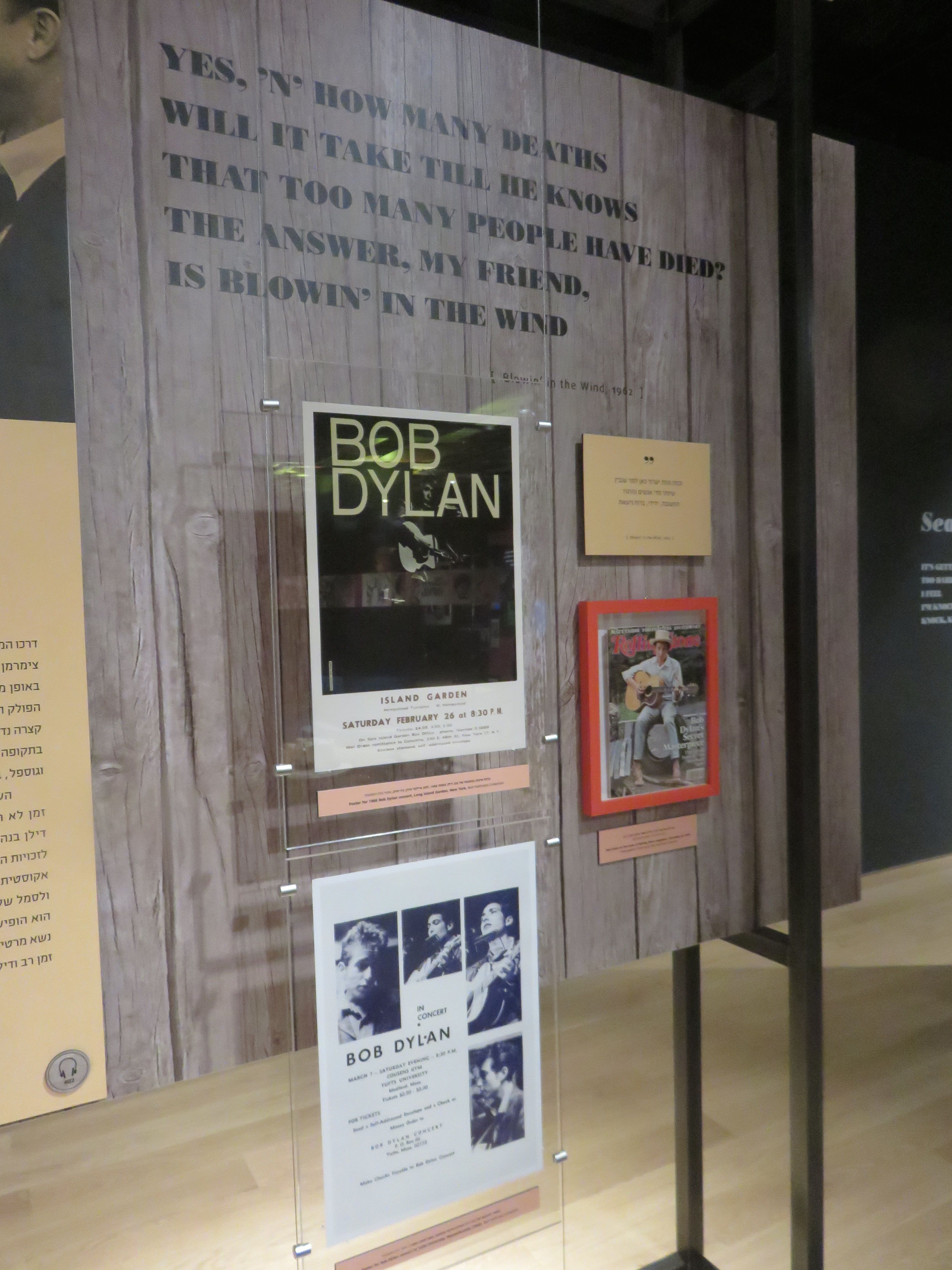
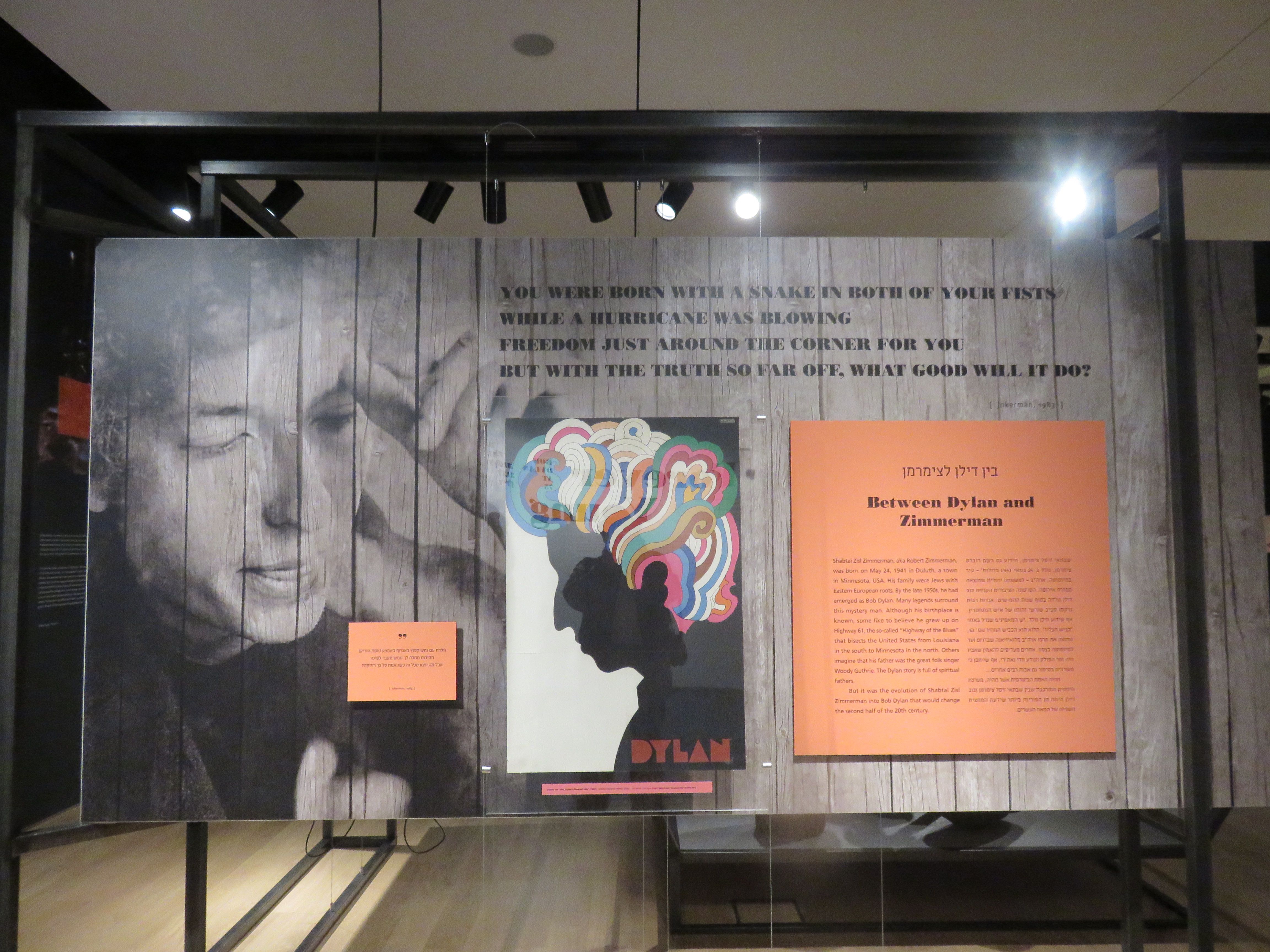
Part of the exhibit at Beit Hatfutsot on the campus of Tel Aviv University. (Photo by Alan Smason)
Achiman admits he is drawn to Dylan first because of the poetic quality of his writing. “But what also makes him great, to my opinion, is his performance,” Achiman explains in his thick Israeli accent. “When you hear him one night you won’t hear the same thing at another concert. His concerts are (heard) one time. They are unique.”
Around the same time Dylan’s music was starting to sweep the folk music and popular charts in the United States, a small record company was established in 1964 in Israel by Columbia Music (CBS) named NMC. That company grew as part of what became known as the CBS family of companies worldwide with Dylan and other CBS artists distributed in Israel exclusively by NMC. Shortly after the $2 billion buyout by Sony Music in 1987, NMC became independent, but it maintained its stable of artists and repertoire. “They are the representation of Sony in Israel,” the curator stated.
The museum aggressively sought permission from NMC for the performance rights of Dylan’s work. NMC and Beit Hatfutsot entered into an arrangement in which NMC would offer video performances and the rights to display Dylan’s work.

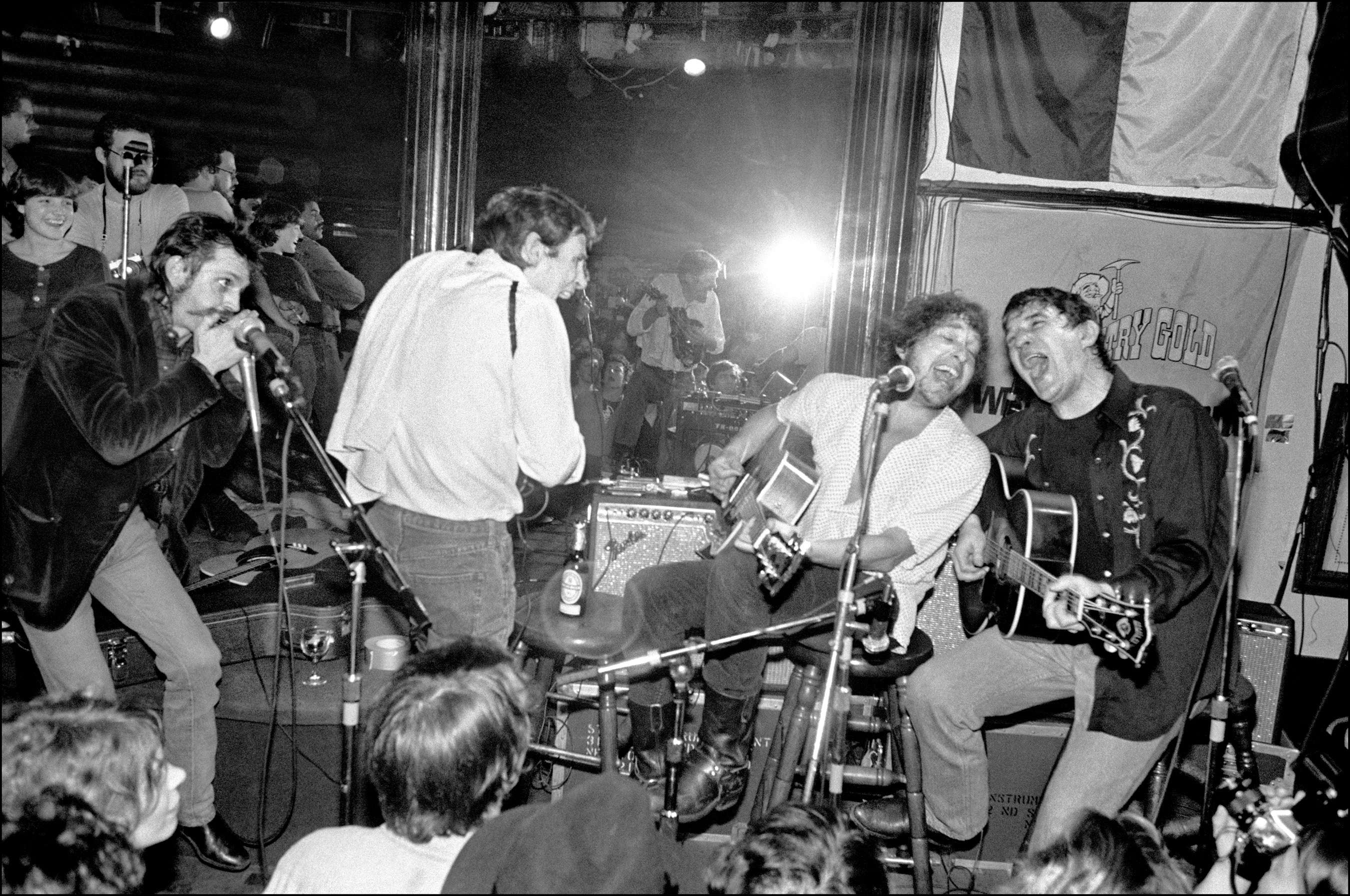
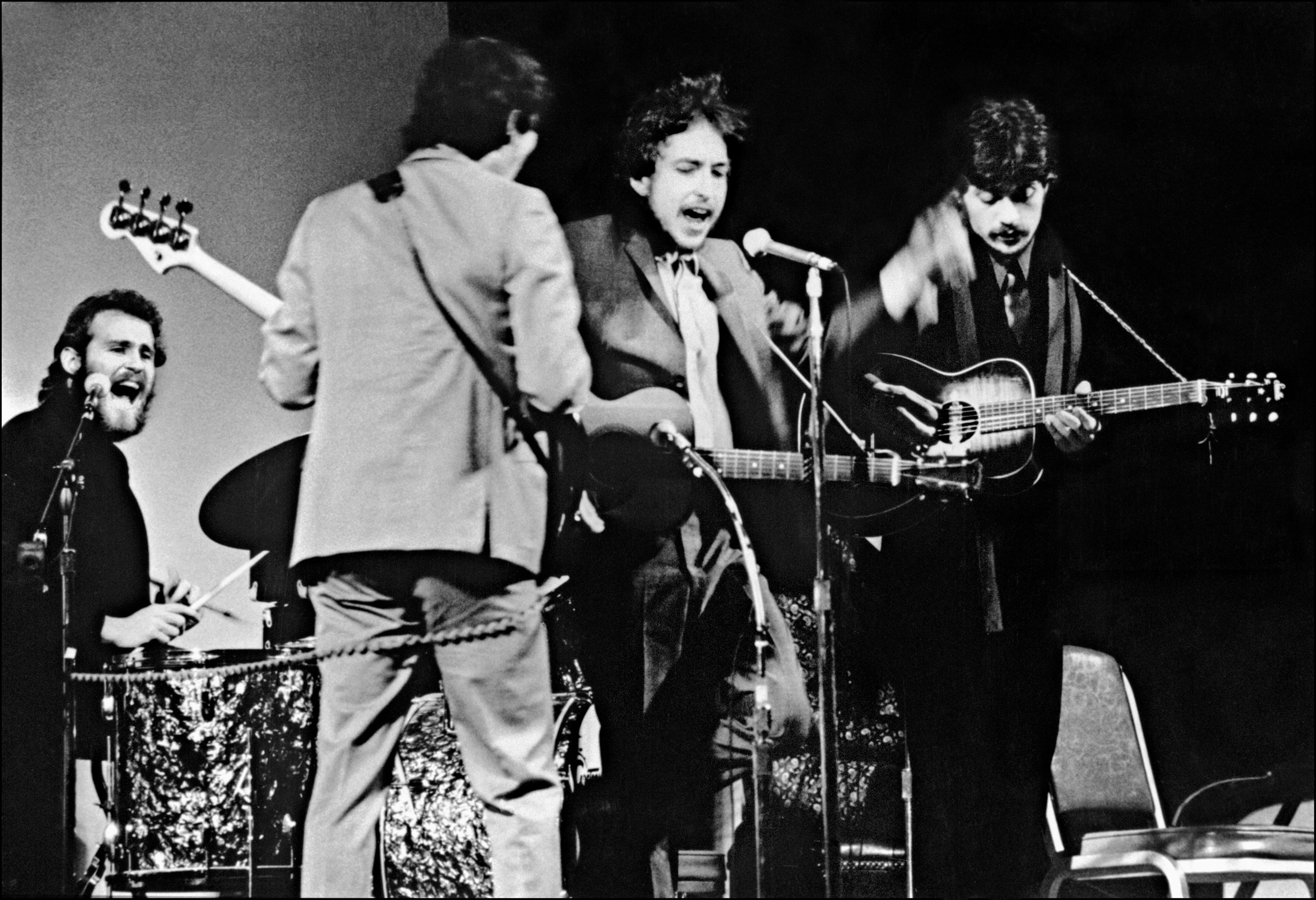
Bob Dylan and Pete Seeger at the Newport Folk Festival in 1964. (Photo by Duncan Hume, courtesy of Library of Congress)
“It was very important to show the representation of Columbia Records in Israel,” Achiman continued. The collaboration brought about the bulk of the materials on display at the museum.
The dark walls of the exhibit are a constantly changing palette on which the videos supplied by NMC are projected and speakers transmit the live performances throughout the hall. The curator had to make certain that the final selections would span Dylan’s entire recording career. “It was very hard to choose,” he admitted.
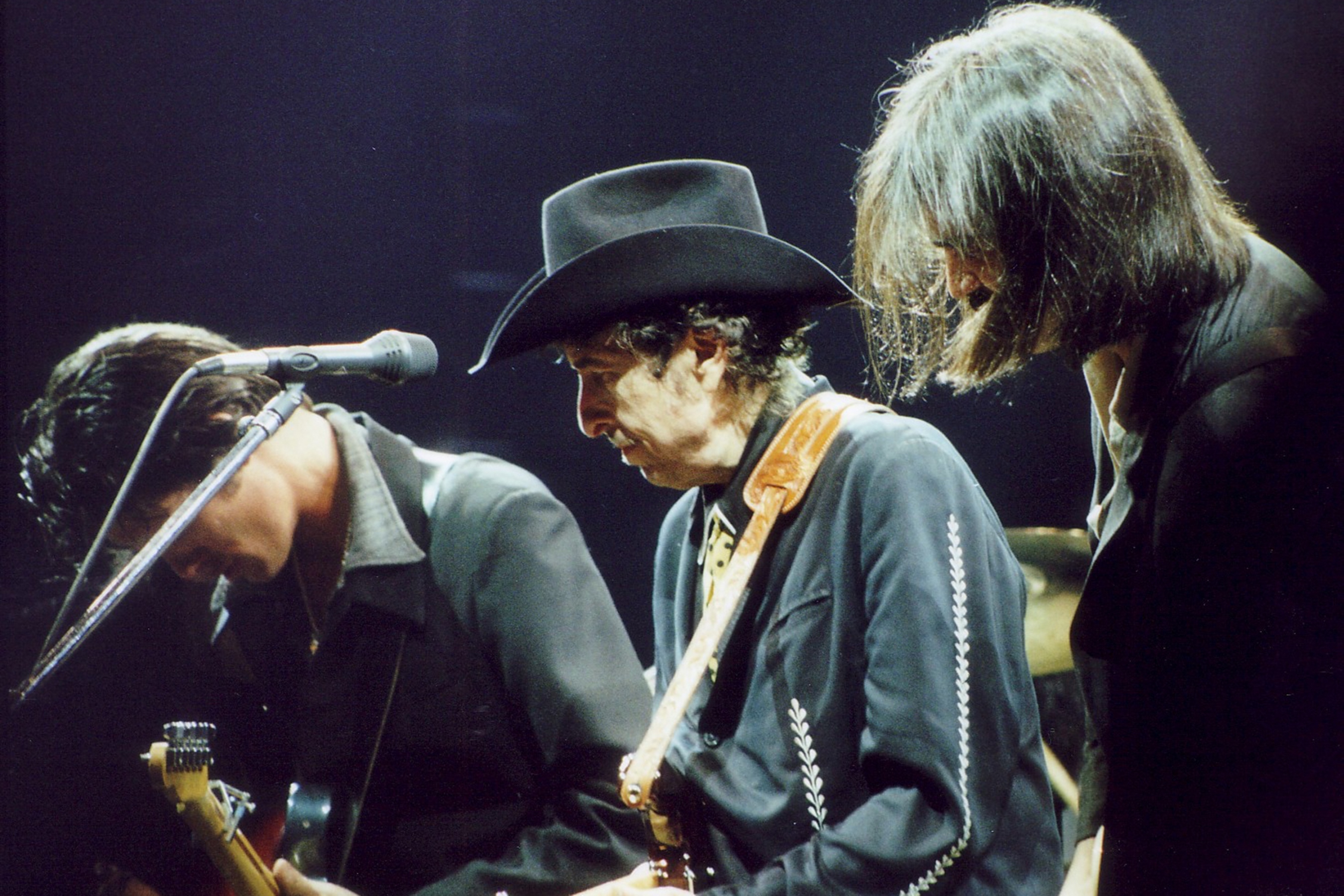
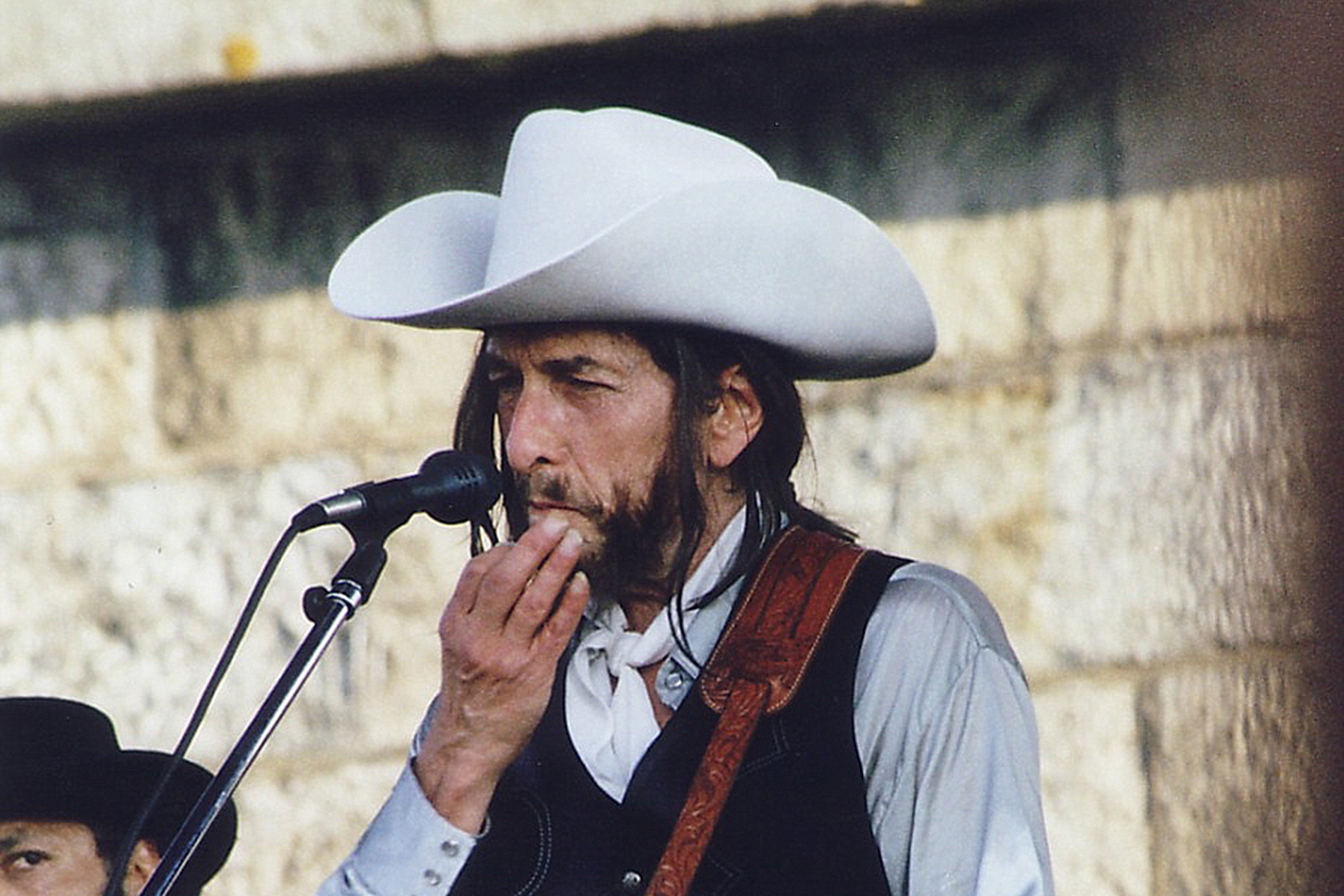
Over the course of many years a fan and photographer, Dennis Hume, amassed a collection of Dylan images captured surreptitiously live in concert across the globe. The amateur quality of the photos captured a look the curator thought would work well with the other portions of the exhibit and showcase the dedication of Dylan’s fans. A central post with dozens of Hume’s images is a prominent part of the exhibit.
Being a museum dedicated to the Jewish people, there is extensive documentation on Dylan’s connection to Judaism. One photo shows him meeting with the last Chabad Rebbe in Brooklyn and accepting a siddur (prayerbook) from him. Two other shots show the bearded figure captured twice on different days at the Western Wall.
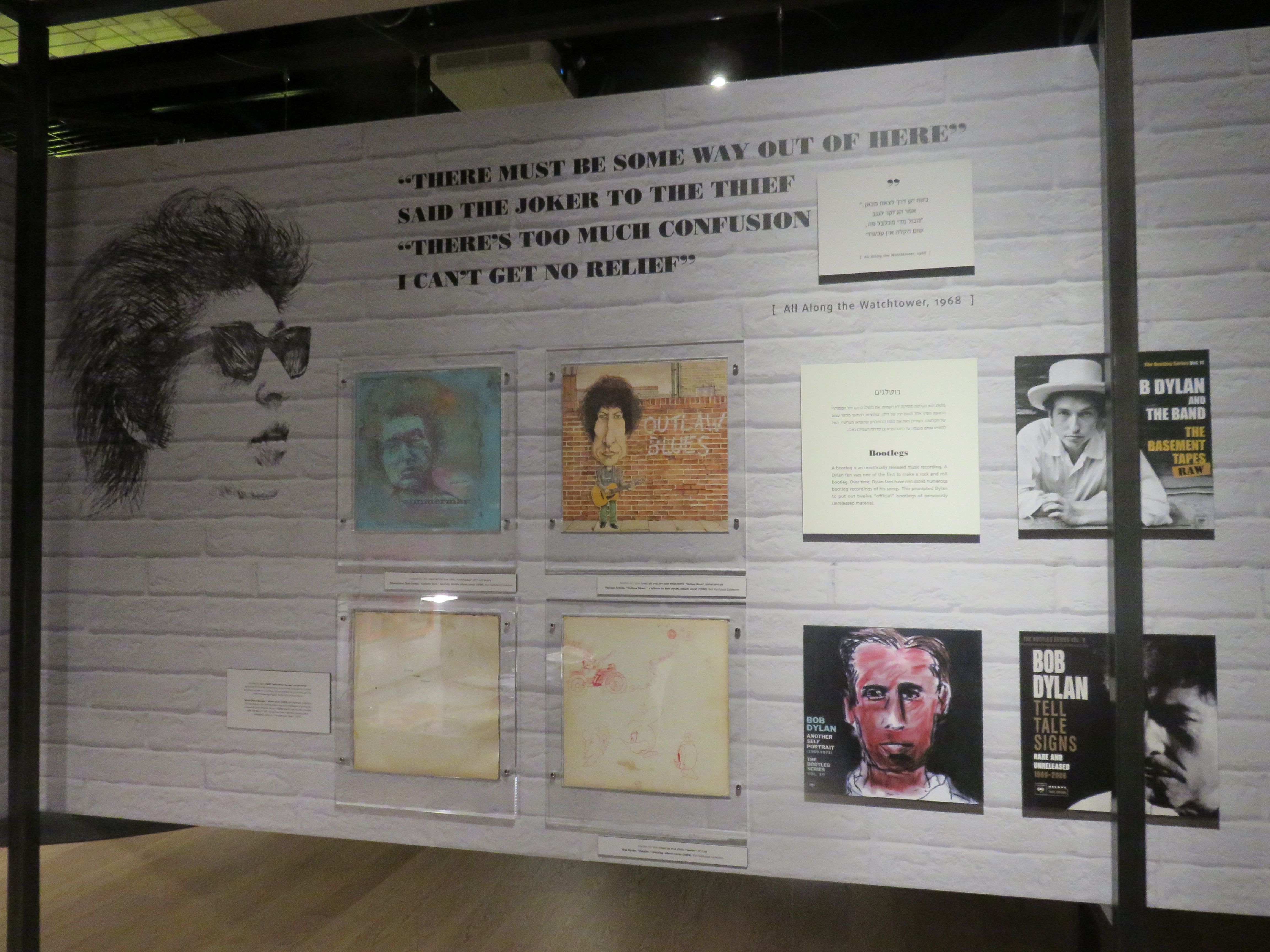
Part of the exhibit deals with bootleg recordings. (Photo by Alan Smason)
Part of the exhibit details Dylan’s connection to the Jewish State too. It is revealed that following his return from Israel to New York in 1971, Dylan applied to become a temporary member of Kibbutz Neve Eitan Beit She’an Valley for a year. In his application to the kibbutz, he indicated his intent to become a full fledged member after the trial period was over. His overtures were never answered.
Also documented are his concert tours to Israel, beginning in 1987, which the exhibit describes as “far from his best performance.” Despite his initial missteps, Dylan was warmly received and critically acclaimed in later appearances, the exhibit notes, in 1993 and 2011.
Several displays allow visitors to listen over headphones to Dylan music or to sit in easy chairs and view videos. One area has every Rolling Stone interview conducted with Dylan assembled in one book for easy access. A children’s book Dylan penned is also on display.

Off duty IDF soldiers relax while watching a video of Bob Dylan. (Photo by Alan Smason)
Achiman regretted not being able to secure Dylan’s first guitar for the exhibit. “It was just too expensive,” he noted.
“This exhibit speaks about one of the most important Jews in the 20th century,” Achiman boasted. “You can see how this Jew was flourishing in the culture of the 20th century and not just the Jewish culture. That’s interesting.”
If the exhibit fails to cover one item, it would be Dylan’s public flirtation with Christianity, although the curator doesn’t seem to have a problem with that. “It think it makes it more interesting,” he said. “You know, he had to find his own way and he needed to explore things. He wanted to try to be Christian, but it’s okay. He came back. One year after that he made a bar mitzvah for his son at the Western Wall.”
“Bob Dylan: Forever Young” continues at Beit Hatfutsot, the Museum of the Jewish People, on the campus of Tel Aviv University from now through 2017. Parking costs 25 NIS and admission is 45NIS for adults.