


Tisha B’Av observed this Sunday
For Jews worldwide, Tisha B’Av, which literally means “the ninth of [the month of] Av” is the saddest day on the Hebrew calendar. It commemorates the destruction of both the First and the Second Temples that the rabbinic sages tell us occurred on the same date some 420 years apart.
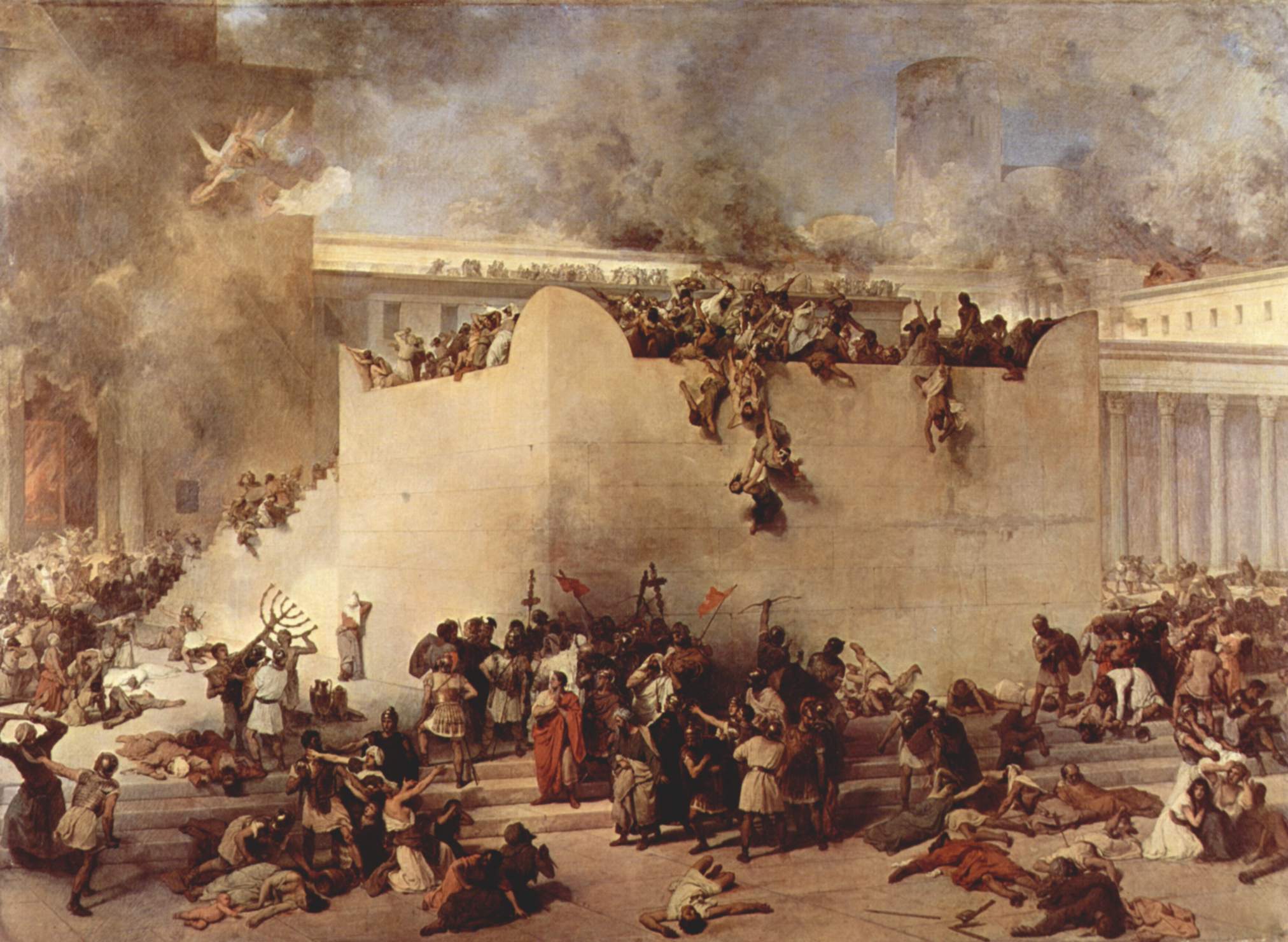
Destruction of the Second Temple by the Romans as depicted by Francisco Helvez (Photo by Wikimedia)
In the event that Tisha B’Av falls on Shabbat, which is the case this year, the public mourning period is delayed for a day. The fast associated with the holiday is postponed until Saturday night.
The reason, of course, is that Shabbat is a customary day of celebration where eating and drinking is expected. No mourning is ever allowed on a Shabbat.
Marital relations encouraged on Shabbat are forbidden when the actual date of Tisha B’Av occurs on Shabbat, as they are also forbidden when the holiday is observed on the 10th of Av.
Torah study normally encouraged on Shabbat is de-emphasized. Except for passages expected to be read, additional study or readings from the Pirkei Avot (“Ethics of the Fathers”) are not allowed.
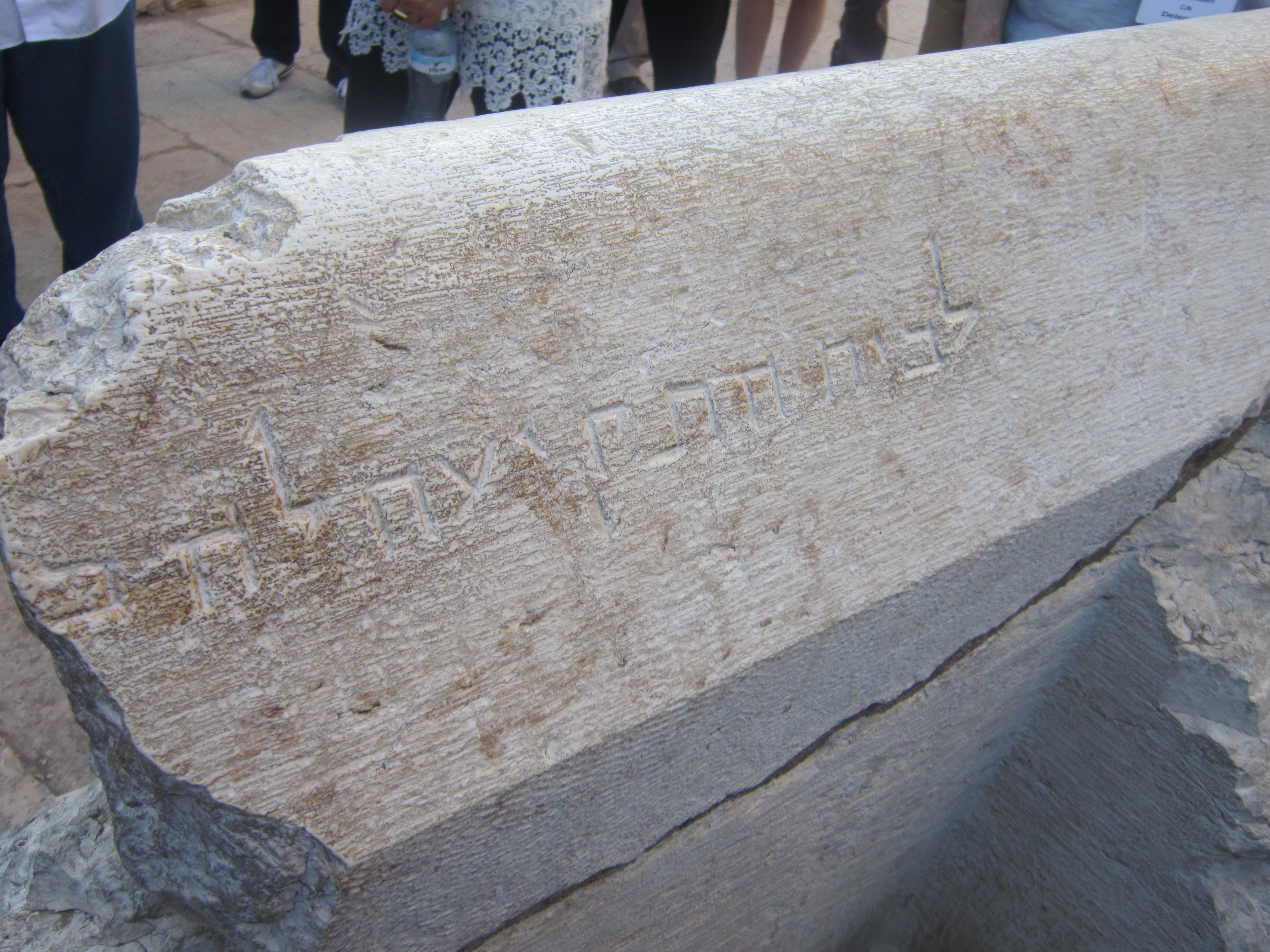
Cornice broken from outer wall of the Second Temple, bearing Hebrew writing on the interior. The destruction was described by Josephus in the 1st century C.E. (Photo by Alan Smason)
Because Shabbat moves directly into an observed holiday, the Havdalah prayers are omitted on Saturday night and recited on Sunday night instead with slight variations. The prayer over spices, for example, is not recited.
Leather footwear is not allowed on Tisha B’Av. Anyone wearing leather shoes at the beginning of the observed holiday on Sunday night is expected to don non-leather ones.
Among other observant prohibitions on Tisha B’Av is the very act of greeting another. For this reason gifts, a form of greeting, are not allowed to be sent. In the case of returning a greeting from someone who did not know better or a non-Jew, it is advised to return the greeting at low breath so as not to be stern with the party. Sitting on chairs is not traditionally done until after midday. Sitting on the floor or on a pillow is encouraged prior to that. Any prohibition on Shabbat is carried over as far as work is concerned to Tisha B’Av. Some allowances are made as to where the cost to a business would be too injurious. Any form of entertainment or pleasurable exercise is to be avoided.
While the list of above rules is primarily observed in the Orthodox and the Conservative branches of Judaism, the Reform movement (URJ) has had a history of distancing itself from recognizing the importance of the First and Second Temples and its history of animal sacrifices. When organizers met in Pittsburgh in 1885, they specifically de-emphasized the connection to the Temples and the hope that there would one day be another temple erected.
“We consider ourselves no longer a nation, but a religious community, and therefore expect neither a return to Palestine, nor a sacrificial worship under the sons of Aaron,” they announced. Reform rabbis rejected the Almighty as being directly involved in the affairs of man and the hope of the coming of a Messiah was also eliminated. Passages in the daily worship prayers that were approved by the body deleted references to those beliefs.
As a result, the tradition of Tisha B’Av observance has evolved in the Reform community, especially since the founding of the modern State of Israel. Many Reform temples that previously rejected Zionism and refused to honor Israel by placing a flag within their sanctuaries have softened that position. Nevertheless, a return to the practice of animal sacrifice and the hope of a Third Temple for the Jewish people is still firmly denied by Reform leaders. Tisha B’Av has largely become a day to commemorate the terrible things done to the Jewish people on or close to the Hebrew date. Among many others these include several pogroms launched against Jews, the institution of the Spanish Inquisition, the expulsion of Jews from England and Spain, the beginning of World War I, the declaration of war on Germany in World War II and the Holocaust that followed.
(Editor’s note: In deference to the religious observant community, the CCJN will not update posts to the website until Tisha B’Av is over on Sunday night.)
