


Trestman Lecture Discusses Margolin’s Behind-the-Scenes Work at Nuremberg
By NICHOLAS HAMBURGER, Special to the CCJN
Raised in New Orleans’ Jewish orphanage in the early 20th century, Bessie Margolin defied her underprivileged background to become a pioneering lawyer who championed workers’ rights before the Supreme Court, as well as a significant figure in the Nuremberg trials that followed World War II.
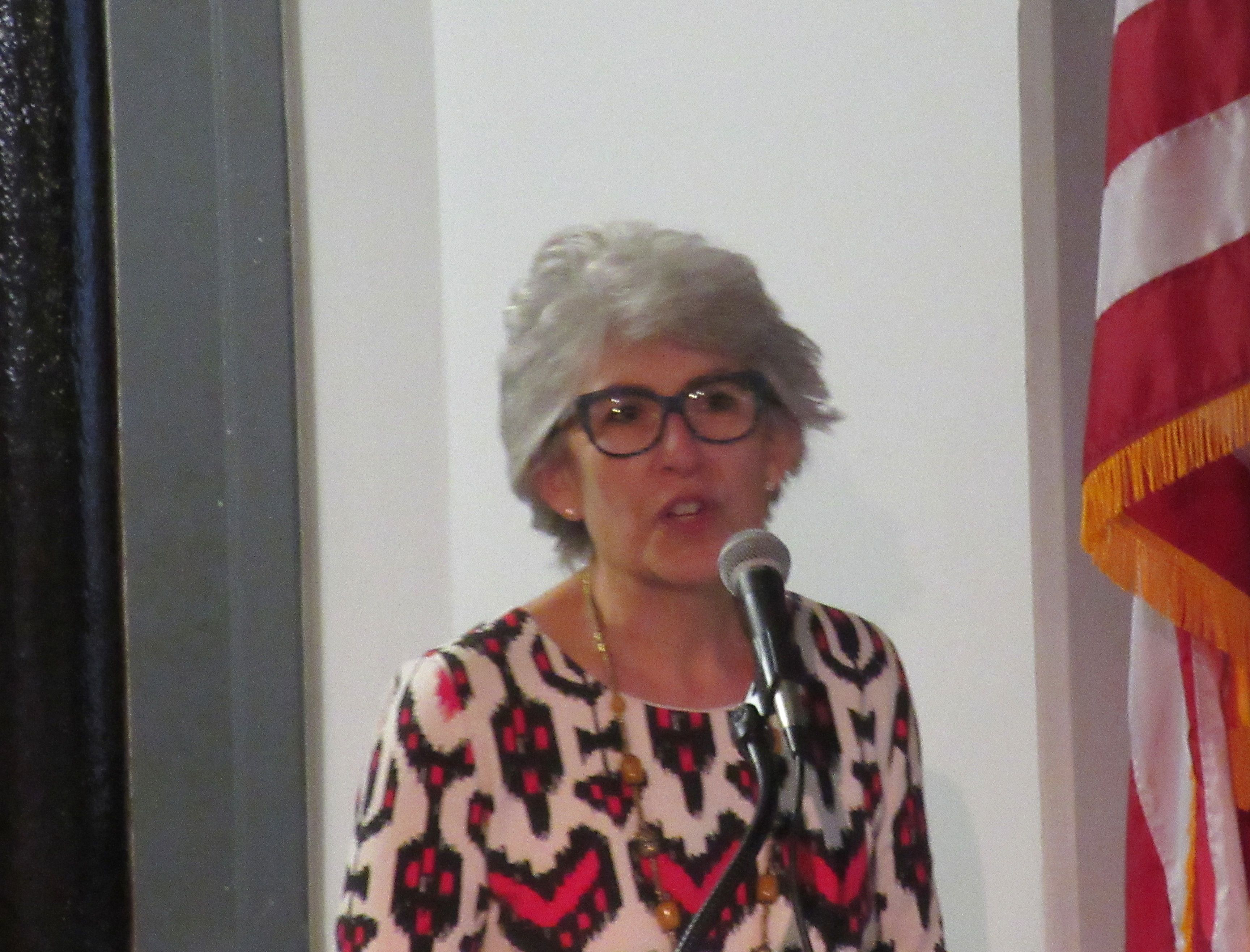
Marlene Trestman delivering a Lagniappe Lecture (photo by Nicholas Hamburger)
On Wednesday, November 29, Marlene Trestman, a former special assistant to Maryland’s attorney general and the author of “Fair Labor Lawyer: The Remarkable Life of New Deal Attorney and Supreme Court Advocate Bessie Margolin,” delivered a Lagniappe Lecture at the National World War II Museum, discussing Margolin’s brief but consequential involvement in the second phase of the Nuremberg war crimes trial.
According to Trestman, Margolin spent six months in Nuremberg in 1946 on loan from the U.S. Department of Labor, where she served as an attorney from 1939 until her retirement in 1972. Before Margolin arrived in Nuremberg, the United States’ prosecution of major Nazi war criminals in front of the International Military Tribunal (IMT) had slowed to a crawl.
Trestman explained that in an effort to expedite the proceedings, Supreme Court Justice Robert H. Jackson, who was in charge of the United States’ prosecution, selected Telford Taylor, one of his top prosecutors, to lead American legal action against lesser-known Nazi war criminals.
Taylor quickly assigned Margolin the task of structuring the legal foundation for what was named the “Subsequent Proceedings,” a second phase of trials designed to prosecute less notorious Nazi officers, judges, industrialists, and concentration camp doctors who had been accused of perpetrating crimes like slave labor, human experimentation, and murder.
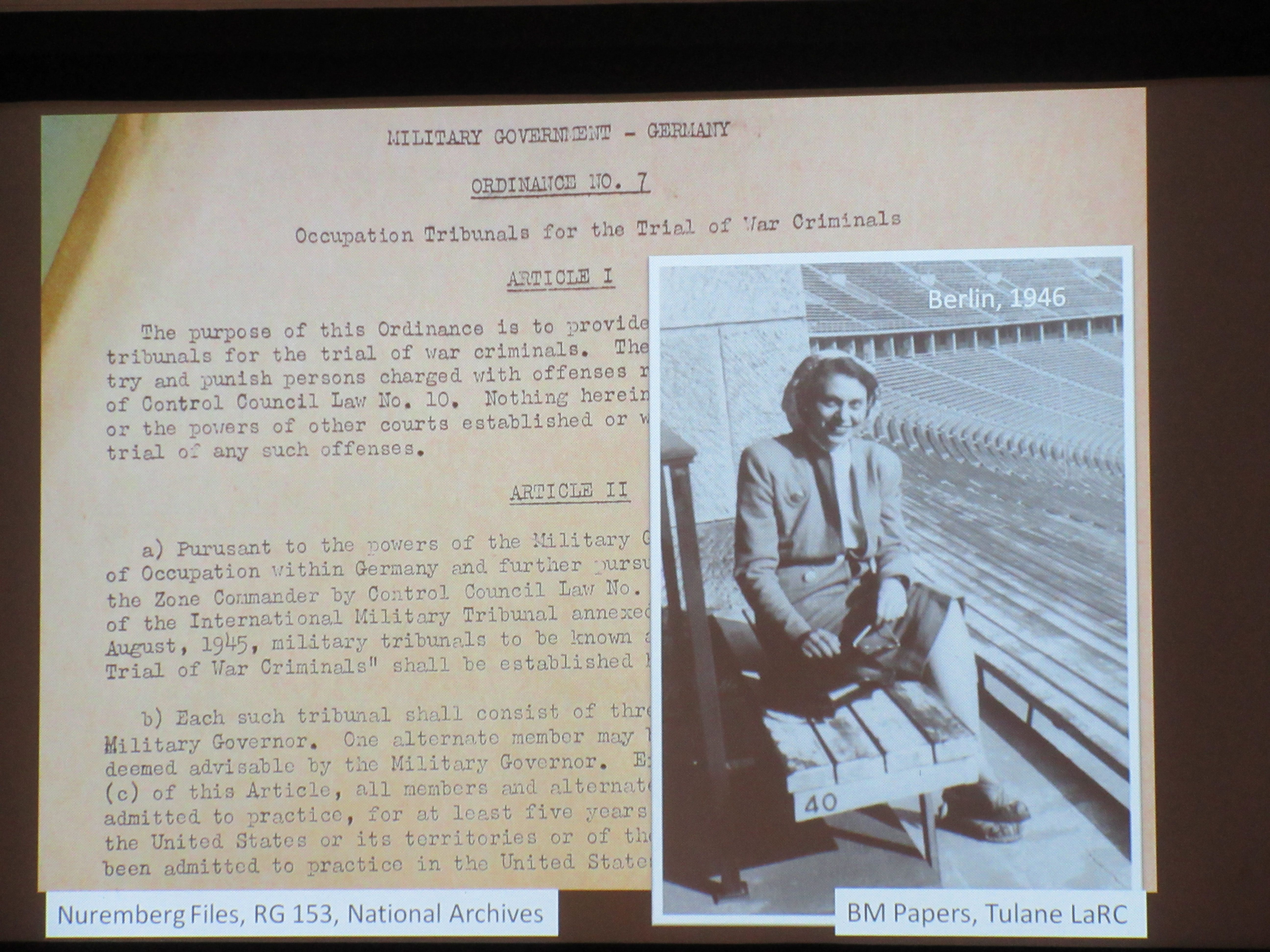
A slide from Trestman’s presentation showing Margolin in Berlin in 1946 (photo by Nicholas Hamburger)
Margolin had already established herself in the United States as a dynamic federal attorney known for her defense of the Fair Labor Standards Act of 1938, the law that created the basis for minimum wage and overtime pay.
According to Trestman, Margolin “remains, to this day, one of only six women” to argue before the Supreme Court, and she would go on to enforce the Equal Pay Act of 1963, which sought to eliminate wage disparity between men and women.
Trestman also pointed out that Margolin wrote the first draft of an order that created an American Military Tribunal, which went on to operate as a separate entity from the slower moving IMT comprised of American, British, French, and Soviet legal teams.
After a revision of Margolin’s draft, the American Military Tribunal was no longer beholden to the IMT’s legal findings, an alteration that may have been freeing for the American prosecution.
Through her work in Nuremberg, Trestman stated, Margolin solidified her connection to her Jewish identity. “It could have been her own family, had they remained in Russia,” Trestman said in an interview with the CCJN. “I think that really emboldened her sense of her religious identity, although not in Orthodox, observant ways.”
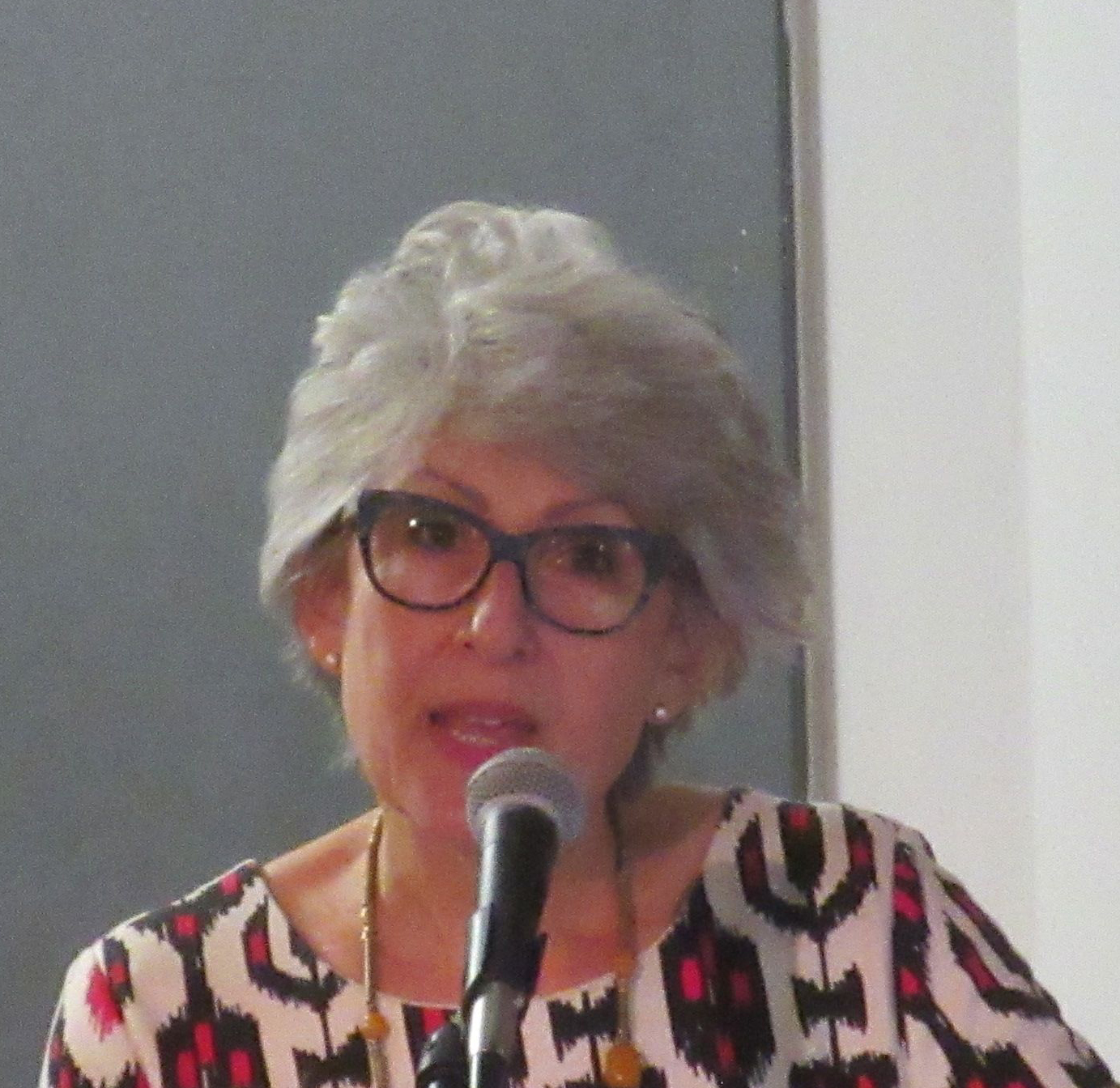
Marlene Trestman (photo by Nicholas Hamburger)
Though Margolin was born in the United States, both her parents were Russian-Jewish immigrants. Her mother died in childbirth during Margolin’s youth, and Margolin was subsequently sent to the Jewish Orphan’s Home in New Orleans, which, Trestman noted in her lecture, is “where the JCC now stands.” Margolin graduated in 1925 from Isidore Newman School after it offered a number of scholarships to residents of the nearby orphanage.
Trestman likewise graduated from Newman — she was named Distinguished Alumnus of Newman in 2004 following her own thirty-year career in law. The similarities between Margolin and Trestman do not end there; like Margolin, Trestman was orphaned in childhood, and she grew up receiving support from the Jewish Children’s Regional Service, the modern incarnation of the orphanage in which Margolin was raised.
In 1974, Trestman and Margolin met for the first time in Washington, D.C. Trestman was a freshman in college, Margolin two years removed from retirement. The 50-year age difference did not deter them, and Trestman, who attended Goucher College in nearby Baltimore, began spending weekends at Margolin’s home in D.C.
“I remember she was the first woman lawyer I ever met,” Trestman said. “How could it not have influenced me?”
When Margolin died in 1996, Trestman realized no writer had ever documented her life. Nine years later, Trestman began a decade-long project that culminated in 2016 in the publication of her L.S.U. Press biography of Margolin.
If Trestman sees herself as a continuation of Margolin’s legacy, she does not say so. Instead, she suggested someone else has inherited Margolin’s tradition of tireless feminist advocacy in court. “Before there was a ‘Notorious R.B.G.,’ as Supreme Court Justice Ruth Bader Ginsburg is affectionately known, there was an audacious Bessie Margolin,” Trestman said in her lecture.
The appreciation is apparently reciprocal. At the end of her lecture, Trestman quoted a handwritten letter she received following the publication of her biography. “‘Thank you for enabling me and legions of other lawyers to appreciate what a frontrunner [Margolin] was,’” Trestman read. “‘Cheers, Ruth Bader Ginsburg.’”
