


Tulane one of four colleges named as part of US Dept. of Education investigation into antisemitism on campus
By ANDREW LAPIN and ALAN SMASON, Exclusive to the CCJN
(JTA) – Tulane University is one of four colleges named today as part of a new series of U.S. Department of Education investigations into the handling of discrimination at colleges and school districts since Thanksgiving. This reflects the latest expansion of the department’s scrutiny of civil rights issues since the outbreak of the Israel-Hamas war.

Palestinian activists in the rear of a pickup truck taunt Tulane students from Freret Street just before the scene turned violent on Oct. 26, 2023. (Screenshot)
In addition to Tulane, Rutgers University, Santa Monica College and Union College in Schenectady, New York are all facing allegations that they failed to respond adequately to antisemitism, spokespeople for each of the schools confirmed to the Jewish Telegraphic Agency and the CCJN.
At least four — and almost certainly more — of the new investigations are related to antisemitism, which the department vowed in October to combat on college campuses using all of its available tools.
Michael Strecker, assistant vice president for news and media relations at Tulane, said the school opened an investigation on Dec. 5. He said the inquiry was tied to antisemitism concerns — specifically over an Oct. 26 pro-Palestinian rally held on city-owned sidewalks along Freret Street near the university at which four individuals not affiliated with Tulane were arrested and several people, including Jewish students, were injured.
“Antisemitism and other forms of hate have no place at Tulane University,” Strecker said in a statement. “The incident at the center of this investigation took place at a rally organized by a group that is not recognized by Tulane. The rally was deliberately staged on public property contiguous to our campus but over which we have no control.”
The violent assaults against Tulane students, many clad in Israeli flags, and a Tulane police officer at the rally, led to the arrest of four individuals. In addition to battery charges, two the four were also charged with hate crimes under Louisiana statute.
Strecker added that the university increased security on campus and increased its own antisemitism training, among other measures, following the incident. “We will fully comply with the OCR’s investigation and look forward to sharing with them the facts of this incident and our continued effort to support a learning environment that is free of harassment and discrimination based on shared ancestry or national origin,” Strecker stressed.
In addition to organizing the protest, Tulane Students for Palestine (TSP) distributed maps that advised protestors to stay on public property and not trespass onto Tulane University property. According to Jewish students interviewed at the time of the incident, many of the protestors connected with TSP were identified as Loyola University students by comments posted on a hastily created Instagram account in advance of the protest.
A lawyer for one of the Jewish students injured at the rally told the Hullabaloo, Tulane’s student newspaper, they “had no idea” about the investigation. According to the Hullaballo, the student in question suffered a broken nose during the altercation. Students interviewed by the CCJN at the time of the incident reported he was injured by being was struck in the face with a megaphone.
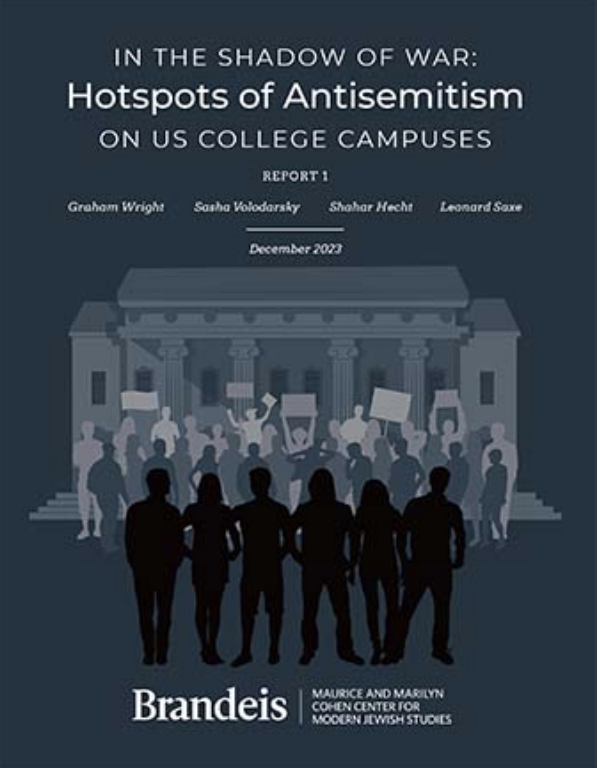 Ironically, Brandeis University released a 31-page academic study today that states Tulane University is among the most welcoming of college campuses for Jewish students. The study was conducted in the wake of the October 7 Hamas attacks against Israel.
Titled “In the Shadow of War: Hotspots of Antisemitism on Campus,” the academic study had several key findings culled from surveys conducted of 2,000 Jewish undergraduate students from 19 private and 32 public colleges and universities. The study found that antisemitic hostility varied dramatically from one campus to another. At the schools with the highest perceived antisemitism, Jewish students were more likely to suffer insults and bullying behavior over social media or in person and were oftentimes blamed for actions by Israel because they were Jewish. At all schools, Jewish students said they were more concerned about antisemitism related to criticism of Israel rather than traditional tropes against Jews.
A reported trend in the Brandeis report was that more Jewish students were significantly concerned about criticism from the political left rather than that from the political right. This was the same for liberal and conservative Jewish students; 54% of the study’s respondents identified as liberal, while 41% consider themselves conservative.
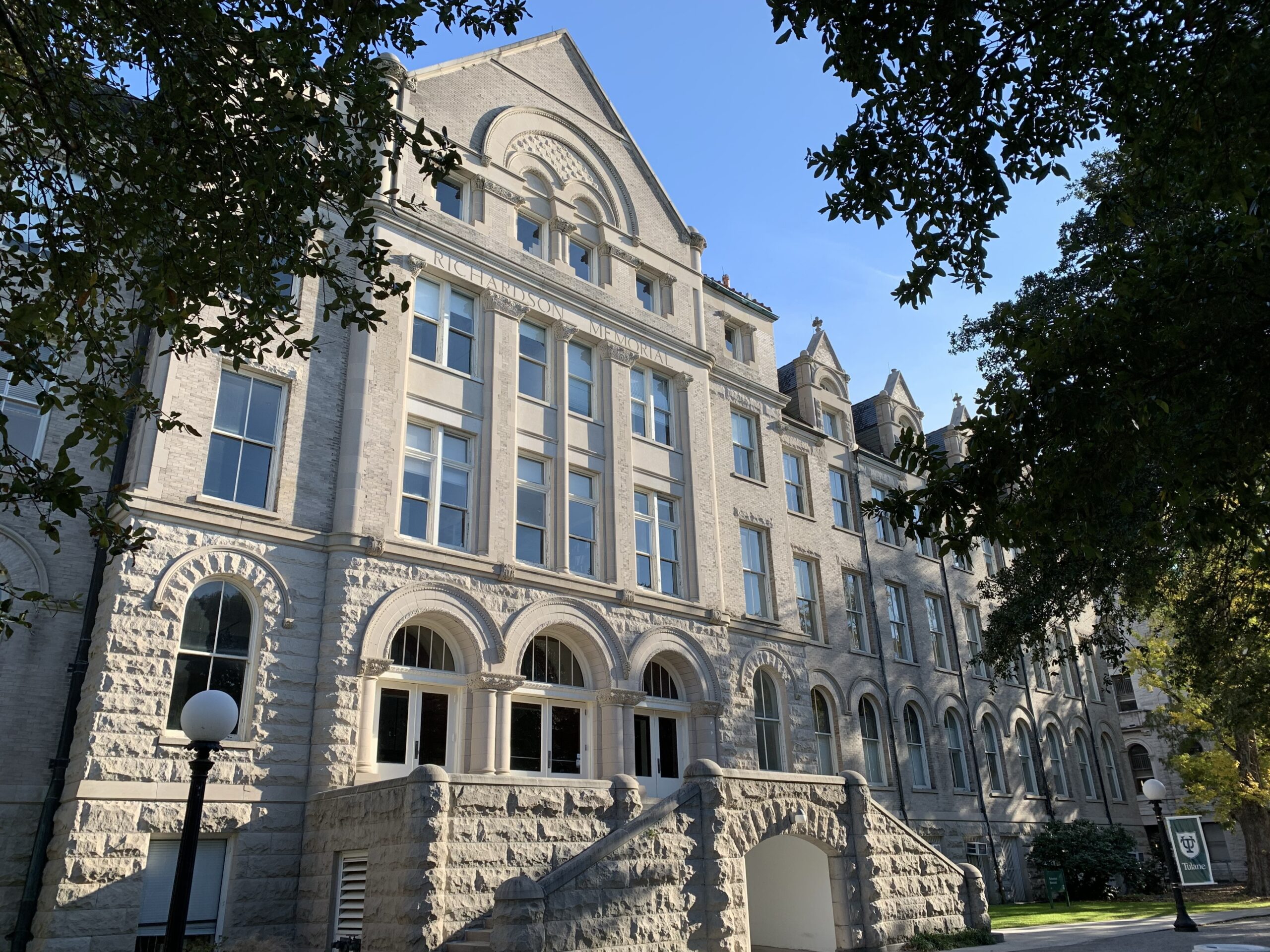
Richardson Memorial Hall, home of the School of Architecture on the Tulane University campus, faces onto historic St. Charles Avenue. (Photo by EEJCC via Wikimedia Commons)
Listed alphabetically are schools with the highest reported acts of antisemitism from the report: Boston University, Columbia University, The George Washington University, New York University, The Ohio State University, Queens College, the University of California, Berkeley; UCLA, University of California, San Diego; University of Michigan, the University of Pennsylvania and the University of Wisconsin.
In addition to Tulane, other campuses considered favorable towards Jewish student life were Brandeis, Duke University, the University of Florida and Washington University in St. Louis.
The OCR has made a point of focusing on antisemitism- and Islamophobia-related complaints that allege violations of Title VI, which prohibits discrimination based on several categories including “shared ancestry.” More than two dozen such cases have been opened since Oct. 7, amid political pressure in the face of rising concerns about campus antisemitism.
Many such Title VI cases involving allegations of discrimination toward Jews are brought by pro-Israel advocacy groups, including the Brandeis Center for Human Rights Under Law and the Lawfare Project, which often seek to define anti-Zionist speech in university spaces as antisemitic.

Liz Magill, then-president of the University of Pennsylvania, testifies before Congress. (Kevin Dietsch/Getty Images)
The department has previously initiated investigations at schools including Harvard, Columbia and the University of Pennsylvania — whose president Liz Magill recently resigned from her post following blowback from her handling of a congressional hearing on campus antisemitism. Opening an investigation does not mean that the department believes a complaint has merit.
The agency does not disclose specifics about the investigations it initiates, leaving the schools and advocacy groups that may be involved in the cases to fill in the details. But even the schools themselves say they are not always immediately aware of why they are being investigated. An education department spokesperson pointed to a November press release about antisemitism- and Islamophobia-related investigations as “context” for the latest round.
A spokesperson for Rutgers University in New Jersey, which had an investigation opened into it on Monday, told JTA it was over “alleged incidents of harassment in October and November 2023 of students on the basis of their national origin (shared Jewish ancestry and/or Israel).” The spokesperson said the school was given no further details.
Rutgers this week announced it was suspending its campus chapter of Students for Justice in Palestine following allegations of disruptive protests. The school also briefly suspended its law school’s Student Bar Association last month after it tried to impeach a Jewish member over a message-board battle about Israel and Hamas.
A trustee for Santa Monica College told a local newspaper that its own investigation, opened Dec. 4, was also related to antisemitism, as a student club council had briefly denied recognition to a local chapter of Students Supporting Israel in late October. University administrators reversed the decision the next day, saying there was “no lawful basis” to deny the club; in a statement, the college told the Santa Monica Daily Press, “This prompt action demonstrates the college’s commitment to a discrimination-free environment for all students.”
And a statement from Union College reveals that its own investigation opened Dec. 5 also involves allegations of “a claim of discrimination toward Jewish students.”
“Specifically, the unnamed complainant alleges that Union College failed to respond appropriately to incidents of harassment in October and November 2023,” the statement reads. It goes on to say that the school “stands against hate in all forms, including antisemitism,” and “has seen no violence, or threats of violence, on campus since the Oct. 7 terror attacks by Hamas on Israel.”
A K-12 school district in Georgia said its investigation was not related to antisemitism, while two other schools declined to say what their investigations concerned. Several major institutions including Stanford University and the University of California-Los Angeles did not respond to requests for comment.
Representatives at two other universities, the University of Washington-Seattle and the University of California-San Diego, told JTA they would cooperate with their investigations but did not say whether the inquiries involved antisemitism. Cobb County School District in Georgia told a local reporter that the investigation opened into it on Dec. 5 was not related to antisemitism.
Requests for comment to the other colleges that have also had recent discrimination investigations opened were not returned. The other schools are UCLA; Stanford; Whitman College; Montana State University; and the University of Cincinnati.
Recent news reports from some of these colleges indicate that they, too, have been the sites of conflict involving Jewish concerns. A conservative radio station has reported that staff at a University of Washington diversity and inclusion office emailed students Oct. 25 to call Israel “oppressors and colonizers, while Palestine stands as the oppressed and colonized.” The letter also accused Israel of “genocide” and said, “We firmly support the cause of Palestinians and their fight for freedom from the unlawful and oppressive settler colonial apartheid state.” The letter was reportedly unsanctioned by the school and staffers who sent it were disciplined.
A video shared on social media from UCSD in November claimed that the university had evacuated a building in which Jewish students were discussing antisemitic threats against them; the university denied the allegations. The video showed pro-Palestinian protesters gathering outside an area where Jewish students were congregating.
At UCLA, administrators last month condemned antisemitic language spoken by students at a pro-Palestinian protest at which students bashed a piñata with an image of Israeli Prime Minister Benjamin Netanyahu while yelling through a microphone, “Beat that f–king Jew.”
And at the University of Cincinnati, the campus chapter of Students for Justice in Palestine was admonished shortly before Halloween for a social media post that promoted a “Spooky Zionist” meeting theme, according to local reports.
