Yom HaShoah memorialized at two community events
By ALAN SMASON, Exclusive to the CCJN
The National World War II Museum and Congregation Gates of Prayer served as the two venues for the Greater New Orleans community’s observances for Yom HaShoah on Thursday evening, April 29. The day for Yom HaShoah is different each year on the Gregorian calendar, because it corresponds to the Hebrew calendar date of 27 Nissan, which moves to the following day if it falls on Shabbat.
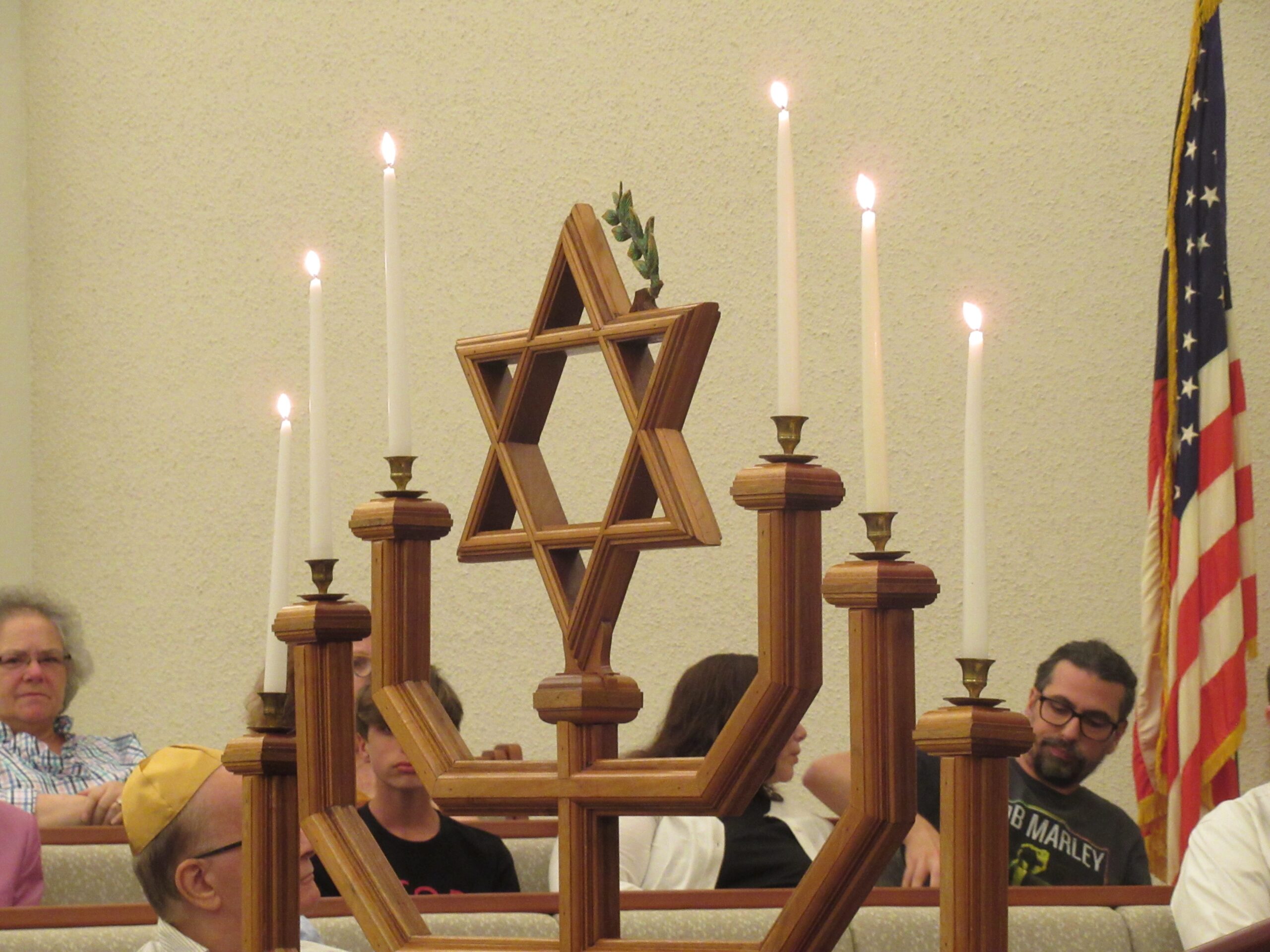
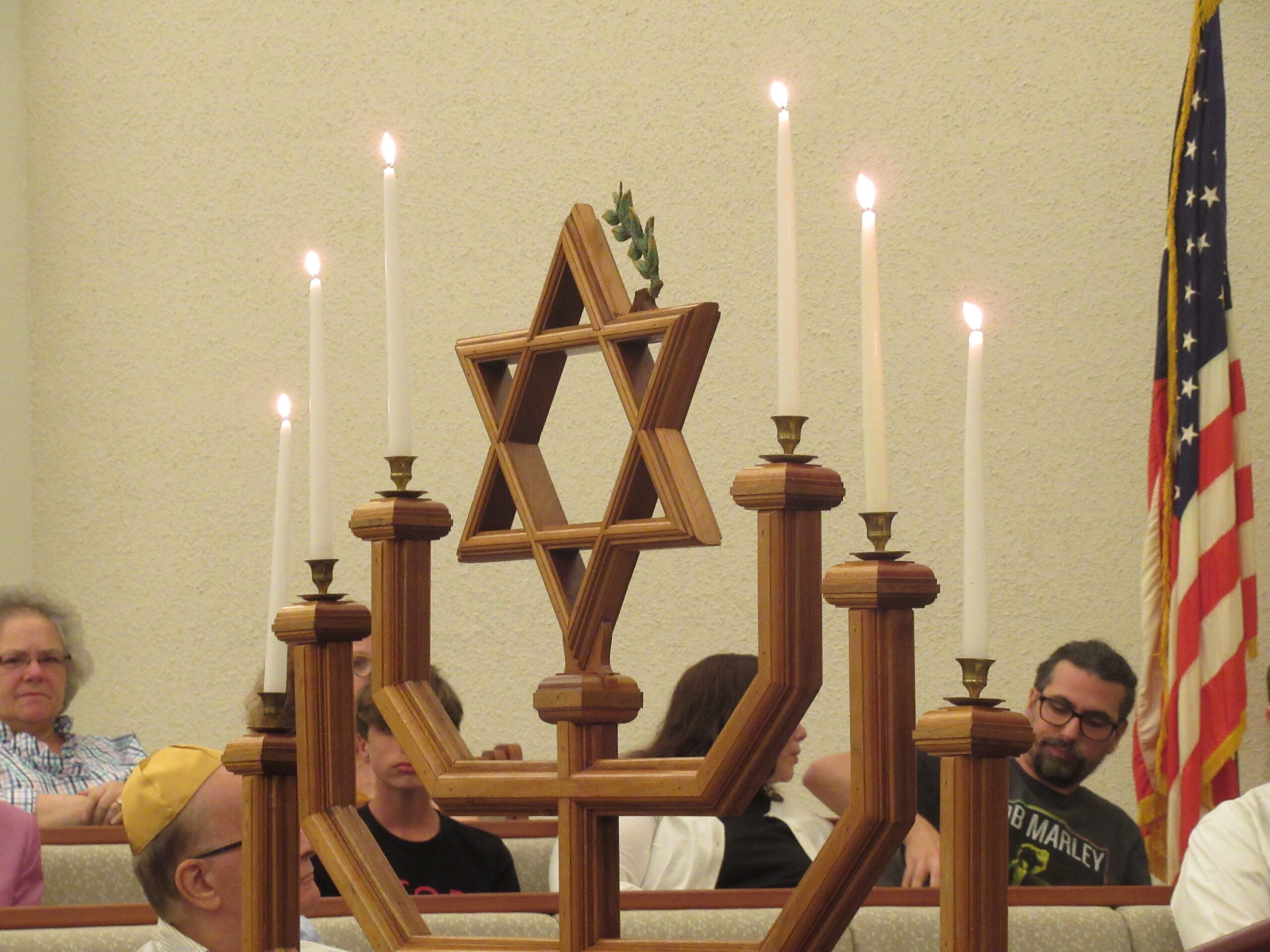
Six candles representing the six million Jews who perished in the Holocaust burn in the wooden menorah created by Holocaust survivor Isak Borenstein. (Photo by Alan Smason)
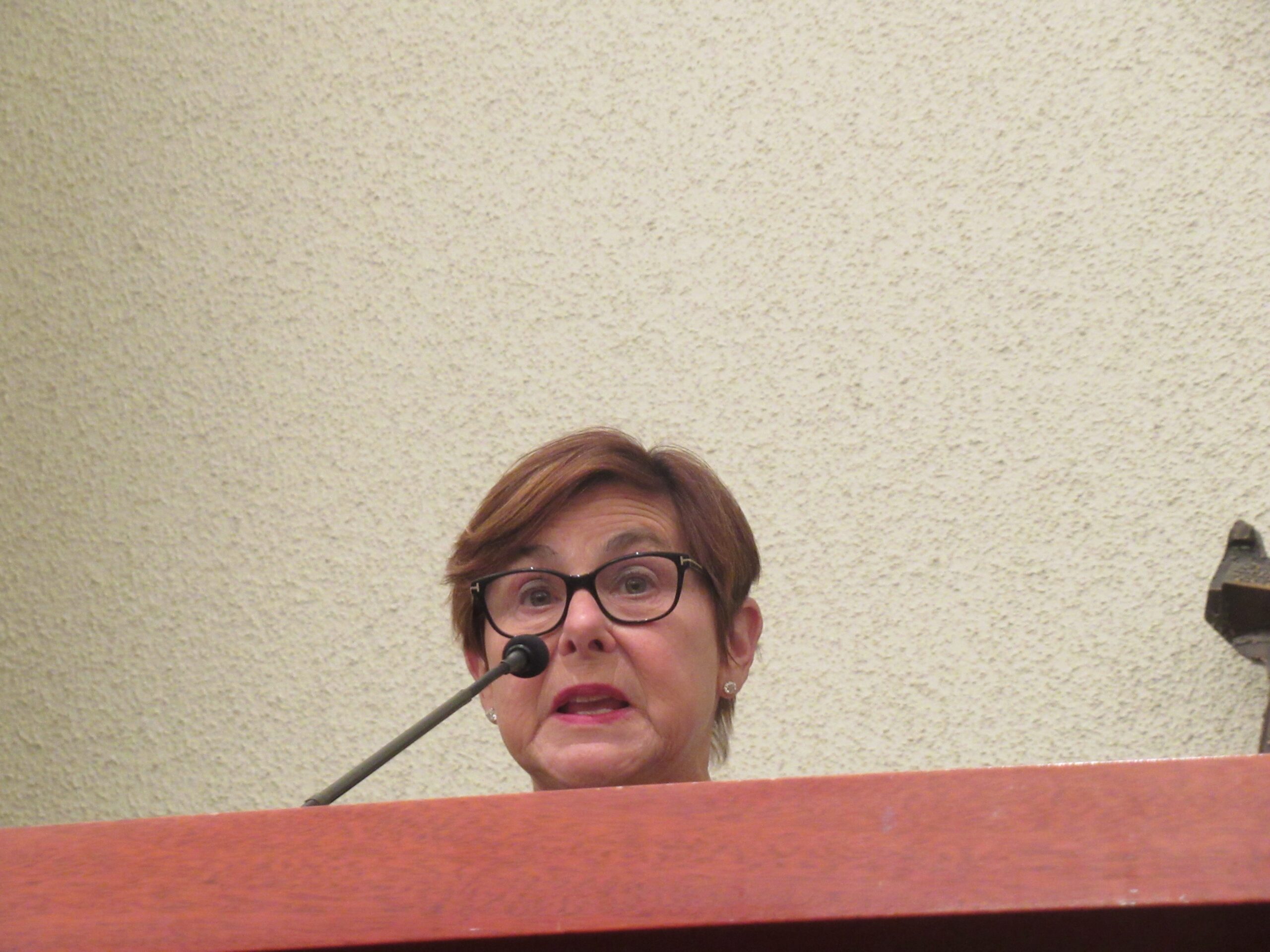
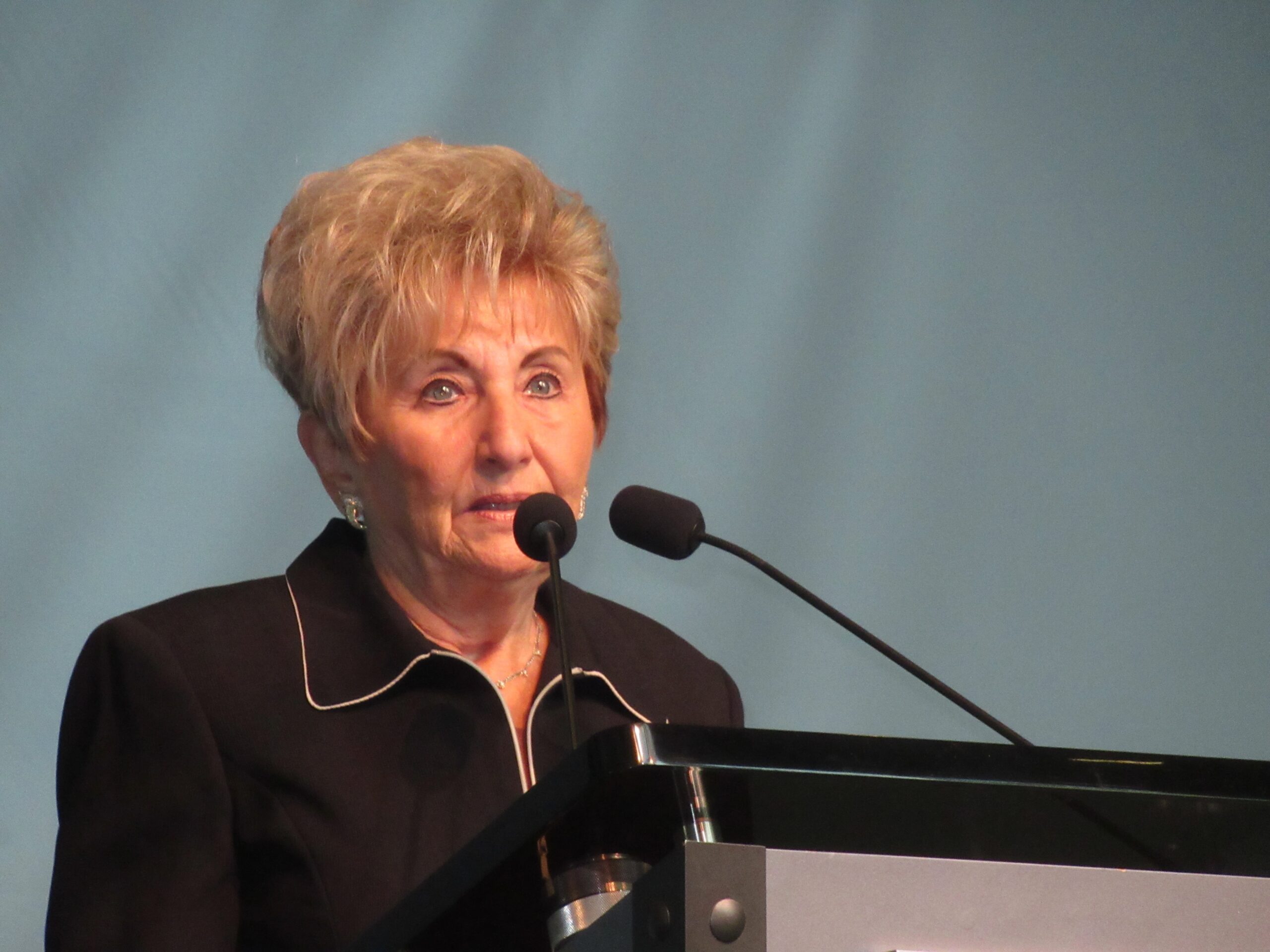
The first of the two events was held in the Boeing Pavilion of the National World War II Museum, a massive auditorium noted for an impressive display of aircraft suspended from its ceiling. A crowd of approximately 120 persons gathered at 6:00 p.m. to hear Holocaust survivor Toni Rinde describe how she and members of her family were rescued and ultimately saved from deportation to the death camps by the intercession of Wehrmacht Oberlieutenant Albert Battel.
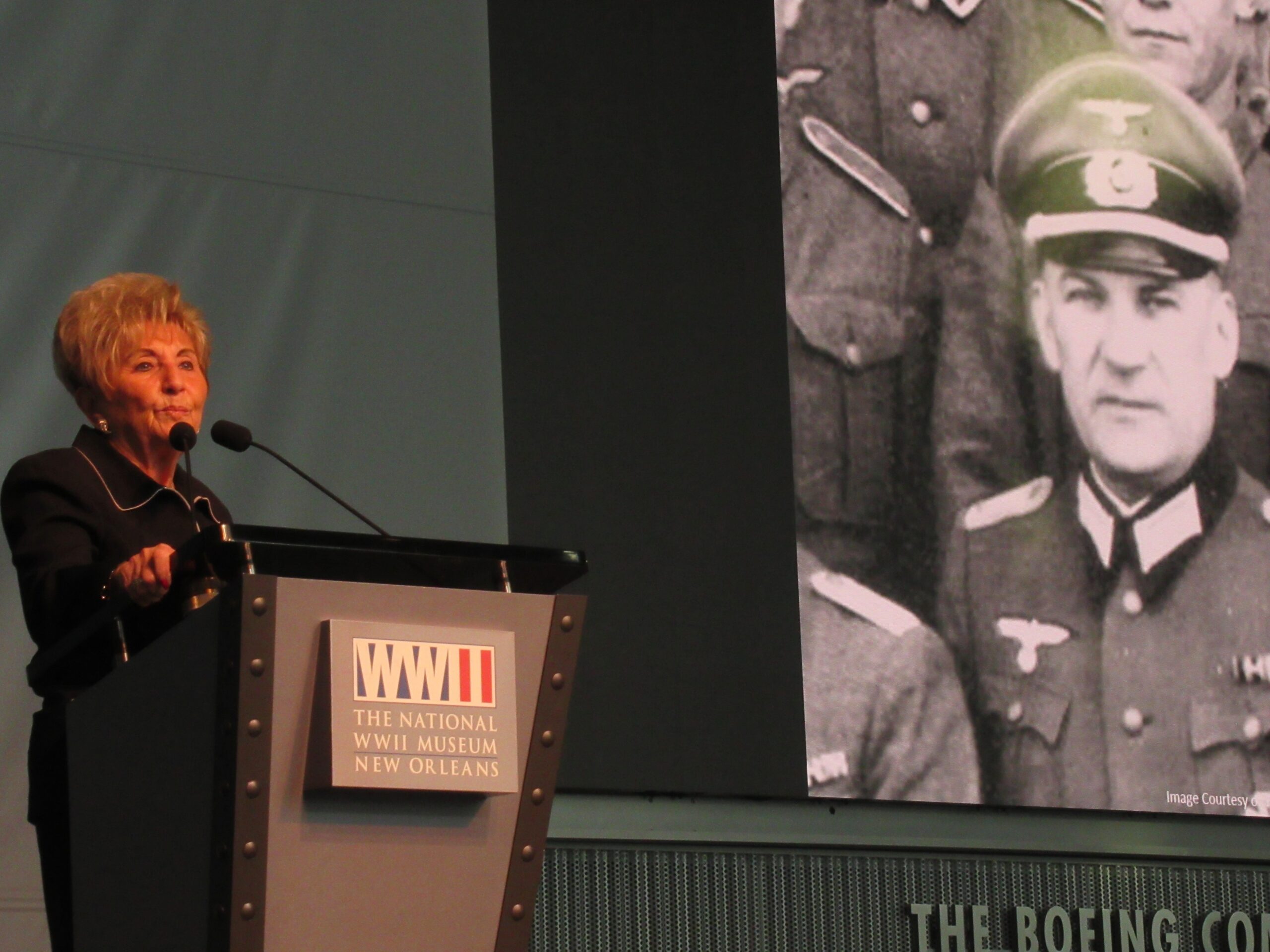
Battel opposed the German SS’s plans to “resettle” (send to the nearby Belzec death camp) the Jewish inhabitants of the ghetto of Przemyśl, where Rinde’s family lived. He engineered the escape and ordered the protection of 100 Jews via a convoy of truck over the protests of the SS. For his actions, Battel was recognized as Righteous Among All the Nations by Yad Vashem in 1981.
Rinde related how her parents used false identification papers to ensure the success of their escape and live in the woods with partisans. Knowing the woods were no place for a young child, they eventually hid her with a sympathetic Catholic woman in a nearby village, who protected her and kept her hidden from prying eyes.
“I was known as her little niece, while her parents – the niece’s parents – were sent to a different city to work for the Germans to help with the war effort,” she explained. “I had to have a name that was changed, a birth certificate – a false one of course – was given to me. I had to learn Catholic prayers. I had to learn Catechism. Przemyśl was an archdiocese, so went to church several times a week.”
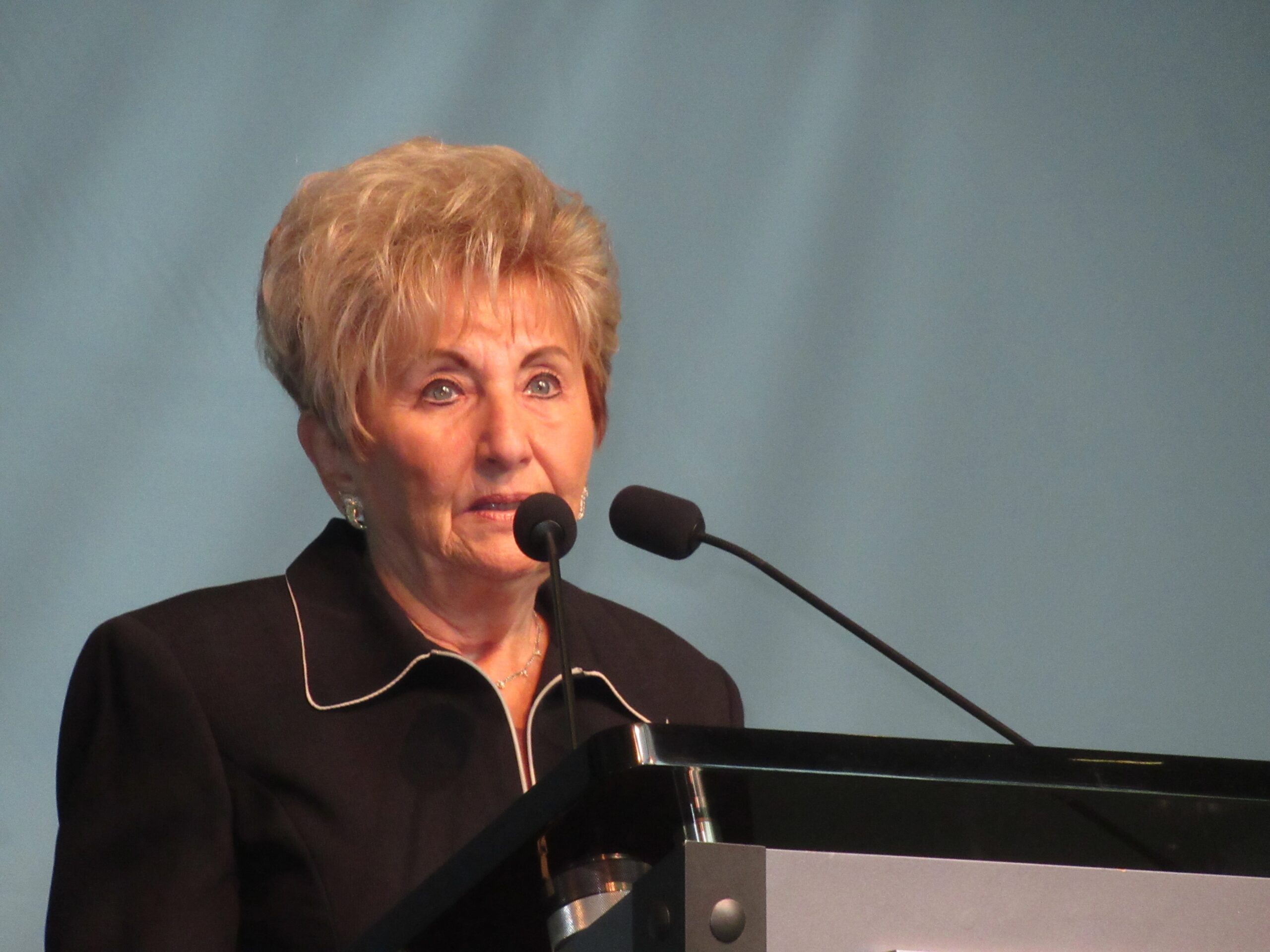
Toni Rinde speaks at the National World War II Museum’s Yom HaShoah presentation on Thur., April 28. (Photo by Alan Smason)
After the war ended, Rinde continued, her parents returned to retrieve her. She had no idea who they were. “It took a little time, but my parents finally convinced me that I had to go with them whether I liked it or not,” she noted. Reunited, the family relocated to a nearby Jewish community in Poland and there her father set about creating false birth certificates for Holocaust survivors so they could emigrate to Palestine.
Eventually, locals found out about his activities and a note indicated to the family that they would be killed if they didn’t leave the town. Undaunted, the family relocated to Prague and were taken in by a friendly Jewish doctor, who had treated Rinde’s mother. After a stopover in Amsterdam in The Netherlands, the family was able to arrange transport to the United States, where they settled in New York for a short time through the sponsorship of a brother of one of her parents.
She neither spoke nor read English and had no formal education up to that point. At the age of seven, she was enrolled in a Hebrew Day School in Manhattan and learned how to speak and read English and speak and read Hebrew. At the end of her first year, she had been promoted from kindergarten to the first and second grades and had achieved the highest marks in both English and Hebrew.
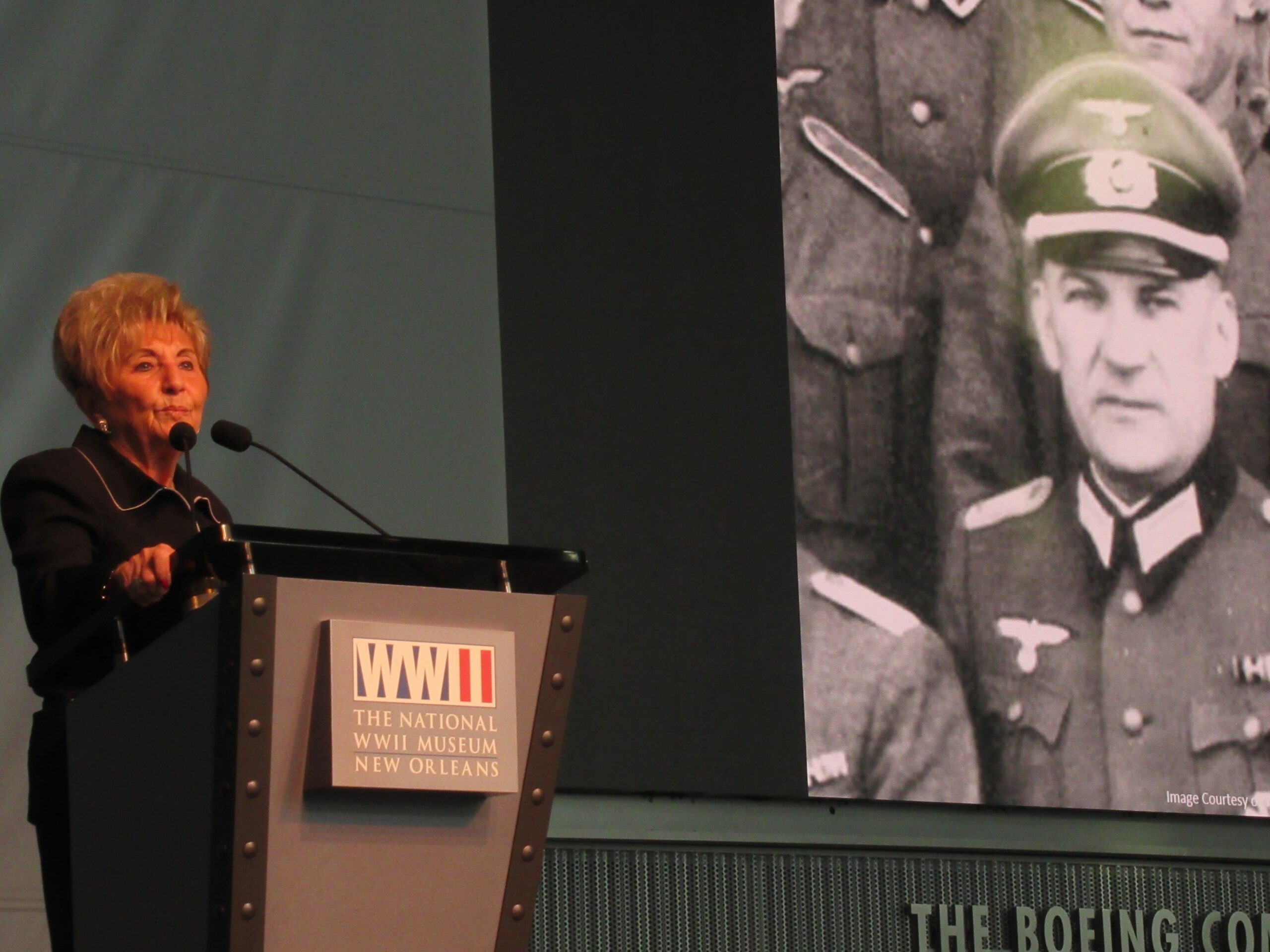
Toni Rinde, left, speaks with the image of Albert Battel at right. Battel was the Werhmacht Oberlietenant who engineered a rescue of 100 Jews, including her family and is now considered a Righteous Among the Nations by Yad Vashem. (Photo by Alan Smason)
Her family had come to America on an agricultural quota and they eventually had to relocate to New Jersey to become farmers in the tradition of her father’s family, she said. Because they lived in a farming community, she had few friends and had to take care of a little brother. “My parents had to learn how to be parents and I had to learn how to be a child,” Rinde continued. “None of that was easy, but you know what? You do what you have to in life.”
After graduating from high school and college, she married a doctor and they became important members of the St. Petersberg, Florida Jewish community. She and her husband became major donors and volunteer leaders for the Florida Holocaust Museum, now enjoying its 30th anniversary.
“History unlearned is history repeated. Remember that,” Rinde said.
Later that evening, the annual Community-Wide Holocaust Memorial was held in Metairie at 7:00 p.m.. Typically held at the Uptown JCC, the event was moved for the first time to Gates of Prayer due to a possible conflict with a nearby school event that was expected to limit parking and compromise egress to the JCC facility on St Charles Avenue.
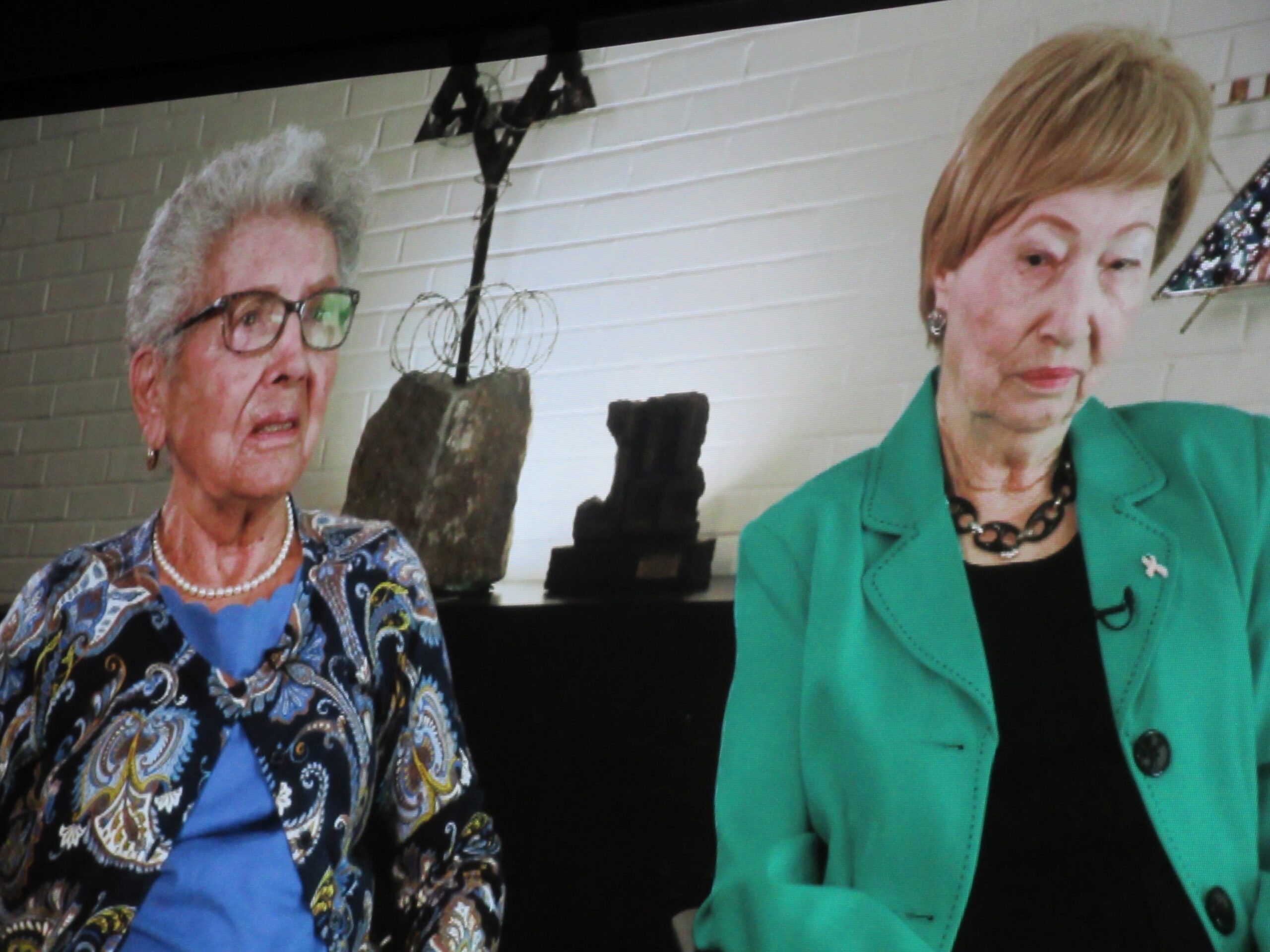
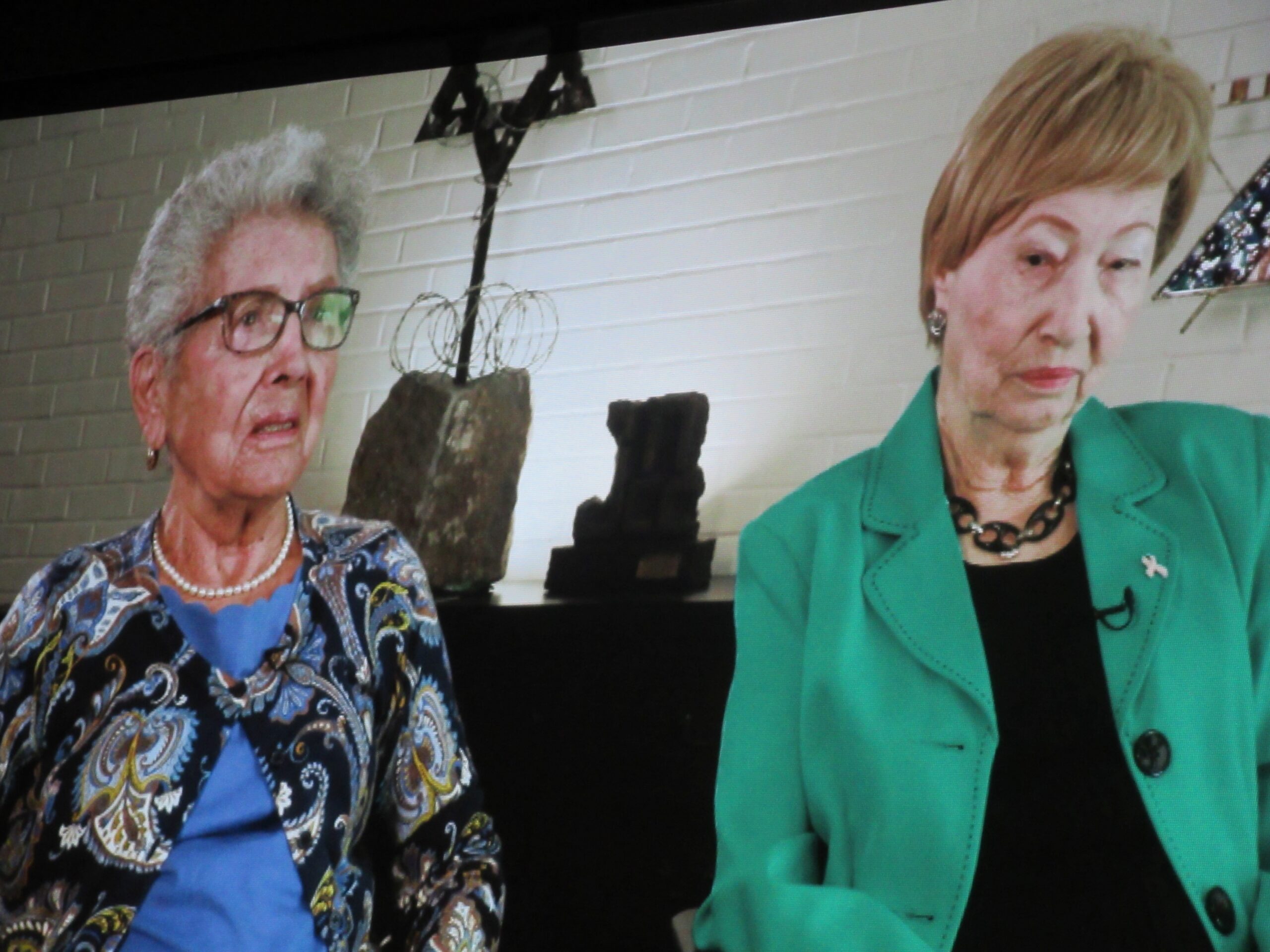
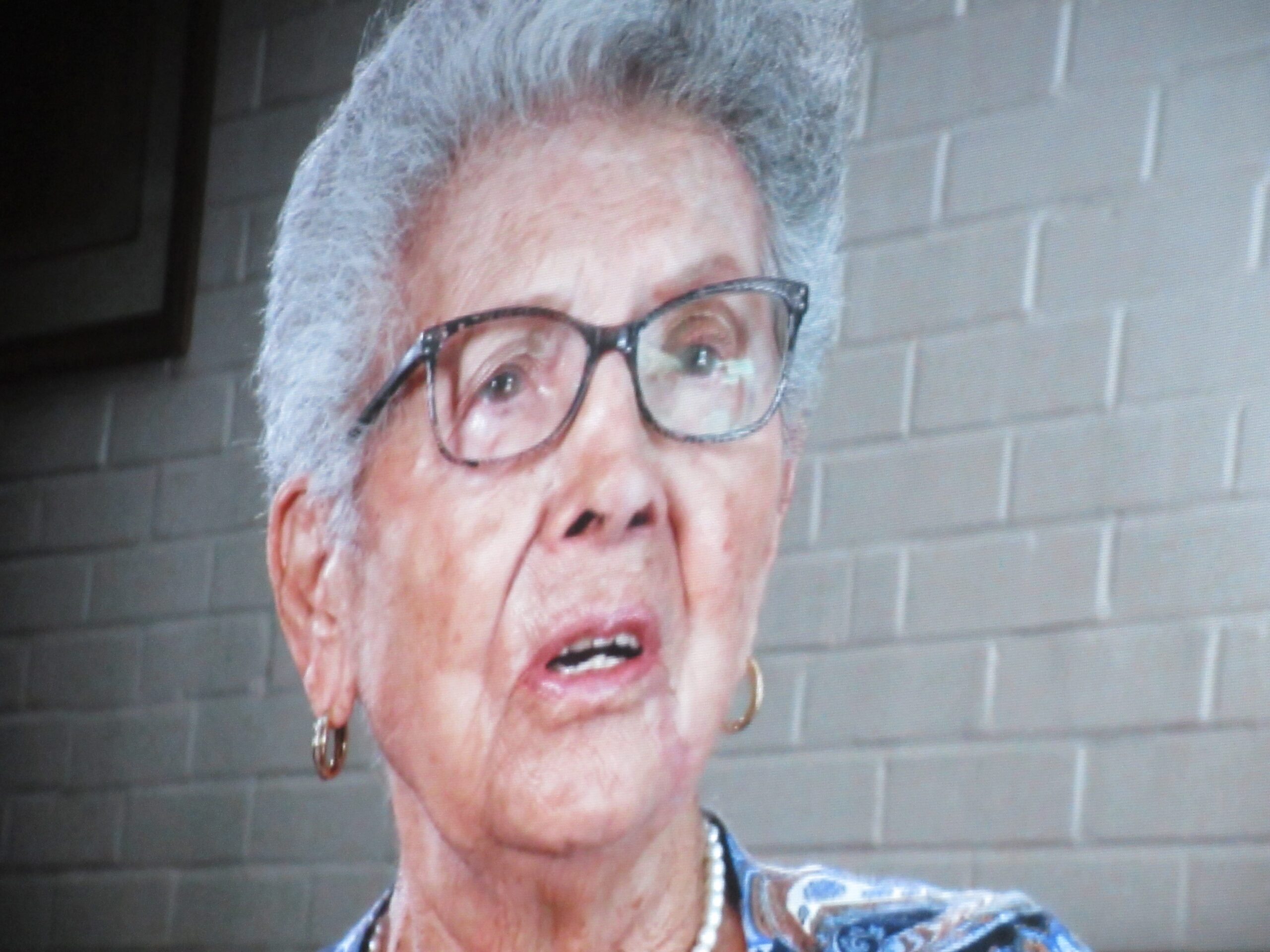
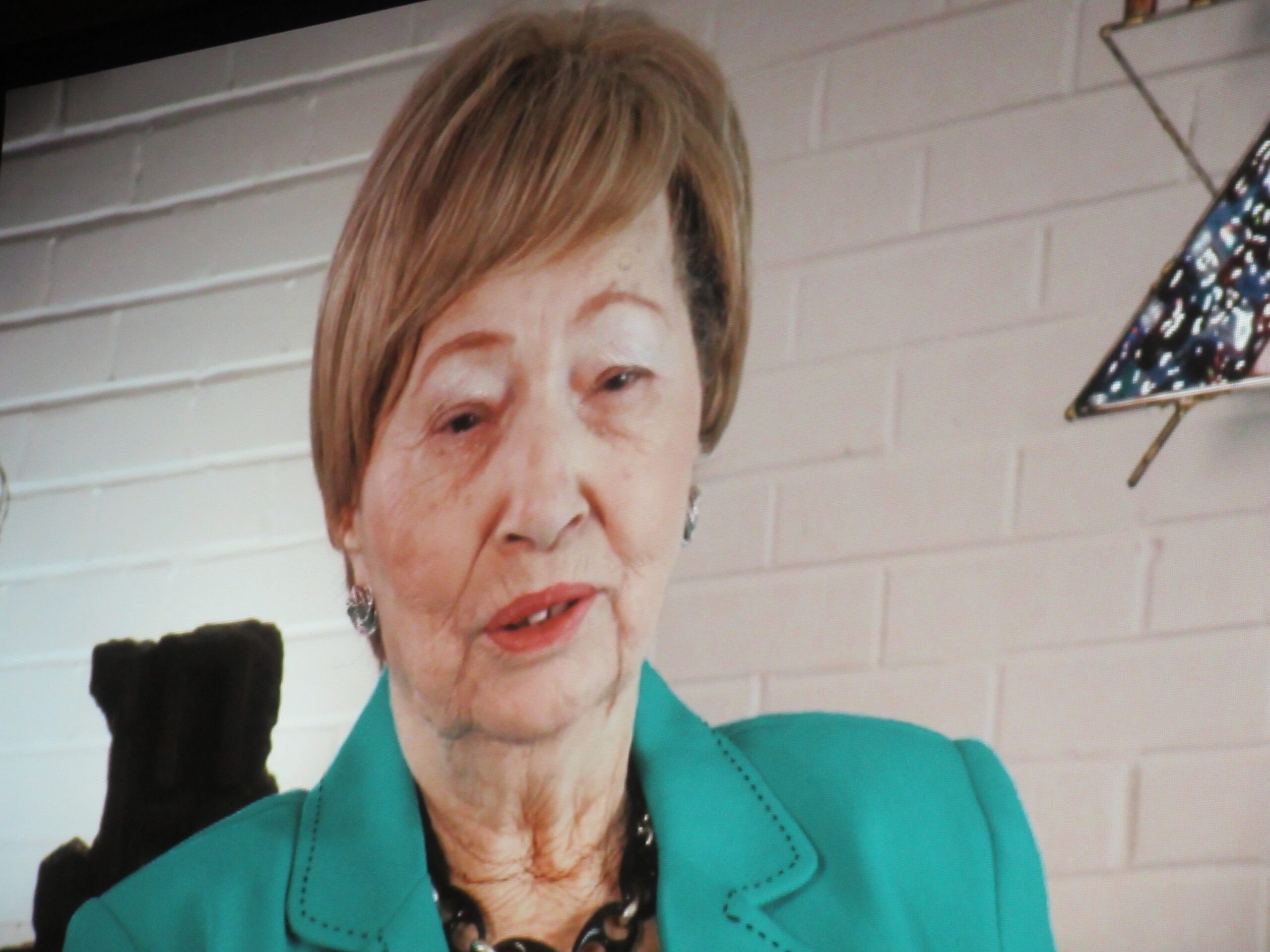
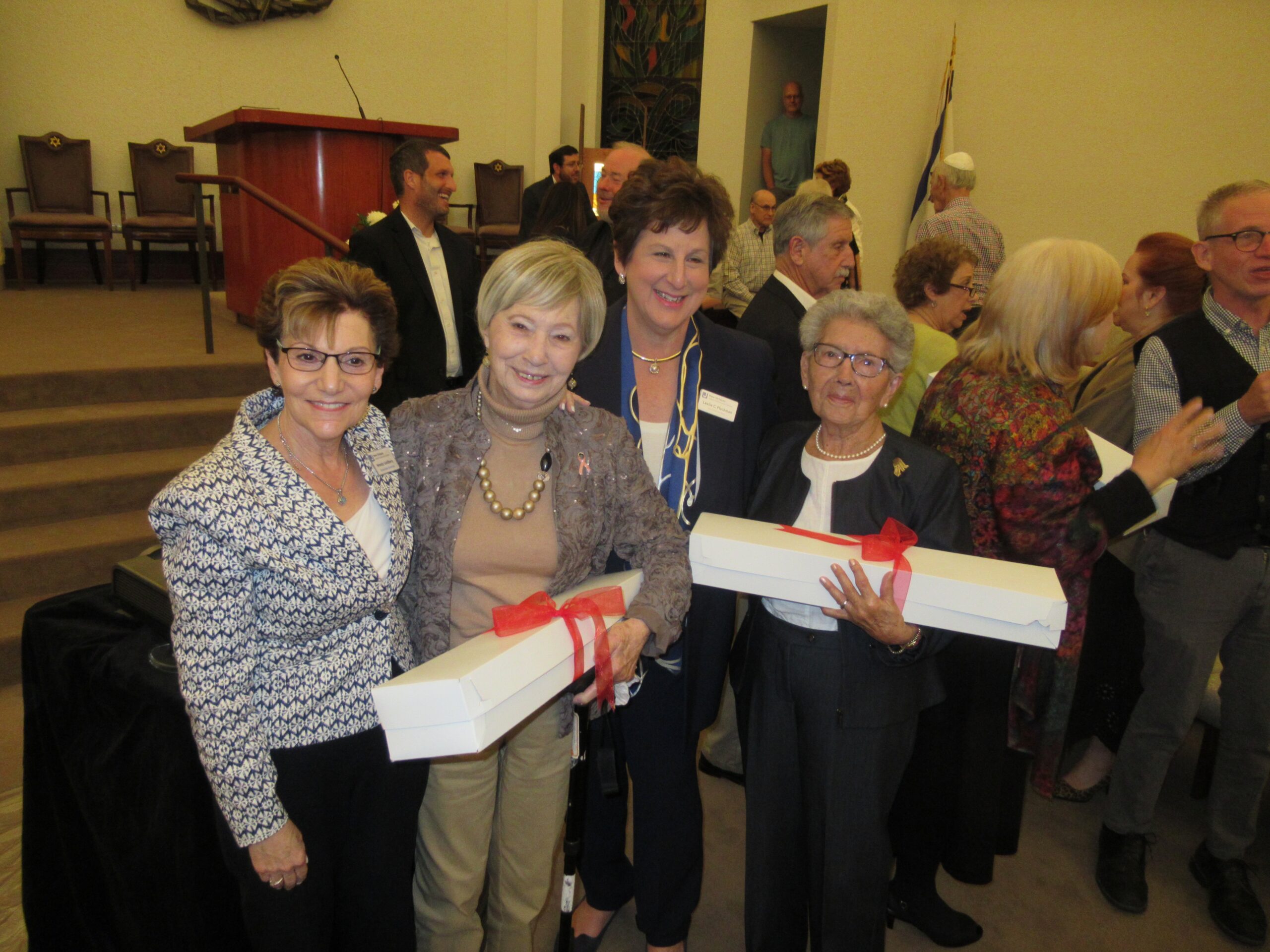
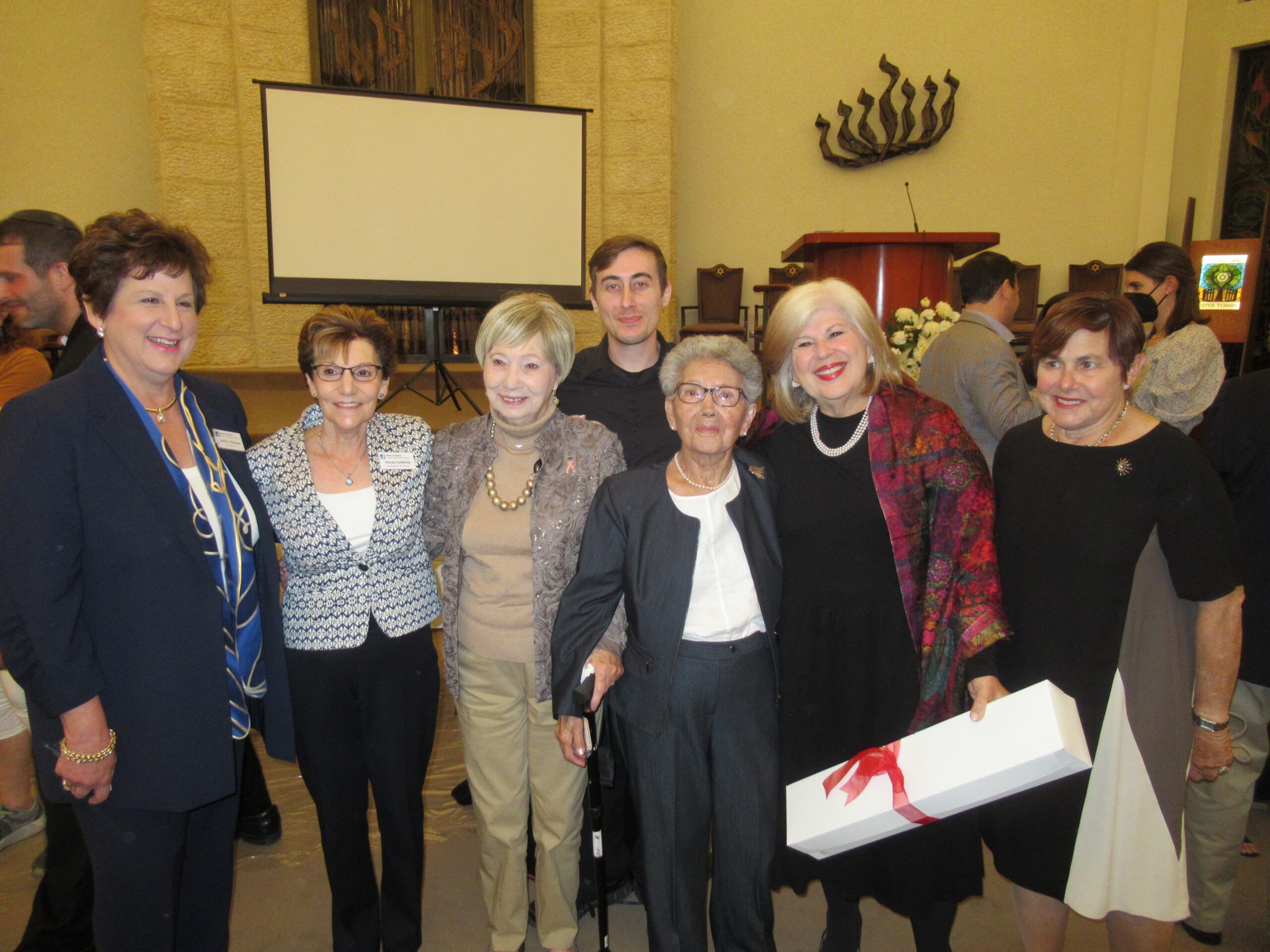
Anne Skorecki Levy, left, and her sister Lila Skorecki Millen. (Frame from film)
A crowd of over 200 gathered in the Gates of Prayer sanctuary to witness the 2022 Holocaust Memorial Program, led by the Procession of the Survivors and Family Members. Sisters Anne Skorecki Levy and Lila Skorecki Millen, the last of the Holocaust survivors who arrived in New Orleans, led the procession. Having been hidden during the war, the two sisters – along with their parents and a brother – arrived in New Orleans as children. The two sisters were featured in a special video created by Moxie Media in which they told how they were saved by their father’s resourcefulness and determination to return to the Warsaw Ghetto and rescue them.
The Skorecki family is one of a tiny fraction of ghetto residents to survive the war intact. The video will be offered to other Jewish communities, who wish to share the inspirational message of survival for future generations.
Selected representatives of the Holocaust Memorial Committee and their family members took turns lighting six candles to signify the six million Jewish dead, 1.5 million of which were children.
Members of the New Orleans rabbinate took part throughout the program. Senior Rabbi David Gerber delivered an opening prayer followed by the singing of the National Anthem and “Hatikvah” by Gates of Prayer cantorial soloist Jordan Lawrence.
Touro Synagogue Katie Bauman sang “Ani Ma’anim”(“I Believe”), the rousing song based on Moses Maimonides’ “Thirteen Principles of Faith” and used as a rallying hymn throughout the various death camps. Leopold Sher, a son of survivors, recited the “El Maleh Rachamim” prayer in memory of those that perished during the war, while Ruth Loeffelholz read the names of the now-deceased New Orleans survivors.
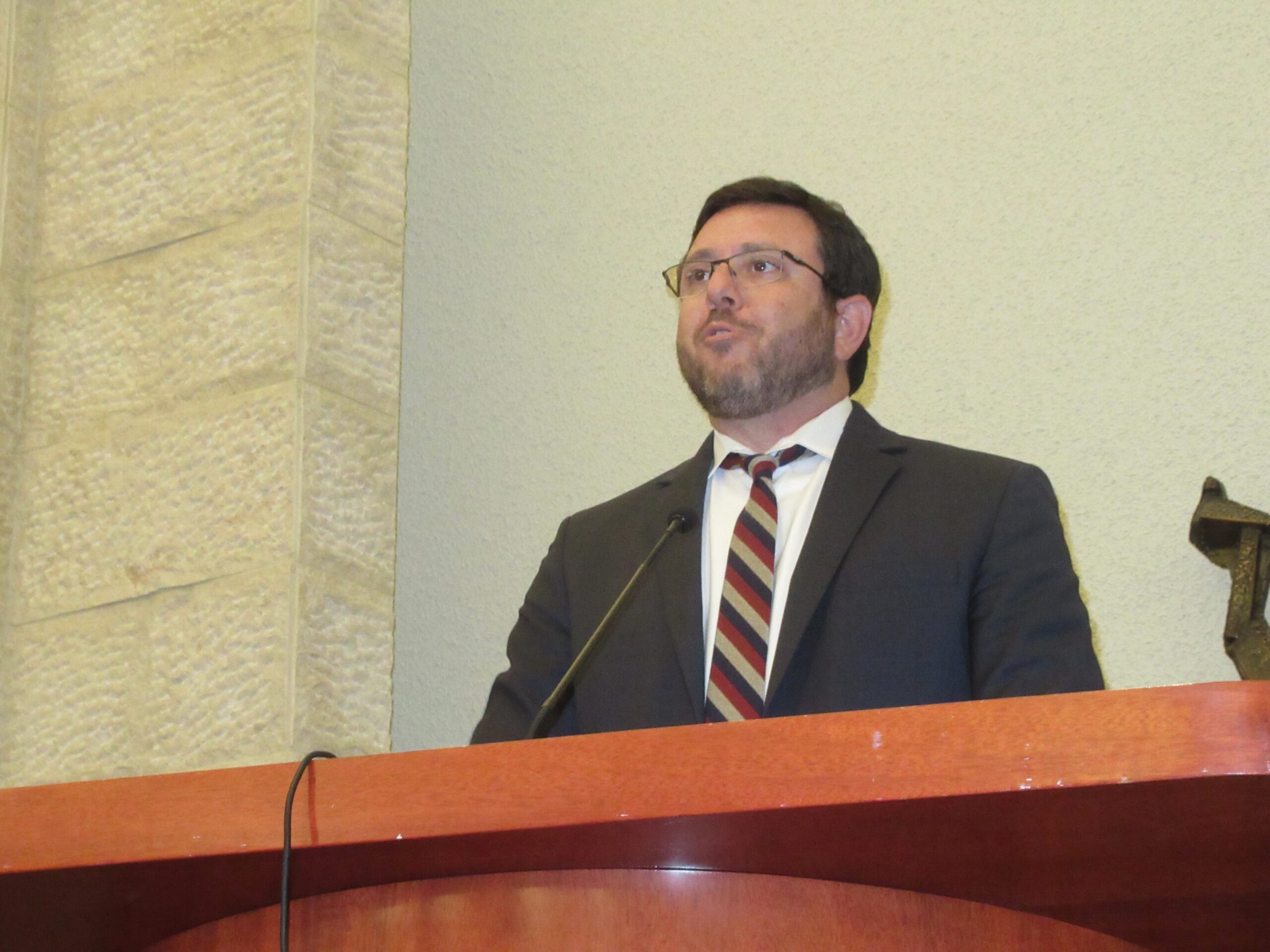
Rabbi Joshua Pernick of Congregation Beth Israel led the crowd in a recitation of the Kaddish prayer, his last public act prior to his leaving for his new post in New Haven, CT as the rabbi-in-residence for the Jewish Federation there.
A reception and refreshments were served in the social hall immediately after the service concluded.
Pictures from both Yom HaShoah events are found here: