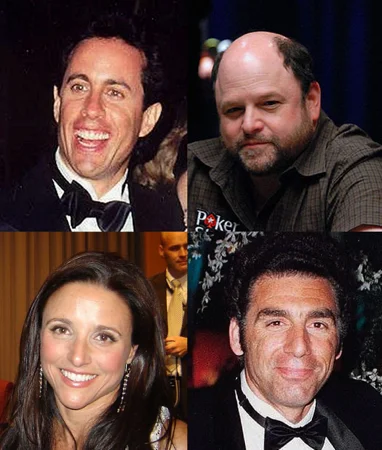
During Jerry Seinfeld’s recent stand-up performance in Boston, he answered an audience member’s question about the final episode of the Seinfeld television show by saying “Something is going to happen that has to do with that ending. It hasn’t happened yet,” implying that he and co-creator Larry David are working on a possible sequel. However, Julia Louis-Dreyfus, who played Elaine, subsequently said, “I don’t know what the hell he’s talking about.” Many Seinfeld episodes had Jewish arcs, featuring a rabbi, circumcision, kosher food, Jewish singles night, babka, and more. Jason Alexander, who played George, usually loved the Jewish themes, noting, “You gotta go a long way to hit my Jew button. I give you Jews are funny, and you can be really sacrilegious with me, and I’ll take every Jew joke you got, even the borderline offensive ones.” But one Jewish-themed episode did cross the line for Alexander, who objected, ultimately leading Larry David to make some changes to the script. Which episode did Alexander object to?
Seinfeld actors montage by TheCuriousGnome is licensed under CC BY-SA 3.0 DEED via Wikimedia Commons
A.The Raincoats (Part II), where Jerry and his girlfriend Rachel make out in the movie theater balcony during a showing of Schindler’s List, with Jerry explaining that “I couldn’t help it. We hadn’t been alone together in a long time and we just kinda started up a little during the coming attractions and the next thing we knew, the war was over.” Said Alexander, “I mean, yeah, anything can be funny. But not really anything. Not the Holocaust. I told Larry he’d be doing great harm to the show.” While David left in the plot line, he did cut out some of the most obnoxious jokes which he had written about Schindler.
B.The Serenity Now, where Elaine learns what “shiks-appeal” is when her boss’s son celebrates his bar mitzvah and tries to French kiss her, leading George to say “Jewish men love being with a woman who is not like their mother.” Said Alexander, “I actually loved the concept of ‘shiks-appeal’ but the idea of Elaine and the bar mitzvah boy? It was just wrong.” David mostly left the scene intact, but he did remove one shot where Elaine smiled at the bar mitzvah boy who was coming on to her.
C.The Bris, where Jerry’s job is to hold the baby at the bris of a friend’s son, featuring a bumbling mohel who says “I could have been a kosher butcher like my brother. The money’s good. He’s got a union, with benefits. And cows don’t have families. You make a mistake with a cow, you move on with your life.” Alexander said, “The character of the mohel was disgusting…to make one who is a child-hating, self-loathing, foul-mouthed incompetent, to me was antisemitic in a hurtful way.” David ultimately cut out some of the most outrageous lines said by the mohel.
D.The Shower Head, where Jerry’s Uncle Leo interrupts Jerry to tell him that the cook at Monk’s Cafe made his hamburger medium instead of medium-rare “because he’s an anti-Semite.” Jerry responded, saying “The point I was making before Goebbels made your hamburger…” Alexander complained to David that “you just gotta be so careful with Nazi jokes,” leading David to change Jerry’s original response to Uncle Leo, which was “The point I was making before Hitler made your hamburger…”
E.The Yada Yada, where Jerry’s friend, the dentist Tim Whatley, converts to Judaism, as Jerry tells George and Elaine. “He looks at my tooth and he says, ‘oy vey, you got tsuris.’ I ask him why he’s talking Yiddish, and he tells me that he met a Jewish girl, and yada yada, he converted to Judaism.” Jason Alexander objected to the original script, where Jerry did a belly-wiggling Tevye dance while saying, “…and biddy biddy bum, he converted to Judaism.” Alexander disliked the Tevye imitation, saying “There’s no more beloved Jewish character than Tevye. I just don’t think we should make fun of that,” which led Larry David to change “biddy biddy bum” to “yada yada.”
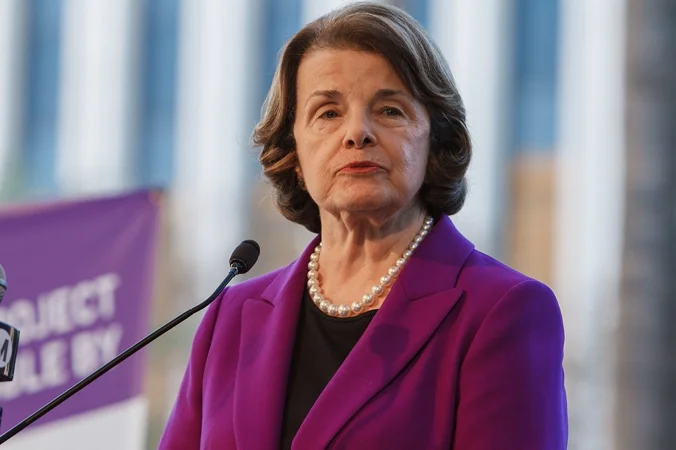
Senator Dianne Feinstein died at the age of 90, just hours after casting a vote on the floor of the United States Senate, where she served since 1992 as California’s first female senator. Among the issues that Senator Feinstein promoted were HIV/AIDS funding, women’s reproductive health needs, gun control, and support of immigrants, including introducing legislation to repeal President Trump’s Muslim travel ban. In addition to being California’s first female senator, Feinstein’s biography incudes many other firsts. She was the first woman president of the San Francisco Board of Supervisors, San Franciso’s first female mayor, and the first woman to chair the Select Committee on Intelligence. What other firsts were part of Dianne Feinstein’s biography?
Dianne Feinstein in November 2014 by Benjamin Dunn is licensed under CC BY-SA 2.0 DEED via Wikimedia Commons
A.She was the first female president of the Stanford University Law Review.
B.She was the first woman to preside over a United States presidential inauguration, that of Barack Obama.
C.She was the first female president of Mount Zion Synagogue in San Francisco.
D.She was the first woman to officially nominate a presidential candidate, nominating Al Gore at the Democratic Convention held in Los Angeles in 2000.
E.She was the first Jewish student to graduate from the Convent of the Sacred Heart High School.
In many Orthodox communities, the intermediary days of Succot (chol hamoed) are occasions for family activities, community-wide trips, outdoor events, and more, as schools are closed. Synagogue trips to amusement parks and other family activity sites are common. For example, Six Flags Great Adventure in New Jersey, Hersheypark in Pennsylvania, and the Chicago Botanic Garden all have special Succot holiday events scheduled, including a sukkah on their premises. Some Succot celebrants, however, have been looking for another type of activity, as noted by one Orthodox woman who said, “This is our [only] chance to go swimming at all, other than the bungalow colony. And for people like me who don’t have a bungalow, we never swim.” What place is this woman referencing where she and other holiday celebrants can swim in sex-segregated waters during Succot?
Photo by Mark D. Zimmerman
A.Governor Gavin Newsom of California announced that a section of Huntington Beach was being reserved exclusively for women on October 5, during chol hamoed of Sukkot. While there was criticism that the state beach should not be gender segregated, he stated that his legal advisors assured him that this was not illegal, as much of the beach remains open to all. Rabbi Mendel Zeitland of the Chabad of Huntington Beach noted that volunteers from his community would be placing opaque panels along the beach to prevent others from watching the women swimming and sunning.
B.The DreamWorks Water Park at the American Dream Mall in East Rutherford, New Jersey is closing to the public and offering entry to members of the Jewish community during Succot, one day for men only and one day for women only. The park is the largest indoor water park in the United States, and features 15 water slides, cabanas and an enormous wave pool. The mall already has numerous kosher restaurants, and a number of sukkot will be erected in the mall’s outdoor areas.
C.Donald Trump offered the pool at Mar a Lago to the Orthodox communities on Florida’s Atlantic coast, noting that “the boys can come Monday and the girls can come Tuesday, because that’s what Ivanka, my Jewish daughter, said I should do.” Many Palm Beach residents opposed the idea of busloads of Jews coming to town to swim, but Trump noted that “there’s nothing wrong with Jewish people swimming at Mar a Lago. It’s not like that would bring down property values. Trust me. It’s still worth $1.8 billion regardless of what that highly partisan Democrat ‘Judge’ said about it only being worth $27 million.”
D.President Joe Biden announced that the lap pool in the White House basement will be open to men on Tuesday, October 3, and to women on Wednesday, October 4. In addition, a succah will be erected in the Rose Garden under the auspices of Rabbi Levi Shemtov of the American Friends of Lubavitch.
E.This weekend, New York City Mayor Eric Adams came under criticism after a major rain storm flooded subway stations throughout the city, leading to chaos as workers and students struggled to find ways to get home. Mayor Adams responded to the criticism by saying, “I do not see this as a crisis, but rather as an opportunity. I am announcing that the flooded subway stations will be made available for swimming during Succot for members of the Jewish community. Stations for the 1, 2, 3, A and C lines are reserved for men, and women can swim in the stations of the F, G, N, R and Q trains.”
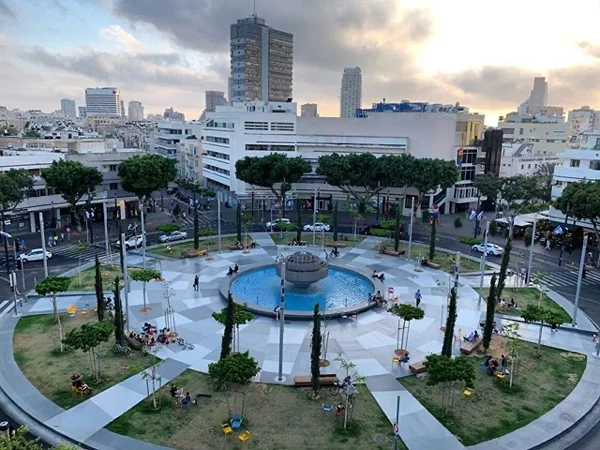
Since 2019, Tel Aviv’s Dizengoff Square has been the location of public Kol Nidre and Yom Kippur services, sponsored by Rosh Yehudi, a non profit organization. The services have attracted upwards of 2000 attendees, from Haredi Jews wearing kippot and tallitot, to secular Israelis in shorts and with bared heads, to Orthodox West Bank settlers. Noted author Daniel Gordis referred to the diverse crowd as reflecting the “open embrace of many Jews of different sorts for each other.” But controversy descended upon the planned 2023 Yom Kippur service when what happened?
Dizengoff Square by stupid systemus is licensed under CC BY 2.0
A.There are a number of food trucks that regularly park at Dizengoff Square. In the past they all agreed to close during the service, as the smell of food cooking was disturbing to many attendees. But this year, one felafel food truck owner stated that he would remain open throughout the service, as many attendees and others visiting the square do not fast for the holiday, and in addition, he needed to be preparing food that would be sold immediately after the service when there would be a huge crowd of customers. After much public outcry and further discussion, the truck owner agreed to park a couple of blocks away and move alongside the square only as the service was ending.
B.While head coverings are not required, many attendees wear baseball caps rather than kippot. An organization opposed to the efforts of Prime Minister Benjamin Netanyahu and his government announced that they would be distributing caps at the service which had the word Democracy in Hebrew. Leaders of Rosh Yehudi announced that they would not allow those caps to be worn as they wanted to keep politics out of the service. Ultimately the protestors agreed not to distribute their caps until the end of the service.
C.A centerpiece of Dizengoff Square is a kinetic sculpture by artist Yaacov Agam called the Fire and Water Fountain. At the 2020 Neilah service, a few attendees jumped into the water pool surrounding the sculpture at the point where “who by water and who by fire” was recited during the Unetaneh Tokef prayer. In subsequent years larger numbers of attendees took this action, causing the Tel Aviv Municipality to refuse to issue the permit to Rosh Yehudi this year, for fear of damage to the sculpture. Ultimately, the government relented when Rosh Yehudi offered assurances that they would place barriers and guards to prevent anyone from jumping into the pool, and there were no incidents this year.
D.The Tel Aviv municipality ruled that Rosh Yehudi was not allowed to place a mechitzah, a divider between men and women, in the public square as it violated laws against gender segregation in public places. When Rosh Yehudi’s legal challenge to that decision was denied, they considered canceling the event but ultimately decided to proceed, hanging Israeli flags overhead as a symbolic separation, hoping to mollify both sides of this issue. While the services did take place, there were huge protests from people on both sides of the religious/political spectrum.
E.Word leaked that the organizers of the service had changed the wording of the Unetaneh Tokef, the central prayer chanted during the services. As word spread, many Israelis stated that they would not attend this year’s event. Ultimately, the leaders of the service agreed not to add to the Unetaneh Tokef after “who by water and who by fire,” the phrase “who by Bibi and who by Ben Gvir.”
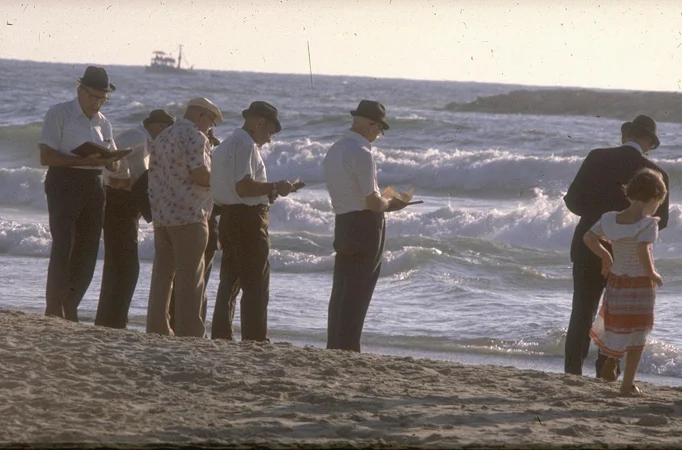
As part of the Rosh Hashanah observance, many Jews participate in the tashlich ceremony, usually held on the first day of Rosh Hashanah, though some celebrated tashlich this year on the second day of Rosh Hashanah because the first day fell on the Sabbath. Others will celebrate tashlich any time through Hoshana Rabah, the seventh day of Sukkot. Tashlich is a symbolic casting of sins upon the water, based on the verse from Micah (chapter 7 verse 19) which states “He will take us back in love; He will cover up our iniquities. You will cast all their sins into the depths of the sea.” In addition to reciting prayers, the ceremony often includes the tossing of bread into the water to represent the shedding of sins. The rabbis stated that tashlich is best celebrated at a body of water with fish, outside the city limits. Some suggest that the presence of fish is desired because the eyes of fish, having no eyelids, are constantly open, symbolizing God’s constant watch over the Jewish people. Another rationale is that fish symbolize our desire to be fruitful and multiply like fish. If a body of water with fish outside the city is not an option, tashlich can be performed at a body of water with fish inside the city, or even a body of water without fish. Where else to the rabbis allow for the tashlich ceremony to take place?
The Taslich Prayer (1) by Government Press Office (Israel) is licensed under CC BY-SA 3.0 via Wikimedia Commons
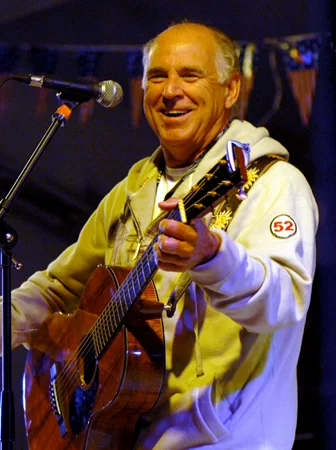
Singer-songwriter Jimmy Buffett died a couple of weeks ago at the age of 76. Buffett’s music reflected what became known as “island escapism,” most famously as depicted in his hit song “Margaritaville. ” In 1997 Buffett teamed up with Jewish novelist Herman Wouk to write a musical version of Wouk’s novel “Don’t Stop the Carnival,” which was about Norman Paperman, a Jewish New York press agent who moves to a Caribbean island to become a hotel keeper. Though the show failed, Buffett did release an album of the music. In 2021 developer Sharif El-Gamal purchased a building in New York’s Times Square with plans to convert it into a location of Buffett’s Margaritaville Resort and Restaurant. The purchase included the requirement to provide space for the Garment Center Synagogue that was already located there. This building would have been the only Margaritaville Resort with a synagogue; however, the developer reneged on the plan to house the shul, leading to a lawsuit by the synagogue which has moved to a nearby location. In collaboration with the Congress for Jewish Culture, Journalist Rohkl Kafrissen wrote a Yiddish version of what Jimmy Buffett song which was recorded by Lorin Sklamberg (of the Klezmatics) along with Yiddish singer Sasha Lurje and violinist Craig Judelman?
Jimmy Buffett 1 by Chief Mass Communication Specialist Michael W. Pendergrass is in the public domain via Wikimedia Commons
A. “It’s 5 O’Clock Somewhere,” including Yiddish lyrics that translate as “Pour me something tall and strong/Make it a Slivovitz before I go meshug/It’s only half past twelve but I don’t care/It’s five o’clock in Jerusalem.”
B. “Why Don’t We Get Drunk,” including Yiddish lyrics that translate as “Today I dipped myself/In the ritual bath just for you,” and “Let’s skip the motzi/Come to me.”
C. “Son of a Son of a Sailor,” including Yiddish lyrics that translate as “As a dreamer of dreams and a travelin’ man/I have chalked up many a mile/Read dozens of books about rebbes and schnooks/And I learned much from both of their styles.”
D. “Margaritaville,” including Yiddish lyrics that translate as “Wasting away again in Anatevkaville/Searchin’ for my long lost shaker of schnapps.”
E. “Cheeseburger In Paradise,” including Yiddish lyrics that translate as “Bagel and lox in Gan Eden/Heaven on earth with an onion slice/Not too particular, not too precise/I’m just a bagel and lox in Gan Eden.”
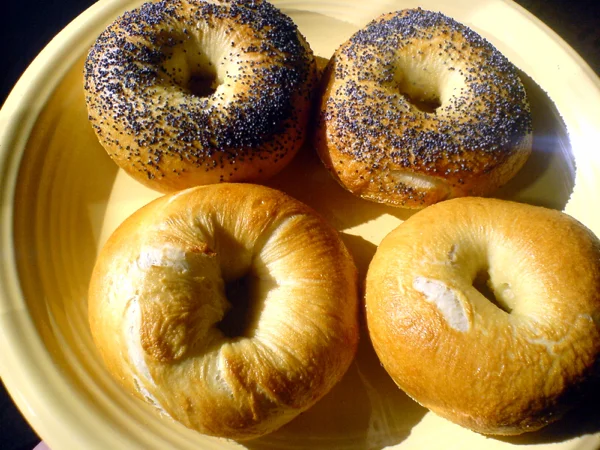
Bagels are one of the quintessential Jewish foods. There are references to bagels in Kraków, Poland in the early 1600’s, though they may have first appeared in Germany prior to that. Polish immigrants brought bagels to the United States around the turn of the 20th century. The bagel became so popular that the International Beigel Bakers Union was established to represent the interests of the workers who eventually were producing millions of bagels weekly. Automation, popularized by Lender’s Bagels, brought an end to the dominance of the union and hand-rolled bagels. But according to a recent article in Politico, “The bagel has emerged as the unofficial food of official Washington.” The Guardian reports that “New York-style bagels are becoming something of a trend in Manchester, London, Leicester and Edinburgh.” Even Burger King is testing an everything bagel bun. According to a report published by online site Snack Food & Wholesale Bakery, in 2022 bagels led the way in sales compared to other fresh breads such as English muffins and sandwich breads. And while Supreme Court Justice Clarence Thomas faces controversy over his choice not to disclose millions of dollars of vacations and other gifts he received from wealthy donors, Justice Elena Kagen notified her circle of high school friends that she could not accept their offer of lox and bagels from New York’s Russ & Daughters as she felt it might violate the court’s ethics rules for accepting gifts. What is a unique bagel store that recently opened?
Bagels by Steam Pipe Trunk Distribution Venue is licensed under CC BY 2.0
A.Schmatte’s Bagels, located in New York’s Garment District, sells 15 types of bagels, plus schmears, and desserts such as rugelach and babka, but all the products they sell are made of recycled clothing. The bagels and other products are sold in a new section of the gift shop of the Garment District Museum.
B.Beagle’s Bagels, located in New York’s Soho neighborhood, sells 15 types of bagels, plus schmears, and desserts such as rugelach and babka, but all the products they sell are for dogs only. It is rumored, however, that some human patrons have raved about the taste of their Pup-peroni Bagels.
C.Feltz Bagels sells 15 types of bagels, plus schmears, and desserts such as rugelach and babka, but all the products they sell are made of felt. The products were created by artist Lucy Sparrow and are sold at TW Fine Art, a gallery in Montauk, New York, whose mission is to serve “as a nurturing space where artists can experiment, grow, and push the boundaries of their practice.”
D.Barbie Bagels, a popup bagel stand in Hollywood, sells 15 types of bagels, plus schmears, and desserts such as rugelach and babka, but all the products they sell are pink in color.
E.Potz Bagels, located in Greenwich Village in New York, sells 15 types of bagels, plus schmears, and desserts such as rugelach and babka, but all the products they sell contain cannabis, some in the form of THC which can make one high, and some with CBD, the non-intoxicating form of cannabis that can have medical benefits.
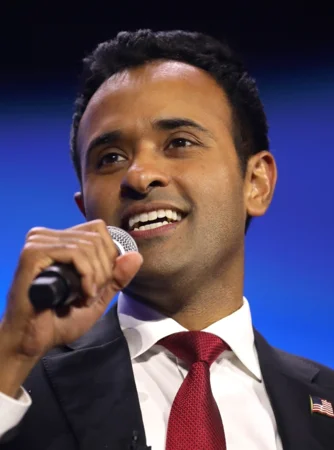
Multi-millionaire biotech engineer and asset manager Vivek Ramaswamy is running for the Republican nomination for President. He is running as an “anti-woke” and anti-abortion candidate who intends to rule by executive fiat, with plans to abolish the Education Department and the FBI, eradicate teachers unions, and launch military action across the Mexican border to stop the inflow of fentanyl. He has called for the phasing out of aid to Israel by 2028 as Israel improves its relationship with its Arab neighbors and no longer needs U. S. support. When criticized for this stance, he responded, “Our relationship with Israel will never be stronger than by the end of my first term. But it’s not a client relationship, it is a friendship. And you know what friends do? Friends help each other stand on their own two feet.” He has criticized Jewish Ukrainian president Volodymyr Zelensky noting, “I would just say that there are open questions about his treatment of religious minorities, including but not limited to Jews in Ukraine.” What is a Jewish connection in Ramaswamy’s life?
Vivek Ramaswamy by Gage Skidmore is licensed under CC BY-SA 3.0 via Wikimedia Commons
A.Even though he is not Jewish, he accepted the offer by rabbis to wear tefillin when he visited the Western Wall in Israel.
B.Even though he is not Jewish, he sent his children to nursery school at Congregation Beth Tikvah in Columbus, Ohio where he lives.
C.Even though he is not Jewish, while at Yale Law School he was a member of Shabtai, a Jewish alternative to the Yale University “secret societies.”
D.Even though he is not Jewish, he made a visit to the grave of the Lubavitcher Rebbe Menachem Mendel Schneerson before appearing at a political event in Borough Park in Brooklyn.
E.Even though he is not Jewish, he threw himself an adult bar mitzvah at the Waldorf Astoria Hotel, featuring entertainment by Drake. His bar mitzvah theme was Wall Street, with guest tables named after investment companies including JPMorgan Chase, Goldman Sachs, Deutsch Bank and Citigroup. Of course, Ramaswamy sat at a table named after his own investment company, Strive Asset Management.
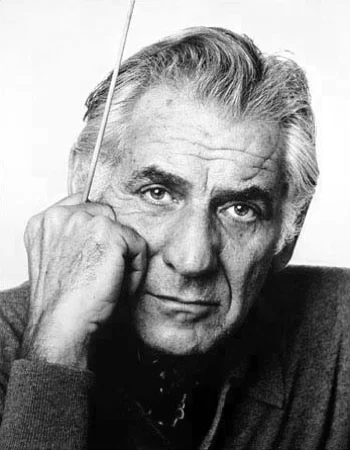
The trailer was released for the upcoming biopic Maestro about composer and conductor Leonard Bernstein. Controversy has arisen as a result of the choice of the non-Jewish actor Bradley Cooper to play the part of Bernstein, as well as his use of a prosthetic nose, which according to some critics injects the antisemitic trope of Jews having large noses. Others contend that actors should not be restricted to playing parts only of their own ethnicity, religion, or nationality. Bernstein’s children defended the choice of Cooper and his use of the prosthetic, noting that they were “touched to the core to witness the depth of (Cooper’s) commitment, his loving embrace of our father’s music and the sheer open-hearted joy he brought to his exploration” and that “It happens to be true that Leonard Bernstein had a nice, big nose. Bradley chose to use makeup to amplify his resemblance, and we’re perfectly fine with that. We’re also certain that our dad would have been fine with it as well.” Bernstein was the son of Jewish-Russian immigrants who raised him in Lawrence, Massachusetts. His early exposure to music included Friday night services at Congregation Mishkan Tefila in Roxbury, Massachusetts. Bernstein’s first symphonic composition was Jeremiah, with movements based on three aspects of the prophet’s life: Prophecy, Profanation, and Lamentation. The Broadway show West Side Story which he and choreographer Jerome Robbins created was originally planned to be about Jews and Catholics fighting in East Side Story. And he composed Chichester Psalms, the lyrics of which were in Hebrew, which was performed at the Vatican for Pope Paul VI’s 10th-anniversary of papacy. What is another example of Judaism infusing Bernstein’s professional life?
Leonard Bernstein by Jack Mitchell is licensed under CC BY-SA 4.0 via Wikimedia Commons
A.In 1945 Park Avenue Synagogue commissioned Bernstein to compose liturgy for their cantor to sing in the Shabbat morning service.
B.In 1963 Bernstein composed the symphony Kaddish, which he dedicated to victims of the Holocaust, inspired by the trial and hanging of Adolf Eichmann in 1962.
C.In 1974 Bernstein composed a ballet suite titled The Golem based on Saul Ansky’s Yiddish play of the same name. In Jewish lore, a golem is a clay creature that has been magically brought to life through Hebrew ritual incantations.
D.Composer Serge Koussevitzky told Bernstein he should change his name to Leonard S. Burns to avoid antisemitism but Bernstein decided not to do so.
E.Bernstein was hired to compose the music for the musical stage adaptation of Dickens’s Oliver Twist that became Oliver!. But he withdrew, telling the producers that he found the large nose on the Jewish character Fagin to be offensive. However, Bernstein returned to the project after Fagin’s children issued a statement saying, “It happens to be true that Fagin had a nice, big nose.”
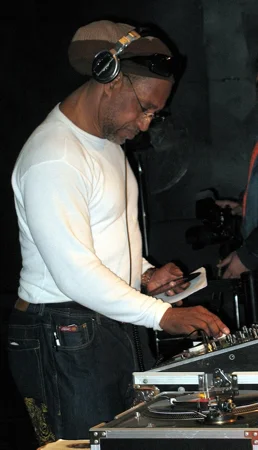
The 50th anniversary of hip-hop is being celebrated, commemorating a party hosted by DJ Kool Herc in an apartment building in the Bronx on August 11, 1973 which is recognized as the first hip-hop event. The music and culture of hip-hop comprises four main elements: DJing/turntablism, MCing/rapping, B-boying/breaking, and visual/graffiti art. There are many Jewish hip-hop and rap artists, among them Drake and the Beastie Boys, each of whom have offered Jewish moments in their public lives, recordings or performances. For example, Drake performed in a Saturday Night Live skit called “Drake’s Bar Mitzvah,” and he filmed his video HYFR in Miami’s Temple Israel. The Beastie Boys (Michael “Mike D” Diamond, Adam “MCA” Yauch, and Adam “Ad-Rock” Horovitz) included a song on one of their albums called Shadrach, where they compared themselves to Shadrach, Meshach and Abednego, three Jewish men who defied King Nebuchadnezzar II as told in the Book of Daniel. What Jewish moments have been part of other Jewish hip-hop performers’ lives?
Herc on the Wheels of Steel by Bigtimepeace is in the public domain, via Wikimedia Commons
A.The Alchemist, born Alan Daniel Maman, released an album in 2015 titled Israeli Salad made up of instrumental compositions which sampled Israeli songs. One track on that album is called Bone Thugs N’ Haifa.
B.The multi-lingual hip-hop group Hip Hop Hoodíos released a CD titled Carne Masada: Quite Possibly the Very Best of Hip Hop Hoodios which contained the songs Que Pasa in Israel, Asi Loncheamos! (Two Matzoh Balls), and Shalom Obama among others.
C.Los Serenos Sefarad (the “Sefardi Watchmen”) is a Jewish hip-hop group from Seattle which was formed by Rabbi Simon Benzaquen and Mexican-born rapper/guitarist Alejandro “Alex” Hernandez. Rabbi Benzaquen had no particular knowledge of hip-hop until he performed the conversion to Judaism of rapper Nissim Black (formerly Damian Jamohl Black).
D.Rapper Benjamin Landy Pavlon, who performs as BLP Kosher, has recorded songs and videos including Jew on the Canoe and Special K (which includes the lyrics And I’m forever smoking Nazis/I’ma pass the blunt to Anne Frank).
E.El-P, born in Brooklyn as Jaime Meline, was not raised in his mother’s Catholic faith or his father’s Jewish faith, though he noted of his Jewish ancestry that he “got none of it except a circumcision at birth.” He is an investor in the Jewish-style deli Frankel’s in the Greenpoint neighborhood of Brooklyn.