


Hurricane Ida destroys one-time Jewish family’s residence that was Louis Armstrong’s ‘second home’
By RON KAMPEAS
(JTA) — Hurricane Ida flattened the New Orleans home where a youthful Louis Armstrong spent time with a Jewish immigrant family who mentored him.

Scattered bricks are all that remain of historic Karnofsky family residence and loan shop. (Photo by Alan Smason)
CNN reported Monday that the Category 4 storm destroyed the brick structure on South Rampart Street where the Karnofsky family lived and ran a tailor shop at the turn of the 20th century.
Starting at about age 5, Armstrong was friends with the five Karnofsky sons and the family would have him over for meals, leading to Armstrong’s lifelong love of matzah. His first job was blowing the tin whistle on the family’s coal and junk wagon, alerting potential customers. A musicologist has said that the whistle was Armstrong’s first instrument.
Morris Karnofsky, a contemporary of Armstrong’s, lent him the money for his first B-flat coronet. Armstrong had been riding a coal delivery wagon for a year with Morris and would blow the whistle, which eventually fell apart from overuse. The famed jazz musician was also reputed to wear a Magen David and have a mezuzah on his door, said Tulane University musicologist John Baron. A story about the connection between the Karnofsky family “Satchmo and the Star” was published in the CCJN.
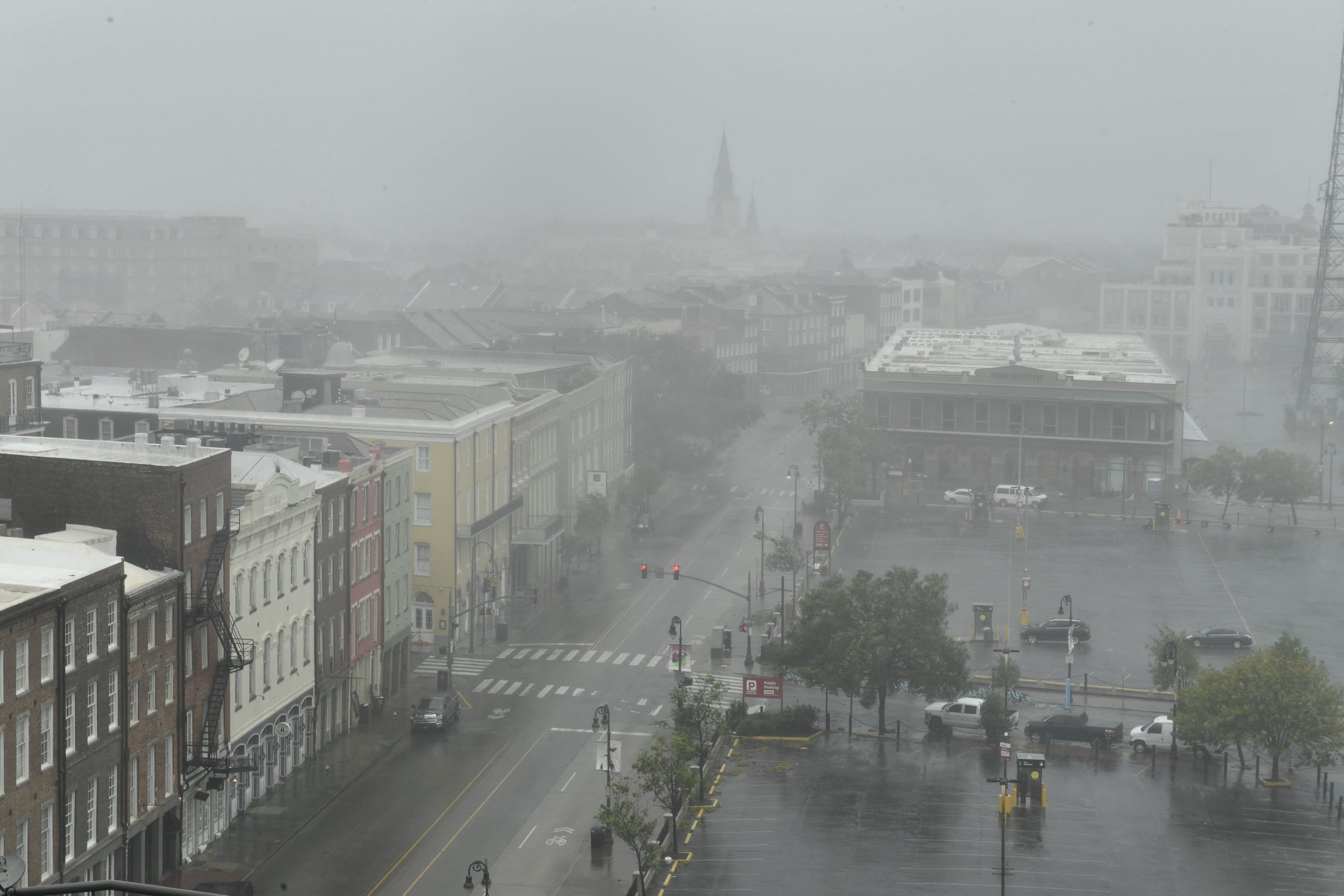
A view of rain from Hurricane Ida in New Orleans, Aug. 29, 2021. (Patrick T. Fallon/AFP via Getty Images)
“The Karnofskys were a tremendous warm influence in his life,” Baron said in 1999. According to the CCJN article, Armstrong gave credit to the matriarch of the family, Ester “Tillie” Karnofsky for teaching him his first song, a Lithuanian-Russian lullaby.
Morris Karnofsky opened the first jazz record store in New Orleans and was a lifelong friend of Armstrong, who became a seminal figure in modern American music. Morris’ younger brother Alex was also friendly with the jazz great.
The building had been long shuttered, although there was talk of restoring it as an homage to Armstrong’s New Orleans roots.
